10-Minute Bedtime Routines for Busy Parents
Bedtime can feel especially demanding when you are finishing household tasks, preparing for tomorrow, and caring for a t
10-Minute Bedtime Routines for Busy Parents
Bedtime can feel especially demanding when you are finishing household tasks, preparing for tomorrow, and caring for a tired child at the same time. A lengthy routine may be unrealistic, but a short and predictable sequence can still give your child a clear transition from daytime activity to bedtime.
The goal of a 10-minute routine is not to guarantee sleep or eliminate every bedtime challenge. It is to create a manageable pattern that you can repeat on busy evenings. The best routine is usually simple enough to follow consistently while remaining flexible when family life does not go to plan.
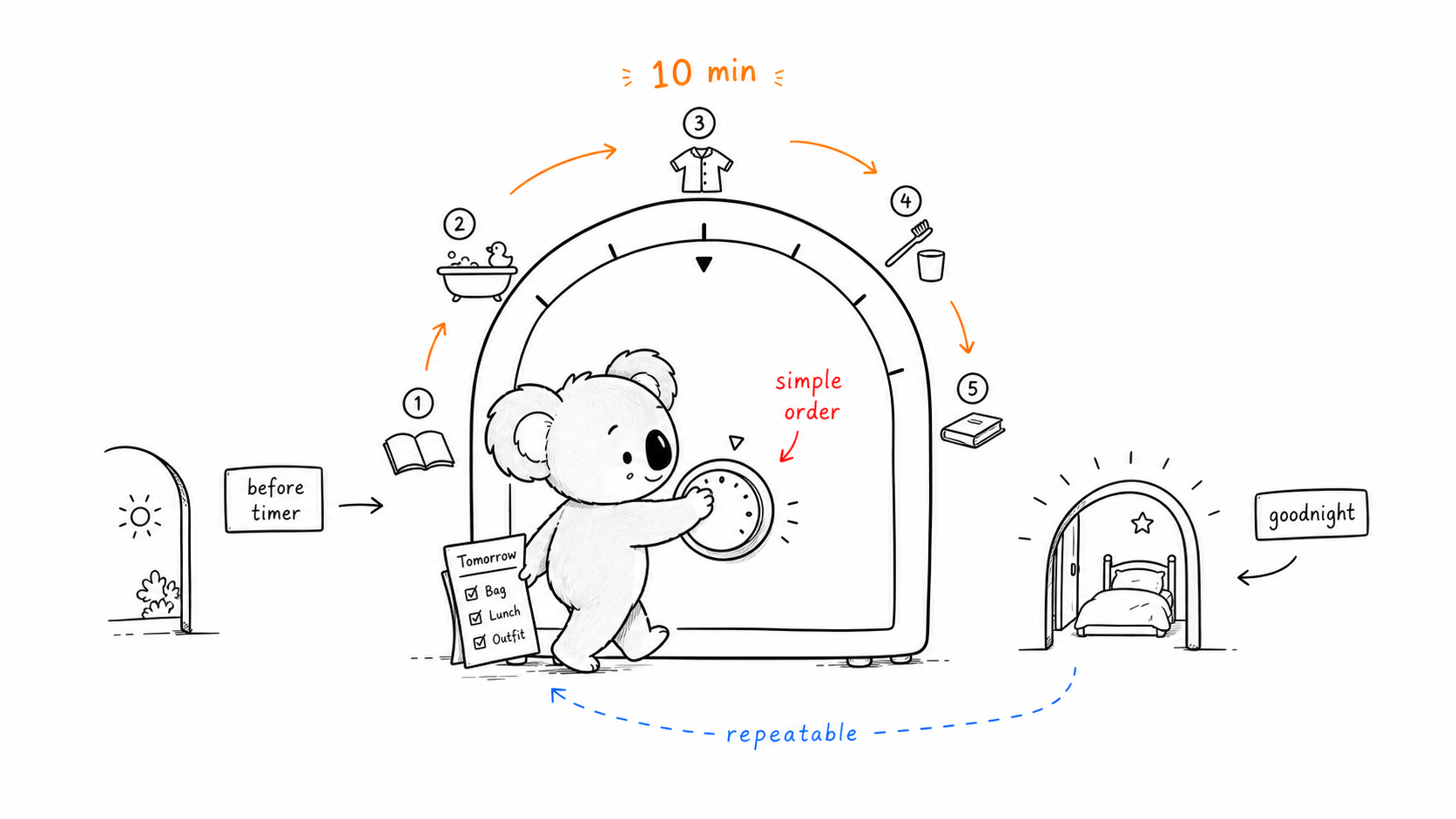
1. Build a Simple 10-Minute Sequence
A practical bedtime routine needs a clear beginning, middle, and end. Choose a small number of calming activities rather than trying to fit every possible bedtime habit into a short window.
Here is one adaptable structure:
| Time | Activity | Purpose |
|---|---|---|
| Minutes 0–2 | Bathroom, drink, and final practical needs | Reduces avoidable interruptions |
| Minutes 2–3 | Choose one story | Gives the child limited, manageable choice |
| Minutes 3–8 | Read or listen together | Creates a focused period of connection |
| Minutes 8–9 | Brief cuddle or conversation | Offers a gentle transition after the story |
| Minutes 9–10 | Goodnight phrase and lights out | Provides a consistent ending |
Complete essential tasks such as changing clothes or brushing teeth before starting the timer if your family needs more than 10 minutes for them. Think of the routine as the final transition into bed, not necessarily the whole evening preparation process.
A repeated goodnight phrase can make the ending easy to recognise. It might be as simple as, “The story is finished, you are safe and loved, and now it is time to rest.” Keep it brief enough to use every night.
2. Reduce Decisions Before Bedtime
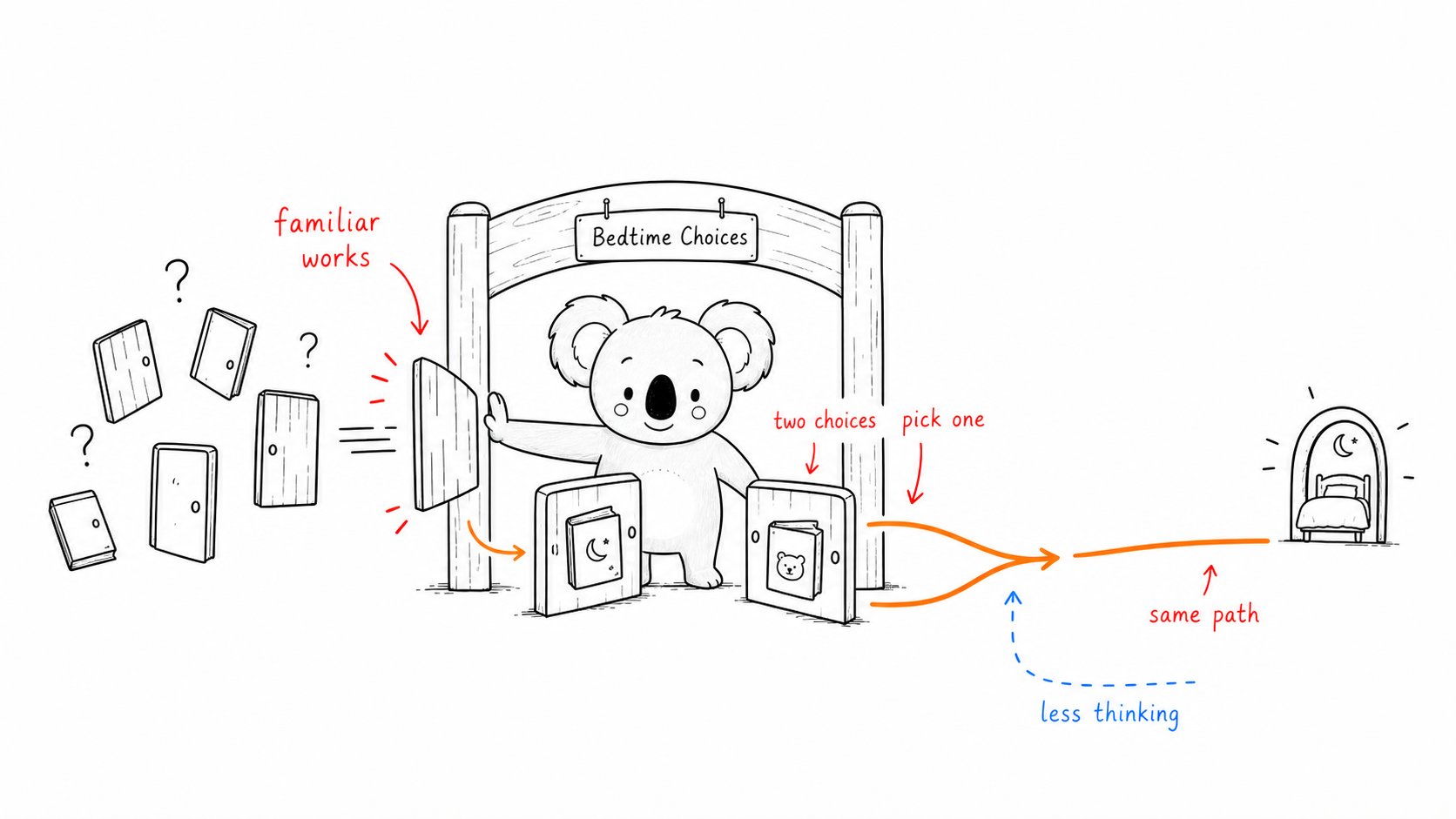
Too many choices can make a short routine expand quickly. Instead of asking an open-ended question such as “What do you want to do tonight?”, offer two acceptable options:
- ●“Would you like the animal story or the adventure story?”
- ●“Shall we read together or listen together?”
- ●“Would you like one cuddle before the story or after it?”
- ●“Should we leave the door slightly open or closed?”
These choices allow your child to participate without changing the overall structure.
You can also prepare a small bedtime selection earlier in the day. Place two or three suitable books beside the bed, save several favourites in a reading app, or rotate a short collection each week. If you use Gula Stories, its age ranges—3–4, 5–6, and 7–8—can help narrow the available choices [K5]. Age-based story choices may make selecting a story easier for a tired parent [K2].
For younger children, familiar stories can be useful because they remove the pressure to find something new every evening. Repetition is acceptable if both you and your child still enjoy the experience.
3. Make Story Time the Centre of the Routine
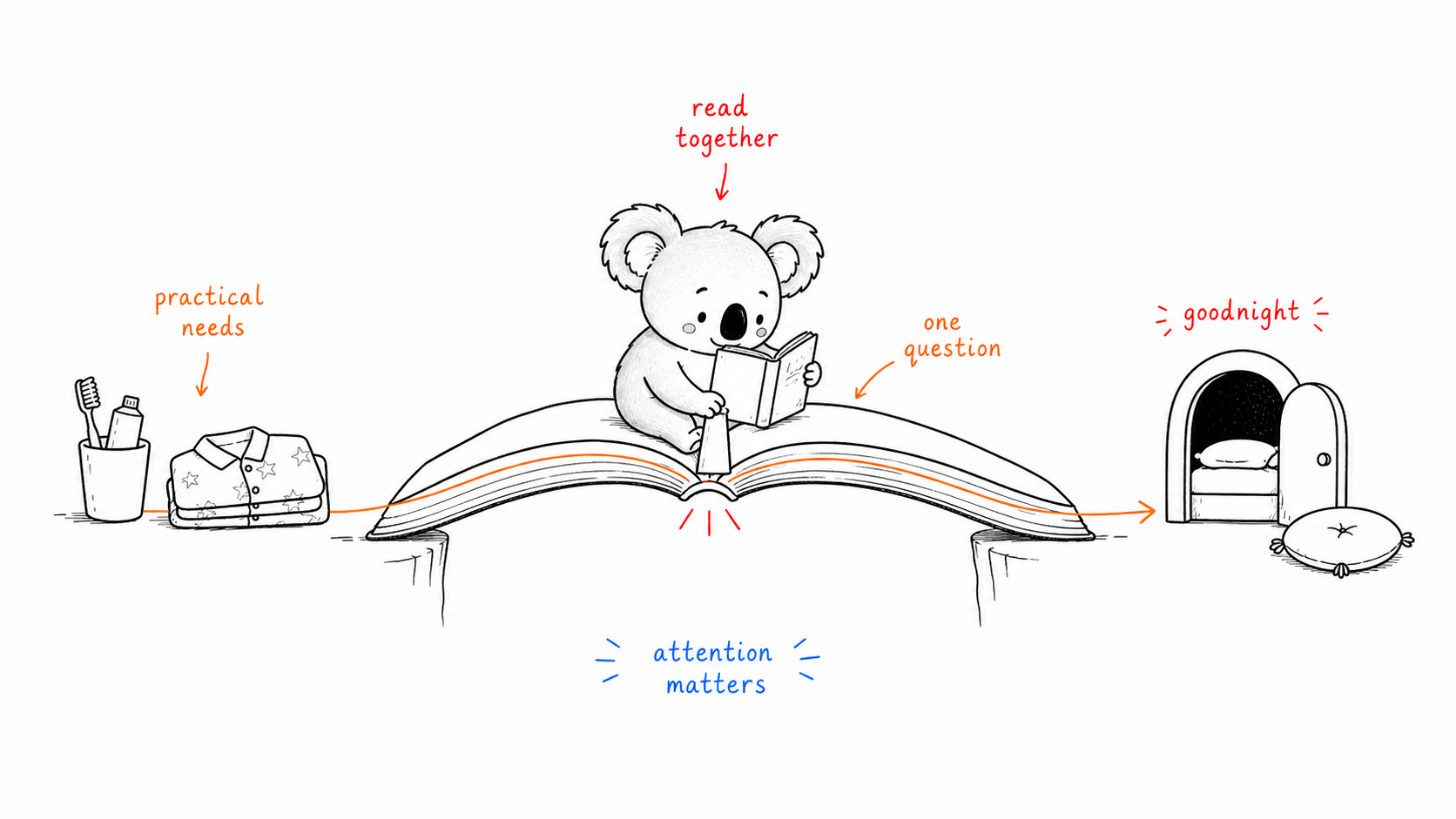
A story can provide a natural bridge between practical bedtime tasks and the final goodnight. You do not need elaborate voices, props, or a long performance. Your attention matters more than producing a perfect reading experience.
Try this five-minute story-time pattern:
- ●Invite your child to choose between two stories.
- ●Settle into a comfortable reading position.
- ●Read or listen without switching between other activities.
- ●Ask one simple question at the end, such as “Which part did you like?”
- ●Move directly to your closing cuddle and goodnight phrase.
Choose content that suits your child’s age and interests. Gula Stories is intended for families with children aged 3–8, with an initial emphasis on ages 3–4, and its current stories are in English [K1]. Stories are reviewed for age suitability, and unsuitable material such as violence and sexual content is excluded before release [K3].
Families using the app can access child-friendly English reading voices, autoplay, favourites, and reading history [K5]. These features can support a simple story-time routine, but no story or app should be presented as a guaranteed way to make a child fall asleep or resolve bedtime anxiety or refusal [K2].
4. Keep the Routine Consistent but Flexible
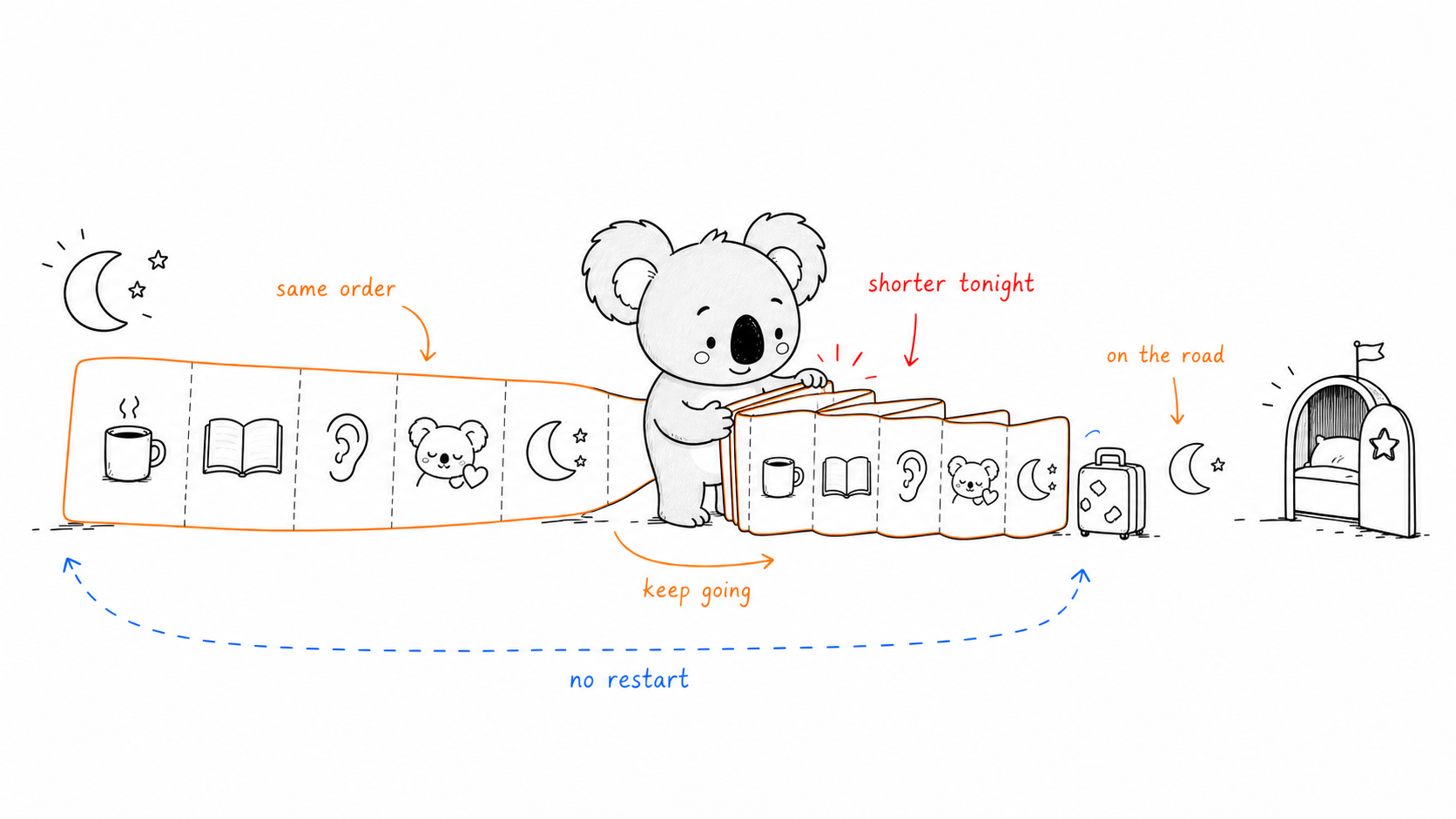
Consistency does not require perfect timing. It means preserving the same basic order on most evenings, even when individual steps need to be shortened.
For example:
- ●On a normal evening, read one complete short story.
- ●On a late evening, read a few pages and mark where you stopped.
- ●While travelling, keep the same story, cuddle, and goodnight sequence.
- ●If another caregiver manages bedtime, share the routine’s order and closing phrase.
- ●If your child is unwell or distressed, prioritise their immediate needs rather than the timer.
A visual checklist may help children follow the sequence:
- ●Bathroom
- ●Choose a story
- ●Read or listen
- ●Cuddle
- ●Goodnight
Keep the checklist where your child can see it. For younger children, simple pictures may be easier to follow than written instructions.
Reminders can also reduce the mental effort required to begin on time. Gula Stories provides daily reading reminders in its current iOS and Android apps [K2][K5]. A reminder may help make story time part of the family routine, although families will still need to decide what schedule works for them.
5. Handle Common Delays Without Restarting
Requests for another drink, another story, or another conversation can stretch a 10-minute routine considerably. You can respond warmly while maintaining the boundary.
Use short, predictable responses:
- ●“We already had our final drink. You can have another in the morning.”
- ●“Tonight’s story is finished. We can save that one for tomorrow.”
- ●“Tell me one important thing now, and we can talk more tomorrow.”
- ●“It is hard to stop when you want more time together. Now it is time for goodnight.”
Try not to introduce new negotiations after the closing phrase. If your child leaves the bed, calmly guide them back and repeat the same brief message. Some evenings will still take longer, and that does not mean the routine has failed.
If bedtime difficulties are persistent, severe, or affecting your child’s wellbeing, consider discussing them with an appropriately qualified healthcare professional. A short family routine can provide structure, but it is not a treatment for medical, behavioural, or emotional concerns.
Conclusion
A useful 10-minute bedtime routine does not need to be elaborate. Prepare practical needs, offer one limited choice, share a short story, connect briefly, and finish with the same goodnight signal.
Begin with a routine that feels realistic on your busiest evening. Once the sequence becomes familiar, you can adjust the details without losing its basic structure. The aim is a gentle and repeatable transition—not a flawless bedtime every night.
Frequently Asked Questions
Is 10 minutes really enough for a bedtime routine?
Ten minutes can be enough for the final part of bedtime if tasks such as bathing, changing, and brushing teeth happen beforehand. If your child needs more time, use the same sequence over a longer period rather than rushing through it.
What if my child asks for several stories?
Set the expectation before you begin: “Tonight we are choosing one story.” Offer two suitable choices, then save any additional request for the following evening. A short story or a selected portion of a longer book can help keep the routine manageable.
Should the routine happen at exactly the same time every night?
An identical start time may not be practical for every family. A broadly consistent time and an unchanged order of activities may be more achievable. If bedtime shifts, keep the final sequence familiar.
Can an audio story replace reading aloud?
An audio story can be part of the routine when reading aloud is difficult or when your child enjoys listening. Whenever possible, stay present for the story so the activity remains a shared transition rather than simply background audio.