My Toddler Won't Go to Sleep: 7 Gentle Things to Try
Try seven gentle ways to help a toddler who will not go to sleep: fixed order, fewer choices, lower stimulation and repeated cues.
My Toddler Won't Go to Sleep: 7 Gentle Things to Try
A toddler who resists bedtime usually benefits from a predictable, lower-stimulation transition and one calm boundary repeated over time. No routine can guarantee quick sleep. Start with one small change and observe the pattern for several nights.
Key Takeaways
- ●Keep a short sequence in a familiar order, such as wash, pyjamas, teeth, story and bed.
- ●Offer two acceptable choices, then close the choice instead of opening a new negotiation.
- ●Reduce active play, bright light and exciting content as bedtime approaches.
- ●Choose one story before the child is exhausted, so browsing does not become a second activity.
- ●Check practical needs and safety, then respond with the same warm, brief boundary.
- ●These are general parenting ideas, not medical advice; persistent, severe or worrying sleep problems need a qualified health professional.
A toddler may be overtired, processing the day, seeking connection or reacting to a change. There is no guaranteed instant fix. Start with one small change and repeat it for several nights.
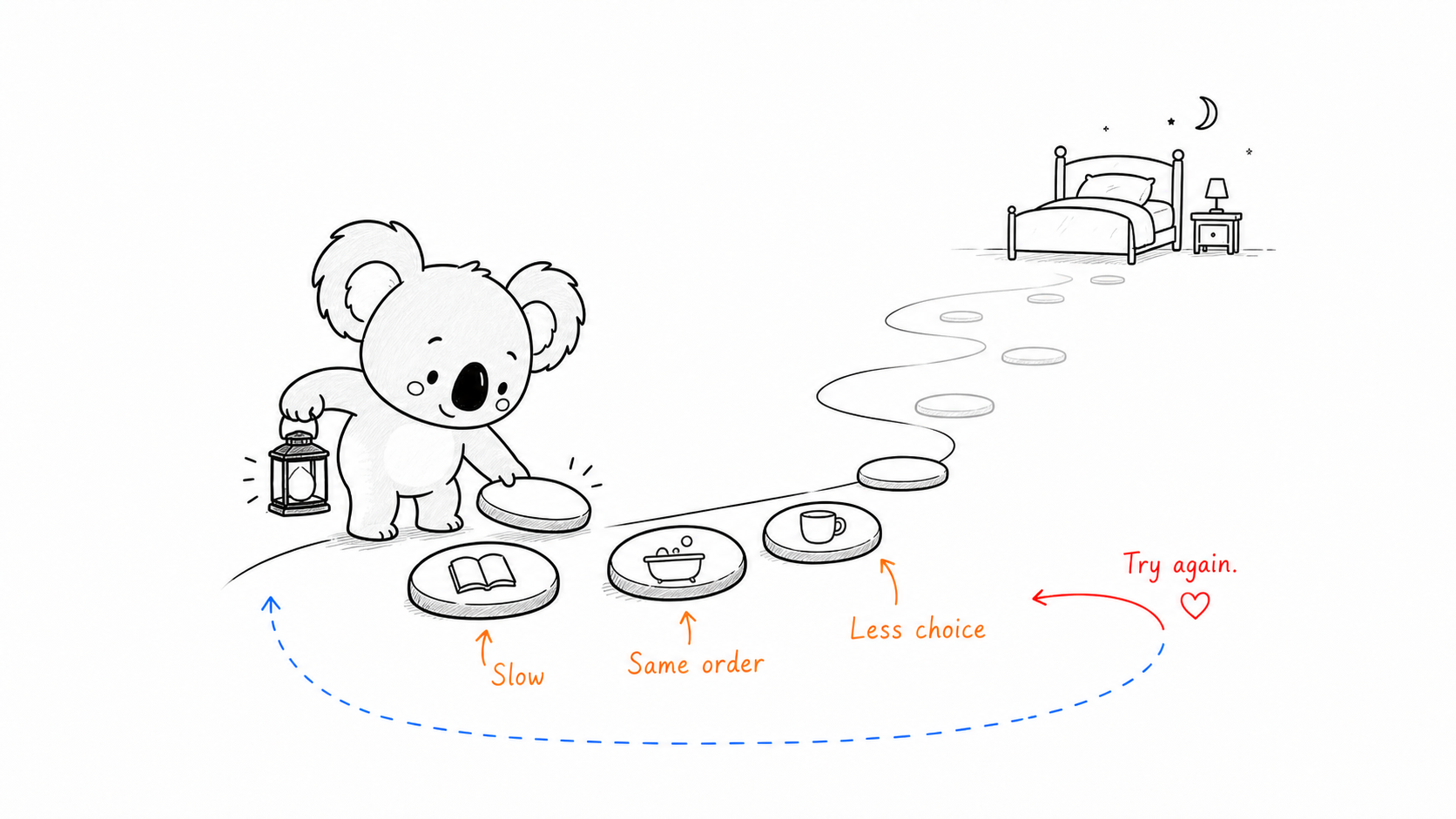
Seven gentle ideas
- ●Keep the order familiar: wash, pyjamas, story, bed.
- ●Offer two choices, not an open menu.
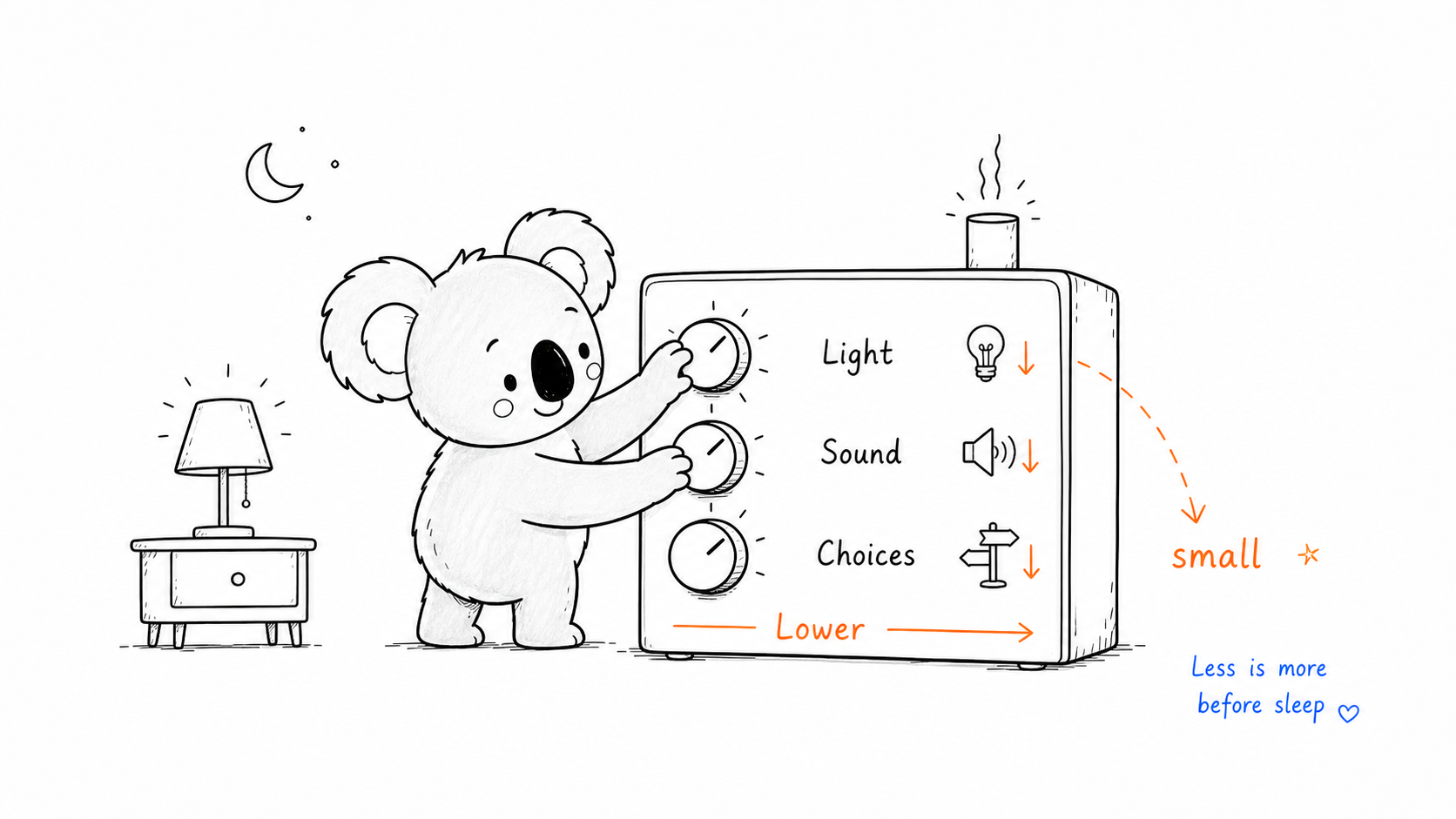
- ●Lower light, sound and active play gradually.
- ●Use one short bedtime phrase.
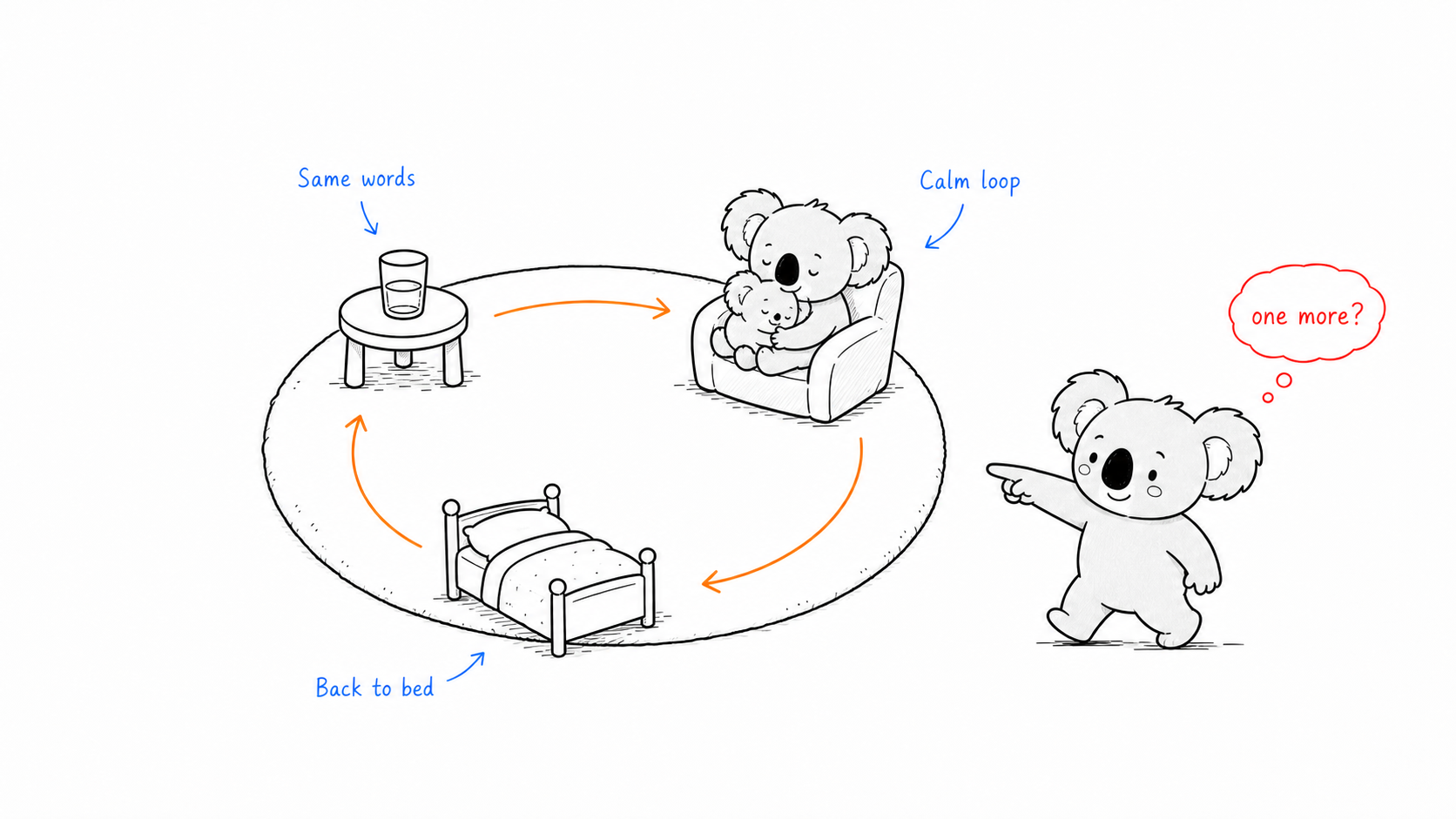
- ●Repeat the same kind response.
- ●Choose one calming story instead of browsing.
- ●Reset gently after a hard night.
A small familiar story can signal that the day is narrowing. If the routine falls apart, make the plan smaller the next evening rather than adding more instructions.
If sleep problems are persistent, severe or worrying, speak with a qualified health professional. These are general parenting ideas, not medical advice. Explore the library and current plans.\n\n
What “won’t go to sleep” can mean
“My toddler won’t go to sleep” is a useful search question, but it describes several different evening patterns. A child may resist the first transition away from play, ask for repeated drinks or stories, get out of bed, call for a parent, wake shortly after settling, or seem wide awake after a late nap. The next step depends on the pattern.
The aim of a gentle plan is not to force sleep or to make a child quiet at any cost. It is to make the route to bed predictable, reduce avoidable stimulation and respond to a real need without opening an unlimited second bedtime. Toddlers are still learning the meaning of “later”, “last” and “tomorrow”, so a short sentence and repeated action often communicate more clearly than a long explanation.
A difficult night can follow an exciting day, travel, illness, a change in childcare, a new room, a new sibling, a developmental phase or a nap that ended late. Parents do not need to diagnose the cause before trying a small routine adjustment. They can observe what happened, choose one experiment and decide whether it is helping the family.
1. Keep the order familiar
A routine is a sequence, not a performance. Choose a handful of steps that can happen in roughly the same order: toilet or wash, pyjamas, teeth, one quiet story, cuddle and bed. The exact order can be adapted to your household. What matters is that the child can begin to recognise the next step before an adult has repeated it three times.
The AAP's Toddler Bedtime Trouble guidance recommends a quiet routine, consistency, comfort and taking care of practical needs before bed. The Raising Children Network's toddler sleep guide likewise describes a consistent, calming routine and notes that naps and wake times can affect readiness for bed. Neither source promises instant sleep; both treat routine as a practical settling support.
Try a visual sequence with four or five pictures. Point to the next picture and say, “Pyjamas now; story is next.” If the child asks for a different activity, acknowledge it without adding a new branch: “You want to play. Play is for tomorrow. Pyjamas now.” The words can remain warm while the sequence stays firm.
2. Offer two choices, not an open menu
A toddler needs some control, but an open menu can make bedtime longer. Offer choices that do not change the destination:
- ●“Blue pyjamas or green pyjamas?”
- ●“Toothbrush before the toilet or toilet before the toothbrush?”
- ●“This story or that story?”
- ●“Walk to bed or be carried?”
Give the child time to answer, then close the choice. If they reject both options, calmly repeat, “Those are the two choices. I will choose this time.” That is not a punishment; it is a clear boundary for a tired child.
Avoid offering a new choice every time the child protests. The adult can name the feeling — “You wanted another story” — and keep the limit — “Tonight we chose one.” Toddlers often need the same boundary several evenings in a row before it feels familiar.
3. Lower light, sound and active play gradually
The last part of the evening should not feel like a sudden stop after a busy day. A gradual bridge might include putting toys away, dimming the main lights, washing, changing clothes and moving to a quiet chair. Drawing, looking at a paper picture book, a simple puzzle or listening to a story can replace chasing games and noisy play.
The AAP's Healthy Sleep Habits guidance recommends keeping screens out of children's bedrooms, especially at night, and turning them off at least 60 minutes before bedtime. The AAP's Toddler Bedtime Trouble guidance recommends a quiet routine, consistency, comfort and meeting practical needs before bed. Families should apply this as general guidance in a way that is realistic for their home; it is not a reason to blame a parent after a hard evening.
If a screen is used for one story, make the transition deliberate. Let the adult choose the story, avoid browsing and finish with the same non-screen cue. If the child becomes excited by the device, use a paper book or an offline quiet activity instead.
4. Use one short bedtime phrase
A consistent phrase marks the end of the routine. It might be, “Goodnight, I love you, it is time to sleep,” or, “The story is finished; I will see you in the morning.” Use words that sound natural in your family and avoid promising a time you cannot guarantee.
A phrase works best when it is paired with the same action: close the book, turn off the main light, give a cuddle, leave the room or sit quietly according to the plan you have chosen. The phrase is not a magic sleep cue. It is a simple signal that tells the child the conversation has changed from planning to resting.
If your toddler asks a new question after the phrase, answer briefly if it is about safety or a genuine need. For a request that simply reopens bedtime, use the same response: “It is sleep time. We can talk tomorrow.” Keeping the response boring and kind avoids turning the final minutes into a new play session.
5. Repeat the same kind response
When a toddler gets out of bed, parents often feel pressure to invent a better explanation each time. A more sustainable approach is to check the practical need, respond briefly and return to the same boundary. The HealthyChildren guidance on toddler bedtime trouble emphasises a quiet routine, consistency, comfort and giving a new sleep habit time to develop. It also warns that this general information is not a substitute for a paediatrician's care.
A simple response ladder can help:
| What happens | Adult response | What to avoid |
|---|---|---|
| “I need water.” | Offer the planned small drink, then return to bed. | Beginning a kitchen tour or snack negotiation. |
| “I need the toilet.” | Help with the toilet, keep lights low, then return to bed. | Turning the trip into a conversation. |
| “I’m scared.” | Check the room, offer brief comfort and restate the plan. | Mocking the fear or promising that nothing can ever happen. |
| “One more story.” | Acknowledge the request and repeat the story limit. | Adding stories because the protest gets louder. |
| Gets out of bed | Guide them back with few words. | Arguing, lecturing or showing anger. |
This is not a prescription for ignoring a child. A child who is unwell, hurt, distressed or unsafe needs care. The point is to distinguish a need from a request to restart the evening, then respond consistently.
6. Choose one calming story instead of browsing
A bedtime story can be a gentle bridge from conversation to quiet. The choice is easier when it happens before the child is exhausted. Select one story, or offer two age-suitable options, and make “story finished” visible through the same closing action.
Gula Stories is a story-focused app for children aged 3–8, with parent-selected age ranges of 3–4, 5–6 and 7–8. Its current stories are in English. The library is growing and has close to 120 English stories; the approximate wording matters because a public total should not be treated as a permanent exact count while listings and the website are being aligned.
The app includes child-friendly English reading voices, autoplay, favourites and reading history. Daily reading reminders are available in the current iOS and Android apps. The app and website describe the experience as free from third-party advertising. These facts can make story selection and routine planning easier, but they do not mean the app makes a toddler sleep, treats anxiety or solves bedtime resistance.
The product limits also matter. The approved facts do not support claims that Gula Stories offers offline listening, offline downloads, a sleep timer, listening-time limits or human narration; those features should not be promised. iPhone and iPad accounts can sync subscription, favourites and reading progress within iOS, and Android devices can sync within Android; iOS and Android accounts do not sync with each other. Check the live App Store listing or Google Play listing for current availability before publishing.
7. Reset gently after a hard night
A hard night is information, not a parenting grade. Ask what made the evening difficult: Was the routine too long? Was the story chosen too late? Was the child hungry, uncomfortable, frightened or overtired? Did two adults give different answers? Was the tablet still available after the story?
Make only one or two changes for the next evening. For example, prepare pyjamas before dinner, choose the story earlier or shorten the final conversation. If the child needs more connection, add a short cuddle inside the routine rather than extending every step indefinitely.
If you are changing a late bedtime, move gradually rather than expecting a single early night to work. The Raising Children Network's toddler sleep guidance explains that toddlers need different amounts of sleep and that naps, wake time and a consistent routine can affect readiness for bed. This is general information, not an instruction to use a particular sleep programme. If a strategy increases distress or does not fit your family, stop and seek professional guidance.
A simple 25-minute toddler routine
The clock times below are examples, not a prescription. Start the routine at a time that gives your child enough opportunity for sleep and leaves room for the family to finish without rushing.
| Approximate stage | What happens | Parent's job |
|---|---|---|
| First 5 minutes | Finish play and put a few toys away | Give one warning, then move to the next step. |
| Next 5 minutes | Wash, toilet, teeth and pyjamas | Keep choices to two and avoid extra tasks. |
| Next 5 minutes | Quiet play, cuddle or looking at a paper book | Lower stimulation and keep the room calm. |
| Next 7 minutes | One story or a short song | Choose before bedtime and stop at the agreed ending. |
| Final 3 minutes | Bed, phrase, lights and a brief check | Use the same ending cue and avoid a new negotiation. |
Some toddlers need a longer routine; others settle with fewer steps. The test is whether the sequence is repeatable on an ordinary, tiring day. A routine that only works when the parent has unlimited energy is too complicated.
When to look beyond a routine
General parenting strategies are suitable for ordinary, short-term bedtime disruption. They are not a way to assess or treat a health problem. Contact a GP, paediatrician, child and family health nurse or another qualified health professional if sleep difficulties continue, are severe, cause significant daytime problems, or worry you. Raising Children Network notes that persistent sleep problems may need assessment and support rather than repeated home experiments.
Seek urgent help for an immediate safety or health concern. Do not use a story app, sleep audio or online article as a substitute for care. This article is not medical advice, and no bedtime routine can guarantee that a child will fall asleep quickly.
FAQ
Why does my toddler suddenly resist bedtime?
Changes in naps, daily activity, childcare, travel, illness, fears, new developmental skills or a need for connection can all coincide with bedtime resistance. The behaviour alone does not identify one cause. Observe the pattern for several nights, keep the routine predictable and seek advice if the change is persistent or concerning.
Should I move bedtime earlier?
Possibly, but not automatically. If your child is regularly falling asleep much later than your family intends, a gradual adjustment may be more realistic than an abrupt change. Consider the child's actual sleep and wake pattern, naps and daily commitments. A qualified health professional can help if you are unsure or if the problem continues.
What if my toddler keeps asking for another story?
Decide the story limit before starting. You can offer one story, or two short choices, then use the same ending phrase. Acknowledge disappointment without turning the limit into a debate. If you choose to read more on some nights, make that a planned variation rather than a reward for escalating the request.
Is a bedtime story app better than a parent reading?
Not necessarily. A parent reading, a paper book and a story app can all be options. Choose what your family can repeat calmly. If using an app, keep the adult in charge of selection, avoid endless browsing and check the actual features and content boundaries rather than assuming every bedtime app is equivalent.
Does Gula Stories help toddlers fall asleep?
That is not a claim the app should make. Gula Stories offers an English story library for ages 3–8, age-based selection, child-friendly English voices and routine-supportive controls. It can be one part of story time, but it does not treat sleep problems, anxiety or bedtime refusal and does not guarantee sleep.
When should I ask for help?
Ask a qualified health professional when sleep problems are persistent, severe, suddenly different, affecting daytime functioning or causing you significant concern. You can start with a GP or child and family health service. This article provides general parenting ideas, not medical advice.
Conclusion
A toddler who will not go to sleep may need a smaller, more predictable transition rather than a stronger promise from an app. Try one gentle change at a time: keep the order familiar, lower stimulation, offer two choices, choose one suitable story and repeat the same kind response. If the problem continues or is worrying, ask a qualified health professional for advice.
Fact-check note
The routine suggestions in this article are informed by the AAP's Toddler Bedtime Trouble guidance, the AAP's Healthy Sleep Habits guidance, and Raising Children Network's toddler sleep guidance. The product description is based on the approved Gula Stories brand facts and should be rechecked against live store listings before publication. Feature availability, subscription details and library size can change.
If a toddler is having ongoing or worrying sleep problems, speak with a qualified health professional. Gula Stories can provide a simple story-time option for families who want one, but it is not medical advice or sleep treatment.