A Simple Story-Time Checklist for 3- to 4-Year-Olds
A practical checklist for choosing a gentle, age-appropriate story-time routine for children aged 3–4.
A Simple Story-Time Checklist for 3- to 4-Year-Olds
Key takeaways
- ●A short checklist helps parents choose a story that fits a young child’s attention, the mood of the evening and the time available.
- ●One clear choice is usually more useful than offering a long list at the end of a busy day.
- ●A predictable close can make story time easier to repeat without promising a particular sleep or behaviour outcome.
Start with the evening you actually have
The best story for a three- or four-year-old is not always the most exciting one on the shelf. On a rushed evening, a familiar story with a clear beginning and ending may be easier to enjoy together than a new, complicated adventure. Start by noticing three practical things: how much attention your child has left, whether the story’s mood feels suitable for tonight, and how long you both want story time to last.
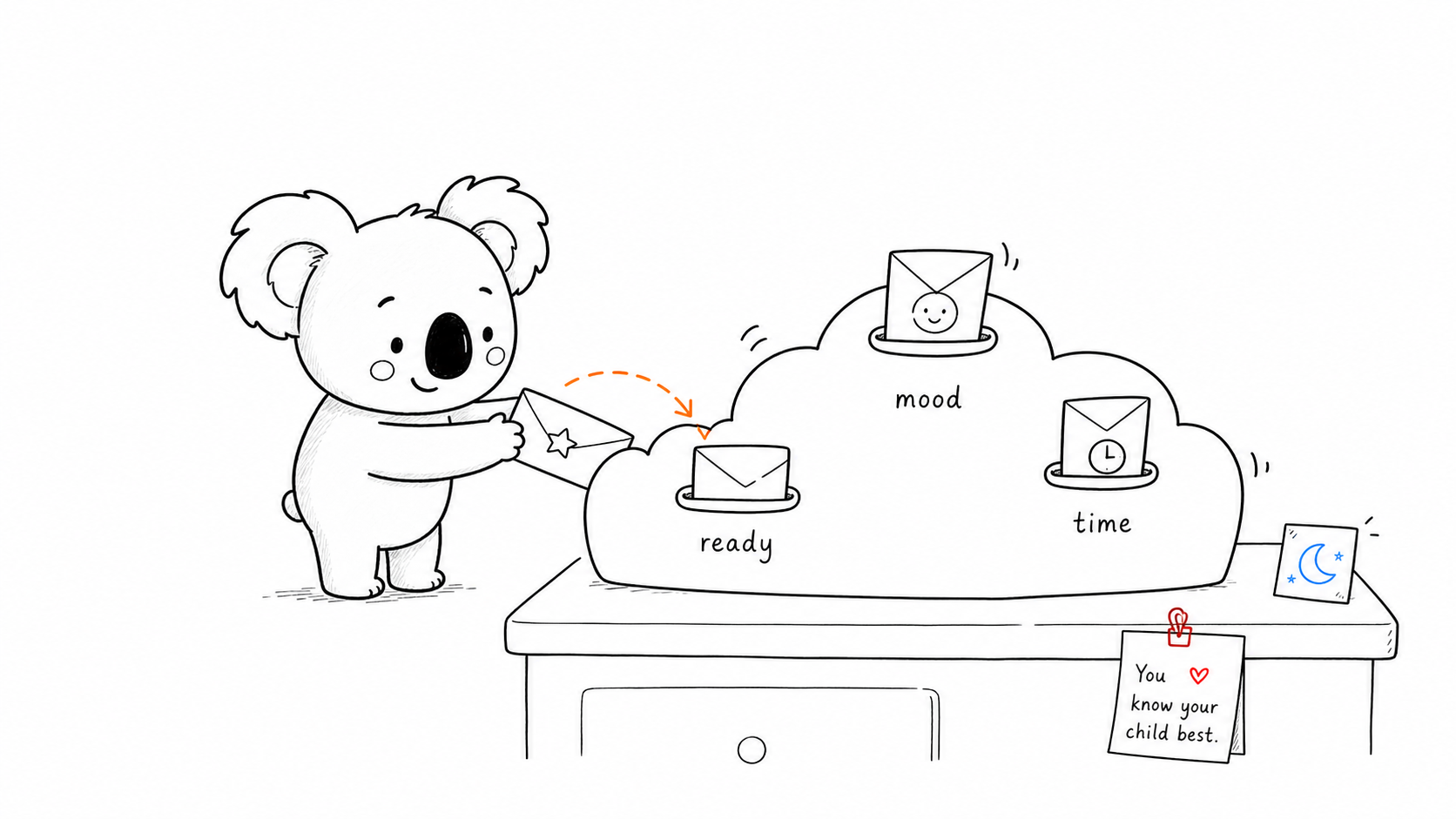
Age fit matters because children in this range often enjoy repeated phrases, recognisable routines and one manageable problem at a time. A child who wants to hear the same story again is not missing out; repetition can make it easier to join in, anticipate what happens and talk about a favourite moment.
Use a small choice instead of a big catalogue
Too many options can make a simple ritual harder to begin. Offer two stories, or choose one category together before opening a library. You might ask whether your child would prefer an animal, an adventure or a quiet family story. Once the choice is made, let the story carry the moment rather than reopening the decision every few pages.
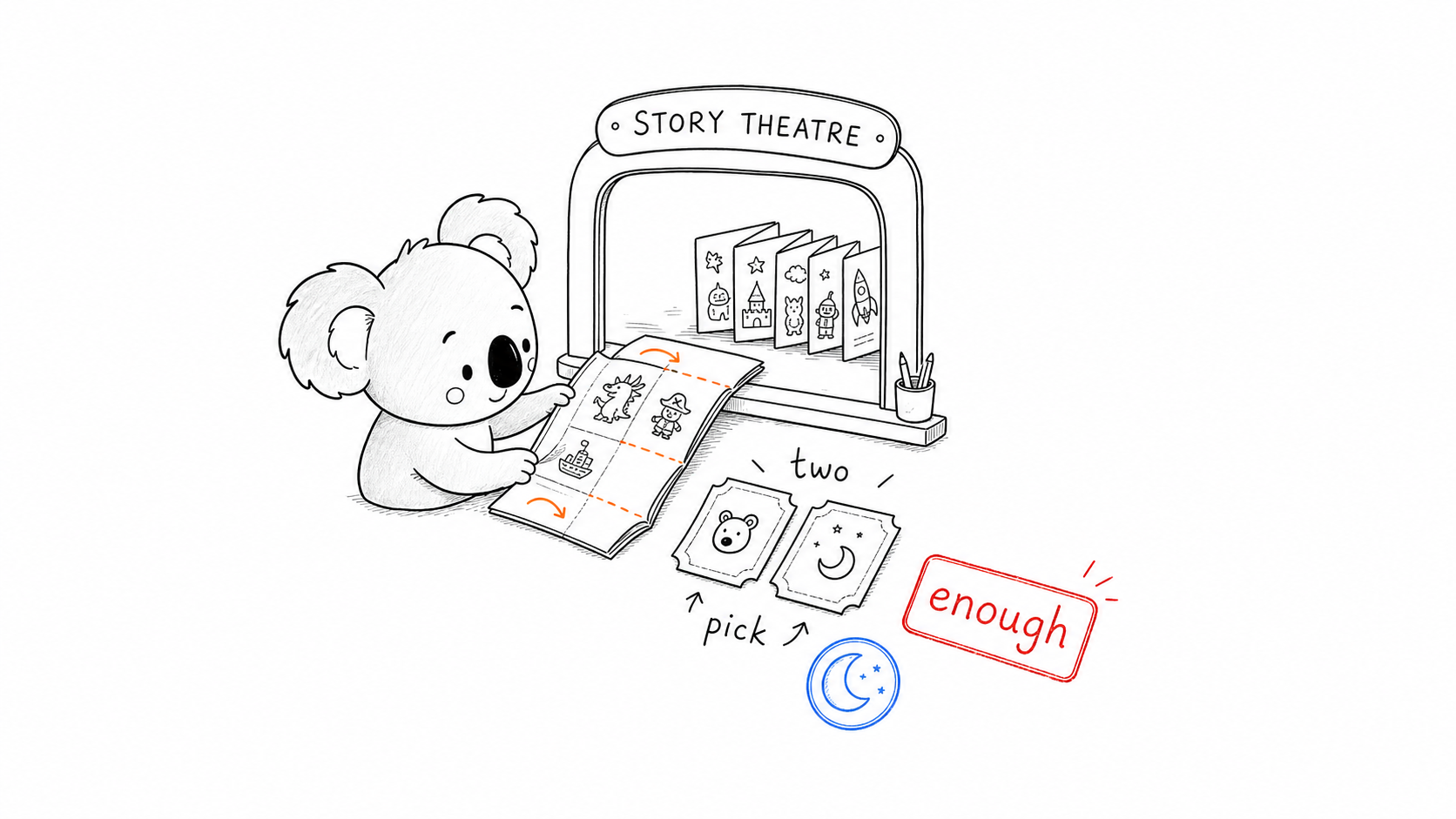
A useful question is: what could this child enjoy without needing to hold too many details in mind? Look for a main character with a clear wish, a gentle obstacle and a reassuring return. If a story begins to feel too long or too intense, it is fine to stop and choose a calmer ending another night.
Leave room for one small response
Story time does not need to become a lesson. A brief pause can be enough: ask what a character might do next, notice a familiar object or repeat a line your child enjoys. Some evenings, the response will be a full answer. On others, it may be a nod, a sound or a request to read the same page again.
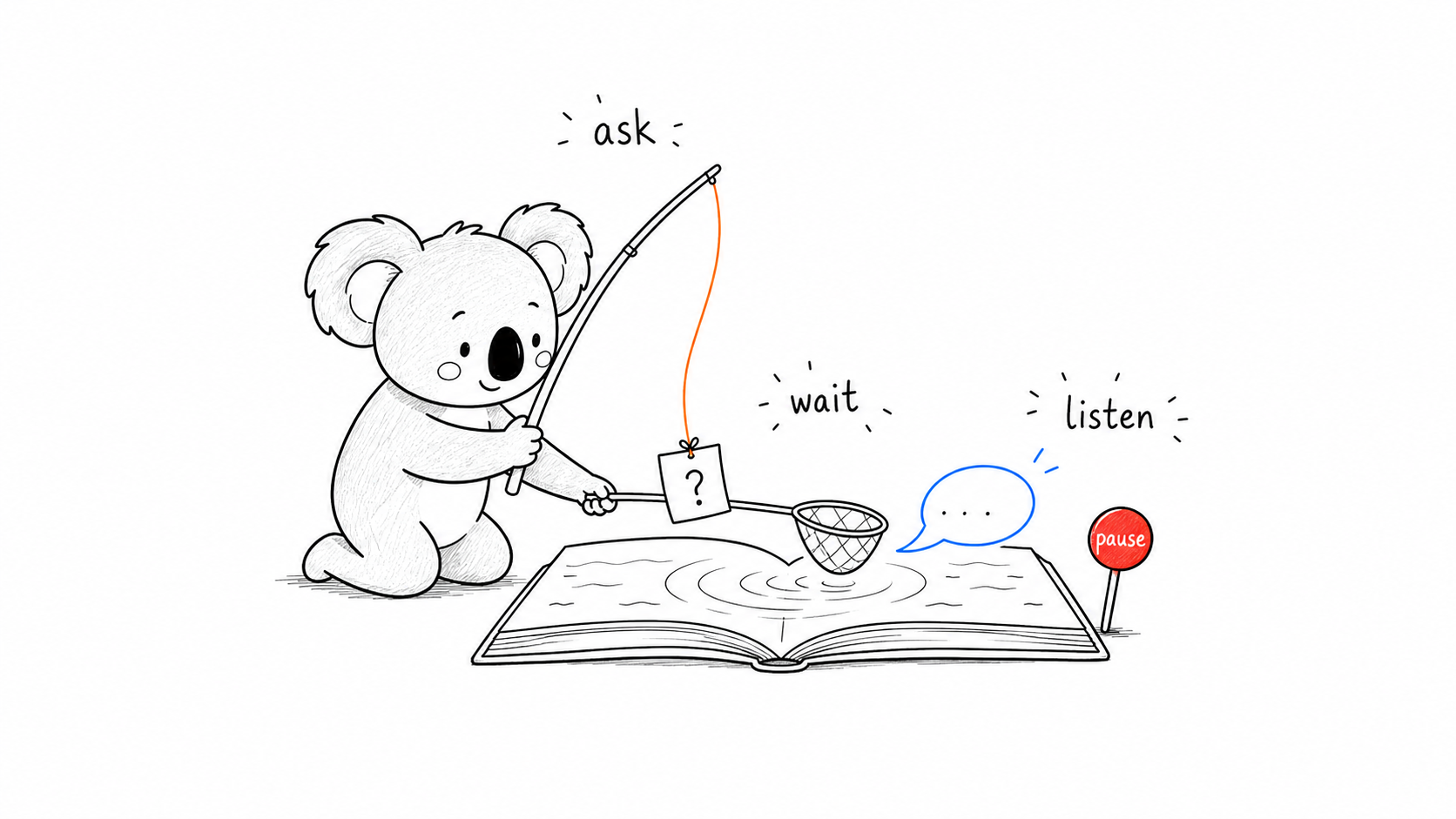
This approach keeps the adult’s role simple. You are not trying to test comprehension or create a perfect routine. You are making a small, repeatable space for language, attention and imagination to meet.
Finish in a way your family can repeat
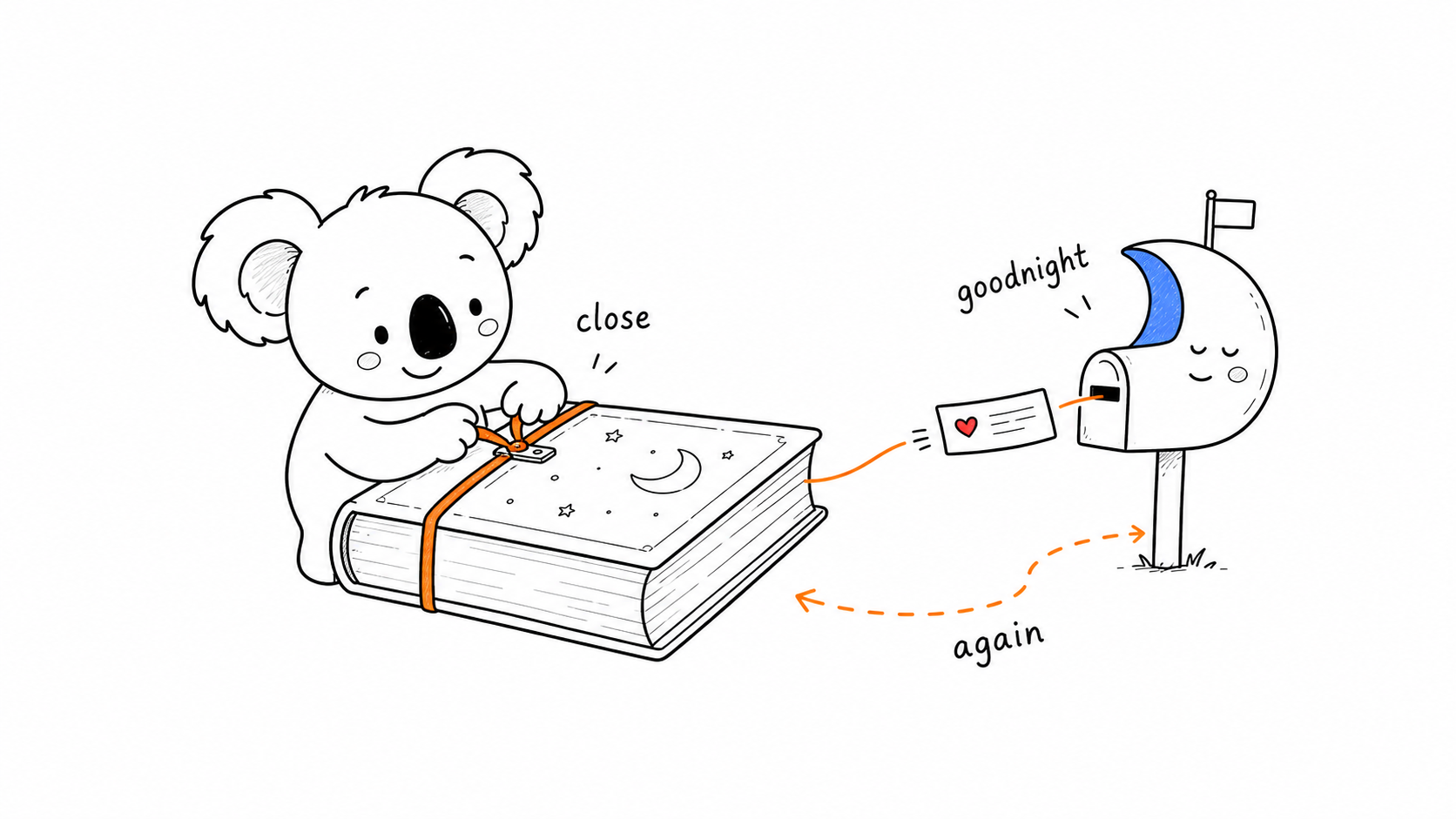
The end of story time can be modest: close the book, name one favourite part and use the same goodnight phrase. A familiar ending gives the ritual a clear boundary while leaving room for change when a child grows or an evening is different.
Families who want an age-based place to browse English stories can use Gula Stories to choose the 3–4 range. The app includes child-friendly English voices, autoplay, favourites, reading history and daily reading reminders. It is designed as a low-distraction story-time tool; it does not promise to make a child sleep or solve bedtime difficulties.
FAQ
How many stories should I offer?
Two choices are often enough for a young child. If choosing becomes stressful, offer one familiar story and save the new option for another evening.
Does every story need a lesson?
No. A story can be valuable because it is enjoyable, familiar or imaginative. A gentle shared moment is enough.
A gentle next step
Try the checklist with one story tonight: choose for the mood, keep the choice small, pause once if it feels natural and close in the same simple way. Notice what your child returns to, then let that guide tomorrow’s choice.