More Features or More Focus? Comparing Six Bedtime Story Apps
More features do not always create a calmer bedtime. Compare six story apps by focus, personalisation, parent involvement and content scope.
The children’s story market is increasingly shaped by a tempting question: why read one prepared story when an app can generate a new one, put the child’s name in it and add interactive choices? That approach can be fun, but it is not the only definition of a good bedtime product.
This comparison looks at six apps through a narrower question: what happens when the bedtime experience is designed around the story itself? The products are Gula Stories, Little Stories: Bedtime Books, Readmio, FarFaria, Moshi Kids and Calm Kids. The five competitors were randomly selected from the supplied 10-app comparison dated 13 July 2026. The comparison is intentionally balanced: every product has a strength, every product has a cost, and Gula Stories is not treated as the default winner.
The real product decision is not AI versus no AI
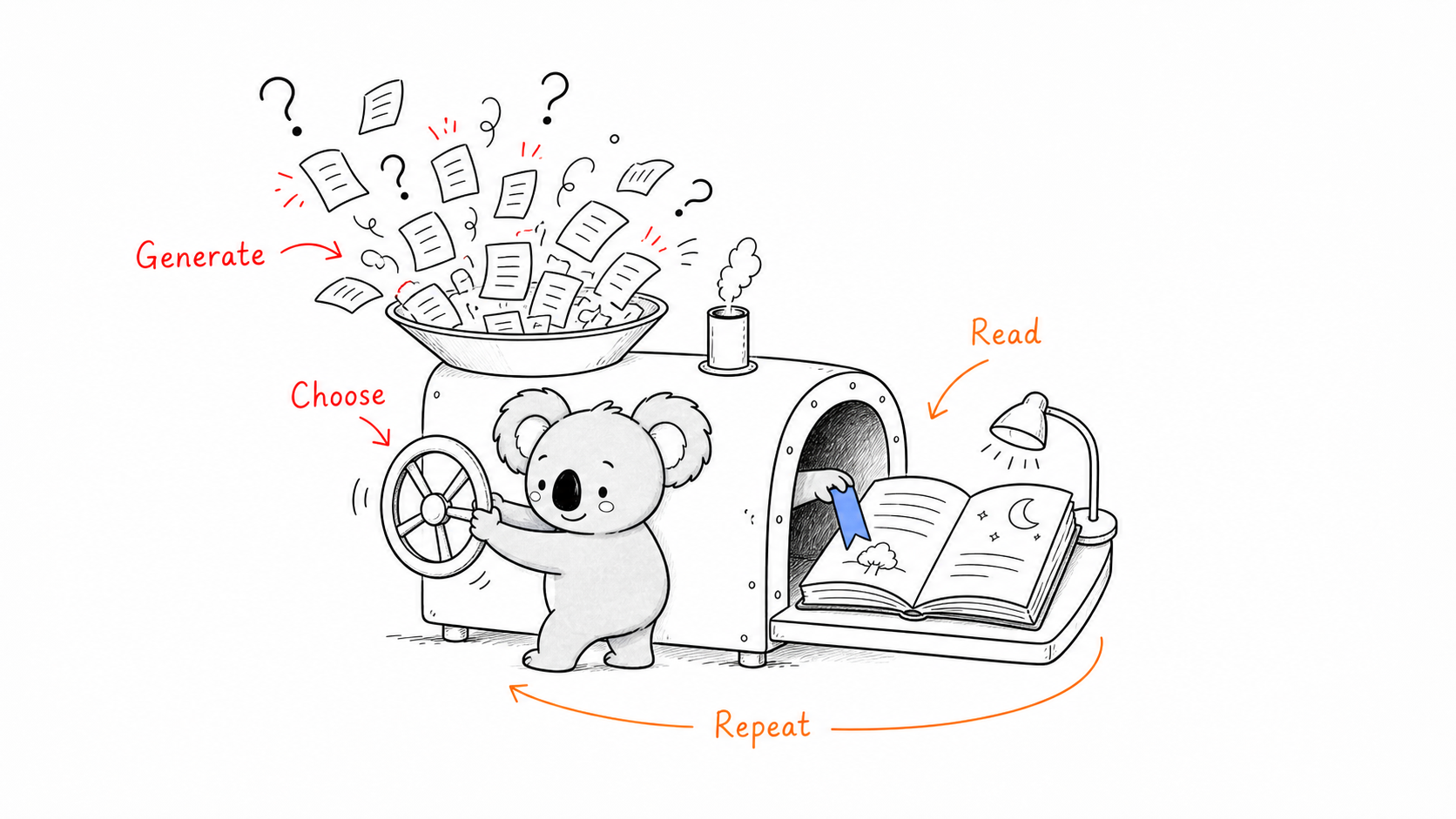
Gula Stories is deliberately restrained. Its brief focuses on original illustrated stories, page-by-page reading, natural TTS, age bands, favourites, progress and bedtime reminders. It does not currently centre AI-generated stories or let a child construct a new personalised story on demand. That means the app has fewer novelty features than products built around generation or customisation. It also means the child is less likely to spend the bedtime session deciding what the machine should make next.
This is a product philosophy, not proof that fewer features are always better. A child who loves to choose characters and settings may find a fixed catalogue less exciting. A parent who is exhausted may value not having to guide a creative setup. The honest comparison is therefore about context: simplicity can reduce friction, while personalisation can increase emotional attachment.
Six products, six different kinds of focus
| App | Where the attention goes | What is intentionally left out or kept secondary |
|---|---|---|
| Gula Stories | The finished illustrated story, page flow and gentle narration | AI story generation, open-ended child story creation and broad wellness tools |
| Little Stories | Prepared illustrated stories plus the child’s identity and the parent’s voice | Fully open-ended generation; the supplied research describes the product as non-generative AI |
| Readmio | Parent-child reading, with sound effects triggered by the adult’s voice | Full in-story illustrations; the product is designed around imagination and shared reading |
| FarFaria | Library breadth, read-along narration and early literacy signals | A clearly documented current consumer proposition; the supplied research flags website and pricing uncertainty |
| Moshi Kids | Audio sleep, calming, learning and light play across the day | A single-purpose story-only experience |
| Calm Kids | Sleep stories and mindfulness inside a larger adult wellness subscription | A dedicated children’s picture-book workflow and child-first product scope |
Gula Stories: the case for finished stories
The strongest argument for Gula Stories is not that it can do more. It is that it asks the app to do less, carefully. The README describes more than 100 original illustrated stories, weekly updates and age-based discovery for children aged 3–8. Each story is presented as a page-turning picture book with a matching narration track. The child can browse, listen, read along, resume later or repeat a favourite.
That approach has practical advantages. A story is selected before the session rather than generated during it. The visual language can be reviewed in advance. The parent can judge the first three pages before unlocking a paid story. Local caching helps the bedtime session continue on a weak connection. There are also five complete free stories, no third-party advertising and a price of US$4.99 monthly or US$29.99 annually in the supplied product brief.
The trade-off is real. A fixed story library can become repetitive. The service does not yet have the public rating history of established apps. It cannot promise the infinite novelty of a generation-first product. If a family’s main need is exploration, creative play or a huge catalogue, Gula Stories’s restraint may feel like a limitation rather than a benefit.
Little Stories: personalisation without open-ended generation
Little Stories is a useful middle case. The supplied competitor analysis describes hand-drawn stories, child-specific illustration variants, professional narration, parent voice recording and marketing that emphasises non-generative AI. In other words, the product adds a personal layer to prepared stories instead of asking an AI model to invent a new plot every night.
That may be a sensible compromise for families who want a child to feel present in the story but still want a crafted narrative and consistent artwork. It also shows why “AI” is too broad a label for a fair comparison. A personalised presentation can be built without generative storytelling.
Its cost is complexity. More options can be emotionally valuable, but they can also create more decisions before sleep. The supplied US snapshot lists about US$9.99 per month, US$59.99 per year and a US$29.99 all-books unlock. Those options may appeal to parents who dislike indefinite subscriptions, but they should still be checked in the current storefront. Its public App Store footprint, reported at roughly 4.7 stars and 45,000 ratings in the supplied research, gives it much more market evidence than a private product such as Gula Stories.
Readmio: fewer pictures, more participation
Readmio makes a different “less is more” argument. The official experience follows the adult’s reading and adds sound and music when the reader reaches highlighted text. The supplied research also says it deliberately avoids full in-story illustrations, leaving more space for the child’s imagination.
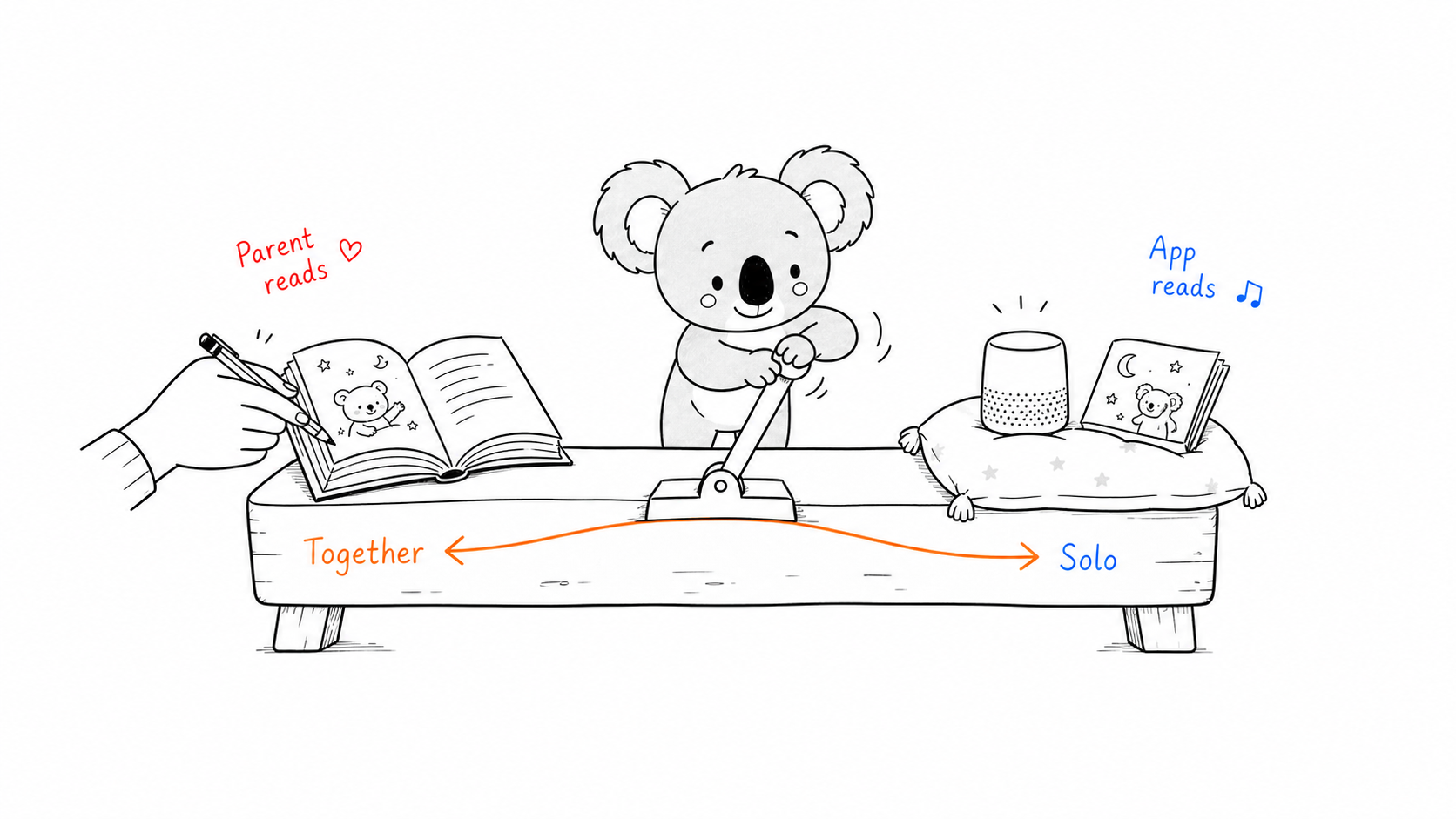
This is not a weaker version of a picture-book app. It is a different bedtime ritual. The adult does more of the work, the child listens to a familiar voice, and the app adds atmosphere rather than replacing the reader. For a family that values shared reading, that may be more meaningful than an app that narrates everything automatically.
The limitation is equally clear: Readmio’s signature experience depends on an adult being available and willing to read. Its supplied US price range is about US$5.99–12.99 monthly and US$39.99–49.99 annually, with a reported lifetime option. A family looking for independent listening after lights-out may prefer Gula Stories, Moshi or Calm instead.
FarFaria: breadth with a confidence problem
FarFaria historically represented the large read-along library model: many illustrated titles, professional narration, highlighted words, reading-level information and themed browsing. That breadth can support repeated use and early literacy. But the supplied analysis says the consumer website was unstable and current pricing was not fully verified; third-party estimates of roughly US$7.99 monthly and US$49.99 annually are explicitly not confirmed.
This matters because a trustworthy comparison should not turn old catalogue claims into current product promises. FarFaria may still be useful for families who can access the current service, but the buying decision needs a live check first. Its uncertainty is a product drawback in its own right.
Moshi Kids and Calm Kids: bedtime inside a wider system
Moshi Kids and Calm Kids both make sense when a family wants audio and regulation tools, not only stories. Moshi combines audio stories with music, white noise, meditation and activities. Its official site currently shows a seven-day trial, US$9.99 monthly and US$49.99 annual pricing on the page checked, although the supplied research notes regional and storefront variations. It has a large public review footprint and a strong sleep brand.
Calm Kids is not an independent story app. It is a children’s section inside Calm Premium, alongside the adult library. Calm’s help centre says Kids content supports offline listening and that new Kids Sleep Stories are released two to three times each month. This is attractive when the family already subscribes to Calm, but expensive if the only need is a short illustrated story for a young child. The supplied comparison lists approximately US$14.99 monthly and US$69.99–79.99 annually, with localised pricing.
The practical decision
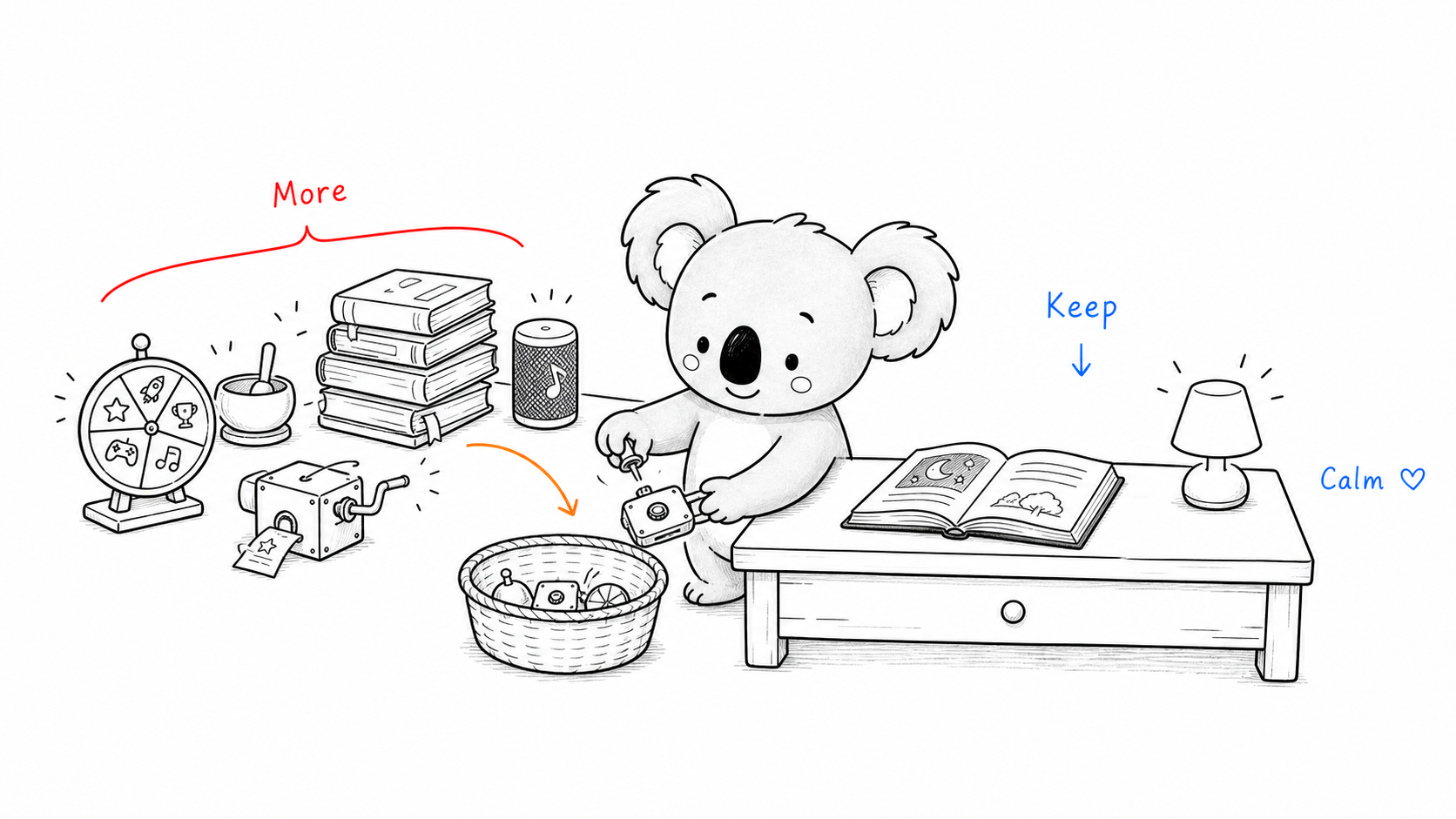
Choose the more focused model when bedtime is already overloaded and the child needs a predictable path from selection to sleep. Choose a personalised model when seeing the child’s name or hearing a parent’s recorded voice is part of the ritual. Choose Readmio when the adult wants to remain the storyteller. Choose Moshi or Calm when stories need to sit alongside broader audio relaxation. Choose FarFaria only after confirming the current catalogue, price and account experience.
The most important weakness of Gula Stories is also the easiest one to hide: it is not yet publicly established. There is no independent App Store rating or large third-party review history because the product is private and unpublished. Its strongest case is therefore about design coherence and the quality of its finished stories, not market proof. That distinction should stay visible.
Sources and method
Product facts come from the supplied Gula Stories README and competitor analysis dated 13 July 2026. External context was checked against Moshi’s official site, Readmio’s official site, Little Stories on the App Store, Calm Kids’ help centre and FarFaria’s site. Prices, features and availability vary by country and should be checked before purchase.