Bedtime Story Apps Compared: Six Different Ideas of a Good Night
Compare six bedtime story apps by story quality, features, pricing, audio experience and family use case, with transparent limitations and source notes.
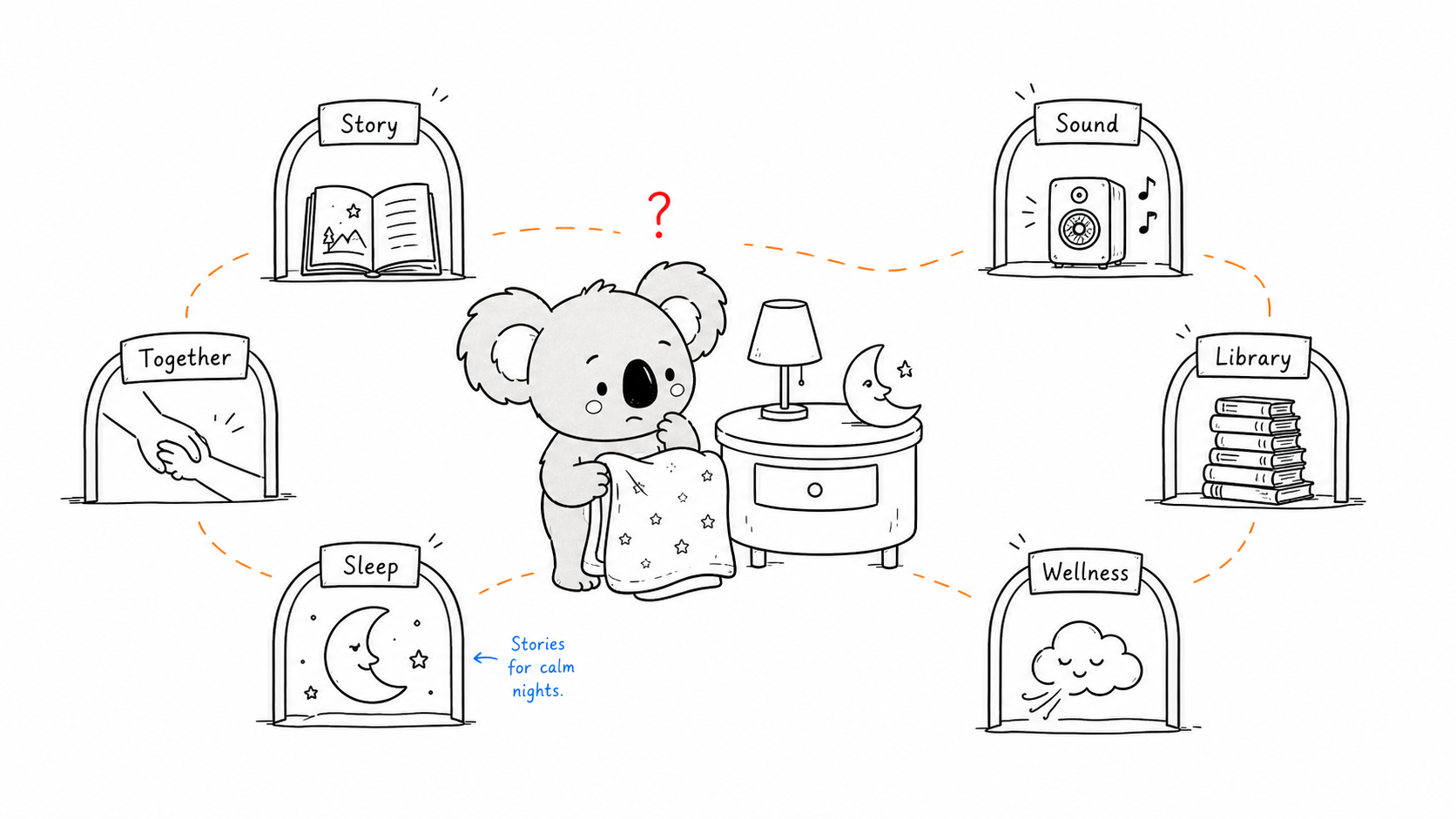
Choosing a bedtime story app is not really a choice between six interchangeable libraries. The apps compared here are built around different definitions of bedtime: a quiet picture-book session, an audio sleep routine, a parent-led read-aloud, a general children’s library, or a small part of a wider wellness subscription.
This comparison covers Gula Stories, Little Stories: Bedtime Books, Readmio, FarFaria, Moshi Kids and Calm Kids. The five competitors were selected at random from the supplied 10-app comparison dated 13 July 2026. The aim is not to crown one product. It is to make the trade-offs visible, including the limitations of Gula Stories.
The short version
Gula Stories is the most focused of the six. Its product brief is built around children aged 3–8, original illustrated stories, paginated picture-book reading and gentle text-to-speech narration. It deliberately does not make AI story generation or child-led story customisation the centre of the experience. That is a clear product choice: fewer creative tools, fewer distractions, and more attention on the finished story.
Little Stories is the closest comparison in illustrated bedtime content, but it adds personalisation around the child’s name, gender and parent-recorded narration. Readmio takes a different route: it makes the adult’s reading the main event and adds sound effects as the app follows along. Moshi Kids and Calm Kids are primarily audio sleep and relaxation products, while FarFaria is best understood as a read-along library whose current consumer status and pricing need extra checking.
At-a-glance comparison
| App | Main format | What it does well | Main trade-off | Price snapshot |
|---|---|---|---|---|
| Gula Stories | Paginated illustrated stories plus TTS | A short path from choosing a story to reading or listening; 100+ original stories; age filters; no third-party ads | Smaller and less proven than large libraries; no public app-store review history yet because it is private/unpublished | US$4.99/month or US$29.99/year; 7-day trial; five complete free stories |
| Little Stories | Illustrated bedtime books with narration and personalisation | Strong bedtime-book fit, hand-drawn story presentation, child-specific variants and parent voice recording | Personalisation adds a layer of choice; pricing includes both subscription and book-unlock options | About US$9.99/month, US$59.99/year, or US$29.99 all-books unlock in the supplied US snapshot |
| Readmio | Parent read-aloud with sound effects and some audio content | Makes shared reading more expressive; clear bedtime positioning; free Explorer stories | The adult needs to read for the signature experience; it intentionally avoids full in-story illustrations | About US$5.99–12.99/month, US$39.99–49.99/year; lifetime option reported at US$159 |
| FarFaria | Classic illustrated read-along library | Historically broad catalogue, professional narration and reading-level signals | The current consumer product, website and price are not fully verifiable in the supplied research | Third-party estimates of about US$7.99/month and US$49.99/year, explicitly unverified |
| Moshi Kids | Audio stories, music, meditation and activities | Strong sleep brand, audio-first use, characters, offline listening and a large public review footprint | Broader than bedtime stories; games and daytime activities may be more than a child needs at lights-out | Official site checked at US$9.99/month or US$49.99/year, with regional or store variations |
| Calm Kids | Children’s sleep stories inside Calm Premium | Useful for families already paying for Calm; offline Kids content and a wider adult wellness library | Not a dedicated children’s story app; the children’s library sits inside an adult wellness product | About US$14.99/month and US$69.99–79.99/year in the supplied snapshot; localised pricing applies |
The price figures are snapshots, not permanent promises. App Store prices, promotions, taxes and regional SKUs can change. FarFaria is the clearest example of why a price should not be repeated without a confidence note.
Story quality versus story quantity
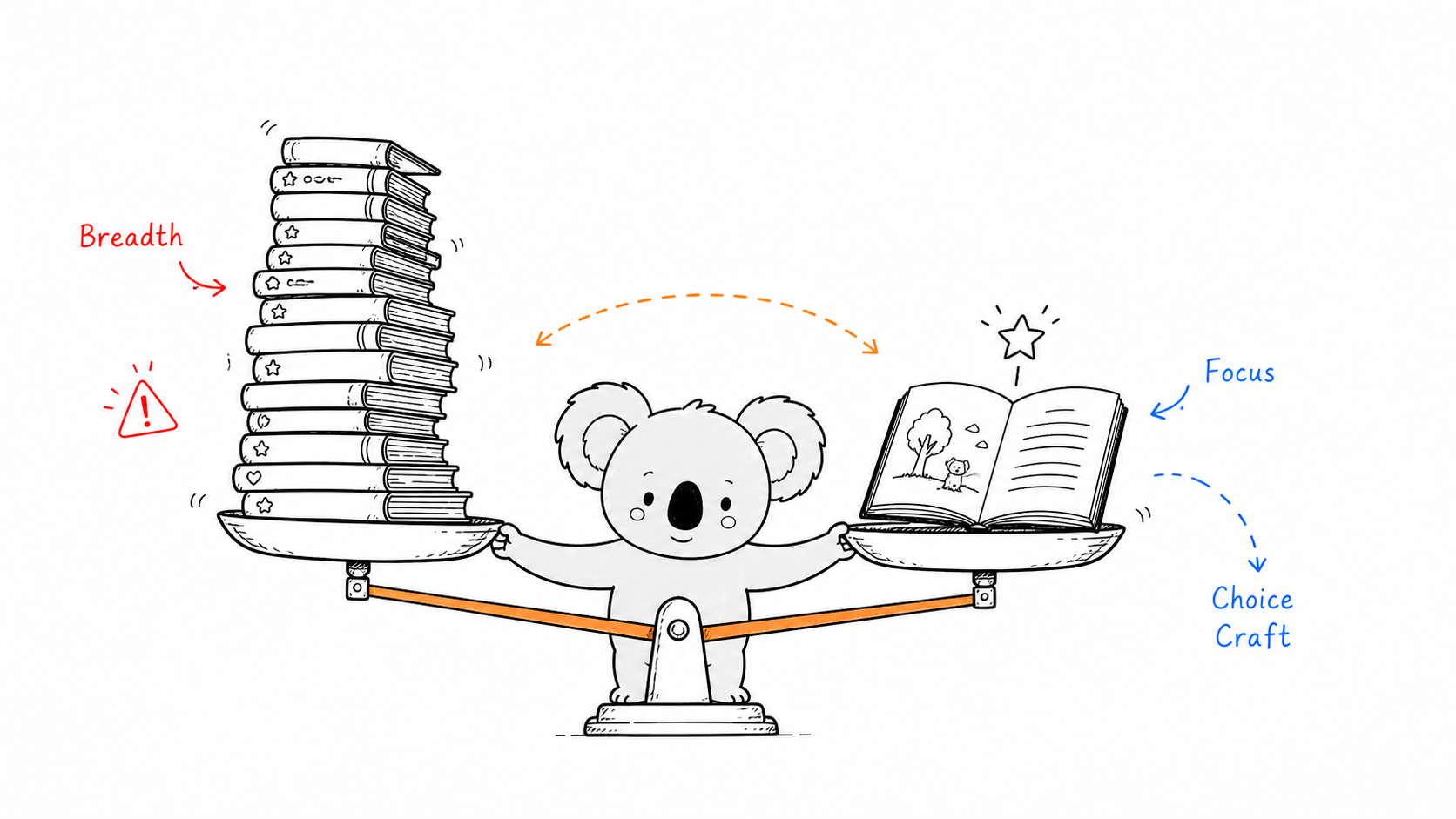
The six products also make different content bets. Gula Stories describes a catalogue of more than 100 original illustrated stories, organised by ages 3–4, 5–6 and 7–8, with weekly updates. That is a useful structure for the parent who wants a story that fits tonight’s age and mood without searching a huge catalogue. Its weakness is equally clear: a young service cannot yet claim the public track record or catalogue scale of established products.
Little Stories is also close to the picture-book end of the market. Its App Store listing presents a large collection of illustrated bedtime books and lets parents record their own voice. The personalisation is not the same as generative storytelling: the story world is prepared, while the child’s identity is placed into selected variations. That can feel special, but it also means parents are paying for a more elaborate presentation rather than simply a clean reading path.
FarFaria historically offered a much larger read-along library, with professional narration, highlighted words and reading-level information. For families who value breadth, those signals matter. The problem is confidence: the supplied research notes that the consumer website was unstable and that current pricing was not fully verified. That makes FarFaria useful as a catalogue model, but harder to recommend on current value without checking the app directly.
Does the app help the child listen, read or play?
Moshi Kids and Calm Kids are the strongest fits when the desired outcome is audio-led winding down. Moshi combines sleep stories with music, white noise, meditation and daytime activities. Its official site currently presents monthly and annual plans with a seven-day trial, while its public positioning includes sleep, calm and learning. Calm Kids offers children’s Sleep Stories, meditations and lullabies within Calm Premium; its help centre says Kids content can be downloaded for offline listening and that new Kids Sleep Stories are added two to three times a month. Both products are credible choices for families who want audio first.
Gula Stories is narrower. It combines a page-turning illustrated story with natural TTS, adjustable voice settings, local audio caching and saved progress. That supports a child who wants to look at the pictures, follow the pages or simply listen. The limitation is that Gula Stories does not offer the broader meditation, music, game or wellness ecosystem that Moshi and Calm provide. If a family wants one subscription for both adult and child sleep content, Gula Stories is not the obvious choice.
Readmio is narrower in a different direction. Its official experience follows the parent’s reading and adds music and sound effects when the reader reaches marked text. This is valuable for shared bedtime because the adult remains part of the ritual. It is less suitable for a child who needs the app to carry the full session independently. The supplied research also notes Readmio’s deliberate decision not to use full in-story illustrations, which creates a lower-screen, imagination-led experience rather than a visual picture-book one.
What does the public evidence say?
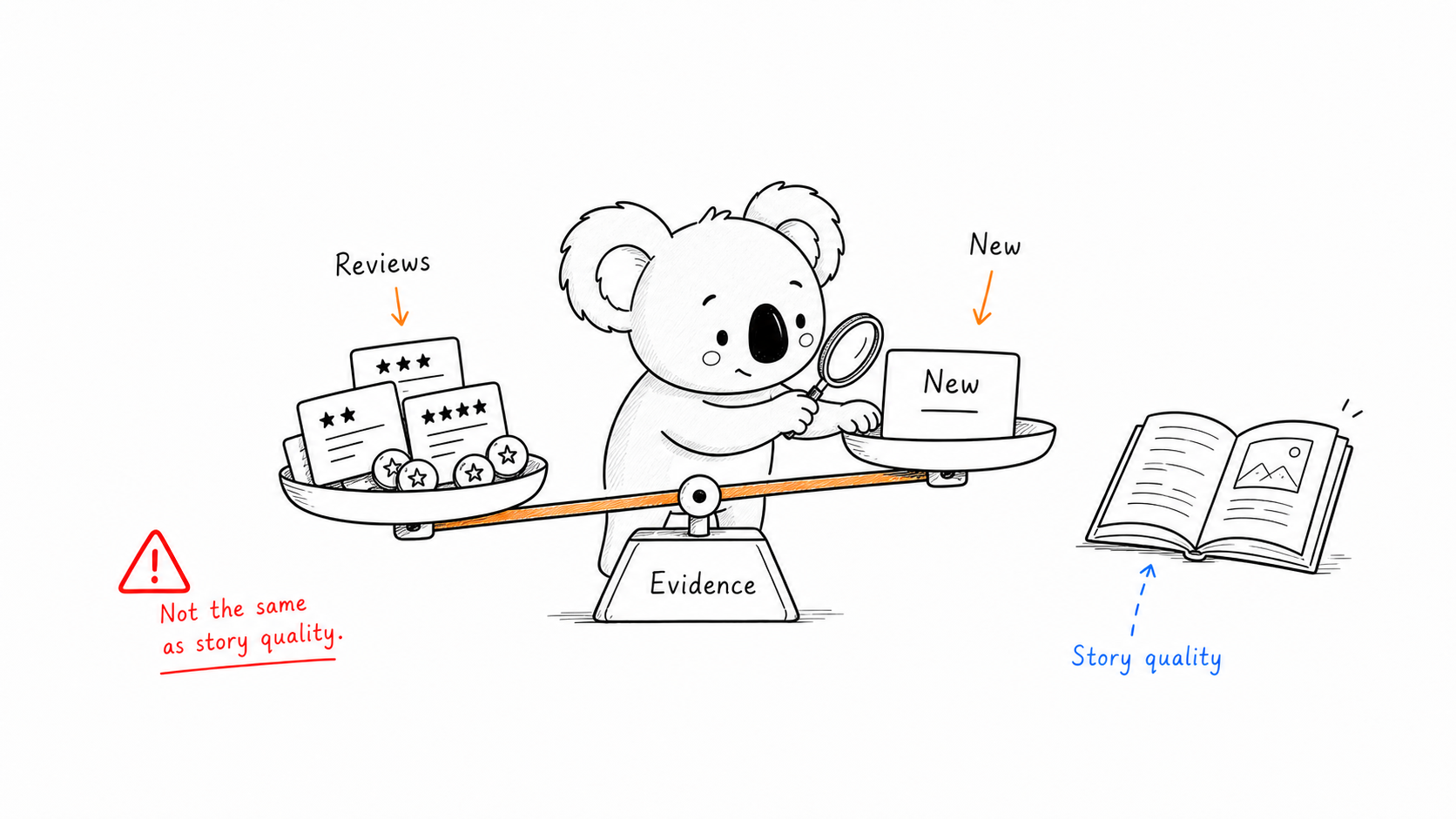
The competitor research includes App Store rating and review-count snapshots: Calm at roughly 4.8 stars with around two million ratings, Moshi at roughly 4.7 stars with about 69,000, Little Stories at roughly 4.7 stars with about 45,000, and smaller footprints for the other products. These figures are useful evidence of market history and customer feedback volume, but they are not a direct measure of story quality. Gula Stories is private and unpublished, so it has no comparable public rating yet. That is an important limitation to disclose rather than hide.
Which one is the better fit?
Choose Gula Stories if the priority is a focused illustrated story session for ages 3–8, with gentle narration, age-based discovery, no third-party advertising and a short path to bedtime. Choose Little Stories if child-specific presentation and parent-recorded narration matter more than a minimal interface. Choose Readmio if the adult wants to be the reader and prefers sound effects over in-story pictures. Choose Moshi if audio sleep content, calming tools and daytime activities belong in the same app. Choose Calm Kids if the family already uses Calm and wants Kids content inside that larger subscription. Treat FarFaria as a catalogue option to verify carefully before paying.
There is no honest universal winner here. Gula Stories has a coherent proposition, but it is also the least established product in this comparison. Its advantage is focus; its weakness is scale and public proof. The right decision depends on whether a family wants more content and features, or a simpler route to one well-made story before sleep.
Sources and method
Feature, price and rating snapshots come primarily from the supplied competitor analysis dated 13 July 2026 and the Gula Stories product README. Official pages checked for context include Moshi’s current pricing page, Little Stories on the App Store, Readmio, Calm Kids’ help page, and FarFaria. Prices and availability should be checked again in the reader’s region before subscribing.