How to Build a Calming Bedtime Routine for Kids (Ages 3-8)
A calming bedtime routine works best when it follows the same short sequence each evening. Keep the routine manageable:
How to Build a Calming Bedtime Routine for Kids (Ages 3–8)
Key Takeaways
- ●A calming bedtime routine works best when it follows the same short sequence each evening.
- ●Keep the routine manageable: choose three to five quiet steps that fit your family’s schedule.
- ●Adjust the level of parental support to the child’s age, temperament and current needs.
- ●Story time can provide a gentle transition from evening activity to bed without promising sleep outcomes.
- ●If bedtime difficulties are persistent, severe or affecting family wellbeing, consider seeking guidance from a qualified health professional.
1. Introduction
Bedtime can become difficult when children are still energetic, parents are exhausted or the evening changes from one day to the next. Children aged three to eight may also delay bedtime by requesting another drink, another story or one more conversation.
A calming bedtime routine does not need to be elaborate. Its main purpose is to make the period before bed familiar and easy to follow. Repeating the same few activities in the same order gives children a clear sense of what comes next.
This guide explains how to design a practical bedtime routine, adapt it for different ages and respond to common interruptions. It also shows how reading can fit naturally into the routine without treating stories, apps or reminders as guaranteed solutions for sleep problems.
2. Build a Short, Repeatable Sequence
Core conclusion: The most useful bedtime routine is one that a family can repeat consistently, including on busy evenings.
Start by selecting three to five activities. Each step should move the household towards quieter behaviour rather than introducing fresh excitement. A simple sequence might be:
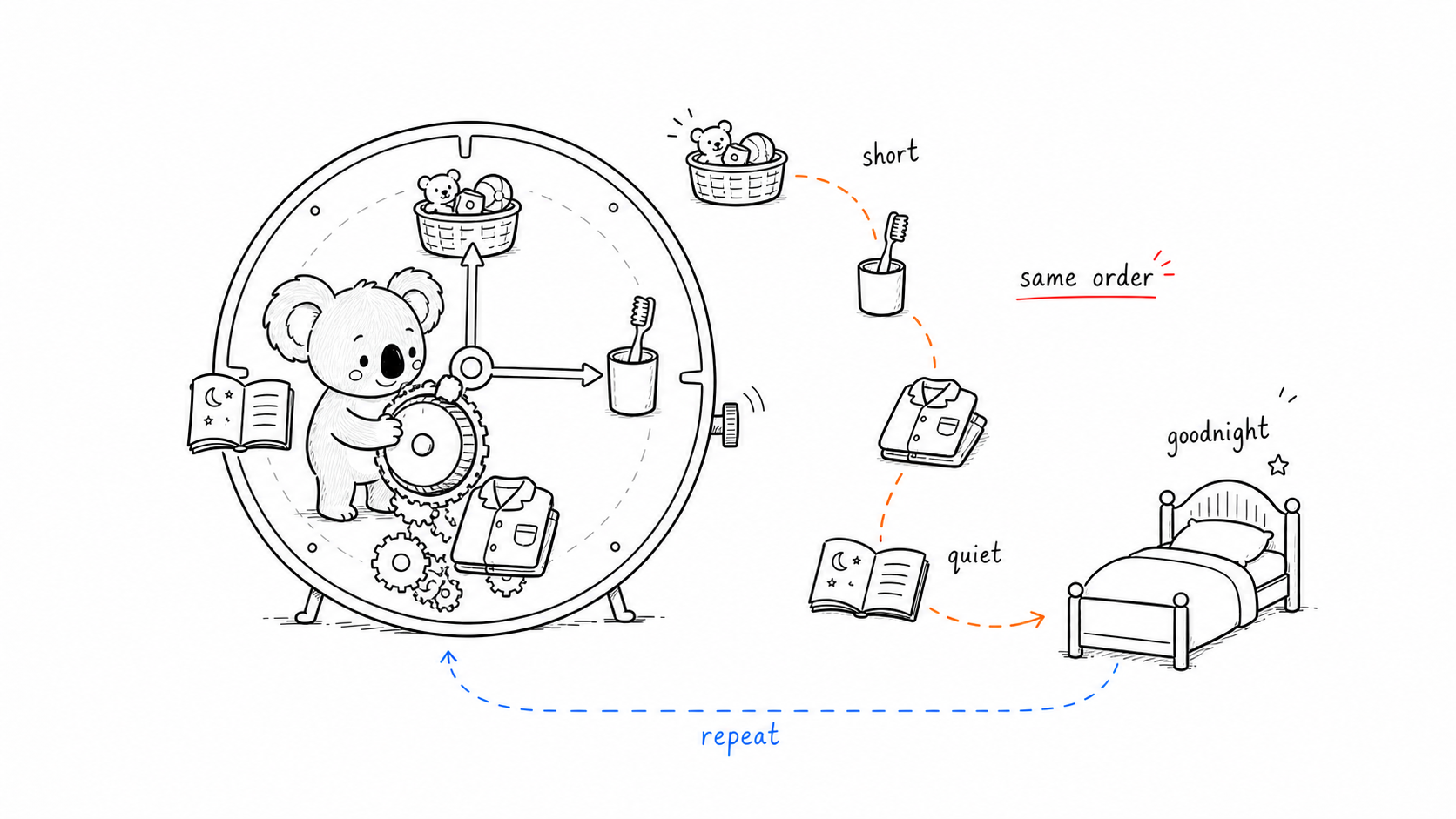
- ●Put away active toys.
- ●Use the bathroom and brush teeth.
- ●Change into pyjamas.
- ●Read one story together.
- ●Share a goodnight phrase and turn out the light.
The exact order matters less than keeping it predictable. A routine with too many steps may become difficult to maintain, while an unclear routine can invite repeated negotiation.
For example, a parent arriving home late might be tempted to abandon the routine completely. A more sustainable approach is to use a shorter version: teeth, pyjamas, one brief story and goodnight. The sequence remains recognisable even when the evening is compressed.
A visual checklist may help younger children follow along. Use simple drawings or words such as “teeth”, “pyjamas”, “story” and “bed”. Let the child mark each completed step, but avoid turning the checklist into a lengthy reward system that adds more negotiation.
3. Create a Clear Transition from Play to Quiet Time
Core conclusion: Bedtime usually feels less abrupt when children receive a clear signal that active play is ending.
Rather than moving directly from running, noisy games or stimulating entertainment to lights out, introduce a brief transition. This could include tidying toys, dimming the room, choosing tomorrow’s clothes or sitting down for a story.
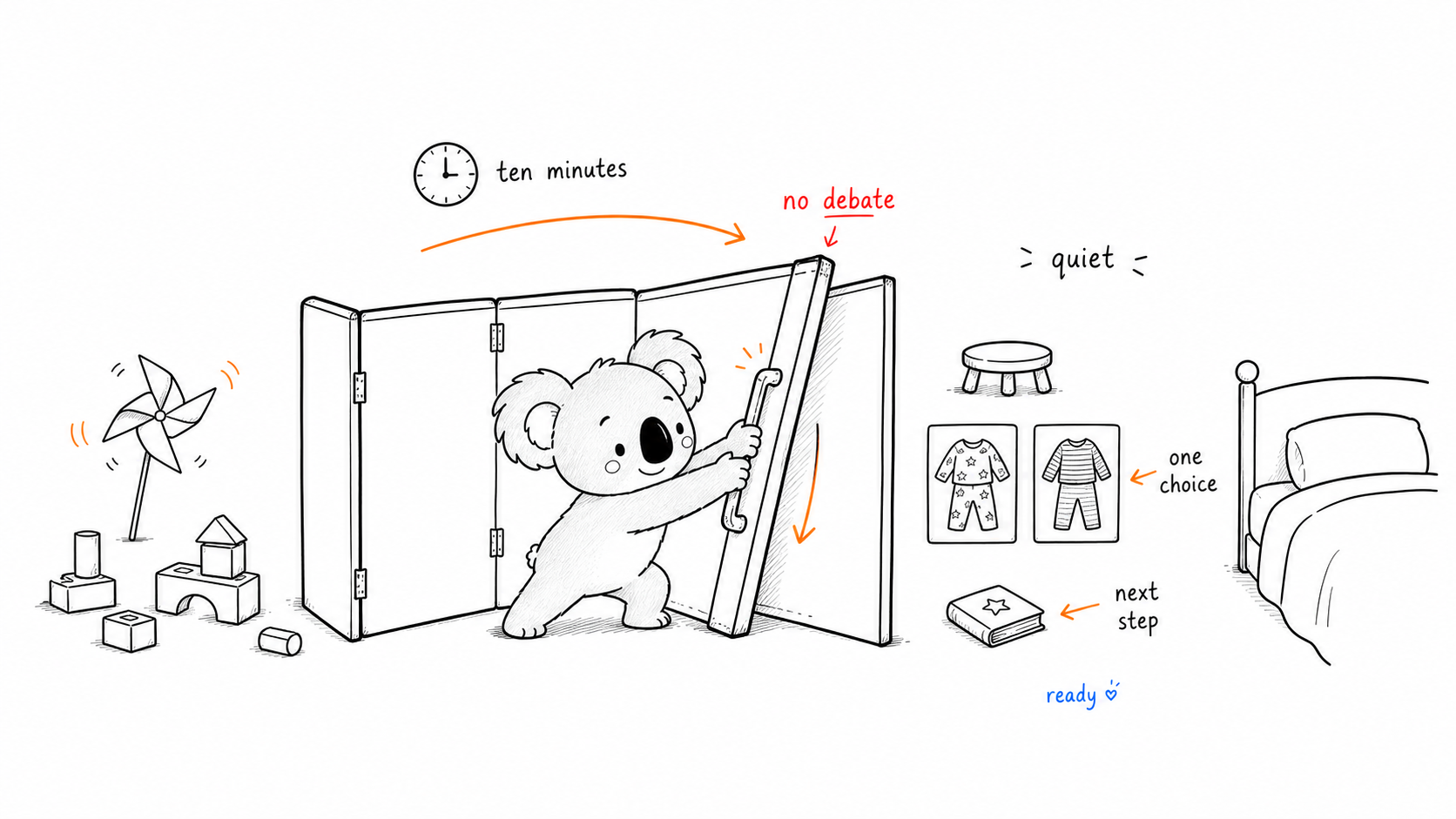
A practical warning can also make the change easier to understand:
- ●“We have ten minutes before we start getting ready for bed.”
- ●“After this game, it will be time to brush your teeth.”
- ●“You may choose one book for tonight.”
These statements define what will happen without opening an unlimited discussion. They also give children a small amount of appropriate control, such as choosing between two pairs of pyjamas or two age-suitable stories.
Try to avoid choices that undermine the routine. “Are you ready for bed?” can sound optional. “Would you like the blue pyjamas or the green ones?” keeps bedtime itself settled while allowing the child to participate.
If a child becomes more energetic during the transition, reduce the number of instructions. Calmly repeat the next step instead of introducing threats, multiple new rules or a long explanation.
4. Use Story Time as a Gentle Routine Anchor
Core conclusion: A short, age-appropriate story can serve as a familiar final activity before goodnight.
Reading gives parents and children a defined activity to share while the pace of the evening becomes quieter. The goal is not to guarantee that a child will fall asleep. Instead, story time can act as a consistent marker near the end of the bedtime sequence.
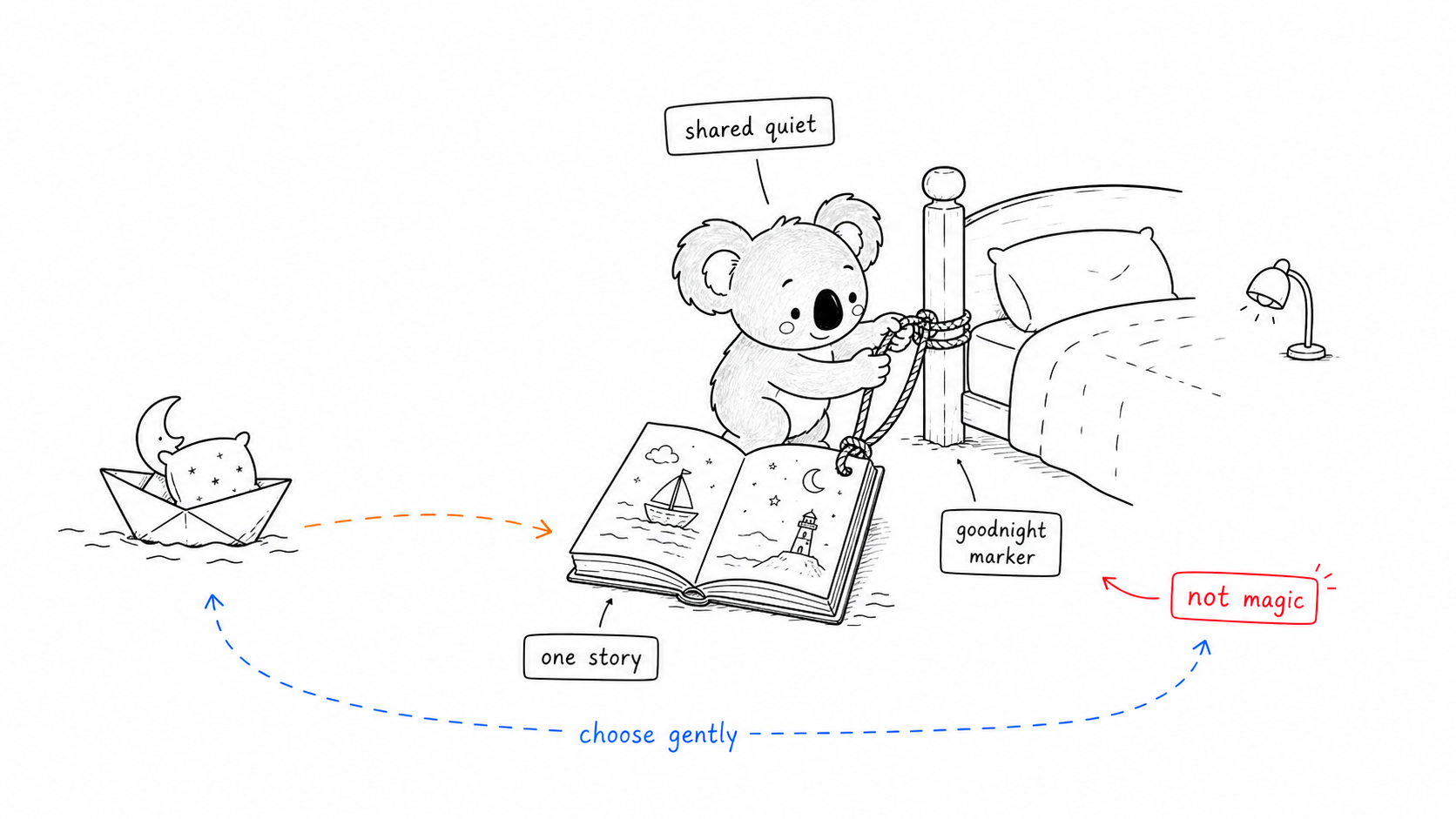
Choose stories that suit the child’s age, interests and sensitivity. Some children enjoy light adventure, while others prefer familiar characters or simple, reassuring plots. If a particular story causes excitement or worry, save it for daytime reading.
Gula Stories offers age-based story choices, which can make selecting a story easier [K2]. Its growing English-language library contains close to 120 stories, although the brand does not publish a precise total while its website and store counts are being aligned [K1].
The stories are created, improved and selected with AI assistance, then rewritten and reviewed by the team for children. Before release, they are reviewed for age suitability, and violence, sexual content and other unsuitable material are excluded [K1]. The app and website also describe the experience as free from third-party advertising [K1].
Families may use daily reading reminders to help make story time part of the evening routine [K2]. However, neither reminders nor stories should be presented as treatments for anxiety, fear of the dark, bedtime refusal or other sleep-related difficulties [K2].
When using a phone or tablet for a story, keep the interaction focused. Choose the story before settling down, reduce unnecessary browsing and return to the established goodnight sequence when the story ends.
5. Adapt the Routine to Age and Common Bedtime Challenges
Core conclusion: Keep the structure stable, but adjust choices, language and parental involvement as children grow.
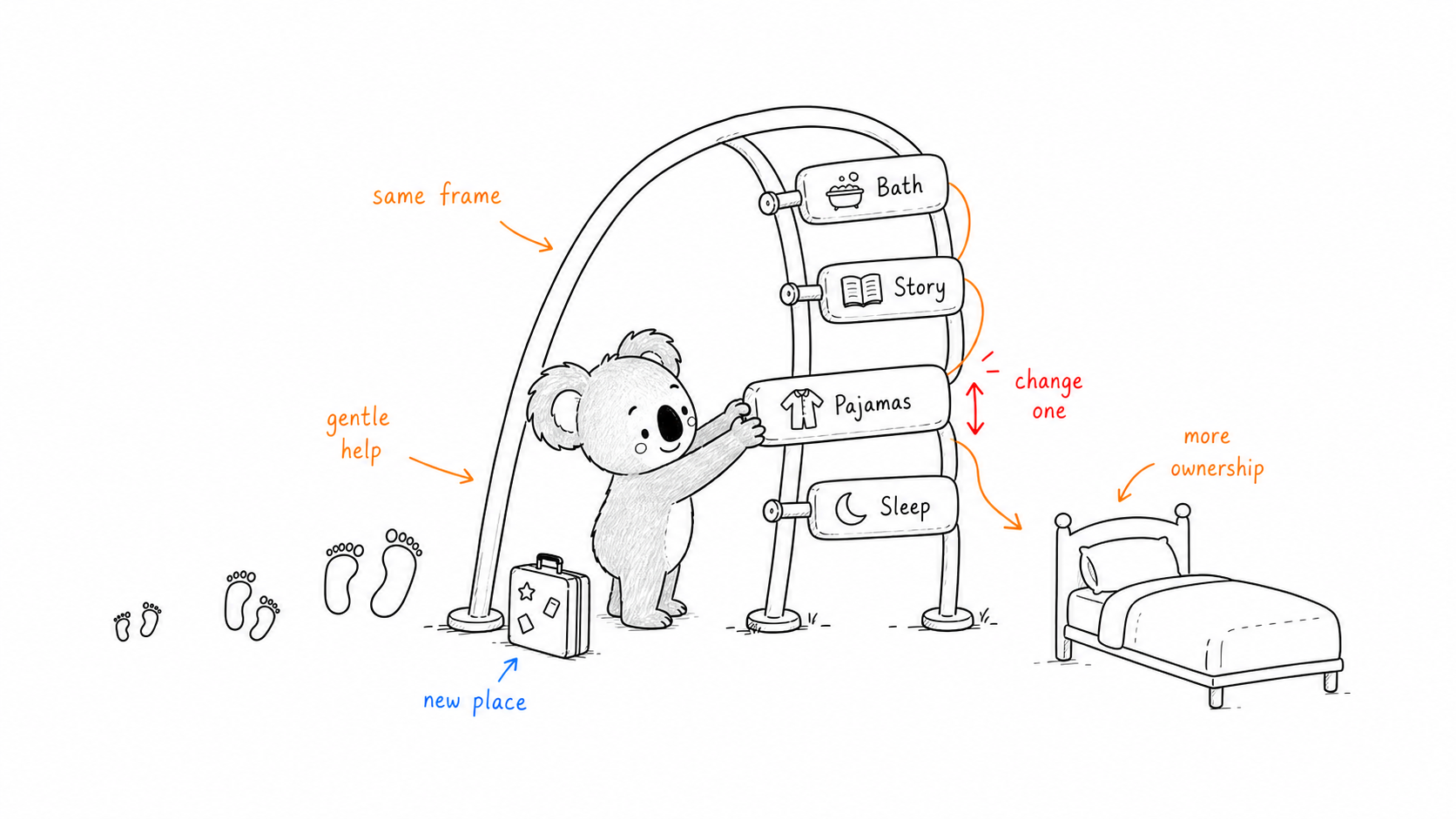
| Age or situation | Useful approach | What to avoid |
|---|---|---|
| Ages 3–4 | Use a short visual sequence, simple choices and one familiar story | Long explanations or too many choices |
| Ages 5–6 | Let the child complete routine steps with gentle prompts | Repeating every instruction when the child already knows the sequence |
| Ages 7–8 | Give the child more responsibility for preparation and book selection | Allowing the routine to expand through unlimited reading or conversation |
| Repeated requests | Address predictable needs before the final goodnight | Restarting the entire routine after every request |
| Busy evening | Use a shortened version with the same core order | Cancelling every familiar step without explanation |
| New environment | Bring one or two familiar elements, such as a book or goodnight phrase | Expecting an unfamiliar setting to feel identical immediately |
Handling “One More” Requests
Before the final story, ask the child to use the bathroom, have an appropriate drink if needed and collect any comfort item normally used at bedtime. This reduces avoidable reasons to leave the room later.
Set the boundary before reading begins: “We are reading one story tonight, and then it is time for goodnight.” If the child asks for another, acknowledge the request and repeat the plan briefly.
Consistency does not require harshness. A calm response can be both warm and firm: “I know you would like another story. We have finished tonight’s story, and we can choose another tomorrow.”
When the Routine Stops Working
A routine may need adjustment after travel, illness, school changes or disruptions at home. First, identify whether the problem is the routine itself or a recent change around it.
Modify one element at a time. For example, shorten an overlong story-selection process or move toothbrushing earlier. Changing every step at once makes it harder to see what is helping.
Bedtime advice is not a substitute for individual medical care. If a child regularly experiences significant distress, breathing concerns, unusual night-time behaviour or difficulties that substantially affect daytime functioning or family wellbeing, seek advice from a qualified health professional.
6. Frequently Asked Questions
Q1. How long should a bedtime routine be?
There is no single duration that suits every family. It should be long enough to complete essential care and provide a quiet transition, but short enough to repeat reliably. If the routine frequently expands because of extra games, repeated choices or multiple stories, simplify the sequence.
Q2. What if my child refuses the routine?
Begin with the next clear action rather than debating the entire bedtime process. Offer a limited choice within that action, such as which pyjamas to wear or which of two stories to read. Keep your wording calm and consistent. If resistance is persistent or unusually intense, consider whether recent changes, worries or health concerns may require additional support.
Q3. Should siblings have the same bedtime routine?
Siblings can share parts of the routine, such as tidying up or listening to a story, but their bedtimes and level of independence may differ. Keep the shared structure simple, then provide age-appropriate steps for each child.
Q4. Can a bedtime story app make children fall asleep?
A story app can offer a convenient way to begin or maintain a gentle reading routine, but it should not be described as making children fall asleep or solving bedtime refusal, anxiety or fear of the dark [K2]. Treat it as a story-selection tool within a broader family routine.
7. Conclusion
A calming bedtime routine for children aged three to eight is best built around a small number of familiar steps. Create a clear transition from active play, complete essential tasks in a stable order, include one quiet shared activity and finish with a consistent goodnight boundary.
Start with a routine your family can manage on an ordinary weekday. Repeat it for several evenings, observe where delays occur and adjust one step at a time. Age-based stories and reading reminders may make story time easier to organise, but they should support the routine rather than carry responsibility for a child’s sleep.