Gula Stories vs Yoto: Which Is Better for a 4-Year-Old's Bedtime?
Gula Stories vs Yoto for a 4-year-old: compare screens, hardware costs, subscriptions, bedtime stories, audio and routine fit.
Gula Stories vs Yoto: Which Is Better for a 4-Year-Old's Bedtime?
The short answer: choose Gula Stories if you want a story-first bedtime app for ages 3–8, illustrated stories on a phone or tablet, a lower annual price, and adjustable read-aloud narration. Choose Yoto if your priority is a dedicated audio player with physical cards, child independence, and a screen-free bedtime setup.
For a four-year-old, this is not simply an app-versus-app decision. It is a choice between two different bedtime systems: an illustrated mobile story library or a physical audio player that sits outside the phone.
Quick comparison
| Decision factor | Gula Stories | Yoto |
|---|---|---|
| Primary fit | Bedtime story app for children ages 3–8 | Dedicated audio player for children, positioned for ages 3–12+ |
| Format | Illustrated stories in a mobile app | Physical player, cards and companion app |
| Hardware | Uses a family iOS or Android device | Yoto Player or Yoto Mini is purchased separately |
| Subscription price | US$4.99/month or US$29.99/year, about US$2.50/month | Yoto Club starts at US$4.99/month; the player and many cards are separate purchases |
| Trial and free access | 7-day free trial on iOS and Android; 5 complete free stories plus a 3-page preview of every premium story | Yoto Club advertises a 2-week free trial; the player can also be used with purchased cards and Make Your Own Cards |
| Content | 100+ original illustrated stories, updated weekly | A large card catalogue covering stories, music, podcasts and other audio content |
| Bedtime controls | Natural read-aloud narration with adjustable speed and pitch | Audio playback through a physical player, with content and player controls managed separately |
| Age selection | Filters for 3–4, 5–6 and 7–8 | Broad 3–12+ positioning, with card recommendations by age and interest |
| Advertising | No third-party ads for free or paid users | Yoto says its player experience has no ads, microphone or camera |
| Connection model | Mobile app experience on iOS and Android | Wi-Fi is used for setup and content transfer; downloaded card content can play without Wi-Fi |
| Up-front cost | No dedicated hardware purchase | Current US list prices show Yoto Player at US$109.99 and Yoto Mini at US$79.99 |
Prices, availability and product details can vary by country, store and promotion. Check the relevant checkout page before subscribing or buying hardware.
The real difference: app convenience versus a dedicated player
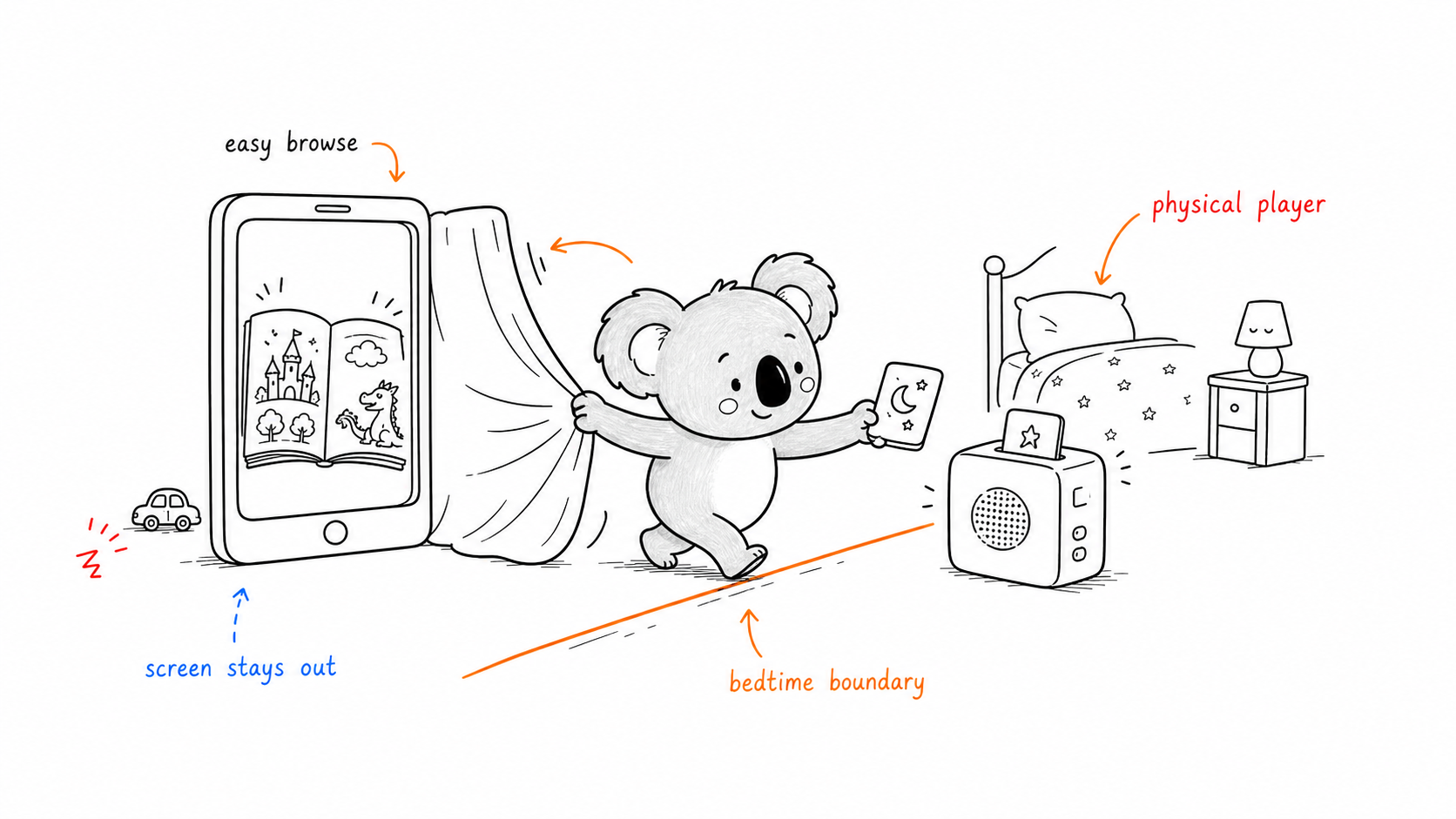
Gula Stories is designed around the habit of opening a bedtime story app. The family already has the device, the content is easy to browse, and the story can sit inside a repeatable reading routine. The experience is useful when a parent wants to choose a short illustrated story, apply an age filter and start narrating quickly.
Yoto is designed around separating children’s audio from a general-purpose screen. A child can choose a physical card, place it in the player and listen without holding a phone. That can be a meaningful change for families whose main problem is device distraction at bedtime.
These are different strengths. A dedicated audio player is not automatically better for every family, and an app is not automatically too stimulating for every family. The practical question is which friction you are trying to remove.
When Gula Stories is the better fit
1. You want illustrated stories, not only audio
A four-year-old may still benefit from seeing the characters, pictures and page-by-page structure of a story. Gula Stories provides original illustrated stories, so a parent can use the app as a shared reading moment rather than only as background audio.
This fits families who want the bedtime story to remain a calm parent-and-child activity. It also helps when a child chooses stories by character, setting or visual mood.
2. You want a lower-cost way to test the routine
Gula Stories costs US$29.99 for an annual plan or US$4.99 month to month. Families can use the 7-day free trial, read five complete free stories, and preview three pages of every premium story before committing.
That makes the decision relatively easy to test: use the app for several bedtime routines, observe whether your child settles into the pattern, and then decide whether the paid plan is useful.
3. You want adjustable read-aloud narration
Gula Stories includes natural read-aloud narration with adjustable speed and pitch. For a four-year-old, a parent may want a slower pace at the end of the day, or a slightly different pitch that feels comfortable in the room.
This is especially useful when the app is part of a consistent routine rather than a one-off distraction. The goal is not to make bedtime louder or more exciting; it is to make the same calm story structure easier to repeat.
4. You want age filters built around early childhood
The age filters are organised around 3–4, 5–6 and 7–8. A parent of a four-year-old can start with the youngest filter rather than sorting through a much broader catalogue.
This is a small product detail, but it can reduce decision fatigue. The more quickly a parent can choose an appropriate story, the less likely bedtime becomes a negotiation over the device.
When Yoto is the better fit
1. You want a dedicated screen-free audio device
Yoto's defining advantage is the physical player. The child does not need to browse a phone or tablet during playback. The player has no microphone or camera, and Yoto's product positioning is built around independent audio listening.
For a family trying to keep phones out of the bedroom, this can be more important than having illustrated content. The trade-off is that the family must buy and store a separate device.
2. You want child-led choices through physical cards
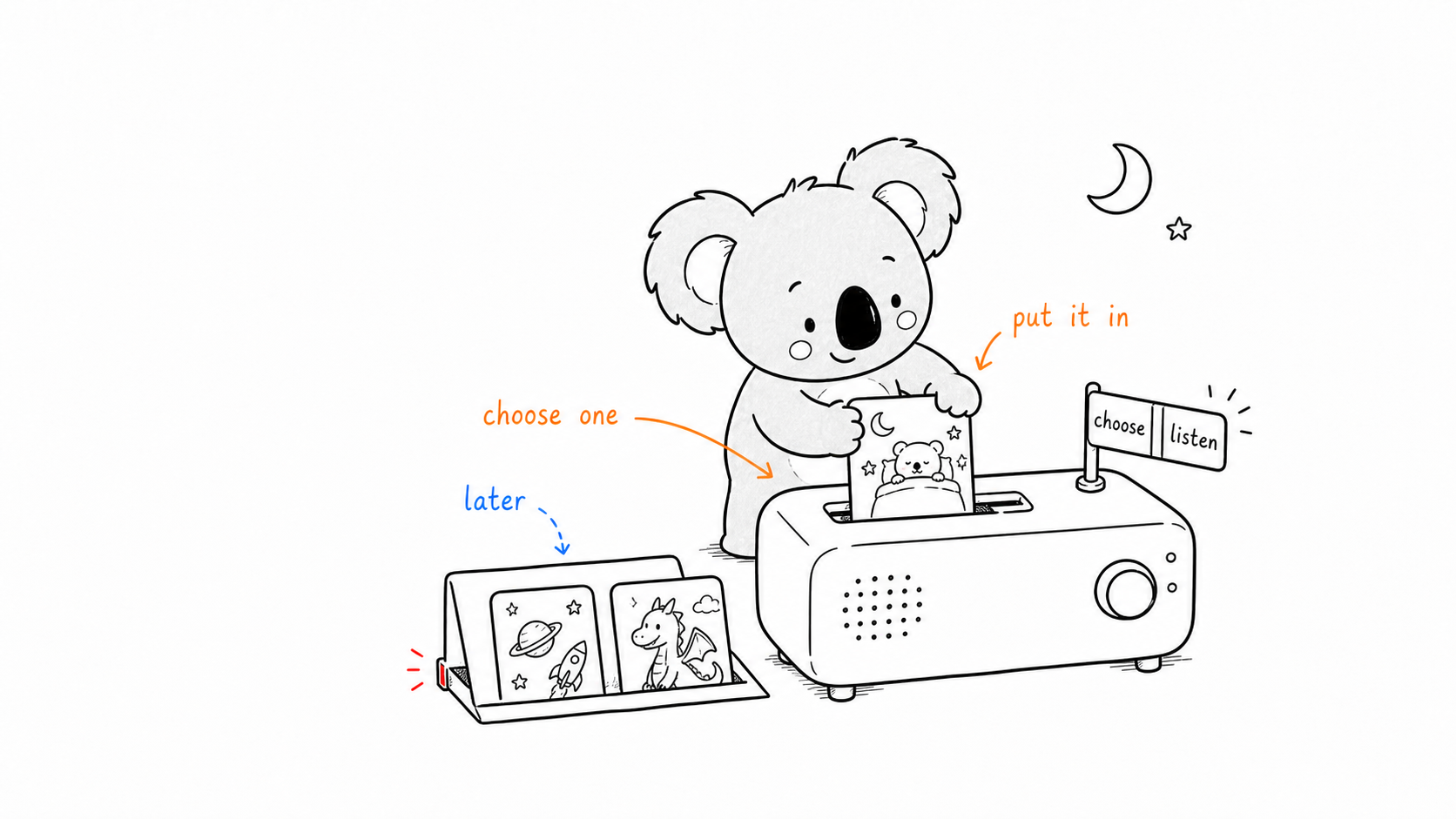
Physical cards make the choice visible and tangible. A four-year-old can select a card, put it in the player and learn a simple start-and-stop routine with less adult navigation.
This can reduce arguments about which app to open. It can also create a clear boundary: once the card is in the player, bedtime listening has started.
3. You expect to use audio beyond bedtime
Yoto is not limited to sleep stories. Its catalogue includes music, podcasts, audio books and other children’s content. The player can therefore serve morning routines, quiet time, travel and independent play as well as bedtime.
That wider use may justify the hardware for some families. If the device will only play one short story at night, the up-front price deserves more scrutiny.
4. You want offline playback on the dedicated player
Yoto states that card content can be downloaded to the player and played without Wi-Fi after setup. This is a Yoto device capability, not a Gula Stories feature. It may matter for travel, rooms with unreliable Wi-Fi or families that want the player to keep working after the bedtime setup is complete.
How the cost feels in the first year
The two products have different cost shapes.
Gula Stories has no dedicated hardware purchase. Its annual plan is US$29.99, and the free access and trial reduce the risk of testing the habit first.
Yoto starts with hardware. The current US price for a Yoto Player is US$109.99, or US$79.99 for Yoto Mini, before adding cards. Yoto Club is optional and starts at US$4.99/month, with a 2-week free trial advertised on the official Club page. Families can also buy individual cards or create Make Your Own Cards.
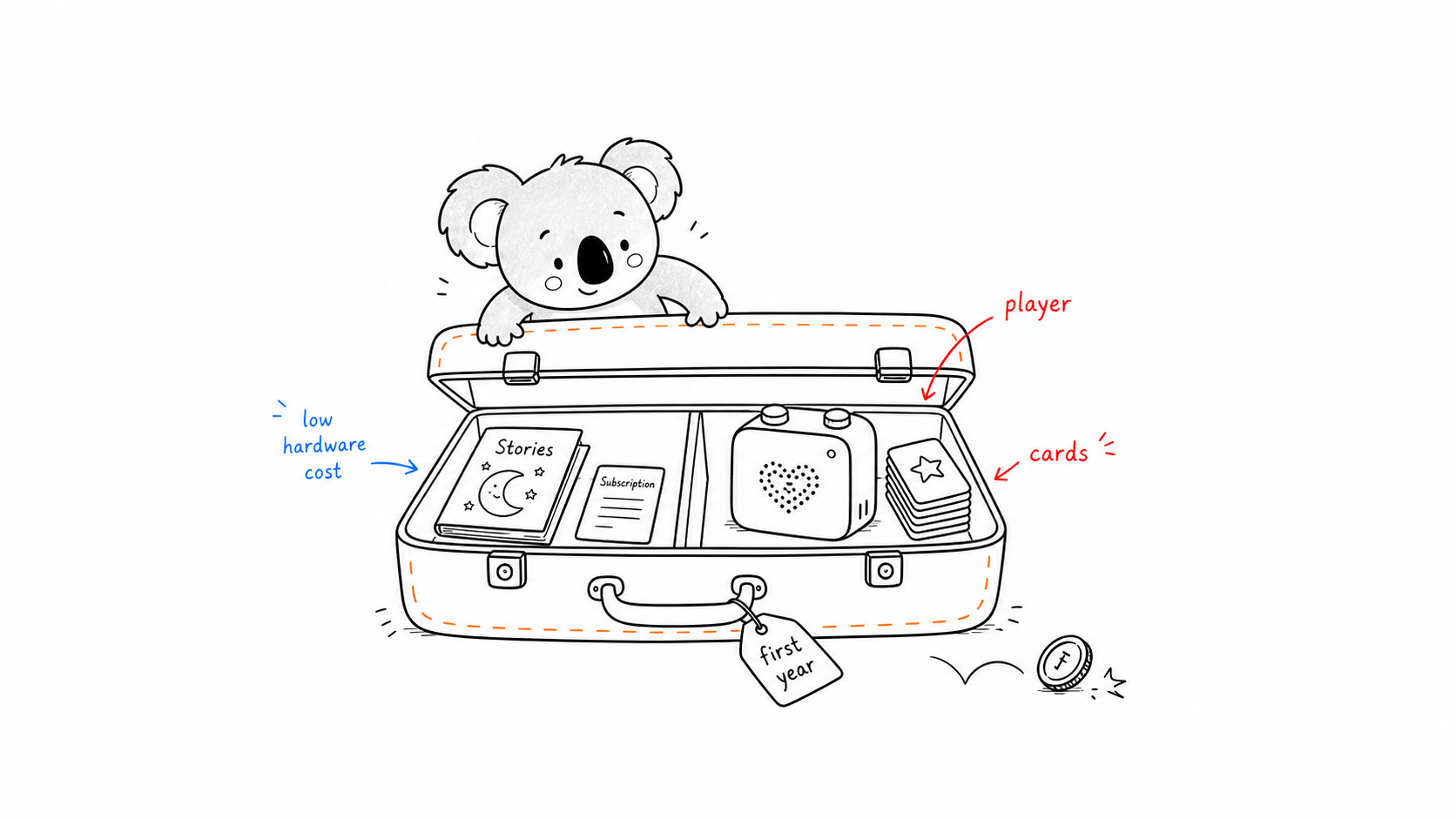
So the first-year comparison is not simply US$29.99 versus US$4.99/month. It is a low-cost mobile subscription versus a hardware-plus-content ecosystem. Ask whether your family wants the physical player itself, not only whether the monthly catalogue price looks attractive.
Which option better supports a bedtime routine?
Both can support a routine, but they support it in different ways.
A Gula Stories routine might look like this:
- ●Choose the 3–4 age filter.
- ●Let the child choose one illustrated story.
- ●Start the read-aloud narration at a comfortable speed.
- ●Keep the room quiet and finish with the same short goodnight cue.
A Yoto routine might look like this:
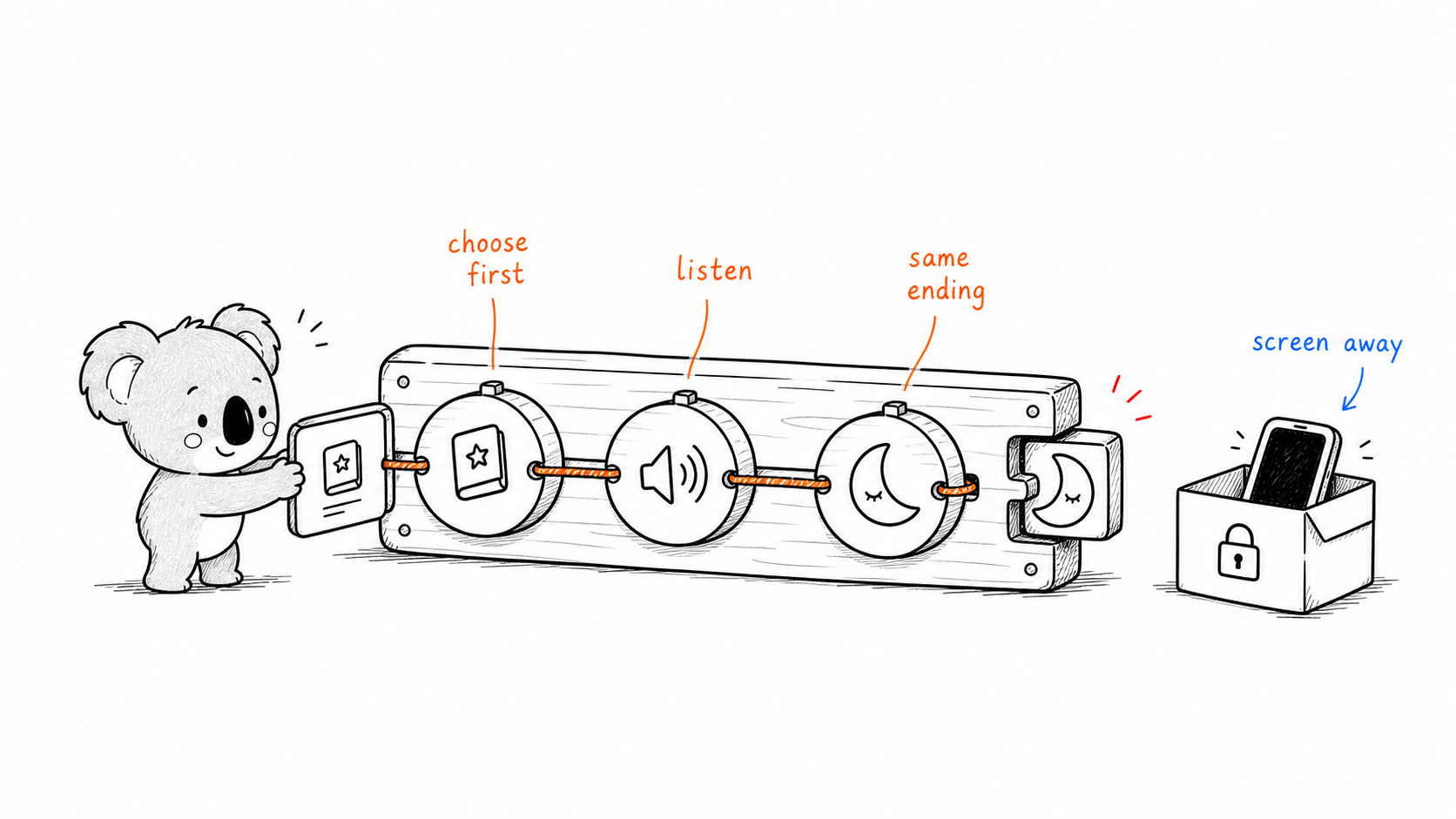
- ●Let the child choose one card before getting into bed.
- ●Put the card in the player.
- ●Listen without opening a general-purpose screen.
- ●End playback with the same goodnight cue.
The best system is the one that adults can repeat consistently. If choosing stories on a phone creates extra requests for games or videos, Yoto may reduce that particular friction. If buying, charging and organising cards creates more work, Gula Stories may be easier to sustain.
Trade-offs parents should consider
Gula Stories trade-offs
- ●It is a mobile app, so the family device remains part of the bedtime environment.
- ●The child may ask to browse beyond the selected story unless the parent sets a clear boundary.
- ●The app is best suited to families who want illustrated bedtime stories, not a general-purpose physical audio system.
- ●It does not replace the parent’s judgement about timing, lighting or the wider bedtime routine.
Yoto trade-offs
- ●The player is a meaningful up-front purchase.
- ●Cards can become an additional collection and recurring expense.
- ●The broad catalogue creates choice, but more choice can also make bedtime negotiations longer.
- ●The player is audio-first, so it is not a direct substitute for a shared illustrated story.
- ●Wi-Fi is required for setup and content transfer even though downloaded card content can later play without Wi-Fi.
Which one should a family with a four-year-old choose?
Choose Gula Stories when:
- ●you want an illustrated story app rather than a separate device;
- ●your child enjoys choosing stories by age, character or picture;
- ●adjustable narration is important;
- ●you want to test the bedtime habit at a low annual price;
- ●you want the same app to work on iOS and Android.
Choose Yoto when:
- ●your main goal is to keep phones and tablets out of bedtime;
- ●your child is ready to make simple independent audio choices;
- ●you expect to use stories, music and other audio throughout the day;
- ●you are comfortable with the hardware and card budget;
- ●a physical object would make the bedtime boundary clearer.
If you are unsure, start by identifying the problem. If the problem is “we need an easier story choice and a repeatable reading routine”, Gula Stories is the more direct fit. If the problem is “we need a separate audio device so the phone does not enter the bedtime routine”, Yoto is the more direct fit.
Three common mistakes
Mistake 1: Comparing only monthly subscription prices
A Yoto Club subscription does not include the same cost structure as a mobile story app. Include the player, cards and likely use beyond bedtime.
Mistake 2: Assuming fewer screens means no routine is needed
A dedicated player can reduce device distraction, but children still need a predictable sequence. Choose the card before lights-out, keep the number of choices small and use the same ending cue.
Mistake 3: Buying a large catalogue before testing the habit
More content is not always more useful. Test whether your child settles with one repeatable story routine before adding more cards or subscriptions.
Sources
- ●Yoto Player official product page: https://us.yotoplay.com/yoto-player
- ●Yoto Club official page: https://us.yotoplay.com/yoto-club
- ●Yoto support: offline playback storage: https://support.yotoplay.com/en-US/how-much-content-can-be-stored-on-the-player--mini-for-offline-playback-11591
- ●Yoto support: battery life: https://support.yotoplay.com/en-US/how-long-does-the-battery-last-33383
- ●Gula Stories pricing: https://www.gulastories.com/pricing
- ●Gula Stories: https://www.gulastories.com/