Which Bedtime Story App Fits Your Family? A Practical Six-App Comparison
A practical, evidence-aware guide to matching six bedtime story apps with different family routines, story preferences and sleep needs.
The best bedtime story app depends less on the number of features than on what the family wants the last 10–20 minutes of the day to feel like. Some children want to turn pages and look at carefully made pictures. Some want to hear an audio story without a bright screen. Some want a parent’s voice, sound effects or a character that feels personal. Some families already pay for a broad reading or wellness service and do not want another subscription.
This guide compares Gula Stories with five randomly selected competitors from the supplied 10-app analysis: Little Stories: Bedtime Books, Readmio, FarFaria, Moshi Kids and Calm Kids. It is a fit guide rather than a ranking. Each product is treated as an ordinary option with a particular strength and a particular compromise. Gula Stories is included on the same terms, including the fact that it has no public review history yet because it is private and unpublished.
Start with the bedtime job
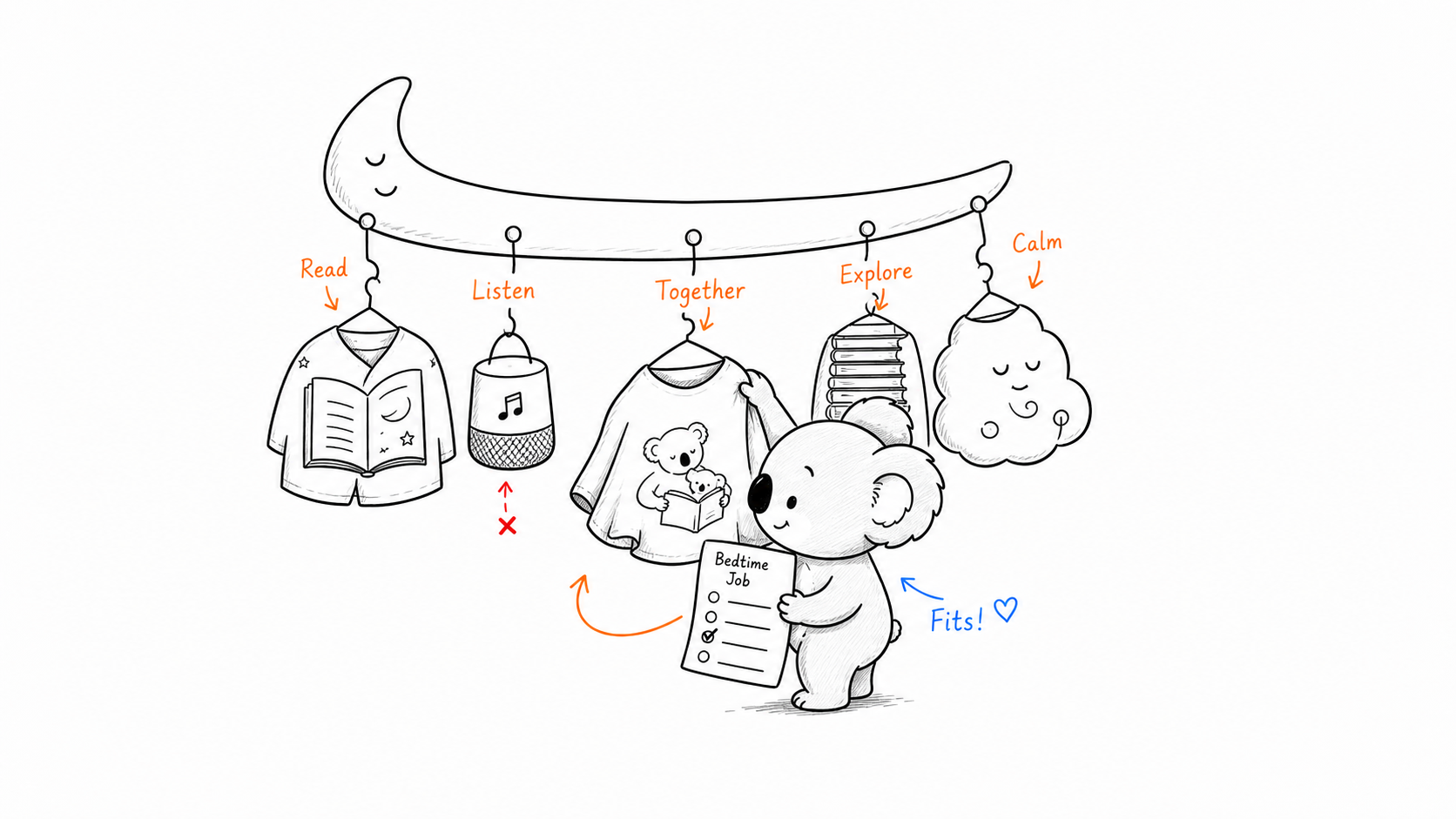
Before comparing features, decide which job the app needs to do.
- ●Help a child choose and finish one gentle story.
- ●Replace or reduce the need for a parent to narrate.
- ●Make shared reading more engaging.
- ●Offer a large library for repeated reading.
- ●Support sleep and calm beyond stories.
No single app leads all five jobs. A product can be excellent for one and awkward for another.
If the child needs a calm, complete picture-book session
Gula Stories is built most directly for this use case. Its brief targets children aged 3–8 and describes 100+ original illustrated stories, weekly updates, page-by-page reading and gentle TTS narration. Parents can browse by age, category or recommendation, while children can save favourites, resume a story and listen again. The five complete free stories and the first-three-page previews give families a way to inspect the experience before subscribing.
The app’s key choice is deliberate simplicity. It does not make AI story generation or child-created personalised stories the main event. The child receives a finished story with prepared illustrations and narration, then spends the session reading or listening. For a family that wants a clear bedtime routine, this is a strength. For a child who wants to keep changing the characters and plot, it may feel less exciting.
The product also has a meaningful limitation: it is not yet backed by a public App Store rating, a large review count or a long operating history. Its intended selling point is the quality of the stories, but that quality still needs to be judged by the parent’s own trial rather than borrowed social proof. The supplied product brief lists US$4.99 monthly, US$29.99 annually and a seven-day trial; prices should be checked at launch and by region.
Little Stories is the closest alternative for this family. It also centres illustrated bedtime books, but adds child-specific presentation, professional narration and the ability to record a parent’s voice. The supplied analysis describes it as non-generative AI, which is a useful distinction: it personalises a prepared story rather than creating an unlimited new one.
Little Stories is likely the better fit if the child’s name, identity or a parent-recorded narration is central to the ritual. Gula Stories is likely the cleaner fit if the parent wants fewer decisions and a direct path into a finished story. The supplied US snapshot lists about US$9.99 monthly, US$59.99 yearly and a US$29.99 all-books unlock for Little Stories. It also has approximately 4.7 stars and 45,000 ratings in the research snapshot, which is stronger public evidence than Gula Stories can offer today.
If the parent wants to remain the storyteller
Readmio is designed around shared reading rather than fully independent playback. The adult reads from the story, the app follows along and adds sounds or music when the reader reaches marked text. Its official site presents the app as a way to add atmosphere to read-aloud time. The supplied analysis also notes that Readmio intentionally does not use full in-story illustrations, favouring imagination and lower visual stimulation.
This makes Readmio a good choice for a family that values the parent’s voice and wants a little theatrical help. It is a poor fit if the child needs the app to carry the entire bedtime session while the adult is doing something else. The supplied US price range is about US$5.99–12.99 per month and US$39.99–49.99 per year, with a reported lifetime option. The lower entry price can be attractive, but the core value depends on participation, not passive listening.
Little Stories can also support parent participation through recorded narration, but it remains closer to a finished digital book. Gula Stories sits between the two: a parent can read the pages, or the child can use TTS and continue without a live reader. That flexibility is useful, although it comes with less of the theatrical soundscape that Readmio provides.
If the family wants the biggest possible reading library
FarFaria historically represented the breadth-first option. The supplied analysis describes a large catalogue, professional narration, highlighted words, reading-level signals and themed browsing. For families whose main problem is running out of books, a broad library can be more valuable than a carefully narrow bedtime experience.
There is a serious qualification. The research says FarFaria’s consumer website was unstable in July 2026 and that current subscription pricing was not fully verified. Third-party estimates of approximately US$7.99 per month and US$49.99 per year are marked as unconfirmed. That uncertainty should influence the decision. A family should confirm that the current catalogue, sign-in flow, offline access and payment plan work as expected before relying on FarFaria for nightly use.
Epic! was not part of this random five, but the broader competitor research places it in the same breadth category. It shows why a bedtime specialist should not compete only on title count. A huge library can be valuable, but a parent may still prefer an app that narrows the path to one suitable story.
If the family wants sleep tools as well as stories
Moshi Kids is the more child-specific audio ecosystem in this group. It combines sleep stories with music, white noise, meditation and daytime activities. It is suitable for families who want one place for winding down, calming down and some light play. Its official site currently shows a seven-day trial, US$9.99 monthly and US$49.99 annual pricing on the page checked; the supplied analysis records higher store or regional variants as well. The research snapshot gives Moshi roughly 4.7 stars and 69,000 ratings, evidence of substantial market history.
The trade-off is scope. Moshi is not a pure story app, and its games and other activities may be useful at some times but unnecessary at lights-out. Gula Stories is narrower and more story-centred. That makes Gula Stories easier to understand, but less useful if the family also wants meditation or a broad audio toolkit.
Calm Kids is the most obvious choice for a family already using Calm. The children’s content lives inside Calm Premium alongside adult sleep stories, meditation and music. Calm’s help centre says Kids stories can be downloaded for offline listening and that new Kids Sleep Stories are released two to three times a month. A family plan can also cover multiple people.
Calm is less compelling as a first purchase for a child who mainly wants illustrated stories. It is a broad wellness subscription, and the supplied comparison lists about US$14.99 monthly and US$69.99–79.99 annually, with localised prices varying by country and storefront. The value depends on using the wider Calm library, not just the Kids section.
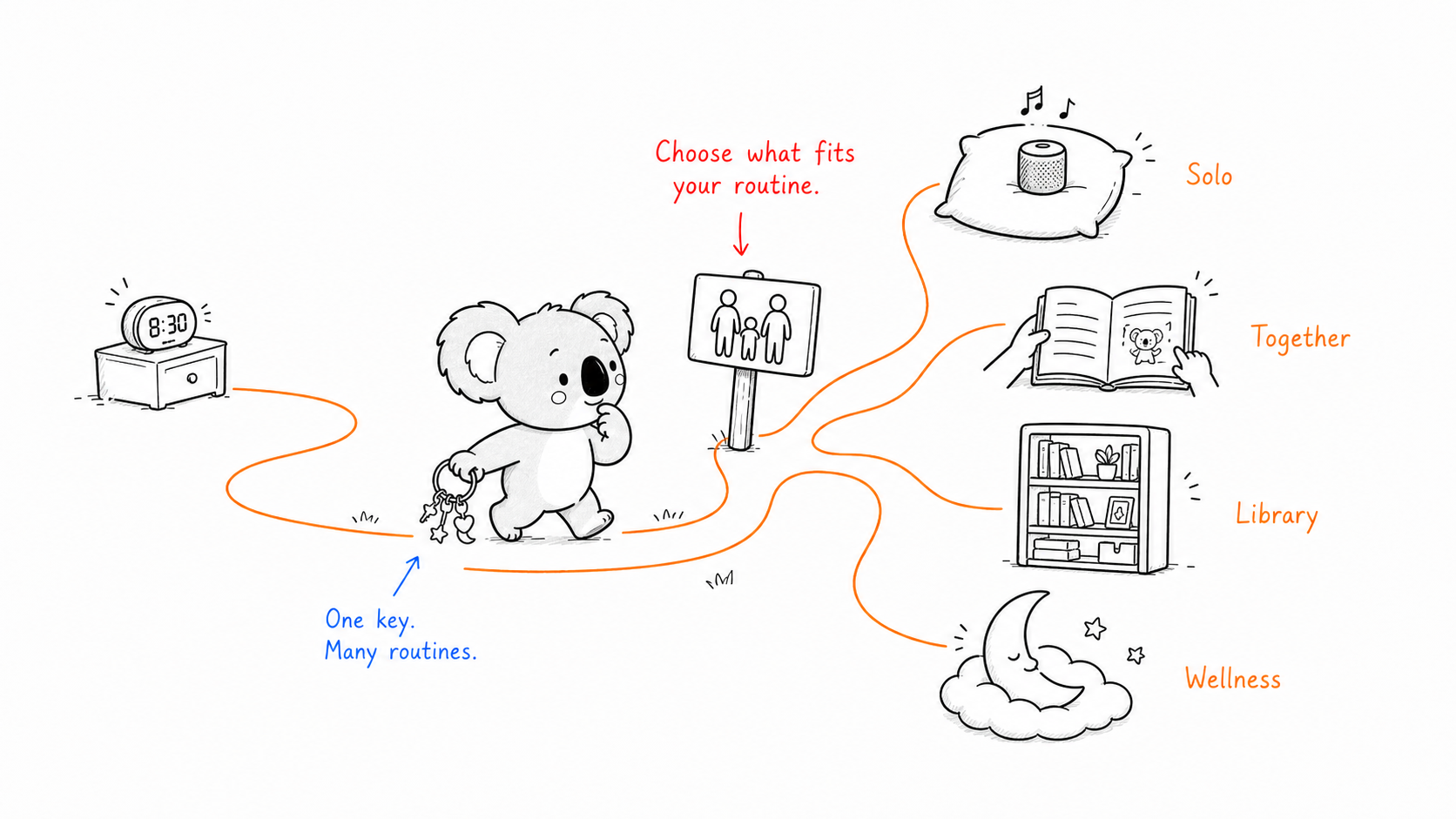
A simple fit matrix
| Family priority | Strongest fits | Why |
|---|---|---|
| One finished illustrated story with minimal setup | Gula Stories, Little Stories | Both are close to the picture-book ritual; Gula Stories is simpler, Little Stories adds personalisation |
| Parent-led reading with atmosphere | Readmio, Little Stories | Readmio adds live sound effects; Little Stories supports recorded narration |
| Independent audio winding down | Gula Stories, Moshi Kids, Calm Kids | TTS or audio libraries reduce the need for live narration; Calm and Moshi offer more non-story sleep tools |
| Very broad catalogue | FarFaria, larger library products | FarFaria’s current consumer availability needs verification before purchase |
| One subscription for adult and child wellness | Calm Kids | Kids content is part of the broader Calm ecosystem |
| No third-party ads and a family-friendly paywall | Gula Stories, Little Stories, Moshi Kids, Calm Kids | The supplied analysis reports no third-party ads for these products; confirm current terms in the store |
What should parents check before subscribing?
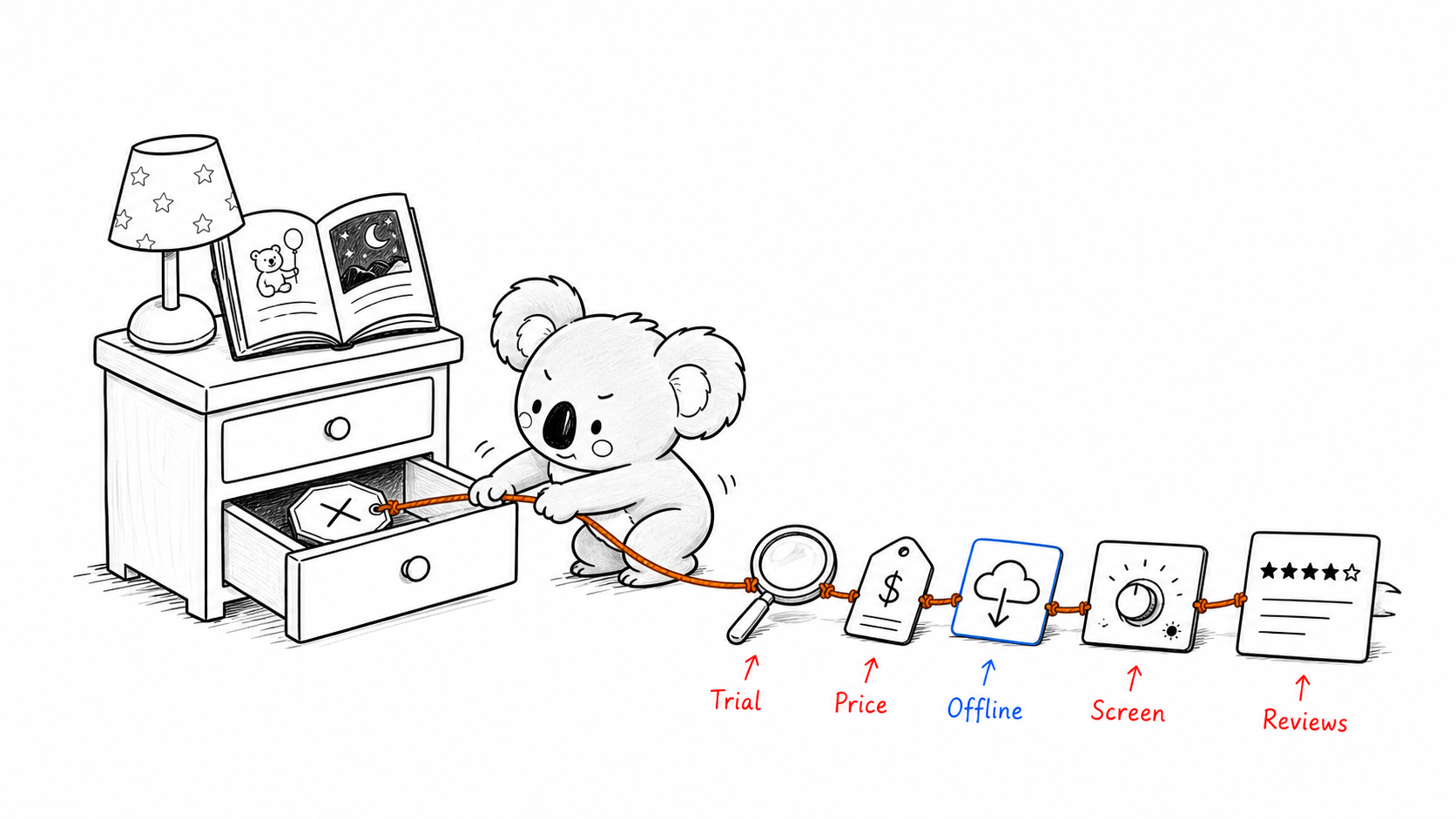
First, check the actual price in the country where the account is billed. The comparison file uses USD snapshots, and several products show multiple App Store SKUs. Second, test the free content or trial at the exact time the app will be used: bedtime. Third, check whether the child can continue without an adult, whether offline playback works, and whether the screen can be dimmed or turned off. Fourth, look at the current review distribution rather than relying only on the average star number. Finally, ask whether the family wants a crafted story, a personalised story, a soundscape, or a general sleep subscription.
The honest conclusion
Gula Stories is a reasonable choice for families who want the app to get out of the way and let a well-made story do the work. Its “less is more” position is clear: no AI story generator as the centre of the product, no need to construct a new plot every night, and a strong emphasis on illustrated stories and gentle narration. That clarity is an advantage, not a universal verdict.
Little Stories is more personal. Readmio is more participatory. FarFaria is more catalogue-led but currently less certain. Moshi is broader in child sleep and calming tools. Calm Kids is strongest when the household already belongs to Calm. A fair decision comes from matching the app to the bedtime job, not from assuming that the most features or the highest rating automatically creates the best night.
Sources and method
The comparison uses the supplied Gula Stories README, the competitor analysis dated 13 July 2026 and the writing principles in the supplied zzz_2.txt. Official pages checked for context include Moshi, Readmio, Little Stories on the App Store, Calm Kids’ help centre and FarFaria. Prices, features and availability may change by region and should be verified before payment.