How to Get a 4-Year-Old to Sleep: A Calm, Repeatable Plan
Use a calm repeatable plan for a 4-year-old with clear boundaries, limited choices, a fixed ending and brief night responses.
How to Get a 4-Year-Old to Sleep: A Calm, Repeatable Plan
Key Takeaways
- ●Start with a predictable routine and reduce choices as bedtime approaches.
- ●Use one short story, a clear stopping point and the same final goodnight signal.
- ●A story app may support a calm transition, but it is not a treatment or a promise of immediate sleep.
The short answer
You cannot force a 4-year-old to fall asleep on demand, but you can make the path to bed more predictable. A calm plan usually has a clear start, a few familiar steps, one small choice and a firm ending. The goal is not to win a nightly argument or promise instant sleep. It is to reduce the number of decisions a tired child and tired adult have to make.
The American Academy of Pediatrics recommends a quiet bedtime routine and consistency, while Australian Raising Children Network recommends a positive, calming routine and avoiding boisterous play or exciting screen content close to bedtime. These are general parenting resources, not a substitute for professional advice. If a child has persistent, severe or worrying sleep difficulties, loud or heavy breathing, or signs of illness, speak with a qualified health professional.
Key takeaways
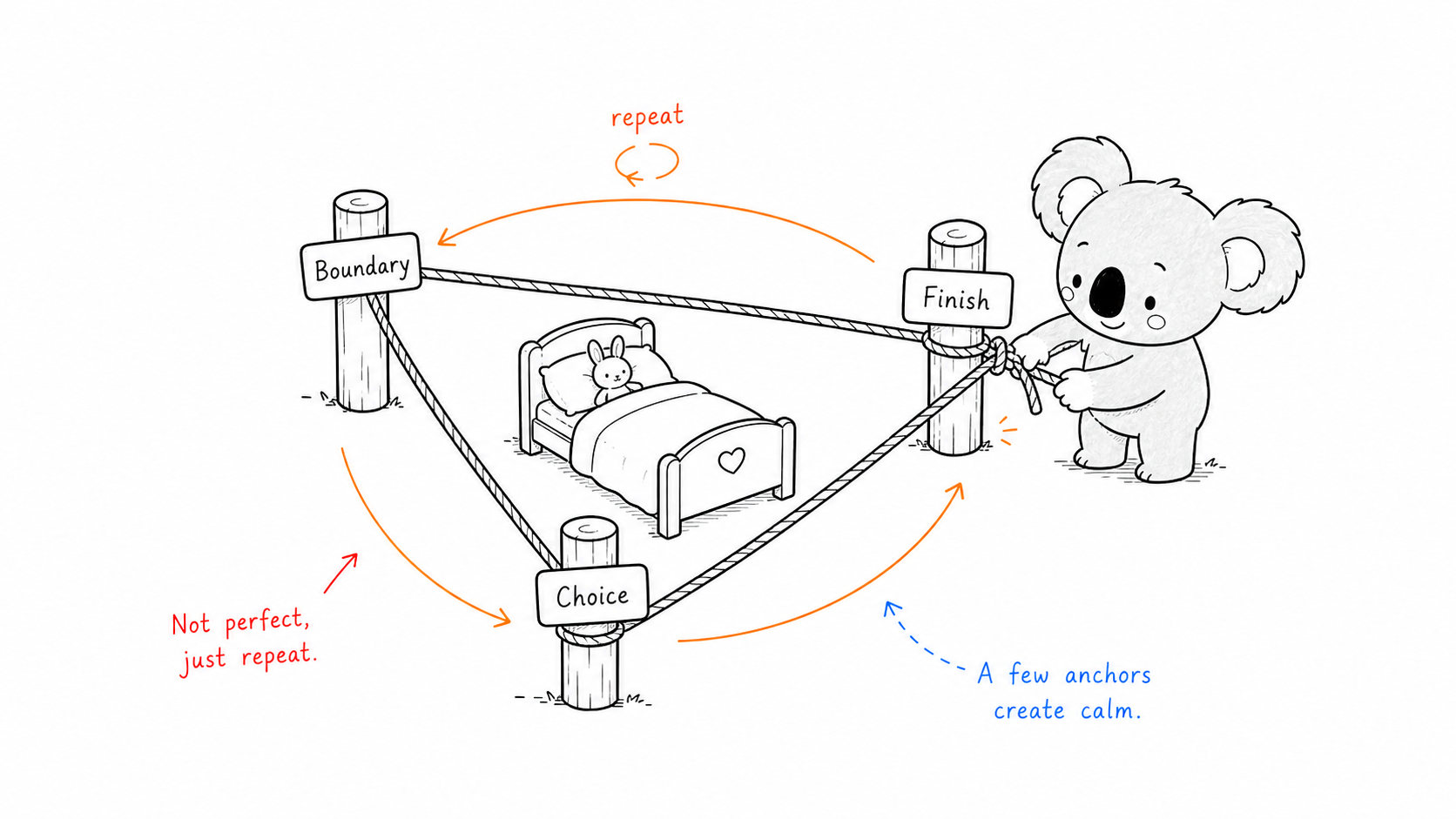
- ●Define the evening boundary before the routine begins: one drink, one story and one final cuddle can be enough.
- ●Give a 4-year-old one bounded choice inside the plan, not control over whether bedtime exists.
- ●Use the same final signal every night: a closed book, a phrase, a hug or a light switch.
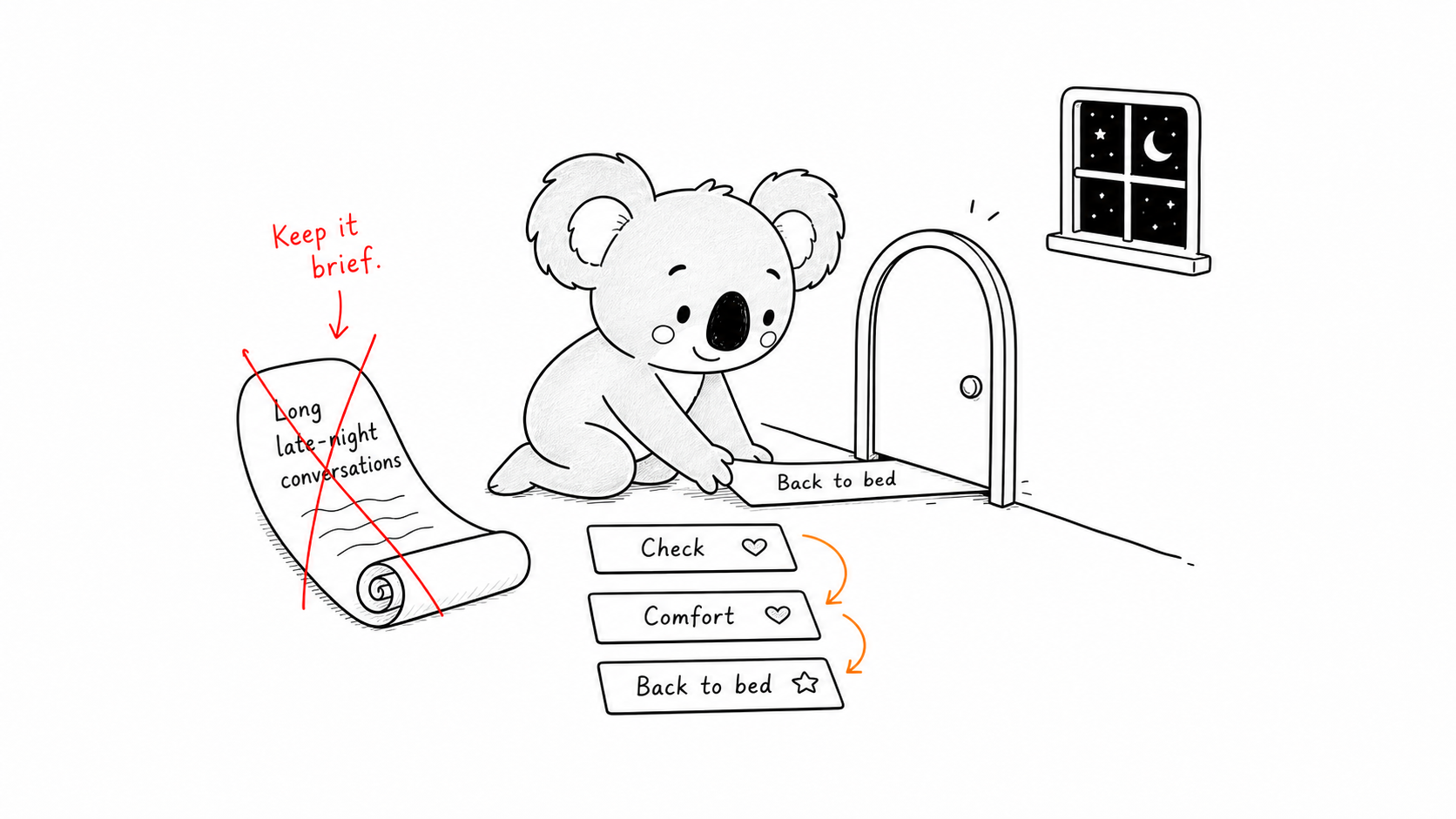
- ●Keep responses to calling out brief, calm and consistent after checking that the child is safe and comfortable.
- ●Choose story content and screen use for the child’s actual response. “Calming” labels are not guarantees.
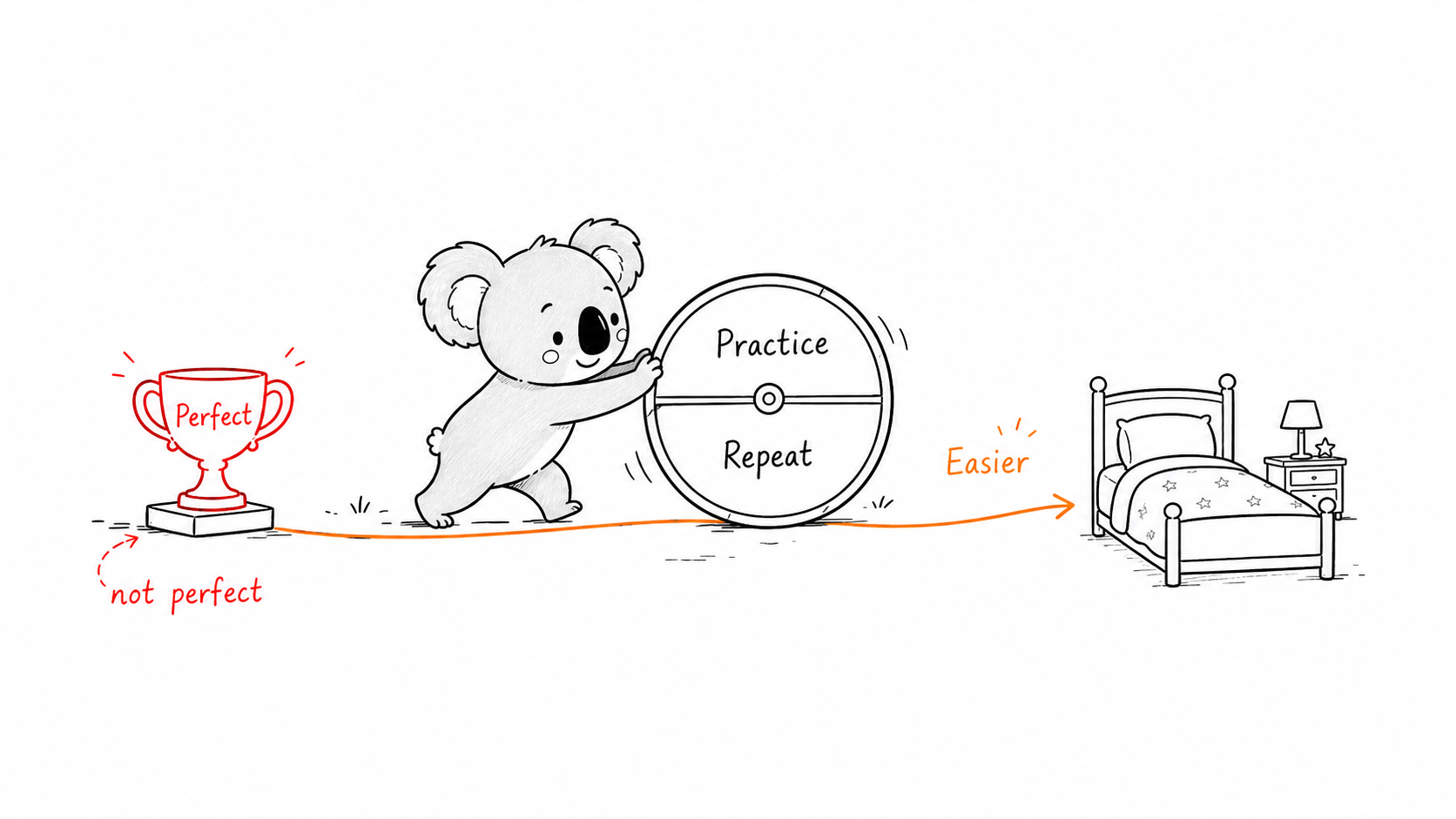
- ●Measure progress by repetition and shorter negotiations, not by whether the child falls asleep at exactly the same minute.
- ●A bedtime story app can support story time, but it cannot treat anxiety, solve bedtime refusal or guarantee sleep.
Why a 4-year-old can understand the plan and still resist it
Four-year-olds have more language and imagination than toddlers, so they may ask detailed questions, bargain for extra time or invent a new reason to leave the room. That does not mean the child is being deliberately difficult. The child may be tired, excited, worried about separation or testing whether the boundary is predictable. A plan works best when the adult treats the feeling seriously without turning every feeling into a new negotiation.
The distinction between choice and boundary matters. “Do you want the blue or yellow pyjamas?” is a choice. “Do you want to go to bed now or in an hour?” reopens the boundary. Offer control over small details while keeping the main sequence fixed.
A useful plan also leaves space for connection. A short cuddle, a question about the day or a few pages of a book can be more effective than adding rewards after the child is already upset. Connection does not require an endless routine; it needs a reliable place inside it.
Set three bedtime anchors
Anchor 1: The start signal
Choose a repeatable event that means active play is ending: dinner is cleared, a timer rings, the child chooses a pyjama set or the lights in the living area become softer. Give a little notice before the transition. “Two more minutes, then teeth” is easier to process than suddenly removing a toy.
Do not make the start signal a threat. Its job is to orient the child, not to create fear. If the evening starts late, use the same short version rather than trying to squeeze in every usual activity.
Anchor 2: The bedtime frame
The frame is the small sequence that will happen every night. For example: toilet, teeth, pyjamas, one story, cuddle, lights out. Write it on a card or draw it with the child. A four- or five-step frame is usually more usable than a detailed schedule.
Before entering the bedroom, handle the ordinary requests that often interrupt the ending: a drink of water, the toilet, a comfort item and the preferred door or night light position. This does not mean every request must be granted. It means the adult can say, “We have checked water and the door; now the plan is story.”
Anchor 3: The final signal
Choose a final action that is the same most nights. It could be “book closed, cuddle, goodnight”, a short phrase, or switching off the same lamp. The ending should be warm but not open-ended. If the child asks for another story, acknowledge the request and repeat the boundary: “You wanted another one. Tonight’s story is finished. Goodnight.”
A calm, repeatable plan for tonight
Use this as a script and adjust it to the child’s needs:
| Moment | Parent action | Child choice | Boundary |
|---|---|---|---|
| Transition | Give notice and finish one small activity | Choose the last toy to put away | No new game after the signal |
| Preparation | Toilet, teeth and pyjamas | Choose between two pyjama sets | Practical needs are finished before story |
| Story | Read or play one preselected story | Choose between two suitable titles | No browsing after the choice |
| Connection | Cuddle, name one good moment or say a short goodnight phrase | Choose hug, hand-hold or a wave | Keep the exchange short |
| Ending | Close the book, switch the light and leave | Take a safe comfort item | Return to the same words if called |
The table is a structure, not a test. If a child is especially tired, use fewer words and the minimum version: toilet, teeth, pyjamas, one familiar story, goodnight. If the child is worried, spend a little longer on reassurance before returning to the ending. The adult can be kind without offering unlimited extensions.
Choosing the story step
The story should help the routine move towards its ending. Look at:
- ●Age fit: Does the story’s language and theme suit the 4-year-old, or will the child need a long explanation?
- ●Emotional fit: Could suspense, separation or a villain make this child more alert tonight?
- ●Length: Can the family finish it within the planned routine?
- ●Visual pace: Are the pictures quiet enough for this child, or do movement and sound keep attention switched on?
- ●Stopping point: Is there a clear last page and a simple way to close the experience?
- ●Repeatability: Would the child benefit from hearing it again for several nights?
Gula Stories is designed for children aged 3–8 and includes a 3–4 age range for parent selection. Its documented product experience is centred on illustrated and narrated English stories, child-friendly English reading voices, autoplay, favourites, reading history and daily reading reminders. The app and website describe the experience as free from third-party advertising, and the product is intended to be simple and low-distraction rather than game-led.
Those facts describe a story-time tool, not a sleep intervention. Gula Stories does not have an approved claim for offline listening, a sleep timer or listening-time limits. Its accounts sync within iOS or within Android, but iOS and Android accounts do not sync with each other. If the family shares devices across both platforms, decide which device will be used for the routine and do not assume that progress will carry across.
The app’s content process is also part of a responsible evaluation: stories are created, improved and selected with AI assistance, then rewritten and reviewed by the team for children. Stories are checked for age suitability before release, with violence, sexual content and other unsuitable material excluded. Parents should still preview and use their own judgement; a review process is not a promise that every story suits every child on every night.
What to do when the child calls out
First check whether the child is safe, unwell or genuinely needs help. If there is an obvious practical need, respond to it. If the child is safe and the request is mainly to restart the routine, keep the answer short. A consistent response might be: “You are safe. It is bedtime. Goodnight.”
The parent does not have to sound cold. A quiet tone, a brief reassurance and a return to the same ending can communicate both care and finality. Avoid long explanations in the dark; they can turn the call-out into another active conversation. If the child is frightened, name the feeling and offer a safe, simple support such as a comfort object or a small light, then repeat the plan.
Some families find it useful to create a “one extra check” card. After the final signal, the child can use that one check for a toilet trip, a drink or a question. Once it is used, the parent returns to the same brief response. The card should be a visual reminder, not a bargaining token that can be renewed indefinitely.
Troubleshoot the plan without adding pressure
When bedtime is difficult for several nights, change one variable at a time. A short log can record wake time, nap, routine start, story choice, lights-out time and what happened afterwards. Do not use it to judge the child; use it to notice patterns. A late nap, a very exciting story or a routine that starts too late may all matter.
If the child is becoming overtired before the routine begins, start earlier or shorten the transition. If the child is alert and delaying for a long time, review daytime sleep and the timing with professional guidance where needed. The correct adjustment depends on the child, so avoid rigid promises based on another family’s schedule.
Also check whether the device itself is becoming the negotiation. Set the story up before the child comes into bed, keep the selection to one or two choices and make sure the device is not a doorway to unrelated games or browsing. A “no third-party advertising” statement removes one source of interruption, but parents still need to manage the screen and close the app at the agreed point.
Signs that the routine is becoming more workable
Do not use instant sleep as the only measure. Look for smaller signs:
- ●The child knows what comes next without a long explanation.
- ●The number of choices becomes smaller and more realistic.
- ●The adult can start the routine without making a new plan each night.
- ●The story ends at a predictable point.
- ●Call-outs are answered with fewer words.
- ●The child recovers more quickly after a boundary.
- ●The family can keep the minimum version on a hard night.
Progress can be uneven. Travel, illness, family change, a new childcare arrangement or a developmental leap can disturb a routine. Returning to the same anchors is often more useful than announcing that the plan has failed.
Common mistakes
Promising a reward for sleep
Rewards can turn sleep into a performance test and make a child more anxious about whether they are succeeding. Praise the parts the child can control: getting ready, choosing, listening and staying with the routine.
Negotiating every step
An adult who is exhausted may keep adding explanations. Use a short script and repeat it. A child can be heard without receiving a new decision each time.
Using a story that is too exciting
A wonderful adventure can be the wrong story for the final five minutes. Save highly active or suspenseful stories for earlier in the day and keep a small bedtime shelf of familiar options.
Expecting an app to solve the evening
An app can make story selection easier, but it cannot decide whether the child is hungry, worried, overtired or unwell. It does not replace a parent’s judgement or professional advice.
Assuming every device works the same
Before using a subscription across devices, verify platform support and account behaviour. Gula Stories supports internal iOS sync and internal Android sync, but not iOS-to-Android sync. It also should not be described as an offline or timer-enabled service without a current official confirmation.
FAQ
How do I get my 4-year-old to sleep faster?
There is no responsible guarantee of a faster result. A better starting point is a repeatable routine with a clear end: prepare practical needs, offer one small choice, read one suitable story, use a fixed final cue and respond briefly after checking safety. If difficulties persist or worry you, speak with a qualified health professional.
What time should a 4-year-old go to bed?
There is no single clock time that fits every child. Consider the child’s usual wake time, nap, activity and signs of tiredness. Keep the routine consistent and adjust timing carefully rather than copying a schedule from another family.
Should a 4-year-old choose the story?
Yes, within a boundary. Offer two stories that the parent has already checked for length, age fit and emotional tone. The child can choose the title, while the adult keeps the number of stories and the ending fixed.
Is a bedtime story app helpful for a 4-year-old?
It can be a convenient way to provide a prepared story, but the app should be judged by age guidance, content review, advertising, visual pace, stopping behaviour and subscription terms. Gula Stories has a 3–4 age choice and narrated English stories. It is not a sleep-treatment app and does not have approved claims for offline playback, a timer or listening limits.
What if my child keeps leaving the bedroom?
Check safety and ordinary needs first. Then keep the response calm and brief, return the child to the same plan and avoid creating a new activity each time. If leaving the room is linked with distress, illness, breathing problems or persistent sleep disruption, seek professional advice.
Can a consistent routine cure bedtime anxiety?
No. A routine may make the evening more predictable, but it is not a cure and an app should not claim to treat anxiety or fear of the dark. Persistent anxiety deserves discussion with a qualified professional.
Should I use a sleep timer?
A sleep timer is a product feature, not a definition of safe content. Some apps offer one and some do not. Gula Stories does not have an approved sleep-timer claim, so parents should not assume it is available.
Conclusion
To help a 4-year-old move towards sleep, build a calm path with three anchors: a clear start signal, a small bedtime frame and a fixed final cue. Give one bounded choice, prepare practical needs, choose one age-appropriate story and keep the response to call-outs brief after checking safety. Judge the plan by whether the family can repeat it, not by a promise that the child will fall asleep on command.
Gula Stories may fit the story step for families seeking English illustrated and narrated stories for ages 3–8, with a 3–4 age option, child-friendly English reading voices, autoplay, favourites, reading history, daily reminders and no third-party advertising. Explore the library and current plans, but check the current store listing and remember that the app is a routine-support tool, not a medical or sleep-treatment solution.
Sources checked for general guidance
- ●American Academy of Pediatrics: Toddler Bedtime Trouble
- ●HealthyChildren.org: Healthy Sleep Habits
- ●Raising Children Network: Toddler sleep
This article provides general parenting information, not medical advice. Product features and subscription terms can change; check official listings before use or purchase.