Bedtime Stories That Help Kids Understand Rules and Boundaries
A practical parent guide to bedtime stories about rules and boundaries for children aged 3–4.
Bedtime Stories That Help Kids Understand Rules and Boundaries
Key takeaways
- ●clear, caring limits that show what a character can do next
- ●Keep the conversation short, concrete and child-led.
- ●Use one story moment as an invitation to notice, imagine or practise together.
Why this theme can work at bedtime
A story can show that a boundary is not only a stop sign. It can also protect people, make a shared activity fair and offer a safe next choice.
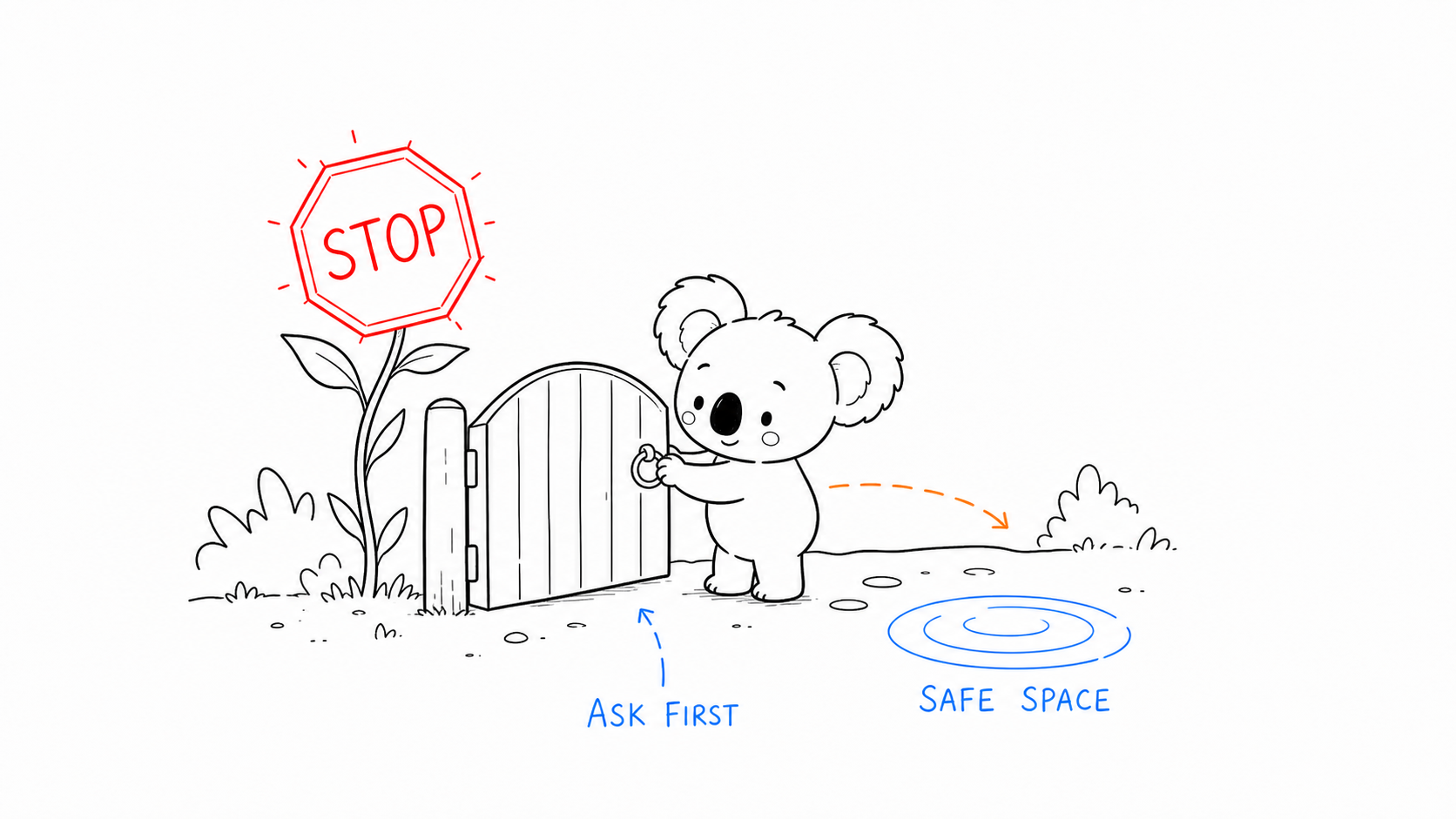
Start with one small story choice
For children aged three and four, the most useful stories are often the ones with a simple path: a character wants something, meets a manageable challenge and has a reassuring place to return to. Before starting, look at the title, the mood and the amount of action. A story does not need to teach every possible lesson. It only needs to give your family one clear thing to notice together.
A practical way to choose is to ask whether the story gives your child room to join in. Repeated phrases, recognisable objects and a calm ending can make that easier. If your child wants the same story again, that is useful information rather than a problem: repetition lets young children explore a familiar idea at their own pace.
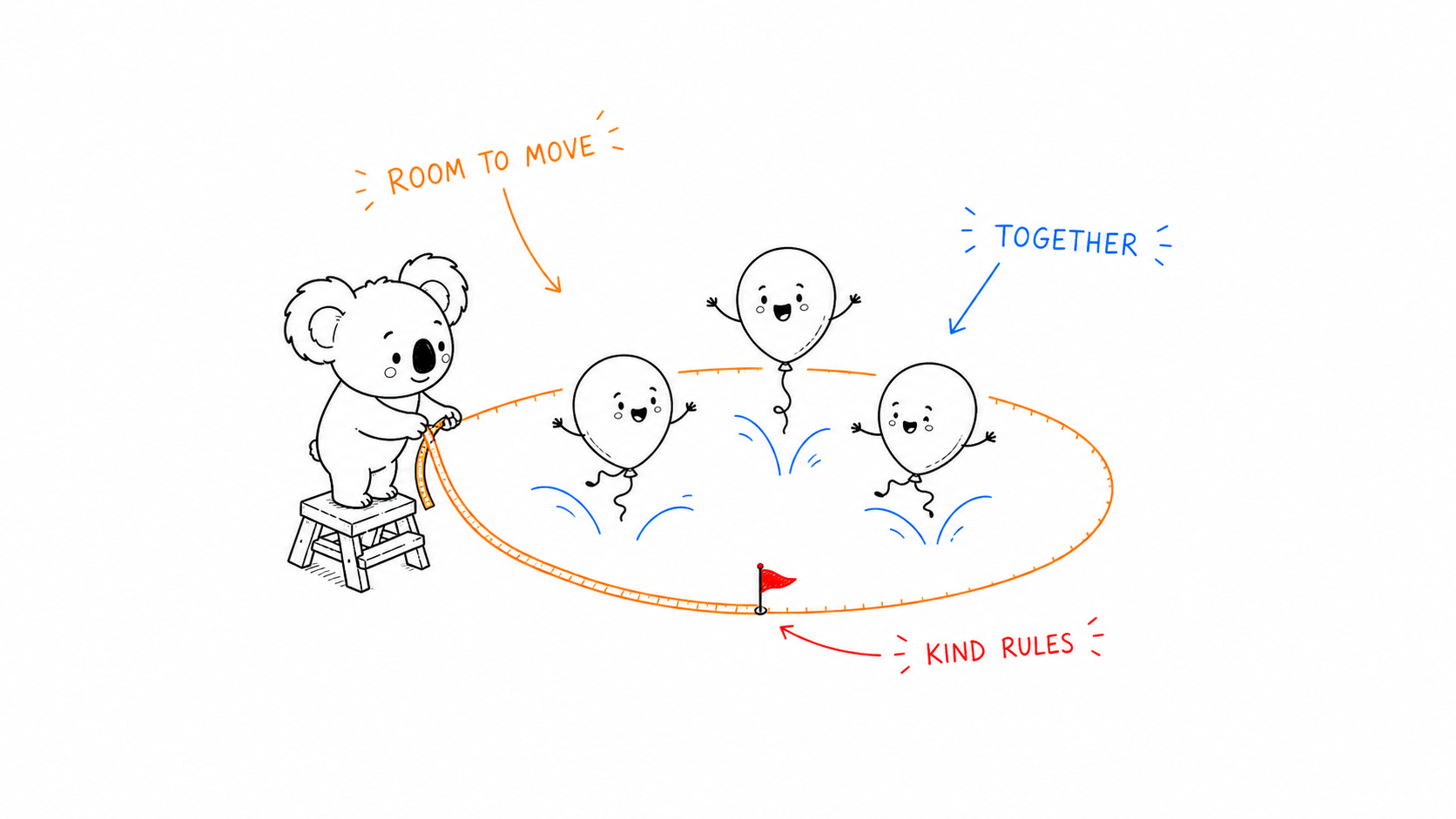
Turn the story into a tiny conversation
Notice one boundary in the story, explain its purpose in plain language, and practise the next safe or respectful action together. Keep the pause light. You can point to a detail, repeat a character's choice or wait for a few seconds. There is no need to turn bedtime into a test. A child can answer with a word, a gesture, a new idea or nothing at all.
Try one of these prompts:
- ●What was the rule for?
- ●Who did it help?
- ●What could the character do instead?
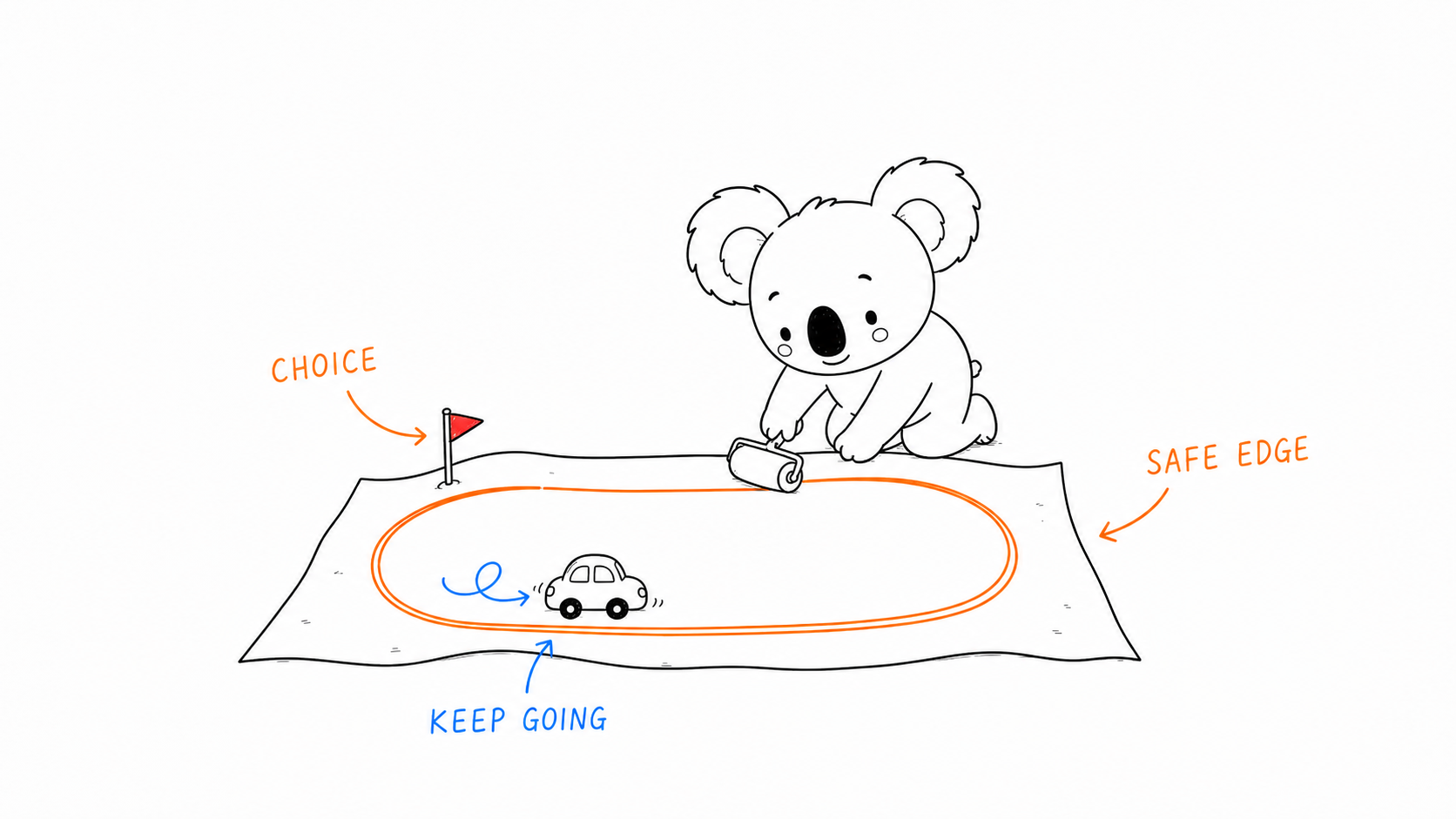
Make the routine easy to repeat
A short, predictable sequence can make story time easier to begin: choose one story, settle in, enjoy it together, then close with a familiar goodnight step. Families can read aloud, listen to a child-friendly English voice or mix the two. The best length is the length that still leaves everyone feeling unhurried.
Use calm, concrete language. Rules are most useful to young children when adults follow through consistently and with care.
FAQ
How long should a bedtime story be for a three- or four-year-old?
There is no single right length. A short story that leaves time for a quiet goodnight can be more useful than finishing a longer one when everyone is tired. Follow your child's attention and keep the ending predictable.
Do stories need to have an obvious lesson?
No. A useful story can simply offer an image, a feeling or a small choice to talk about. The conversation afterward is often more valuable than a heavy moral.
A gentle next step
Choose one story from this theme and try it on an ordinary evening. Notice what your child returns to, then let that interest guide the next choice. If you would like an age-based place to browse English stories, Gula Stories lets families choose the 3–4 range and use child-friendly English voices, autoplay, favourites, reading history and daily reading reminders. It is a simple story-time tool, not a promise about sleep or behaviour.