How to Build a Bedtime Routine for a 3-Year-Old
Build a simple bedtime routine for a 3-year-old with four repeatable steps, one small choice and a consistent goodnight signal.
How to Build a Bedtime Routine for a 3-Year-Old
Key Takeaways
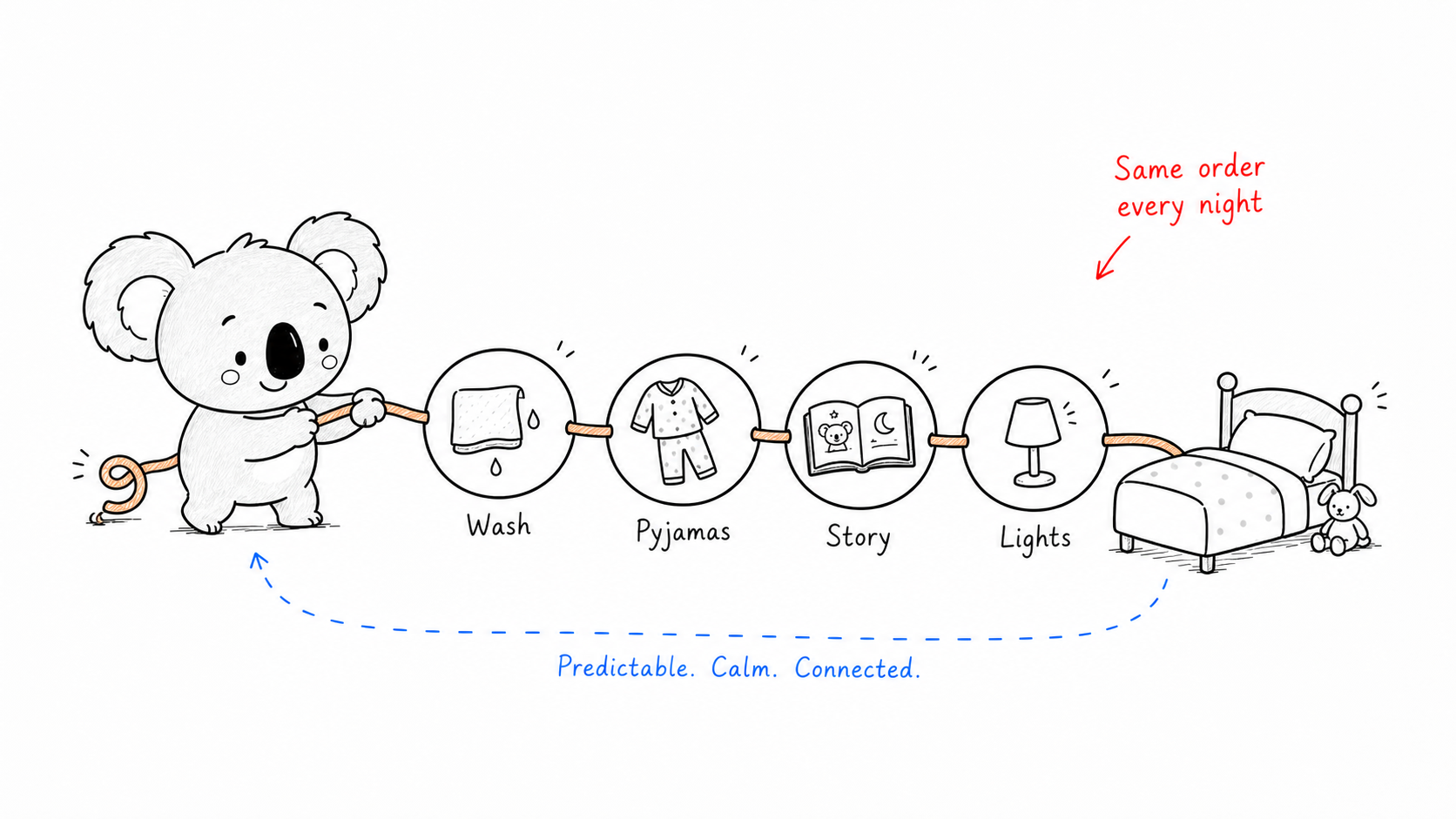
- ●Use the same short sequence each night, such as wash, pyjamas, story and lights out.
- ●Keep the story choice bounded and use a familiar ending signal instead of adding more activities.
- ●A story app can support the reading step, but it cannot guarantee sleep or replace professional advice when concerns persist.
The short answer
A workable bedtime routine for a 3-year-old is short, predictable and easy for an adult to repeat on a tired evening. A useful starting pattern is wash, pyjamas, story and lights out. The exact clock time will depend on the child’s wake time, nap, childcare day and family schedule; the important part is the order and the same final signal. A routine is an invitation to slow down, not a promise that a child will fall asleep immediately.
The American Academy of Pediatrics describes a quiet pre-bed routine and consistency as practical sleep habits for toddlers. Raising Children Network likewise recommends a consistent, calming sequence and gives “brush teeth, quiet story time, bed” as an example. Those recommendations are general guidance, not a prescription for every child. If a child snores, has loud or heavy breathing, seems unwell, or has persistent and worrying sleep difficulties, speak with a qualified health professional.
Key takeaways
- ●Keep the sequence stable even when the details change: wash, pyjamas, story, then the same goodnight cue.
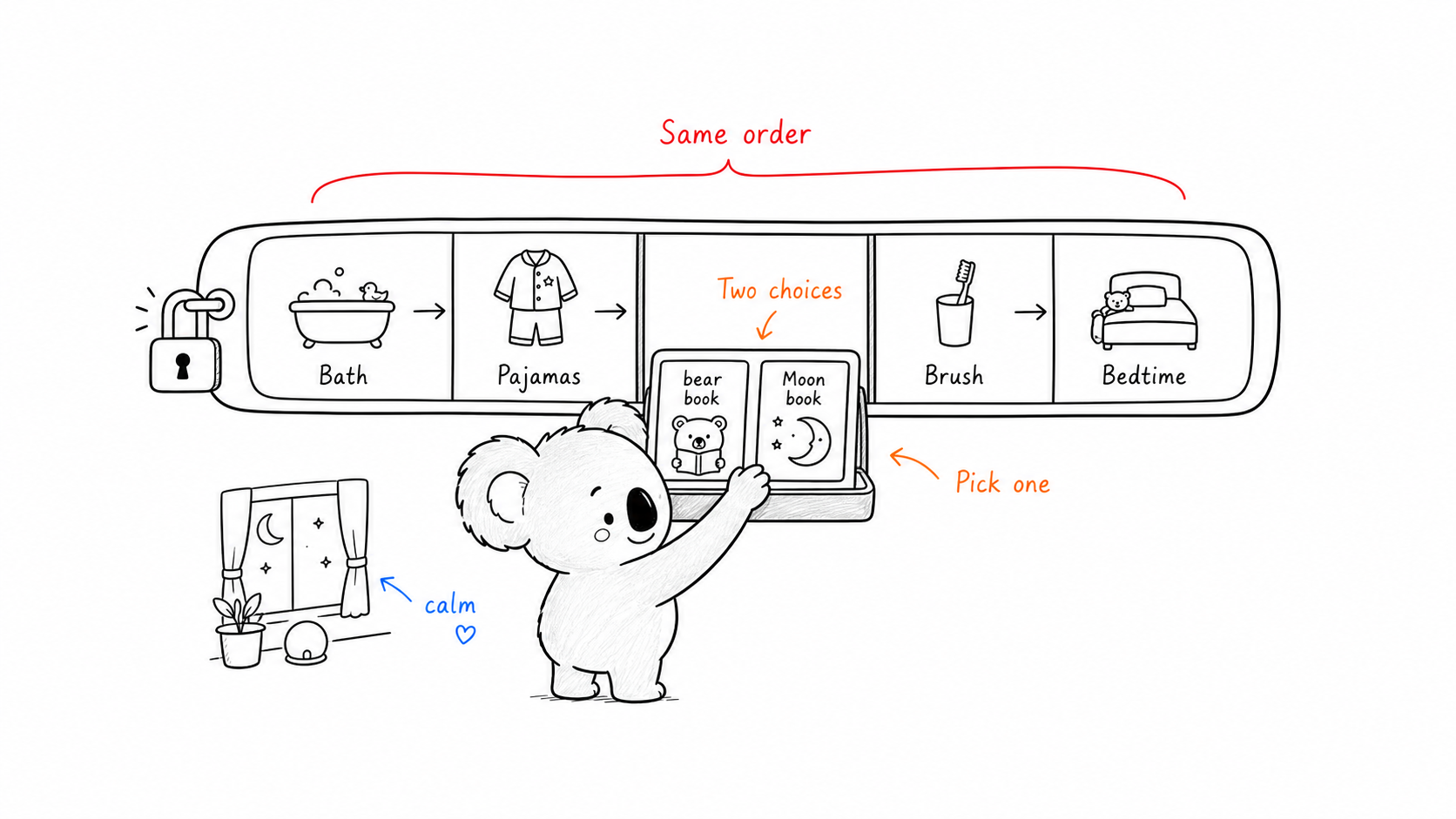
- ●Offer one small choice inside the routine, such as which pyjamas or which of two familiar stories. Avoid an open-ended menu at the point when everyone is tired.
- ●Move active play, bright screens and exciting conversations earlier. The last part of the evening should become quieter by degrees.
- ●Use a picture chart or spoken rhythm so the child can see what happens next instead of relying on repeated negotiations.
- ●Treat story time as connection and routine support, not as a treatment for sleep problems or a guarantee of fast sleep.
- ●Choose a story that fits the child’s age and mood. A familiar, gentle story is often easier to finish than a brand-new adventure.
- ●Review the plan after several evenings. Measure whether the family can repeat it, whether arguments become shorter and whether the child recognises the final signal.
What a 3-year-old needs from a bedtime routine
Three-year-olds are learning to manage transitions, but they are still very sensitive to tiredness, hunger, excitement and separation from a parent. A long list of instructions can become another source of friction. The routine should therefore do three jobs: make the next step predictable, meet ordinary needs before lights out, and give the child a calm ending that does not keep expanding.
Predictability does not mean that every evening must look identical. A bath can become a quick wash, a paper book can replace an app, and a parent who is working late may join for only the story and goodnight. The order can stay recognisable even when the materials change. This distinction is helpful: protect the sequence, not a perfect performance.
A realistic routine might take around 20–30 minutes from the first transition to bed, but families should adjust it to their own child. One child may need time to finish play and another may become overtired quickly. If the routine keeps growing, remove a step before adding another reward, activity or explanation.
Build the four-step sequence
1. Wash and finish ordinary needs
Start with the practical jobs that otherwise become reasons to leave the bedroom. This may include a bath or face wash, brushing teeth, using the toilet, putting away one toy and having a small drink if that is part of the child’s normal evening. Keep the instruction concrete: “First teeth, then pyjamas.”
Avoid turning the bathroom into a long play session just before bed. Warmth and connection are welcome, but energetic water play can make the transition harder. Check that the sleeping space is safe and comfortable before the final light is turned off.
2. Change into pyjamas with one small choice
A 3-year-old often wants some control. Give that control a boundary: “Do you want the striped pyjamas or the green ones?” Two options are enough. The parent can keep the rest of the routine fixed. If neither option is accepted, calmly choose one and move on rather than creating a new catalogue of alternatives.
The same principle can apply to a comfort object, a bedside light or the order of two small tasks. A choice is useful when it helps the child participate without reopening the whole bedtime. It is less helpful when it becomes a new negotiation after every step.
3. Read one short story
Story time can be the emotional centre of the routine. Keep the choice narrow: one familiar book, or one of two stories already selected by the adult. Ask a simple question about the pictures, but do not turn the reading into a lesson if the child is already tired. The goal is a warm, clear ending.
Some families prefer a physical book. Others use an illustrated story app when they want a prepared shelf of short English stories. Gula Stories is designed for children aged 3–8 and lets parents choose the 3–4 age range. Its current story experience includes illustrated and narrated English stories, child-friendly English reading voices, autoplay, favourites and reading history. It is described as free from third-party advertising and as a simple, low-distraction experience.
Those are product facts, not sleep outcomes. Gula Stories does not have an approved claim for offline listening, a sleep timer or listening-time limits. iOS and Android accounts do not sync with each other; subscription, favourites and reading progress can sync within iOS, and Android devices can sync within Android. A parent who wants one story should choose it before handing over the device and close the app when the story ends.
4. Lights out and the final cue
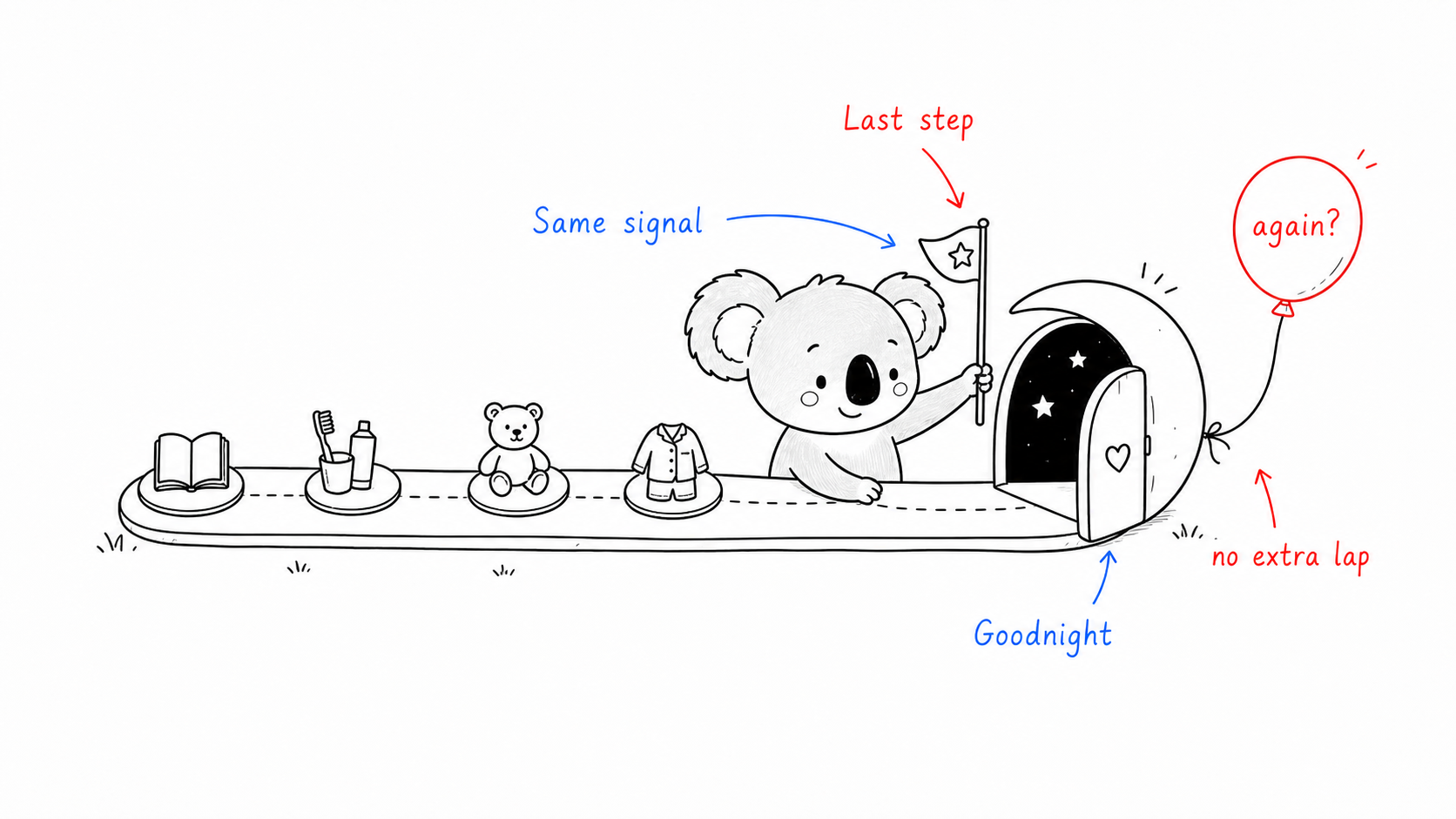
The last step should be recognisable and brief. It might be the same phrase, a hug, a closed book, a small night light and “goodnight”. Avoid introducing a new conversation at this point. The child can hear that the routine is complete without feeling that connection has disappeared.
If the child calls out, first check safety and an obvious need. Then keep the response short and consistent. A parent might say, “You are safe. It is sleep time. Goodnight.” The exact words matter less than the calm repetition. If the adult keeps adding stories, questions and new promises, the ending becomes harder to recognise.
A sample routine that can flex
The following is a planning example, not a rule:
| Stage | Example action | What keeps it manageable |
|---|---|---|
| Transition | Tidy one small area and say that bedtime is beginning | Give notice before stopping play |
| Wash | Toilet, teeth, wash or bath | Finish practical needs before the story |
| Pyjamas | Put on clothes and choose one comfort item | Offer one bounded choice |
| Quiet time | Dim lights, cuddle and read one story | Select the story before the child is overtired |
| Ending | Close the book, use the same phrase and turn off the light | Do not add a new menu after goodnight |
The sequence can be shorter on a difficult night. A parent may skip a bath while keeping teeth, pyjamas, one story and the final cue. Consistency is often easier when the routine has a “minimum version” for evenings when the family is late, travelling or exhausted.
How to make the routine visible
A visual chart can reduce the number of words an adult has to repeat. Draw or print four simple pictures: a toothbrush, pyjamas, a book and a moon. Place the chart somewhere the child can reach. Point to the next picture and invite the child to move a peg or turn over a card. The chart is not a behaviour scorecard; it is a map.
Use the same language each night. “Look at the chart: book is next” is clearer than a long explanation about why the child must hurry. Praise participation without promising a reward for sleep: “You found the next step” or “You put the book back gently.” If the chart itself becomes a source of argument, simplify it to three pictures or use it only as a parent prompt.
Choosing a story without creating more browsing
The story should match the job of the moment. For a 3-year-old close to sleep, consider:
| Check | A useful question |
|---|---|
| Language | Can my child follow most of the words without a long explanation? |
| Emotional tone | Is the theme gentle enough for this child tonight? |
| Length | Can the family finish it without delaying the next step? |
| Visual energy | Do the pictures support attention or invite more tapping? |
| Ending | Is there a natural last page and a clear way to close the app or book? |
| Repetition | Would my child benefit from hearing this story again tomorrow? |
Repetition is not a failure of imagination. A familiar story can give a child a dependable structure and give the adult a dependable stopping point. Keep two or three favourites available and introduce a new story earlier in the day if the child becomes too alert at bedtime.
For a digital app, the adult should preview the title, manage the device and decide when the experience is finished. No third-party advertising is a useful boundary, but it does not remove the need to supervise the overall routine. Gula Stories’ documented content process includes AI assistance followed by team rewriting and review for children; before release, violence, sexual content and other unsuitable material are excluded. Parents should still use their own judgement about the child’s individual sensitivities.
When the routine stops working
First, look for the smallest change rather than rebuilding the whole evening. Is the routine starting too late? Is a nap finishing later? Is the story choice too exciting? Is the child hungry, uncomfortable or seeking one-to-one connection? A brief note for three or four nights can reveal a pattern without turning bedtime into a research project.
If the child becomes more distressed at the same step, make that step smaller. A full bath might become a wash. A long book might become one familiar page spread followed by a cuddle. A chart with six pictures might become four. The purpose is not to win a negotiation; it is to create a sequence the child and adult can repeat.
Avoid promising that a particular routine will make a child sleep through the night. A routine can support the transition to bed, but children differ and night waking has many possible causes. The American Academy of Pediatrics advises parents to speak with a paediatrician about sleep concerns, and Raising Children Network recommends seeking help when settling or sleep problems are concerning. Use those sources as general guidance and follow advice from a professional who knows the child’s circumstances.
Common mistakes to avoid
- ●Starting with too many choices. “What do you want to do before bed?” can produce a second evening. Offer one choice inside a fixed plan.
- ●Making the story an unlimited reward. One more book can become the main event. Decide the number before reading.
- ●Changing the final cue every night. A consistent phrase or action makes the ending easier to understand.
- ●Using exciting screen content at the end. A story app should be chosen for its pace and fit, not simply because it is digital.
- ●Adding a new strategy after one difficult night. Try a small change for several evenings before deciding whether it helps.
- ●Expecting the app or chart to do the parenting. Tools can support a routine; the adult still sets the boundary and notices the child’s needs.
- ●Treating a sleep concern as a product problem. Persistent, severe or worrying issues deserve professional advice, not a stronger marketing promise.
FAQ
What is the best bedtime routine for a 3-year-old?
There is no single best routine for every family. A practical starting point is wash, pyjamas, one quiet story and lights out, repeated in the same order. Keep the routine short enough that an adult can repeat it on a difficult evening, then adjust the clock time and details to the child’s day.
How many stories should a 3-year-old hear at bedtime?
Choose a number the family can finish consistently, often one story or a very small, pre-agreed set. The important point is to decide before the story begins. If the child keeps requesting another story, repeat the same calm ending instead of making the number larger every night.
Should I let my 3-year-old choose the bedtime story?
Yes, but keep the choice bounded. Offer two stories that you have already checked for length and emotional fit. This gives the child participation without turning the final part of the evening into open-ended browsing.
Are bedtime story apps suitable for 3-year-olds?
Some may be, but parents should check age guidance, content review, advertising, story length, visual pace and how the experience ends. Gula Stories offers a 3–4 age range and English illustrated and narrated stories; the current product facts do not support claims of offline playback, a sleep timer or guaranteed sleep.
Should I use a screen before bed?
Families should consider the child’s response and current health guidance. Raising Children Network advises turning off TV, computers and tablets an hour before bedtime and avoiding scary or exciting content close to bedtime. If a family uses a story app, a parent can keep the session short, choose the story in advance, dim the screen and make the final transition clear. A physical book remains a good alternative.
What if my child refuses every step?
Reduce the language and offer one small choice. Check ordinary needs, keep the response calm and return to the same sequence. If refusal is persistent or accompanied by distress, breathing problems, pain or other concerns, speak with a qualified health professional.
Can a bedtime routine make a child fall asleep?
No routine or app should guarantee that outcome. A predictable routine may help a child understand that bedtime is approaching, but it is not a treatment and it cannot account for every sleep problem. The responsible goal is a calmer, repeatable transition, not instant sleep.
Conclusion
To build a bedtime routine for a 3-year-old, begin with four steps that an adult can repeat: wash, pyjamas, one story and lights out. Keep choices small, reduce stimulation gradually, make the final cue consistent and use a picture chart if it helps the child see what comes next. Review the routine over several nights and shorten it when it becomes too complicated.
Gula Stories can be one option for the story step when a family wants English illustrated and narrated stories with a 3–4 age choice, child-friendly reading voices, autoplay, favourites, reading history, daily reminders and no third-party advertising. It should be used as a story-time convenience, not as a promise of sleep treatment. Explore the Gula Stories library and current plans, and check the current store terms before subscribing.
Sources checked for general guidance
- ●American Academy of Pediatrics: Toddler Bedtime Trouble
- ●HealthyChildren.org: Healthy Sleep Habits
- ●Raising Children Network: Toddler sleep
This article provides general parenting information, not medical advice. Product features and subscription terms can change; check official listings before use or purchase.