Gula Stories vs Moshi: Which Is Better for a 4-Year-Old?
Gula Stories vs Moshi for a 4-year-old: compare prices, age fit, free access, bedtime stories, narration and sleep content.
Gula Stories vs Moshi: Which Is Better for a 4-Year-Old?
The short answer: choose Gula Stories if you want a focused bedtime story app for ages 3–8, a lower subscription price, age filters built around preschool and early-school years, and a free tier that lets you test the routine before paying. Choose Moshi if your family wants a broader sleep and relaxation library that also covers older children, meditations, music and calming activities.
For a four-year-old, neither product is automatically “the best”. The better choice depends on whether you are buying a simple story routine or a wider sleep-and-wellbeing library.
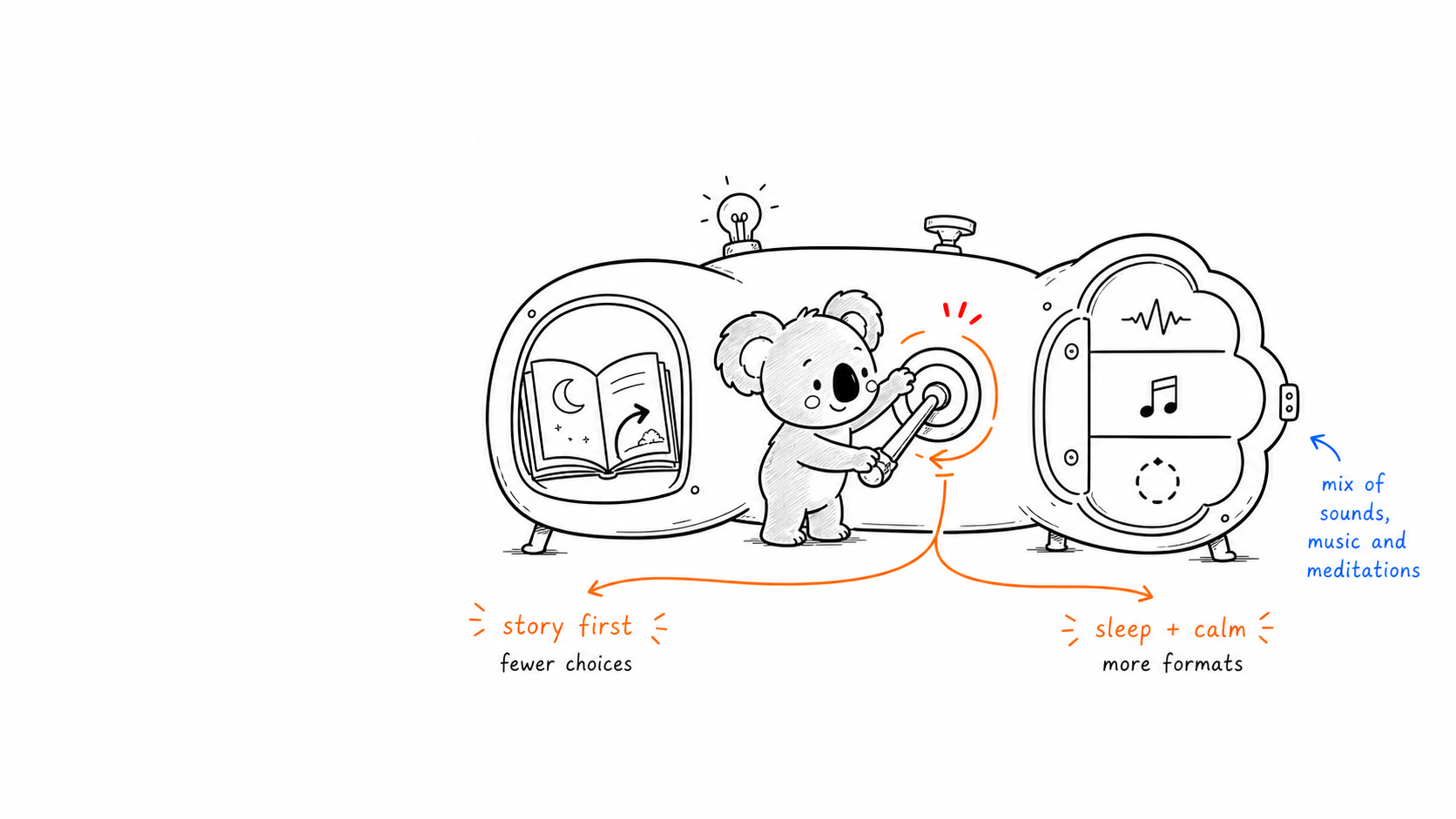
Quick comparison
| Decision factor | Gula Stories | Moshi |
|---|---|---|
| Primary fit | Bedtime story app for children ages 3–8 | Sleep, relaxation and learning content for children across a wider age range |
| Age positioning | 3–8, with filters for 3–4, 5–6 and 7–8 | The US App Store listing describes content for ages 0–12 |
| Monthly price | US$4.99/month | US$9.99/month on Moshi’s official site |
| Annual price | US$29.99/year, about US$2.50/month | US$49.99/year on Moshi’s official site |
| Free access | 5 complete free stories plus a 3-page preview of every premium story | A selection of free content; the official site advertises a 7-day free trial |
| Core content | 100+ original illustrated stories, updated weekly | Sleep stories, music, sounds, meditations and calming content; Moshi lists 400+ audio tracks |
| Narration and controls | Natural read-aloud narration with adjustable speed and pitch | Audio-first sleep and relaxation content with different content types |
| Age selection | Filters designed around 3–4, 5–6 and 7–8 | Wider age positioning, with content organised across sleep, relaxation and play |
| Advertising | No third-party ads for free or paid users | Moshi describes its experience as ad-free |
| Platforms | iOS and Android | iOS, Android and web-based account/subscription flows vary by region |
Prices and product details can change by country, store and promotion. Moshi’s current public pricing is listed on its official website; check the checkout screen for your location before subscribing.
What is the real difference?
The most important difference is not the number of features. It is the job each product is trying to do.
Gula Stories is positioned as a bedtime story app. Its core promise is easy to understand: a parent chooses an age range, selects an illustrated story, and uses natural read-aloud narration as part of the evening routine. The product is deliberately centred on stories for children ages 3–8.
Moshi is broader. Its official materials describe sleep stories, music, sleep sounds, meditations and relaxation content, alongside activities for children. That breadth can be useful when one child wants a story, another needs a calming audio track, or a family wants content that remains relevant beyond the preschool years.
For a four-year-old, the practical question is this: do you want more bedtime choices, or do you want fewer decisions and a clear story habit?
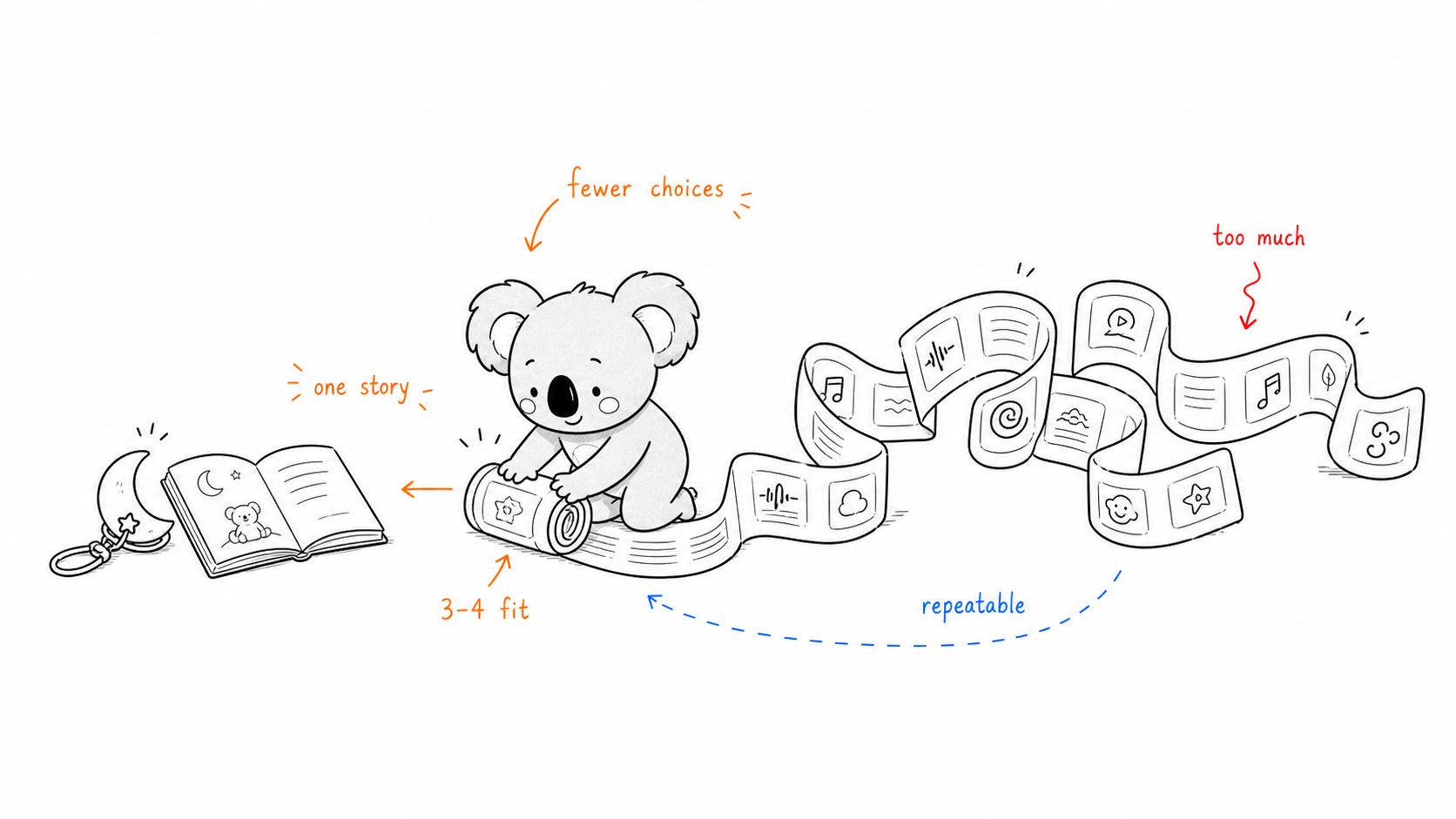
When Gula Stories is the better fit
1. You want a simple story-first routine
A four-year-old often benefits from a predictable sequence. Bath, pyjamas, story, lights out is easier to repeat when the story app itself does not ask the family to manage many different content categories.
Gula Stories keeps the centre of the experience around illustrated bedtime stories. That makes it a natural choice for parents who want to add a story to an existing routine rather than introduce a complete sleep platform.
2. You want a lower-cost way to test the habit
Gula Stories costs US$4.99 per month or US$29.99 per year. The annual plan works out to about US$2.50 per month. Families can also try 5 complete free stories and preview 3 pages of every premium story.
That matters because a bedtime app only creates value if your child actually accepts it. A lower entry price and a meaningful free tier let parents test story length, narration style and evening fit before committing to a larger subscription.
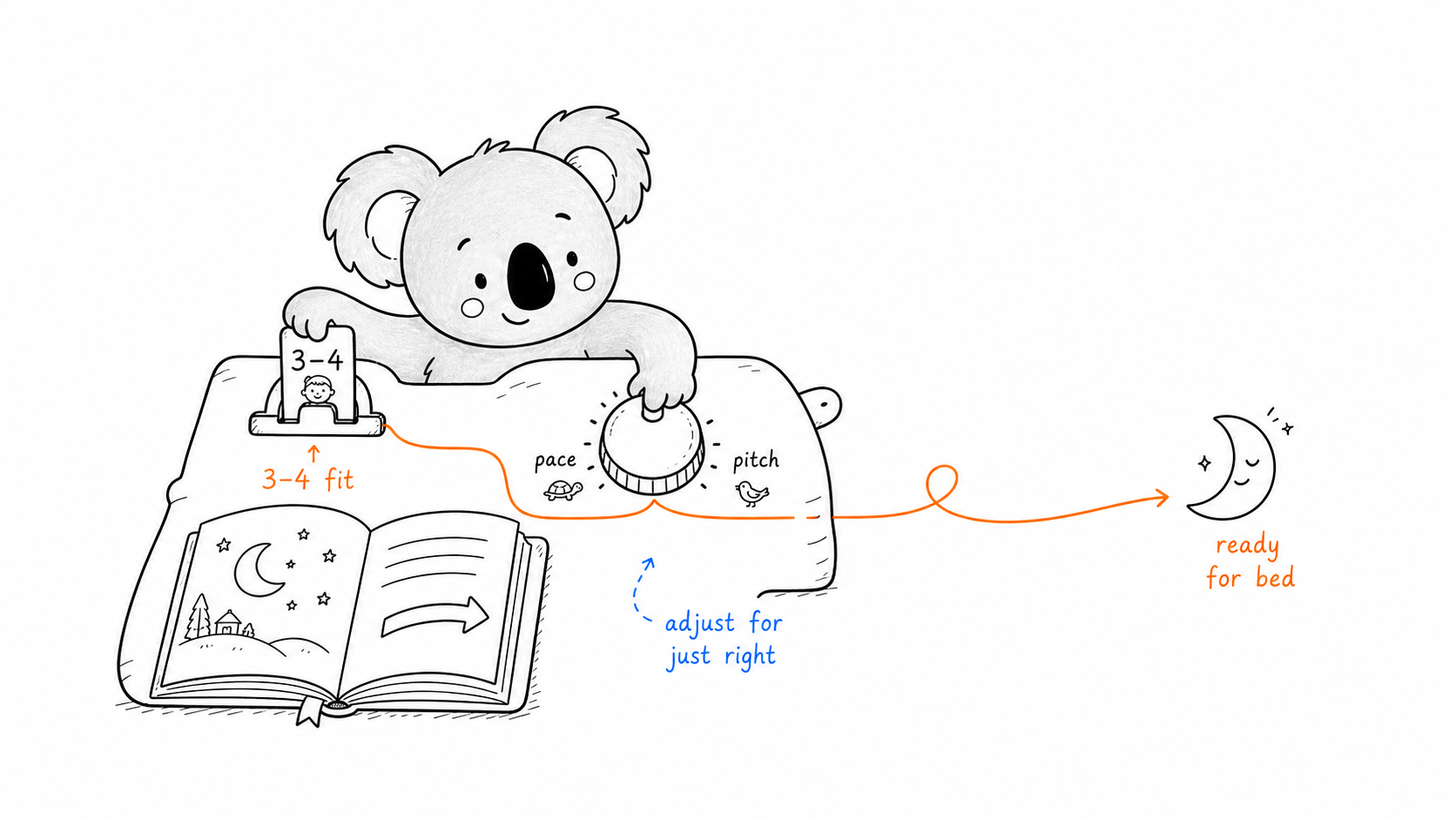
3. You need age filters that make sense for preschoolers
The 3–4 filter is directly relevant to a four-year-old. The other age groups, 5–6 and 7–8, also make the library easier to revisit as a child grows.
Moshi covers a wider age span. That can be a strength, but a wider library may also mean that parents need to spend more time choosing the right track for a particular evening. A more focused age structure can be preferable when bedtime decisions already feel tiring.
4. You want adjustable narration
Gula Stories offers natural read-aloud narration with adjustable speed and pitch. That gives parents a practical way to match the pace to the child: slower for a winding-down story, or slightly quicker when the child is ready to finish the routine.
This is a functional advantage, not a promise that any app will make a child fall asleep. It simply gives families more control over how the story sounds.
When Moshi is the better fit
1. Your family wants sleep and relaxation content beyond stories
Moshi’s official materials include sleep stories, music, sleep sounds and meditations. That broader mix can be valuable when bedtime changes from night to night. A child might want a story on one evening, a soundscape on another, or a short calming exercise after a difficult day.
For families with children across a wider age range, Moshi’s broader positioning may also reduce the need to change products as children grow.
2. You value a large audio catalogue
Moshi lists 400+ audio tracks and a wider collection of sleep and relaxation material. This is not a direct apples-to-apples comparison with Gula Stories’ 100+ original illustrated stories, because the products count and package content differently.
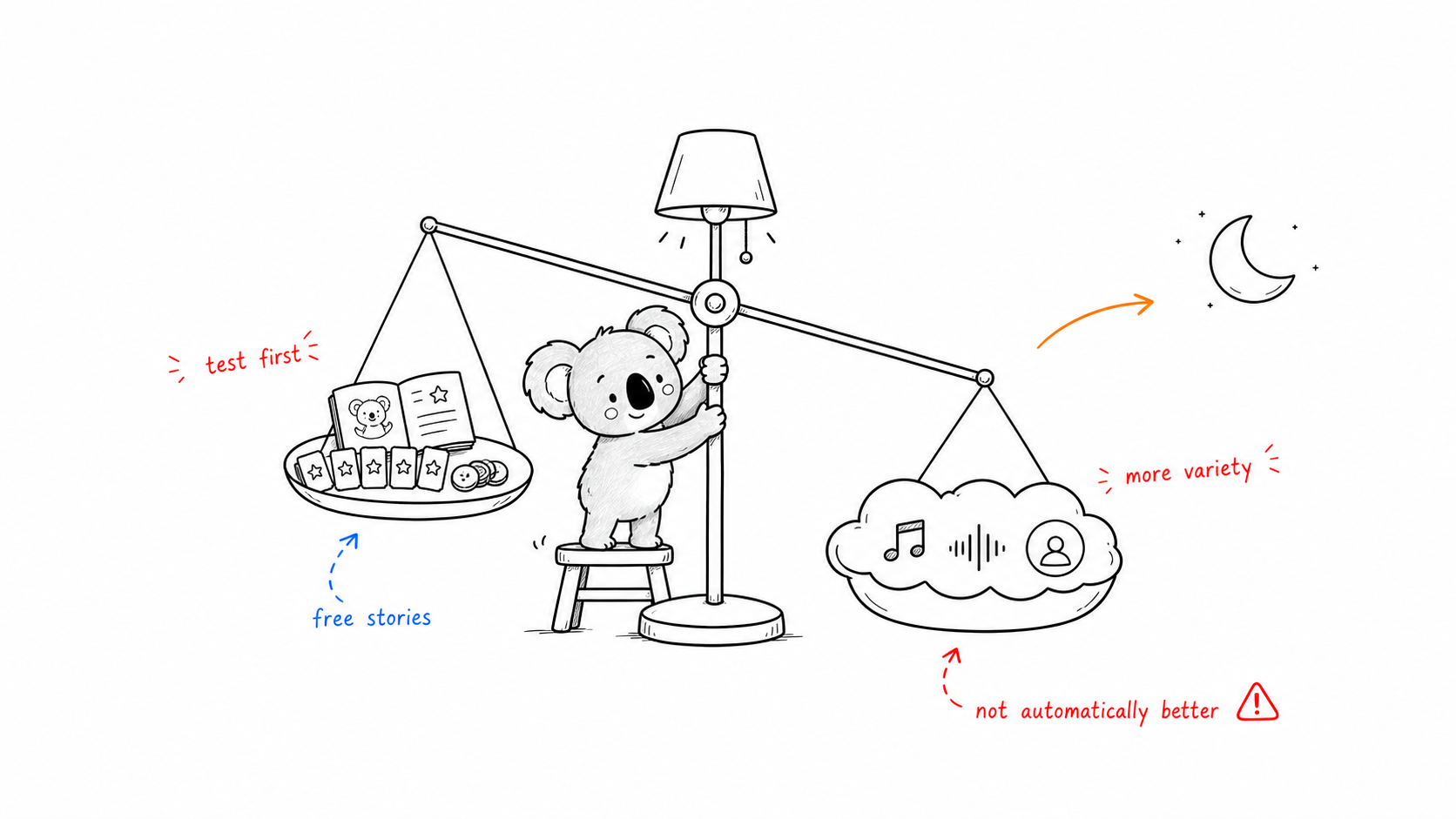
The useful question is whether your family needs variety across multiple formats. If the answer is yes, Moshi may offer more breadth. If you mainly need one dependable bedtime story each night, a larger catalogue may not create a better routine by itself.
3. You want a product with a broader sleep identity
Moshi is explicitly built around helping children relax and sleep, and its public materials discuss sleep routines, calming down and emotional regulation. Parents who are looking for a sleep-focused product rather than a story library may find that positioning easier to understand.
Trade-offs parents should consider
Gula Stories trade-offs
Gula Stories is more focused, which means it is not designed to be a complete collection of meditations, music and relaxation exercises. Parents who specifically want those formats may prefer Moshi.
It is also a mobile app rather than a dedicated audio device. Families who want a child to operate a separate physical player may need to consider a different type of product.
Finally, 100+ stories is a useful library, but it should not be compared directly with a competitor’s track count without checking what each company counts as a story, track, sound or activity.
Moshi trade-offs
Moshi’s monthly price is higher than Gula Stories’ monthly price, and its wider catalogue can mean more choice to manage. More content is valuable only when it matches the child’s age, attention span and bedtime mood.
Moshi also covers play and other activities alongside sleep content. Those features may be useful during the day, but parents should still decide which content belongs in the bedtime part of the routine.
Which one should a 4-year-old family choose?
Choose Gula Stories when:
- ●You want a story-first app built around ages 3–8.
- ●You prefer age filters for 3–4, 5–6 and 7–8.
- ●You want a lower monthly or annual price.
- ●You want to test the routine with 5 complete free stories.
- ●You value adjustable narration and a straightforward bedtime flow.
Choose Moshi when:
- ●You want sleep stories plus sounds, music and meditations.
- ●You want content that extends beyond the preschool years.
- ●You prefer a broader relaxation library.
- ●You are comfortable paying more for a larger mix of audio formats.
- ●You want one product that can cover bedtime and calming moments during the day.
The best choice is the one your child will accept repeatedly. Start with the free option or trial where available, test the same bedtime sequence for a week, and observe whether the product reduces decisions or adds another one.
Three common mistakes
- ●Choosing by catalogue size alone. A large library does not matter if your child cannot settle on a story or the routine becomes longer.
- ●Treating a trial as proof of sleep improvement. A free trial shows whether the child likes the content. It does not prove that any app will solve a sleep problem.
- ●Mixing daytime play and bedtime content without a boundary. Decide which tracks or activities are part of the wind-down routine and keep the final steps predictable.
Sources
- ●Moshi official website
- ●Moshi official FAQs
- ●Moshi Kids on the US App Store
- ●Gula Stories pricing
- ●Gula Stories
This comparison was prepared for parents choosing a bedtime story product for a four-year-old. Product prices and availability should be rechecked before purchase.