
When Your Child Is Afraid of the Dark
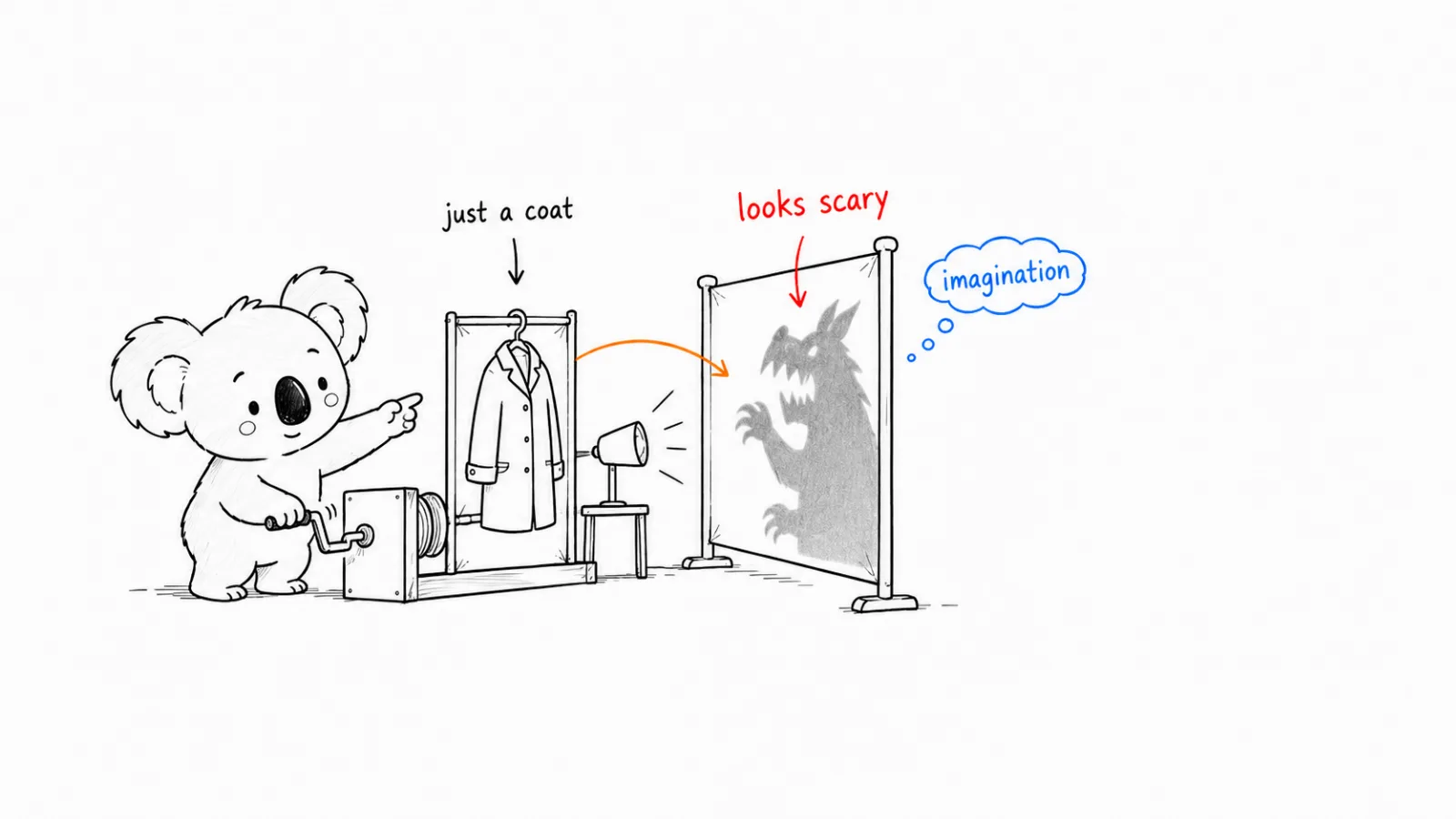
Fear of the dark is a common childhood experience, especially when imagination develops faster than a child’s ability to
Key Takeaways
- ●Fear of the dark is a common childhood experience, especially when imagination develops faster than a child’s ability to distinguish imagined dangers from real ones.
- ●Validate the feeling without confirming that the imagined threat is real: “I can see that you feel frightened. You are safe, and I am here.”
- ●Use predictable routines, gentle light and calm language to create reassurance while gradually building confidence.
- ●Avoid teasing, prolonged checking rituals or frightening stories, as these responses can intensify fear or make reassurance harder to reduce.
- ●Seek professional guidance if the fear is severe, persists despite consistent support or significantly disrupts sleep and daytime life.
1. Introduction
When your child is afraid of the dark, bedtime can quickly change from a peaceful routine into repeated requests, tears and negotiations. A child may ask you to check under the bed, leave every light on or stay until they fall asleep. Parents can feel caught between offering comfort and worrying that too much reassurance will strengthen the fear.
The most helpful response usually combines two messages:
- ●The feeling is real and deserves compassion.
- ●The child is safe and capable of learning to manage it.
Children between the ages of two and eight are developing vivid imaginations, but they do not always have the reasoning skills needed to evaluate what those imaginations create. Shadows may resemble faces, ordinary household sounds may seem mysterious, and a story remembered at bedtime may feel more immediate in a dark room.
The goal is not to force a child to “be brave” or eliminate every uncomfortable feeling. It is to help them tolerate the darkness in manageable steps, using light, language, stories and predictable routines as temporary supports.
2. Validate the Fear Without Making It Bigger
The core principle is simple: validate the emotion, not the imagined danger.
If a child says, “There is a monster behind the curtain,” an adult may be tempted to search the room and announce that no monster is there. A brief safety check can sometimes settle a young child, but repeatedly investigating every imagined threat may unintentionally suggest that a threat could be present.
Dismissing the fear is not helpful either. Statements such as “That is silly” or “Big children are not scared” can add shame to the original fear. The child may still feel frightened but become less willing to ask for support.
A balanced response sounds like this:
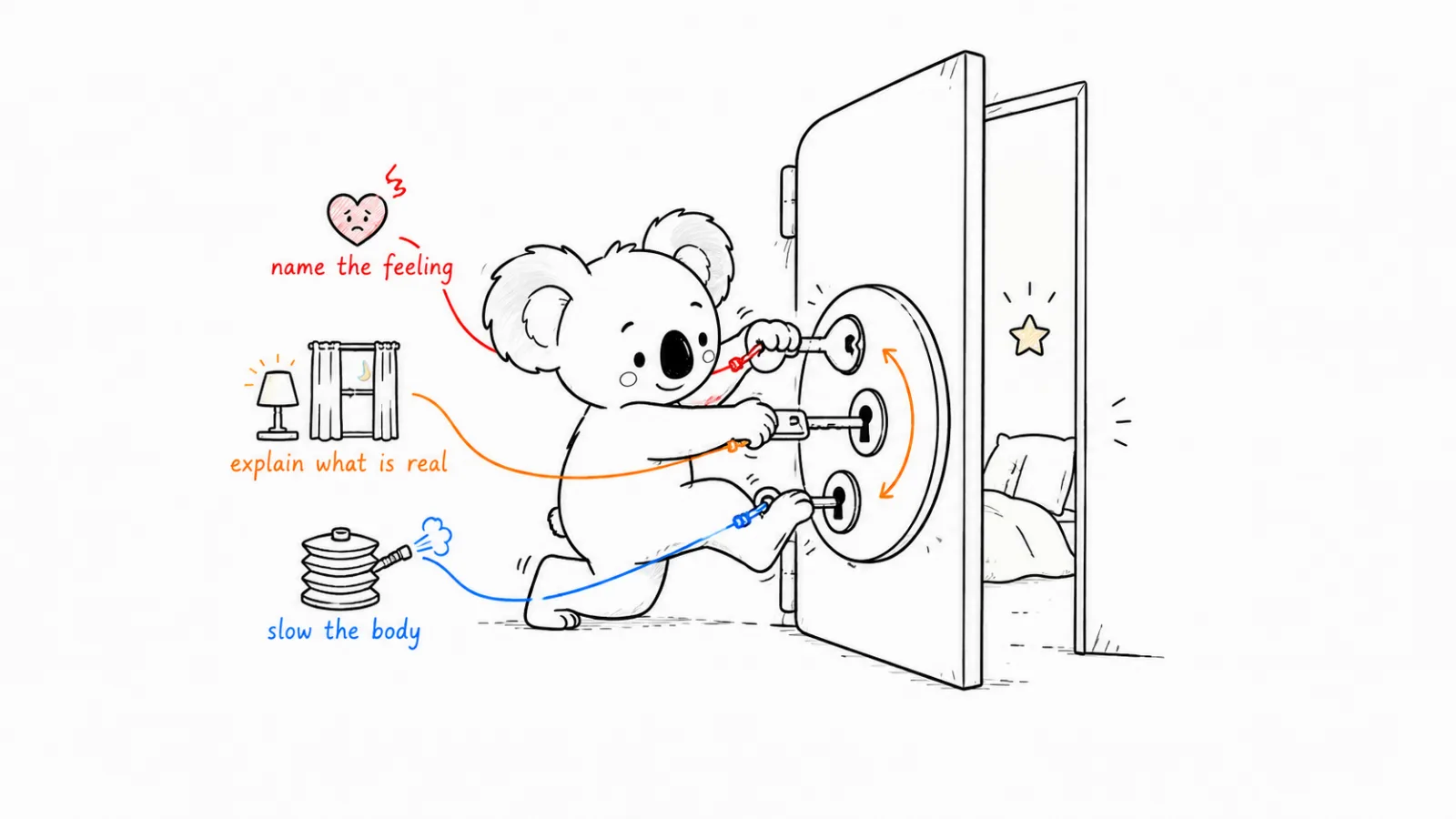
“That shadow looks frightening to you. It is the curtain next to the lamp. You are safe, and we can take three slow breaths together.”
This response does three things:
- ●Names and accepts the feeling.
- ●Gives a calm, reality-based explanation.
- ●Offers a practical way to settle the body.
Useful bedtime language
Try short, repeatable phrases rather than lengthy explanations:
- ●“It is okay to feel scared. You are safe in your room.”
- ●“Your imagination is making a scary picture.”
- ●“Let us look once, then we will return to our bedtime plan.”
- ●“You do not have to make the feeling disappear. We can let it get smaller.”
- ●“I will check on you after I put away the laundry.”
Keep your voice calm and matter-of-fact. Children often respond as much to an adult’s pace, facial expression and body language as they do to the words themselves.
Scenario: “Do not leave me”
If your child becomes distressed whenever you move towards the door, avoid disappearing unexpectedly. Instead, describe exactly what will happen:
“I will sit beside your bed for two minutes. Then I will move to the chair. After our song, I will leave the door slightly open and check on you soon.”
Following through matters. Predictable departures help a child learn that separation at bedtime is safe and temporary.
3. Use Light as a Support, Not a Battle
A completely dark room is not a necessary test of courage. A soft night-light, light from the hallway or a partially open door can make bedtime feel manageable while a child develops confidence.
The type and placement of light matter. A very bright light may make it harder to create a restful environment, while a poorly positioned night-light can cast unfamiliar shadows. Choose a dim, warm light and place it where it illuminates the room gently without shining directly into the child’s eyes.
Walk through the room at bedtime and notice what changes when the main light goes off. A pile of clothes, open wardrobe or moving curtain may look very different in low light. Removing confusing shapes is a practical adjustment, not an admission that the room is dangerous.
A gradual-light plan
Some children are content to keep a night-light for an extended period. Others may want to work towards less light. If reducing it is appropriate, make the change gradually and with the child’s knowledge.
| Stage | Bedtime setup | Confidence-building message |
|---|---|---|
| 1 | Dim night-light close to the bed | “This light can help while you practise sleeping in your room.” |
| 2 | Night-light moved farther away | “You are managing with a little less light.” |
| 3 | Light outside the room with the door open | “The room is darker, and your bedtime plan stays the same.” |
| 4 | Door partly closed or light reduced | “You can use your breathing, your story and your comfort object.” |
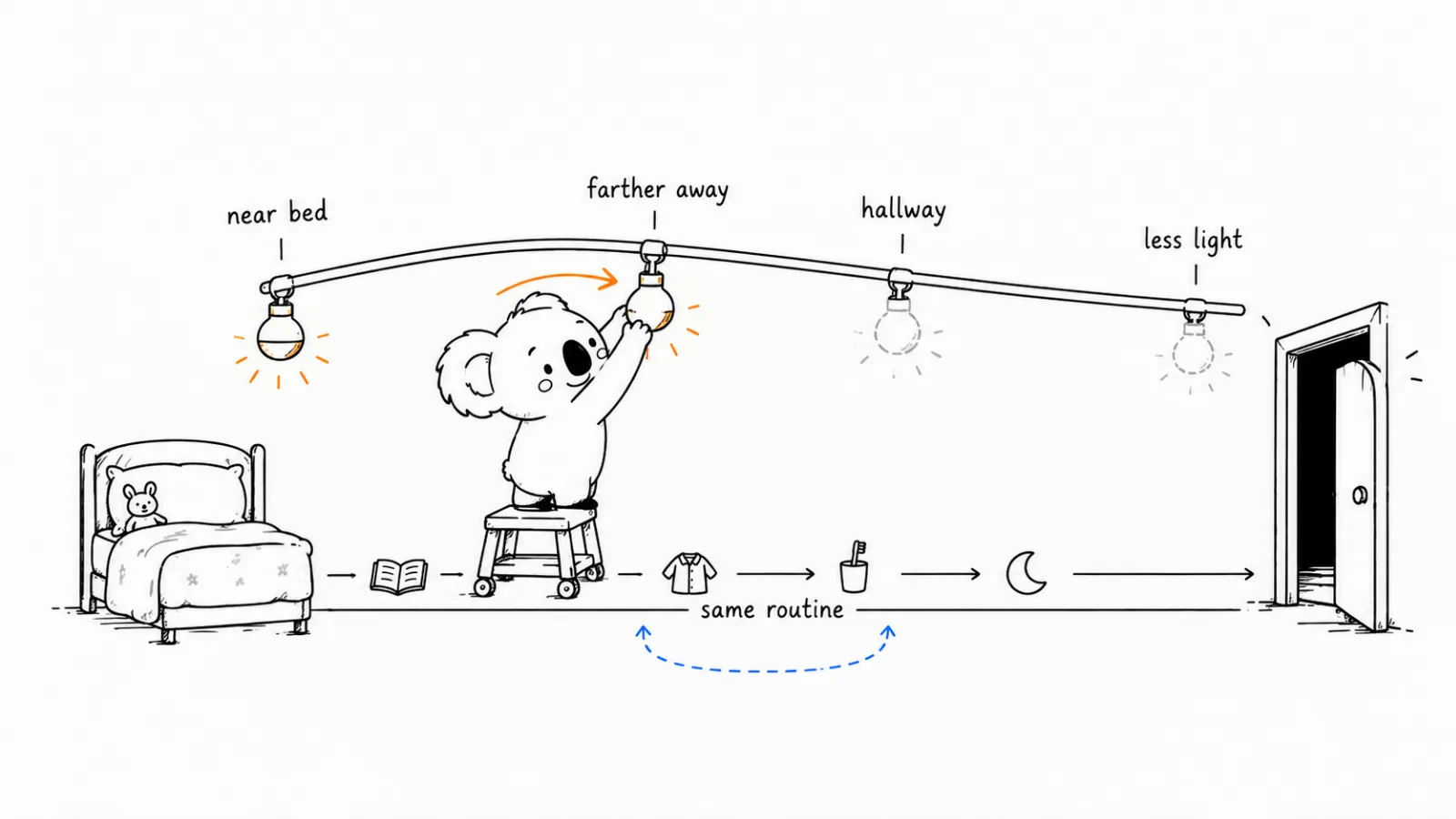
There is no need to rush through these stages. Return to an earlier step after illness, travel or a major family change if necessary. Temporary setbacks do not erase previous progress.
If your child becomes highly distressed, reduce the size of the challenge. Confidence develops through repeated experiences of coping—not through being overwhelmed.
4. Build Confidence Through Routine and Stories
Fear often grows when bedtime feels unpredictable. A simple sequence gives children fewer opportunities to become alert and uncertain.
A routine might include:
- ●Bath or wash.
- ●Pyjamas and toilet.
- ●One quiet story.
- ●Cuddle and a short conversation.
- ●Night-light on.
- ●The same goodnight phrase.
- ●A planned check-in, if needed.
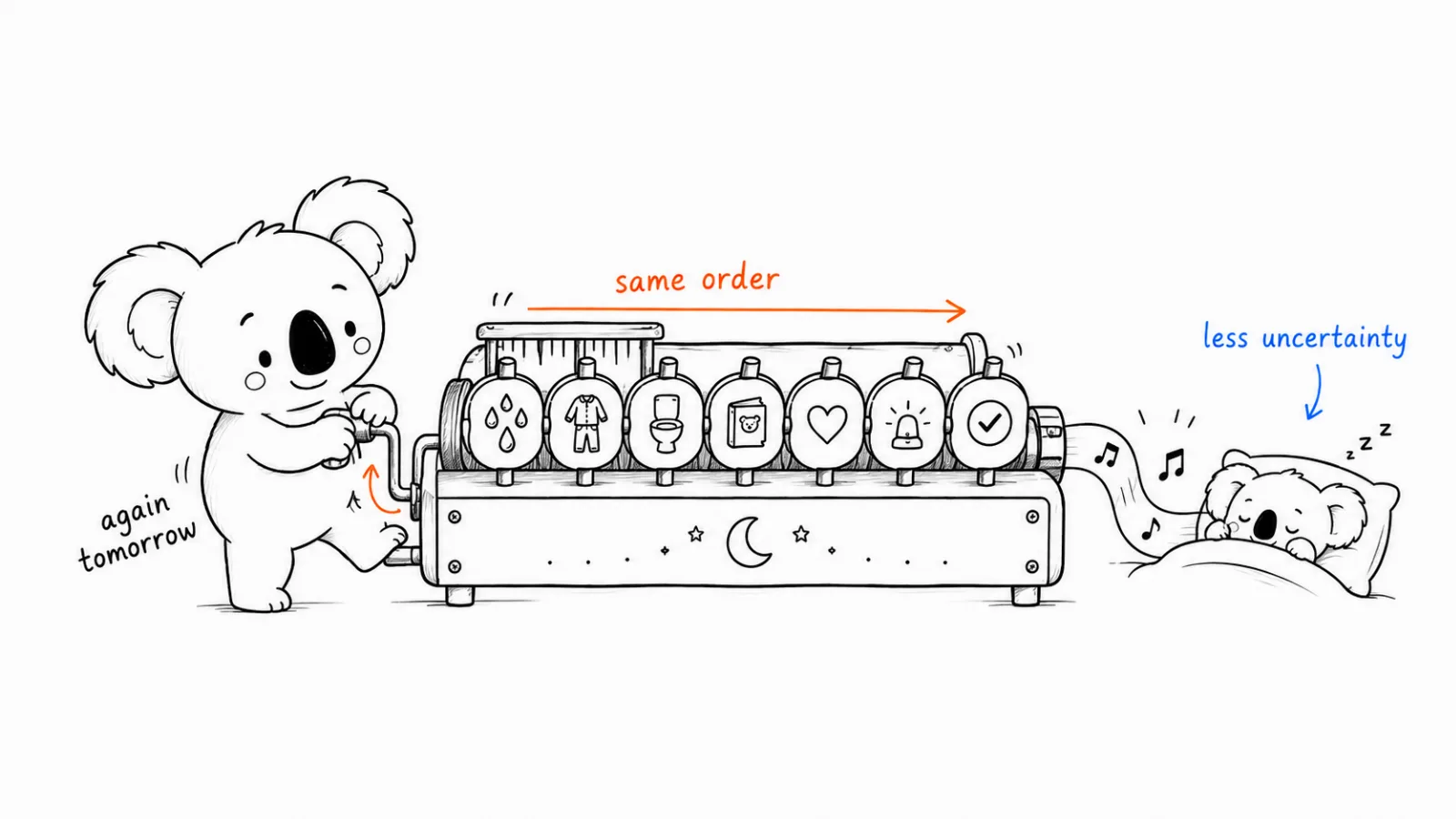
Try to keep the routine calm and similar from night to night. Avoid exciting videos, frightening images or intense stories shortly before bed, particularly if your child tends to replay them in the dark.
Use stories to rehearse courage
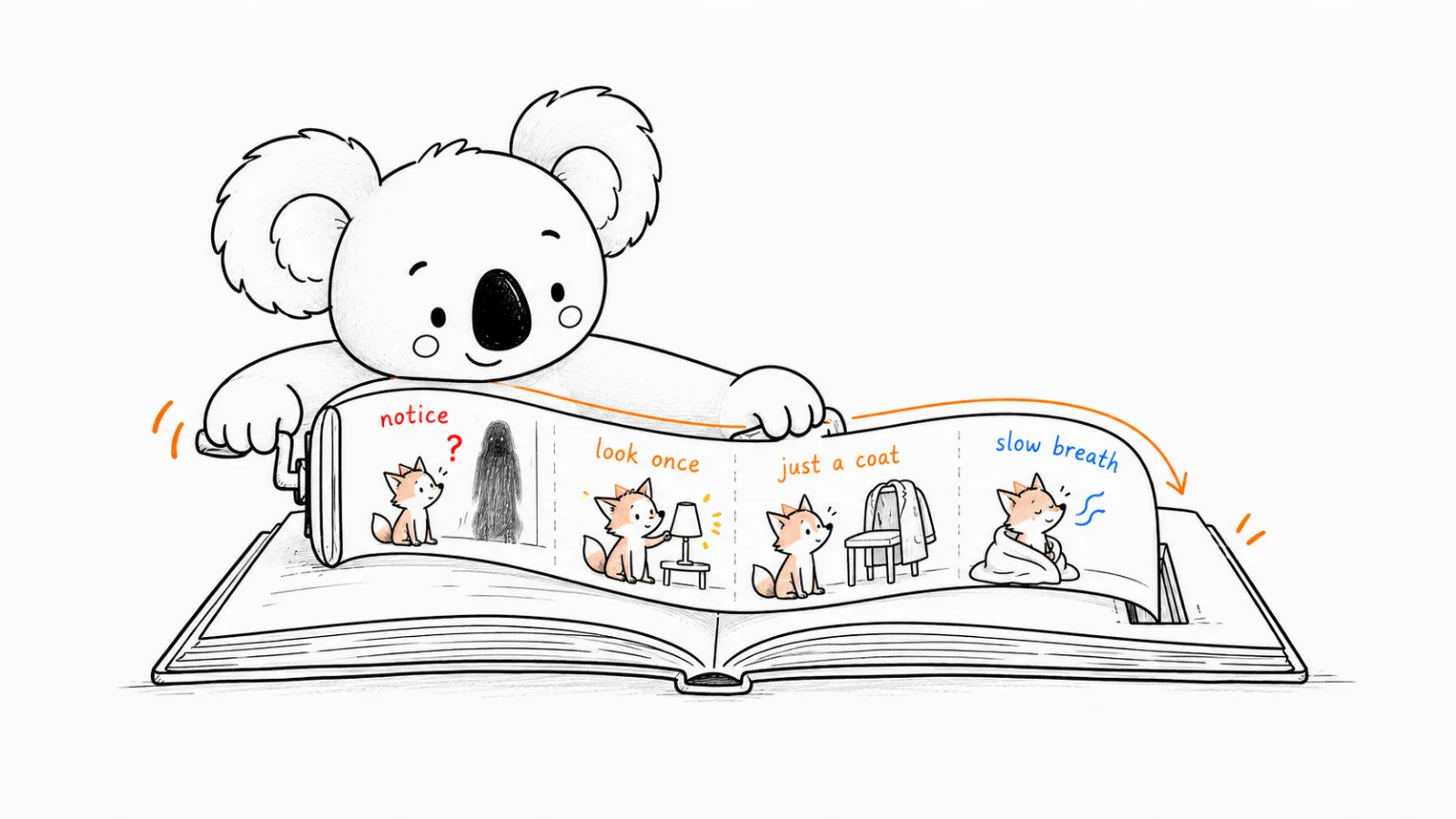
Stories can give children emotional distance from a fear. A character may hear a strange noise, notice a shadow and use a familiar strategy before settling down. The story should acknowledge uncertainty without introducing elaborate threats.
For example:
A little fox noticed a tall shape beside the wall. First, the fox’s imagination said, “Something is there.” Then the fox switched on a small light and saw a coat hanging on a chair. The fox took a slow breath, held a soft blanket and remembered, “A shadow can look different, but my room is still my room.”
After reading, ask one or two gentle questions:
- ●“What helped the fox feel safer?”
- ●“What could you try if a shadow looks strange?”
- ●“Which brave phrase would you like to remember?”
Avoid turning the discussion into a test. The purpose is to give the child language and options, not to demand a correct answer.
If audio stories help your family maintain a consistent routine, choose calm, age-appropriate material with predictable narration. An ad-free app such as Gula Stories can be used for a quiet bedtime story, including personalised elements that make a reassuring character or avatar feel familiar. Keep the device screen dim or off when possible so the story supports winding down rather than extending screen time.
Let the child help design the plan
Children are more likely to use a coping strategy when they have some ownership of it. Offer two limited choices:
- ●“Would you like the night-light near the door or near the bookshelf?”
- ●“Should our brave phrase be ‘I am safe’ or ‘My room is calm’?”
- ●“Would you like the rabbit or the bear beside you?”
- ●“Should I check on you in two minutes or five minutes?”
Limited choices create control without turning bedtime into an open-ended negotiation.
5. A Practical Response Plan for Parents
Use the following framework when fear appears at bedtime.
| What happens | Helpful response | What to avoid |
|---|---|---|
| Your child says the room is scary | Name the feeling and state that the room is safe | “There is nothing to be scared of” |
| A shadow looks like a creature | Identify its source once and adjust the object or light | Repeated searches for imaginary dangers |
| Your child calls you back many times | Use brief, predictable check-ins | Adding new songs, snacks or conversations each time |
| Your child asks for every light to remain on | Offer one soft light and agree on its location | Abruptly switching everything off as a test |
| Fear follows a frightening story or image | Acknowledge the connection and choose calmer content | Replaying or discussing scary details at bedtime |
| The child leaves bed repeatedly | Return them calmly with the same short phrase | Anger, teasing or lengthy arguments |
| Progress reverses after illness or change | Temporarily increase support, then reduce it gradually | Treating a setback as failure |
Keep reassurance brief and consistent
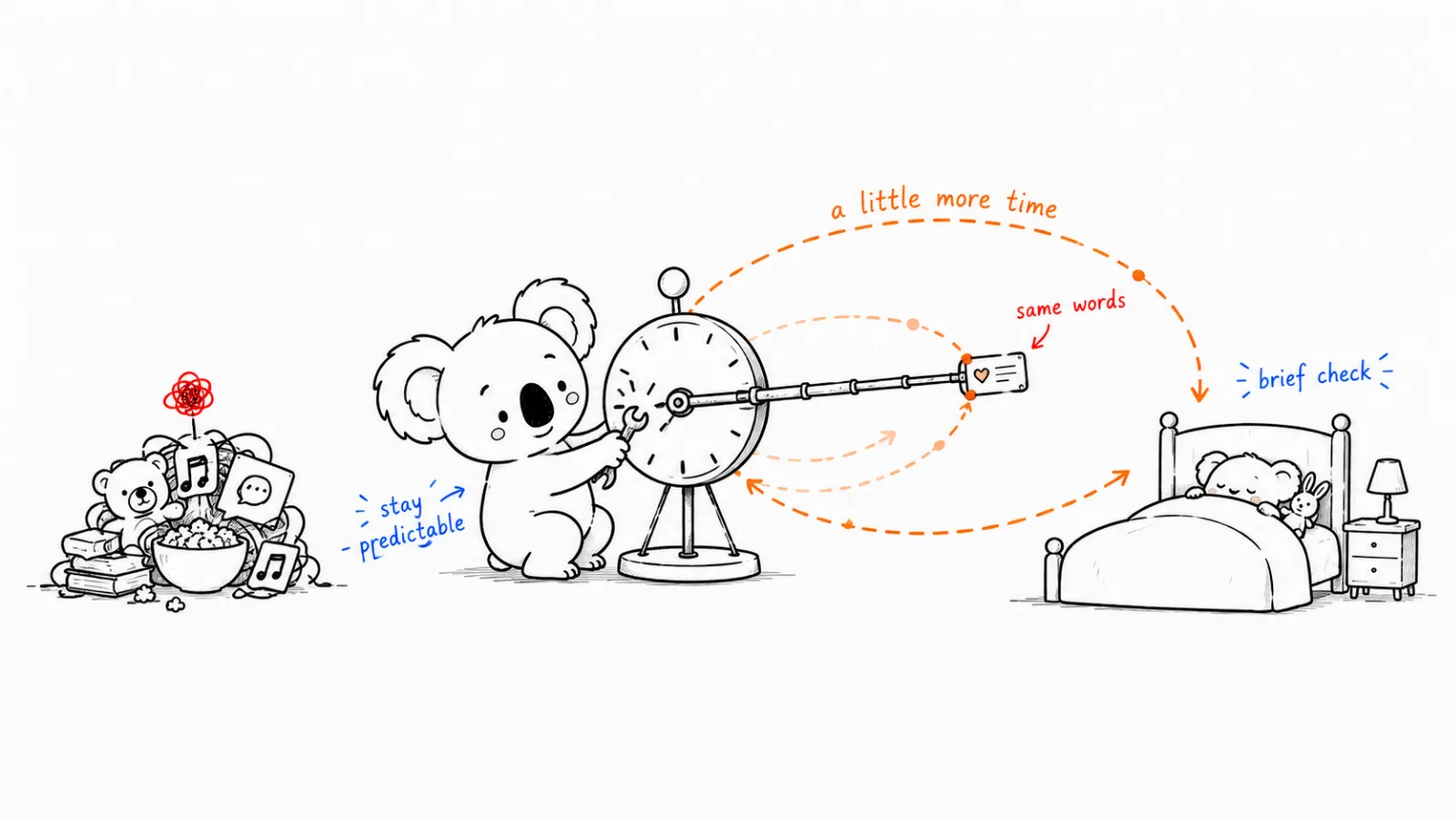
Reassurance is most effective when it is warm but predictable. If each call produces a longer visit, children may learn that escalating distress keeps a parent in the room. This is not manipulation; it is a normal learning pattern.
Choose a response you can repeat calmly:
“You are safe. It is sleep time. I will check on you soon.”
Then keep the check-in brief. Over several nights, you can gradually increase the interval or reduce the amount of support, depending on your child’s response.
Consider what may be feeding the fear
A fear of darkness may become stronger after:
- ●Moving house or changing bedrooms.
- ●Starting childcare or school.
- ●Illness, travel or disrupted sleep.
- ●Hearing frightening news or adult conversations.
- ●Seeing age-inappropriate videos or images.
- ●Changes within the family.
- ●A stressful event that the child does not yet know how to explain.
Ask about these possibilities during the day, when the child is calm. Bedtime is rarely the best moment for a long investigation.
Recognised parenting and health resources, including HealthyChildren.org, the NHS and Raising Children Network, generally encourage calm routines, reassurance and age-appropriate support for common childhood fears. Guidance should still be adapted to the individual child and family.
6. FAQ
Is it normal for a child to be afraid of the dark?
Fear of the dark is a common pattern in young children, particularly as imagination becomes more active. It may come and go and can become stronger during periods of change or stress. A common fear is not automatically a sign of a disorder, but its intensity and effect on daily life matter.
Should I let my child sleep with a night-light?
A dim night-light can be a reasonable source of comfort. Choose a warm, low-level light and avoid placing it directly in the child’s line of sight. If the family later decides to reduce the light, do so in small, predictable steps rather than removing it unexpectedly.
Should I check for monsters under the bed?
A single brief check may help a very young child settle, but repeated checking can turn into a ritual that keeps the question alive. A better long-term approach is to validate the fear, identify real objects that create confusing shapes and consistently state that the room is safe.
When should I seek professional advice?
Talk with your child’s doctor or another qualified health professional if the fear is intense, continues despite consistent support, causes significant loss of sleep, leads to persistent daytime anxiety or prevents the child from taking part in usual activities. Seek guidance sooner if the fear follows a distressing event or your child reports something that raises a genuine safety concern.
7. Conclusion
When your child is afraid of the dark, the most useful approach is neither dismissal nor endless reassurance. Start by accepting the feeling, calmly confirming safety and offering a manageable support such as a dim light, a familiar phrase, a comfort object or a gentle story.
Keep the bedtime routine predictable and make changes gradually. With repeated practice, many children learn that they can feel uncertain and still remain safely in bed. The aim is not a perfectly fearless night. It is a growing sense of confidence: I know what this feeling is, I know what helps, and I can cope with it.
Ready for calmer bedtimes?
Try Gula Stories free — 5 narrated bedtime stories, ad-free, for children ages 3-8.