
Weekend Bedtimes: How Much Flexibility Is Too Much?
A slightly later weekend bedtime can support family life, but the child’s total sleep and usual wake time still matter.
Key Takeaways
- ●A slightly later weekend bedtime can support family life, but the child’s total sleep and usual wake time still matter.
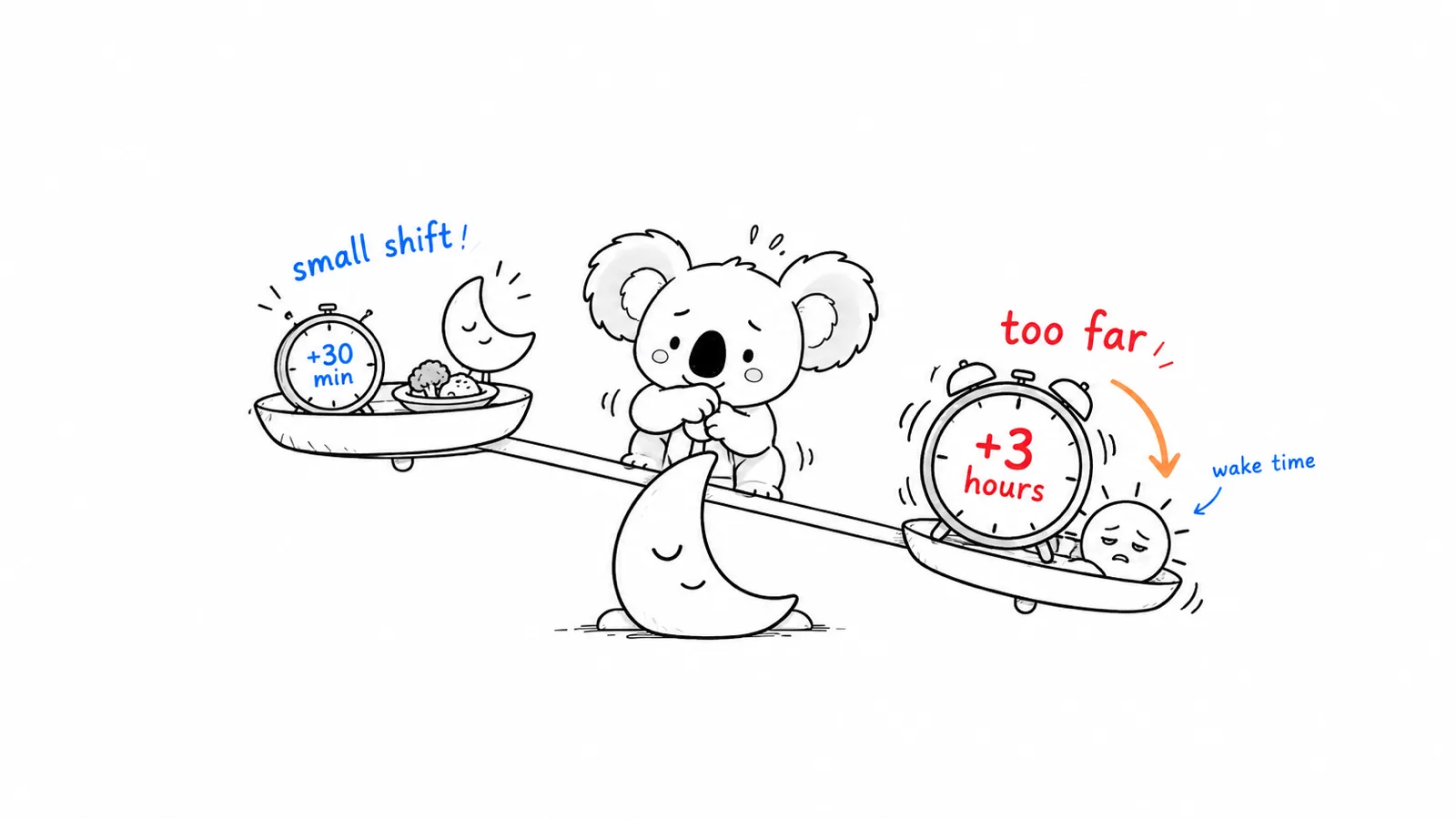
- ●For many children aged 2–8, keeping bedtime within about an hour of the weekday schedule is a practical starting point, not a medical rule.
- ●Flexibility becomes a problem when it causes difficult mornings, daytime tiredness, emotional volatility, naps that disrupt the next night, or prolonged bedtime resistance.
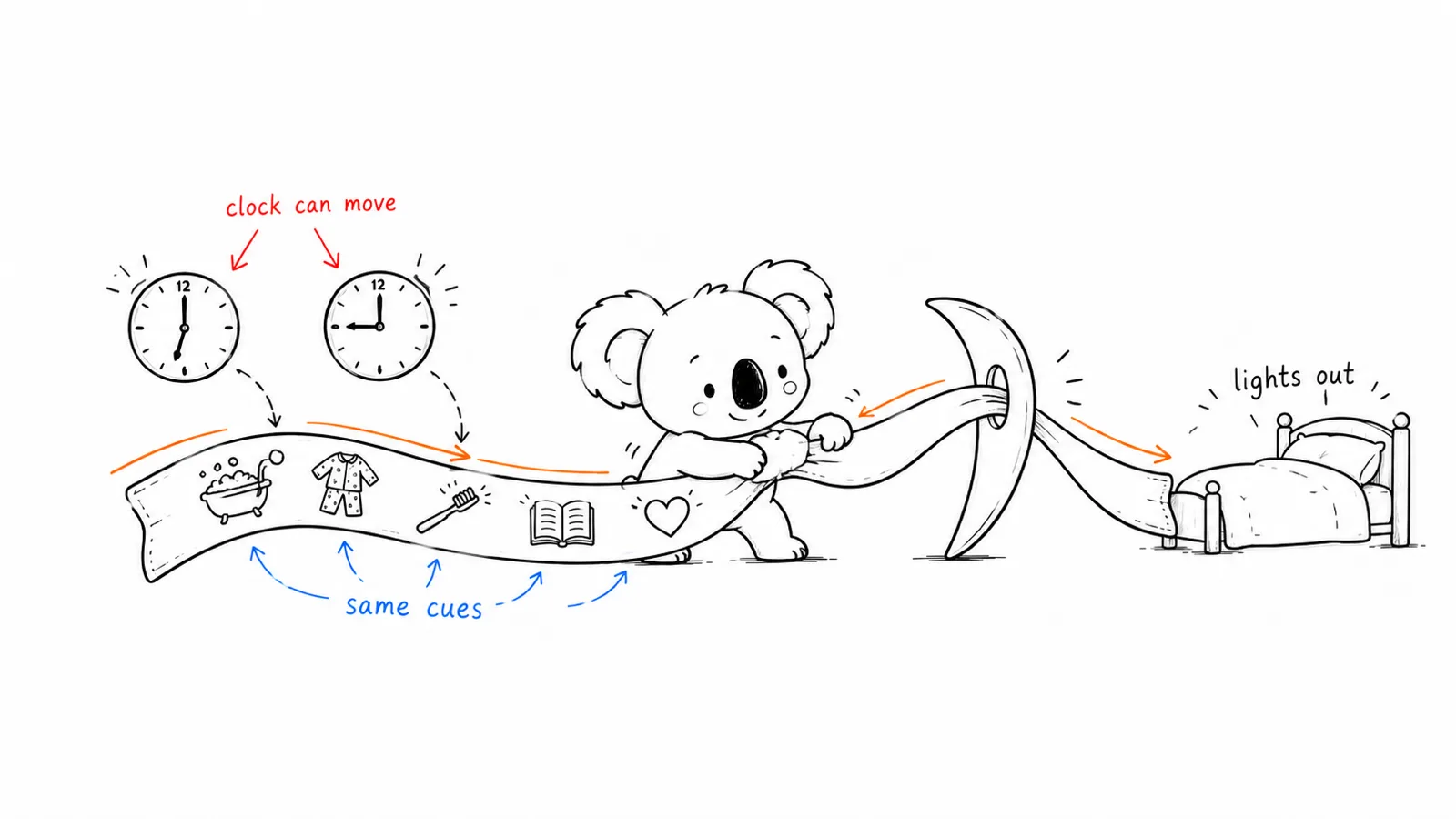
- ●Protect the familiar bedtime sequence even when the clock changes. Consistent cues help children understand that sleep is approaching.
- ●After an unusually late night, return to the normal routine promptly instead of allowing the schedule to drift across the entire weekend.
1. Introduction
Friday evening arrives, the family finally has room to breathe, and a later bedtime seems harmless. There may be dinner with friends, a film night, a special event, or simply a child who knows there is no school or childcare the next morning.
Some flexibility can be enjoyable and developmentally reasonable. Children benefit from participating in family traditions and learning that routines can bend for meaningful occasions. The difficulty is that a later night does not always remain an isolated event. Bedtime shifts, wake-up time moves, naps return, and Sunday night becomes a struggle. By Monday morning, the family may feel as though the week’s sleep progress has quietly disappeared.
So, how flexible should a weekend bedtime for kids be?
There is no single clock time that suits every child. A useful decision depends on three things: whether the child still receives enough sleep, whether the later bedtime changes daytime behaviour, and how easily the family can return to the weekday schedule. This guide explains where flexibility helps, where it starts to cause problems, and how parents can make practical weekend decisions without turning bedtime into a rigid system.
2. A Later Weekend Bedtime Can Be Reasonable
The core conclusion is simple: a later bedtime can work when it is modest, purposeful, and compatible with the child’s sleep needs.
A child’s bedtime is not meaningful in isolation. Wake time, naps, sleep quality, age, temperament, and the next day’s demands all affect whether a schedule is workable. A 30-minute delay for a relaxed family dinner is different from keeping a tired preschooler awake several hours beyond the usual routine.
Recognised health authorities focus primarily on adequate sleep and regular sleep habits. The American Academy of Sleep Medicine, whose recommendations are supported by the American Academy of Pediatrics, advises that children aged 1–2 typically need 11–14 hours of sleep in 24 hours, including naps. Children aged 3–5 generally need 10–13 hours, while children aged 6–12 generally need 9–12 hours. Individual needs vary within those ranges.
A later bedtime is more likely to be manageable when:
- ●The child can wake slightly later the next morning.
- ●The change is relatively small.
- ●The child is not already carrying a sleep debt from the week.
- ●The evening activity is calm rather than highly stimulating.
- ●The usual bedtime routine remains recognisable.
- ●The normal schedule can resume the following evening.
For example, a seven-year-old who usually sleeps from 8:00 p.m. to 7:00 a.m. may manage an 8:45 p.m. bedtime on Saturday if Sunday morning is unhurried. A three-year-old who wakes at 6:00 a.m. regardless of bedtime may not tolerate the same delay as well.
The reason for the change also matters. Occasional flexibility for a birthday, cultural celebration, holiday, family visit, or special outing can be worthwhile. Regularly extending bedtime simply because it is the weekend may offer less benefit, particularly if the child becomes overtired.
A practical rule of thumb
For many families, keeping weekend bedtime and wake time within roughly one hour of the weekday schedule is a useful starting point. This is not a universal clinical limit. Some children tolerate more movement, while others show difficulties after a much smaller change.
The child’s response is more informative than the clock alone.
3. When Flexibility Quietly Undoes the Week’s Progress
Weekend flexibility becomes too much when it shifts the child’s sleep pattern rather than creating one occasional late night.
Sleep timing is supported by the body’s internal clock and by repeated environmental cues. Light exposure, meals, physical activity, bath time, stories, and the usual sleep environment all help signal when the body should be awake or asleep. When bedtime and wake time move substantially for several days, returning to the weekday schedule can become harder.
The pattern often develops gradually:
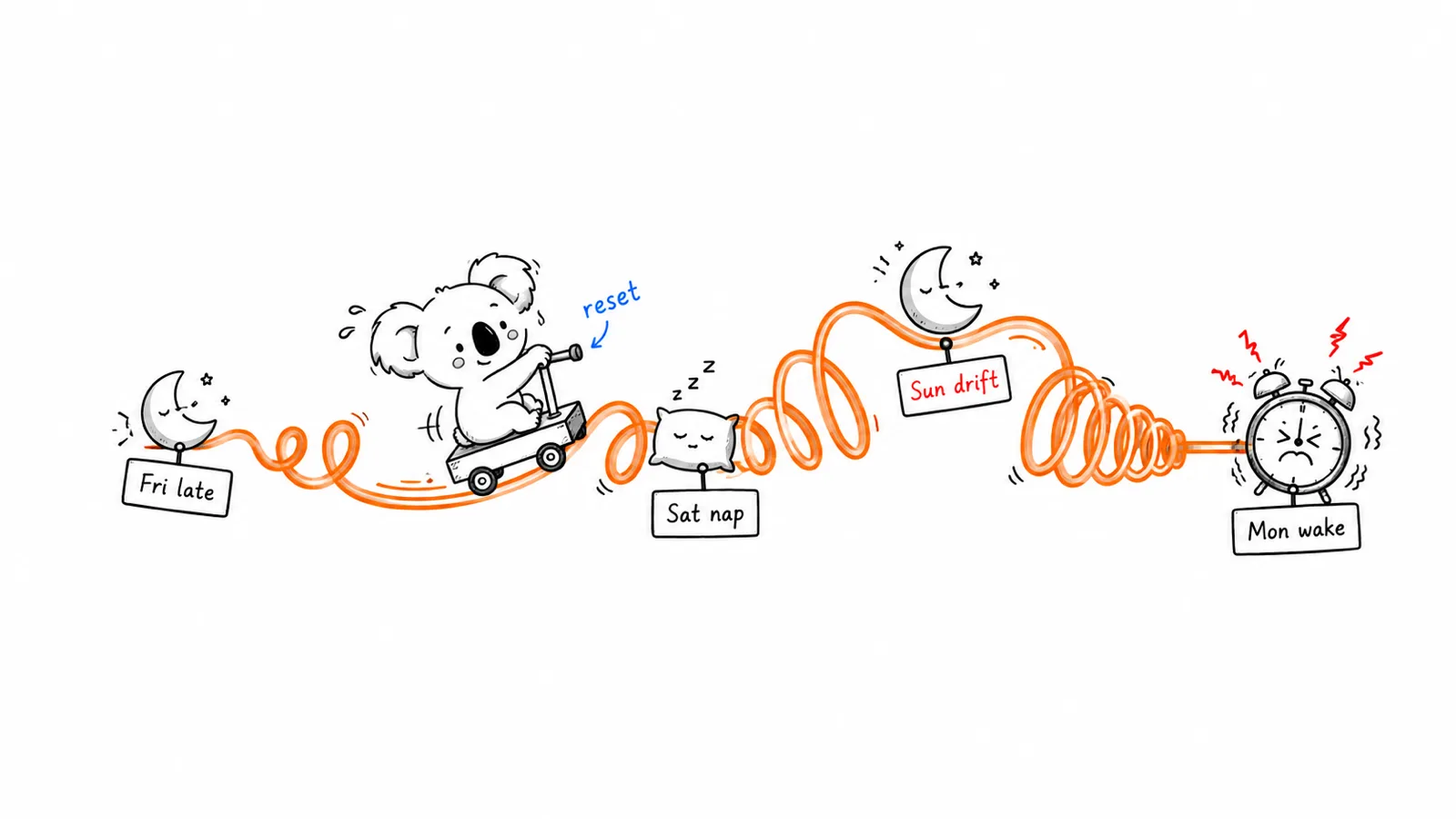
- ●Bedtime moves later on Friday.
- ●The child wakes later on Saturday or becomes tired enough to nap.
- ●Saturday bedtime moves later again because the child is not sleepy.
- ●Sunday morning starts late.
- ●The child resists the normal Sunday bedtime.
- ●Monday begins with insufficient sleep or a difficult wake-up.
This resembles a small time-zone change created inside the family schedule. It may be especially noticeable in children who depend strongly on routine or who wake at the same early time even after going to bed late.
Signs that the schedule has moved too far
Parents should look for a pattern rather than one imperfect morning. Weekend flexibility may be interfering with sleep when a child:
- ●Is unusually difficult to wake.
- ●Becomes tearful, irritable, impulsive, or unusually active.
- ●Falls asleep during short car journeys or at unexpected times.
- ●Needs a late nap that delays bedtime again.
- ●Takes much longer than usual to fall asleep on Sunday.
- ●Repeatedly asks for extra activities after the routine should have ended.
- ●Struggles with attention or ordinary frustrations on Monday.
- ●Requires several nights to settle back into the weekday rhythm.
Tiredness does not always look like quiet sleepiness in young children. It can appear as restlessness, silliness, emotional outbursts, or increased bedtime resistance. These behaviours can have many causes, so they should not be treated as proof of a sleep problem. However, if they repeatedly follow late weekends and improve with a steadier schedule, the connection is worth considering.
A later bedtime also cannot reliably be “repaid” by one long sleep-in. Extra sleep may help a tired child, but large swings between weekday and weekend timing can make the next bedtime more difficult. The goal is not to prevent recovery sleep; it is to avoid creating a cycle that requires recovery every weekend.
4. How to Make Weekend Flexibility Work
The most useful strategy is to preserve the structure of bedtime even when the timing changes.
Children usually respond better to predictable steps than to repeated clock negotiations. A familiar sequence—such as washing, pyjamas, teeth, one story, a cuddle, and lights out—provides a clear transition from activity to rest.
Decide on the limit before the evening begins
Choose the intended bedtime before the child becomes tired or absorbed in an activity. Parents can say, “Tonight is a special later night. We will have one story at 8:30, then it will be time to sleep.”
This makes the change specific. It also helps prevent “later” from expanding through another episode, another game, and another snack.
Protect the final wind-down period
A later bedtime does not need to mean a more stimulating bedtime. Dimmer lighting, quiet conversation, gentle audio, reading, or calm storytelling can help the evening slow down.
If screens are part of the special event, ending them before the final bedtime routine may make the transition easier. The exact interval will depend on the family, but the principle is to create a clear boundary between entertainment and sleep.
A calm audio story can be useful when parents need a consistent final cue away from a bright screen. For families that already use Gula Stories, choosing a familiar story with calm narration can preserve part of the normal routine during travel, visits, or special weekends.
Keep morning drift modest
A slightly later morning may be appropriate after a late night. However, allowing wake time to move several hours can delay the next night’s sleepiness.
Once the child is awake, ordinary morning cues help re-establish the day: open the curtains, eat breakfast, get dressed, and spend time outdoors when practical. Daylight and normal daytime activity support a return to the regular rhythm.
Avoid turning Sunday into a correction project
Parents sometimes try to force an unusually early Sunday bedtime after two late nights. That can lead to conflict if the child is not yet sleepy.
A steadier approach is to reduce the shift before Sunday evening. Keep Saturday night closer to normal, avoid an unnecessarily late nap, and begin the familiar routine at the usual time. If the weekend has moved substantially, the schedule may need to return in smaller steps.
Use the next-day response as evidence
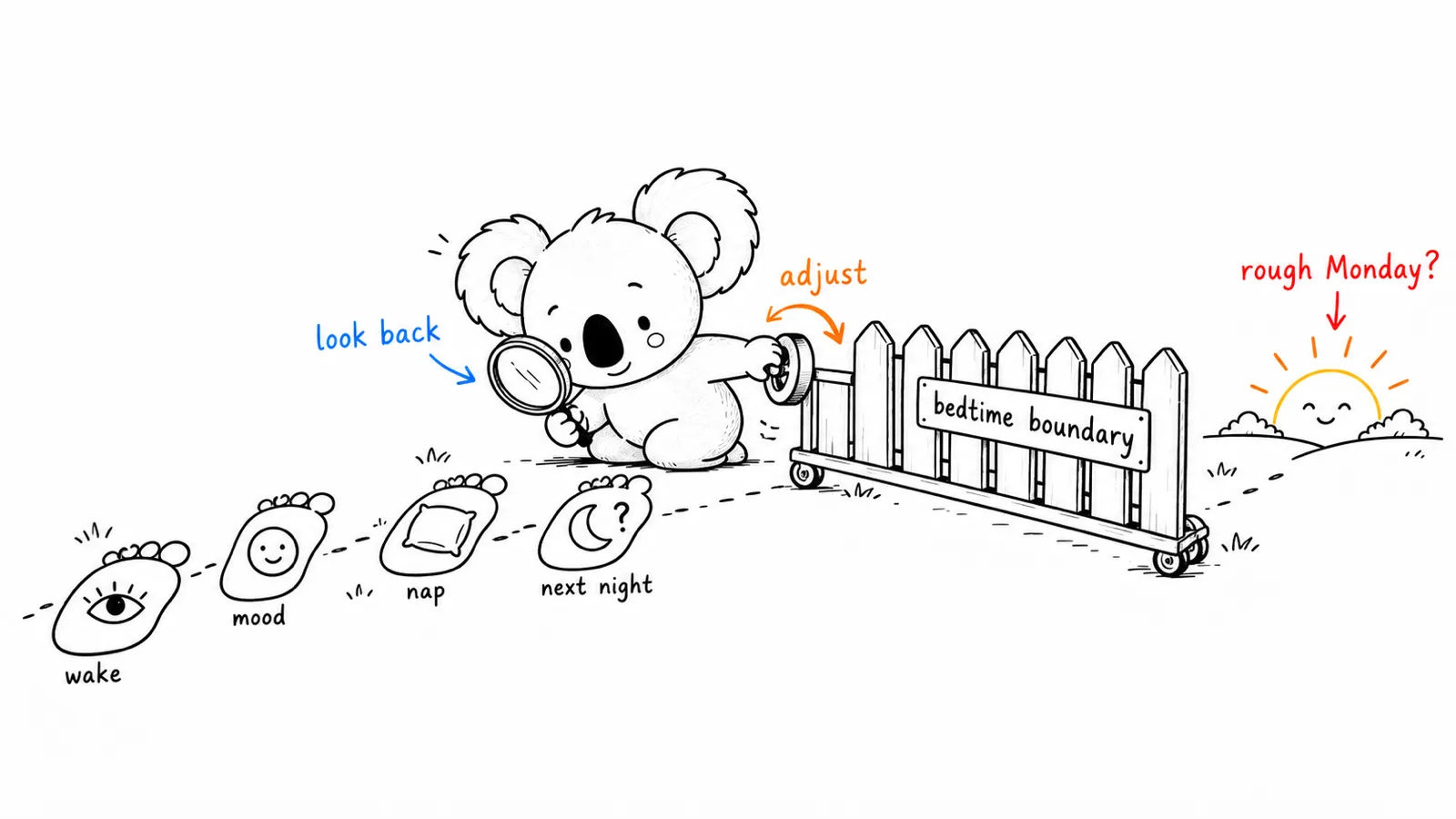
Instead of asking only, “How late can my child stay up?”, ask:
- ●How did my child wake?
- ●How was their mood before lunch?
- ●Did they need an unusual nap?
- ●How long did bedtime take the following night?
- ●Were we back to normal by Monday?
These observations help parents find a realistic boundary for their own child.
5. Weekend Bedtime Decision Guide
The following table offers a practical framework rather than a strict medical standard.
| Situation | Likely level of disruption | Practical response |
|---|---|---|
| Bedtime is 30–60 minutes later for a special family activity | Usually lower | Keep the normal routine and allow a modestly later morning if needed |
| Bedtime is later, but the child still wakes at the usual early time | Moderate | Watch for daytime tiredness and plan an earlier, calm bedtime the next night |
| Friday and Saturday bedtime both move substantially later | Higher | Keep Saturday closer to normal or begin shifting back before Sunday |
| A late nap follows a late night | Higher | Expect bedtime to move later; keep the nap brief or earlier only if that is appropriate for the child |
| The child is already tired from early mornings or disrupted sleep | Higher | Prioritise recovery and routine rather than adding another late night |
| A rare celebration ends much later than usual | Variable | Accept that one night may be imperfect, then return to normal cues and timing promptly |
| Monday mornings are repeatedly difficult after late weekends | Clear sign to adjust | Reduce the weekend shift and track whether mornings improve |
A simple boundary test
A weekend schedule is probably flexible enough when all three statements are broadly true:
- ●The child still receives an age-appropriate amount of sleep.
- ●Daytime mood, attention, and energy remain close to normal.
- ●The weekday schedule returns without a prolonged struggle.
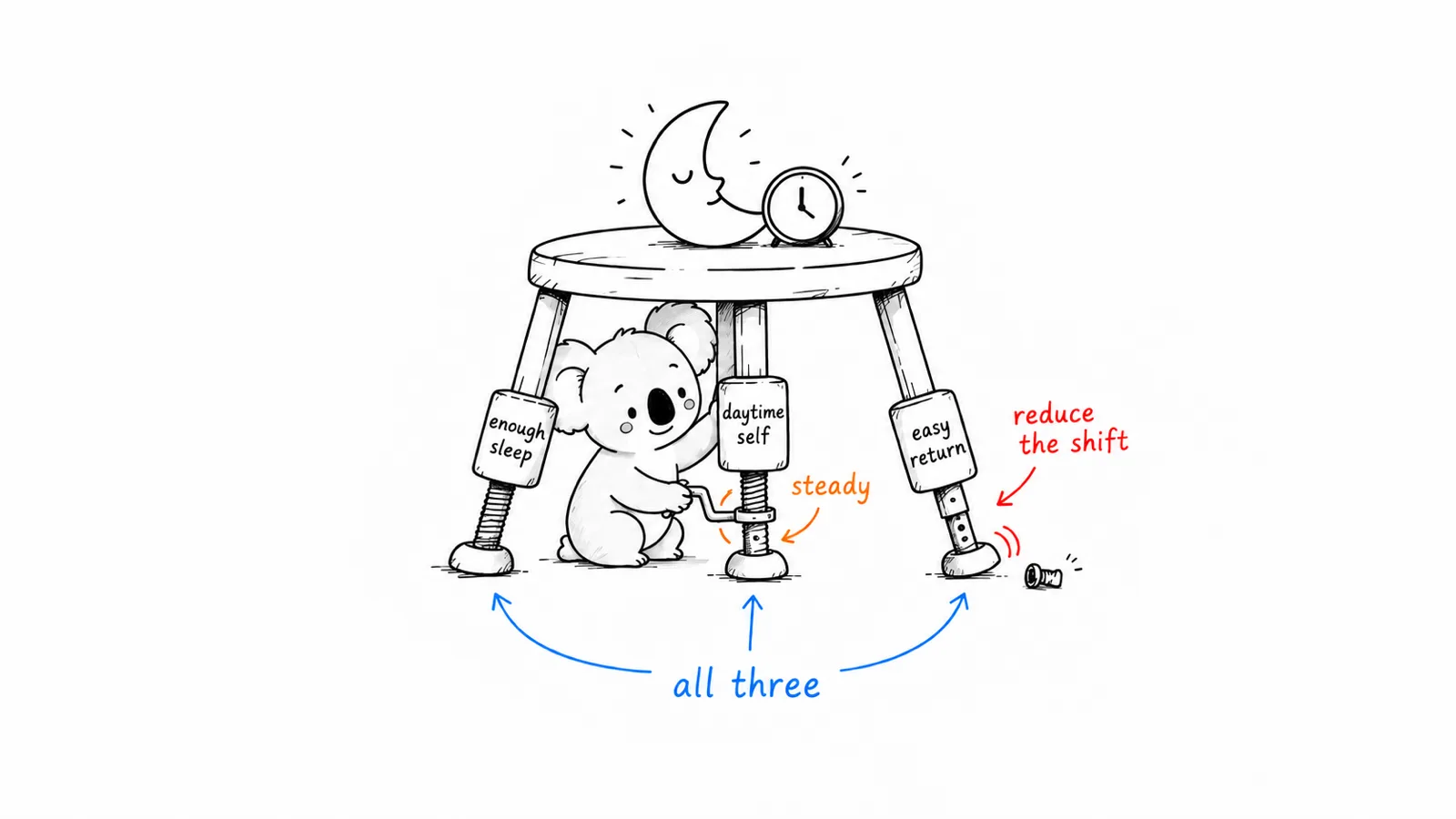
If one of these repeatedly fails, reduce the bedtime shift—even if other children in the family or friendship group appear able to stay up later.
Consider the child, not only their age
Two children of the same age may respond differently. Important factors include:
- ●Whether the child still naps.
- ●How early they naturally wake.
- ●Sensitivity to noise, excitement, and changes in routine.
- ●The demands of school, childcare, sport, or travel.
- ●Recent illness or disrupted sleep.
- ●Whether bedtime has already become difficult during the week.
A child who is coping with a transition, such as starting school or dropping a nap, may temporarily need more consistency.
6. FAQ
How much later should children stay up on weekends?
There is no single limit for every child. For many families, a shift of no more than about an hour is a sensible starting point. The better test is whether the child still gets enough sleep, functions well the next day, and returns easily to the weekday schedule.
Should I let my child sleep in after a late night?
A modest sleep-in can help after an occasional late night. However, a very late morning may make the next bedtime harder. If the child wakes near the usual time, begin the day normally and plan a calm, timely bedtime rather than relying on a large schedule correction.
Is it harmful to have one very late bedtime for a special event?
An occasional late night is unlikely to define a child’s overall sleep pattern. Expect possible tiredness or emotional sensitivity the next day, and avoid scheduling several late nights in succession. Resume familiar routines promptly.
When should parents ask a health professional about sleep?
Speak with a GP, paediatrician, child health nurse, or other qualified professional if sleep concerns persist despite a consistent routine, significantly affect daily life, or involve frequent snoring, breathing difficulties, unusual movements, ongoing extreme tiredness, or regular trouble falling or staying asleep. Guidance from services such as HealthyChildren.org, the NHS, and Raising Children Network can also help families understand typical sleep patterns.
7. Conclusion
The right weekend bedtime for kids is not determined by whether the calendar says Friday or Saturday. It depends on whether flexibility still protects adequate sleep, stable daytime functioning, and an easy return to the weekday rhythm.
A modest later bedtime can make space for family connection and special experiences. It becomes too much when the child repeatedly loses sleep, the schedule drifts across the weekend, or Sunday night and Monday morning become predictable battles.
Start with a small shift, preserve the usual bedtime sequence, and observe what happens over the next day or two. If the child remains rested and returns comfortably to routine, the flexibility is probably working. If the weekend repeatedly creates a recovery cycle, move bedtime closer to the weekday schedule. The aim is not perfect consistency; it is a rhythm flexible enough for family life and stable enough to support the child.
Ready for calmer bedtimes?
Try Gula Stories free — 5 narrated bedtime stories, ad-free, for children ages 3-8.