
Summer Bedtimes When It's Still Light Outside
Keep your child’s usual bedtime unless their sleep needs or daily schedule have genuinely changed. Create an artificial
Key Takeaways
- ●Keep your child’s usual bedtime unless their sleep needs or daily schedule have genuinely changed.
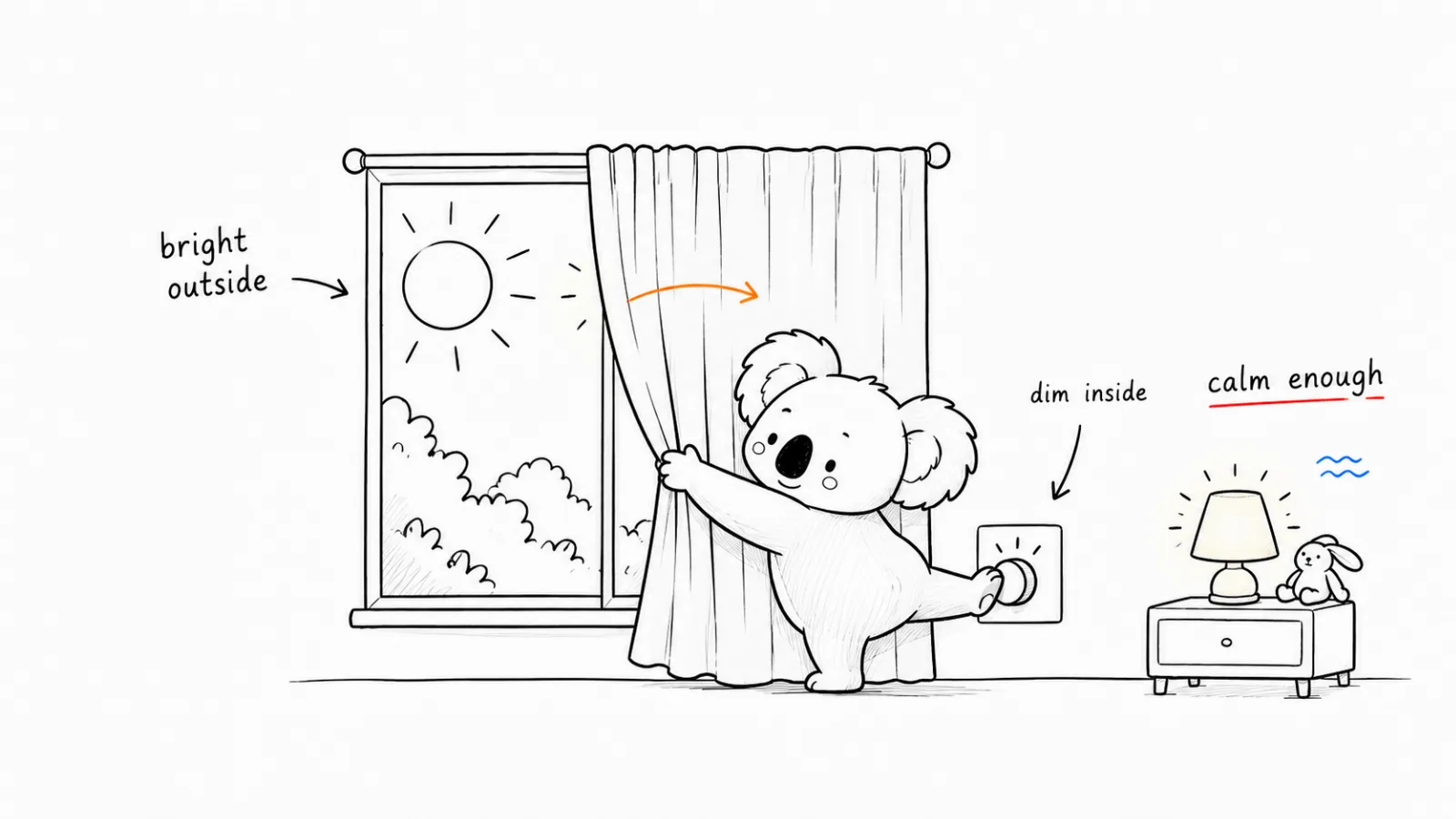
- ●Create an artificial “night-time” with dim indoor lighting, closed curtains and a predictable routine.
- ●Reduce stimulating outdoor play and bright screens during the final hour before bed.
- ●Introduce summer sleep changes gradually rather than expecting instant adjustment.
- ●Focus on a consistent wake time and calming cues, not on making the room completely dark.
When the sun is still shining at bedtime, children may resist sleep because light tells the body that it is still daytime. The most practical approach is to keep a consistent summer bedtime for kids while using darkness, quiet and familiar routines to signal that the day is ending.
You do not need to convince a child that it is “really night.” Instead, give their brain a reliable sequence of cues that means sleep comes next.
Create Night-Time Indoors Before Bed
Light is one of the environmental signals involved in the body’s sleep-wake rhythm. Long summer evenings can therefore make winding down harder, especially when a child can see sunlight around the curtains or hear other children playing outside.
Start changing the home environment around 30 to 60 minutes before bedtime:
- ●Close curtains or blinds in the rooms your child uses.
- ●Dim overhead lights and use a warm bedside lamp where practical.
- ●Turn off bright or flashing toys.
- ●Lower household noise.
- ●Avoid bright screens close to bedtime.
- ●Move energetic play earlier in the evening.
Blackout blinds or well-fitted curtains can help when direct sunlight reaches the bedroom. Check that window coverings are securely installed, with cords kept completely out of children’s reach. The room does not need to be perfectly dark; the aim is to make it noticeably dimmer and calmer than the rest of the day.
A child who is afraid of darkness may be more comfortable with a small, dim night-light. Position it away from the bed and choose the lowest brightness that helps them feel secure.
Use the Same Sequence Every Evening
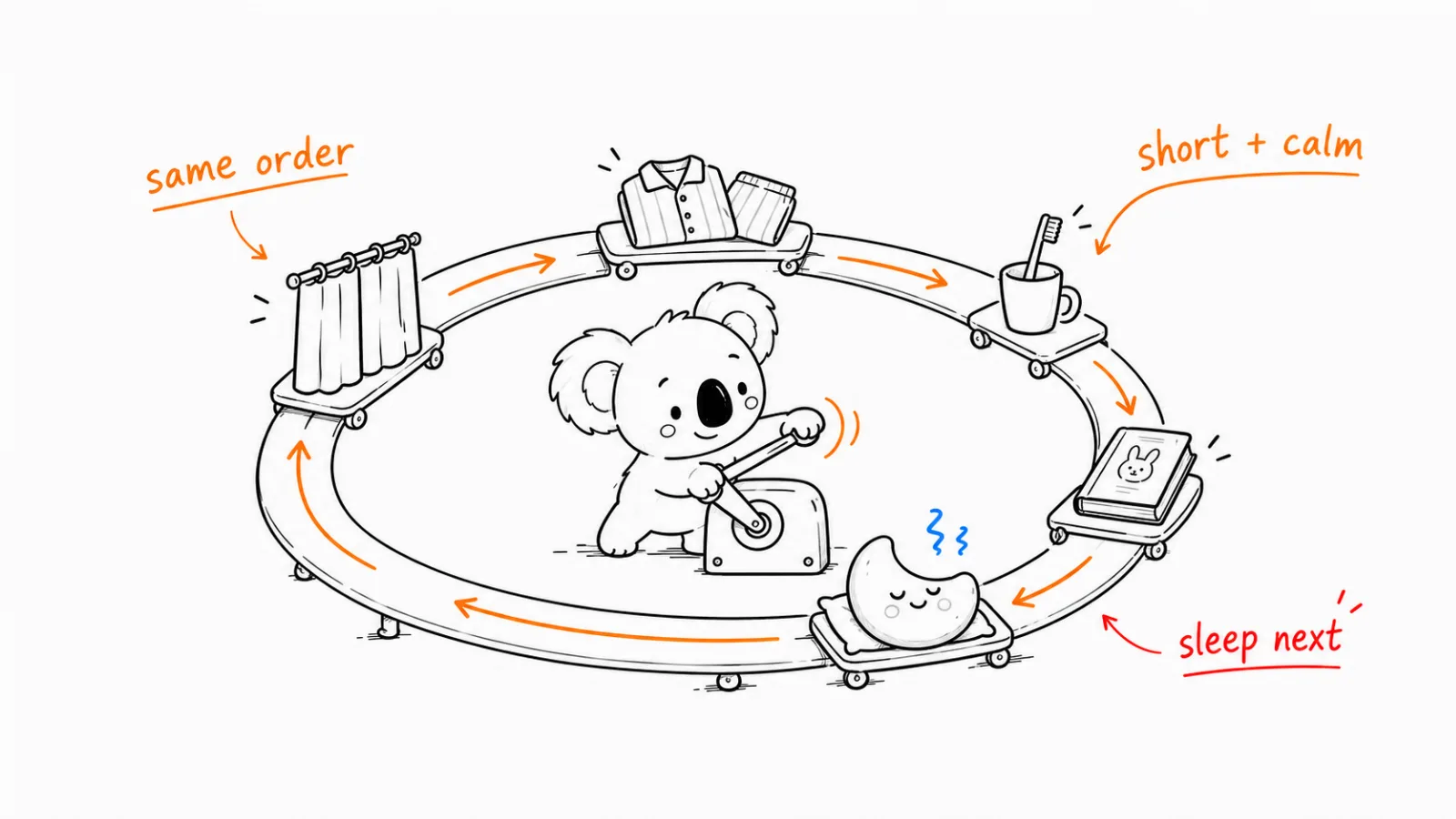
Young children often respond more readily to repeated actions than to explanations about clocks or daylight saving time. A short routine gives them predictable signals that bedtime is approaching even when the sky looks like afternoon.
A workable routine might look like this:
| Stage | What to do | What it signals |
|---|---|---|
| Transition | Come inside, close curtains and dim lights | Active daytime is ending |
| Care tasks | Bath or wash, toilet, teeth and pyjamas | The bedtime sequence has started |
| Connection | Cuddle, quiet conversation or one calm activity | The body can slow down |
| Story | Read or listen to one age-appropriate story | Sleep is the next step |
| Bed | Use the same short goodnight phrase and leave calmly | The routine is complete |
Keep the order similar even if individual details change. A routine does not need to be elaborate: 20 to 30 calm minutes may be easier to sustain than a long process with repeated requests.
For example, instead of debating whether it looks dark enough for bed, say: “The sun stays up later in summer, but your body still needs rest. We have brushed teeth and finished our story, so now it is sleep time.”
If listening helps your child settle, a calm narrated story can become one consistent cue. Gula Stories offers age-appropriate bedtime stories with natural voices and personalised avatars, but the useful principle is simply to choose quiet content with a clear ending rather than something interactive or open-ended.
Decide Whether Bedtime Should Actually Change
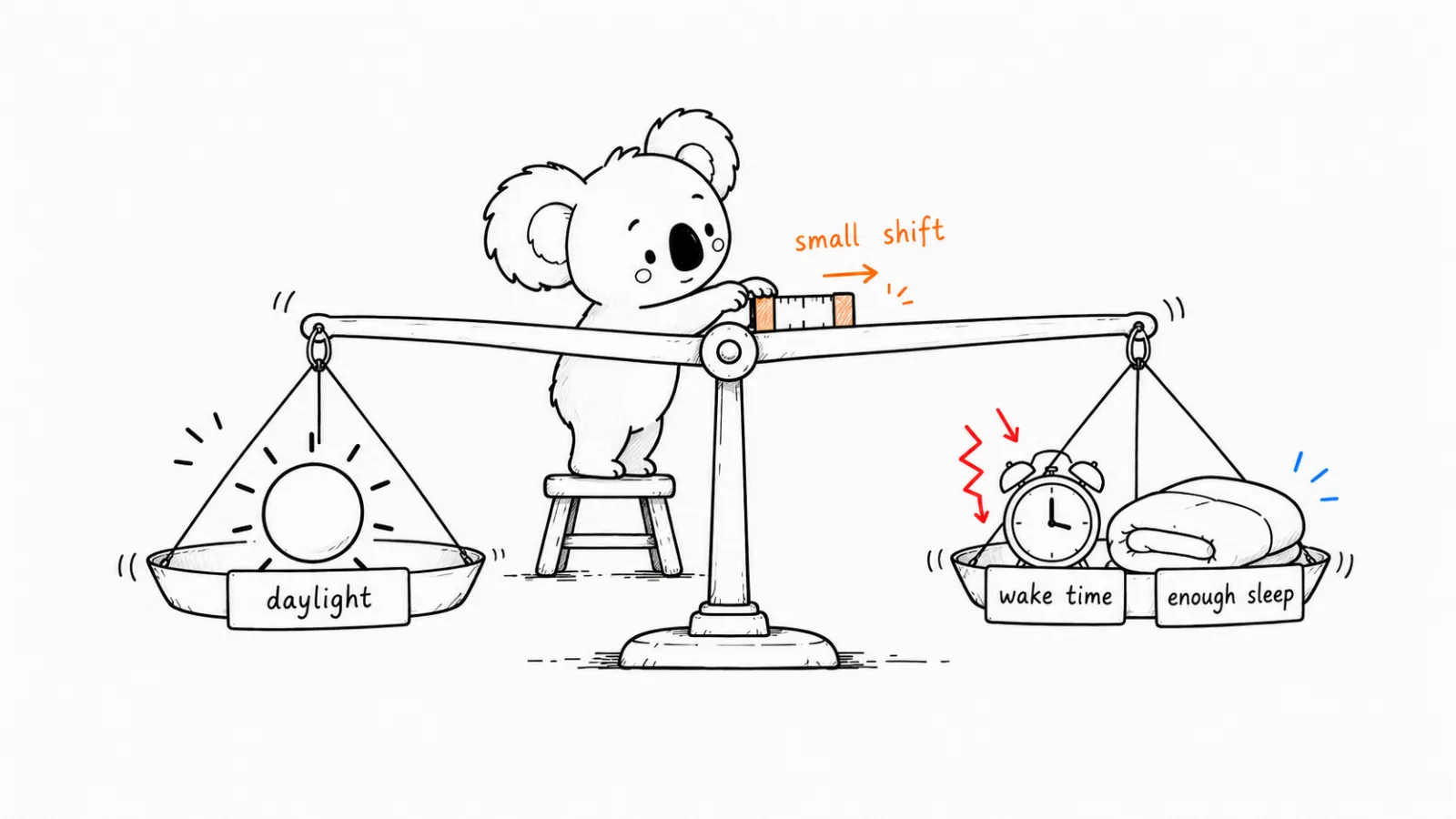
Daylight alone is not a reason to move bedtime later. Children still need enough sleep across each 24-hour period, although individual needs vary by age, temperament, activity and whether they nap.
Before changing the schedule, look at the pattern over several days:
- ●Is your child regularly awake for a long time despite a calm routine?
- ●Are naps ending later than they did previously?
- ●Has the family’s morning wake time changed?
- ●Does your child seem alert and well-regulated during the day?
- ●Is a later bedtime leading to difficult mornings or noticeable tiredness?
If your child is functioning well and waking later during school holidays, a modest seasonal shift may suit your family. Move bedtime in small steps—such as 10 to 15 minutes every few nights—while protecting sufficient sleep and maintaining a stable routine.
If mornings must stay early for childcare, school or work, a much later bedtime can gradually reduce total sleep. In that situation, it is usually more helpful to strengthen evening cues than to wait for sunset.
Recognised child-health resources such as HealthyChildren.org, the NHS and Raising Children Network provide age-based sleep guidance. Their ranges are useful reference points, but a child’s behaviour and regular sleep pattern also matter. Persistent difficulty falling asleep, loud snoring, breathing concerns, unusual daytime sleepiness or ongoing distress warrants a conversation with a GP, paediatrician or qualified health professional.
Handle “But It’s Still Daytime” Without a Battle
A child who points to the bright sky is making a reasonable observation. Acknowledge it briefly, then return to the routine:
“Yes, it is still light outside. In summer, the sun goes down later. The clock and our bedtime steps tell us when it is time to rest.”
Avoid lengthy negotiations or repeatedly checking whether your child feels sleepy. That attention can turn daylight into a dependable way to delay bedtime.
It can help to use a simple visual schedule for children aged two to eight:
- ●Curtains closed
- ●Pyjamas on
- ●Teeth brushed
- ●One story
- ●Cuddle and lights out
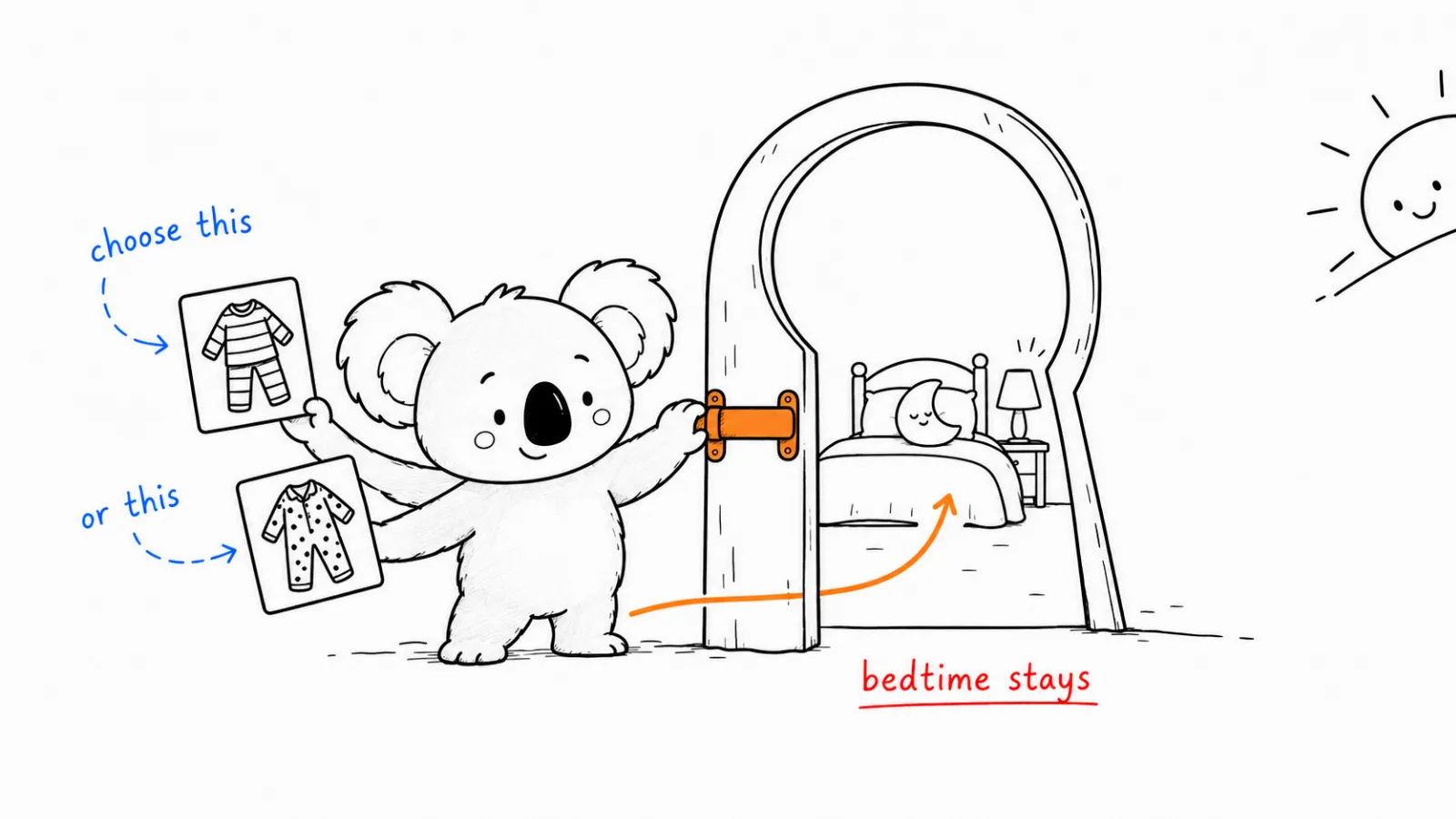
Give limited choices within the routine—“blue pyjamas or green?” or “this story or that one?”—while keeping bedtime itself settled. This preserves some independence without reopening the main decision.
If your child gets out of bed, respond quietly and consistently. Guide them back with minimal conversation and repeat the same brief phrase. The goal is not to force immediate sleep, but to maintain conditions that support rest.
FAQ
Should I use blackout curtains for summer bedtime?
They can be useful if sunlight makes the bedroom noticeably bright, but they are not essential for every child. Choose secure window coverings, keep cords inaccessible and make sure the room remains comfortably ventilated and does not overheat.
How can we manage bedtime while travelling in summer?
Bring a few familiar cues, such as the same pyjamas, a favourite book, a small night-light or the usual audio story. Keep the sequence recognisable even if the room and bedtime are slightly different.
What if siblings have different bedtimes?
Begin the younger child’s dim-light routine in a separate area if possible. Ask older siblings to keep noise and energetic play away from the bedroom, while explaining that different ages can have different schedules.
How long does it take a child to adjust?
Some children settle within a few evenings, while others need longer to adapt to brighter nights or a changed schedule. Consistency matters more than a flawless first week. Seek professional advice if sleep difficulties continue, disrupt daytime functioning or cause significant family distress.
The Bottom Line
Summer bedtimes work best when the home provides clearer sleep signals than the evening sky. Keep the schedule appropriate for your child, dim the environment and repeat a short, calm routine. With consistent cues, “still light outside” can become an ordinary part of summer rather than a nightly argument.
Ready for calmer bedtimes?
Try Gula Stories free — 5 narrated bedtime stories, ad-free, for children ages 3-8.