
Starting Daycare: Easing Bedtime Anxiety
Starting daycare anxiety often appears at bedtime because quiet moments leave more room for separation worries. Keep bed
Key Takeaways
- ●Starting daycare anxiety often appears at bedtime because quiet moments leave more room for separation worries.
- ●Keep bedtime predictable and calm; consistency helps a toddler know what happens next.
- ●Acknowledge feelings without repeatedly extending the routine or promising that the anxiety will disappear.
- ●Briefly preview the next daycare day and make the reunion plan concrete.
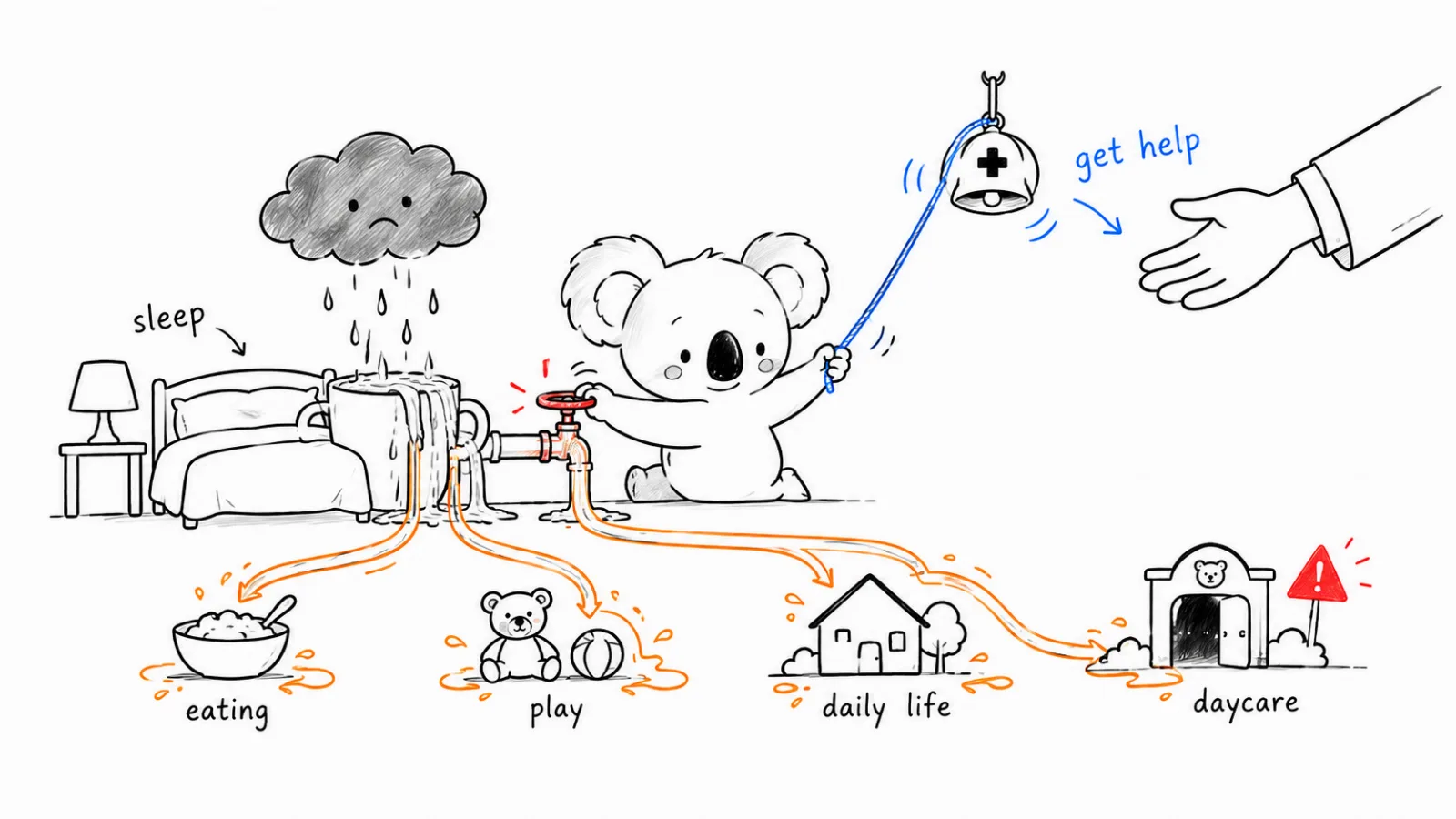
- ●Seek professional guidance if distress is intense, persistent, or affecting eating, sleep, play, or daily functioning.
Starting daycare can make bedtime harder even when a toddler seems settled during the day. Extra clinginess, requests for “one more” cuddle, delayed sleep, or renewed night waking can be typical responses to the emotional load of separation, unfamiliar routines, and new relationships.
The most useful response is steady reassurance: name the feeling, maintain a familiar bedtime sequence, and remind your child what will happen in simple, concrete terms. The aim is not to eliminate every worry before sleep, but to help your child feel safe enough to rest while they adjust.
Why Daycare Worries Often Surface at Bedtime
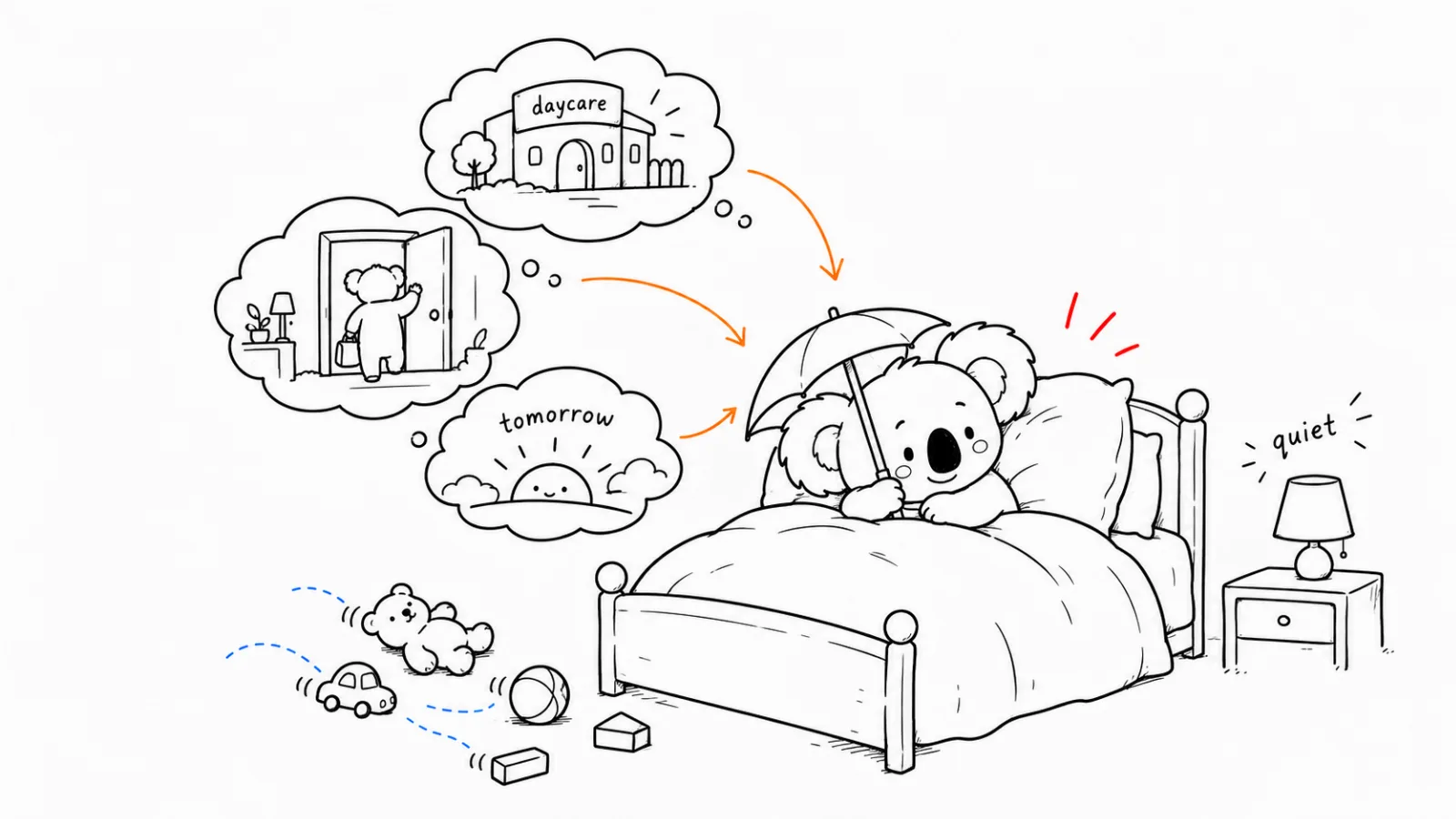
Toddlers process change differently from adults. They may not be able to explain that daycare feels noisy, that they miss home, or that they are unsure whether a parent will return. Instead, those feelings can appear through behaviour.
Bedtime is a common pressure point because separation happens again: the parent leaves the room, the child loses access to daytime distractions, and tomorrow’s daycare routine may feel close. Common temporary changes include:
- ●Wanting a parent to stay longer
- ●Asking repeated questions about the next day
- ●Resisting pyjamas, toothbrushing, or getting into bed
- ●Requesting extra drinks, stories, or toilet trips
- ●Waking and calling for reassurance
- ●Returning to an earlier comfort habit
These behaviours do not automatically mean that daycare is unsuitable or that something is wrong. They may reflect a child borrowing a parent’s calm while adapting to a demanding change.
Listen carefully, however, if your child repeatedly mentions a particular person, event, or fear. Ask neutral questions such as, “What happened next?” rather than suggesting an answer. Record the child’s words accurately and discuss specific concerns with the educator.
Use a Predictable Routine Without Making Bedtime Longer
A familiar sequence reduces the number of decisions and negotiations a tired toddler must manage. During the first weeks of care, protect the existing bedtime routine where possible rather than introducing several new sleep strategies at once.
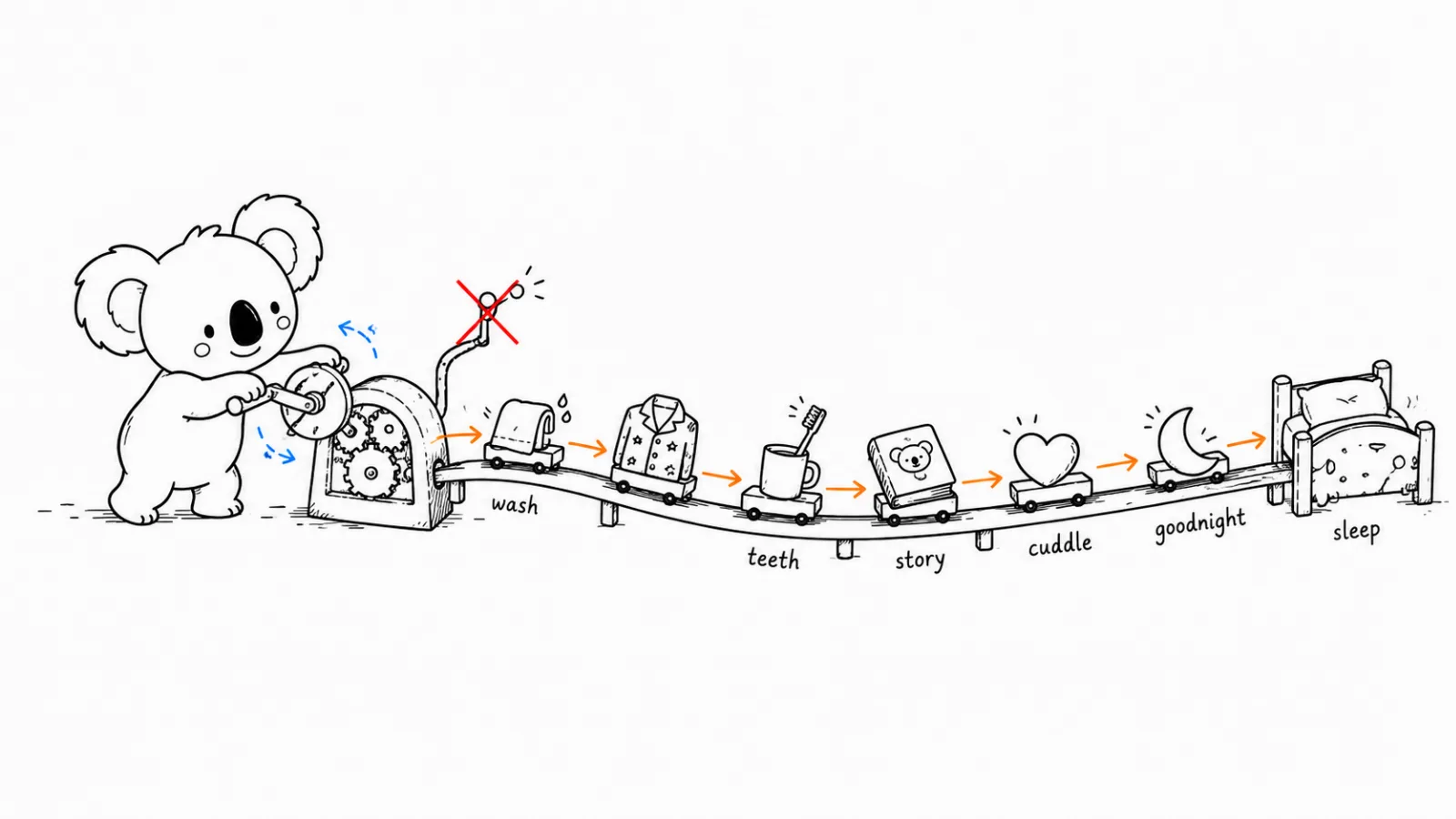
A simple routine might be:
- ●Bath or wash
- ●Pyjamas and teeth
- ●One or two quiet stories
- ●A cuddle and a brief daycare preview
- ●The same goodnight phrase
- ●Lights out
If your child is more tired after daycare, consider beginning the routine slightly earlier. New environments require sustained attention, social effort, and emotional regulation; overtiredness can make separation at bedtime more difficult.
Keep the comforting parts generous but bounded. For example: “We will read two stories, have one long cuddle, and then it is time to sleep.” If you use Gula Stories, choose one familiar, age-appropriate story with calm narration as a consistent part of the routine rather than adding more stories each time your child protests.
A Practical Response Guide
| What your child does | What it may communicate | A calm response |
|---|---|---|
| “Don’t leave me” | Bedtime separation feels harder after daytime separation | “You want me close. You are safe, and I will check on you after I put the washing away.” |
| Repeatedly asks about daycare | Tomorrow feels uncertain | Give one short preview: who will take them, what happens first, and who will collect them |
| Requests another story or drink | They want to delay separation | Acknowledge the wish, keep the limit, and repeat the goodnight phrase |
| Wakes during the night | They need reassurance after a demanding day | Respond calmly, keep lights low, and use the same brief settling approach |
| Says something worrying happened | They may be trying to process a real experience | Listen without leading, note the details, and speak with the educator |
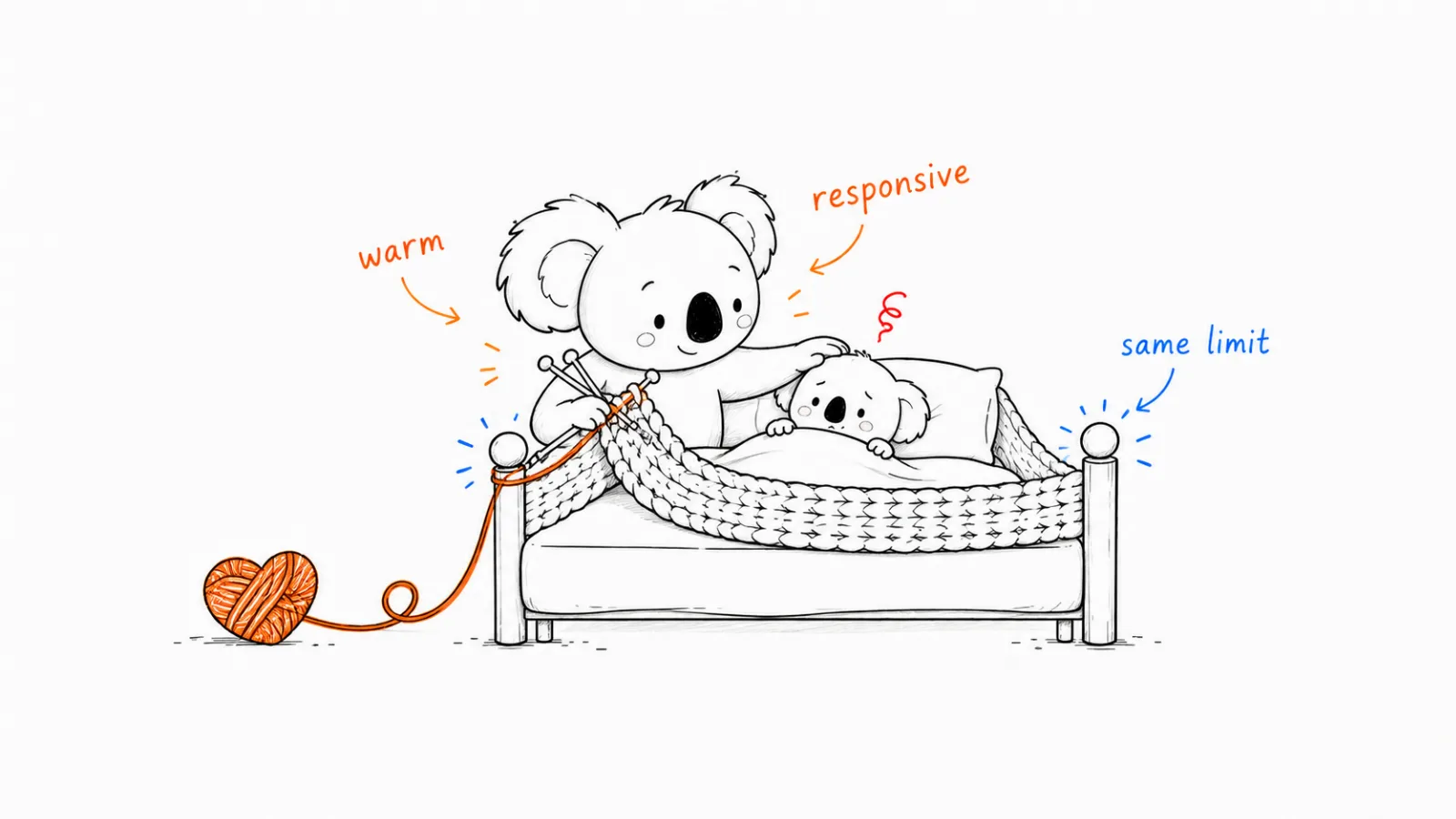
Consistency does not require ignoring distress. You can remain warm and responsive while keeping the sequence and limit unchanged.
Give Feelings Words and Make Reunion Concrete
Toddlers benefit from short language that connects their feelings with the change:
“Starting daycare is a big change. You can miss me and still be safe with your educators.”
Avoid lengthy explanations once your child is tired. Repeated reassurance can unintentionally create a new question—“Why does Mum keep telling me I’m safe?”—or turn bedtime into an extended discussion. Name the feeling, state the plan, and return to the routine.
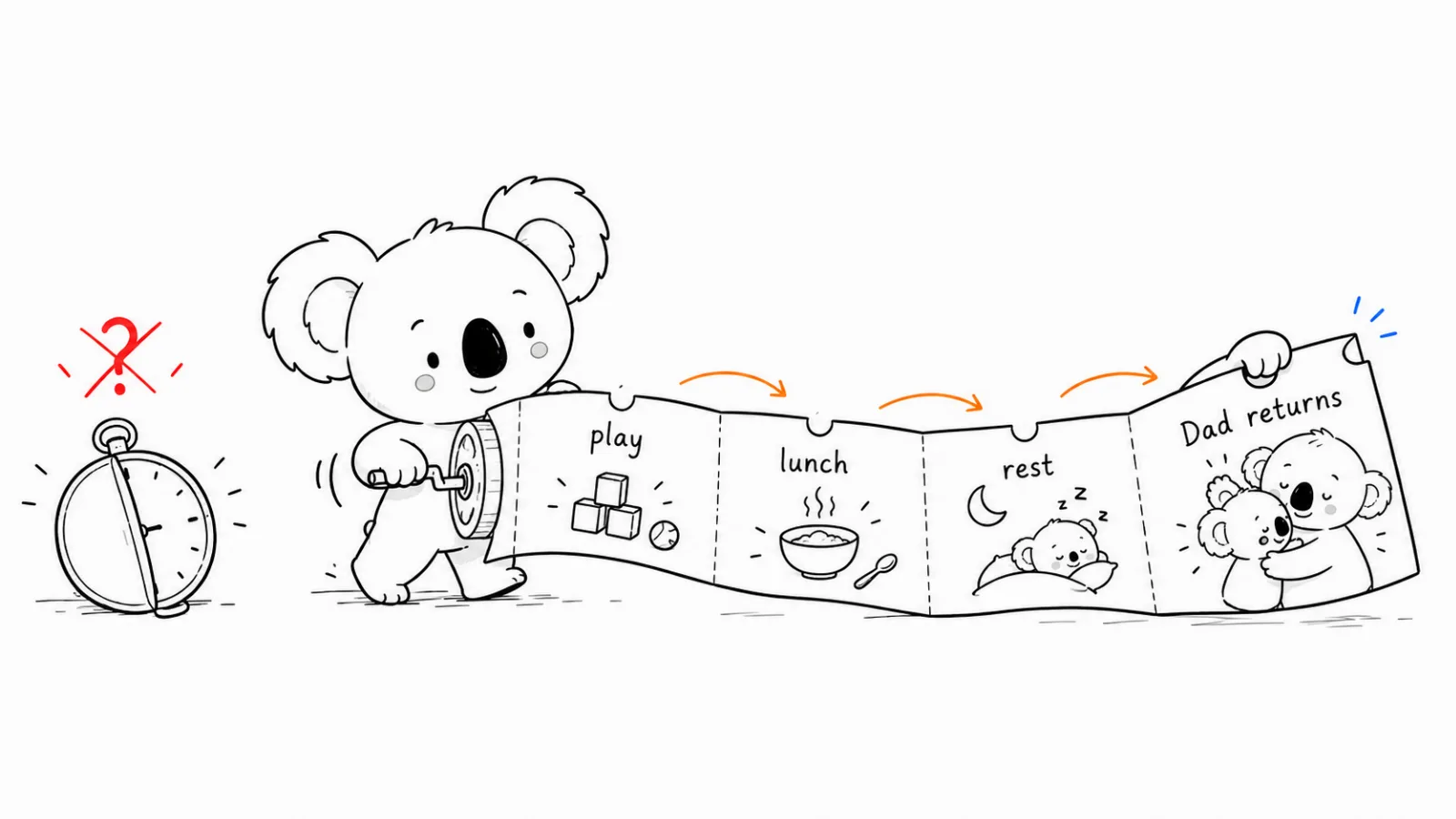
Young children also understand concrete events more easily than clock time. Instead of saying, “I’ll be back at 4:30,” try:
“You will play, have lunch, rest, and then Dad will collect you.”
Use only a sequence that matches the daycare’s actual routine. If collection plans change, tell your child simply and as early as practical. Reliable follow-through builds trust more effectively than saying, “There’s nothing to worry about.”
A small bridge between home and care may also help if the service permits it. This could be a family photo, a comfort item, or a simple ritual such as drawing a small heart on paper to keep in a bag. Ask educators what is safe and appropriate within their policies.
Coordinate With Daycare and Know When to Seek Help
Bedtime anxiety is easier to understand when parents and educators compare what they observe. A child may cry at drop-off and settle soon afterward, or appear cheerful at care but release tension at home. Both perspectives matter.
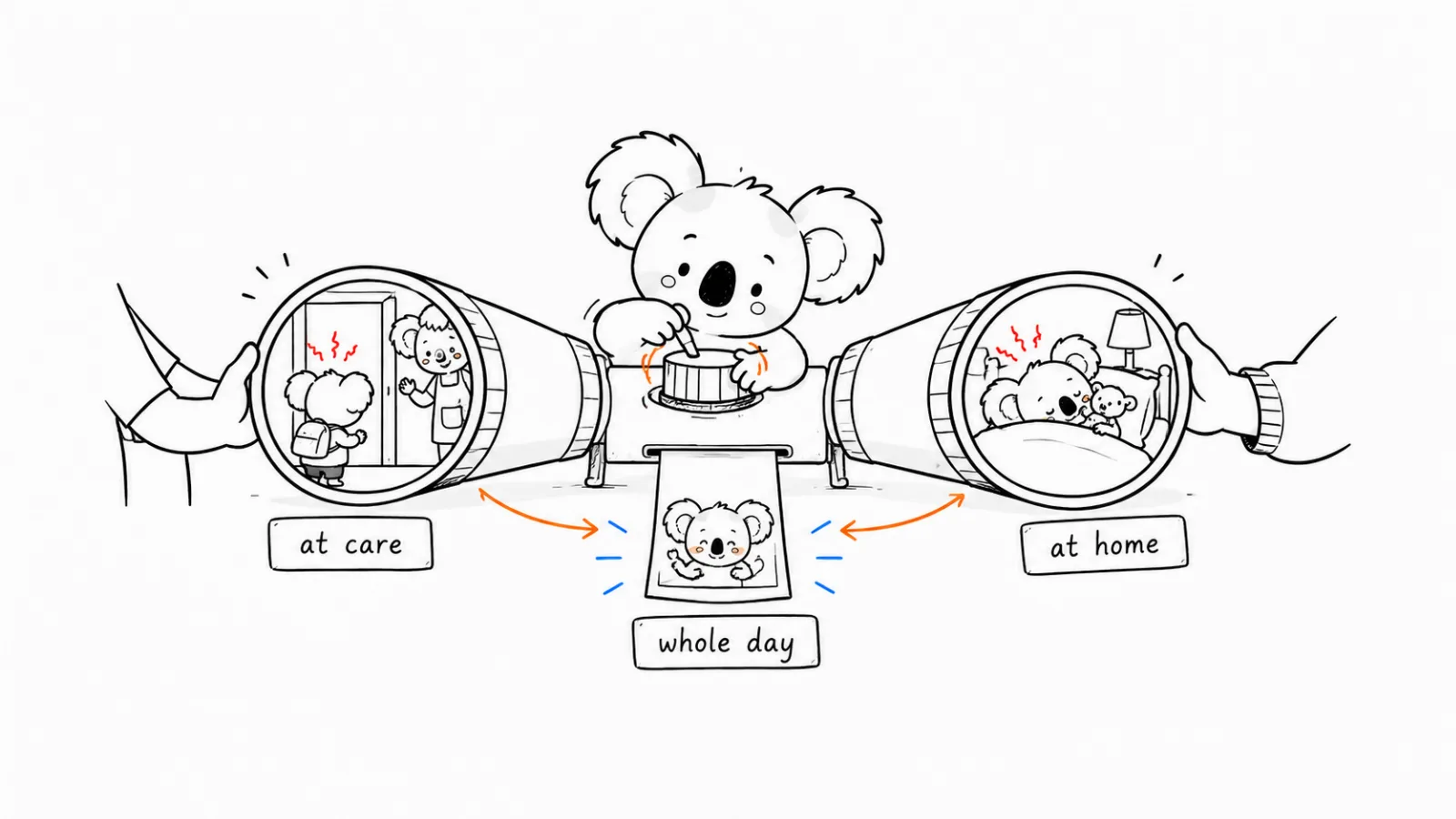
Ask specific questions:
- ●How long does my child remain upset after I leave?
- ●Who comforts them, and what seems to help?
- ●Are they eating, playing, resting, and engaging with others?
- ●Is there a particular transition that is difficult?
- ●Can we use the same simple language at drop-off and bedtime?
Recognised parenting and health authorities, including HealthyChildren.org, the NHS, and Raising Children Network, generally emphasise predictable routines, calm separations, and responsive reassurance during transitions. Adjustment varies by child, so progress may be uneven rather than improving every day.
Consider speaking with your child’s doctor or another qualified health professional if anxiety remains intense, continues without gradual improvement, or significantly affects sleep, eating, play, family life, or participation in care. Seek advice sooner if your child reports harm, shows a marked change in behaviour, appears unusually fearful of a specific person or place, or you have any safeguarding concern.
FAQ
Should I stop daycare if bedtime anxiety begins?
Not necessarily. Bedtime anxiety can be part of adjusting to separation and a new routine. First, gather information from educators, maintain a predictable home routine, and watch whether your child gradually becomes more comfortable. If distress is severe, persistent, or linked to a specific concern, seek professional advice and review the care arrangement.
Is it helpful to let my toddler sleep in my bed during the transition?
Families make different choices about bed-sharing, but changing the usual sleep arrangement may create another transition later. If you want to preserve independent sleep, offer extra connection before bed and use consistent check-ins instead. Follow current safe-sleep guidance relevant to your child’s age and location.
Should we talk about daycare immediately before sleep?
A brief, reassuring preview can help, but bedtime is rarely the best time for detailed problem-solving. Discuss bigger worries earlier in the day through play, drawing, or conversation. At bedtime, keep the message short and predictable.
Can weekends undo progress?
Weekends do not usually undo adjustment. Keeping wake times, naps, meals, and bedtime reasonably consistent may make Monday transitions gentler, while still allowing normal family flexibility.
The Bottom Line
Starting daycare anxiety at bedtime calls for calm connection, clear limits, and predictable follow-through. Give your toddler simple words for the feeling, keep the bedtime sequence familiar, and work with educators to understand the whole day. If the distress does not gradually ease or raises specific concerns, involve a qualified health professional.
Ready for calmer bedtimes?
Try Gula Stories free — 5 narrated bedtime stories, ad-free, for children ages 3-8.