
Space and Stars Bedtime Stories for Sleepy Astronauts
Gentle space bedtime stories can feel calming because they combine wonder, distance, darkness, and slow movement without
Key Takeaways
- ●Gentle space bedtime stories can feel calming because they combine wonder, distance, darkness, and slow movement without requiring much real-world problem-solving.
- ●The most soothing stories use familiar routines, reassuring relationships, simple plots, and peaceful images such as drifting clouds, glowing moons, and quiet planets.
- ●For children aged 2–8, choose the emotional intensity and story length according to the child’s temperament and developmental stage—not age alone.
- ●Avoid stories dominated by danger, isolation, loud battles, frightening aliens, or unresolved suspense close to bedtime.
- ●A predictable reading or listening routine matters more than finding one supposedly “perfect” sleep story.
1. Introduction
Space can appear enormous, mysterious, and exciting. At bedtime, however, it can also become surprisingly cosy: a small astronaut tucked into a warm spacecraft, a moon saying goodnight to the stars, or a sleepy comet making its slow journey home.
That contrast is what makes space bedtime stories appealing to many families. They offer enough imagination to hold a child’s attention while creating distance from the worries and demands of an ordinary day. A child can explore something extraordinary without leaving the safety of bed.
Not every space story is suitable for winding down. Rocket launches, alien chases, black holes, emergencies, and dramatic missions may energise or unsettle some children. Others may become concerned about darkness, getting lost, or being far from their parents.
The practical question is therefore not simply, “Does my child like space?” It is, “Which kind of space story helps my child feel safe, settled, and ready to rest?” This guide explains why gentle cosmic themes may support a calm bedtime atmosphere, how to assess a story before sharing it, and how to adapt the experience for children aged 2–8.
2. Why Gentle Space Themes Can Feel Calming
The calming quality of a space story usually comes from its treatment of space, not from the subject alone. Quiet pacing, emotional safety, repetition, and a reassuring ending matter more than whether the main character travels to the Moon or stays at home.
Space creates emotional distance from the day
Children often bring unfinished feelings to bedtime. A disagreement, a difficult transition, a noisy afternoon, or anticipation about tomorrow can remain active even after the lights are lowered.
An imaginary journey provides a temporary change of perspective. A problem that feels immediate in everyday life can be explored indirectly through a lost star, a nervous moon rover, or an astronaut preparing for sleep. This distance may make feelings easier to approach without turning bedtime into an intense discussion.
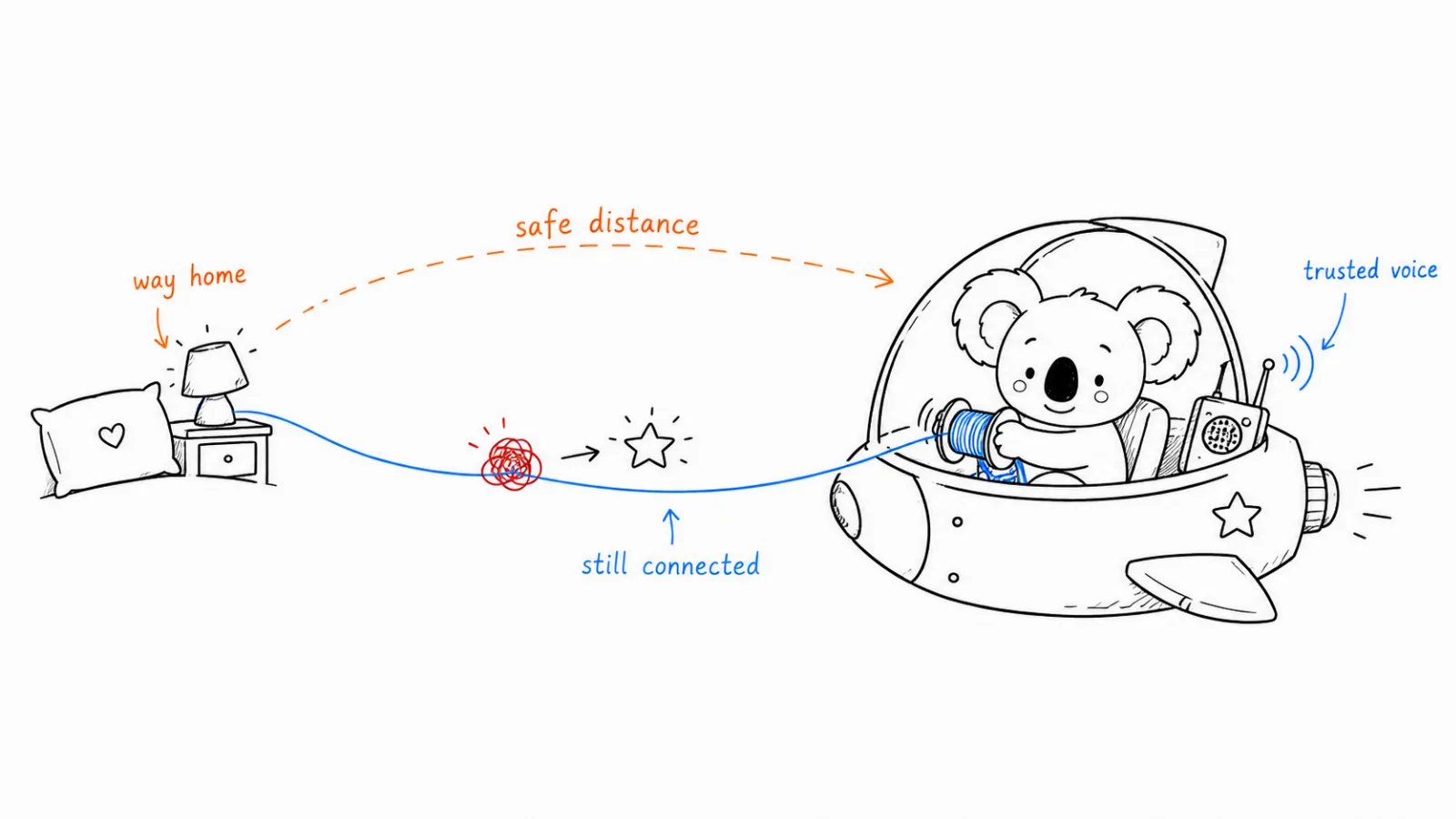
For example, a child who is nervous about sleeping alone might relate to a young astronaut in a quiet cabin. The story can show that the astronaut has comforting routines, a trusted voice nearby, and a clear way home. The message is reassuring without placing the child under pressure to explain their own feelings.
The night sky naturally supports quiet imagery
Many bedtime-friendly space images are slow and visually simple:
- ●Stars twinkle rather than rush.
- ●Planets follow steady paths.
- ●Moons rise and set.
- ●Spacecraft drift between destinations.
- ●Astronauts speak softly inside protected cabins.
These images suit calm narration and gradual transitions. They can also help replace stimulating mental pictures from daytime play or screens with gentler ones.
Darkness must still be handled carefully. Some children find a star-filled sky comforting, while others interpret outer space as empty or frightening. A good story presents darkness as peaceful and inhabited by friendly points of light—not as a threat.
Space encourages awe without requiring excitement
Awe and high-energy excitement are not the same experience. A story can invite a child to wonder about Saturn’s rings or imagine stars as lanterns while keeping the action minimal.
This is especially useful for children who resist bedtime because quiet stories feel “boring.” A cosmic setting offers novelty while the plot remains simple. The child receives an imaginative reward without a cliffhanger or fast-moving conflict.
Repetition makes the journey predictable
Young children often respond well to familiar sequences. Recognised parenting and health resources, including HealthyChildren.org, the NHS, and Australia’s Raising Children Network, commonly emphasise consistent, calming bedtime routines. A story can become part of that routine when its rhythm and ending are predictable.
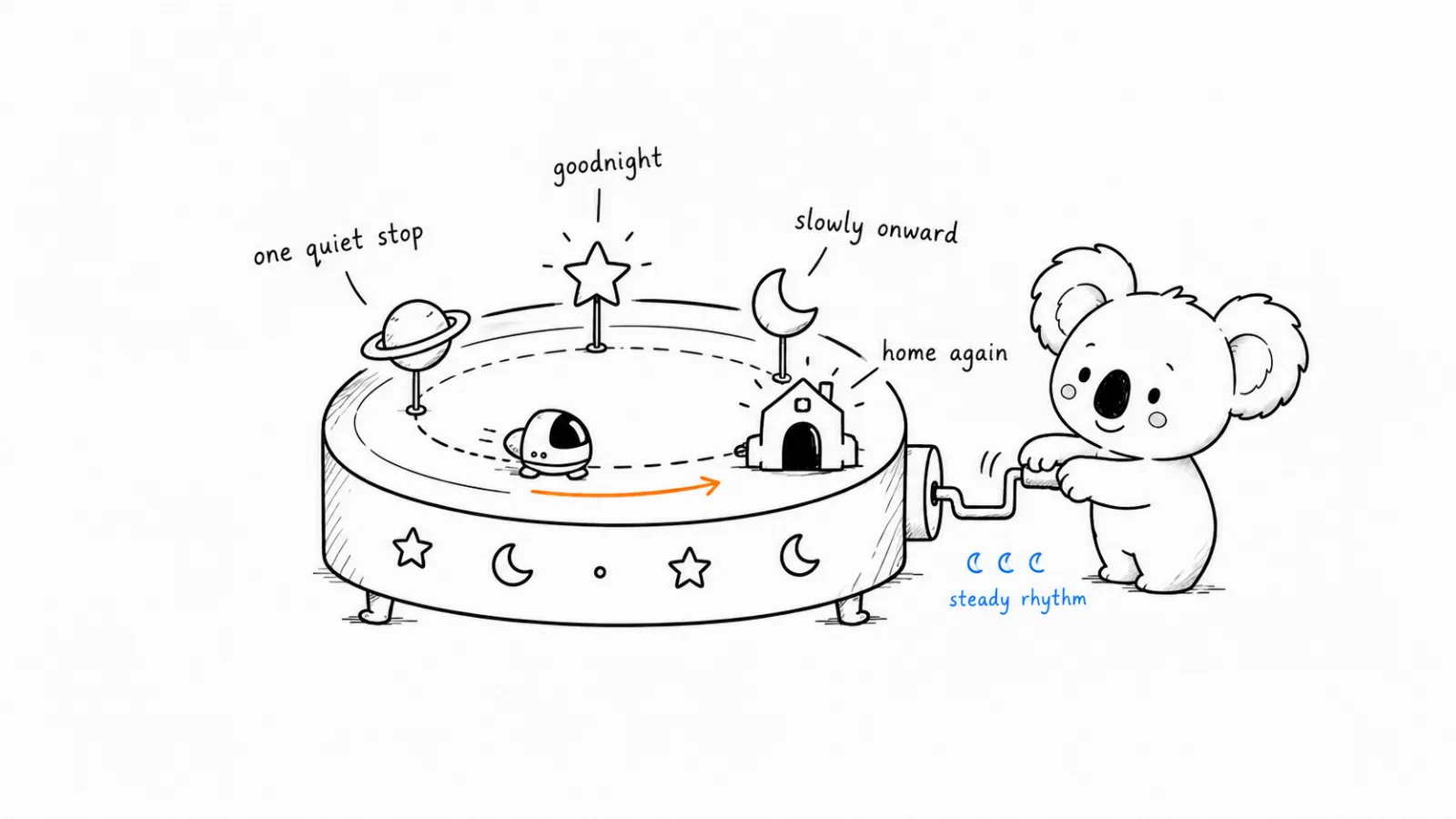
A space story might repeat a pattern such as:
- ●Visit one quiet planet.
- ●Notice one gentle detail.
- ●Say goodnight.
- ●Travel slowly to the next stop.
- ●Return safely home.
The repetition helps children anticipate what comes next. Predictability can make the transition from wakefulness to rest feel less abrupt.
3. What Makes a Space Bedtime Story Gentle?
A gentle story does not need to be completely free of problems. It needs to keep any problem manageable, emotionally contained, and clearly resolved.
Begin with safety
Young listeners benefit from knowing where the character belongs and who is looking after them. Establishing a safe base early prevents the adventure from feeling like abandonment.
Useful details include:
- ●A comfortable spacecraft with a bed or sleeping pod
- ●A caring parent, caregiver, captain, or companion
- ●Reliable communication with home
- ●A familiar object such as a blanket, toy, or photograph
- ●A clear plan for returning
For a two-year-old, “home” might remain physically close: a little bear looks at the Moon through a bedroom window. For an older child, the character may travel farther, but the story should preserve a sense of connection.
Keep the conflict small
Bedtime conflict works best when it can be solved through patience, kindness, cooperation, or a simple routine. Suitable problems might include finding a misplaced moon map, helping a star feel included, or waiting calmly for a space cloud to pass.
More intense subjects require caution. Stories involving oxygen failure, collisions, attacks, permanent separation, or characters trapped far from home may be too activating before sleep, even if the ending is positive.
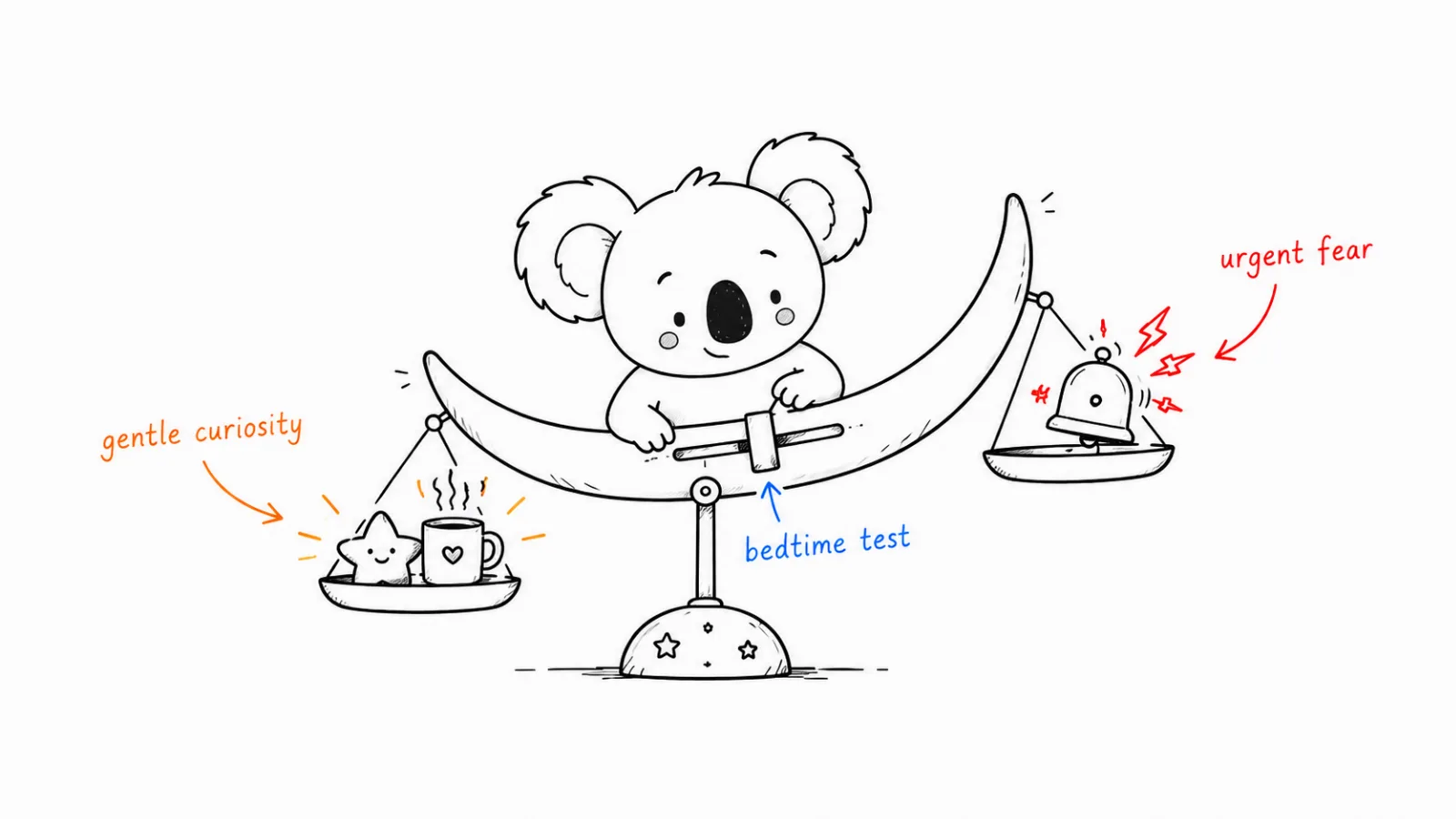
A useful test is to ask: Does the problem invite gentle curiosity, or does it create urgent fear? If the main character must escape, fight, or survive, save that story for daytime.
Slow the language and action
Bedtime prose should leave room to breathe. Short sentences can work well for toddlers, while older children may enjoy richer description. In both cases, the story should avoid constant surprises.
Calming language often focuses on sensory details:
- ●Soft light across a control panel
- ●The quiet hum of a spacecraft
- ●A round moon above a silver cloud
- ●A warm blanket in a cool cabin
- ●Slow breathing while the stars pass outside
Narration matters too. A steady voice, comfortable pauses, and moderate volume are generally more settling than exaggerated character voices or dramatic sound effects. Gula Stories, for example, offers calm narration and multiple natural voices, allowing families to choose a voice that suits the child and the evening routine.
End with closure, not another adventure
A bedtime ending should signal that the emotional work is complete. The astronaut lands, the star finds its place, the moon says goodnight, or the spacecraft enters a calm orbit before everyone rests.
Avoid endings that introduce a new mystery on the final page. “But what was hiding behind Mars?” may encourage speculation when the goal is to help the mind become quieter.
4. Choosing Space Bedtime Stories by Age and Temperament
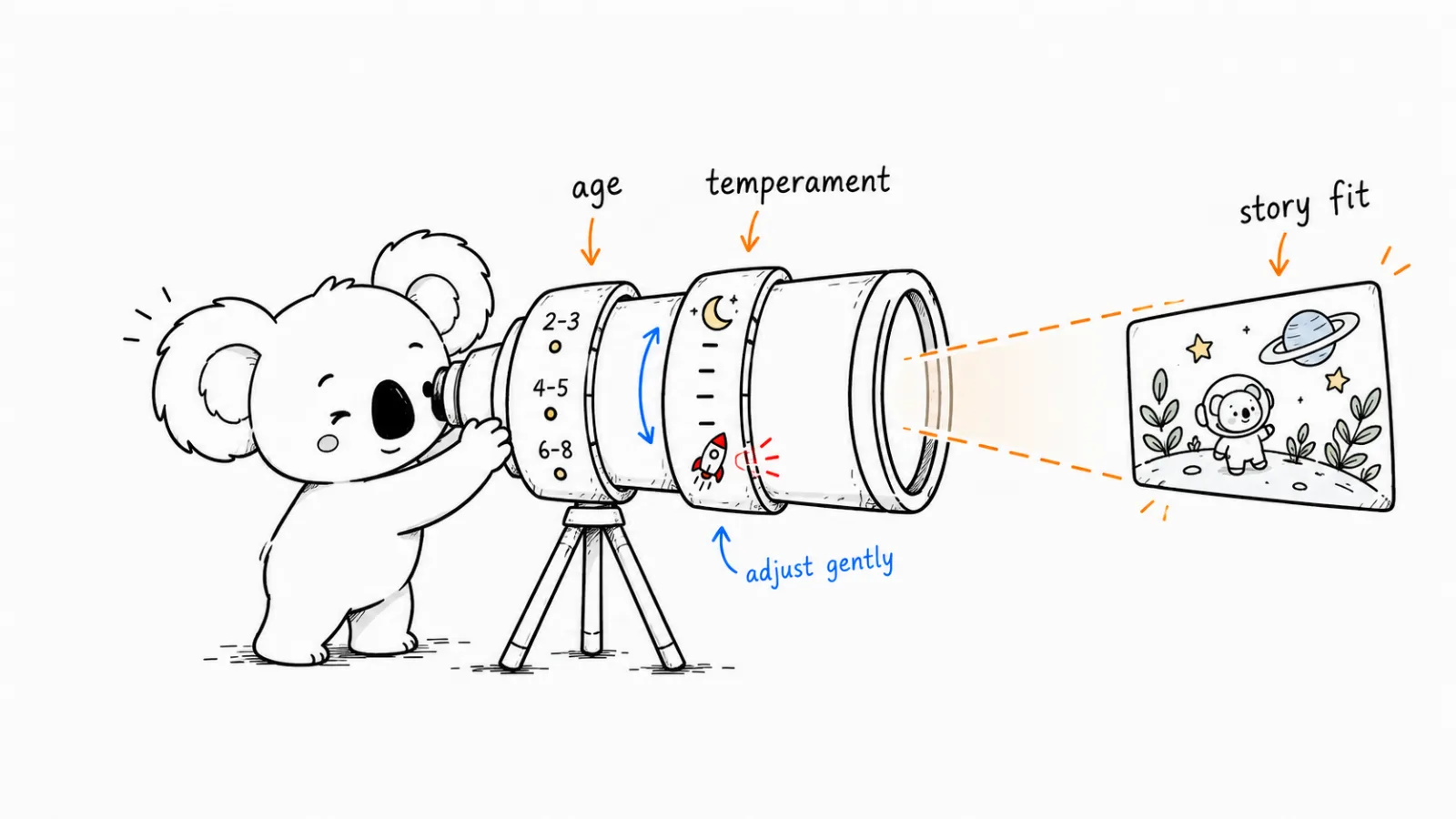
Age provides a useful starting point, but individual responses matter more. One six-year-old may enjoy gentle scientific details, while another may worry about how astronauts breathe. A three-year-old may love friendly aliens, while another finds any unfamiliar creature unsettling.
| Age range | Story features that often work well | Suitable scenarios | Themes to approach carefully |
|---|---|---|---|
| 2–3 | Repetition, familiar objects, very simple journeys, strong caregiver presence | Saying goodnight to stars; watching the Moon from home; a toy rocket returning to bed | Separation, loud launches, strange creatures, long plots |
| 4–5 | Simple missions, friendly companions, mild problems with quick resolution | Delivering a blanket to the Moon; helping a small star glow; visiting one peaceful planet | Getting lost, darkness without reassurance, villains, unresolved suspense |
| 6–8 | More detailed worlds, gentle facts, emotional themes, longer but contained plots | Mapping constellations; caring for a space garden; overcoming first-mission nerves | Realistic emergencies, isolation, destruction, frightening cosmic events |
For children who are sensitive to darkness
Choose stories that connect darkness with rest, safety, and visible light. Keep the character near home at first. A bedroom window, garden telescope, or short trip around the Moon may feel safer than deep-space exploration.
Invite the child to identify comforting elements: “Can you find the astronaut’s night-light?” or “Which star would watch over the spacecraft?” The goal is reassurance, not convincing the child that fear is unreasonable.
For children who become excited by space
Some children turn every rocket into a countdown and every planet into a mission. They may still enjoy space at bedtime, but the storytelling needs firmer boundaries.
Try a “quiet mission” with no launching sequence. The astronaut might polish a telescope, arrange moon rocks, or prepare the cabin for sleep. Read the most energetic space books earlier in the day and reserve slow stories for bedtime.
For children who ask many factual questions
Curiosity can extend bedtime indefinitely. A story with a few accurate, age-appropriate facts may satisfy interest without becoming a science lesson. Choose one or two ideas—such as the Moon reflecting sunlight or astronauts floating in low gravity—and return to the story promptly.
If a question requires a complicated answer, acknowledge it and make a plan: “That is a good question for our space book tomorrow.” This respects the child’s curiosity while protecting the bedtime routine.
For children experiencing persistent sleep difficulties
Stories may support a calming routine, but they are not a treatment or guaranteed way to produce sleep. Children’s sleep needs and patterns vary. If bedtime difficulties are frequent, distressing, or affecting daytime wellbeing, consult a doctor, child health nurse, or other qualified health professional.
5. A Practical Method for Selecting and Sharing a Story
Parents can screen a space story quickly by checking its emotional temperature, structure, and delivery.
The SPACE check
| Letter | Check | What to look for |
|---|---|---|
| S | Safety | The child character is protected, connected, and able to return home. |
| P | Pace | Events unfold slowly, with few surprises or sudden changes. |
| A | Age fit | Language, length, and emotional themes suit the individual child. |
| C | Closure | The main problem is resolved before the final lines. |
| E | Ease | The story ends with quiet actions such as resting, breathing, cuddling, or saying goodnight. |
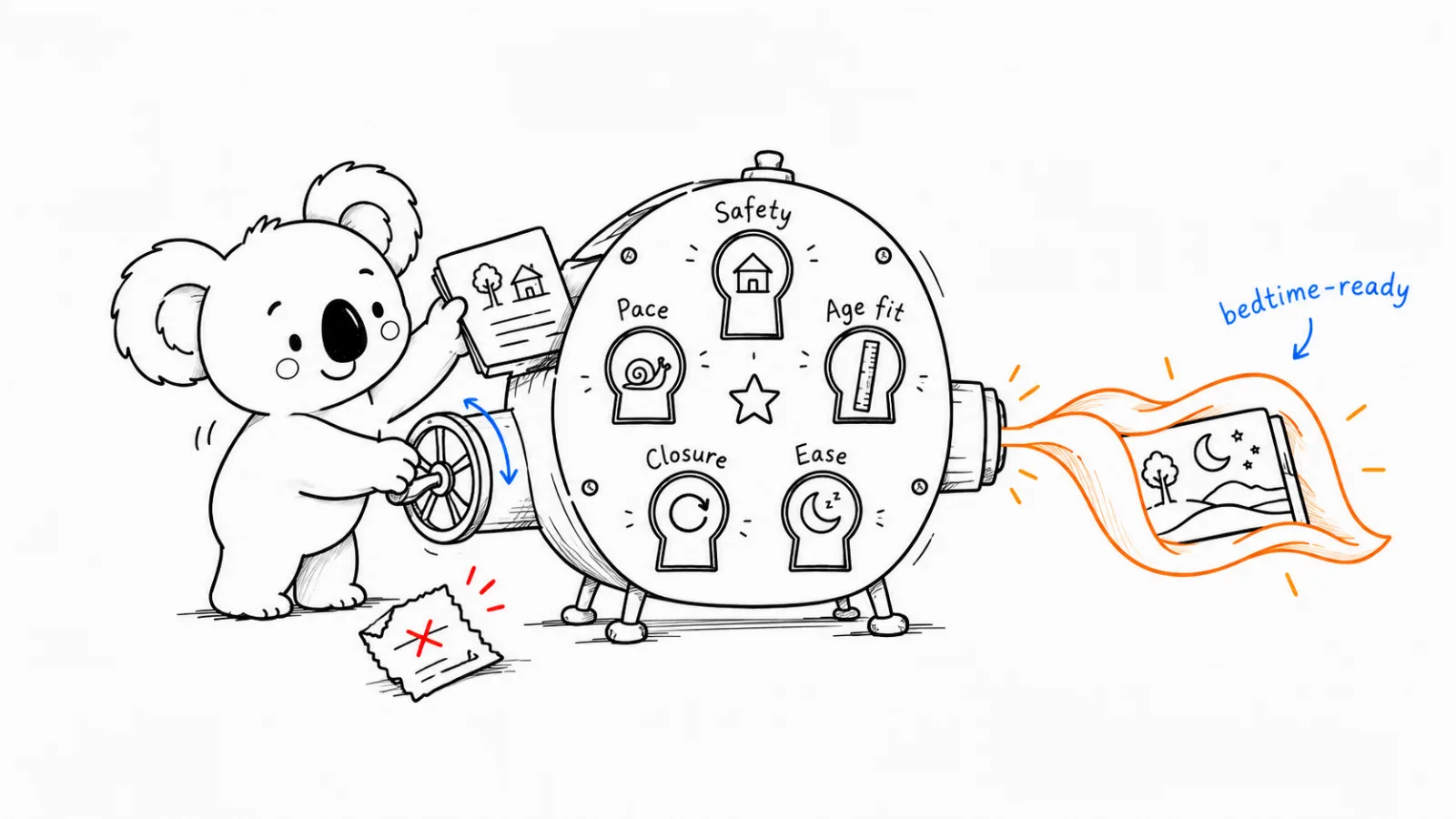
A story does not need to satisfy every child in the same way. The SPACE check is a decision aid, not a rigid rule.
Preview unfamiliar stories
Read or listen to a new story before using it at bedtime, especially if your child is sensitive to danger or separation. Titles and cover art do not always reveal an intense scene midway through the plot.
When using an app, look for age-appropriate recommendations and clear descriptions. Personalised features can also make an unfamiliar setting feel safer. In Gula Stories, for example, a personalised avatar can place the child within a gentle narrative while the ad-free format avoids commercial interruptions during the routine.
Build a clear transition around the story
The story works best as one part of a predictable sequence. A simple routine might be:
- ●Finish active play.
- ●Complete washing and toothbrushing.
- ●Dim the room and choose one story.
- ●Read or listen at a calm pace.
- ●Ask one simple closing question.
- ●Say the same goodnight phrase each evening.
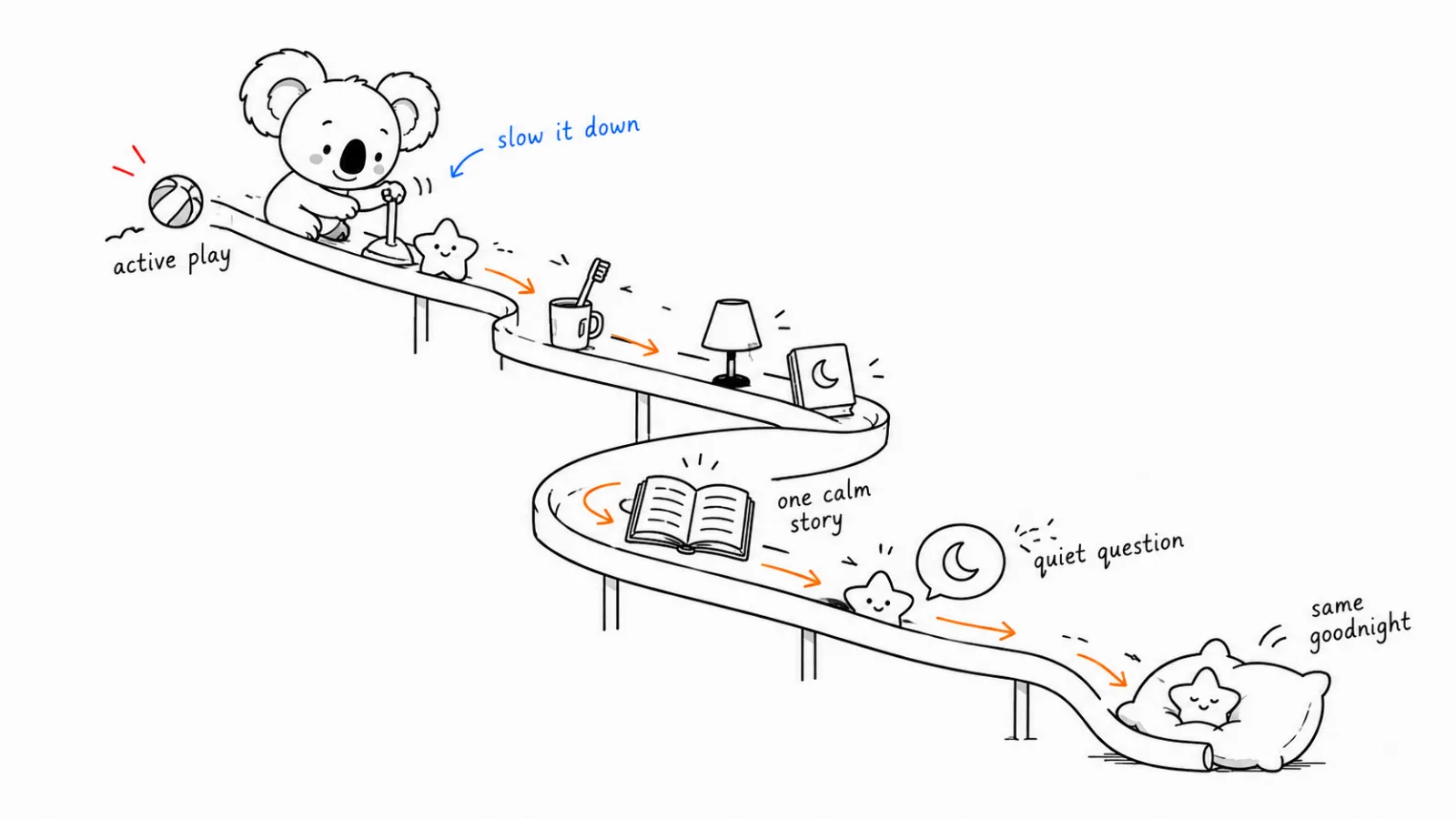
A closing question should reduce activity rather than restart the adventure. Try, “Which planet would you say goodnight to?” instead of, “What should the astronaut do next?”
Follow the child’s response
Observe behaviour during and after the story. Relaxed posture, quieter speech, and willingness to settle suggest that the tone is suitable. Repeated questions about danger, requests to check the room, or renewed energetic play may indicate that the story is too intense for bedtime.
If a child becomes worried, pause. Offer reassurance, clarify that the story is imaginary where appropriate, and switch to something familiar. There is no need to finish a book that is making bedtime harder.
6. FAQ
Are space bedtime stories suitable for toddlers?
Yes, when they are short, repetitive, and strongly reassuring. Stories for toddlers should keep the setting simple and connect space to familiar experiences, such as looking at the Moon from a bedroom or taking a toy rocket on a brief journey. Avoid complex danger, long separations, and frightening creatures.
Can a space story make a child more awake?
It can. Fast countdowns, dramatic launches, battles, mysteries, and cliffhangers may increase excitement. If a child becomes energised, choose a slower story or move space adventures to an earlier reading time. A child’s response is more informative than the theme alone.
Should bedtime space stories include scientific facts?
A few accurate, child-friendly facts can enrich the story, particularly for children aged 6–8. Keep them brief and connected to the plot. Too many explanations may shift the experience from winding down to active learning, so save extended questions for daytime.
What should I do if my child becomes frightened by space?
Stop or change the story and acknowledge the feeling calmly. Return to a familiar book, add reassuring details, or choose stories set closer to home. If fears are persistent, intense, or affecting sleep and daily life, consider discussing them with a qualified health professional.
7. Conclusion
The value of space bedtime stories lies in their ability to make wonder feel safe. Quiet stars, slow journeys, reassuring companions, and clear returns home can offer children an imaginative bridge between a busy day and a restful night.
Choose stories with low emotional intensity, age-appropriate language, a predictable structure, and a settled ending. Preview new material, notice how the individual child responds, and keep the surrounding routine consistent. The gentlest space story is not necessarily the one with the least imagination—it is the one that lets a sleepy astronaut explore the universe while always feeling securely connected to home.
Ready for calmer bedtimes?
Try Gula Stories free — 5 narrated bedtime stories, ad-free, for children ages 3-8.