
Setting Screen-Time Limits Kids Actually Accept
Children are more likely to respect screen-time limits when they help shape the routine, but adults should still set the
Key Takeaways
- ●Children are more likely to respect screen-time limits when they help shape the routine, but adults should still set the non-negotiable boundaries.
- ●Agree in advance on when screens are available, what “finished” means, and what happens next.
- ●Use predictable cues—such as a timer, a final-activity warning, and a consistent stopping point—rather than ending screen time without notice.
- ●Treat resistance calmly and keep the boundary steady; accepting a limit does not always mean liking it.
- ●Review the plan after a trial period instead of renegotiating it during every difficult transition.
The most effective screen time limits kids can accept are clear, predictable, and created with their input. Parents remain responsible for the final boundary, but children can help decide practical details such as when screen time happens, how warnings work, and which offline activity comes next.
This shared approach gives children a useful sense of control without making them responsible for setting every rule. It also turns screen time from a recurring negotiation into a familiar family routine.
Give Children Choices Inside an Adult-Set Boundary
Involving a child does not mean asking, “How much screen time do you want?” That question places an adult decision in the child’s hands and can invite a daily debate.
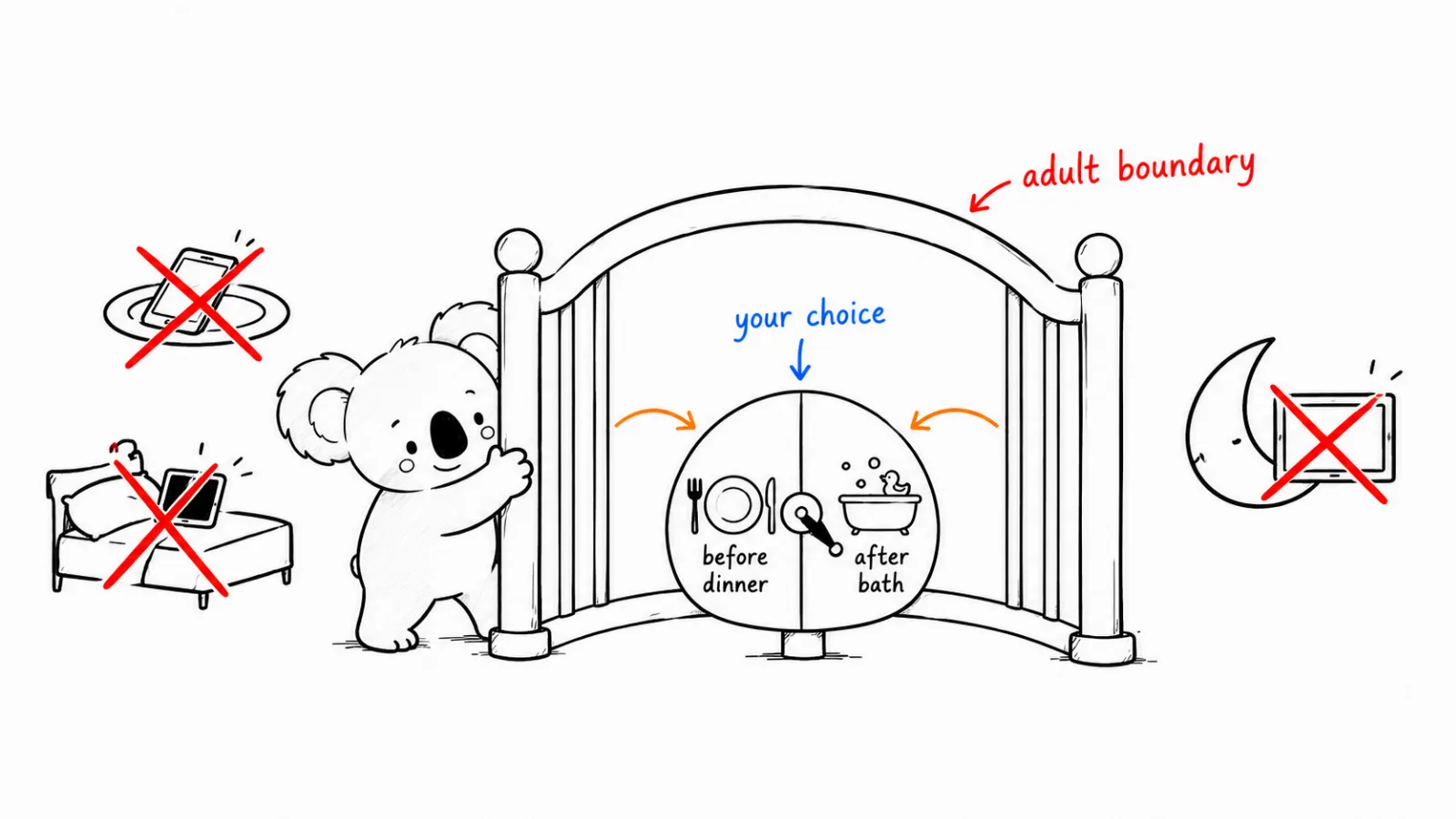
Instead, establish the boundaries that are not open for negotiation. These might include no devices at meals, screens staying outside bedrooms, or stopping before the evening routine. Then offer limited choices within those boundaries.
For example:
- ●“You can use your screen time before dinner or after your bath. Which works better?”
- ●“Would you like a five-minute warning or a ten-minute warning?”
- ●“When the timer ends, would you rather build with blocks or choose a bedtime story?”
- ●“Should we keep the tablet on the kitchen bench or the charging shelf when it is finished?”
The available choices should all be acceptable to the parent. For children aged two or three, one simple choice is usually enough. Older children may be able to contribute more, such as helping create a weekday plan or suggesting a fair stopping point between game rounds.
Recognised authorities, including the American Academy of Pediatrics through HealthyChildren.org, encourage families to consider not only the amount of media children use but also its quality, context, and effect on sleep, movement, learning, and family time. A family plan should therefore fit the child’s age and daily needs rather than rely on one rule for every household.
Build a Screen-Time Agreement Children Can Understand
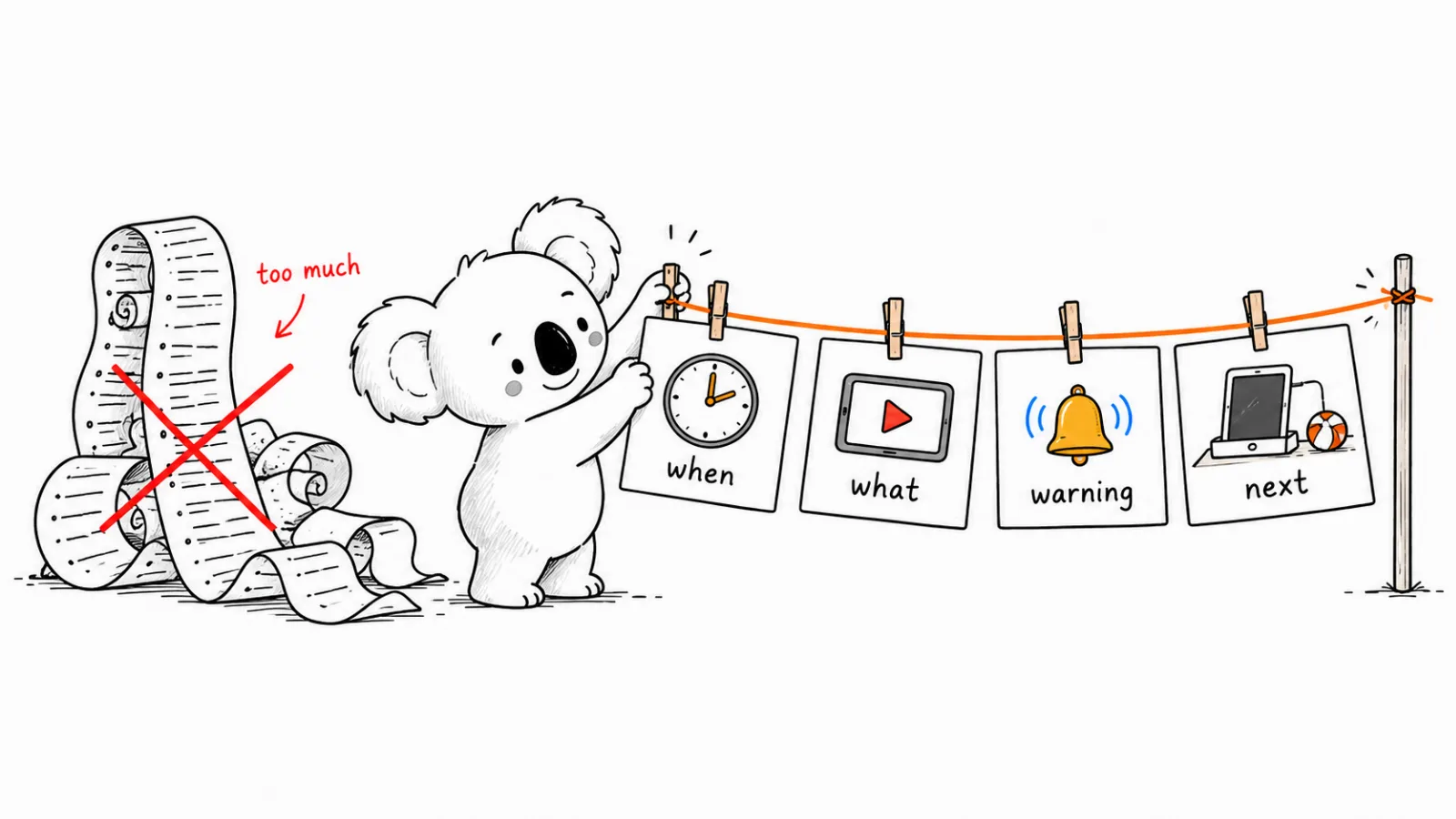
A useful agreement is short enough for a child to remember. It should answer four questions:
- ●When can I use a screen?
- ●What can I use it for?
- ●How will I know it is nearly time to stop?
- ●What happens when screen time ends?
For children who cannot yet read, use pictures: a tablet, a timer, a charging station, and the next activity. A long contract on the fridge is less helpful if the child cannot understand it independently.
| Part of the plan | Adult responsibility | Child’s input |
|---|---|---|
| Timing | Protect meals, sleep routines, school, and family commitments | Choose between two suitable time slots |
| Content | Approve age-appropriate apps, games, and videos | Choose from approved options |
| Ending cue | Set the timer and define the stopping point | Choose the warning style |
| Device storage | Select a shared, visible location | Help name or decorate the charging space |
| Next activity | Offer realistic offline options | Choose what to do after the screen ends |
Be precise about what “finished” means. “One more minute” is vague, and a timer that rings halfway through a game level can feel abrupt. Where practical, agree that the child will stop when the timer sounds or at the next natural break, such as the end of an episode or round. The parent should decide beforehand which rule applies.
A simple agreement might be:
“After afternoon tea, you may choose one approved show. I will tell you when five minutes remain. When the episode ends, the tablet goes on the charging shelf, and you choose drawing or outside play.”
The clearer the sequence, the less room there is for competing interpretations.
Make Stopping Predictable, Not Surprising
Many screen-time conflicts are transition problems. A child may understand the rule and still find it hard to leave an engaging activity, especially when tired, hungry, or absorbed in a game.
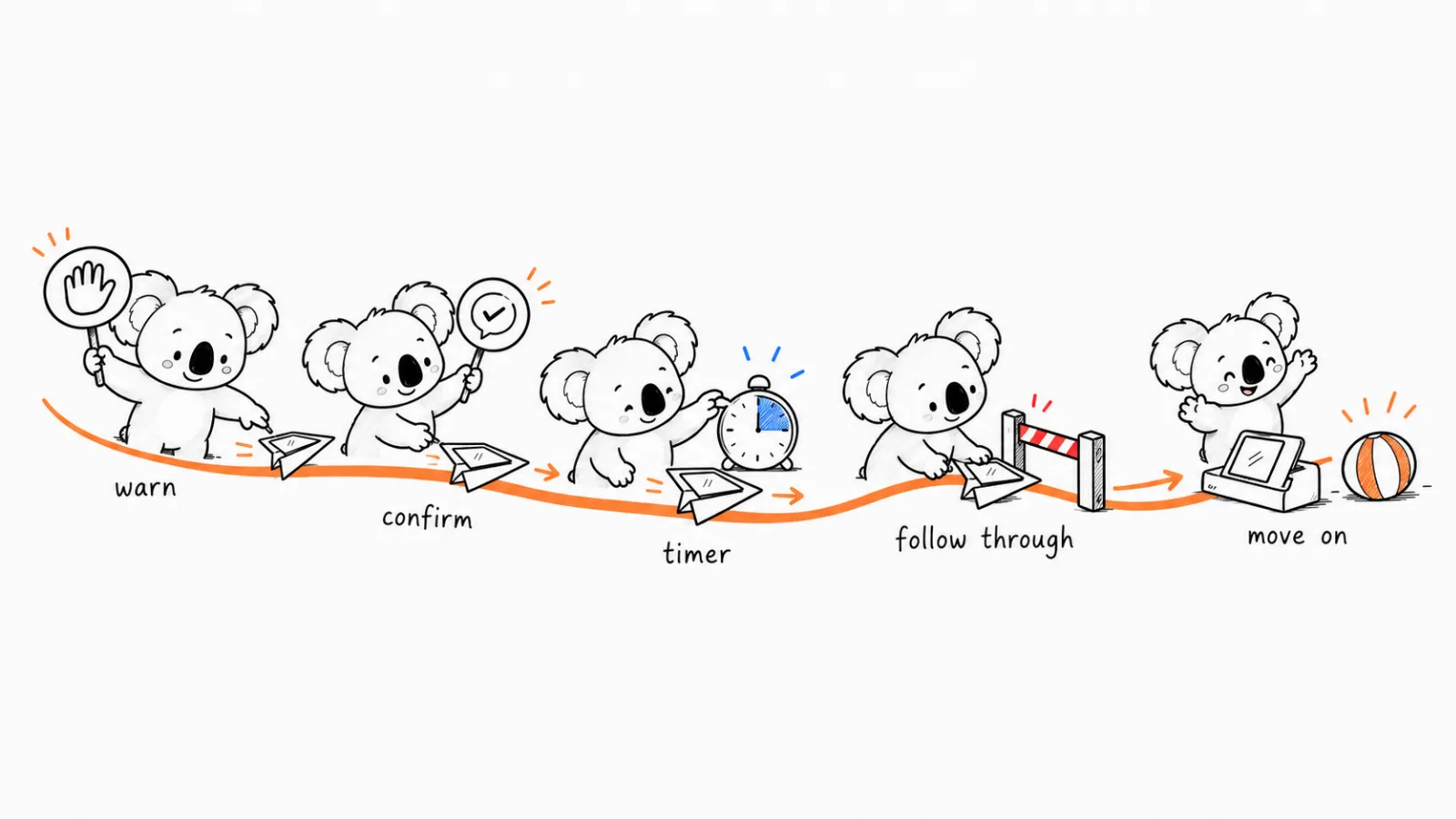
Use the same short sequence each time:
- ●Give a warning before the end.
- ●Ask the child to confirm the stopping point: “What happens when this round finishes?”
- ●Use a visible or audible timer if it helps.
- ●Follow through without extending the limit repeatedly.
- ●Move directly to the agreed next activity.
Avoid presenting the warning as a new decision. “Would you like to turn it off now?” suggests that “no” is an available answer. A calmer statement is: “Five minutes left. When the timer rings, the tablet goes on the shelf.”
Some platforms use endless play, automatic recommendations, or episodes that start immediately. Turning off autoplay and choosing content with clear endings can make the boundary easier to follow. For evening use, a contained activity—such as listening to a calm story—may also provide a clearer stopping point than an open-ended video feed. An ad-free app such as Gula Stories can support that kind of predictable routine when it suits the family’s plan.
Hold the Limit Without Turning It Into a Power Struggle
A child’s protest does not prove that the plan has failed. Children can participate in making a rule and still feel disappointed when it takes effect.
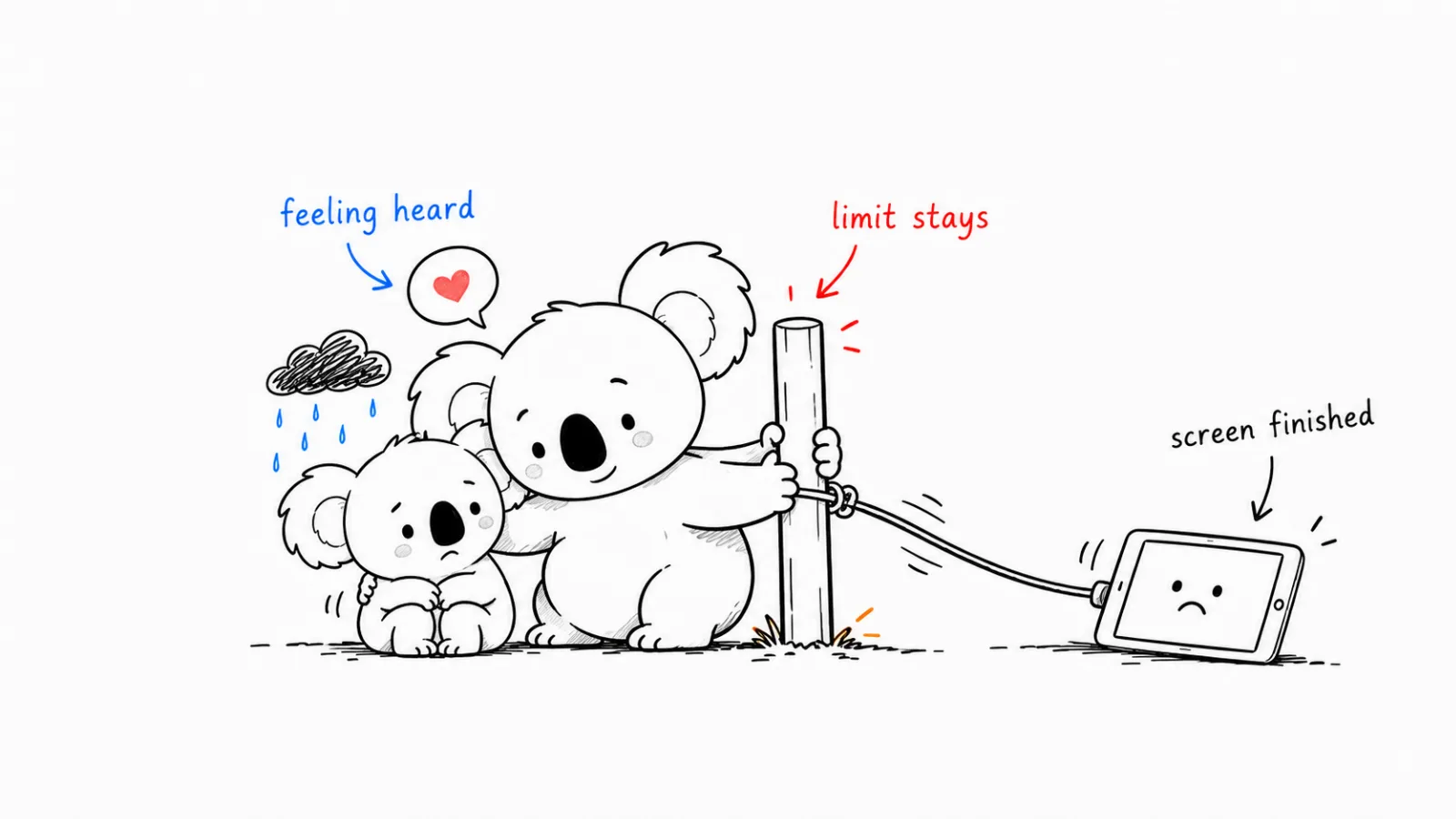
Acknowledge the feeling without reopening the decision:
“You wanted to keep playing. It is hard to stop. The screen is finished for today.”
Keep the explanation brief. Repeating arguments, offering several new choices, or threatening unrelated punishments can intensify the conflict. Stay nearby if the child needs help calming down, then follow the agreed transition.
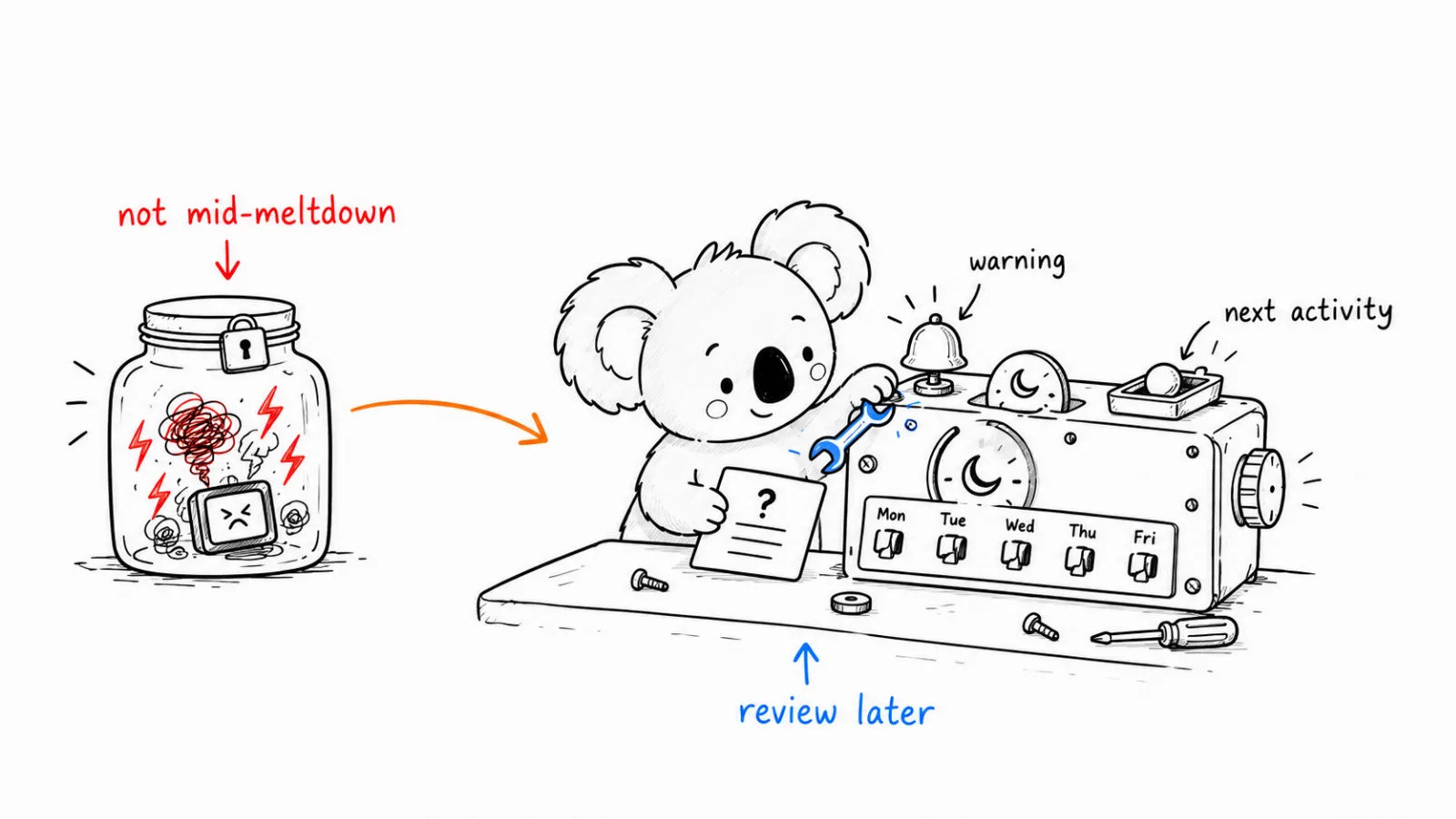
If the same problem happens repeatedly, review it later when everyone is calm. Ask specific questions:
- ●Was the warning easy to notice?
- ●Did the activity have a natural ending?
- ●Was the child consistently hungry or tired at that time?
- ●Was the next activity realistic and ready?
- ●Did adults follow the same rule each day?
Change the system if necessary, but avoid changing it in response to shouting at the moment the screen ends. A weekly family check-in gives children a legitimate place to suggest adjustments while protecting the daily boundary.
Parents should also model the rule where possible. If phones are put away during meals, that expectation is easier to understand when it applies to adults too. Necessary work calls or messages can be explained simply rather than treated as invisible exceptions.
FAQ
What if caregivers have different screen-time rules?
Agree on a small set of shared non-negotiables, particularly around meals, bedtime, approved content, and device storage. Other details can differ between homes or caregivers, but explain those differences plainly: “Grandad has a different afternoon routine; at home, this is our plan.”
Should children earn screen time with chores?
Screens can follow ordinary responsibilities, but avoid making them the reward for every helpful action. Children also need to learn that dressing, tidying, and contributing to family life are normal expectations. If screen time is part of the routine, describe the sequence clearly: “First shoes and bag, then the agreed screen time.”
What if my child becomes extremely distressed whenever a device is removed?
Start by checking predictable triggers such as hunger, tiredness, unclear warnings, overly stimulating content, or an abrupt stopping point. If intense distress is frequent, affects family life, or comes with concerns about sleep, behaviour, learning, or development, discuss it with your child’s doctor or another qualified health professional.
Do screen-time limits need to be identical for siblings?
No. Limits can reflect age, school demands, sleep needs, and the type of activity. Explain that fair rules meet each child’s needs; they do not always look exactly the same.
The Bottom Line
Children do not need complete control over screen time, but they benefit from having a meaningful role in how limits work. Set the protective boundaries, invite choices within them, and practise the same ending routine consistently. The goal is not a child who never objects—it is a child who knows what to expect and gradually learns to move on.
Ready for calmer bedtimes?
Try Gula Stories free — 5 narrated bedtime stories, ad-free, for children ages 3-8.