
Screen Time Before Bed for Kids: A Gentler Wind-Down
Screen time before bed for kids can delay sleep by extending stimulation, displacing calming routines, and making it har
Key Takeaways
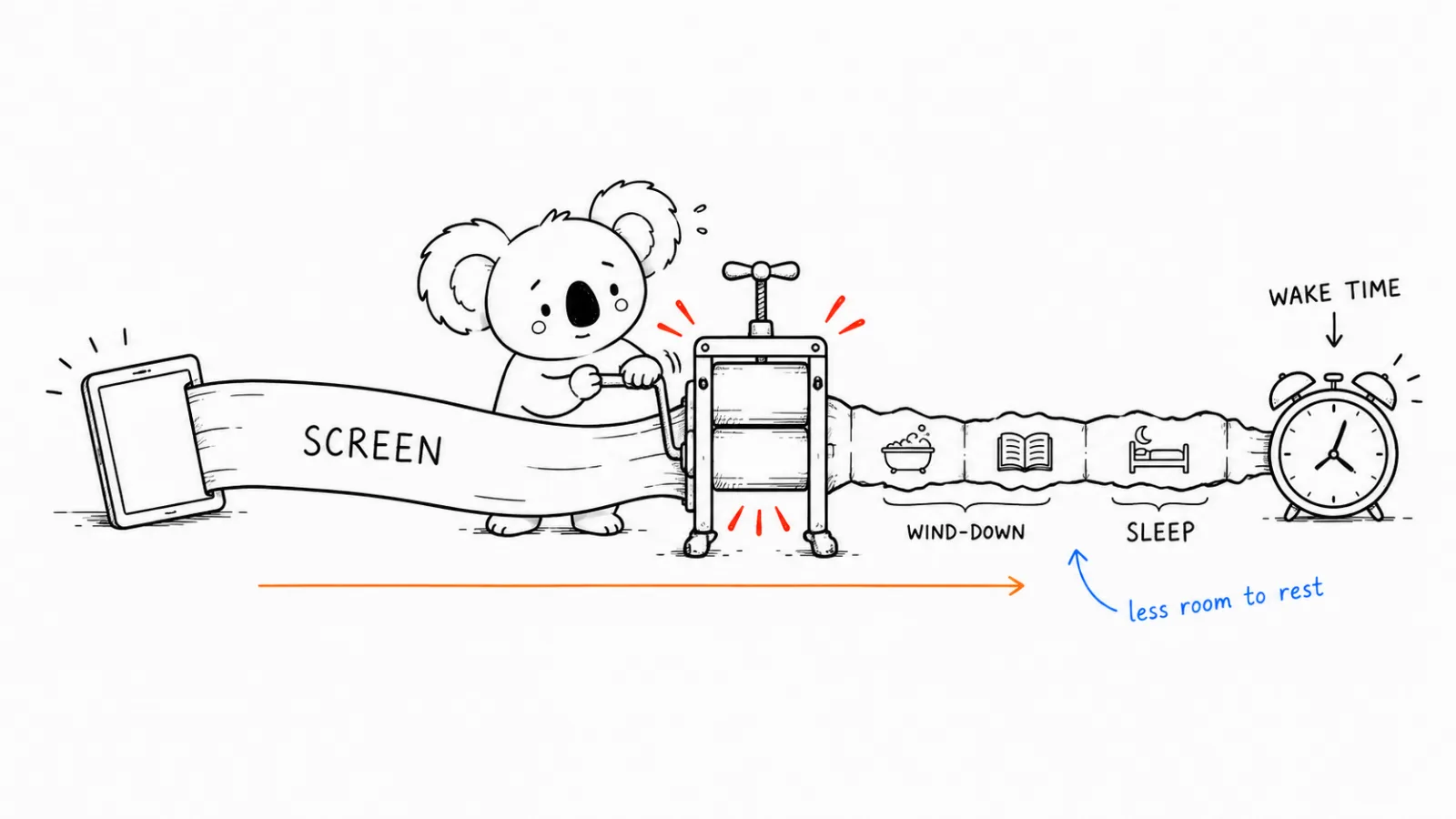
- ●Screen time before bed for kids can delay sleep by extending stimulation, displacing calming routines, and making it harder to stop an enjoyable activity.
- ●A practical starting point is to create a screen-free transition during the final hour before bedtime, while adjusting the timing to the child’s age, needs, and household routine.
- ●Content, context, and device location matter alongside total minutes. Fast-paced videos, emotional games, notifications, and devices used in bed are especially likely to interfere with winding down.
- ●Gradual changes usually create less conflict than sudden bans. Replace screens with predictable alternatives rather than simply removing them.
- ●Persistent sleep problems, significant daytime sleepiness, loud snoring, or major behavioral changes deserve professional attention.
1. Introduction
For many families, screens fill a useful role at the end of a demanding day. A television program may occupy children while dinner is prepared. A tablet may help siblings settle down. An older child may use a laptop to complete homework or talk with friends.
The difficulty begins when screen use runs directly into bedtime. Parents may see repeated requests for “one more video,” arguments when a device is removed, or a child who appears tired but becomes restless after getting into bed. The result can be a nightly struggle that feels larger than the screen itself.
The goal does not have to be a rigid, screen-free household. A more realistic aim is to separate stimulating media from sleep and give the child a dependable path from activity to rest.
This guide explains how screen time before bed for kids may affect that transition, how different types of use compare, and how parents can build a gentler wind-down without turning every evening into a confrontation.
Direct answer: If screens appear to be affecting bedtime, begin by ending recreational screen use about one hour before lights-out. Keep devices out of the bed, reduce stimulating content in the evening, and replace the screen with a short, predictable routine. Treat this as a starting point rather than an inflexible rule.
2. Why Evening Screens Can Make Sleep More Difficult
The central concern is not that every minute of evening screen use automatically causes poor sleep. The more useful question is whether the screen is interfering with the processes that help a particular child become ready for bed.
Several mechanisms can overlap.
Screens can displace the wind-down period
A child who watches videos until lights-out loses time that might otherwise be used for bathing, reading, talking, stretching, or sitting quietly. Even if the screen content is calm, the routine may end too abruptly: the child moves from active attention to an expectation of immediate sleep.
The same displacement can affect sleep duration. If bedtime moves later while the morning wake time stays fixed for school or childcare, the child has less opportunity to sleep.
Content can increase alertness
Fast-paced games, suspenseful stories, competitive play, social conversations, and emotionally intense videos can leave a child mentally activated. A child may continue thinking about a challenge, replaying a scene, or anticipating the next message after the device is turned off.
Interactive media can be particularly difficult to stop because it requires ongoing decisions and often has no natural endpoint. A television episode at least finishes; an online feed, multiplayer game, or sequence of short videos may continue indefinitely.
Light may reinforce wakefulness
Bright light in the evening can signal alertness to the body. Screens are not the only source of evening light, and brightness, distance, timing, and duration all influence exposure. However, a bright device held close to the face can work against a dim, quiet bedtime environment.
Night-mode settings and lower brightness may reduce glare, but they do not address every issue. The content can still be exciting, and the activity can still delay the routine.
Devices create opportunities for interruption
A phone or tablet beside the bed can remain psychologically “open” even when it is not being used. Notifications, vibrations, incoming messages, and the temptation to check something can interrupt settling or wake a child later.
For practical purposes, device location is often as important as the family’s stated bedtime rule.
3. A Gentler Approach: Change the Transition, Not Just the Limit
Simply announcing “no screens” may remove an activity without solving the reason the child relies on it. The screen may provide entertainment, connection, predictability, distraction from worry, or a buffer between school and sleep.
A gentler plan identifies that function and creates a replacement.
Start with one clear boundary
Choose a rule that is easy to understand and enforce consistently. For example:
- ●Recreational screens end one hour before lights-out.
- ●Devices charge outside bedrooms overnight.
- ●Homework on a computer ends before the bedtime routine begins.
- ●No autoplay or new game rounds after the agreed stopping time.
Avoid creating several complicated limits at once. One reliable boundary is usually easier for children and caregivers to remember.
Give advance notice
An abrupt stop can feel like an unexpected loss, especially to younger children or children who find transitions difficult. Use predictable warnings:
- ●“Ten minutes until the tablet goes away.”
- ●“This is the last episode.”
- ●“Finish this round; we are not starting another one.”
- ●“When the timer rings, the phone charges in the kitchen.”
The warning should describe what happens next, not only what is ending.
Replace the screen with a short sequence
A wind-down routine does not need to be elaborate. It needs to be repeatable.
One possible sequence is:
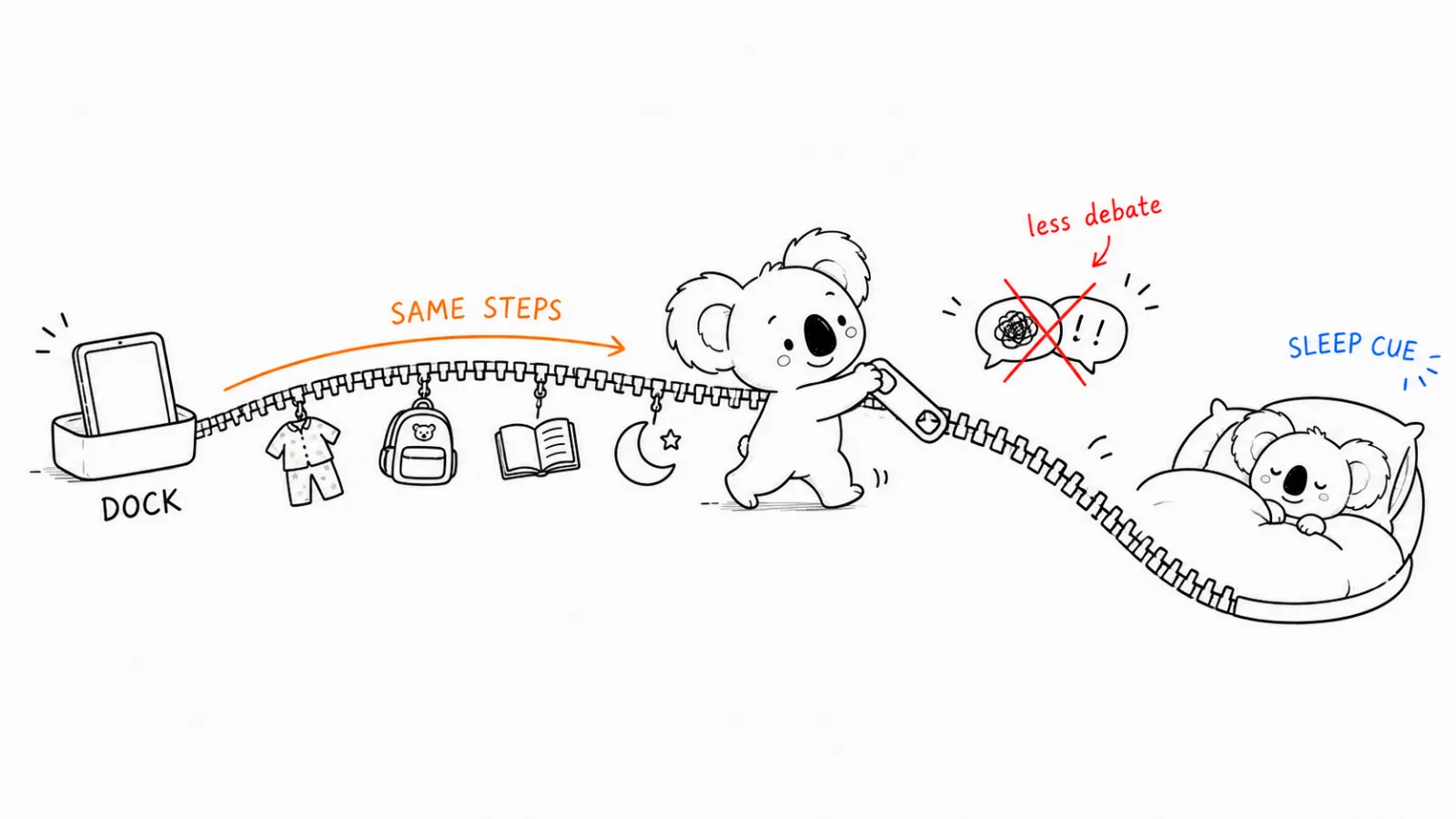
- ●Turn off and dock devices.
- ●Use the bathroom, wash, and put on sleepwear.
- ●Prepare clothes or a school bag for the next morning.
- ●Choose one quiet activity.
- ●Dim the room and move to bed.
- ●Finish with a brief story, conversation, or calming ritual.
The sequence itself becomes a cue. Over time, predictability can reduce negotiation because the child knows what follows the screen.
Offer limited choices
Children often respond better when they have some control within a firm boundary. Instead of asking whether they want to stop using the device, ask what they want to do afterward:
- ●“Would you like drawing or a story?”
- ●“Do you want music while you get ready, or quiet?”
- ●“Should we read on the sofa or in bed?”
The screen limit remains stable, while the child chooses part of the transition.
Expect an adjustment period
A new routine may initially produce complaints, boredom, or repeated requests. That response does not necessarily mean the plan is failing. It may mean the former habit was well established.
Keep the replacement activity accessible and the boundary calm. If the routine is unmanageable after several nights, adjust its design rather than abandoning the goal. The wind-down may be too long, the stopping cue may be unclear, or the chosen alternative may not meet the child’s needs.
4. Match the Strategy to the Child and the Situation
Bedtime guidance works better when it reflects age, temperament, responsibilities, and family context.
Younger children
Young children often benefit from visible, concrete steps. A picture chart can show the evening sequence: device away, pajamas, teeth, book, bed. A physical timer may make the stopping point feel less arbitrary.
Choose media with a clear ending and avoid beginning long content close to the cutoff. If a program lasts 25 minutes but only 10 minutes remain, save it for another time.
School-age children
School-age children can participate in designing the routine. Ask which screen activities are hardest to stop and which quiet alternatives feel realistic. They may prefer reading, puzzles, coloring, building something, or listening to an audio story.
If homework requires a screen, distinguish required use from entertainment. Completing an assignment at 8:00 p.m. is not the same activity as moving directly from homework into gaming or short-form video. When possible, schedule screen-based homework earlier and follow it with an offline transition.
Teenagers
For teenagers, evening device use may involve schoolwork, friendships, and growing independence. A rule that ignores those needs may invite secrecy rather than cooperation.
Agree on practical boundaries such as a charging location, a final time for social messaging, or a “do not disturb” schedule. Adults should also explain the reason for the rule and model similar behavior where possible.
A teenager who regularly works late because of academic demands may need help with workload, scheduling, or expectations—not only a phone restriction.
Children who use screens for regulation or communication
Some children use familiar media to recover from sensory overload, reduce anxiety, communicate, or follow a stable routine. Sudden removal may be particularly distressing.
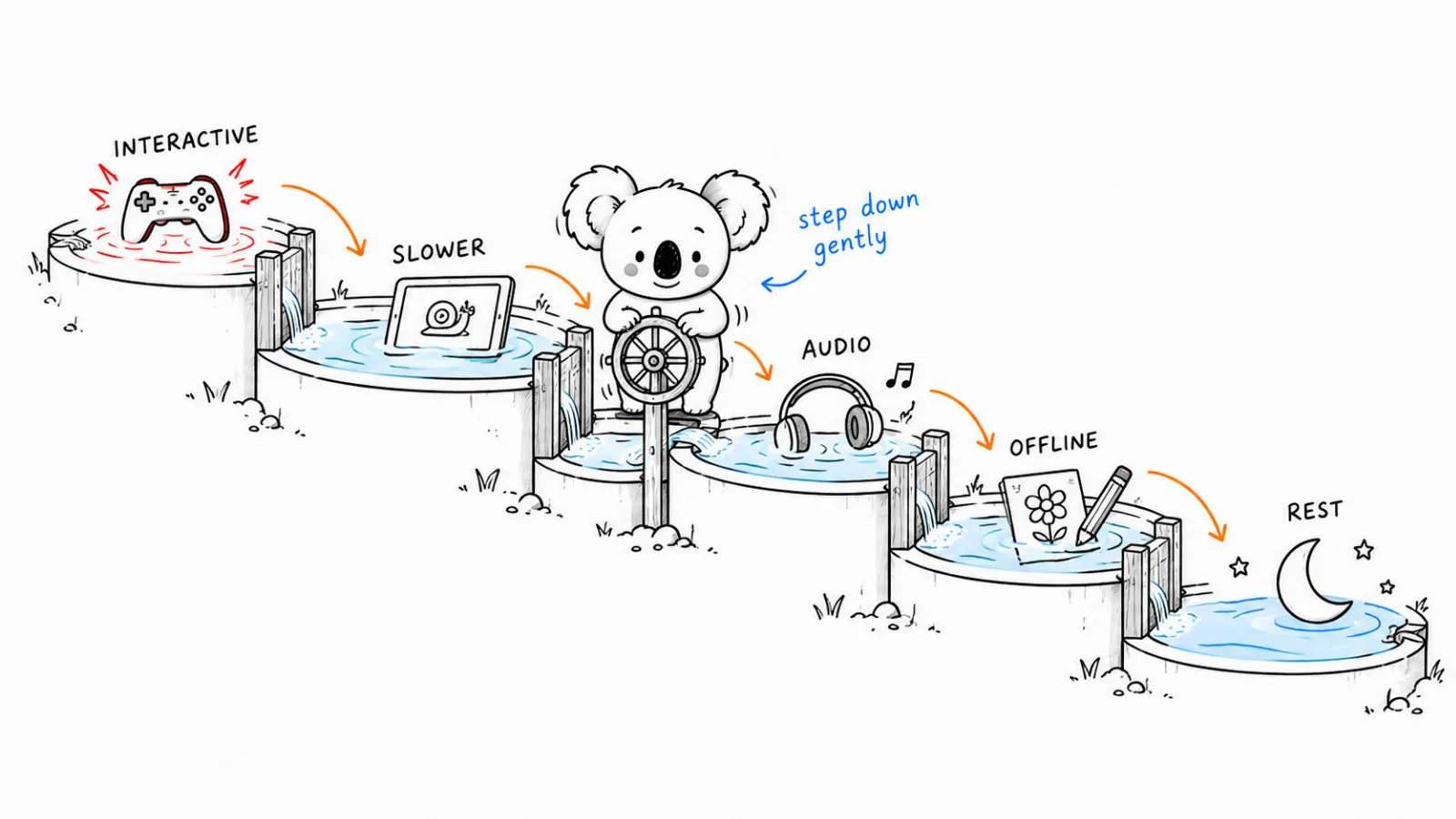
In these cases, consider a staged transition:
- ●Move from highly interactive content to familiar, slower content.
- ●Lower the volume and brightness.
- ●shift from visual media to audio.
- ●Continue with an offline calming activity.
- ●Move toward sleep at a consistent time.
Individualized guidance from a pediatrician, occupational therapist, psychologist, or another qualified professional may be helpful when a child has developmental, sensory, emotional, or medical needs.
5. Comparing Common Evening Screen Situations
Not all screen use creates the same bedtime challenge. The following table helps families identify the most useful adjustment.
| Evening situation | Likely bedtime concern | Gentler adjustment |
|---|---|---|
| Fast-paced gaming immediately before bed | High engagement, competition, and difficulty stopping | End play earlier and avoid starting a final round near the cutoff |
| Short-form videos with autoplay | No natural stopping point and repeated novelty | Disable autoplay and choose one preselected video or episode |
| Calm family television in a shared room | May still delay the routine, but has clearer supervision | Set a firm end time and follow it with an offline activity |
| Video call with relatives | Emotionally meaningful but potentially energizing | Schedule it earlier or keep the final minutes quiet and predictable |
| Screen-based homework | Necessary use may extend alertness and delay bedtime | Finish earlier where possible, then add a screen-free buffer |
| Phone beside the bed | Checking, notifications, and overnight interruptions | Charge the phone outside the bedroom or beyond easy reach |
| Audio story with the display off | Lower visual stimulation, but content may continue too long | Use a sleep timer and select familiar, calm material |
| Occasional movie night | Later timing may be manageable when it is planned | Treat it as an exception and return to the normal routine afterward |
A simple decision framework
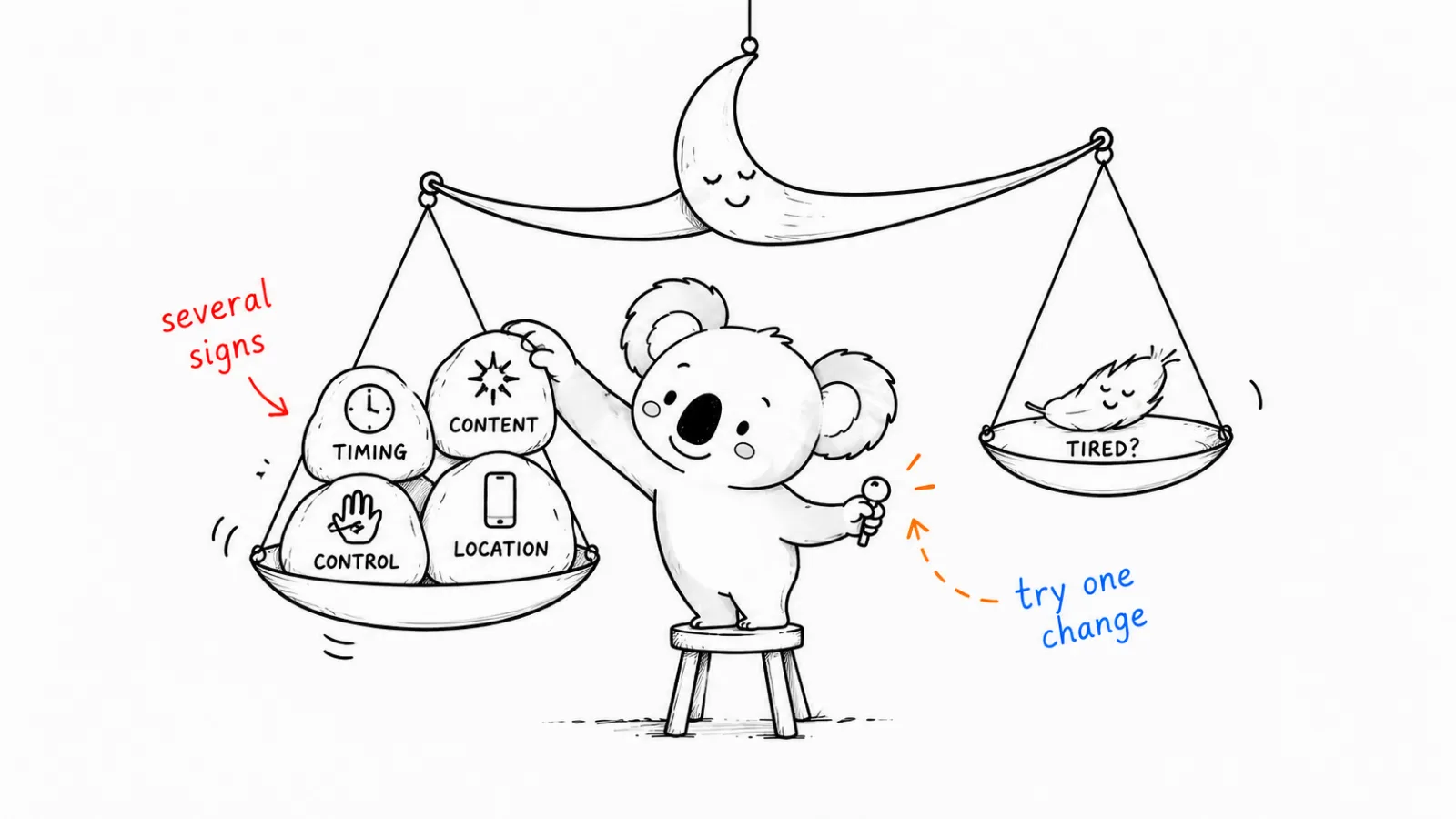
When deciding whether evening screen use needs to change, ask four questions:
- ●Timing: Does it continue until lights-out or push bedtime later?
- ●Content: Is it fast, frightening, competitive, social, or emotionally intense?
- ●Control: Can the child stop without prolonged conflict?
- ●Location: Does the device remain in the bedroom overnight?
A “yes” to one question does not prove that the screen is causing a sleep problem. Several “yes” answers, combined with bedtime resistance or daytime tiredness, provide a reasonable basis for testing a different routine.
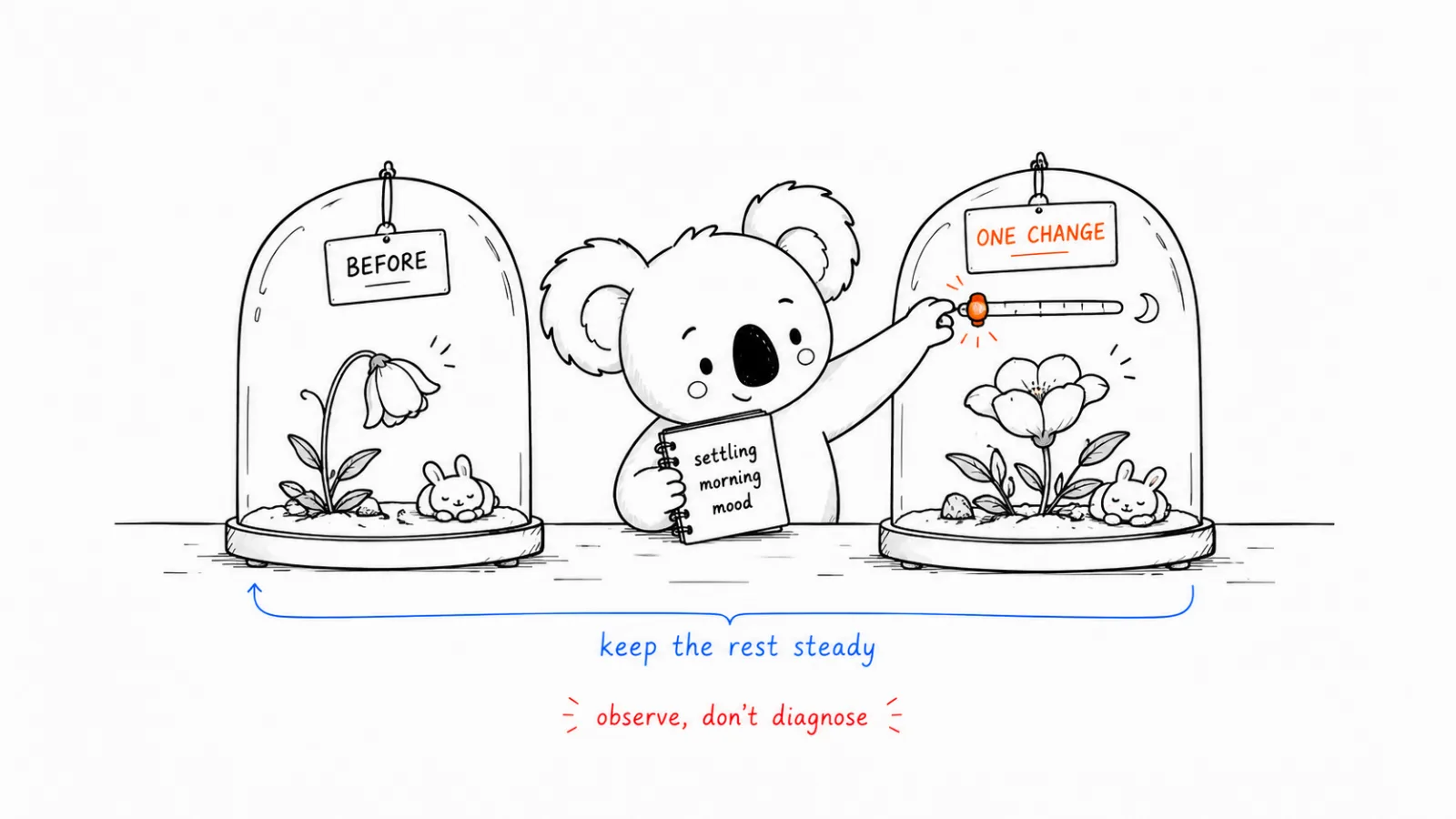
Run a small household experiment
Families do not need to settle the issue through argument. They can compare routines.
For one or two weeks, record:
- ●When recreational screens stop
- ●When the child gets into bed
- ●Roughly how long settling appears to take
- ●Night waking reported by the child or noticed by a caregiver
- ●Morning mood and ease of waking
- ●Daytime sleepiness or irritability
Then change one factor, such as moving the screen cutoff 30 minutes earlier or charging devices outside the bedroom. Keep other parts of the routine as stable as practical.
This is not a medical study, and it cannot establish a diagnosis. It can reveal whether a specific household change appears useful.
6. Common Mistakes and Better Alternatives
Making the rule only about punishment
Removing a screen in response to misbehavior can turn bedtime limits into a recurring power struggle. It is often more effective to present the cutoff as part of the household’s normal evening structure.
Better approach: “Devices charge at 8:00 because that is when our wind-down begins.”
Expecting sleep immediately after shutdown
A child who has been deeply engaged may need time to shift attention and settle.
Better approach: Build in a consistent transition rather than moving directly from device removal to lights-out.
Allowing unlimited “educational” content
Educational media can still be stimulating, bright, or difficult to stop. The label does not determine its effect at bedtime.
Better approach: Evaluate timing, pace, interaction, and stopping difficulty regardless of the content category.
Creating a rule adults do not follow
Children notice when caregivers scroll during the same period in which screens are forbidden to them. Adults may have legitimate responsibilities, but unexplained inconsistency can weaken cooperation.
Better approach: Create a shared charging area or explain when adult device use is necessary.
Treating every sleep issue as a screen issue
Screen habits are only one possible factor. Stress, inconsistent schedules, caffeine, uncomfortable sleep conditions, illness, medication, anxiety, and sleep disorders can also affect rest.
Better approach: Review the full routine and seek qualified guidance when problems are persistent or severe.
7. FAQ
How long before bed should children stop using screens?
A screen-free period of about one hour before lights-out is a practical starting point for many families. Some children may settle well with a shorter transition, while others may benefit from more time. The most useful measure is whether the routine supports a consistent bedtime, calm settling, sufficient sleep opportunity, and reasonable daytime functioning.
Is television better than a tablet or phone before bed?
Television may be easier to supervise and is usually viewed from farther away, but it can still delay bedtime or provide stimulating content. Handheld devices add close viewing, touch interaction, notifications, and easy access in bed. The content, timing, location, and child’s response matter more than treating any device as automatically harmless.
Do blue-light filters make bedtime screen use safe?
Blue-light filters and reduced brightness may make a display more comfortable, but they do not remove the effects of engaging content, social interaction, notifications, or delayed bedtime. They are a limited adjustment, not a substitute for a wind-down routine.
When should parents ask a professional about sleep?
Consider speaking with a pediatrician or another qualified health professional if sleep difficulties persist despite routine changes, or if the child experiences significant daytime sleepiness, major mood or behavior changes, frequent prolonged waking, breathing pauses, or loud habitual snoring. Urgent symptoms should be assessed promptly through appropriate medical care.
8. Conclusion
Managing screen time before bed for kids is less about enforcing a flawless rule and more about protecting the transition into sleep. Timing matters, but so do content, device location, stopping difficulty, and what replaces the screen.
A workable first step is simple: choose a consistent stopping point, move devices away from the bed, and follow screen use with a short sequence of calm activities. Give children advance notice and meaningful choices within the routine. For older children and teenagers, agree on boundaries that recognize homework, communication, and increasing independence.
The most sustainable bedtime plan is one the household can repeat. Start with one change, observe what happens, and adjust based on the child’s response. If sleep remains difficult or concerning, look beyond the screen and seek professional guidance.
Ready for calmer bedtimes?
Try Gula Stories free — 5 narrated bedtime stories, ad-free, for children ages 3-8.