
Reading Aloud Tips for Parents Who Feel Awkward
Your child needs connection and consistency more than a polished performance. Start with short, familiar books and read
Key Takeaways
- ●Your child needs connection and consistency more than a polished performance.
- ●Start with short, familiar books and read for a few minutes at a time.
- ●Use your natural voice; small changes in pace, volume, and expression are enough.
- ●Share the reading when possible by inviting your child to point, predict, repeat, or choose.
- ●Audiobooks and narrated story apps can support family reading without replacing the comfort of your presence.
1. Introduction
Reading aloud can look effortless when someone else does it. They give every character a different voice, pause at exactly the right moment, and somehow keep an energetic child interested until the final page.
At home, the experience may feel very different. You might dislike hearing your own voice, stumble over unfamiliar words, feel unsure about acting out characters, or become discouraged when your child wanders away. If English is not your first language, pronunciation concerns can add another layer of self-consciousness.
The reassuring truth is that reading aloud is not a performance. It is a shared activity between you and your child. You do not need a theatrical voice, perfect pronunciation, or a complicated routine. Your child benefits from hearing language and sharing attention with a trusted adult—even when the reading includes pauses, mistakes, and interruptions.
These reading aloud tips are designed for parents of children aged 2–8 who want to feel more comfortable, not more performative. The goal is to build a routine that feels natural enough to repeat.
2. Redefine What “Good Reading” Sounds Like
The most useful confidence shift is simple: stop measuring yourself against professional narrators.
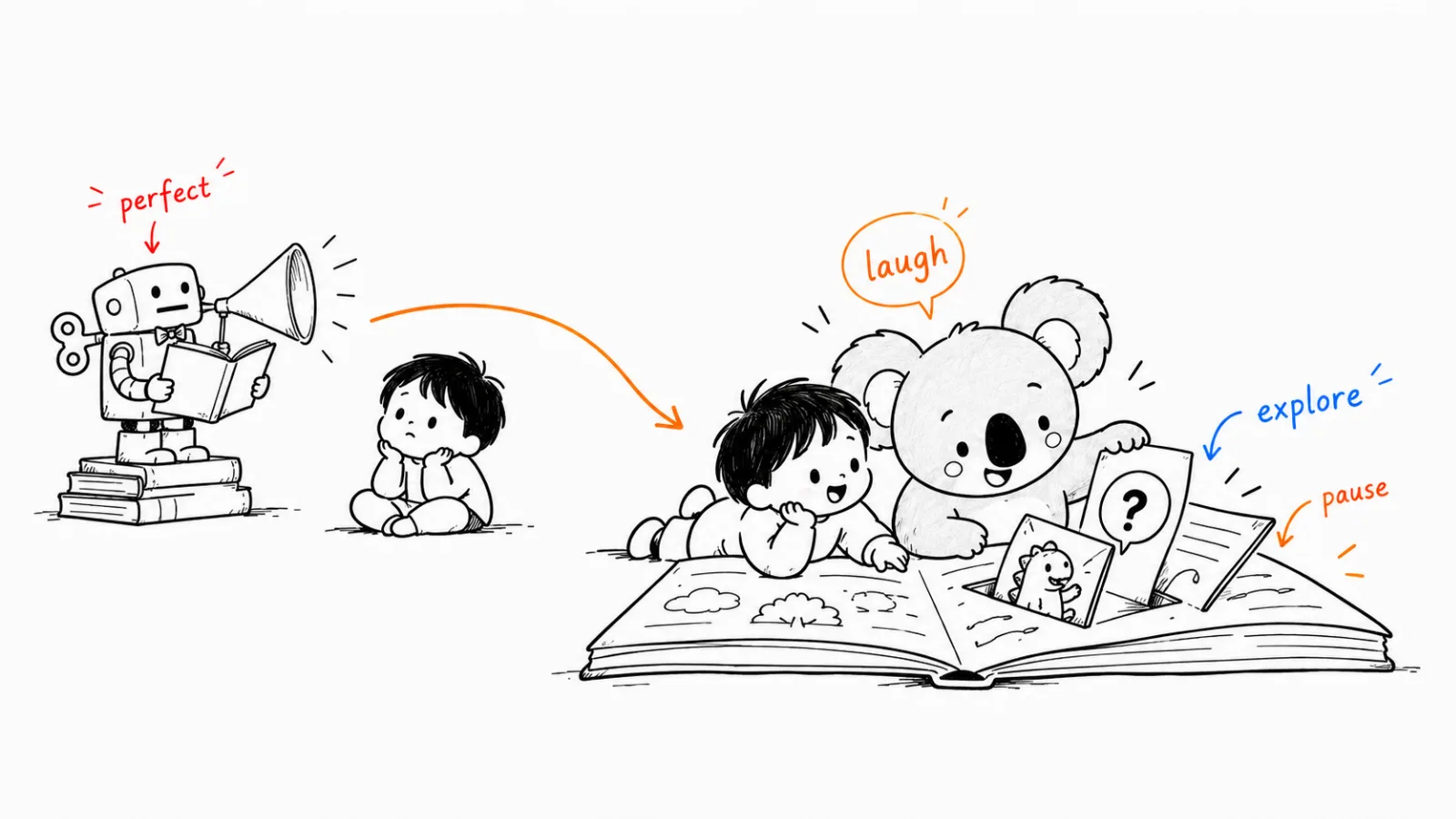
Professional audiobooks are produced performances. A parent reading at the end of a busy day is doing something different. You are creating a familiar moment in which a child can listen, look, ask questions, and feel close to you. Warmth and responsiveness matter more than dramatic technique.
A perfectly fluent reading can also be less engaging than an imperfect but interactive one. When you pause to answer a question or laugh at an illustration, you show your child that books are meant to be explored rather than completed as quickly as possible.
Use your ordinary speaking voice
Begin as if you are telling your child about something that happened during the day. You can add expression without inventing a collection of character voices:
- ●Slow down during a quiet or suspenseful moment.
- ●Speak slightly louder when a character is surprised.
- ●Pause before revealing what happens next.
- ●Repeat an amusing phrase with emphasis.
- ●Let your face respond to the pictures.
These small changes create interest while allowing you to sound like yourself.
Treat mistakes as normal
If you misread a word, correct it briefly and continue. For example: “The dog raced—sorry, rested—under the tree.” There is no need to apologise repeatedly or restart the page.
This can model something useful: fluent readers do not avoid every mistake; they notice, correct, and keep going.
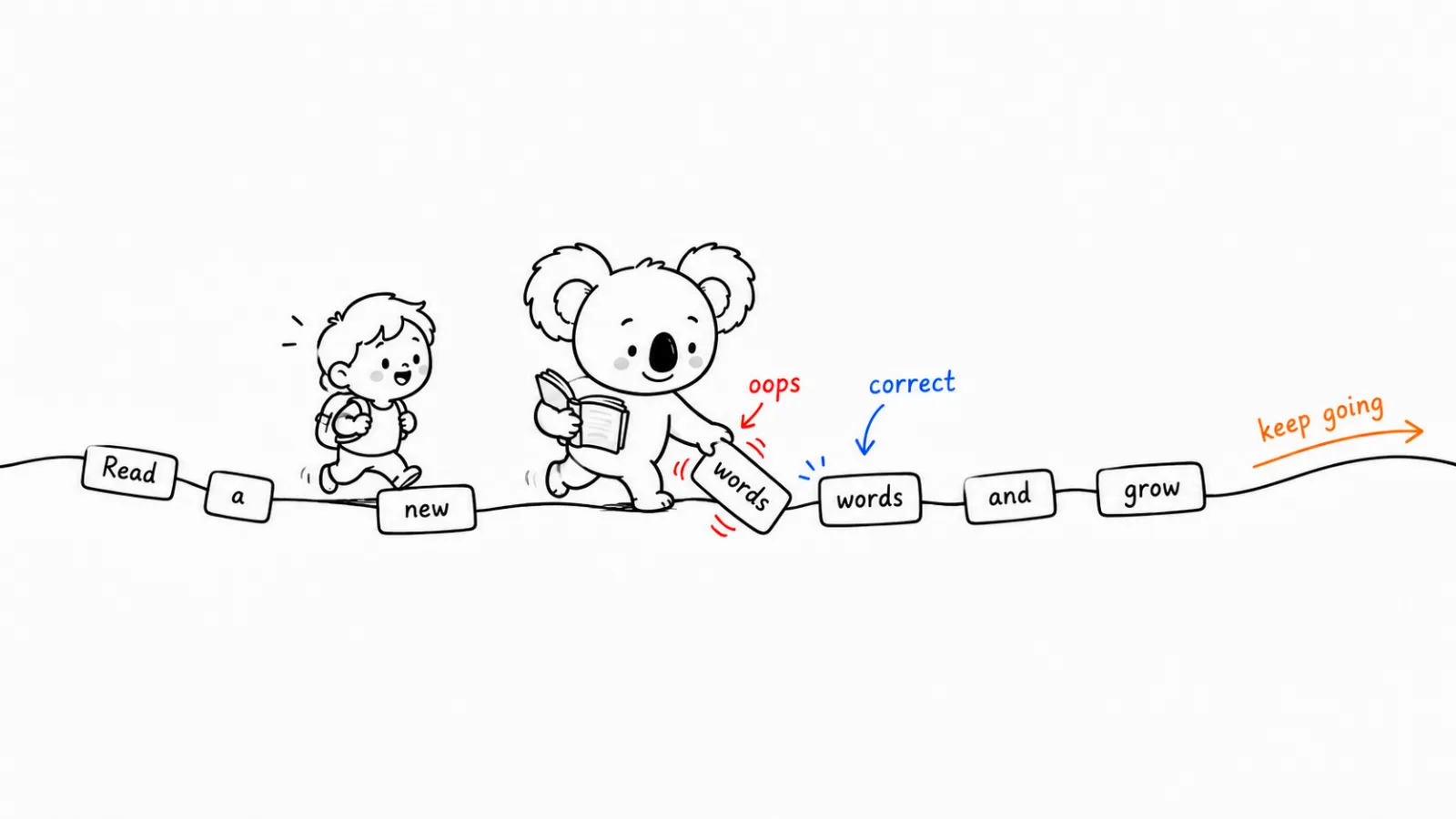
If a name or unfamiliar word feels difficult, choose a pronunciation and use it consistently. For factual books, you can look it up later if the exact pronunciation matters. During a bedtime story, preserving the calm flow is often more useful than interrupting the moment to search.
Read in the language that feels most comfortable
Families do not need to use only English for shared reading. You might read the printed English text, discuss the pictures in another language, or retell part of the story in your family’s home language. The aim is meaningful conversation and shared understanding, not a test of the adult’s accent.
3. Make the First Step Smaller
Confidence usually grows through repetition, so create a version of reading aloud that is easy to begin.
A long chapter book may be too demanding when you already feel uncomfortable. Start with a board book, a familiar picture book, a comic, a poem, or a short section of a nonfiction book about something your child enjoys.
Try a low-pressure starting routine
Use this sequence for the first week:
- ●Ask your child to choose between two short books.
- ●Sit somewhere comfortable, but do not insist that your child remain completely still.
- ●Read for about five minutes or until the natural end of the book.
- ●Pause once or twice to notice a picture or invite a prediction.
- ●Stop while the experience still feels manageable.
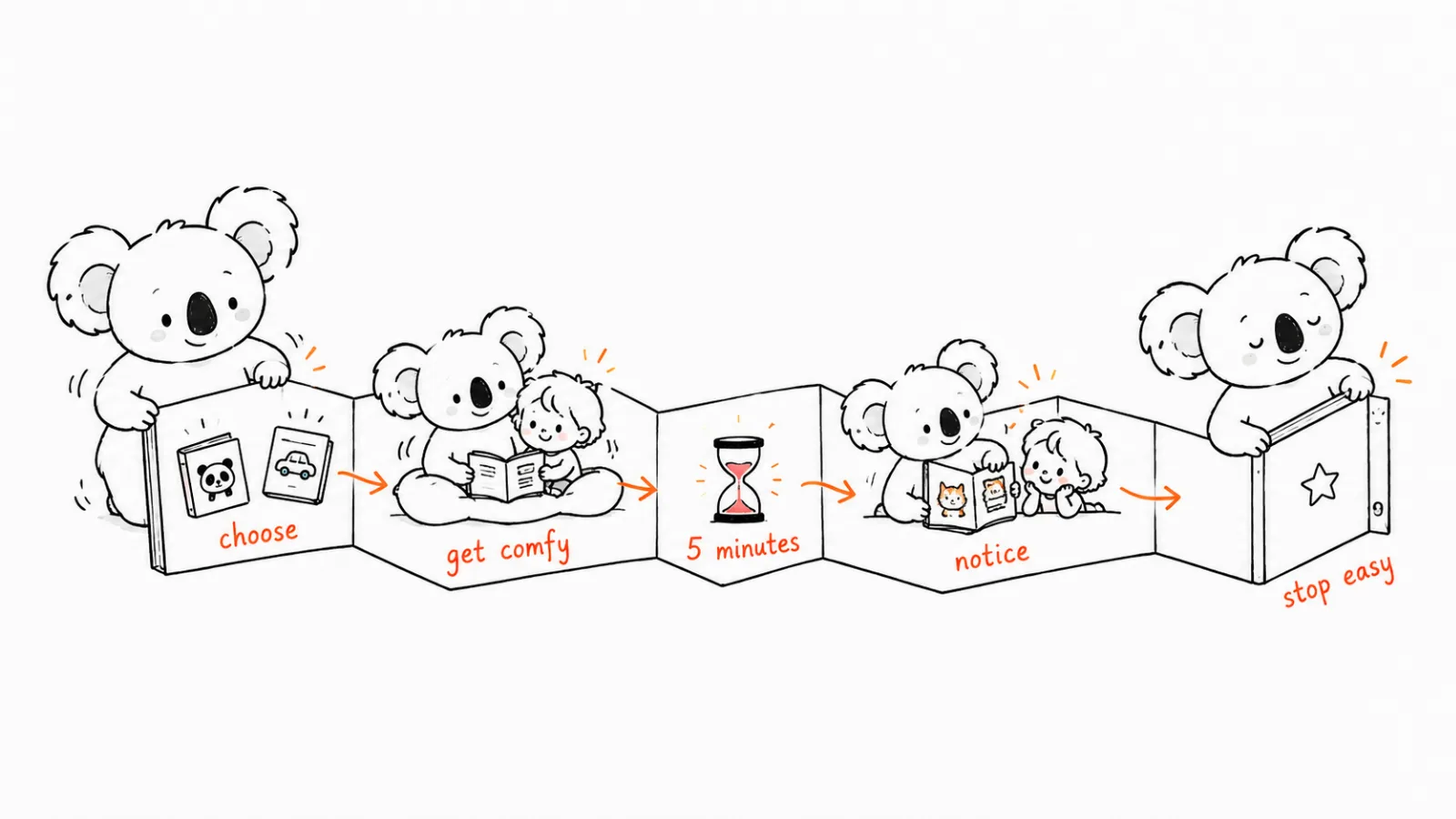
The time is not a target you must enforce. Some two-year-olds may listen briefly and then move around. Older children may want several books or another chapter. Follow your child’s interest and your own available energy.
Preview the book when possible
A quick preview can reduce the fear of being caught off guard. Before reading, scan for:
- ●Long or unfamiliar character names
- ●Repeated phrases your child may enjoy joining
- ●Pages with dense text
- ●Topics likely to prompt questions
- ●Moments where a pause would feel natural
You do not need to rehearse the entire book. Even a one-minute look can make the reading feel more predictable.
Choose forgiving books
Certain formats are especially comfortable for hesitant readers:
| Book type | Why it can feel easier | How to use it |
|---|---|---|
| Repetitive picture book | Familiar phrases reduce the amount of new text | Pause before the repeated line and let your child join |
| Wordless picture book | There is no exact script to get wrong | Describe what you notice and build the story together |
| Rhyming book | Rhythm can guide pacing | Read slowly rather than trying to sound highly animated |
| Comic or graphic novel | Dialogue is divided into short sections | Take one character each with an older child |
| Familiar favourite | You already know the plot and vocabulary | Focus on enjoyment instead of accuracy |
| Child-friendly nonfiction | Pictures and facts naturally invite discussion | Read selected captions rather than every word |
A book does not have to be finished in one sitting. Skipping a dense paragraph, summarising a page, or returning later can keep the activity comfortable.
4. Share the Work With Your Child
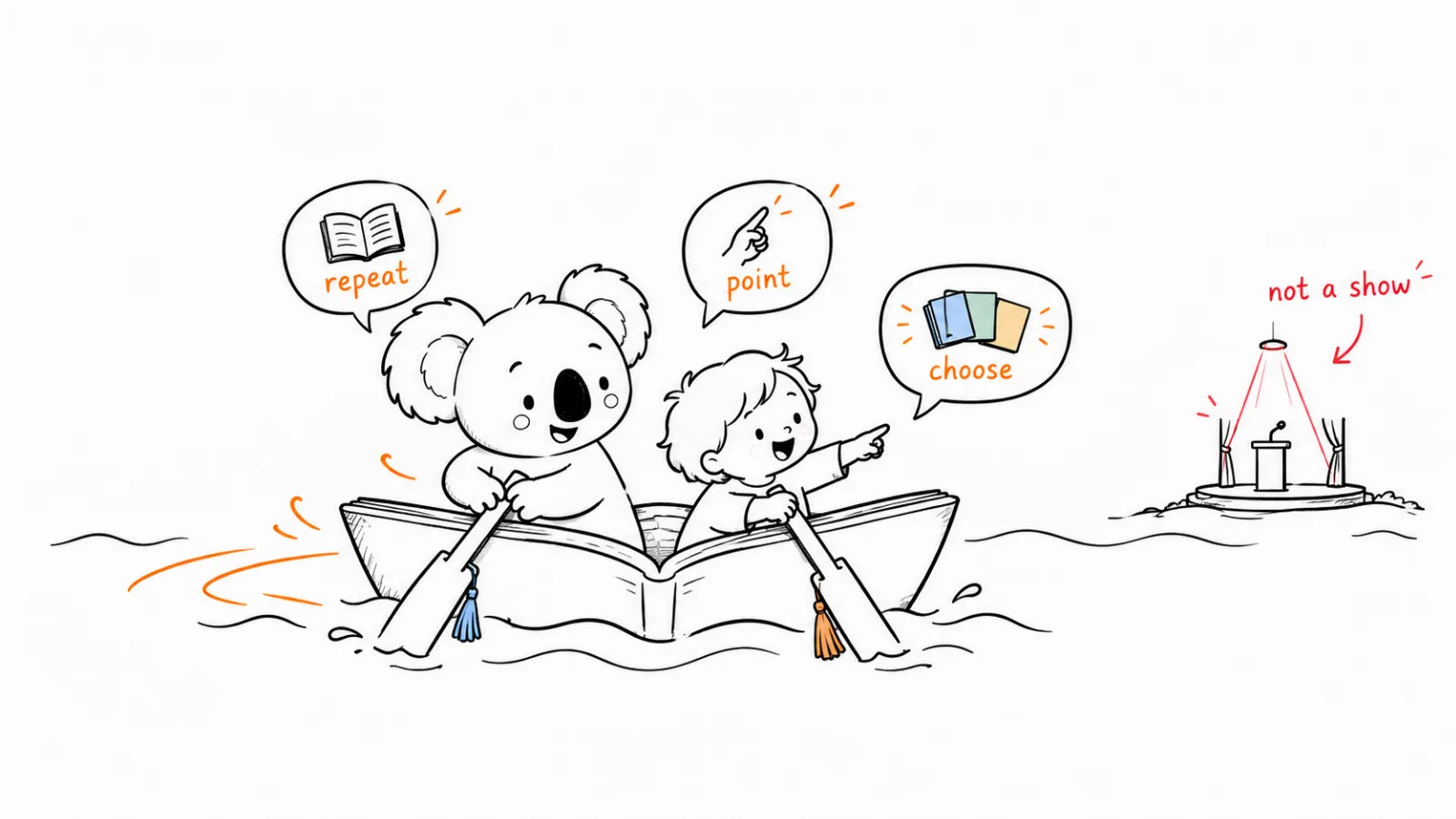
Reading aloud becomes less awkward when it is something you do together rather than something you deliver to an audience.
Children aged 2–8 can participate in different ways depending on their language skills, attention, mood, and familiarity with the book. Participation should feel like an invitation, not a quiz.
For younger children
A child aged 2–4 might:
- ●Point to a named object
- ●Make an animal sound
- ●Turn the pages
- ●Repeat a short phrase
- ●Find a familiar character
- ●Choose which book comes next
If your child moves around while listening, that does not automatically mean the reading has failed. Some children listen while holding a toy, changing position, or looking away briefly. You can continue for a little while and notice whether they still respond to the story.
For older children
A child aged 5–8 might:
- ●Read a repeated line
- ●Take one character’s dialogue
- ●Predict what will happen
- ●Explain a picture
- ●Retell the previous chapter
- ●Read one page while you read the next
Avoid turning every page into a comprehension exercise. Too many questions can disrupt the story and make children feel tested. Comments such as “That looks like a difficult journey” or “I wonder where the key went” often invite conversation more naturally.
Use a simple “notice, pause, continue” method
When you are unsure how interactive to be, use this three-step method:
- ●Notice: Make one brief comment about the story or illustration.
- ●Pause: Give your child time to respond if they want to.
- ●Continue: Return to the story without demanding an answer.
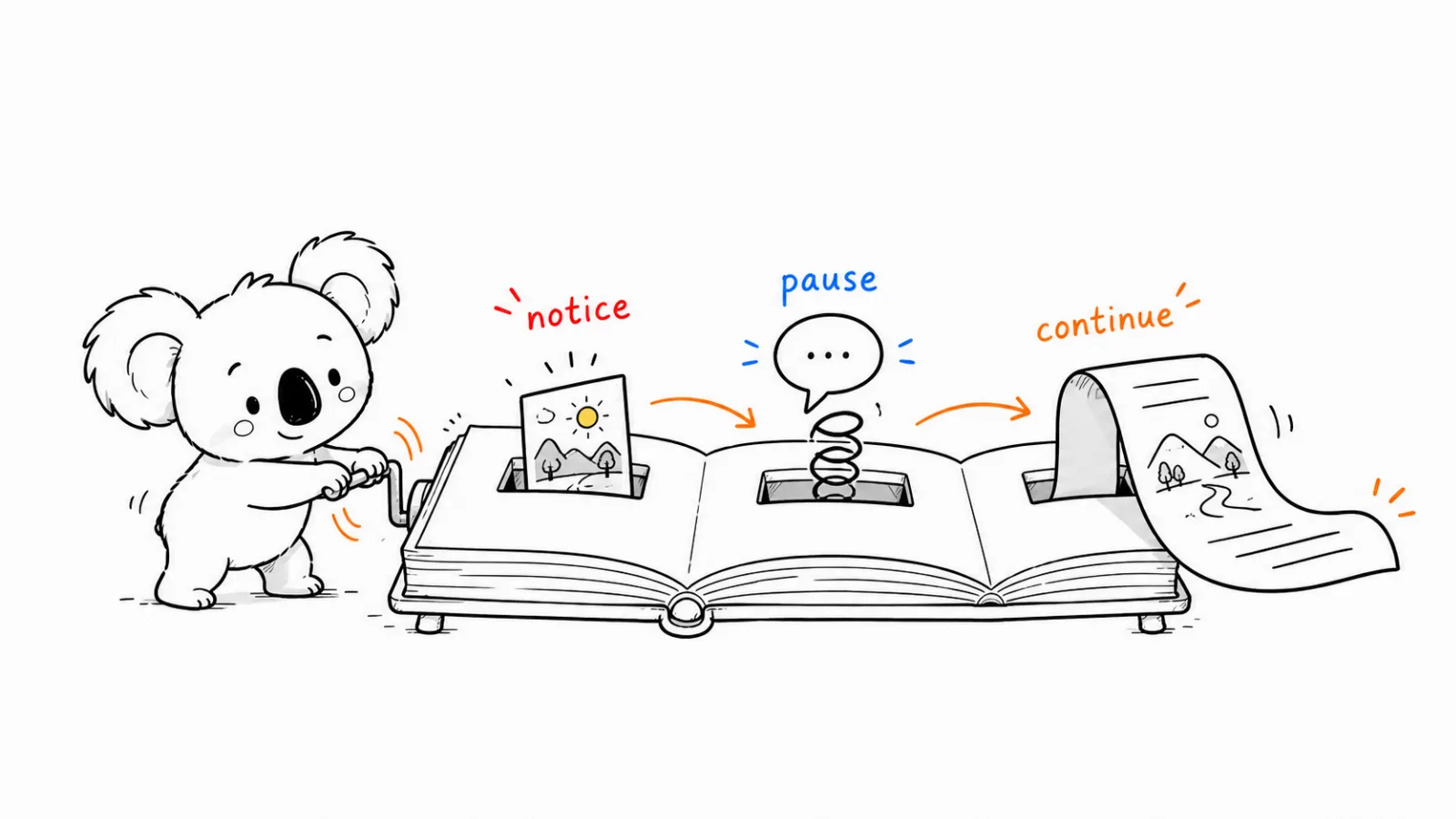
For example: “The bear looks worried.” Pause. Then continue reading.
This keeps the story moving while making room for connection.
5. Build Confidence With a Flexible Support Plan
The right reading method depends on why you feel uncomfortable. Match the support to the problem instead of assuming you need to “try harder.”
| If you feel… | Try this first | Avoid |
|---|---|---|
| Self-conscious about your voice | Read in your ordinary conversational tone | Forcing elaborate accents |
| Worried about mistakes | Preview difficult words and correct errors briefly | Restarting the entire page |
| Unsure how to sound expressive | Change pace and volume slightly | Treating every sentence like a performance |
| Tired at bedtime | Choose one short, familiar story | Selecting a long new book out of obligation |
| Nervous reading in English | Discuss or retell parts in your strongest language | Apologising for your accent |
| Distracted by interruptions | Let your child ask a few questions, then return to the text | Expecting complete silence |
| Overwhelmed by long books | Read one page, section, or chapter | Believing every book must be finished |
| Uncertain about character voices | Use one subtle change for a key character | Creating voices you cannot maintain |
Use narration as a bridge
On some evenings, listening may be more realistic than doing all the reading yourself. You can play an audiobook or use a calm, age-appropriate story app while sitting with your child. Follow the pictures if a matching book is available, or talk briefly about the story afterward.
Gula Stories, for example, offers calm narration, multiple natural voices, age-appropriate recommendations, and personalised avatars in an ad-free environment. A narrated story can give a tired or self-conscious parent a model for pacing while preserving a shared bedtime moment.
You can also alternate roles: listen to one page or scene, pause the narration, and read or discuss the next part yourself. The tool supports the routine; it does not have to replace your involvement.
Plan for difficult evenings
Consistency does not require doing the same amount every night. Create three versions of your routine:
- ●Full version: One or two books with time for conversation
- ●Short version: A few pages or one brief story
- ●Listening version: Calm narration while you sit together
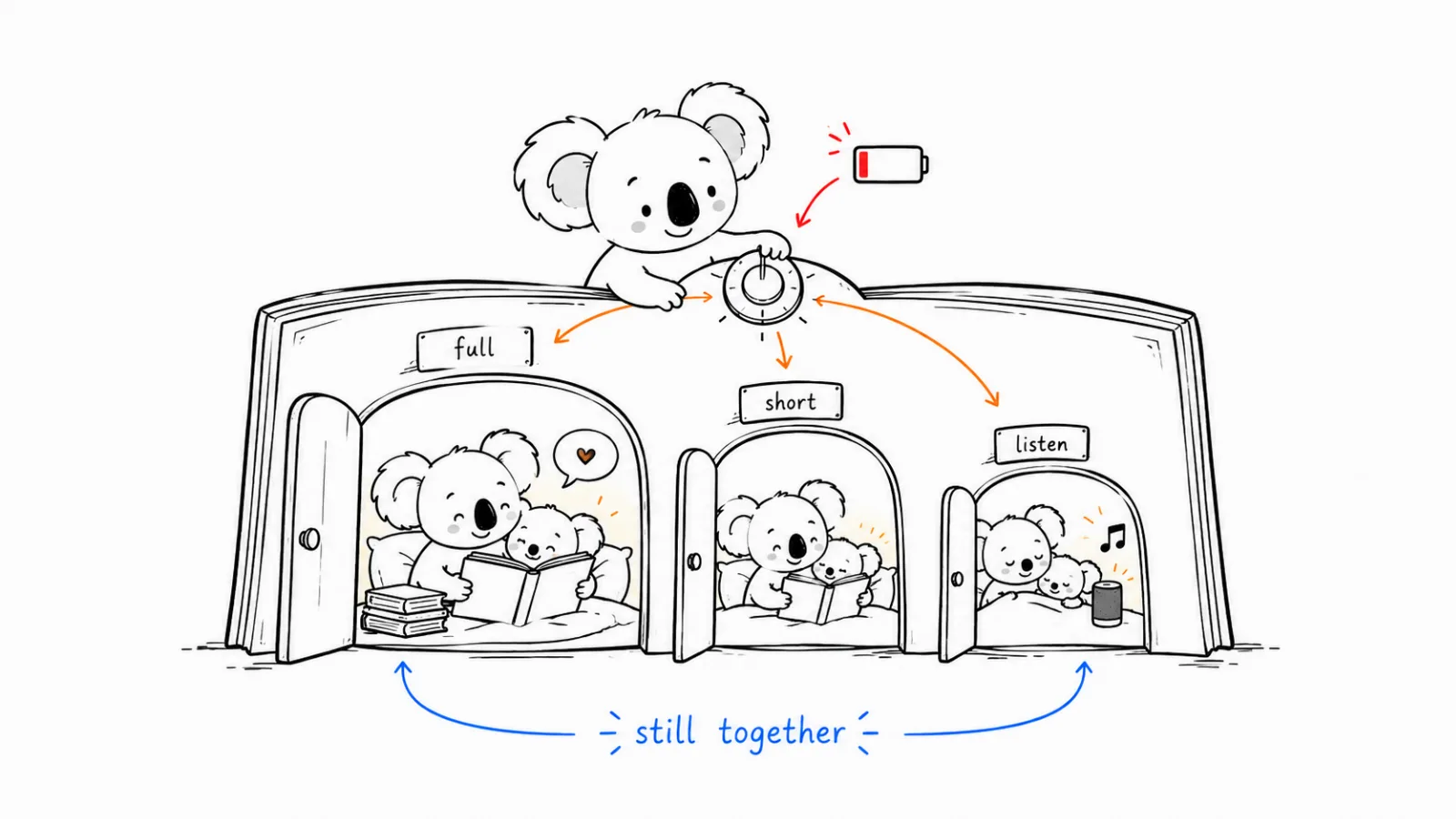
This makes it easier to maintain the habit during busy, tiring, or emotionally unsettled evenings.
If reading routinely leads to intense frustration, or if you have ongoing concerns about your child’s hearing, speech, language, attention, or ability to engage with books, consider speaking with your child’s teacher, a librarian, or an appropriate health professional. They can help you distinguish between a preference, a developmental pattern, and something that may need individual support.
6. FAQ
What if my child keeps interrupting while I read?
Brief interruptions are a normal part of shared reading, especially with younger children. Answer relevant questions simply, acknowledge interesting observations, and then return to the page.
If interruptions make the story difficult to follow, set a gentle boundary: “Let’s finish this page, and then you can tell me your idea.” The aim is not silent compliance; it is a workable balance between conversation and narrative flow.
Do I need to use different voices for every character?
No. Character voices are optional. Clear, comfortable reading is enough.
If you want to distinguish speakers, make one small change. You might read a large bear more slowly or a nervous mouse more quietly. You can also say, “The fox whispered,” and let the text communicate the emotion.
Is it okay to skip words or shorten a story?
Yes, particularly when the text is too long for the available time or your child’s current attention. You can summarise a paragraph, skip a repetitive page, or stop at a natural point.
Try not to change details that are essential to understanding the story. If your child knows the book well and objects to skipped text, agree on a shorter book before you begin.
Can an audiobook replace reading aloud?
Audiobooks and narrated apps can be valuable parts of a family’s reading routine, especially when a parent is tired, has difficulty reading print, or wants support with pacing. However, they serve a different role from responsive reading with an adult.
When possible, stay nearby, look at the book together, or talk about one moment afterward. Even a short conversation can turn listening into a shared experience.
7. Conclusion
The most effective reading aloud tips are not about becoming more theatrical. They are about reducing pressure until reading feels possible, comfortable, and repeatable.
Choose a short book. Use your normal voice. Pause occasionally. Let your child participate. Correct mistakes without embarrassment, and finish before either of you becomes exhausted. On difficult evenings, shorten the routine or use calm narration as support.
Children do not need a flawless narrator at home. They need opportunities to experience stories with someone who makes reading feel safe, interesting, and shared. Confidence can grow one ordinary page at a time.
Ready for calmer bedtimes?
Try Gula Stories free — 5 narrated bedtime stories, ad-free, for children ages 3-8.