
Ocean and Underwater Bedtime Stories
Ocean bedtime stories can create a calm atmosphere by using gentle movement, repeated sounds, soft imagery, and an unhur
Key Takeaways
- ●Ocean bedtime stories can create a calm atmosphere by using gentle movement, repeated sounds, soft imagery, and an unhurried plot.
- ●The most settling stories focus on safe, familiar journeys rather than storms, danger, deep-sea monsters, or urgent rescues.
- ●Children aged 2–4 often respond well to repetition and simple sensory details, while children aged 5–8 may enjoy slightly richer underwater worlds and quiet emotional themes.
- ●Slow narration, comfortable pauses, and a predictable ending are as important as the sea setting itself.
- ●An ocean story works best as part of a consistent bedtime routine, not as a guaranteed solution to ongoing sleep difficulties.
1. Introduction
The ocean is naturally suited to bedtime storytelling. Waves rise and fall, seaweed sways, bubbles drift upward, and marine animals glide rather than hurry. These slow, flowing movements give a storyteller an easy framework for creating a quiet mood without making the story feel empty.
However, not every underwater adventure belongs at bedtime. A story about shipwrecks, predators, powerful storms, or a race to escape danger may be exciting, but excitement can work against the transition to sleep. Parents therefore need to consider more than the setting. The pace, language, emotional tension, narration, and ending all affect how a story feels.
This guide explains how to choose or tell ocean bedtime stories for children aged 2–8. It focuses specifically on using calm sea settings to support a gentle bedtime atmosphere, with practical examples for different ages and sensitivities.
2. Why Slow Sea Settings Work Well at Bedtime
The core strength of an underwater bedtime story is rhythmic movement. A calm ocean scene offers patterns that can be described slowly and repeatedly:
- ●Waves roll toward the shore and slide back again.
- ●Bubbles float from the seabed to the surface.
- ●A turtle glides through warm water.
- ●Sea grass bends one way and then the other.
- ●A small boat rocks gently beneath the moon.
These actions have no urgent destination. They allow the story to move forward while preserving a restful tone.
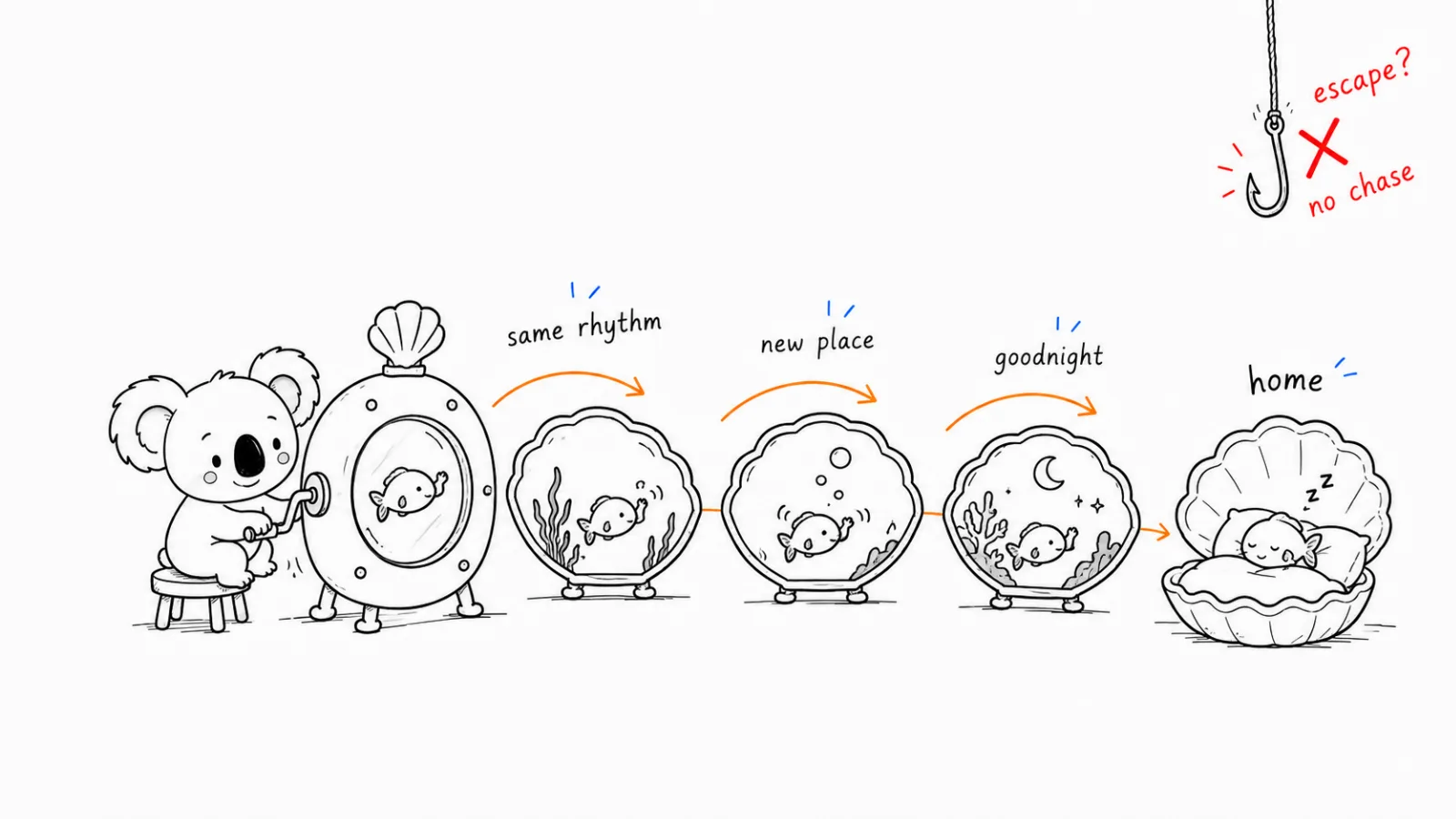
Repetition also helps make a story predictable. A young child may enjoy hearing that a little fish visits three familiar places before returning home. Each stop can follow the same sequence: the fish arrives, notices one peaceful detail, says goodnight, and swims on. The child knows what will happen next, even though the scenery changes.
Predictability does not mean that a story must be dull. It means that curiosity is created without fear or suspense. The question is not, “Will the character escape?” but, “Which quiet place will the character visit next?”
A calm narrative pattern
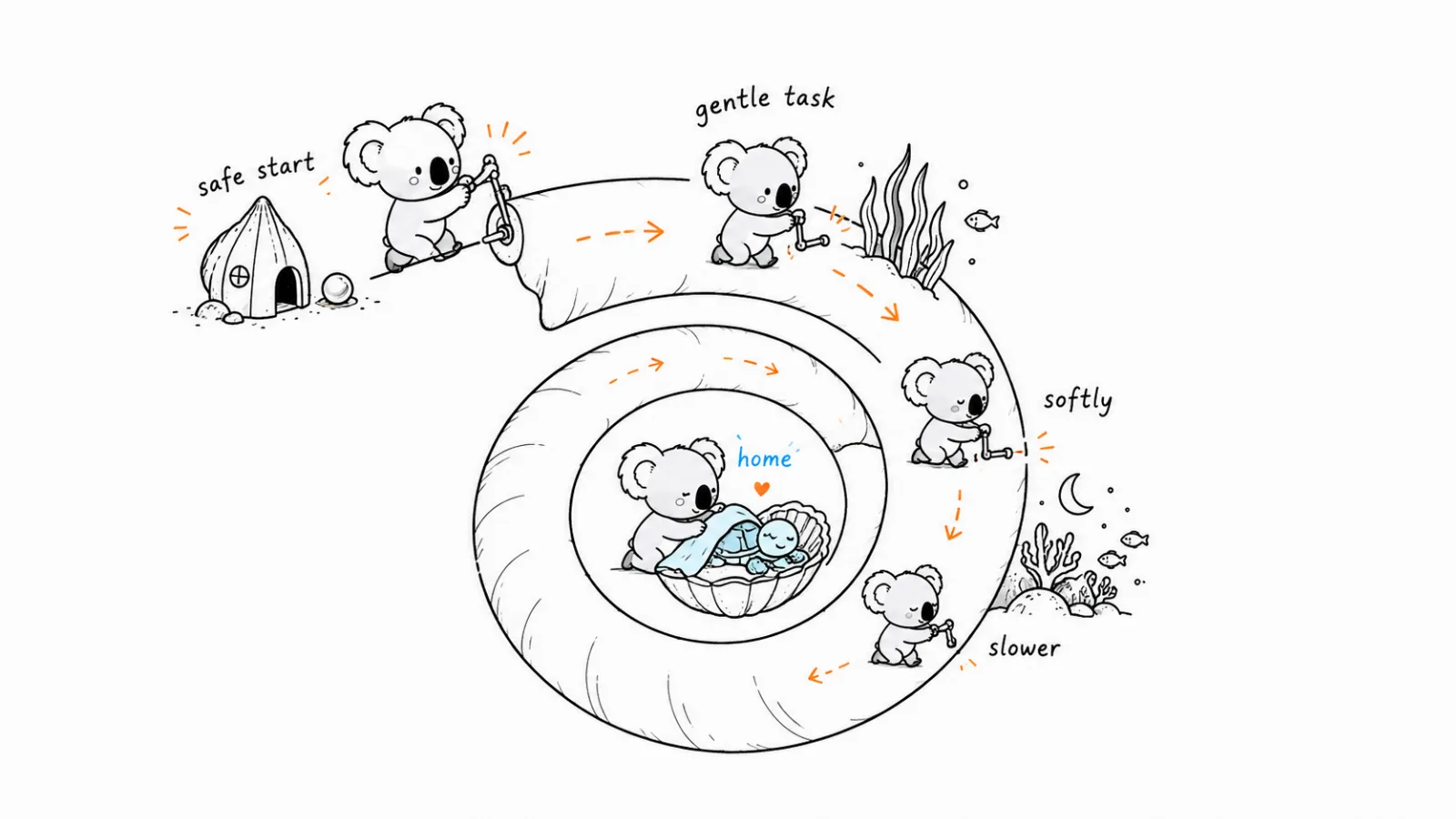
A simple ocean bedtime story can follow this sequence:
- ●Begin in a safe home: A shell house, coral garden, lighthouse cottage, or boat cabin.
- ●Introduce a gentle purpose: Returning a pearl, delivering goodnight wishes, or finding a comfortable place to rest.
- ●Travel through two or three peaceful settings: A sea-grass meadow, a moonlit reef, or a warm current.
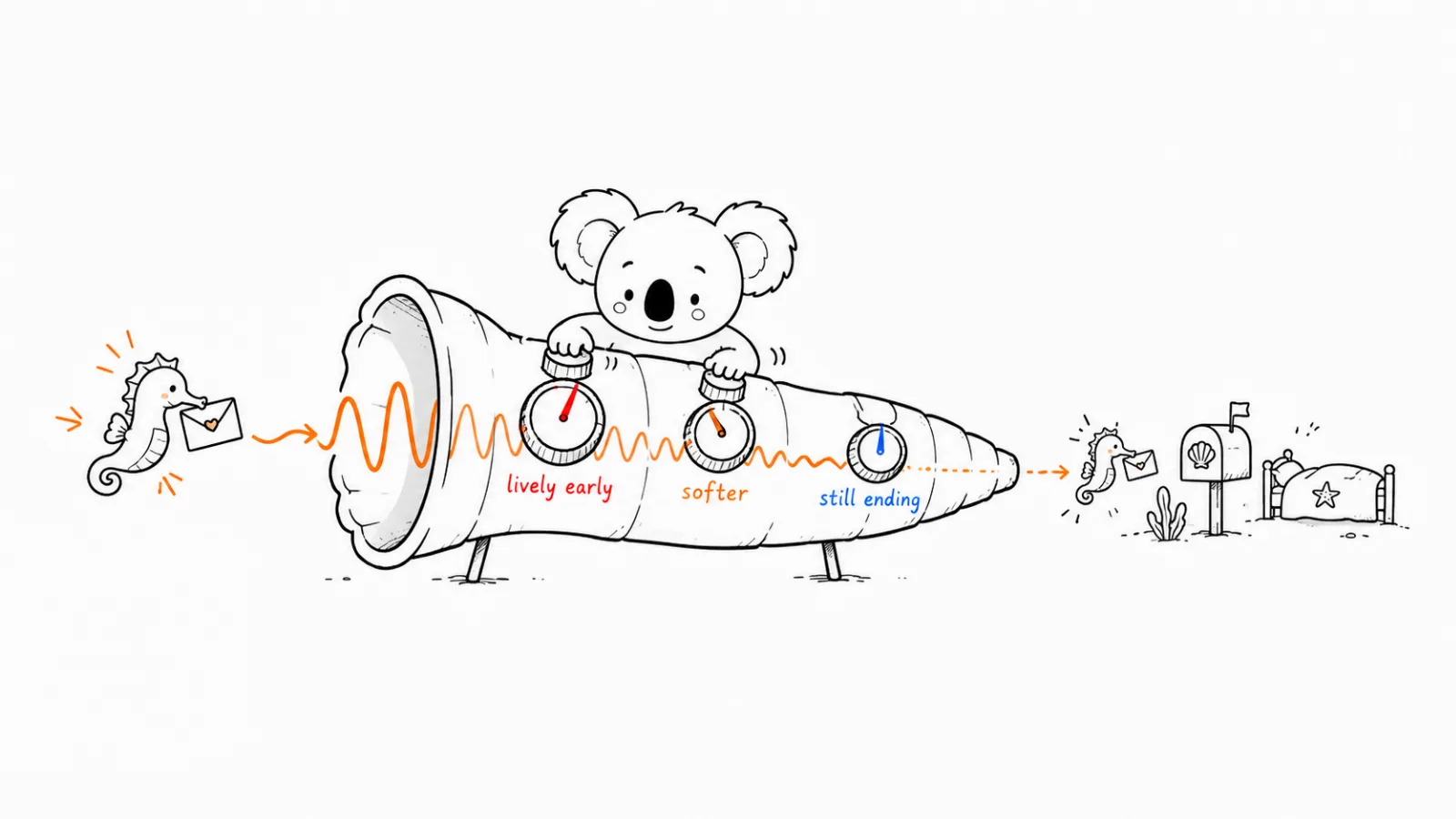
- ●Reduce activity gradually: Fewer characters speak, movements become smaller, and sentences become softer.
- ●Return to safety: The character reaches home, settles into bed, and notices the calm ocean nearby.
This structure is useful for both written stories and improvised storytelling. It gives the child a clear journey while guiding the mood from quiet activity toward stillness.
3. Building a Sleepy Underwater World
A restful sea setting depends on the details selected. Gentle sensory language can make the underwater world feel immersive, but too much description may keep a child mentally busy. The aim is to choose a few soothing details and return to them throughout the story.
Use soft movement
Choose verbs that suggest steady, low-effort motion:
- ●drift
- ●float
- ●glide
- ●sway
- ●ripple
- ●rock
- ●curl
- ●shimmer
For example, “The silver fish darted into the cave” creates more energy than “The silver fish glided past the smooth stones.” Both describe movement, but the second is better suited to a sleepy atmosphere.
Keep sounds quiet and repetitive
The sea offers many gentle sounds: water brushing the shore, bubbles popping, rain tapping on a cabin roof, or a distant buoy bell. Repeating one sound can act as a refrain:
Hush went the water. Sway went the grass. Home swam the little turtle.
A refrain gives younger children something familiar to anticipate. For older children, the same effect can be achieved with recurring imagery, such as moonlight following a dolphin across the bay.
Choose a comfortable sense of scale
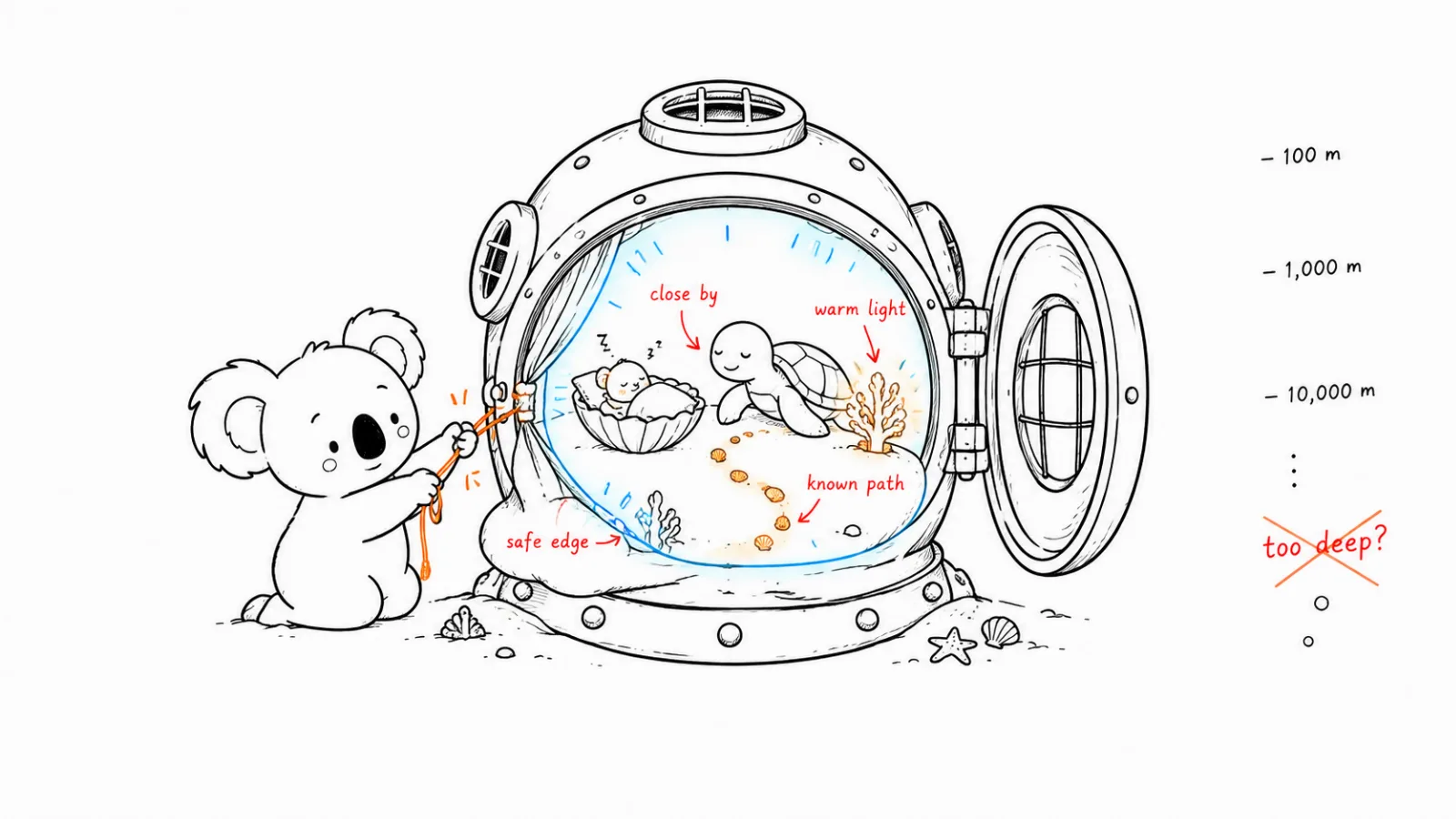
Some children find the vastness or darkness of the ocean unsettling. A bedtime story does not need to explore an endless deep sea. It can stay in a sheltered rock pool, a bright lagoon, a friendly reef, or a small bay close to home.
If a child is cautious about underwater scenes, establish clear boundaries. The character might remain inside a glowing coral garden or follow a familiar path marked by shells. A trusted adult animal can stay nearby. These details communicate safety without interrupting the story to explain it.
Avoid unnecessary stimulation
The following elements are usually better suited to daytime adventures:
- ●Chases, attacks, or narrow escapes
- ●Sudden storms and loud crashes
- ●Characters becoming lost for long periods
- ●Threatening sharks, giant creatures, or dark trenches
- ●Cliff-hanger endings
- ●Fast dialogue and frequent scene changes
A mildly uncertain moment can still work, particularly for children aged 5–8, but it should be resolved calmly. For example, a seahorse may briefly forget which shell marks the path home, then notice a familiar trail of softly glowing plants. The problem creates gentle interest without turning the story into a crisis.
4. Matching Ocean Bedtime Stories to the Child
Age labels are useful starting points, but a child’s preferences, fears, language development, and energy level matter just as much. A story that settles one child may feel too slow, too detailed, or too mysterious to another.
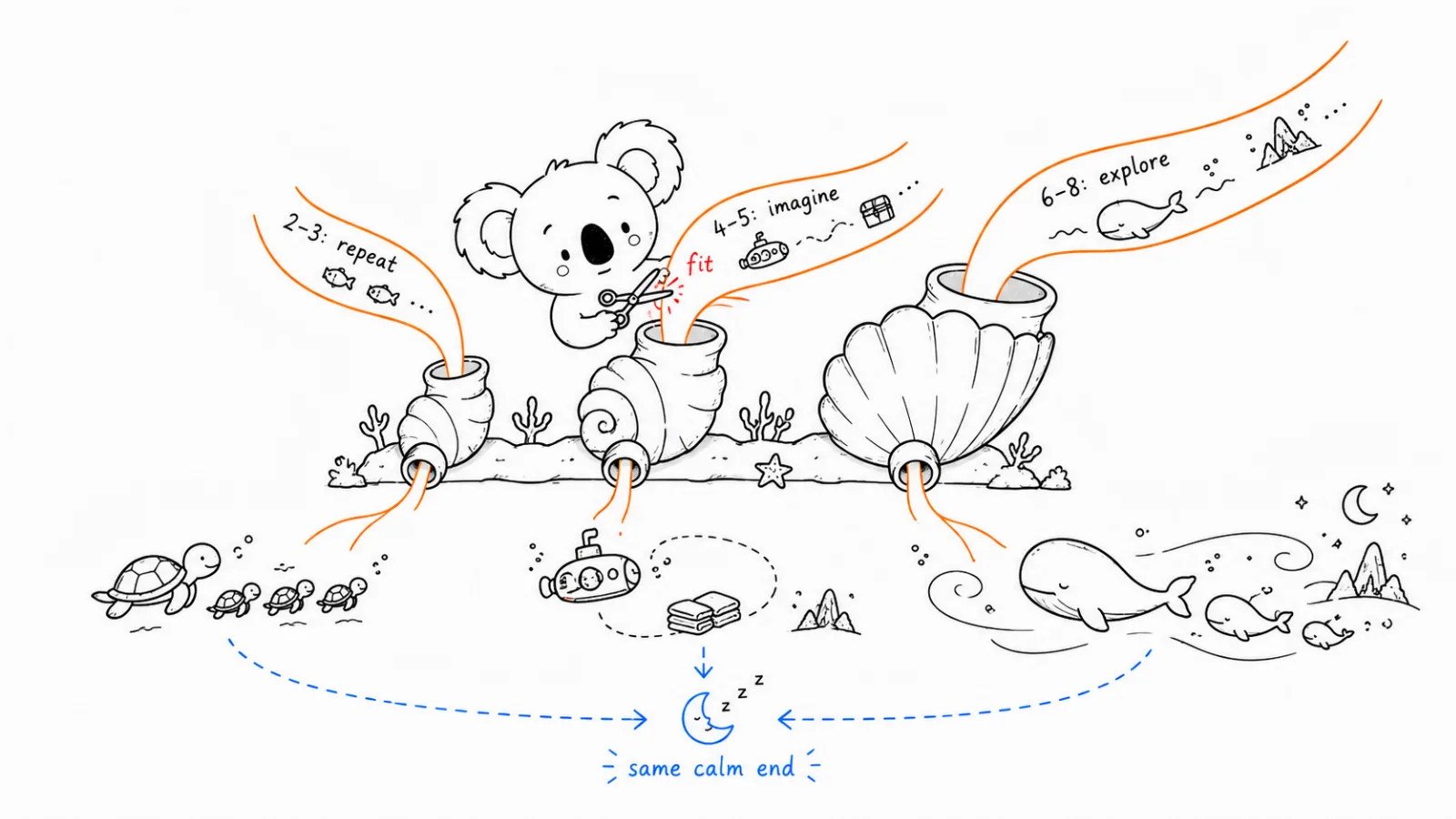
| Age range | Helpful story features | Suitable sea scenario | Considerations |
|---|---|---|---|
| 2–3 years | Repetition, familiar animals, short sentences, one simple journey | A baby turtle says goodnight to three reef friends | Keep the plot brief and make separation from caregivers minimal |
| 4–5 years | Predictable sequence, light imagination, repeated phrases | A small submarine delivers blankets to sleepy sea animals | Avoid complicated explanations or several competing problems |
| 6–8 years | Richer imagery, gentle emotional themes, longer journeys | A young whale follows moonlit currents back to its family | Keep tension low and allow enough time for a complete resolution |
For children who ask many questions
Some children pause stories to ask how whales breathe, why starfish have arms, or whether a submarine could really visit a reef. These questions are valuable, but a detailed science discussion may shift bedtime back toward alertness.
A practical response is to acknowledge the question briefly and save exploration for the next day:
“That is an interesting question. Let’s remember it for tomorrow. For now, the little whale is taking one last slow breath before resting.”
When including real marine facts, keep them accurate and relevant. If you are uncertain, avoid presenting a guess as fact. A bedtime story can be imaginative without pretending that every detail is scientifically true.
For children who dislike dark water
Use shallow, warmly lit settings. A rock pool at sunset, a clear lagoon, or a cosy boat cabin can provide an ocean atmosphere without placing the child in the deep sea. It may also help to let the child choose the main character or describe the character’s safe sleeping place.
Personal details can strengthen familiarity. An avatar that resembles the child, a favourite-colour shell, or a trusted toy travelling with the character may make the imagined setting feel more secure. Gula Stories, for example, offers personalised avatars and age-appropriate story recommendations within an ad-free bedtime environment.
For children who want excitement
Do not remove all activity. Instead, change the type of goal. A character can search for the smoothest pebble, carry a message across a lagoon, or help prepare a reef for nighttime. The plot still has direction, but it does not depend on danger.
A useful rule is to let the story become quieter as it progresses. The liveliest event should occur early or near the middle, not just before the ending.
5. A Practical Method for Choosing or Telling a Calm Sea Story
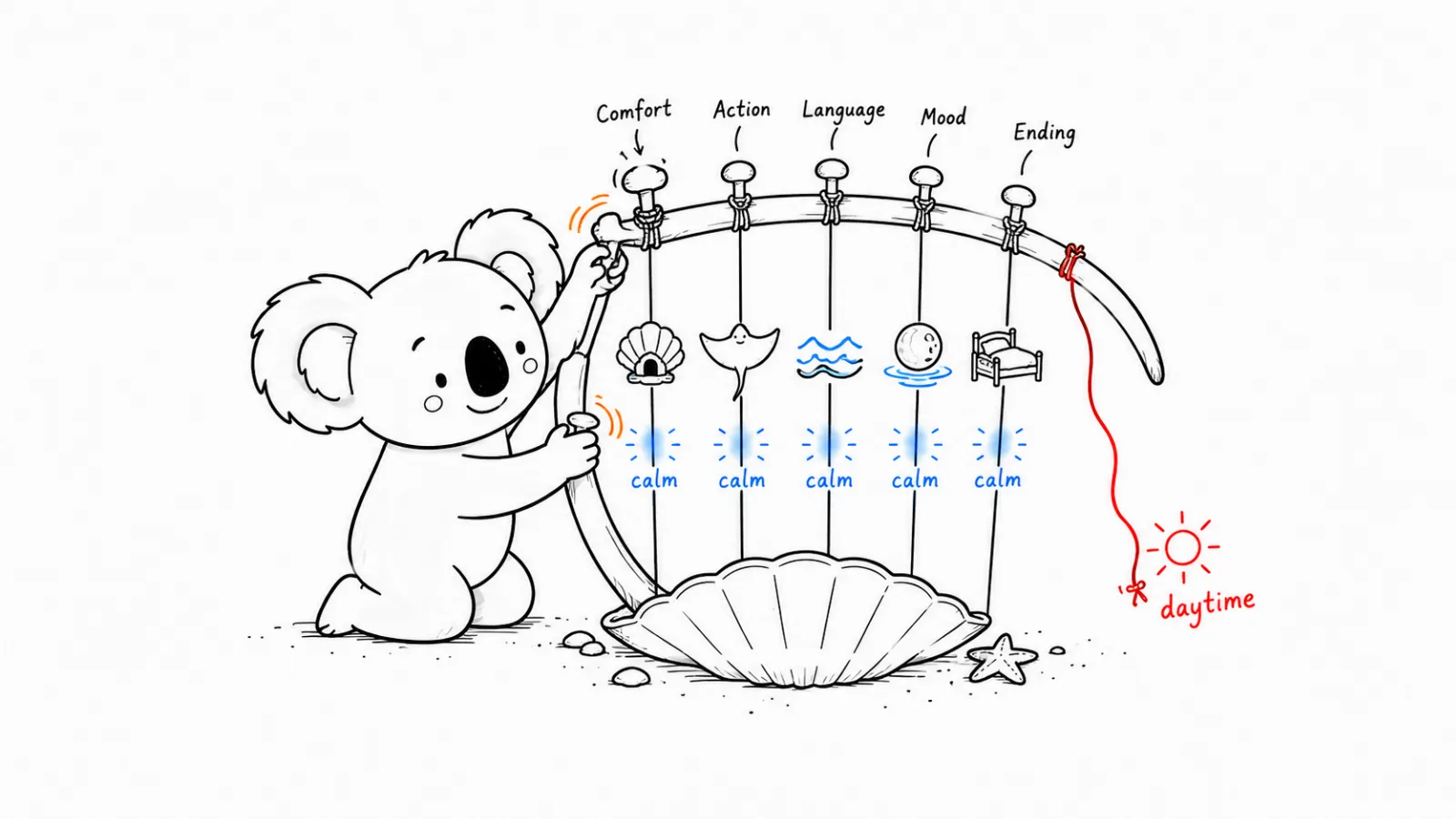
Parents can quickly assess an ocean story by checking five elements: setting, movement, stakes, voice, and ending.
The CALM check
| Element | What to look for | A bedtime-friendly example |
|---|---|---|
| Comfort | The character has a safe home, companion, or familiar route | A small octopus explores within sight of its coral home |
| Action | Movement is slow and the task is manageable | A ray carries a shell across a quiet lagoon |
| Language | Sentences include repetition and gentle sensory details | “The water rocked softly, back and forth” |
| Mood | Curiosity is stronger than fear | The character wonders where moonlight rests underwater |
| Ending | The problem is fully resolved and the final scene is still | The character curls into bed while the reef grows quiet |
If several of these elements are missing, the story may work better earlier in the day.
Adjust the delivery
Even a well-written story can feel energetic when read quickly. Calm delivery usually includes:
- ●A slightly slower pace than daytime reading
- ●Natural pauses after repeated lines
- ●A comfortable, quiet voice rather than exaggerated character voices
- ●Gradually softer narration near the end
- ●Enough expression to remain engaging without making each scene theatrical
A choice of calm, natural voices can be helpful when families use audio stories. The selected voice should feel comfortable to the child and should not change volume or intensity abruptly. An app such as Gula Stories can support this preference with multiple natural narration voices, but a familiar caregiver reading aloud can create the same sense of continuity.
Fit the story into a routine
Recognised parenting and health resources, including HealthyChildren.org, the NHS, and Australia’s Raising Children Network, commonly recommend predictable, calming bedtime routines. An ocean story can become one step in that sequence—for example: washing, pyjamas, a quiet story, goodnight, and lights out.
Try to keep the story’s role consistent. If one more story repeatedly becomes a long negotiation, decide in advance whether bedtime includes one chapter, one short story, or a fixed listening period.
Storytelling can support a peaceful transition, but it cannot diagnose or treat sleep problems. If a child regularly has difficulty sleeping, snores, appears distressed at night, or has sleep concerns that affect daily life, parents should speak with a qualified health professional.
6. FAQ
What makes an ocean bedtime story calming?
A calming ocean story combines a safe setting with slow movement, gentle repetition, low emotional stakes, and a complete ending. The presence of water alone is not enough. A storm or sea-monster chase may be ocean-themed but still feel highly stimulating.
How long should an underwater bedtime story be?
There is no single ideal length. Toddlers may prefer a brief, repetitive story, while older children may enjoy a longer journey with several quiet scenes. The practical test is whether the child remains comfortably engaged without becoming more alert. A shorter complete story is often more useful than a long story that must stop at a tense moment.
Are sharks and other large sea animals unsuitable for bedtime?
Not necessarily. A whale, shark, or giant octopus can be portrayed as calm, helpful, or sleepy. The important issue is the animal’s role. If it chases or threatens the main character, it may raise tension. If it quietly guides a lost shell home or rests beside a reef, it can fit the bedtime mood.
Can the same ocean story be repeated every night?
Yes. Many young children enjoy familiar stories because they know the sequence and ending. Repetition can also become part of a predictable routine. Parents can make small changes—such as choosing a different shell colour—while keeping the overall pattern familiar.
7. Conclusion
Ocean and underwater bedtime stories are most effective when their form matches their setting: flowing, rhythmic, and gradually quieter. A peaceful reef or moonlit bay provides the background, but the real calming work comes from predictable events, soft language, manageable stakes, and a secure ending.
Choose a story that suits the individual child rather than relying on age alone. Keep sensitive children close to bright, sheltered water; give curious children a simple journey; and redirect excitement into gentle discovery. Read slowly, allow pauses, and end with the character safe and still.
Used within a consistent bedtime routine, ocean bedtime stories can offer families a warm way to move from the activity of the day toward rest—one quiet wave, drifting bubble, and sleepy sea creature at a time.
Ready for calmer bedtimes?
Try Gula Stories free — 5 narrated bedtime stories, ad-free, for children ages 3-8.