
Night Waking in Preschoolers: Common Causes and Calm Responses
Preschoolers often wake briefly between sleep cycles; the main challenge is whether they can settle again without extens
Key Takeaways
- ●Preschoolers often wake briefly between sleep cycles; the main challenge is whether they can settle again without extensive help.
- ●Common causes include changing sleep needs, fears, uncomfortable sleep conditions, illness, hunger or thirst, and reliance on a particular settling routine.
- ●A calm, predictable response usually works better than lengthy conversations, bargaining, punishment, or changing the rules from night to night.
- ●Daytime connection, an age-appropriate schedule, and a consistent bedtime routine can reduce avoidable waking.
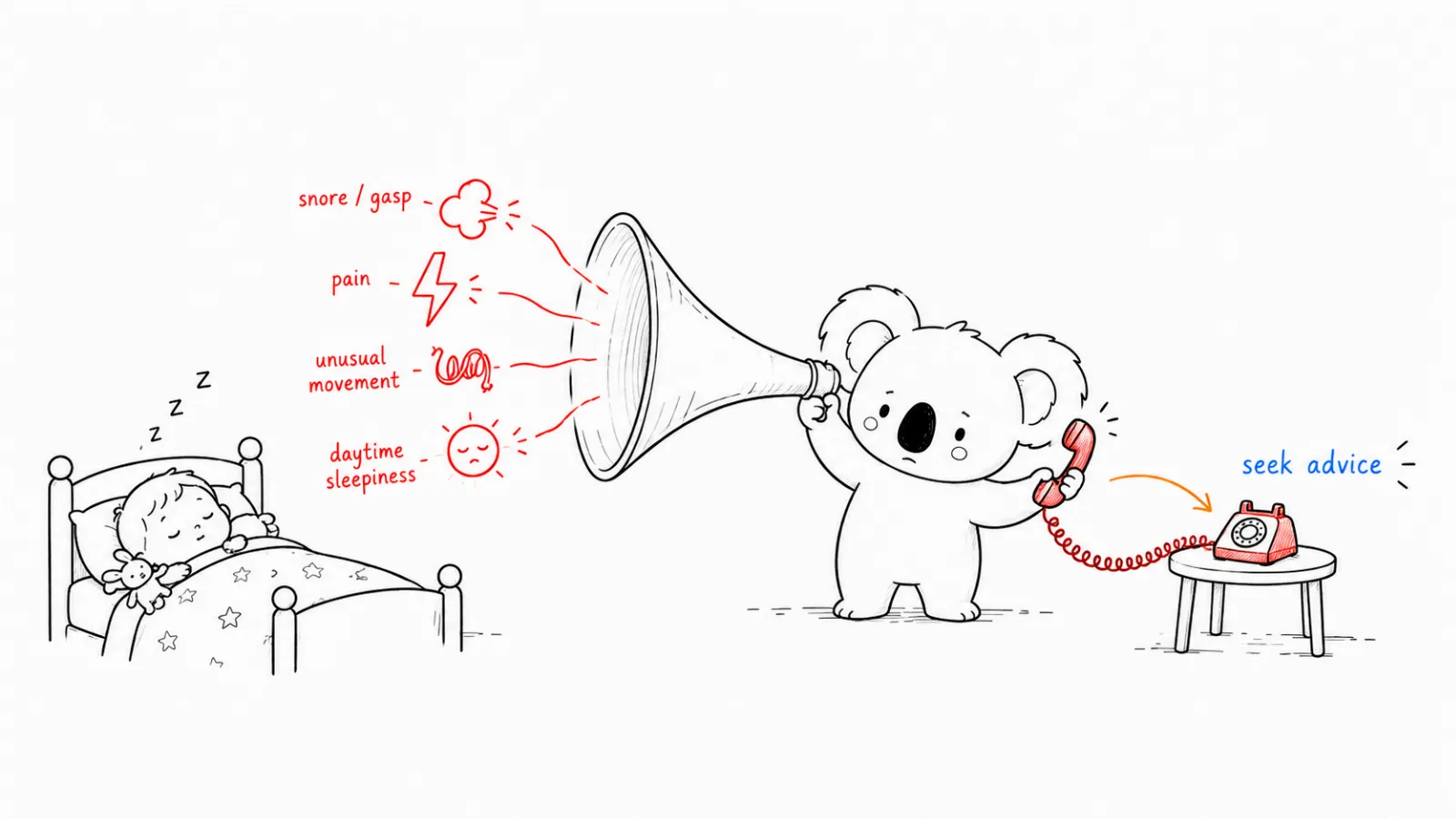
- ●Persistent waking accompanied by breathing problems, pain, extreme distress, or significant daytime difficulties should be discussed with a health professional.
1. Introduction
Night waking is exhausting at any age, but the preschool years can be especially confusing. A three-year-old may suddenly call for a parent several times after previously sleeping well. A four-year-old may become afraid of shadows. A five-year-old may leave bed each night with a new request: water, another cuddle, a missing toy, or reassurance that everyone is still at home.
These behaviours do not necessarily mean that anything is seriously wrong. Preschoolers are developing vivid imaginations, greater independence, stronger language skills, and changing sleep patterns. They may understand more about the world while still needing adult help to manage worry, discomfort, and frustration.
The goal is not to prevent every brief awakening. People naturally move through lighter and deeper stages of sleep. Instead, parents can identify likely causes, respond to genuine needs, and help children return to sleep with as little disruption as possible.
This guide explains the usual reasons for preschooler night waking, how to respond consistently, and when repeated waking deserves professional advice.
2. Why Preschoolers Wake During the Night
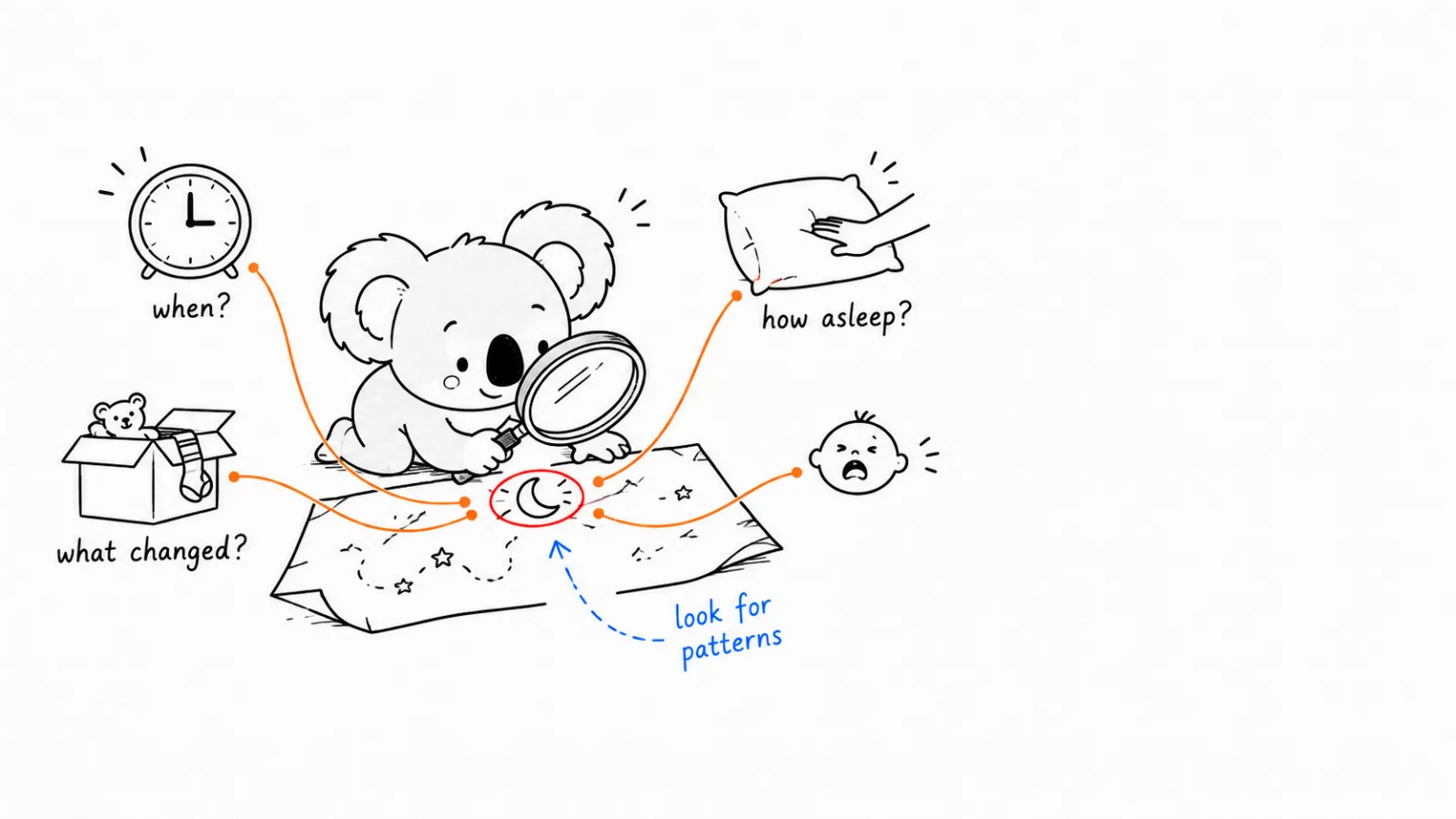
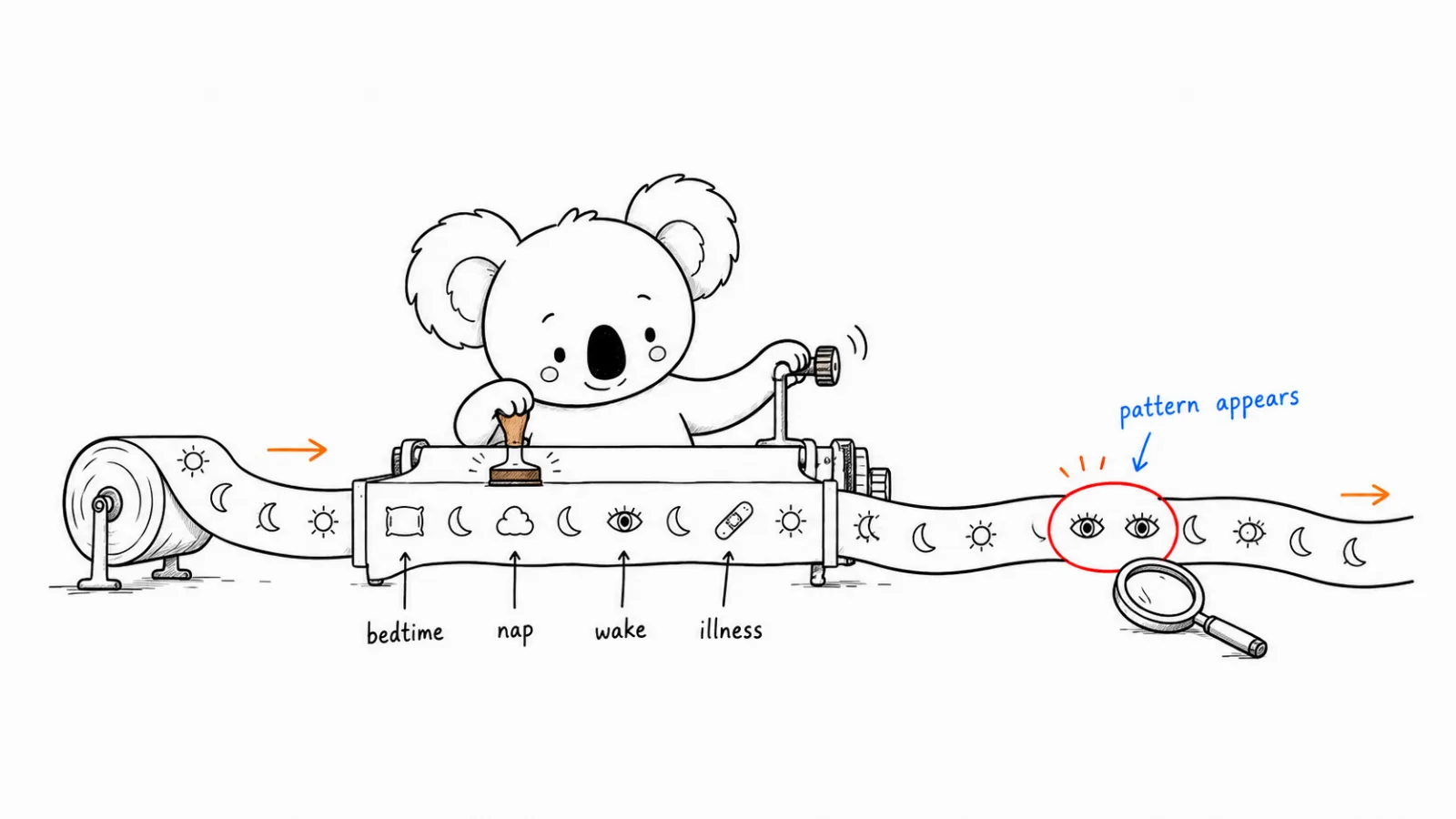
The first step is to look for patterns rather than treating every waking as deliberate misbehaviour. The time of waking, the child’s behaviour, recent changes, and the way the child falls asleep can all provide useful clues.
Changing sleep needs and schedules
Sleep needs vary between children and can change during the preschool years. Some children still nap, while others are beginning to drop daytime sleep. A late or long nap may make it harder to build enough sleep pressure for the night. Conversely, a child who is overtired may become unsettled, emotional, or harder to soothe.
Preschoolers generally need a substantial amount of sleep across a full day, but an individual child’s pattern matters more than forcing a precise schedule. Signs that the schedule may need adjustment include:
- ●Taking a long time to fall asleep most nights
- ●Waking very early and appearing ready for the day
- ●Resisting bedtime without seeming tired
- ●Becoming unusually irritable or hyperactive late in the day
- ●Struggling to wake in the morning
- ●Falling asleep unexpectedly during quiet daytime activities
If a child still naps and bedtime has become difficult, parents can experiment with an earlier or shorter nap. Schedule changes are usually easier to assess when they are kept consistent for several days rather than altered every night.
Sleep associations
A sleep association is a condition a child expects when falling asleep. It might be a parent lying beside the bed, repeated back rubbing, a particular song, or being moved into an adult’s bed.
These routines are not automatically harmful. The practical question is whether the family is comfortable repeating them during the night. A child who always falls asleep with a parent present may seek the same support after a normal partial awakening.
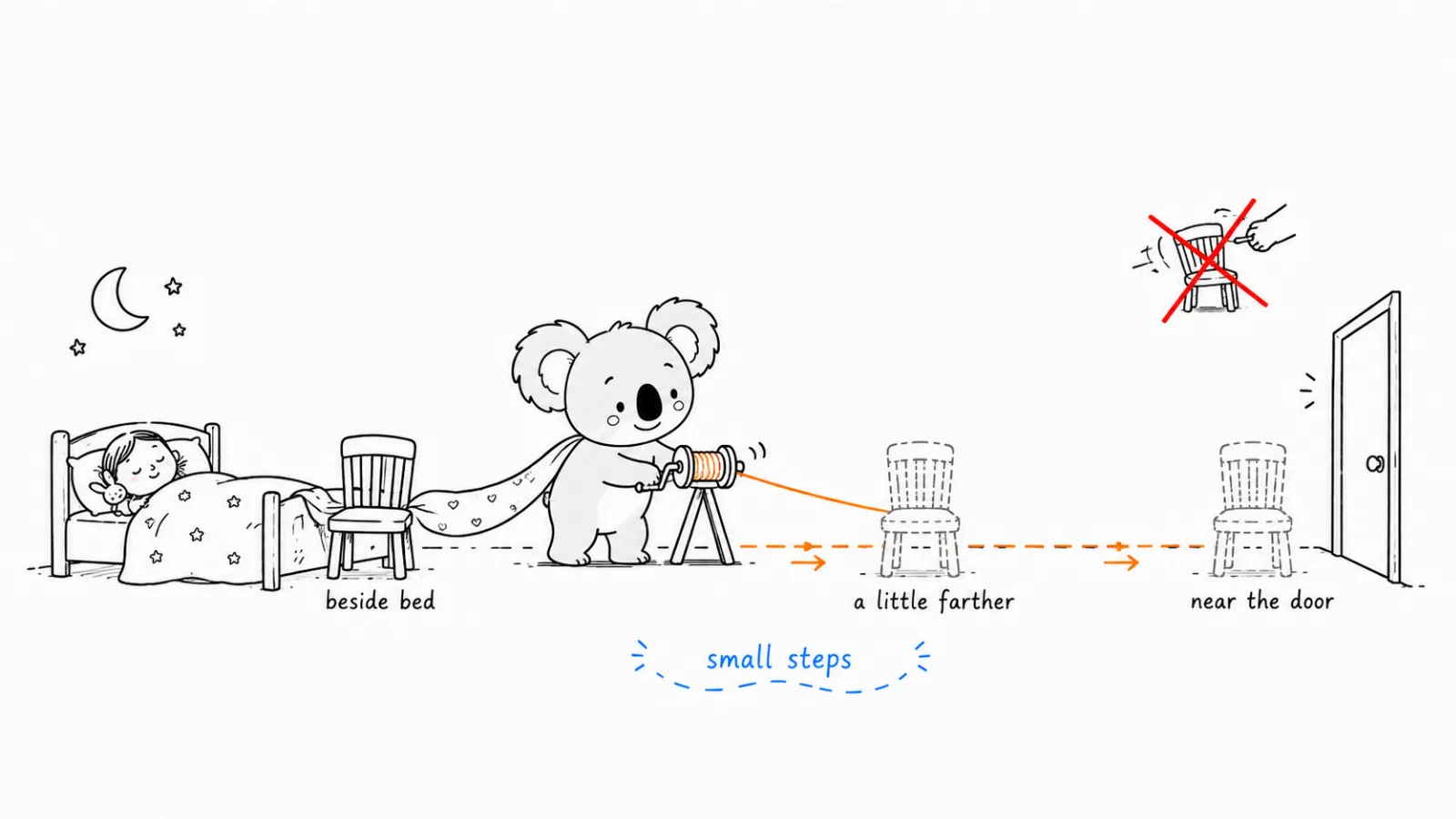
To change an unsustainable association, reduce help gradually. For example, a parent might begin beside the bed, then move to a chair, then move the chair closer to the doorway over successive nights. The process should be explained simply during the day, when everyone is calm.
Physical discomfort or an unsuitable sleep environment
A child may wake because the room is too hot or cold, pyjamas are uncomfortable, the environment is noisy, or light enters early in the morning. Hunger, thirst, needing the toilet, congestion, coughing, itching, or pain can also disturb sleep.
Before treating waking as a behavioural issue, check basic comfort and health needs. A small drink, toilet visit, or temperature adjustment may be appropriate. Keep the response quiet and brief so that necessary care does not become a stimulating nighttime activity.
Developmental fears and separation concerns
Preschoolers can imagine situations they cannot yet evaluate realistically. Darkness, unfamiliar sounds, dreams, changes at childcare, family tension, or separation from a parent may feel threatening at night.
Fear should be acknowledged without confirming that the imagined danger is real. A helpful response might be: “That dream felt scary. You are safe, and I am nearby.” Lengthy searches for monsters can accidentally suggest that there may be something to find.
Offer practical reassurance such as a dim night-light, a comfort object, or a simple picture showing the bedtime steps. Discuss recurring worries during daylight hours rather than holding long problem-solving conversations at 2 a.m.
Illness and major changes
Temporary sleep disruption is common during illness, travel, toilet learning, the arrival of a sibling, moving house, starting preschool, or changes in family routines. Children may need more reassurance during these periods.
Extra support does not have to mean abandoning all boundaries. Parents can provide comfort while preserving familiar cues: the same story, the same goodnight phrase, and the same sleeping place where possible. Once the disruption passes, gradually return to the usual level of support.
3. How to Respond Calmly and Consistently
A useful nighttime response meets the child’s immediate need without making waking more interesting or rewarding than sleep.
Use a simple response sequence
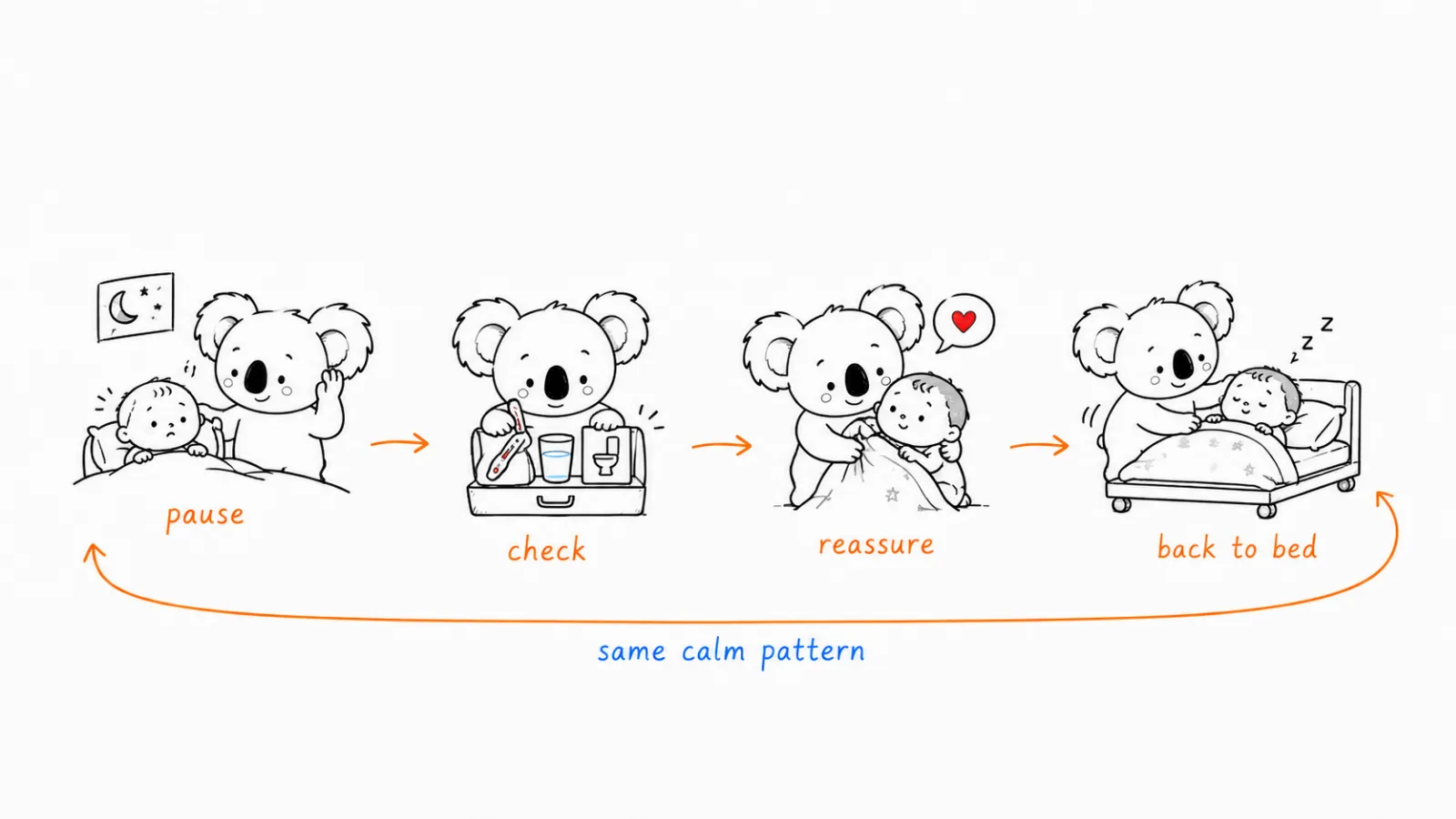
When a preschooler calls out or leaves bed, follow the same brief sequence each time:
- ●Pause and listen. If the child is safe and only stirring, allow a short opportunity to resettle.
- ●Check essential needs. Look for illness, pain, breathing difficulty, a wet bed, a toilet need, or another genuine problem.
- ●Offer calm reassurance. Use a quiet voice and minimal light.
- ●Restate the boundary. Say, “It is nighttime. Your body needs rest.”
- ●Return the child to bed. Keep conversation and negotiation brief.
- ●Repeat consistently. Use approximately the same words and actions if the child wakes again.
Consistency does not require emotional coldness. A parent can be warm, responsive, and firm at the same time. The aim is to make the nighttime pattern safe and predictable.
Keep nighttime boring
Bright lights, snacks, games, screens, and extended discussions can make waking more alerting. Unless a health or safety need requires otherwise, keep the room dim and the interaction short.
Avoid introducing a different solution with each waking. If one request leads to water, another to a story, and another to sleeping in a parent’s bed, the child may continue testing which option is available. Decide in advance which needs will be addressed and how.
Agree on the plan during the day
Preschoolers understand limits better when they are discussed before bedtime. Keep the explanation concrete:
“If you wake tonight, cuddle your bear and try to rest. If you need the toilet or feel unwell, call us. If you come out for another story, we will quietly take you back to bed.”
Parents or caregivers should also agree on the response. If one adult returns the child to bed while another begins a new story or allows play, the mixed pattern can make adjustment harder.
Expect protest during a change
A child may object when a familiar nighttime routine changes. Protest alone does not mean the plan is unsafe or unsuitable. However, the approach should remain responsive to the child’s age, temperament, health, and level of distress.
If the plan feels too abrupt, use smaller steps. For example, shorten nighttime cuddles gradually or move farther from the bed over time. Sustainable consistency is often more useful than a strict method that caregivers cannot maintain.
4. Preventing Avoidable Night Waking
Nighttime strategies work best when supported by a predictable day and bedtime routine.
Build a steady sleep rhythm
Try to keep waking time, meals, active play, quiet time, and bedtime reasonably consistent. Exact timing may vary between weekdays and weekends, but large shifts can make settling more difficult.
Daylight exposure and physical activity during the day help support the body’s sleep-wake rhythm. In the hour before bed, move toward quieter activities and reduce highly stimulating play.
Create a short, repeatable bedtime routine
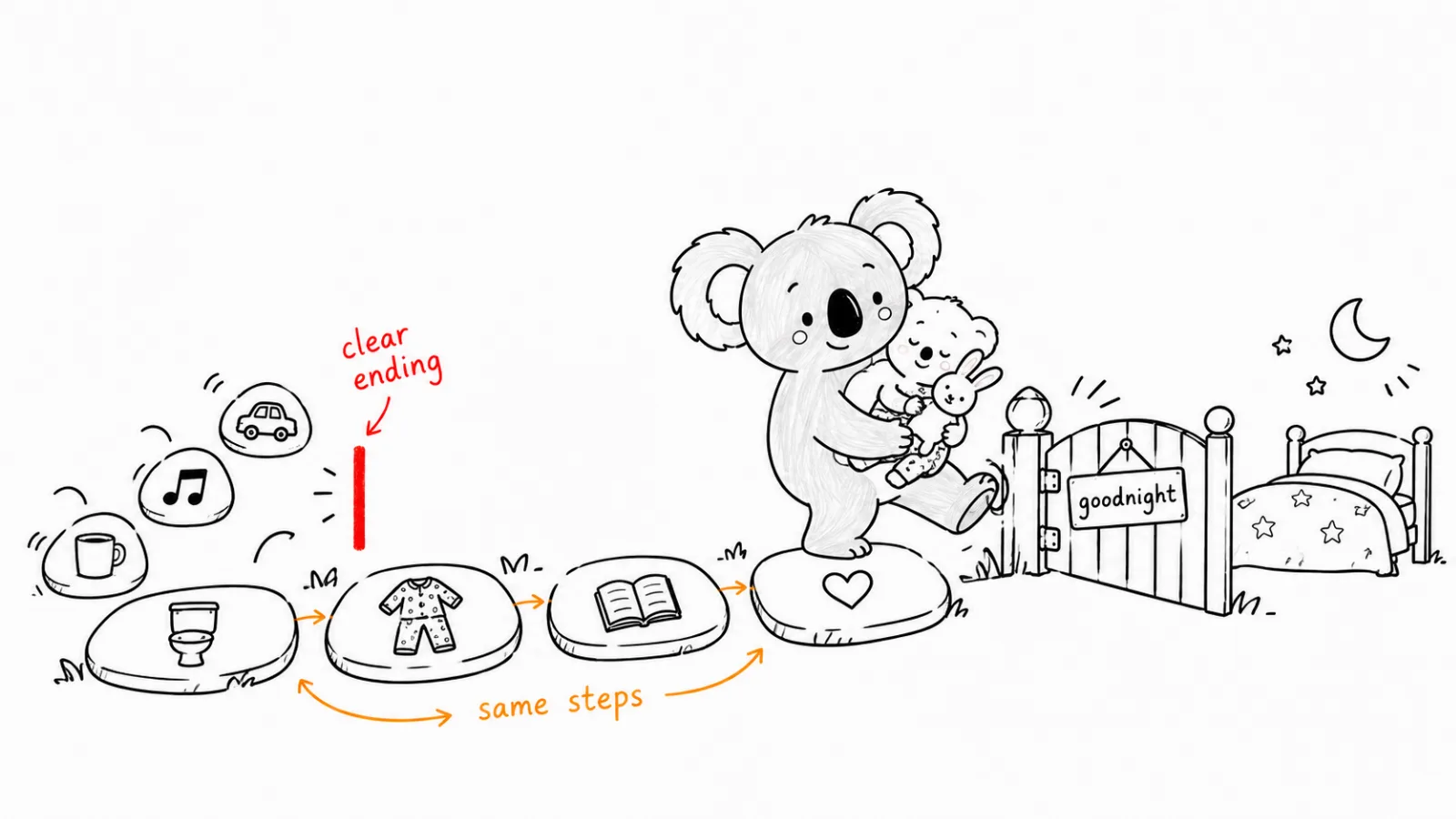
A bedtime routine does not need to be elaborate. A practical sequence might be:
- ●Toilet and wash
- ●Pyjamas
- ●Teeth brushing
- ●One or two quiet stories
- ●Cuddle and goodnight phrase
- ●Lights out
The routine should have a clear ending. Repeated additions—one more drink, another song, a different toy—can blur the transition to sleep.
An audio story may help some children settle when it is used as a consistent, screen-free part of the routine rather than an open-ended nighttime activity. For families who prefer this approach, an age-appropriate bedtime app such as Gula Stories can provide calm narration and familiar story choices. Set the stopping point before playback begins.
Address fears before bedtime
Invite children to talk about worries earlier in the day. Drawing the worry, practising a calming phrase, or choosing a comfort object can give them something concrete to use at night.
Parents can also teach a short settling routine:
- ●Take three slow breaths.
- ●Hold a favourite soft toy.
- ●Think about a safe or happy place.
- ●Repeat, “I am safe in my bed.”
These steps are not guaranteed to stop waking, but they give the child a manageable response other than immediately leaving the room.
Reinforce the behaviour you want
Notice effort in the morning: “You called once, had a quick cuddle, and stayed in bed. That was a calm way to handle waking.”
Simple visual charts may motivate some preschoolers, particularly when the goal is specific and achievable. Reward the behaviour under the child’s control—such as returning to bed calmly—not the unrealistic expectation of never waking.
5. Matching the Response to the Likely Cause
The following table offers a practical starting point. It describes common patterns, not diagnoses.
| What parents notice | Possible explanation | Calm response | What to avoid |
|---|---|---|---|
| Child wakes and asks for the same help used at bedtime | Strong sleep association | Gradually reduce the help while keeping the routine predictable | Removing all reassurance without preparation |
| Child reports monsters, shadows, or bad dreams | Developmental fear or a frightening dream | Validate the feeling, confirm safety, and use a brief comfort routine | Mocking the fear or conducting elaborate “monster checks” |
| Child is awake for long periods and seems cheerful | Bedtime may be too early, or daytime sleep may be affecting sleep pressure | Review nap timing and make small, consistent schedule adjustments | Changing bedtime dramatically after one difficult night |
| Child wakes upset after an unusually busy day | Overtiredness or overstimulation may be contributing | Use an earlier, quieter wind-down and maintain familiar cues | Adding exciting activities to “wear the child out” |
| Waking begins during illness or a major transition | Discomfort or increased need for reassurance | Provide necessary care while preserving familiar bedtime boundaries | Treating genuine distress as deliberate defiance |
| Child repeatedly leaves bed with new requests | Boundary testing may have become part of the pattern | Meet essential needs once, then return the child calmly with the same phrase | Bargaining, arguing, or offering new activities |
| Child snores loudly, gasps, struggles to breathe, or is very sleepy during the day | A health issue may be disrupting sleep | Arrange medical advice and describe the observed pattern clearly | Assuming the problem is purely behavioural |
A simple sleep diary can clarify patterns. For several days, record bedtime, approximate sleep onset, naps, waking times, how the child responded, and any illness or major event. This information can also help a GP, paediatrician, or child and family health nurse assess persistent concerns.
6. FAQ
Is it normal for a preschooler to wake every night?
Brief waking can be part of normal sleep, but repeated calls, long periods awake, or difficulty returning to sleep may indicate a schedule issue, discomfort, fear, illness, or reliance on a particular settling condition.
Look at the whole picture: how long the pattern has lasted, whether the child functions well during the day, and whether there are symptoms such as pain, breathing changes, or intense anxiety. If waking is persistent or affecting family wellbeing, seek advice from a health professional.
Should I let my preschooler sleep in my bed after waking?
There is no single arrangement that suits every family. If bed-sharing is not the family’s intended routine, allowing it unpredictably may make it harder for the child to understand what will happen after waking.
Choose a response that caregivers can provide safely and consistently. That might mean returning the child to their own bed, sitting nearby briefly, or gradually reducing adult presence. Follow current safe-sleep guidance relevant to the child’s age and local health authorities.
How long does it take for a new nighttime routine to work?
Children respond at different rates, and progress is rarely perfectly linear. Illness, travel, developmental changes, and inconsistent responses can extend the adjustment period.
Focus on whether the pattern is moving in a helpful direction: fewer exits from bed, shorter reassurance, less distress, or easier settling. If the approach is causing escalating distress or no meaningful improvement, reassess the likely cause and consider professional guidance.
When should parents seek medical advice?
Contact a healthcare professional if night waking is accompanied by loud or frequent snoring, gasping, pauses in breathing, persistent coughing, pain, unusual movements, significant itching, extreme daytime sleepiness, major behaviour changes, or ongoing anxiety.
Advice is also appropriate when waking persists despite a stable routine, the child’s growth or daily functioning is affected, or parental exhaustion is making safe care difficult. Resources from HealthyChildren.org, the NHS, and Raising Children Network can provide general guidance, but they do not replace individual assessment.
7. Conclusion
Preschooler night waking usually becomes easier to manage when parents separate genuine needs from habits, developmental fears, and schedule-related problems. The most useful response is often calm and repetitive: check safety and comfort, offer brief reassurance, restate the nighttime boundary, and help the child return to bed.
A predictable daytime rhythm and bedtime routine can prevent some waking, while gradual changes can reduce reliance on adult help. Progress may include small improvements rather than immediate uninterrupted sleep.
Parents do not need to ignore distress or manage persistent problems alone. When waking is prolonged, severe, associated with concerning symptoms, or affecting the child’s daytime wellbeing, a GP, paediatrician, or qualified child health professional can help identify the next appropriate step.
Ready for calmer bedtimes?
Try Gula Stories free — 5 narrated bedtime stories, ad-free, for children ages 3-8.