
Moving House: Helping Kids Sleep in a New Room
A new bedroom usually feels safer when it contains familiar sights, sounds, objects, and bedtime steps. Recreate the chi
Key Takeaways
- ●A new bedroom usually feels safer when it contains familiar sights, sounds, objects, and bedtime steps.
- ●Recreate the child’s usual sleep routine before introducing new decorations, sleep rules, or major schedule changes.
- ●Let children make a few simple choices about their room while adults maintain predictable boundaries.
- ●Expect some temporary bedtime resistance or extra reassurance-seeking after moving house.
- ●Seek professional advice if sleep problems persist, become severe, or affect a child’s health and daily functioning.
1. Introduction
Moving house can be exciting for a family, but bedtime often reveals how significant the change feels to a child. During the day, a new home may seem like an adventure. At night, unfamiliar shadows, sounds, smells, and room layouts can make the same place feel uncertain.
Children aged two to eight commonly rely on predictability. Their bedroom, comfort object, bedtime sequence, and a parent’s familiar words all help signal that it is time to rest. After a move, several of those signals may disappear at once. Even a child who previously slept comfortably may ask for another story, call out repeatedly, resist being left alone, or wake during the night.
The most useful principle for parents managing moving house kids sleep concerns is simple: make the new bedroom feel familiar before expecting sleep to return to normal. This article explains how to preserve comforting cues, prepare the room, respond calmly to disrupted nights, and recognise when additional support may be appropriate.
2. Rebuild Familiarity Before Redesigning the Routine
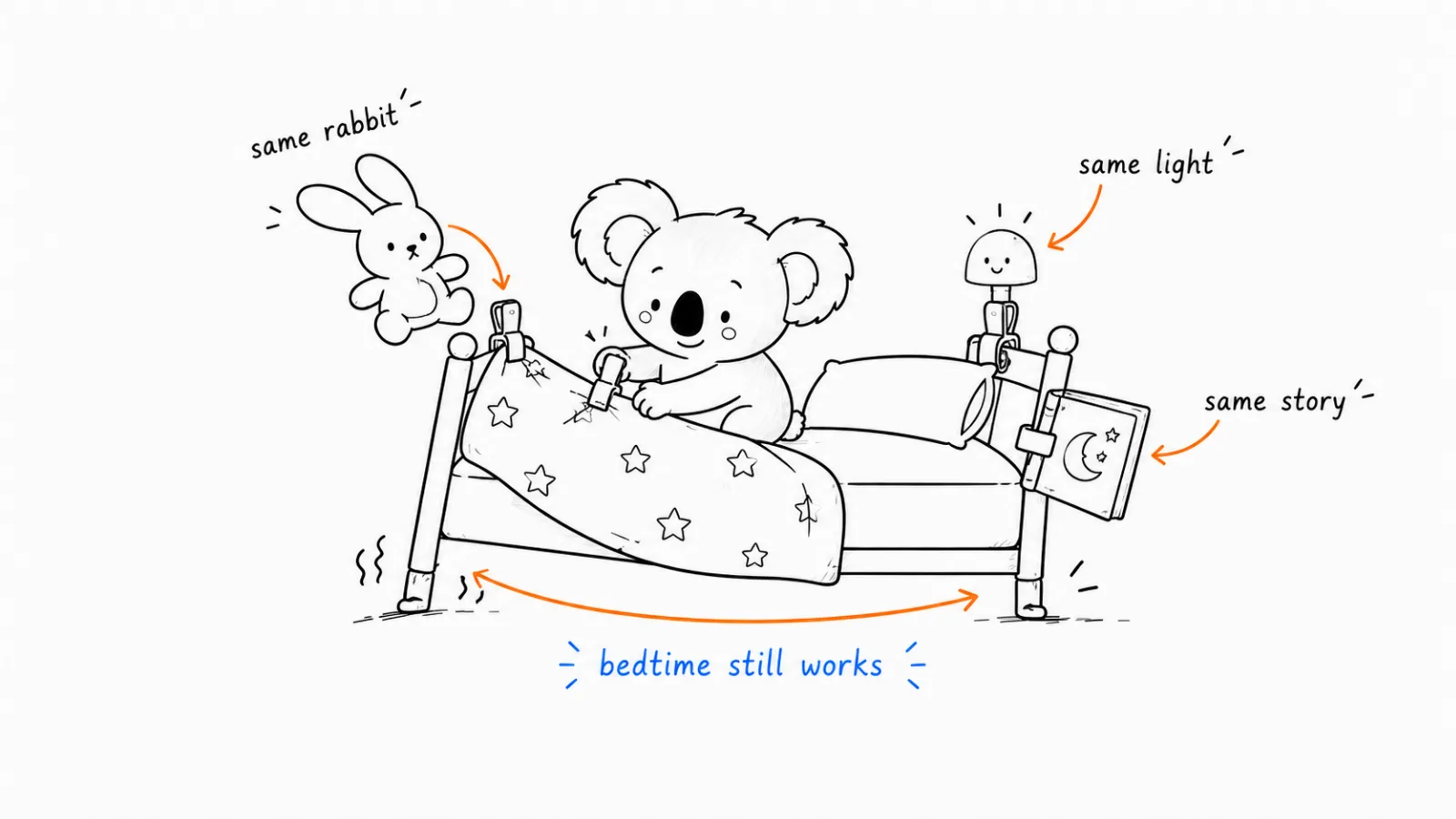
The core goal during the first days in a new home is continuity. A child does not need an elaborate new sleep system; they need recognisable signals that bedtime still works in the same dependable way.
Familiar cues can include:
- ●The same comfort toy, blanket, or pillow
- ●Familiar bedding, even if it does not match the new room
- ●The usual night-light
- ●The same bedtime story or song
- ●A consistent sequence, such as bath, pyjamas, teeth, story, cuddle, and lights out
- ●A parent’s usual goodnight phrase
- ●The normal bedtime, adjusted only when moving-day logistics make that impossible
If practical, pack essential bedtime items in a clearly labelled bag that stays with the family rather than going deep into the moving truck. This avoids a stressful search for a favourite toy or night-light when everyone is already tired.
Try to set up the child’s sleeping area early. It does not need to be fully decorated. A made bed, familiar bedding, curtains or blinds, a working light, and a clear path to the bathroom are more important than finished shelves or coordinated furniture.
A practical scenario
Suppose a five-year-old normally sleeps with a soft rabbit, listens to one story, and has the door left slightly open. In the new house, keep those three cues unchanged. Resist the temptation to introduce a new bedtime audiobook, close the door because the hallway is brighter, and replace the old bedding on the same night.
Each change may seem small to an adult. Together, however, they can remove the signals the child associates with safety and sleep.
Familiarity does not require recreating the old bedroom exactly. It means preserving enough recognisable details to help the child understand: This is a different room, but bedtime is still predictable.
3. Prepare the New Room for Comfort and Orientation
A child’s first experience of the room should ideally happen before they are expected to fall asleep in it. Explore the space together during daylight, when unfamiliar corners and sounds are less intimidating.
Show the child:
- ●Where their bed will be
- ●How to turn the light on and off
- ●Where the bathroom is
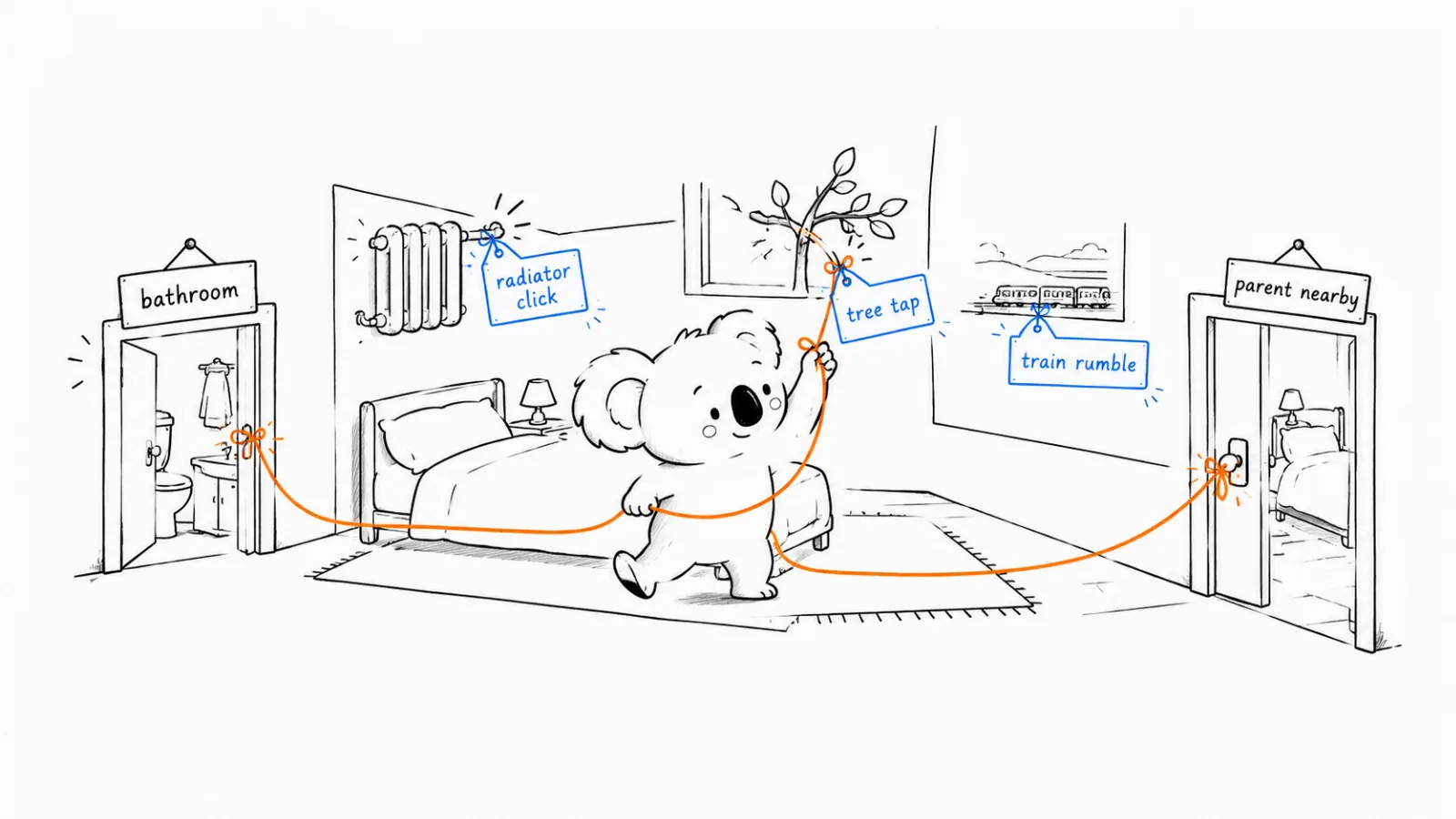
- ●Which sounds come from heating, plumbing, traffic, trees, or neighbours
- ●Where a parent or caregiver will sleep
- ●What they should do if they need help at night
This orientation gives practical meaning to the new space. For younger children, walk the route from their bed to your room together. For older children, explain unfamiliar household noises rather than dismissing them. A radiator click, floorboard creak, or passing train is often easier to tolerate once it has a name and an ordinary cause.
The room should also support safe, comfortable sleep. Check that furniture is stable, blind or curtain cords are secured, windows are appropriately restricted, and the sleep environment is not too hot. Follow locally relevant child-safety guidance when arranging furniture and bedding.
Recognised authorities such as HealthyChildren.org from the American Academy of Pediatrics, the NHS, and Australia’s Raising Children Network generally emphasise consistent routines and a calm sleep environment. Their age-specific guidance can be useful when families have questions about safe bedding, bedtime routines, or ongoing sleep difficulties.
Offer limited choices
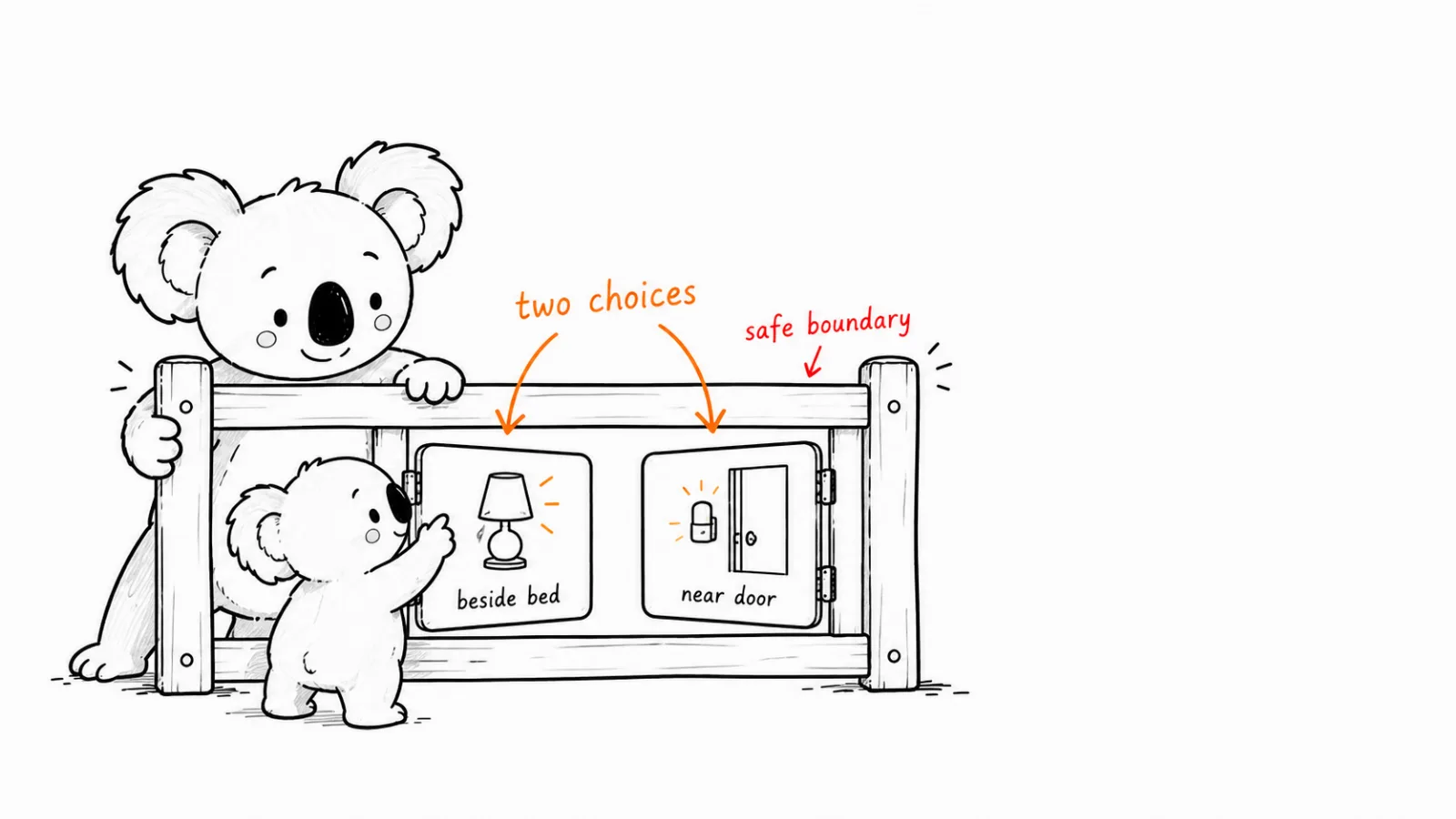
Children may benefit from having some control over the new room, but too many decisions can create pressure. Offer two or three manageable choices:
- ●“Would you like the night-light beside the bed or near the door?”
- ●“Should the bear or the rabbit sit on your pillow?”
- ●“Would you like the blue pyjamas or the striped ones tonight?”
Keep adult responsibilities—such as safety, bedtime boundaries, and furniture placement—with the adult. Limited choices help a child participate without making them responsible for solving bedtime.
Check the room from the child’s perspective
Stand or lie where the child will sleep. A harmless coat on a chair may create a strange shape in low light. Light from the hallway may cast moving shadows. A new smoke alarm or heating vent may be visually unfamiliar.
If the child identifies something unsettling, address the specific concern. Move the coat, explain the alarm, or adjust the light. Avoid conducting repeated “monster checks,” which can unintentionally suggest that there might be something to find. A calm room check followed by a confident goodnight is usually more reassuring.
4. Keep Bedtime Predictable While Allowing Extra Reassurance
Temporary sleep disruption after moving does not necessarily mean the routine has failed. A move can make children more alert, emotionally unsettled, or eager to stay close to a parent. The response should combine warmth with consistency.
A useful approach is to keep the usual sequence while allowing a modest, clearly defined amount of additional reassurance. For example:
- ●Complete the normal bedtime routine.
- ●Acknowledge that the room feels new.
- ●Remind the child of familiar objects and where the adults are.
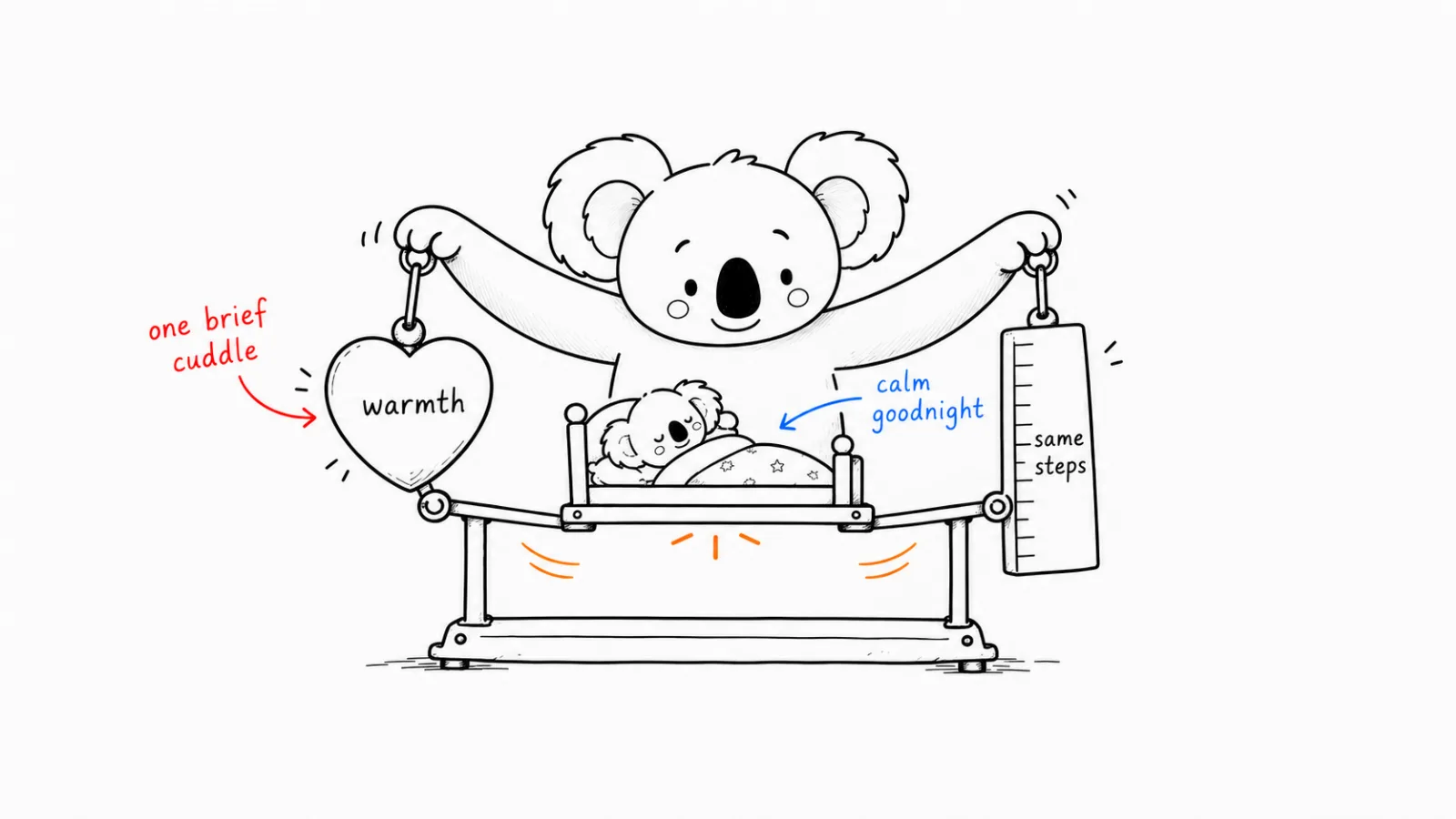
- ●Offer one extra brief cuddle or check-in.
- ●Use the normal goodnight phrase and leave calmly.
- ●If the child calls out, respond briefly and consistently.
The language parents use matters. Instead of saying, “There is nothing to worry about,” try: “I know this room feels different. Your rabbit is here, your night-light is on, and I am nearby.” This validates the child’s experience without reinforcing the idea that the room is unsafe.
When a child repeatedly leaves the room
If a child comes out of the bedroom several times, keep the response quiet, brief, and predictable. Walk them back, repeat a simple phrase, and avoid starting a new conversation or activity.
A suitable phrase might be: “It is sleep time. You are safe, and I will see you in the morning.”
Long negotiations can make bedtime more stimulating and may turn repeated leaving into a reliable way to gain extra attention. Consistency is more important than sounding stern. The aim is to make the boundary clear while preserving a sense of security.
When a child wakes during the night
Respond in much the same way you would at bedtime. Keep lights low, voices calm, and interactions brief. First check for practical needs, such as the toilet, temperature, illness, or an unusual noise. Then guide the child back toward sleep using familiar cues.
If the family already uses calm audio stories as part of bedtime, the same familiar narration may help preserve continuity in the new room. For example, an existing Gula Stories routine could travel with the child through the move. Avoid introducing screens, exciting content, or several new sleep aids at once.
5. A First-Week Plan for Moving House and Kids’ Sleep
The following framework helps parents decide what to prioritise without expecting every night to go smoothly.
| Stage | Main objective | Helpful actions | What to avoid |
|---|---|---|---|
| Before the move | Prepare the child for a new sleeping space | Talk about what will stay the same; show photos if available; pack comfort items separately | Promising that the child will love the room or sleep perfectly |
| Moving day | Protect essential bedtime cues | Keep bedding, pyjamas, comfort objects, books, and night-light accessible | Leaving all bedtime items in unlabelled boxes |
| First night | Create safety through familiarity | Use the usual routine; explain new sounds; show the route to the bathroom or parent’s room | Introducing multiple new rules or decorations at bedtime |
| First few nights | Combine reassurance with consistent limits | Use brief check-ins; return the child calmly to bed; keep wake-up time reasonably steady | Lengthy negotiations, exciting nighttime activities, or changing the response each night |
| End of the first week | Review patterns and practical barriers | Check light, noise, temperature, schedule, and the child’s specific concerns | Assuming every difficulty is behavioural or expecting instant adjustment |
What to change—and what to postpone
A move may coincide with other transitions, such as starting school, moving from a cot to a bed, giving up a dummy or pacifier, or beginning independent sleep. When possible, avoid combining several major bedtime changes.
Consider postponing a non-urgent change if:
- ●The child is already distressed by the move.
- ●The familiar sleep arrangement remains safe and age-appropriate.
- ●The family cannot apply a new routine consistently during unpacking.
- ●The proposed change is mainly for convenience rather than an immediate need.
Some changes cannot wait. A child may need a different bed because of safety, size, or availability. In that case, preserve other cues: the same bedtime order, comfort object, story, night-light, and parental response.
Keep expectations flexible
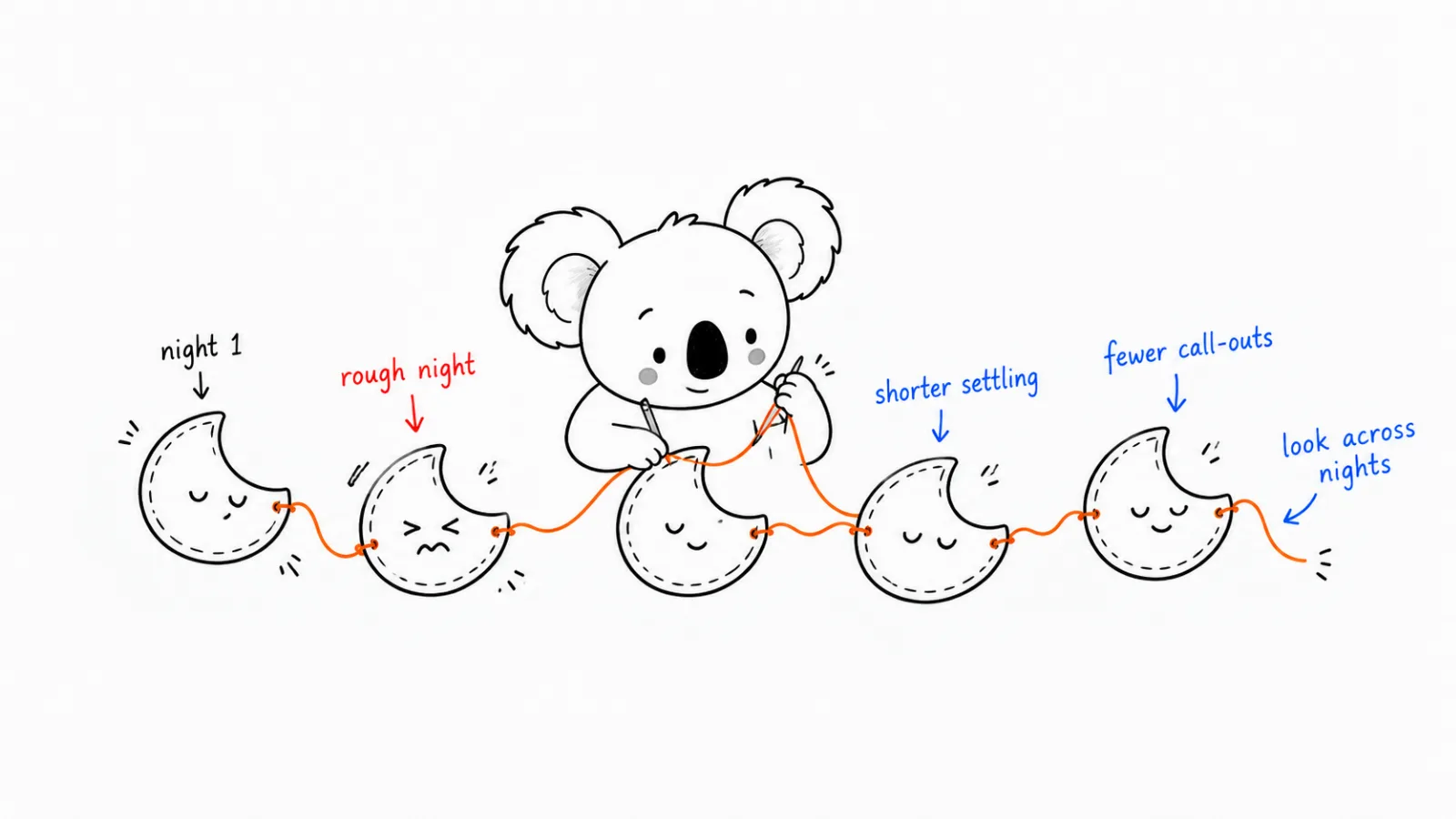
Adjustment is rarely perfectly linear. A child may sleep well on the first night because they are exhausted, then struggle on the second or third night as the move becomes more real. Another child may need reassurance only after hearing an unfamiliar noise.
Judge progress across several nights rather than treating one difficult bedtime as evidence that the approach is not working. Useful signs of adjustment may include fewer call-outs, shorter settling periods, greater comfort playing in the room during the day, or less help needed after waking.
6. FAQ
How long does it take a child to sleep normally after moving house?
There is no universal timetable. A child’s age, temperament, previous sleep pattern, sensitivity to change, and the amount of disruption surrounding the move can all affect adjustment. Some children settle quickly, while others need repeated exposure to the new room and several nights of consistent reassurance.
Focus on whether the overall pattern is gradually becoming easier. If sleep disruption persists, worsens, or significantly affects the child or family during the day, discuss it with a GP, paediatrician, child health nurse, or another qualified health professional.
Should I let my child sleep in my room after the move?
This depends on the family’s usual arrangements and what parents can sustain consistently. A temporary change may provide reassurance, but it can also become a new expectation if there is no clear plan for returning to the child’s room.
If the goal is independent sleep in the new bedroom, consider supporting the child there with brief check-ins or temporarily sitting nearby, then gradually reducing your presence. Choose an approach that is safe, calm, and realistic for your family.
Should I buy new bedroom items to make the room more appealing?
A few child-chosen details can help create ownership, but familiar items are often more useful during the initial transition. Keep trusted bedding, toys, books, and bedtime equipment available first. New decorations can be added gradually once the child feels secure.
Avoid presenting new purchases as a guarantee that the child will sleep. Comfort usually comes from repeated safe experiences and predictable responses, not from the room’s appearance alone.
When should I seek professional help?
Talk to a qualified health professional if sleep difficulties are persistent, severe, or affecting the child’s mood, learning, behaviour, health, or daily functioning. Seek advice sooner if the child has breathing difficulties during sleep, unusual episodes at night, significant anxiety, symptoms of illness, or any issue that concerns you.
7. Conclusion
When moving house, helping kids sleep is primarily about restoring familiar signals in an unfamiliar place. Set up essential sleep items early, preserve the established bedtime sequence, explain the new environment, and respond to worries with calm, consistent reassurance.
The new bedroom does not need to feel finished on the first night. It needs to feel understandable, safe, and connected to routines the child already knows. With repeated positive experiences—and appropriate professional support when concerns persist—the room can gradually become an ordinary and comfortable place to sleep.
Ready for calmer bedtimes?
Try Gula Stories free — 5 narrated bedtime stories, ad-free, for children ages 3-8.