
Late Dinners and Bedtime: Keeping the Evening Routine Calm
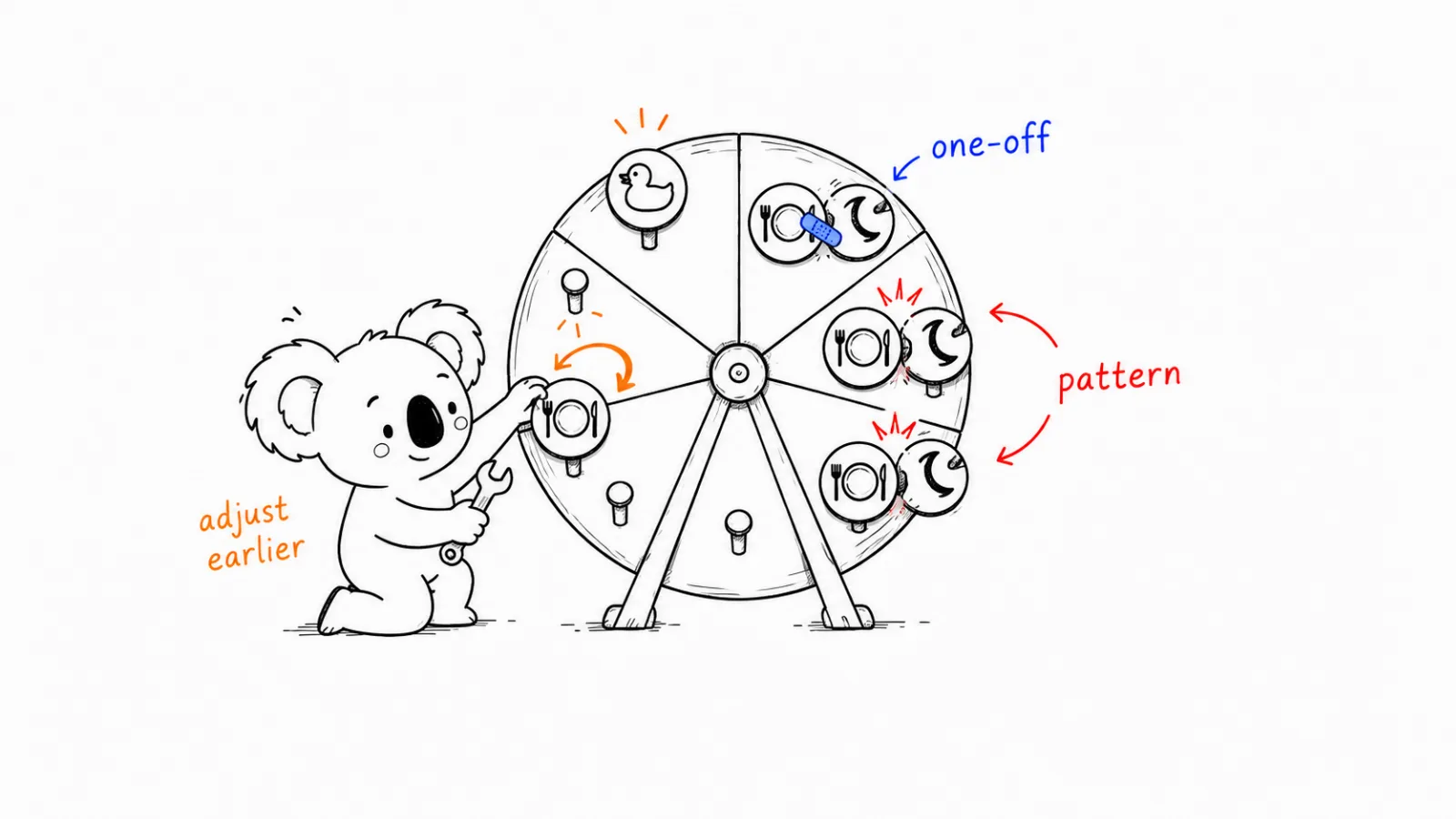
After a late dinner, shorten bedtime by removing optional steps—not by rushing, scolding, or skipping essential care. Ke
Key Takeaways
- ●After a late dinner, shorten bedtime by removing optional steps—not by rushing, scolding, or skipping essential care.
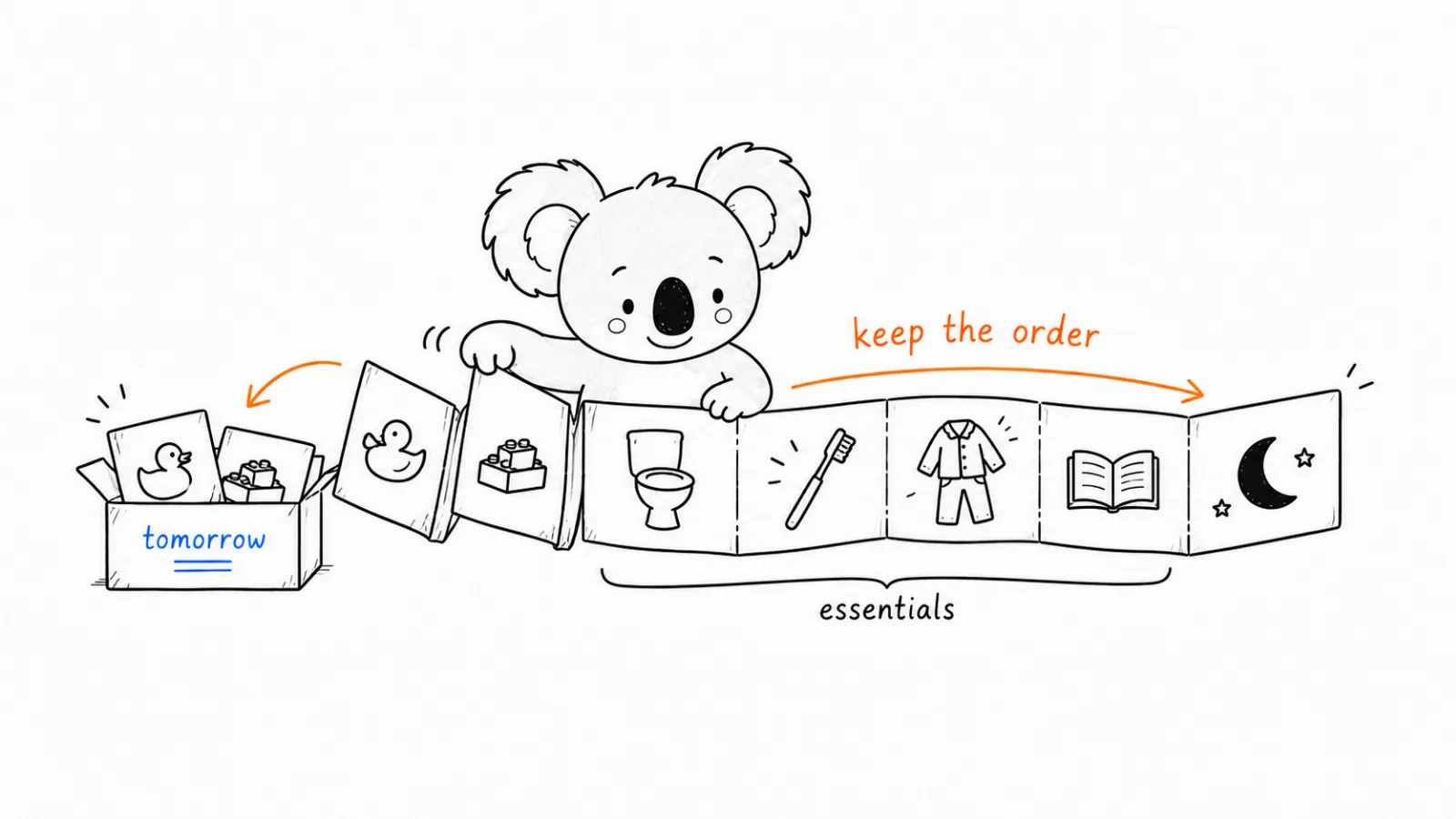
- ●Keep the sequence familiar: toilet, teeth, sleepwear, one calming connection activity, then lights out.
- ●Give children clear, limited choices so they retain some control without delaying bedtime.
- ●Avoid claims that particular foods will improve sleep. Focus instead on comfort, predictability, and a calm transition.
- ●If bedtime difficulties, digestive discomfort, snoring, or persistent sleep concerns continue, speak with a qualified health professional.
1. Introduction
Late dinners happen. A family outing runs longer than expected, an activity finishes late, traffic slows the journey home, or a working day pushes the evening schedule off course. Suddenly, a child who normally has plenty of time to eat, play, bathe, and hear a story is finishing dinner close to bedtime.
For parents searching for advice about late dinner bedtime kids routines, the central question is usually practical: how can bedtime be shortened without making the evening feel tense?
The answer is not to compress every task into a frantic race. A better approach is to preserve the familiar order of bedtime while reducing its optional parts. Children aged two to eight often cope more easily when they can predict what happens next—even if the routine is shorter than usual.
A late meal does not require a completely different parenting strategy. It calls for a simplified version of the routine your child already knows. This article explains how to decide what stays, what can wait until tomorrow, and how to maintain connection while moving calmly toward sleep.
2. Use a “Minimum Viable Bedtime” Routine
The most useful response to a late dinner is a minimum viable bedtime: the shortest routine that still covers your child’s essential needs and provides a clear transition to sleep.
A full evening routine might include a bath, extended play, several books, a long conversation, songs, and repeated check-ins. On a late night, trying to fit everything in can push bedtime even later. It can also create pressure that children notice immediately.
Instead, identify the steps that matter most:
- ●Finish eating without unnecessary hurry.
- ●Use the toilet or change the nappy.
- ●Brush teeth.
- ●Put on sleepwear.
- ●Share one brief calming activity.
- ●Say goodnight and turn out the light.
The order matters more than the duration. A familiar sequence gives the child recognizable cues that the day is ending.
What can usually be shortened?
Optional activities can often be reduced for one evening:
- ●Replace a bath with a quick wash of hands and face.
- ●Choose one short story instead of several.
- ●Save extended play for the next day.
- ●Prepare clothes, bags, and lunch items after the child is asleep, if practical.
- ●Keep the goodnight conversation warm but brief.
Essential hygiene should still be handled appropriately. In particular, toothbrushing should not be dropped simply because dinner was late. The NHS, the American Academy of Pediatrics’ HealthyChildren.org, and other recognised child-health authorities provide age-appropriate oral-care guidance; families should follow the advice relevant to their child.
Scenario: arriving home after an evening activity
Suppose a six-year-old finishes dinner at 8:00 p.m., later than the family’s usual schedule. Instead of announcing, “We have no time—you need to hurry,” a parent might say:
“It is a short-routine night. We’ll do the toilet, teeth, pyjamas, one story, and bed.”
This sentence communicates both the limit and the reassurance. The child knows that the routine is shorter, but the familiar elements remain.
3. Create a Calm Transition After the Meal
A child may find it difficult to move directly from a lively meal or outing into bed. The goal is not to make the child fall asleep on command. It is to lower the level of stimulation and make the next steps predictable.
Begin the transition before dinner ends. Use a calm statement such as, “After we finish eating, we are going straight into our short bedtime routine.” This gives the child advance notice rather than introducing the change at the last moment.
After dinner, keep the environment simple:
- ●Dim bright household lights where practical.
- ●Put away noisy or highly stimulating toys.
- ●Avoid starting a new game, episode, or complicated activity.
- ●Speak at a normal, steady pace.
- ●Move directly from one bedtime step to the next.
- ●Keep screens out of the shortened routine.
Recognised authorities, including the NHS, HealthyChildren.org, and Australia’s Raising Children Network, commonly emphasise consistent routines and calming pre-sleep habits. Their specific recommendations may differ by age and circumstance, but the broad principle is useful: bedtime tends to work more smoothly when activities become quieter and more predictable.
Do not turn bedtime into a race
Repeated commands such as “Faster,” “We’re late,” or “Go, go, go” may increase tension. A child who senses urgency may become upset, silly, resistant, or unusually energetic. What looks like deliberate delay can sometimes be a response to tiredness, excitement, or an abrupt change in expectations.
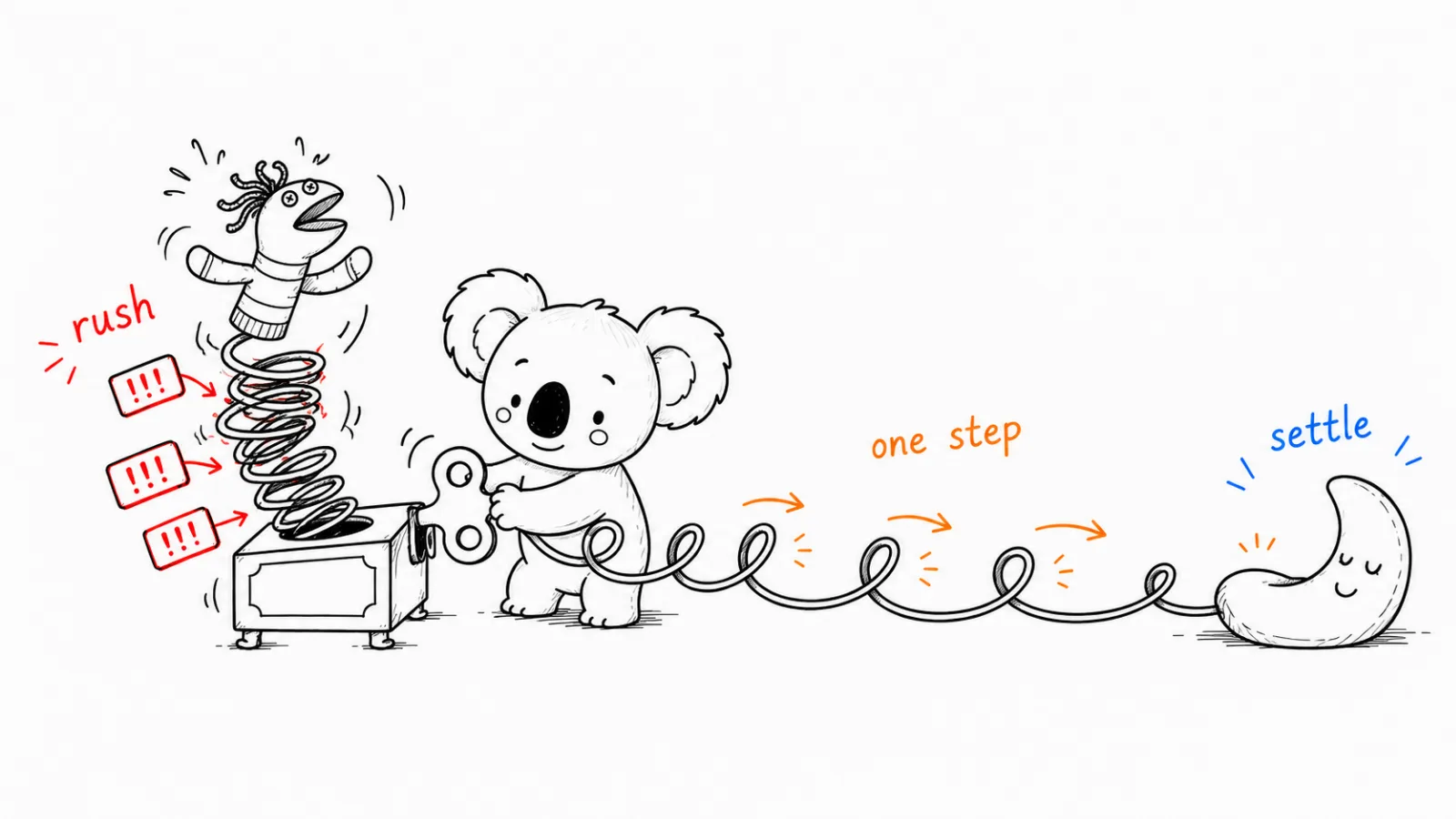
Use one instruction at a time:
- ●“Please take your plate to the kitchen.”
- ●“Now it is toilet time.”
- ●“Next, we brush teeth.”
- ●“Then you can choose the story.”
For younger children, a simple visual or verbal sequence can reduce negotiation: “Teeth, pyjamas, book, bed.”
Scenario: a tired four-year-old becomes playful
A four-year-old starts running around after dinner and refuses to change clothes. Rather than adding more warnings, the parent can reduce the demand:
“Your body looks tired. Would you like to put on your pyjama top or bottoms first?”
The bedtime boundary remains, but the child receives a manageable choice. This often feels less confrontational than an open-ended question such as, “Are you ready for bed?”
4. Protect Connection Without Extending the Night
A shorter routine should not feel like a withdrawal of affection. When children resist an abbreviated bedtime, they may be trying to preserve their usual connection with a parent rather than seeking extra entertainment.
Keep one dependable connection point, even if it lasts only a few minutes. It might be:
- ●One short book
- ●One quiet song
- ●A brief cuddle
- ●A “best part of the day” conversation
- ●A short audio story with calm narration
- ●The same goodnight phrase used every evening
The activity should have a clear ending. For example: “We will read one book, then it is time for sleep.” If the child asks for another, acknowledge the disappointment without reopening the plan: “I know you would like one more. Tonight is a one-book night. We can choose two tomorrow.”
For families who already use Gula Stories, choosing one short, age-appropriate story with calm narration may help preserve a familiar story cue on a compressed evening. Set the selection before getting into bed so browsing does not become another source of delay.
Offer limited choices
Choices can support cooperation, but too many choices may lengthen the routine. Offer two acceptable options:
- ●“Blue pyjamas or green pyjamas?”
- ●“This short story or that short story?”
- ●“Cuddle first or song first?”
- ●“Would you like the door slightly open or closed?”
Avoid offering a choice when there is no real option. “Do you want to go to bed?” invites a reasonable “no.” A clearer statement is, “It is bedtime. Would you like to walk to your room or hold my hand?”
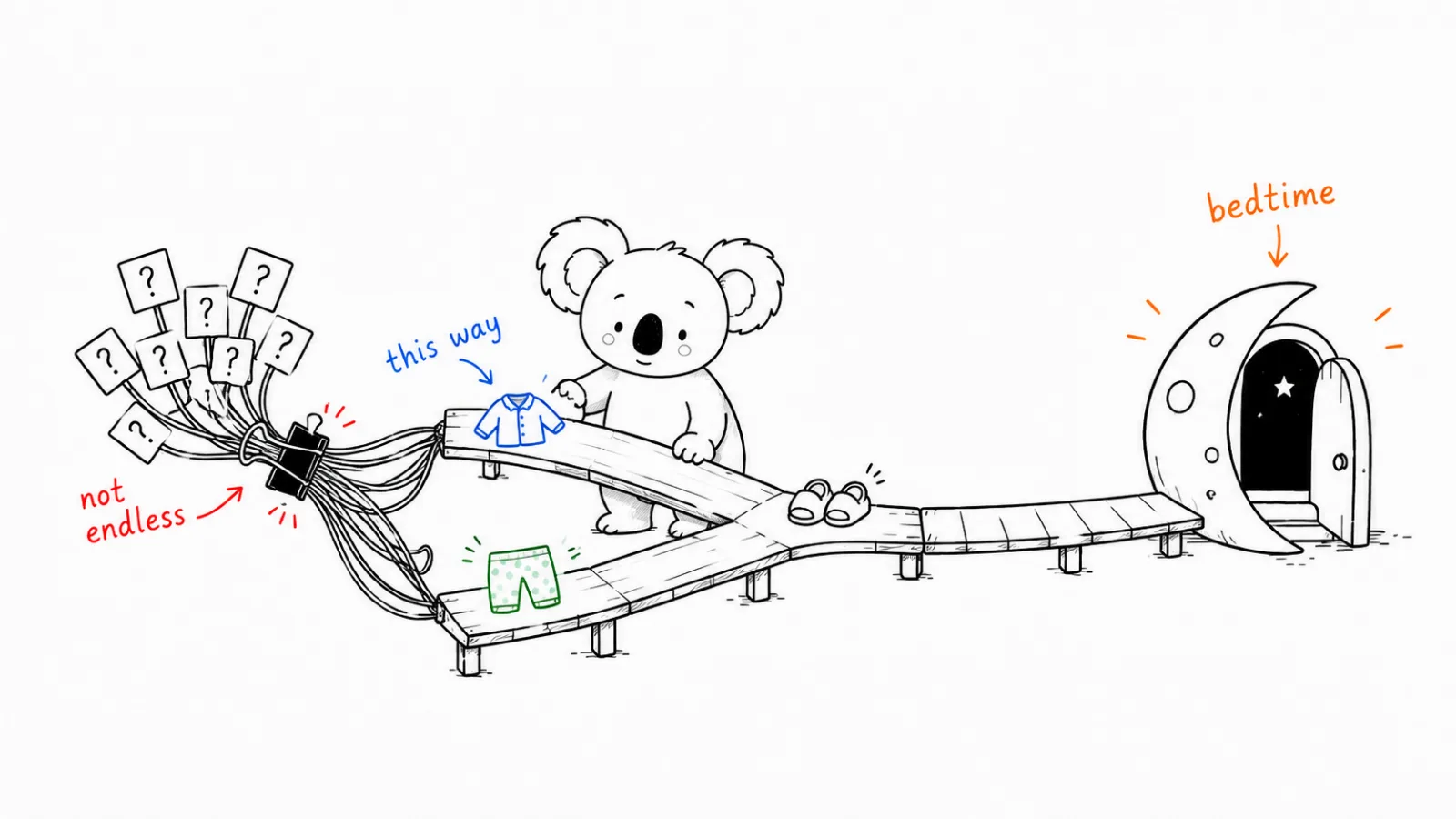
Keep the boundary steady
Children may test whether the shortened routine is negotiable, especially if the change is unusual. Calm repetition is generally more helpful than adding new explanations each time.
Try a consistent response:
“You wanted the longer routine. Tonight we are doing the short routine because dinner finished late. You are safe, I love you, and now it is time for bed.”
This combines empathy, explanation, and a firm endpoint.
5. A Practical Late-Dinner Bedtime Plan
The following framework can help parents decide what to keep, shorten, or postpone.
| Bedtime element | Keep, shorten, or postpone? | Practical approach |
|---|---|---|
| Finishing dinner | Keep | Allow the child to finish without creating a stressful countdown. Avoid pressuring them to eat more than they want. |
| Active play | Postpone | Explain that playtime will return tomorrow. Do not begin a new energetic activity. |
| Bath | Usually shorten or postpone | Use a quick wash if a full bath is not essential that evening. |
| Toilet or nappy change | Keep | Complete the child’s normal age-appropriate care. |
| Toothbrushing | Keep | Follow the child’s usual oral-care routine and professional guidance. |
| Sleepwear | Keep and simplify | Lay out sleepwear in advance or offer only two choices. |
| Story or song | Keep one brief version | Preserve connection with one clearly bounded activity. |
| Screens | Avoid adding | Do not use extra screen time as a transition or reward for moving quickly. |
| Goodnight requests | Limit calmly | Handle genuine needs, then use a consistent final phrase. |
| Next-day preparation | Postpone if possible | Complete nonessential household tasks after bedtime or the following morning. |
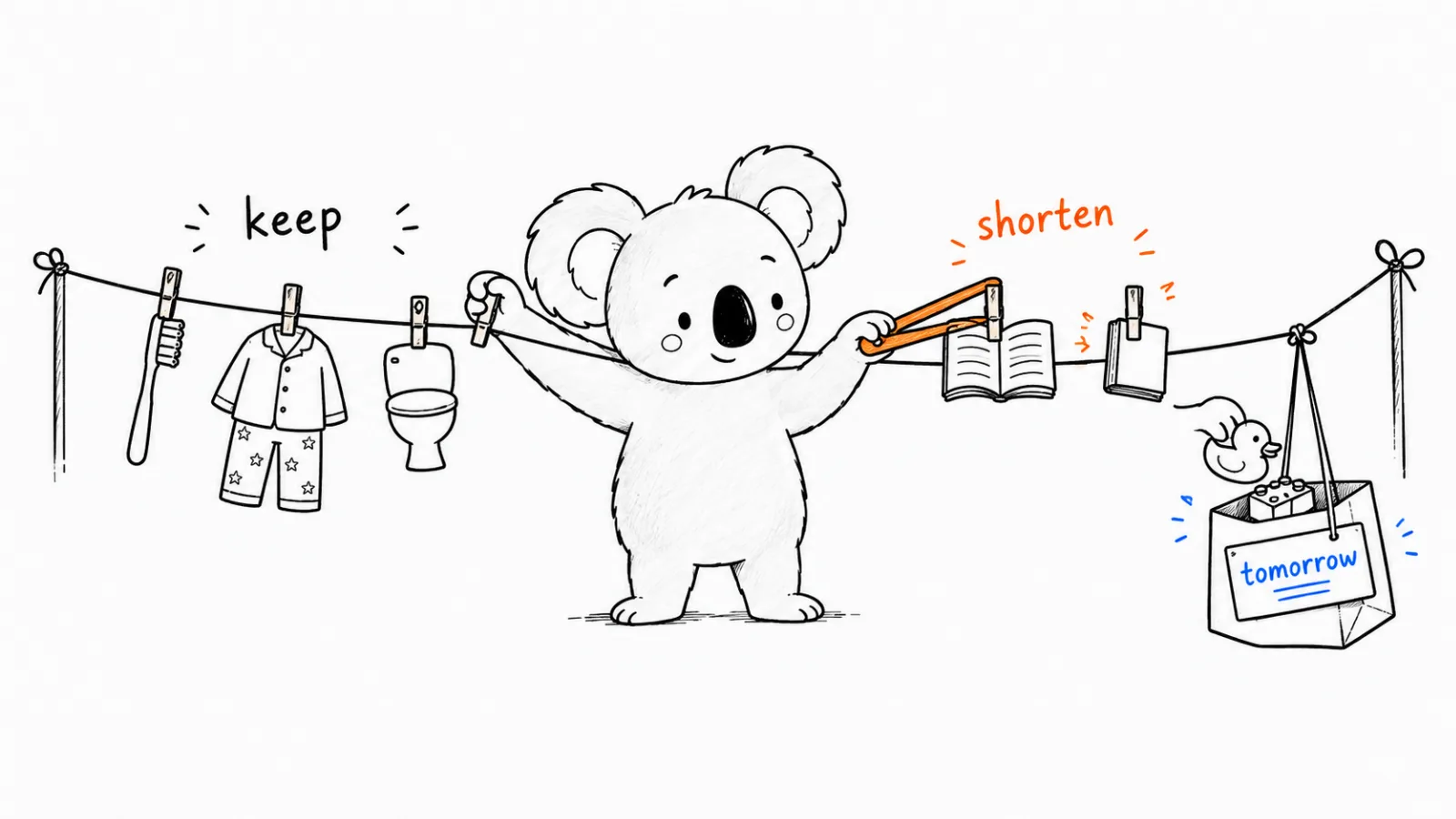
A sample 15-minute routine
The exact timing will vary by age and family circumstances, but a compressed routine might look like this:
- ●Minutes 0–3: Clear the table, use the toilet, and move to the bedroom or bathroom.
- ●Minutes 3–7: Brush teeth, wash face if needed, and put on sleepwear.
- ●Minutes 7–12: Read one short story or listen to one brief calming story.
- ●Minutes 12–15: Cuddle, say goodnight, and turn out the light.
Treat this as a flexible sequence rather than a stopwatch. The purpose is to remove unnecessary gaps, not to pressure a child through each step.
Helpful language for common delays
| Situation | Calm response |
|---|---|
| “I want another story.” | “I know. Tonight is a one-story night. We can read another tomorrow.” |
| “I’m not tired.” | “You do not have to make yourself sleep. It is time to rest quietly in bed.” |
| “I need to play.” | “Playtime is finished for tonight. You may choose which toy waits beside the bed.” |
| “Why is bedtime shorter?” | “Dinner finished later, so we are using our short routine. The usual routine will return tomorrow.” |
| Repeated requests after lights out | “We have finished the bedtime steps. You are safe, and it is time to rest.” |
6. Plan for Comfort Without Making Food Claims
Parents sometimes wonder whether a particular evening food will help a child sleep. This article does not recommend foods as sleep aids. Sleep is influenced by many factors, and it is not appropriate to promise that one food or drink will produce a particular sleep outcome.
The more practical issue after a late dinner is comfort. Encourage ordinary, calm eating rather than turning the meal into another source of conflict. Avoid forcing a child to finish a large serving because the hour is late. Follow the family’s usual approach to portions, allergies, medical needs, and professional advice.
If a child says they feel overly full or uncomfortable, keep the transition gentle. Avoid immediately introducing vigorous play. If discomfort is frequent, severe, or associated with symptoms such as persistent pain, vomiting, difficulty swallowing, breathing concerns, or poor growth, seek advice from a qualified health professional.
When late dinners happen regularly
An occasional short-routine night is different from a schedule in which dinner repeatedly collides with bedtime. If the pattern is frequent, review the evening structure:
- ●Can part of dinner preparation happen earlier?
- ●Can the child eat at a different time from adults on certain nights?
- ●Can after-school activities be adjusted?
- ●Can the full bath move to another part of the day?
- ●Can bags, clothes, and other preparations be completed earlier?
- ●Does the expected bedtime still fit the child’s age, school schedule, and actual sleep needs?
Families do not need identical schedules. What matters is whether the routine is workable, sufficiently consistent, and supportive of the child’s overall wellbeing.
Persistent difficulty settling, frequent waking, loud snoring, breathing pauses, unusual daytime sleepiness, or ongoing distress around sleep warrants discussion with a GP, paediatrician, child and family health nurse, or another qualified professional.
7. FAQ
What should I skip when my child eats dinner late?
Skip or shorten optional activities such as a full bath, active play, multiple stories, and lengthy preparation for the next day. Keep essential care, including toileting or nappy care, toothbrushing, sleepwear, and a brief period of calm connection.
Should my child go to bed immediately after a late dinner?
There is no single interval that suits every child and situation. Focus on a quiet, low-stimulation transition rather than rushing directly from the table to lights out. If your child regularly experiences discomfort after evening meals or has a medical condition that affects eating or sleep, ask a qualified health professional for individual guidance.
How can I shorten bedtime without causing a tantrum?
Give advance notice, preserve the usual order of events, and offer limited choices within firm boundaries. Acknowledge disappointment without extending the routine: “You wanted two stories. Tonight we have time for one, and you can choose which one.”
Will one late dinner ruin my child’s sleep routine?
An occasional disruption does not mean the family routine has failed. Use a shortened version of the familiar bedtime sequence and return to the usual schedule the next day. If late meals or sleep difficulties become an ongoing pattern, review the schedule and seek professional guidance when concerns persist.
8. Conclusion
The most effective approach to late dinner bedtime kids routines is simple: preserve the structure, reduce the extras, and keep your tone calm. Essential care stays. Optional activities become shorter or move to another day. One reliable moment of connection helps bedtime remain reassuring even when the schedule changes.
A late evening does not need to become a battle or an elaborate recovery exercise. Name the plan, move through one step at a time, and return to the normal routine when circumstances allow. Consistency does not mean every night must look identical; it means children can still recognise the path from evening activity to safe, settled rest.
Ready for calmer bedtimes?
Try Gula Stories free — 5 narrated bedtime stories, ad-free, for children ages 3-8.