
Kids’ Bedtime Stories About Emotions: Naming Every Feeling
Emotion-focused bedtime stories help children connect internal sensations, facial expressions, thoughts, and actions wit
Key Takeaways
- ●Emotion-focused bedtime stories help children connect internal sensations, facial expressions, thoughts, and actions with useful feeling words.
- ●Stories work best when adults treat them as conversation starters, not tests or lectures.
- ●For siblings, shared stories can build empathy while also showing that two children may experience the same event differently.
- ●Choose emotionally safe stories with recognizable situations, manageable conflict, and a reassuring ending.
- ●Short, specific questions such as “What might she be feeling?” are usually more useful than asking children to explain an entire moral.
1. Introduction
Children often feel an emotion before they know what to call it. A tight stomach may be worry, a hot face may be embarrassment, and an urge to grab a toy may contain jealousy, frustration, or fear of being left out. Without precise language, these different experiences can all appear as “mad,” “sad,” or “bad.”
Bedtime offers a useful setting for expanding that language. The day is slowing down, immediate conflicts have usually passed, and a fictional character creates enough distance to discuss difficult feelings without putting a child on trial. A story about a fox who resents a new cub, for example, can open a safer conversation than directly asking an older child why they were unkind to the baby.
This is especially valuable when choosing bedtime stories for siblings. Children who share a household may encounter rivalry, comparison, unequal abilities, changing attention from caregivers, and disagreements about possessions or personal space. A well-chosen story can help them understand that conflicting feelings are normal, feelings are not the same as actions, and another person’s perspective may be different without being wrong.
This guide explains how emotion stories support children, which feelings deserve attention, how to read these stories with siblings, and how to select books that encourage honest conversation without turning bedtime into a lesson.
2. Why Naming Feelings Matters
The central purpose of an emotion story is not to eliminate uncomfortable feelings. It is to help a child notice, name, and respond to them.
A richer emotional vocabulary gives children more precise ways to describe experience. “I’m angry” may become “I’m disappointed because I expected a turn,” or “I’m jealous because you were playing without me.” That distinction matters because different feelings call for different responses. Disappointment may need comfort and a new plan; jealousy may need reassurance and connection; frustration may need a pause or practical help.
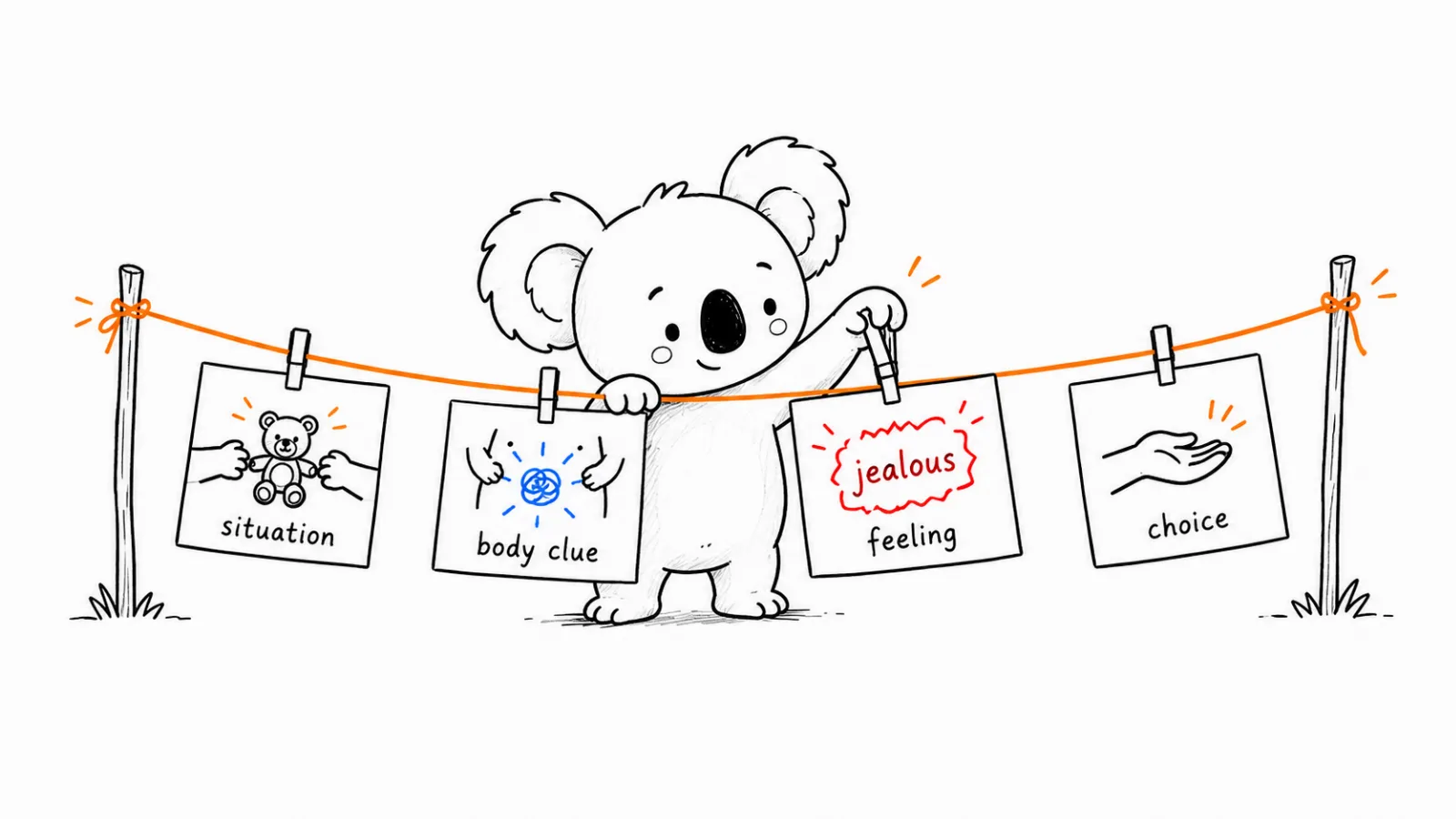
Stories support this process through four linked elements:
- ●Situation: Something happens to a character.
- ●Body signal: The character notices a physical response.
- ●Emotion word: The feeling is named or inferred.
- ●Choice: The character acts, reflects, repairs, or asks for help.
Consider a story in which one sibling performs in a school play while another sits in the audience. The watching child may feel proud and jealous at the same time. If the story acknowledges both emotions, children learn an important principle: people can experience several feelings together.
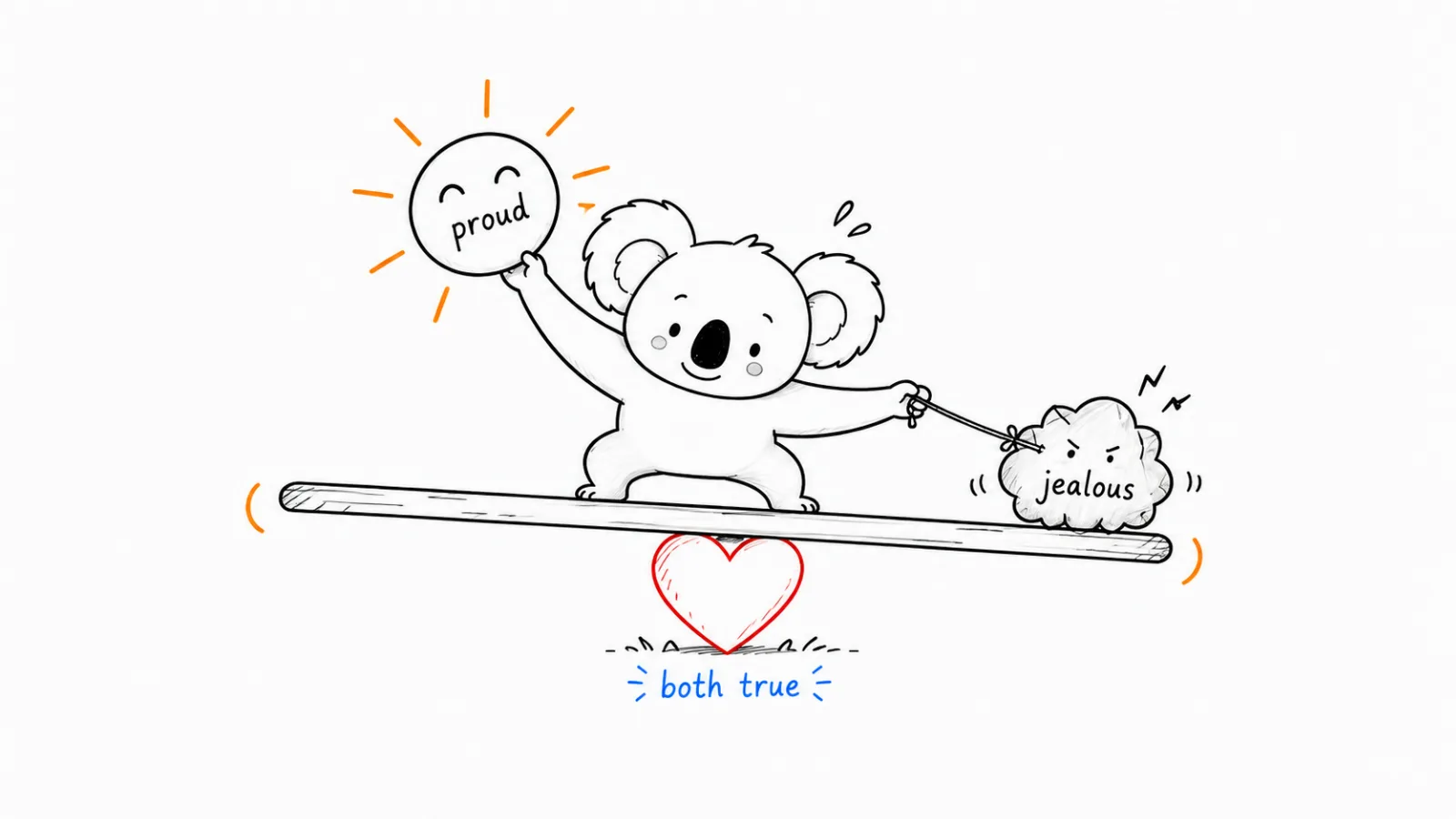
Adults can reinforce that lesson with simple observations:
- ●“His hands are clenched. What could that tell us?”
- ●“She says she is fine, but she has moved away from everyone.”
- ●“He loves his sister and still wishes he had received attention too.”
- ●“The feeling is allowed. What he does next still matters.”
This language separates identity from emotion. A child is not “a jealous person”; the child is experiencing jealousy. Likewise, feeling angry does not make someone cruel. It signals that something feels unfair, threatening, blocked, or painful. The child remains responsible for choosing a safe response.
A practical boundary
Story conversations should not pressure children to disclose personal experiences. A child may want to talk only about the character, particularly after a difficult day. That indirect conversation still has value. Emotional learning can happen without requiring a confession or immediate comparison to real family conflict.
3. Which Emotions Should Bedtime Stories Explore?
Books about happiness, sadness, anger, and fear provide a useful foundation, but children also benefit from more specific emotional distinctions. Many sibling conflicts become easier to understand when adults move beyond broad labels.
| Feeling | Common story situation | Possible body or behavior clues | Helpful response to model |
|---|---|---|---|
| Frustration | A task or game does not go as planned | Tense muscles, repeated attempts, shouting | Pause, ask for help, try a smaller step |
| Jealousy | A sibling receives praise, attention, or a privilege | Withdrawal, criticism, attention-seeking | Name the wish underneath the feeling |
| Embarrassment | A mistake happens in front of others | Hiding, silence, nervous laughter | Offer privacy, reassurance, and perspective |
| Disappointment | An expected event is canceled or lost | Tears, slumped posture, irritability | Acknowledge the loss before making a new plan |
| Loneliness | A character feels excluded | Quietness, watching from a distance | Seek connection or invite someone to join |
| Guilt | A character realizes an action caused harm | Avoidance, worry, attempts to hide evidence | Admit the action, repair harm, and try again |
| Pride | A character completes something difficult | Smiling, energetic speech, wanting to share | Celebrate effort without comparing children |
| Worry | A character anticipates an uncertain event | Stomach discomfort, repeated questions | Gather information and identify available support |
| Relief | A feared outcome does not happen | Relaxed body, laughter, deep breath | Notice how the body changes when tension passes |
| Mixed feelings | A move, new baby, celebration, or goodbye | Rapid changes in mood or contradictory statements | Accept that two feelings can coexist |
The goal is not to introduce every term in one night. One or two useful words are enough. Repetition across different stories helps children understand that an emotion can appear in many situations and with different levels of intensity.
Use intensity words carefully
Children can also learn that emotions vary in strength. A character may be:
- ●uneasy, worried, or terrified;
- ●annoyed, frustrated, or furious;
- ●content, cheerful, or delighted;
- ●disappointed, sad, or heartbroken.
These distinctions help children communicate before an emotion becomes overwhelming. However, adults should not correct a child’s label too quickly. If a child says a character is “angry,” an adult might respond, “Angry makes sense. I wonder whether he is also embarrassed.” This expands the interpretation without replacing the child’s view.
Include pleasant and uncomfortable emotions
An emotional education focused only on distress can make feelings seem like problems to solve. Stories should also explore curiosity, affection, gratitude, anticipation, calm, pride, amusement, and relief. Positive emotions deserve names, and they can be complicated too. A child may feel excited about a sleepover while also missing home.
4. How to Read Emotion Stories With Siblings
Shared reading can encourage empathy, but it can also produce comparison. One child may answer quickly while another prefers to listen. One may identify with the rule-following character and another with the impulsive one. The adult’s task is to make room for multiple interpretations.
Before reading: create a low-pressure invitation
Introduce the story briefly rather than announcing an emotional lesson. For example:
“This story is about two siblings who both want the same special object. Let’s see what each of them does.”
That framing directs attention to the situation without implying that the book was chosen because of a recent argument.
If siblings are already dysregulated, select a familiar, calming story instead of a highly activating conflict. Bedtime is not always the right moment to revisit a serious incident. Safety, sleep, and connection may need to come first.
During reading: pause selectively
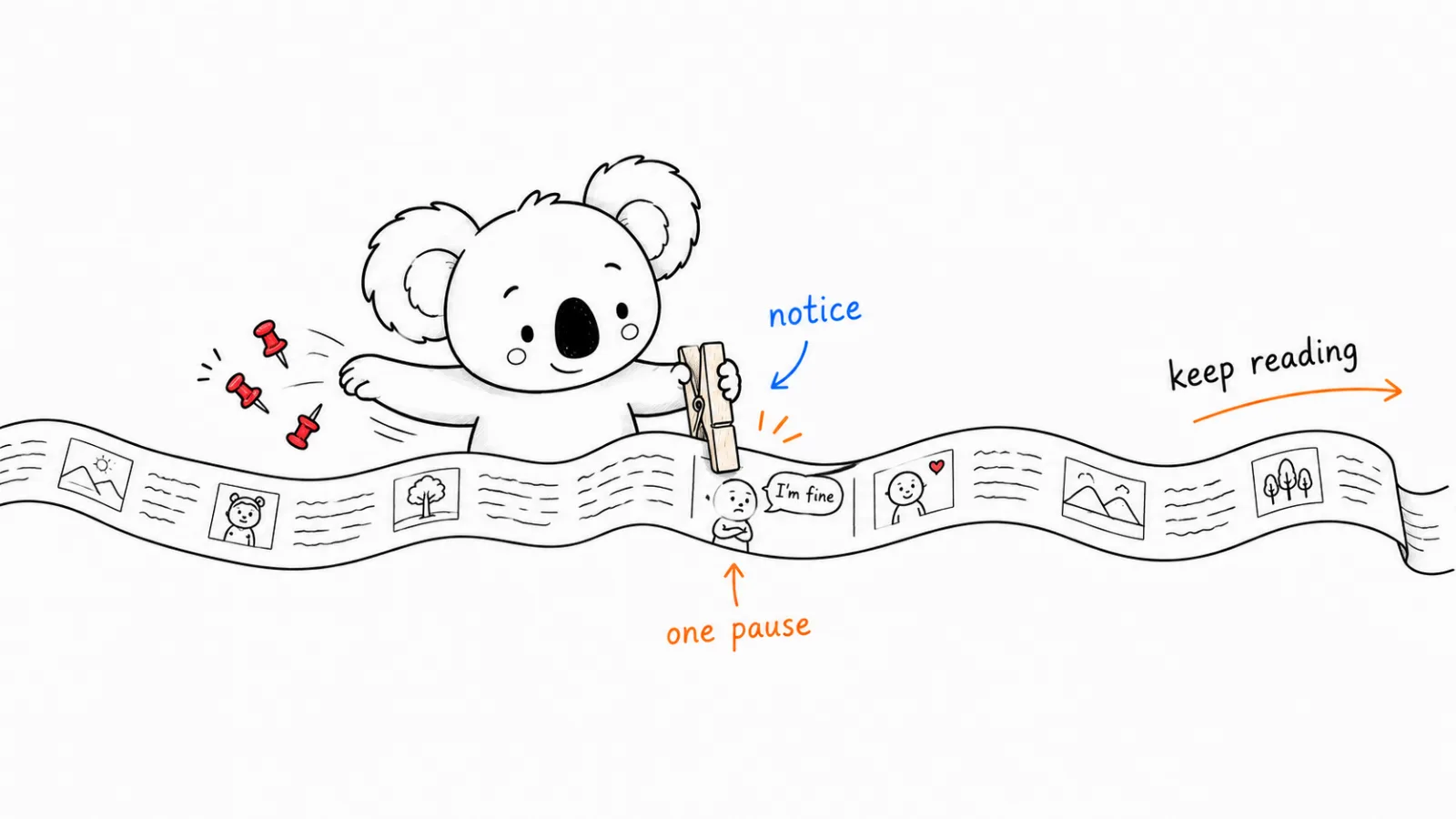
Frequent interruptions can weaken the story and make the discussion feel like a quiz. Pause only at a few useful moments:
- ●when a character’s expression conflicts with their words;
- ●when two characters interpret the same event differently;
- ●just before an important choice;
- ●after an attempt to repair harm.
Useful prompts include:
- ●“What do you notice?”
- ●“What might this feeling be called?”
- ●“Could the other character see it differently?”
- ●“What does the character need right now?”
- ●“Which choices would be safe and fair?”
Accept more than one plausible answer. Fictional scenes often support several interpretations, and recognizing ambiguity is part of emotional understanding.
After reading: connect gently
Instead of asking, “What was the lesson?” try one focused question:
- ●“Which character did you understand most?”
- ●“Did anyone’s feeling change during the story?”
- ●“What helped the problem become smaller?”
- ●“Was the ending fair to both siblings?”
When appropriate, connect the story to family life without assigning roles. Say, “Sometimes people in our family want the same thing too,” rather than, “You behave exactly like the selfish character.”
Protect each child’s dignity
Avoid using the story to publicly correct one sibling in front of another. Statements such as “This is what you should have done earlier” can turn a shared story into a disguised reprimand. They may also invite one child to judge the other.
If a specific behavior needs correction, address it separately and clearly. The story can provide language for the discussion, but it should not carry the full burden of discipline.
5. Choosing and Using Bedtime Stories for Siblings
The most useful bedtime stories for siblings do more than show a conflict followed by an apology. They help readers understand what led to the conflict, how each child experienced it, and what repair actually required.
A practical selection checklist
Look for stories that offer most of the following:
- ●Recognizable stakes: The conflict involves attention, turns, privacy, competence, fairness, change, or belonging.
- ●More than one perspective: Each sibling has understandable feelings or needs.
- ●Specific emotion language: The story names feelings or provides enough clues to infer them.
- ●A distinction between feeling and action: Anger or jealousy is accepted, while harmful behavior still has consequences.
- ●Realistic repair: Characters listen, apologize specifically, replace or fix something, change a plan, or rebuild trust over time.
- ●A regulated ending: The conclusion provides enough emotional safety for sleep.
- ●Age-appropriate complexity: The plot and language match the children’s comprehension and attention.
- ●No fixed family labels: One sibling is not permanently cast as “the good one,” “the difficult one,” or “the baby.”
Match the story to the moment
| Family situation | Story features to prioritize | Reading approach |
|---|---|---|
| Frequent competition | Separate strengths and non-comparative praise | Notice how each character contributes differently |
| A new baby | Love, loss of attention, uncertainty, and gradual adjustment | Validate affection and resentment without shame |
| Sharing a room | Boundaries, privacy, noise, and compromise | Discuss concrete agreements, not forced closeness |
| Different ages or abilities | Fairness versus sameness | Ask why equal treatment is not always identical treatment |
| Recent argument | Accountability and repair | Read after children are calm; avoid assigning character roles |
| One child is absent | Independent identity and missing someone | Allow the present child to discuss their own experience |
| Blended-family adjustment | Belonging, loyalty, unfamiliar routines | Avoid promising instant attachment or harmony |
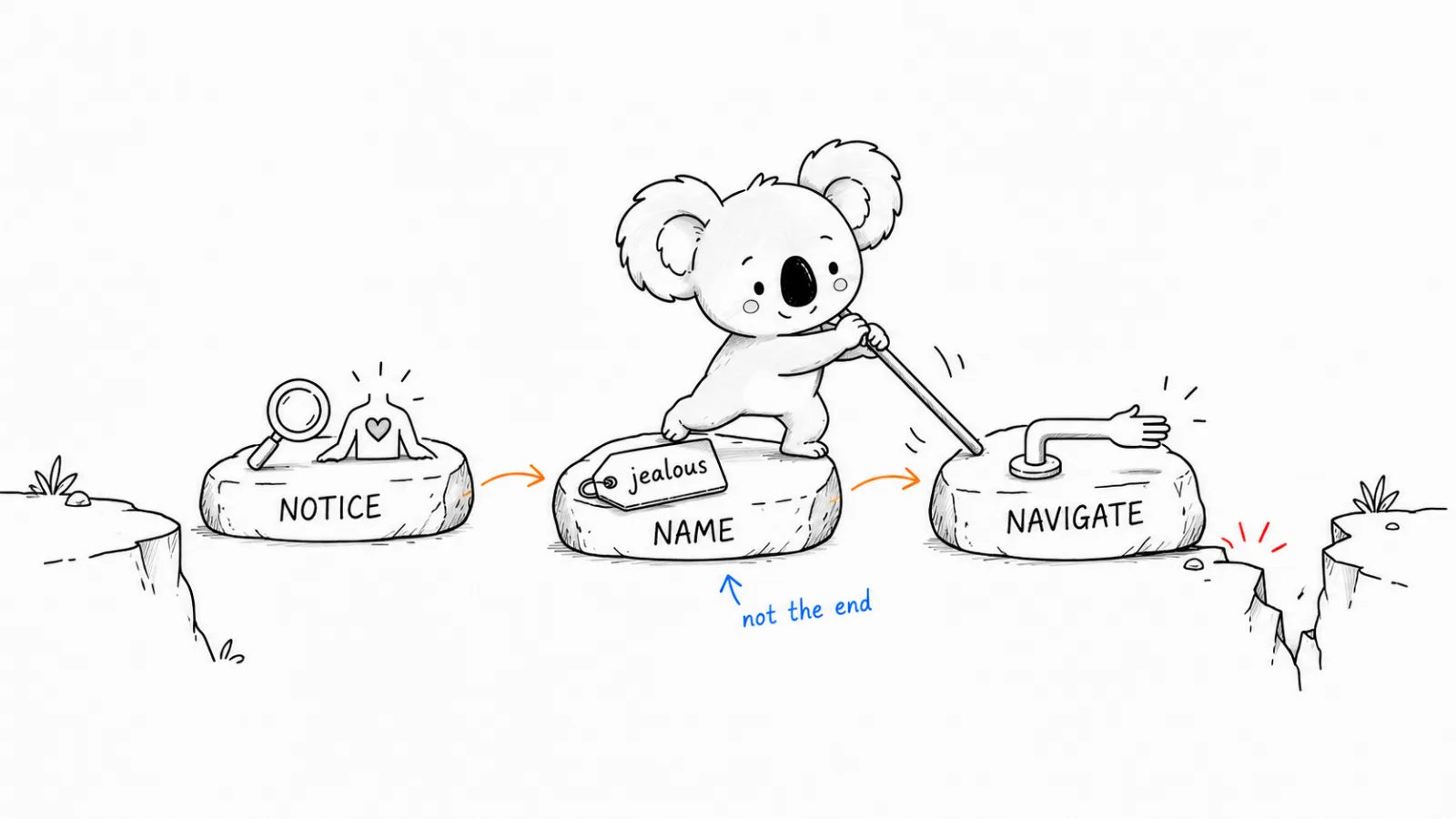
Use a simple three-step method
A repeatable method makes emotion stories easier to use without overcomplicating bedtime:
- ●Notice: Identify what happened and what clues appear in the character’s body, words, or behavior.
- ●Name: Suggest one or more emotions, including mixed feelings when appropriate.
- ●Navigate: Consider what the character needs and which next action would be safe, respectful, and realistic.
For example:
“Maya hears her brother being praised and stops showing her drawing. I notice she looks down and becomes quiet. She may feel disappointed, jealous, or overlooked. She could ask a parent for time to share her work, and the parent could acknowledge both children without comparing them.”
The method avoids two common mistakes: treating feelings as misconduct and treating a feeling label as the end of the conversation. Naming is useful because it supports the next step.
Keep expectations realistic
A single story is unlikely to change a persistent behavior. Children learn through repeated language, adult modeling, predictable boundaries, and opportunities to repair mistakes. Stories contribute to that process; they do not replace it.
If a child regularly experiences intense distress, aggression, sleep disruption, or anxiety that affects daily life, books may offer comfort but should not be treated as the only support. Caregivers may need guidance from an appropriately qualified health or education professional.
6. FAQ
What age should children begin reading stories about emotions?
Emotion language can begin with toddlers through simple picture books that connect facial expressions, situations, and basic words such as happy, sad, angry, and scared. Older children can explore mixed emotions, social consequences, conflicting perspectives, and repair. The better guide is not age alone but the child’s language, attention, sensitivity, and current experiences.
Should parents explain the meaning of every emotion in a story?
No. Too much explanation can interrupt engagement and make reading feel instructional. Choose one or two important emotional moments, offer a short observation, and allow the story to continue. Children may also understand more than they can immediately explain.
What if siblings disagree about how a character feels?
Treat disagreement as an opportunity to examine evidence. Ask each child what they noticed in the character’s words, face, posture, or actions. Both interpretations may be reasonable. The aim is not always to find one correct label but to practice perspective-taking and careful observation.
Should a bedtime story address a conflict that happened that day?
It can, provided the children are calm and the book does not become a tool for blame. If emotions remain intense, choose a comforting story and return to the conflict later. A direct, private conversation may be more appropriate when one child needs accountability or reassurance.
7. Conclusion
Kids’ bedtime stories about emotions are most effective when they help children do three things: notice emotional clues, name feelings with increasing precision, and choose constructive responses. The story supplies a safe practice space in which jealousy, embarrassment, disappointment, pride, worry, affection, and mixed feelings can all be discussed without defining a child’s character.
For families reading bedtime stories for siblings, the strongest books recognize that children can share an event without sharing the same experience. They present more than one credible perspective, distinguish feelings from behavior, and show repair as a process rather than a magical apology.
Caregivers do not need to turn every bedtime into a detailed discussion. A warm reading routine, one thoughtful question, and a few accurate feeling words can be enough. Repeated over time, those small conversations can give siblings a clearer language for understanding themselves, recognizing each other’s needs, and navigating conflict with greater care.
Ready for calmer bedtimes?
Try Gula Stories free — 5 narrated bedtime stories, ad-free, for children ages 3-8.