
How Bedtime Stories Build Vocabulary
Repeated bedtime stories help children learn what words mean, how they sound, and how they fit into sentences. Hearing t
Key Takeaways
- ●Repeated bedtime stories help children learn what words mean, how they sound, and how they fit into sentences.
- ●Hearing the same book several times is valuable because familiarity gives children more opportunities to notice, remember, and use new words.
- ●Brief conversations, simple explanations, pictures, gestures, and links to everyday life can deepen word learning without making bedtime feel like a lesson.
- ●Parents do not need to test every new word. Calm, responsive reading is usually more useful than frequent correction or questioning.
- ●The most effective routine is consistent, enjoyable, and suited to the child’s age, interests, language level, and attention span.
1. Introduction
Many parents want to support their child’s language skills but are unsure whether bedtime reading is doing enough. A child may request the same story every night, ignore unfamiliar words, interrupt constantly, or appear to remember the plot without using any of the book’s vocabulary.
These are not necessarily signs that story time has stopped being useful. Repetition is one of the main ways young children become familiar with language. A word that is confusing on the first reading may become clearer after a child hears it in the same sentence, sees the matching illustration, and connects it with something in everyday life.
Bedtime stories can contribute to vocabulary development in kids because books offer words and sentence patterns that may not appear often in ordinary conversation. The routine also provides a shared context: an adult, a child, a sequence of events, and pictures or narration that make meaning easier to understand.
The goal is not to turn bedtime into a formal vocabulary lesson. It is to create repeated, meaningful encounters with words while protecting the calm connection that makes children want to return to stories.
2. Why Repeated Stories Help Words Stick
The core benefit of repetition is simple: children rarely master a new word after hearing it once.
Learning a word involves several kinds of knowledge. A child gradually learns:
- ●How the word sounds
- ●What it refers to
- ●How its meaning changes with context
- ●Where it belongs in a sentence
- ●How to pronounce or use it independently
- ●How it relates to words they already know
A single reading may provide only a first encounter. During the second or third reading, the child already understands more of the characters and plot. That familiarity frees attention for smaller details, including unfamiliar words.
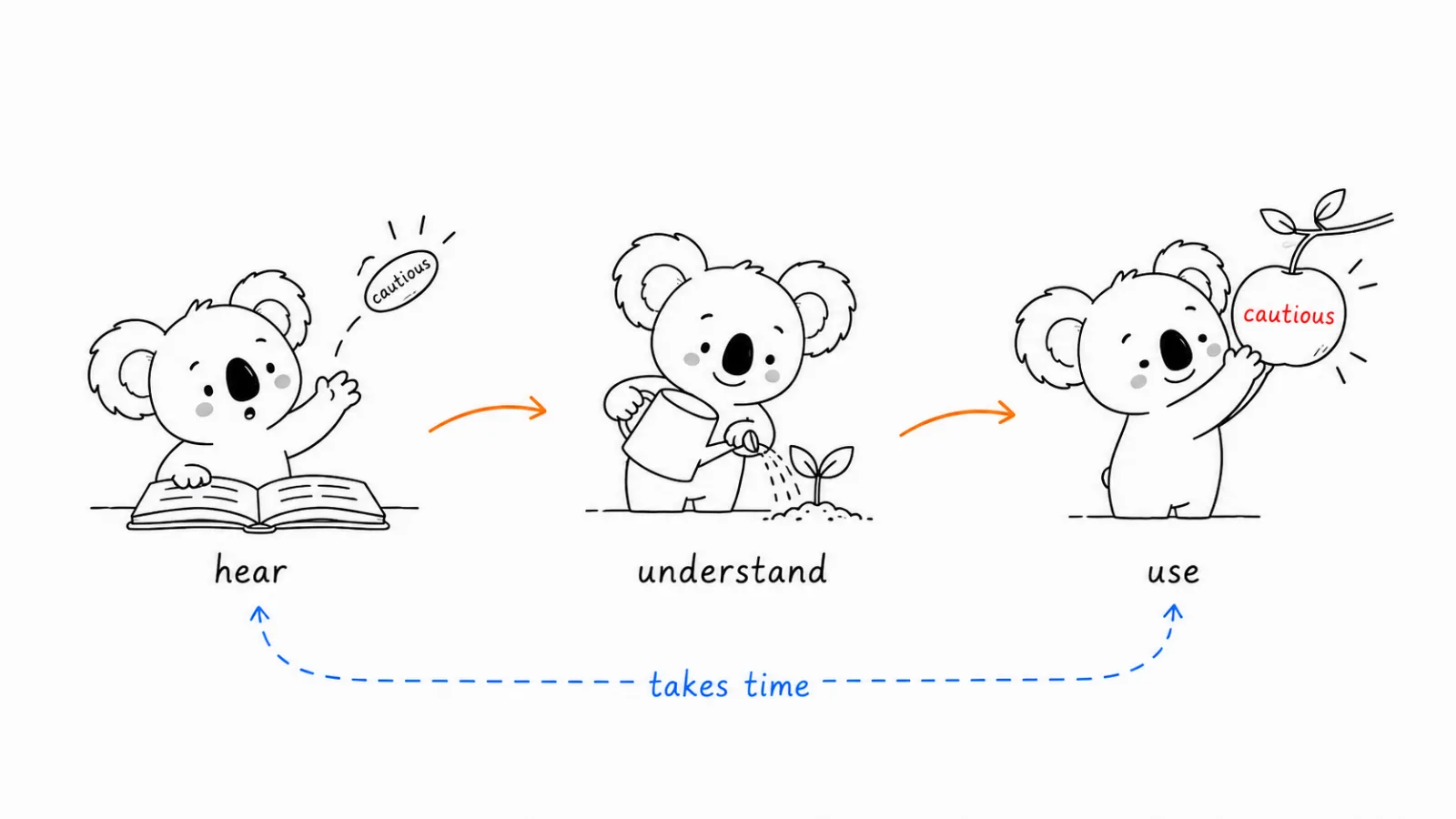
Consider the sentence, “The rabbit cautiously approached the gate.” On the first night, a child may focus on whether the rabbit will enter. On a later night, the parent might explain that “cautiously” means moving carefully because the rabbit is unsure. Another evening, the child may point to the illustration and say, “He’s being cautious.”
That progression—from hearing to understanding and then using—is gradual. Children may understand a word long before they say it themselves.
Repetition also creates predictable language. When children know what comes next, they can join in with a phrase, complete a sentence, or correct a playful mistake made by the reader. These behaviours show active attention to words and story structure.
Practical approach: repeat without becoming rigid
If a child asks for the same book, there is no need to replace it simply because the adult is tired of it. Instead, vary the interaction slightly:
- ●Read the story straight through one night.
- ●Pause briefly at one or two interesting words the next night.
- ●Invite the child to finish a familiar phrase.
- ●Ask what a character might do next.
- ●Connect one word to something that happened during the day.
Keep these additions light. Repetition works partly because it feels safe and familiar; too many questions can interrupt that experience.
3. How Shared Reading Builds Deeper Word Knowledge
Reading aloud exposes children to vocabulary, but shared attention helps them understand it.
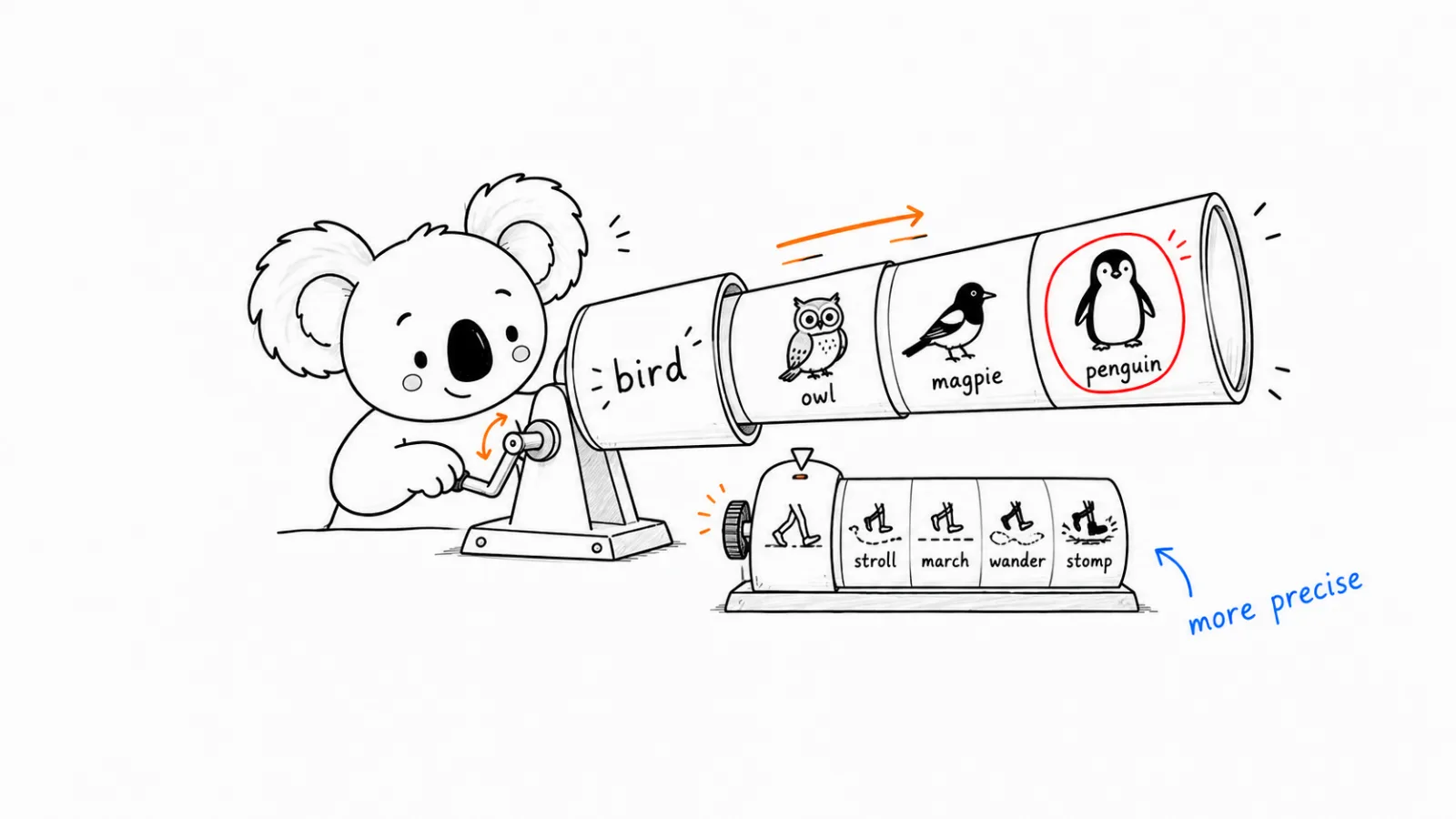
Books often contain more specific language than everyday speech. A family may usually say “bird,” while a story refers to an “owl,” “magpie,” or “penguin.” An adult might say that a child “walked,” while a book describes someone who “strolled,” “marched,” “wandered,” or “stomped.”
These distinctions help children build a more detailed network of meanings. They begin to understand not only individual words, but also relationships between them.
Parents can support this process with short explanations that fit naturally into the story:
“Gloomy means dark or a little sad. The forest looks gloomy because the sun has gone.”
This works better for a young child than a dictionary-style definition. It provides a familiar synonym, points to the context, and keeps the story moving.
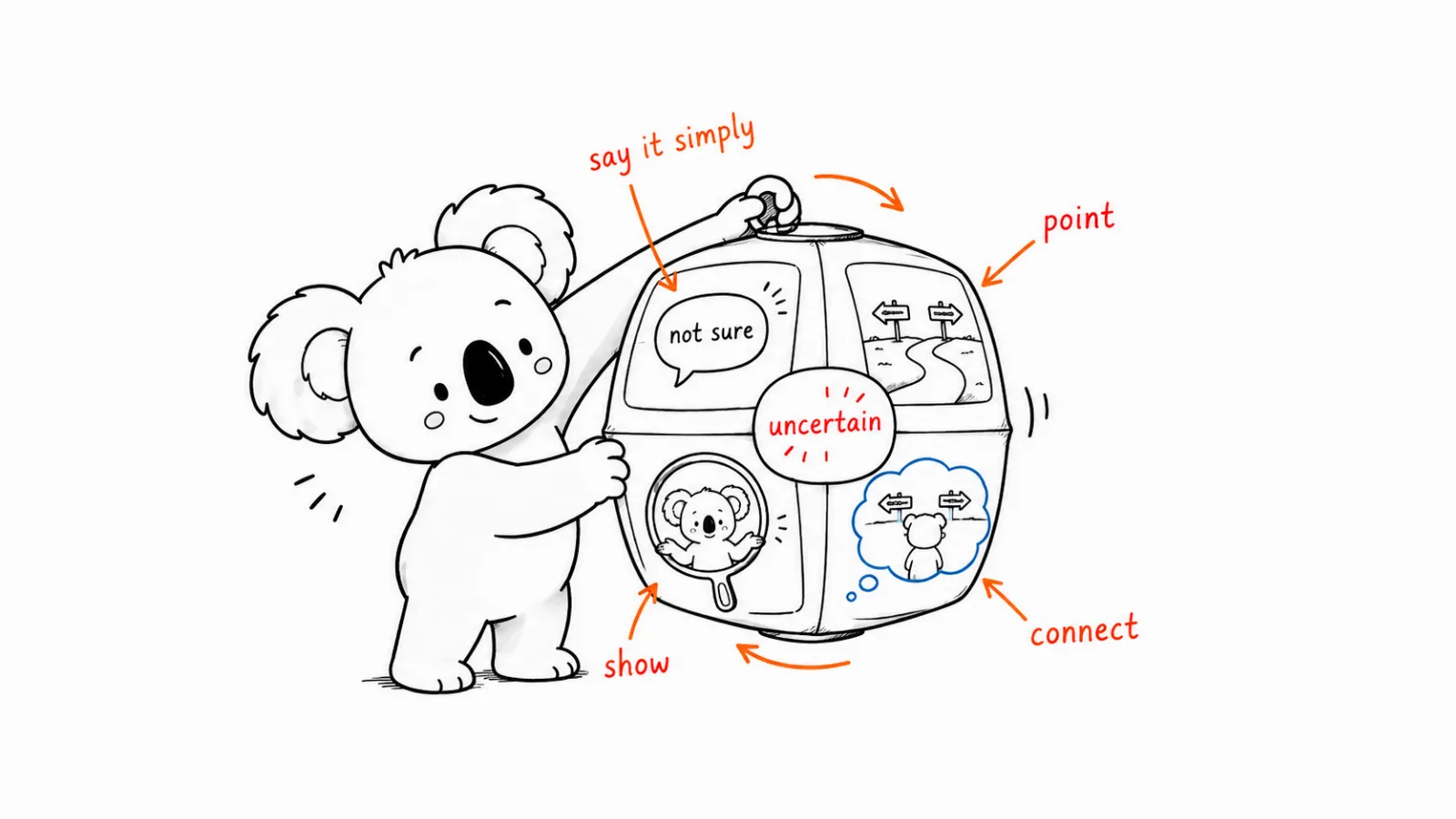
Four simple ways to clarify a word
- ●
Use a familiar synonym.
“Enormous means very big.” - ●
Point to the picture.
“That curved part is the arch.” - ●
Use a gesture or expression.
Shrug to show “uncertain,” or move slowly to demonstrate “crept.” - ●
Connect it to the child’s life.
“You were exhausted after swimming—that means very tired.”
Picture books are especially useful because illustrations give children another route to meaning. However, parents should avoid assuming that the picture explains everything. A child may see a storm without understanding words such as “thunderous,” “shelter,” or “drenched.” A brief comment can make the connection explicit.
Follow the child’s signals
Not every unfamiliar word needs an explanation. Pause when a word is important to the plot, likely to be useful again, or clearly interests the child.
A child may signal curiosity by:
- ●Asking what a word means
- ●Repeating it
- ●Pointing at the corresponding picture
- ●Looking puzzled
- ●Using a similar but less precise word
- ●Returning to the same page
Responding to those signals keeps vocabulary support relevant rather than overwhelming.
4. Simple Ways to Boost Vocabulary at Bedtime
The most useful techniques are brief enough to preserve the rhythm of bedtime.
Choose a small number of words
Select one to three words from a story rather than trying to teach every unfamiliar term. Useful choices include words that:
- ●Matter to the story
- ●Can be explained simply
- ●Relate to the child’s interests
- ●May appear in other books or daily life
- ●Describe feelings, actions, objects, size, position, or texture
For a story about a storm, words such as “shelter,” “rumbled,” and “soaked” may be more useful than a rare technical term that appears only once.
Ask questions that invite conversation
Questions can help children retrieve and apply words, but bedtime should not feel like a quiz.
Compare these approaches:
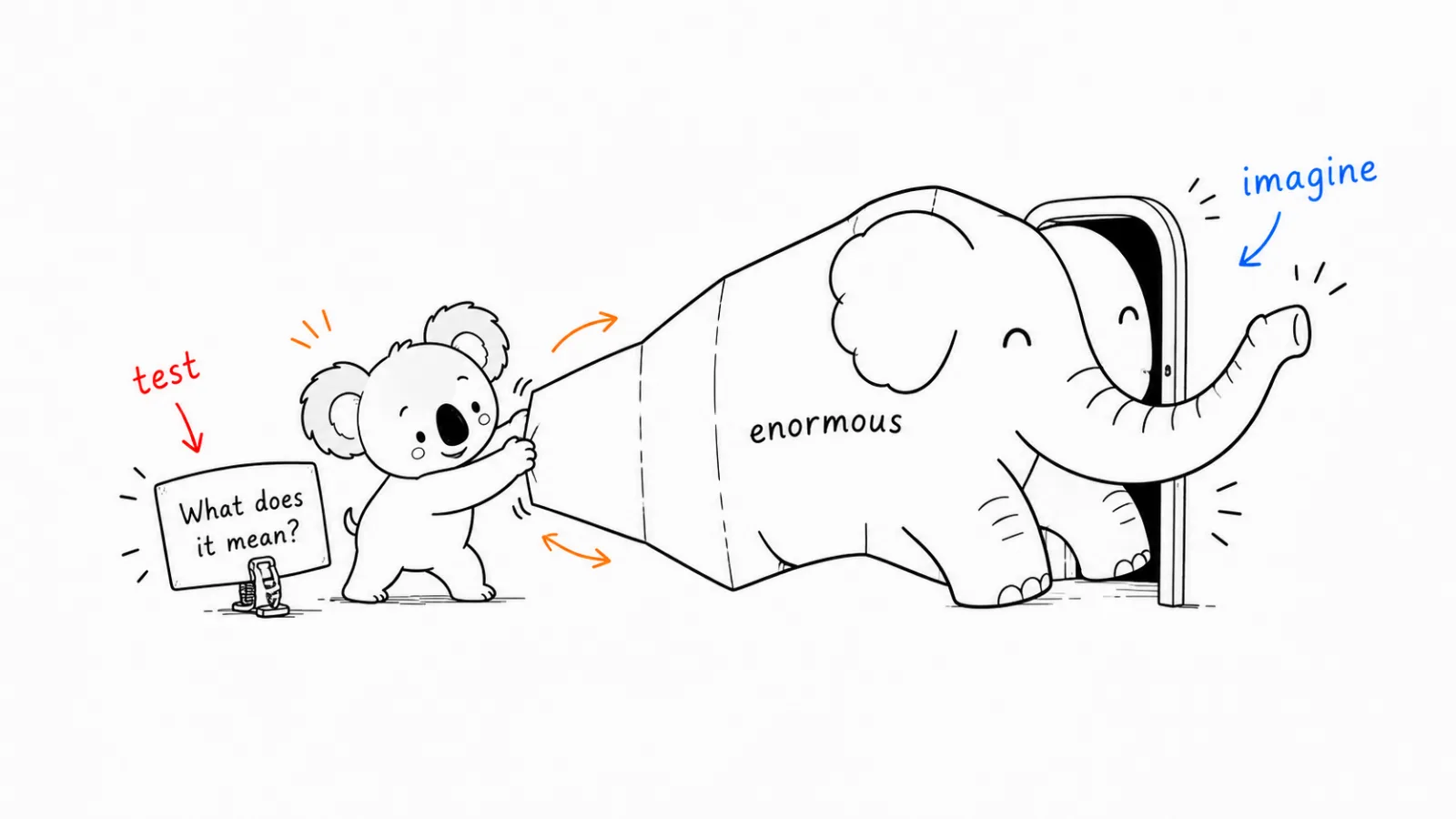
- ●Test-like: “What does enormous mean?”
- ●Conversational: “Which animal in this picture is enormous?”
- ●Imaginative: “How would you fit an enormous elephant through that tiny door?”
Open prompts allow children to show understanding in different ways. A younger child might point, act, or give a one-word answer. An older child may explain, compare, or invent a new sentence.
Expand what the child says
Expansion means repeating the child’s idea with slightly richer language.
Child: “The dog is wet.”
Adult: “Yes, the dog is completely soaked after the rain.”
Child: “She went quietly.”
Adult: “She crept quietly so nobody would hear her.”
This technique models vocabulary and grammar without telling the child that their original sentence was wrong.
Reuse words after story time
A word becomes more useful when it appears in more than one setting. If a story uses “delicate,” a parent might later describe a thin leaf, a glass ornament, or a carefully built block tower as delicate.
The follow-up does not need to be formal. A quick comment the next day can strengthen the link between the story and the real world.
Let children participate in different ways
Participation is not limited to answering questions. Children can:
- ●Turn pages
- ●Point to objects
- ●Copy an action
- ●Make a sound effect
- ●Finish a repeated line
- ●Retell one part using toys
- ●Choose between two descriptive words
- ●Predict what happens next
These activities require different levels of language and can be adapted for children between ages two and eight.
5. A Practical Bedtime Vocabulary Method
A useful routine can be remembered as read, notice, connect, and revisit.
| Step | What the parent does | Example | Why it helps |
|---|---|---|---|
| Read | Share the story with a calm, natural pace | Read the full sentence before stopping | Preserves meaning and enjoyment |
| Notice | Briefly highlight one useful word | “Scampered means ran quickly with little steps.” | Directs attention to sound and meaning |
| Connect | Link the word to a picture, action, or experience | “The squirrel scampered like the one we saw at the park.” | Adds concrete context |
| Revisit | Use the word again later in the story or the next day | “Did the mouse scamper or stroll?” | Supports recall and comparison |
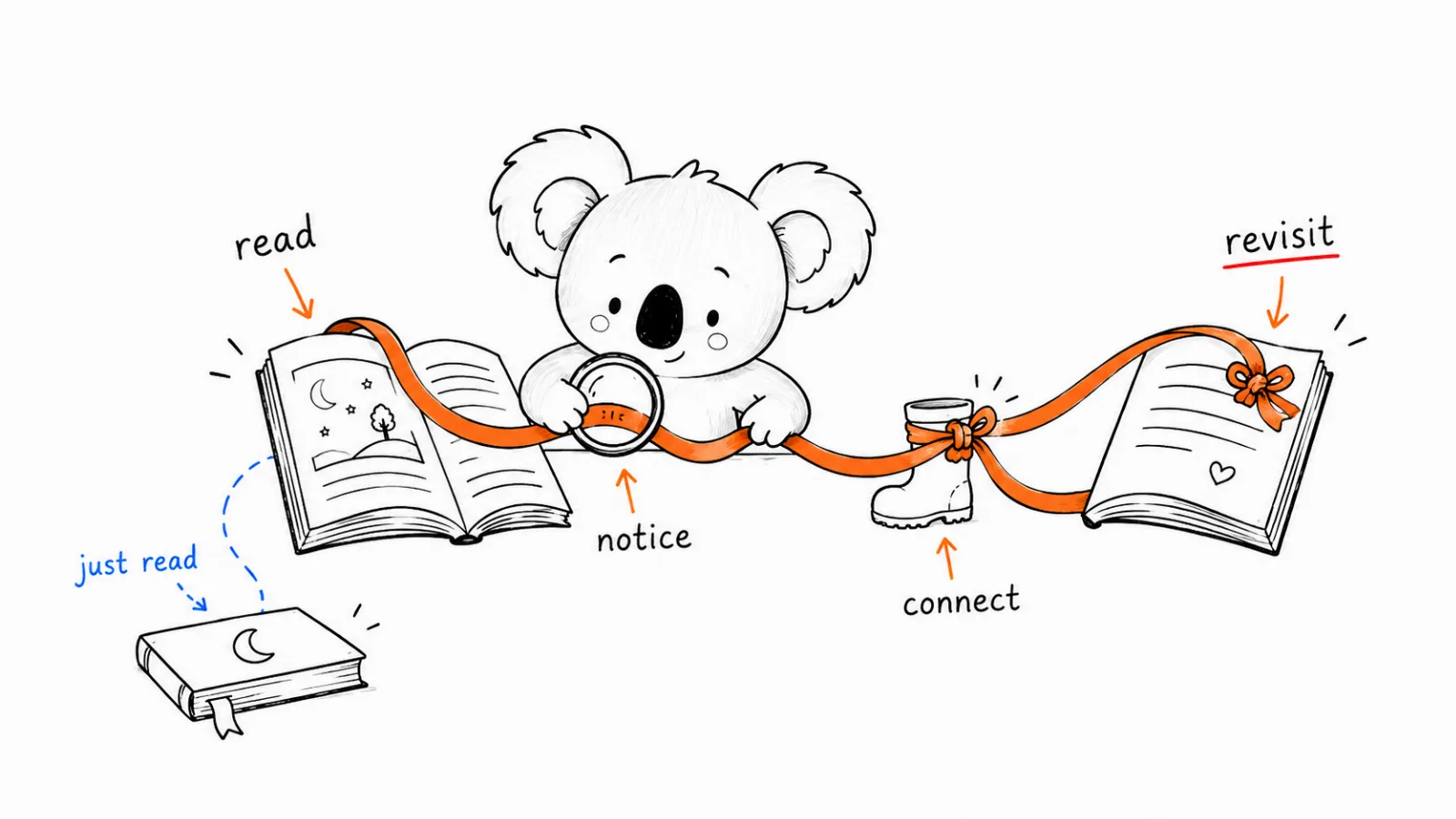
This method should remain flexible. On a tired evening, simply reading the story is enough. Consistency over time matters more than completing every step each night.
Adjust the routine by age
| Approximate age | Helpful approach | What to avoid |
|---|---|---|
| 2-3 years | Name pictures, repeat short phrases, use gestures, and offer simple choices | Long definitions or repeated testing |
| 4-5 years | Explain action and feeling words, invite predictions, and expand the child’s sentences | Correcting every pronunciation or grammar error |
| 6-8 years | Discuss word shades, motives, figurative expressions, and links between books | Turning all reading into comprehension work |
These age ranges are guides rather than rules. Children develop at different rates, and multilingual children may understand a concept in one language before using the English word for it.
Printed books, audiobooks, and story apps
Printed books make it easy to pause, point, revisit illustrations, and follow a child’s interests. Audio stories can model expressive narration and introduce vocabulary when an adult is unavailable to read. However, young children often gain more from audio when an adult occasionally shares the experience and talks about the story with them.
A calm, ad-free app such as Gula Stories may be useful for families who want natural narration, age-appropriate recommendations, or personalised avatars. It can complement shared reading, but it does not need to replace the responsive conversation between a child and caregiver.
Keep expectations realistic
Vocabulary growth is cumulative and uneven. A child might repeat a new word immediately, use it several days later, or appear to forget it before recognising it in another book.
Avoid requiring perfect pronunciation or immediate recall. For children who use more than one language, families can discuss a story in the language that allows the richest interaction. Strong concepts and enjoyable conversation remain valuable even when the book and discussion use different languages.
Recognised child-development resources such as HealthyChildren.org, the NHS, and Raising Children Network encourage reading and talking with children as part of language-rich family life. If a parent has ongoing concerns about a child’s hearing, understanding, speech, or communication, it is sensible to speak with a GP, paediatrician, child health professional, or speech-language professional rather than relying on story time alone.
6. FAQ
How many times should I read the same bedtime story?
There is no required number. Continue while the child remains interested, and return to favourite books when requested. Each reading can offer something different: plot familiarity, new vocabulary, sentence patterns, humour, or emotional reassurance.
If the repetition is difficult for the adult, rotate a small group of familiar books or let the child choose between two options.
Should I explain every word my child does not know?
No. Explaining every unfamiliar word can break the story’s flow and make bedtime tiring. Focus on one to three useful words, respond when the child asks, and use the illustration or sentence to support understanding.
Some words can remain partly understood at first. Repeated encounters will often clarify them.
What if my child will not answer questions about the story?
Listening quietly, pointing, acting, or requesting the same page can all be meaningful forms of participation. Reduce direct questions and try comments instead: “That fox looks startled,” or “I wonder where the path goes.”
Children are more likely to talk when the exchange feels shared rather than tested.
Can bedtime stories help multilingual children learn English vocabulary?
Yes, English stories can provide repeated exposure to words and sentence patterns. Parents can also explain ideas, discuss pictures, or retell parts of the story in another language. This can help the child connect a new English label with a concept they already understand.
Families do not need to abandon their strongest home language. Rich, responsive conversation in any language supports learning and family connection.
7. Conclusion
Bedtime stories support vocabulary development in kids through repeated, meaningful exposure to language. Familiar books allow children to hear words again, notice how they are used, connect them with pictures and experiences, and eventually try them independently.
Parents can strengthen this process without creating a lesson plan. Choose a few useful words, explain them briefly, expand on what the child says, and reuse the language in everyday situations. Let the child point, predict, act, repeat, or simply listen.
The most sustainable routine is not the one with the most questions or the greatest number of new words. It is the one a family can return to calmly—one story, one conversation, and one familiar phrase at a time.
Ready for calmer bedtimes?
Try Gula Stories free — 5 narrated bedtime stories, ad-free, for children ages 3-8.