
Farm Animal Bedtime Stories for Toddlers
The most suitable farm animal stories for toddlers use a simple sequence, familiar animals, repeated phrases, and a calm
Key Takeaways
- ●The most suitable farm animal stories for toddlers use a simple sequence, familiar animals, repeated phrases, and a calm ending.
- ●Choose one small problem—such as finding a missing chick or settling the barn for sleep—rather than a complicated adventure.
- ●Repetition helps young listeners anticipate what comes next and join in without needing to follow a long plot.
- ●Keep the reading experience gentle: use a steady voice, limit noisy sound effects, and finish with every animal safe and settled.
- ●A short story can be repeated across several nights; toddlers often enjoy familiarity more than novelty.
Farm animal bedtime stories for toddlers work best when they are predictable, repetitive, and easy to picture. A good story might visit three animals, repeat the same reassuring line after each encounter, and end with the farm becoming quiet for the night.
The aim is not to teach every animal name or create an exciting adventure. It is to give a young child a simple pattern they can follow while the pace gradually slows.
For how long to read at this age and five calm stories to try, see our guide to bedtime stories for toddlers.
What Makes a Farm Story Toddler-Friendly?
Toddlers are still learning to follow sequences, remember characters, and understand why events happen. A bedtime story should keep those demands light.
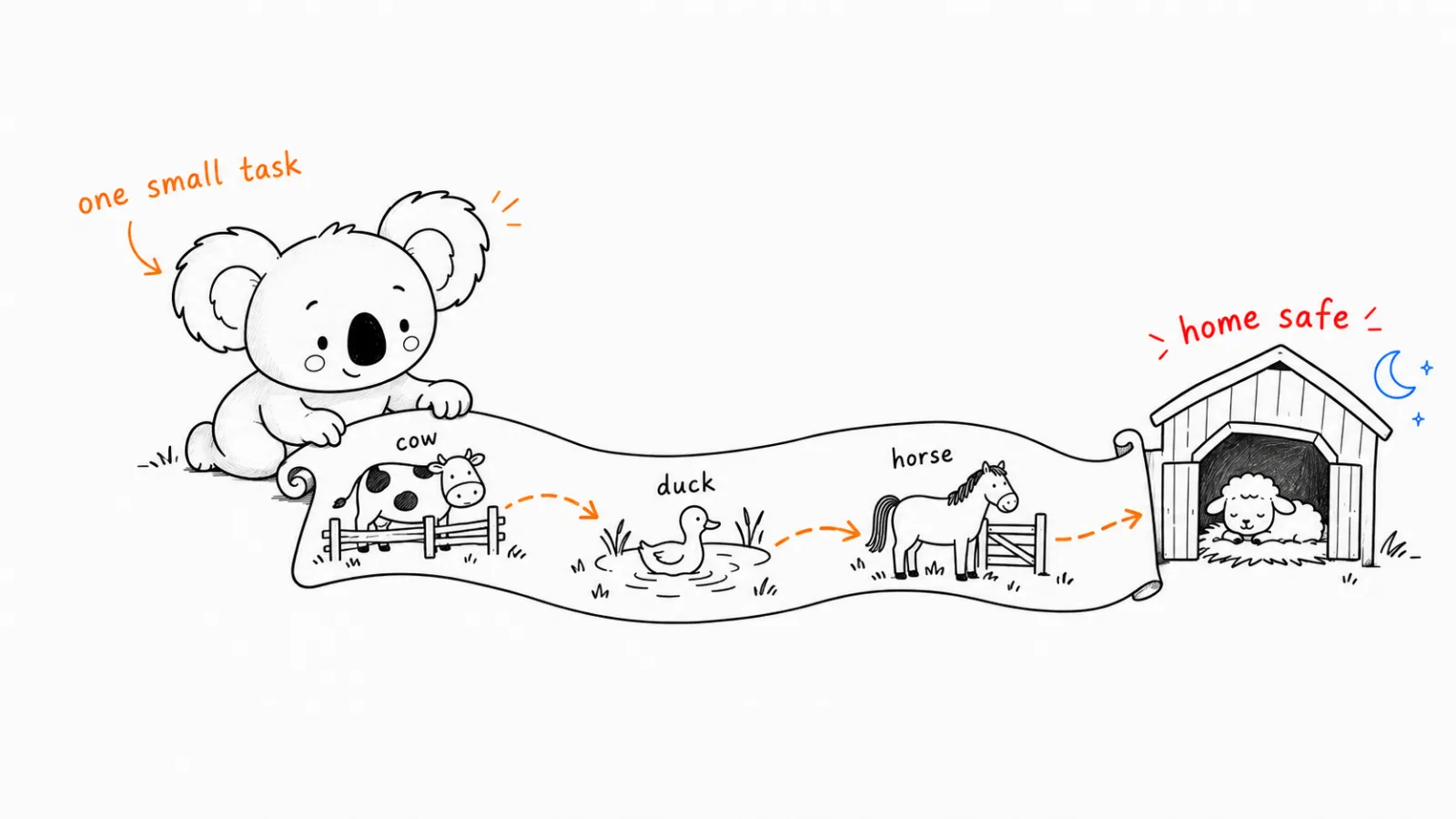
A useful structure is:
- ●Introduce one familiar character.
- ●Give the character one small task.
- ●Visit two or three farm animals.
- ●Repeat the same question or action at each stop.
- ●Solve the task simply.
- ●Say goodnight to the farm.
For example, a little lamb may be looking for the quietest place to sleep. It asks the cow, the duck, and the horse the same question: “Is this where little lambs sleep?” Each animal answers gently before the lamb returns to its mother in the warm barn.
That pattern is easier to follow than a story with several conflicts, changing locations, or a surprise villain. Mild uncertainty is usually enough. A lost mitten, an open gate, a sleepy animal, or a search for home can create interest without making the story tense.
A Scannable Story Checklist
| Story element | Good choice for toddlers | Better to avoid at bedtime |
|---|---|---|
| Cast | One main character and two or three helpers | Many named animals |
| Plot | One clear task or question | Multiple problems and subplots |
| Repetition | A phrase repeated at each stop | Long descriptions that change every time |
| Conflict | A small, quickly resolved difficulty | Threats, chasing, or separation without reassurance |
| Language | Short, concrete sentences | Sarcasm, complex jokes, or abstract lessons |
| Ending | Home, safety, quiet, and sleep | A cliffhanger or a new adventure |
| Sounds | Soft, occasional animal sounds | Loud calls on every page |
Why Repetition Works So Well
Repetition turns listening into participation. After hearing “Goodnight, cow, the moon is high” a few times, a toddler may supply the final word, copy the rhythm, or make the animal sound before the reader does.
This participation does not require the child to understand every sentence. The repeated line acts as an anchor while the animal or location changes:
“The gate is closed, the hay is dry, and everyone is safe nearby.”
A phrase like this can appear after the farmer checks the hens, the sheep, and the pony. Its meaning remains clear, and its rhythm signals that the farm is becoming more settled.
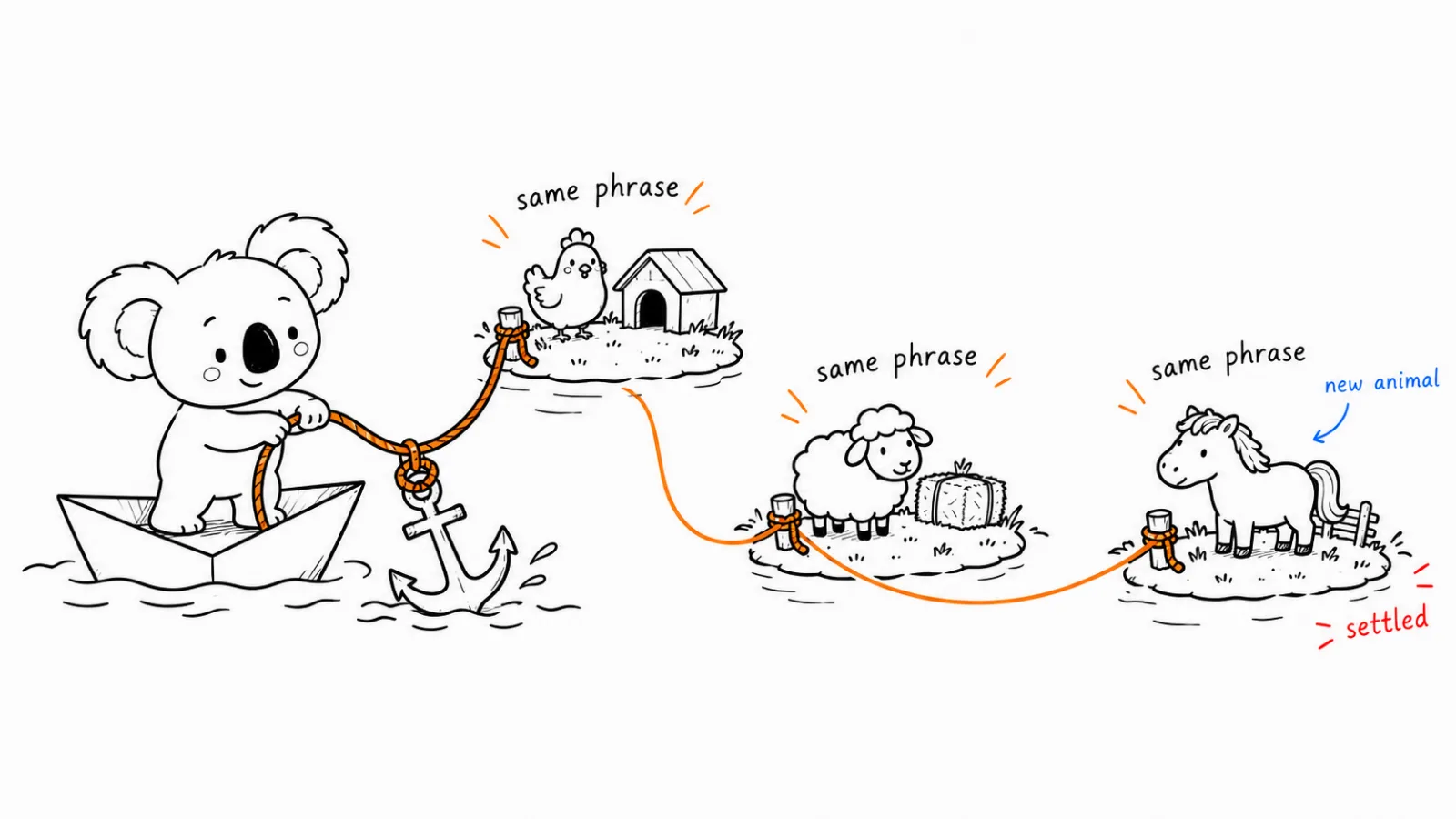
Repetition can occur at several levels:
- ●Words: “Slowly, slowly, home we go.”
- ●Questions: “Are you ready for bed?”
- ●Actions: Each animal washes, stretches, and lies down.
- ●Sequence: Visit the barn, pond, and field in the same order.
- ●Ending ritual: Say goodnight to every character introduced earlier.
Try repeating the core phrase exactly rather than rewriting it each time. Adults may notice the sameness, but young children often find that consistency satisfying.
Simple Farm Story Patterns to Try
You do not need an elaborate script. A dependable pattern and a few familiar details are enough.
1. The Farm Says Goodnight
Move through the farm one location at a time. At each stop, an animal completes a final task and hears the same goodnight phrase.
- ●The hen gathers her chicks.
- ●The pony drinks some water.
- ●The sheep settles into the straw.
- ●The farmer closes the barn door.
Repeated line: “Goodnight, little farm. Rest until the morning.”
This pattern naturally becomes quieter because every action moves toward rest.
2. The Little Duck Finds Home
A duckling visits a small number of places while looking for its sleeping spot.
At each location, ask: “Is this the duckling’s home?” The cow points toward the pond, the horse points past the gate, and the frog welcomes the duckling back to the reeds.
Keep the duckling calm rather than frightened. A reassuring narrator can make it clear from the beginning that home is nearby.
3. Who Made That Gentle Sound?
A sleepy child or animal hears one soft sound at a time:
- ●A quiet “moo” beside the barn
- ●A rustle from the hens
- ●A small splash near the pond
Each sound is identified and followed by the phrase, “Just a farm friend getting ready for bed.” This allows animal recognition without turning the story into a noisy guessing game.
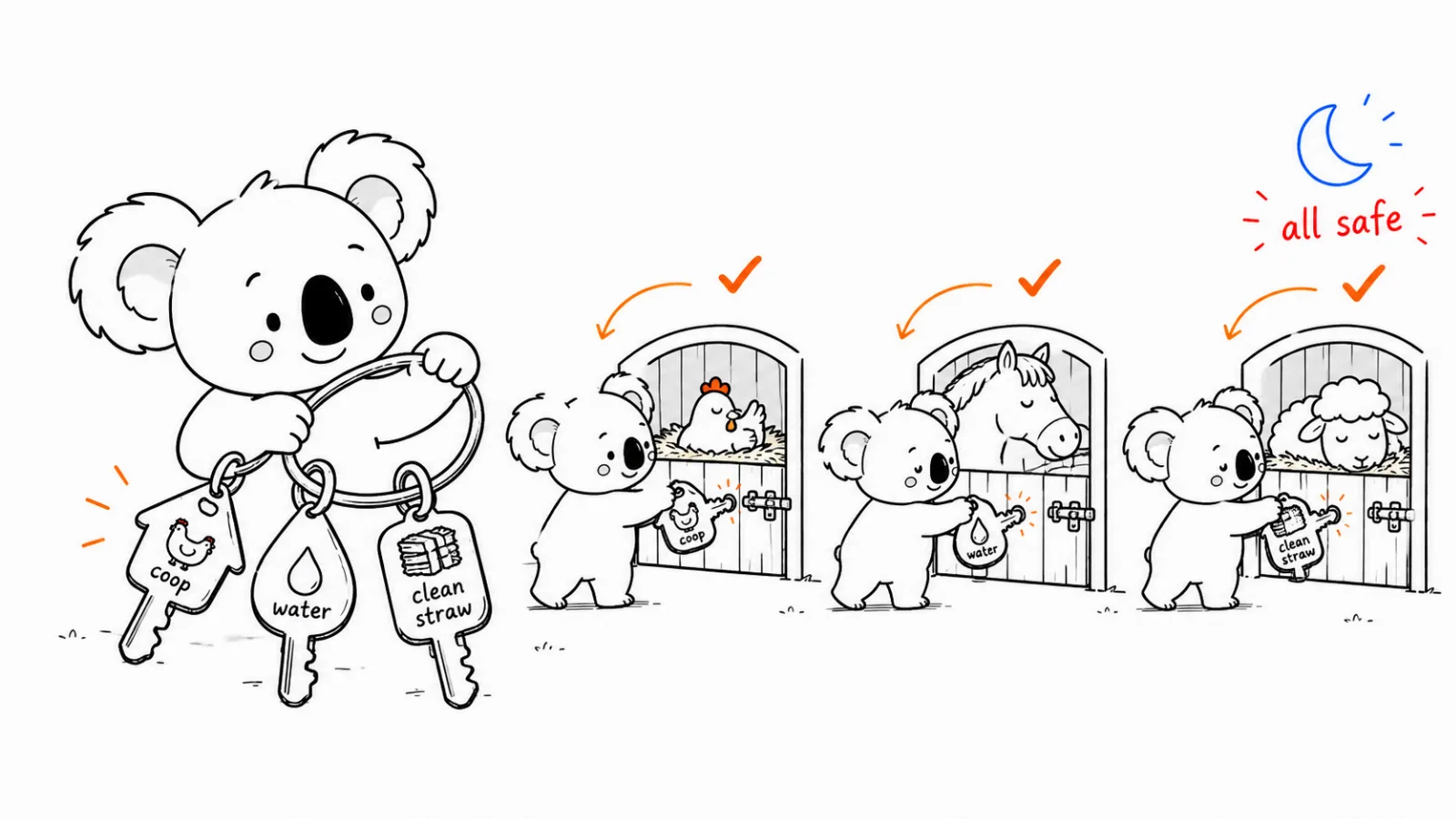
4. The Farmer’s Final Check
The farmer walks a short route, checking that each animal has what it needs. The hens have their coop, the horse has water, and the sheep have clean straw.
This pattern feels secure because an attentive adult is present and each check ends with confirmation: “All safe. All warm. All ready for sleep.”
Farm routines can be simplified for storytelling, but avoid presenting unrealistic care as instruction. If a detail matters to the plot, keep it general unless you are confident it reflects appropriate animal care.
How to Read the Story at Bedtime
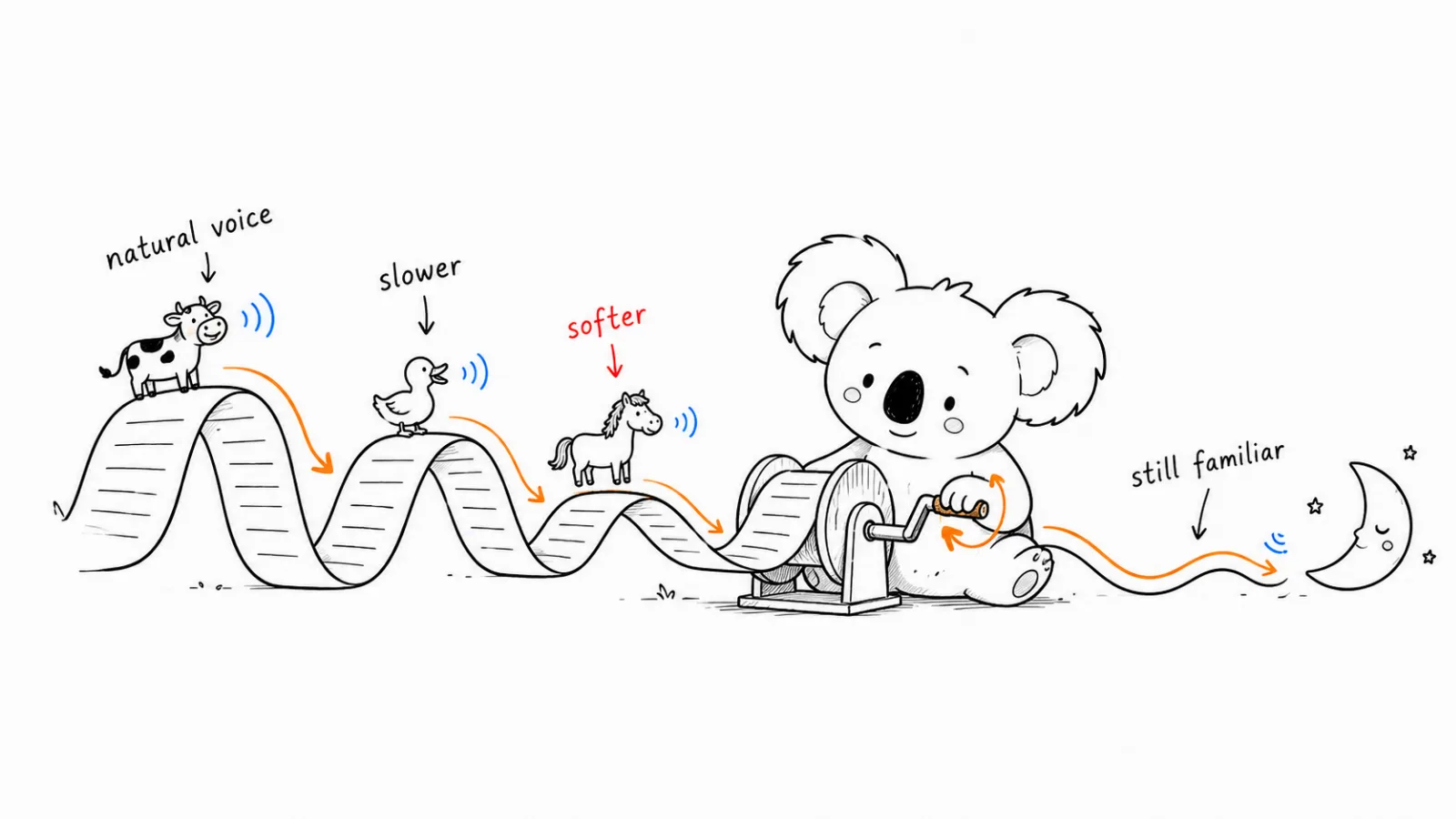
The same story can feel lively or restful depending on how it is read. Use a natural voice and gradually reduce your pace and volume as the animals settle.
Animal sounds are useful when they help a child recognise a character, but they do not need to be loud. A whispered “moo” or gentle “quack” preserves the fun without restarting energetic play.
If your toddler interrupts, names an animal, or repeats a line, allow a brief response and then return to the pattern. For example: “Yes, that is the brown horse. The brown horse is ready for bed.” This acknowledges the child without opening a long conversation.
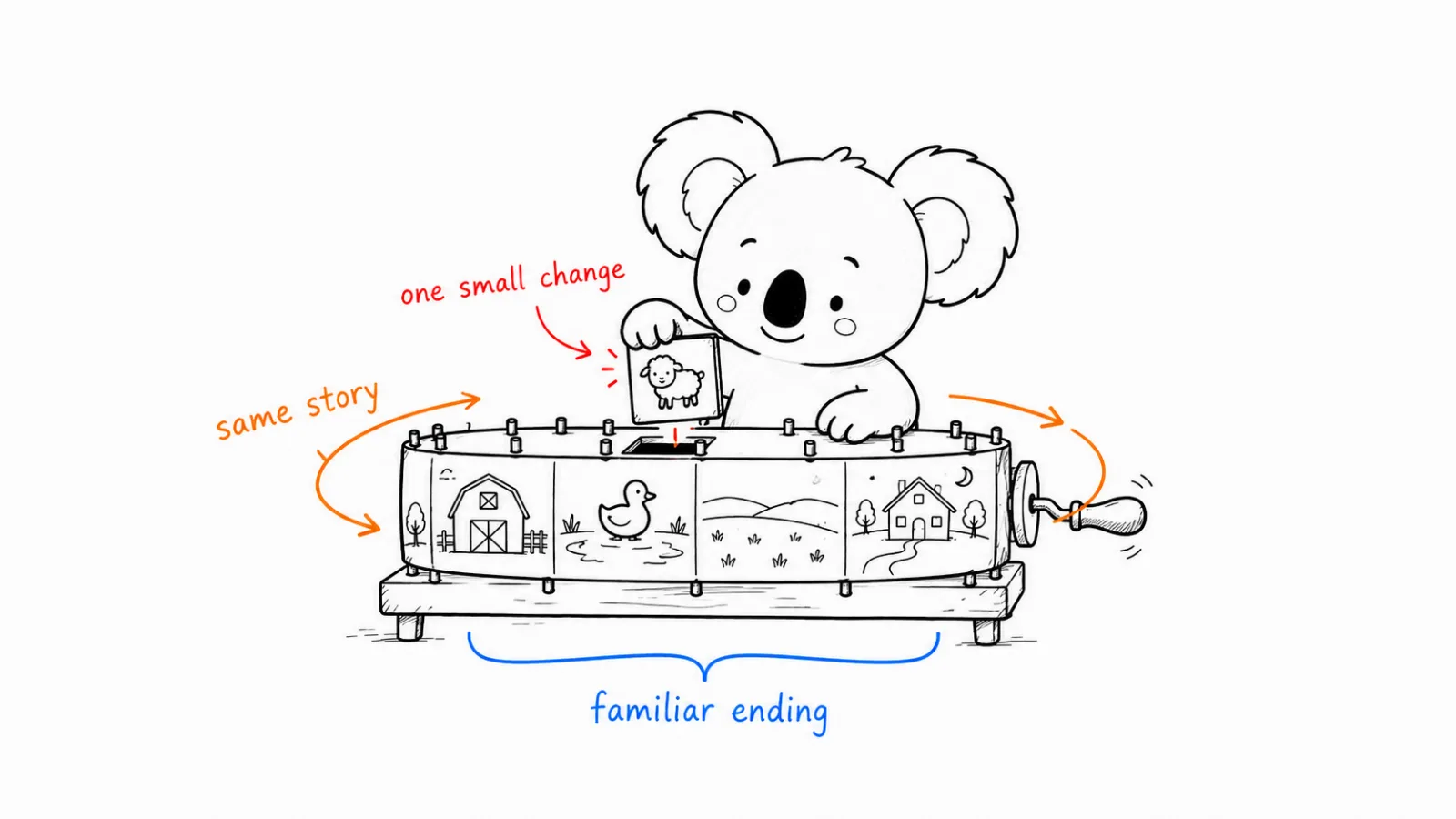
It is also fine to read the same farm story for several nights. Familiarity lets a toddler focus on the rhythm and details instead of working to understand a new plot. If you want variety, change only one element—the main animal, a repeated sound, or the object being found—while keeping the structure intact.
For families using audio stories, choose calm narration and an age-appropriate story rather than a fast, highly dramatic performance. Gula Stories, our own app, has 120+ illustrated bedtime stories for ages 3 to 8, each about 5 minutes long and read aloud, with no third-party ads or tracking.
FAQ
How many farm animals should a toddler story include?
Usually, one main animal and two or three supporting animals are enough. A larger cast can make it harder for a young listener to remember who is doing what, especially when tired.
Do farm animal stories need to be educational?
No. A toddler may naturally learn animal names, sounds, routines, and location words, but the story does not need to become a lesson. At bedtime, a clear pattern and a reassuring ending are often more useful than packing in facts.
What if my child wants the same story every night?
Repeated requests are common in early childhood. You can keep the words unchanged, invite your child to complete the repeated phrase, or make one small variation while preserving the familiar ending.
Should I avoid all excitement in a bedtime story?
Not necessarily. A small question or gentle problem gives the story momentum. Keep the stakes low, signal that the character is safe, and resolve the problem before the final settling-down sequence.
The Bottom Line
The strongest farm animal stories for toddlers are small, rhythmic, and reassuring. Choose a few familiar animals, repeat one comforting line, and guide every character toward a safe, quiet ending.
Ready for calmer bedtimes?
Try Gula Stories free — 5 narrated bedtime stories, ad-free, for children ages 3-8.