
Early Rising: Why Your Child Wakes at 5 a.m.
A child waking too early may be responding to light, noise, hunger, an unsuitable bedtime, or a sleep schedule that no l
Key Takeaways
- ●A child waking too early may be responding to light, noise, hunger, an unsuitable bedtime, or a sleep schedule that no longer matches their needs.
- ●Treat wake-ups before your chosen morning time like night waking: keep the room dark, interactions quiet, and activities uninteresting.
- ●Change one factor at a time and observe the pattern for several days rather than adjusting bedtime every night.
- ●An earlier bedtime can help an overtired child, while a later bedtime may suit a child who is consistently getting enough sleep.
- ●Seek professional advice if early waking comes with persistent snoring, breathing difficulties, pain, marked daytime tiredness, or significant changes in behaviour.
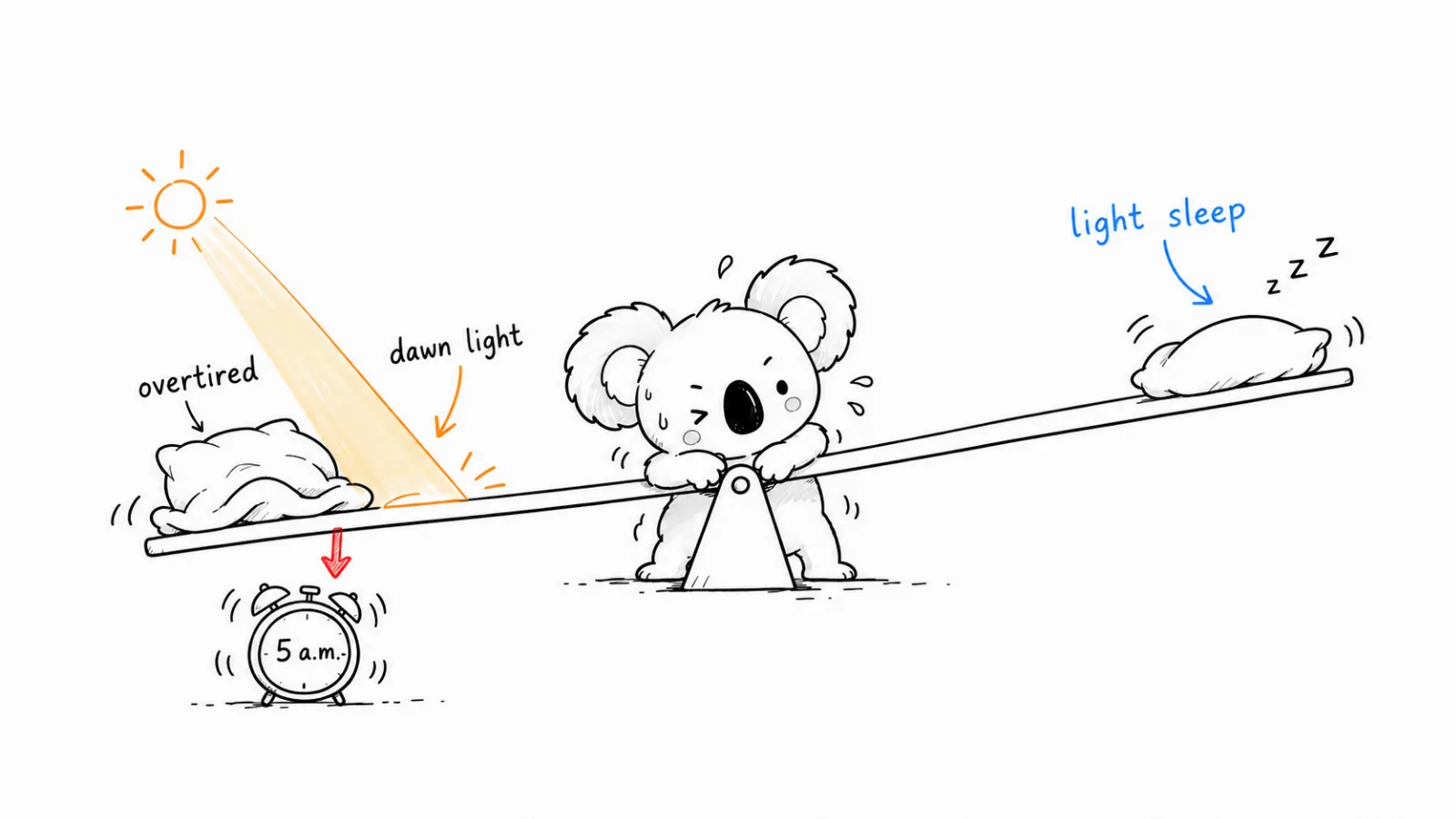
A child who wakes at 5 a.m. is not necessarily “done sleeping.” Early waking often happens because the sleep environment signals morning, the child has become overtired, or their daytime sleep and bedtime no longer fit their current needs.
The most useful response is to identify the likely cause, make a small adjustment, and keep the morning boundary consistent. The right change depends on what happens before bedtime, overnight, and during the day.
Why Children Wake Too Early
Sleep becomes lighter toward morning, making children more sensitive to environmental changes. A thin beam of sunlight, birds outside, central heating switching on, or movement elsewhere in the home may be enough to wake them fully.
Schedule-related causes are also common. Children aged 2–8 vary considerably in how much sleep they need, and those needs change as naps shorten or disappear. Recognised guidance from organisations such as the American Academy of Pediatrics, the NHS, and Raising Children Network emphasises regular routines and age-appropriate sleep opportunities, but an individual child’s behaviour is often the best clue to whether their schedule fits.
| What you notice | Possible explanation | Adjustment to try |
|---|---|---|
| Your child wakes when the room becomes lighter | Dawn is acting as a morning cue | Use effective blackout blinds and cover small light sources |
| Waking follows noisy household activity | Light morning sleep is being disrupted | Reduce noise, use soft white noise, or change when appliances run |
| Your child wakes early after late or busy evenings | Overtiredness may be fragmenting sleep | Move bedtime earlier by 15–30 minutes |
| Your child wakes cheerful and energetic every morning | Bedtime may be too early, or total sleep may already be sufficient | Consider a slightly later bedtime while keeping wake time stable |
| Early waking began after a nap change | Daytime sleep and bedtime may be temporarily misaligned | Adjust nap timing, duration, or bedtime gradually |
| Your child asks for breakfast immediately | Hunger may be contributing | Check that dinner and any usual bedtime snack are filling and balanced |
| Waking started during toilet training | A full bladder or discomfort may be waking the child | Encourage a toilet visit before bed and provide quiet help if needed |
| Your child seeks a parent at the same time daily | The waking may have become a learned pattern | Respond consistently and avoid starting the day early |
More than one factor may be involved. For example, a child who is overtired may enter lighter sleep near dawn and then be fully awakened by early sunlight.
Adjust Bedtime According to Your Child’s Pattern
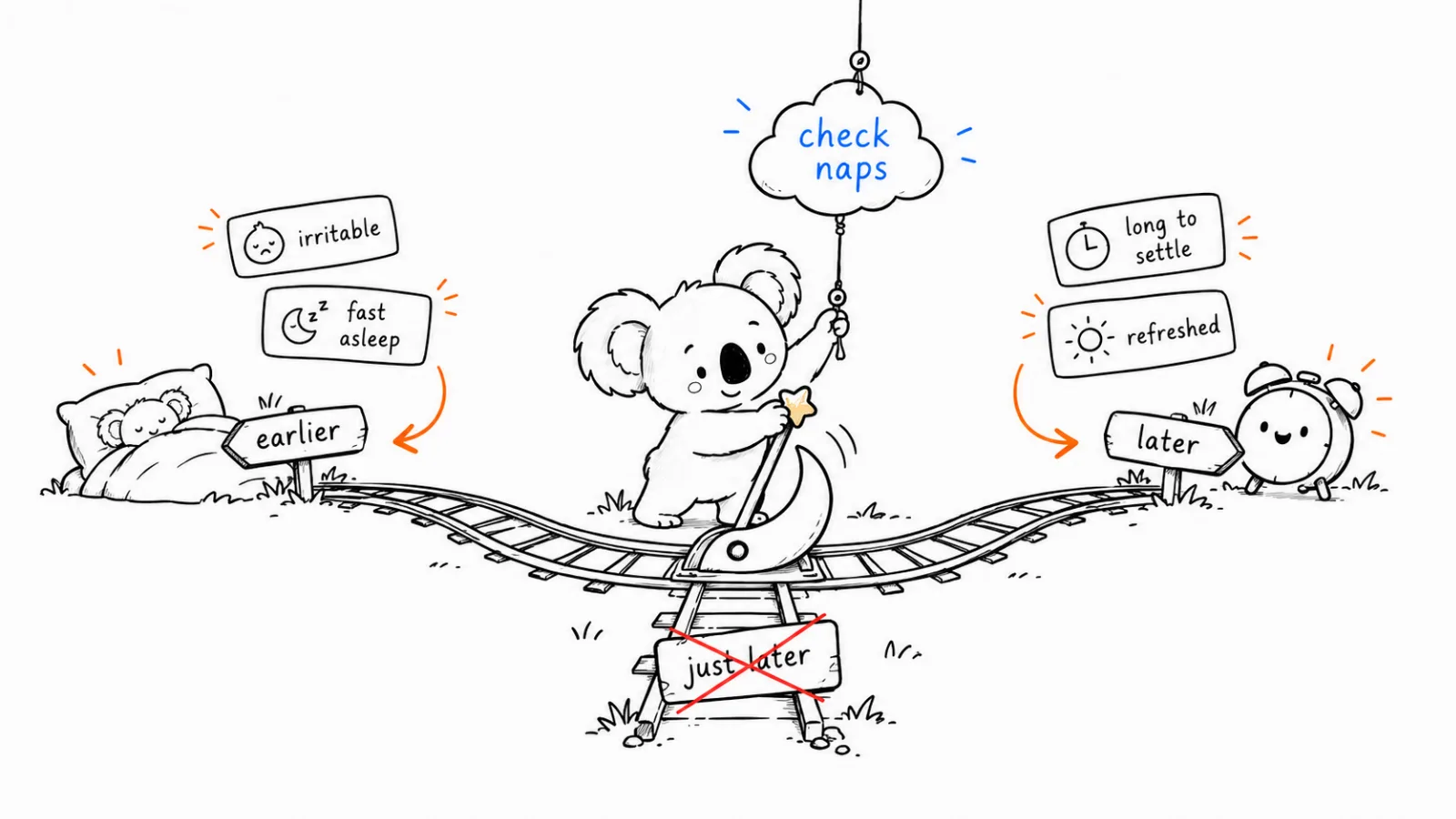
Moving bedtime later is an understandable reaction, but it does not always lead to a later morning. Some children wake earlier when they are overtired, so keeping them up can make the problem worse.
Look at the full pattern:
- ●Try an earlier bedtime if your child is irritable before bed, falls asleep almost immediately, has more night waking, or struggles during the day.
- ●Consider a slightly later bedtime if your child takes a long time to fall asleep, wakes early feeling refreshed, and functions well throughout the day.
- ●Review naps if your preschooler is resisting bedtime or waking early after a change in daytime sleep. A late nap can reduce sleep pressure at bedtime, while dropping a nap too quickly can create overtiredness.
- ●Keep changes small. Shift bedtime or nap timing by about 15 minutes, then observe before making another adjustment.
Avoid making several changes at once. If bedtime, naps, lighting, and breakfast timing all change together, it becomes difficult to know what helped.
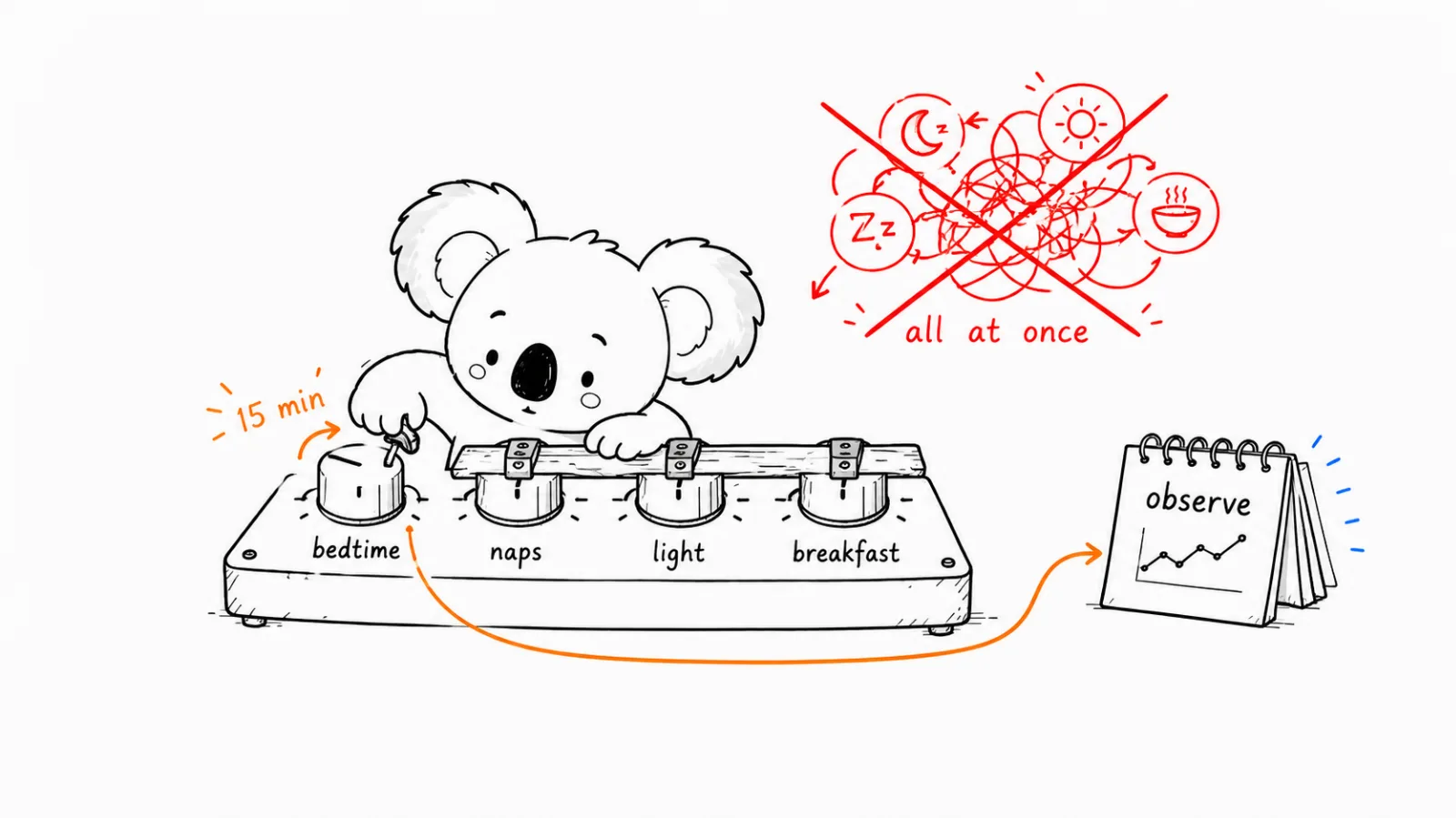
A simple sleep diary can reveal patterns. For one week, note bedtime, estimated sleep time, night waking, morning wake time, naps, and daytime mood. You do not need minute-by-minute accuracy; the goal is to see whether early waking follows particular days or routines.
Make 5 a.m. Feel Different From Morning
Children learn morning time partly from what happens after they wake. If a 5 a.m. wake-up regularly leads to bright lights, television, play, or breakfast, that sequence can reinforce the habit.
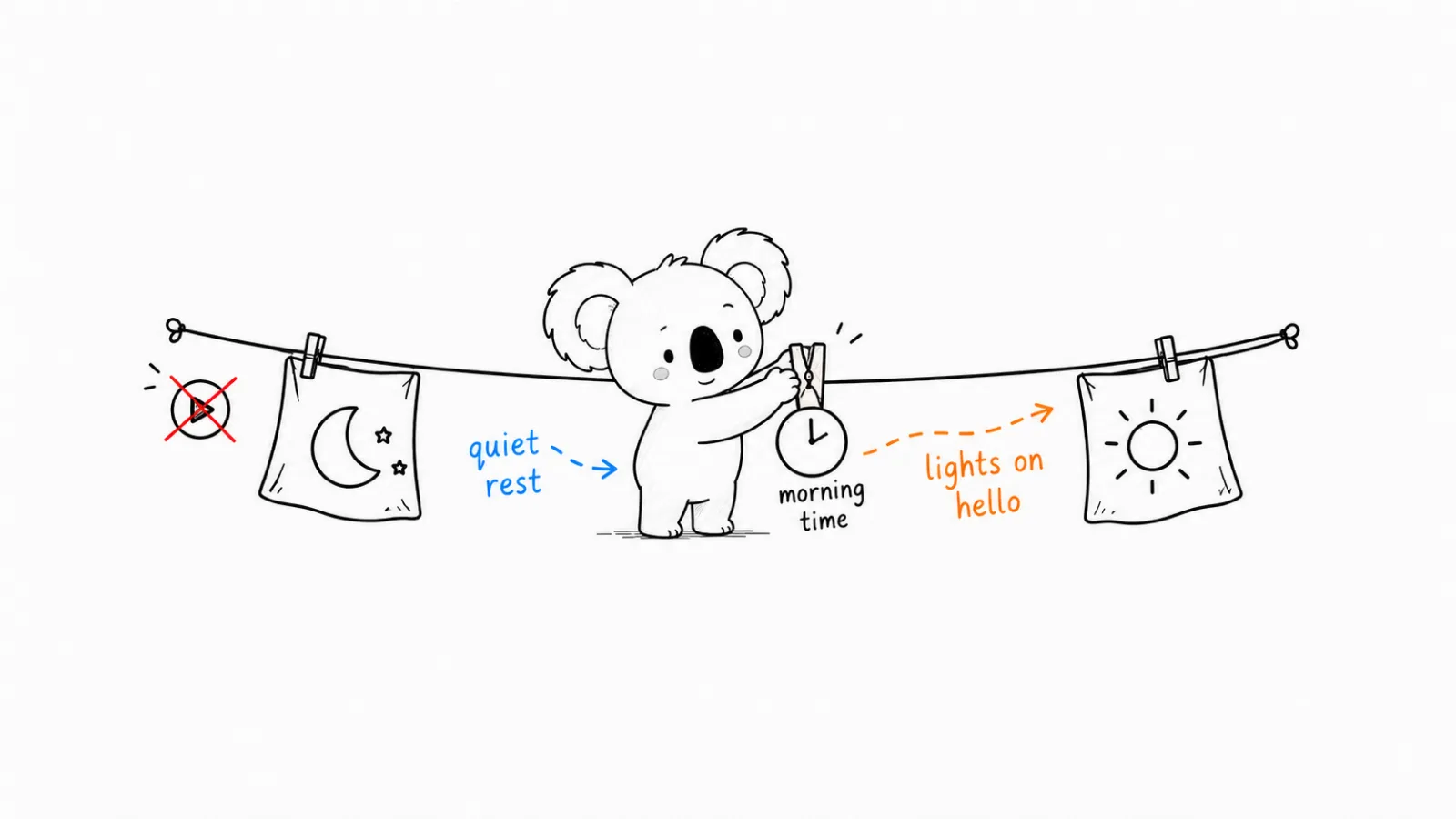
Choose a realistic “morning starts” time and create a clear contrast:
- ●Before morning time: Keep lights low, speak quietly, and offer brief reassurance. Guide your child back to bed or allow quiet resting, depending on their age and temperament.
- ●At morning time: Open the curtains, turn on lights, greet them warmly, and begin the normal routine.
- ●Use a visual cue: For children who understand simple rules, an wake-up clock can show when it is time to get up. Introduce it during the day and practise what to do when it shows “sleep” and “morning.”
- ●Be consistent without expecting immediate sleep: The first goal is not necessarily to make the child fall asleep again. It is to prevent the household’s morning routine from shifting earlier.
If your child becomes distressed, needs the toilet, feels unwell, or is frightened, respond to that need. A morning boundary should be calm and supportive, not rigid or punitive.
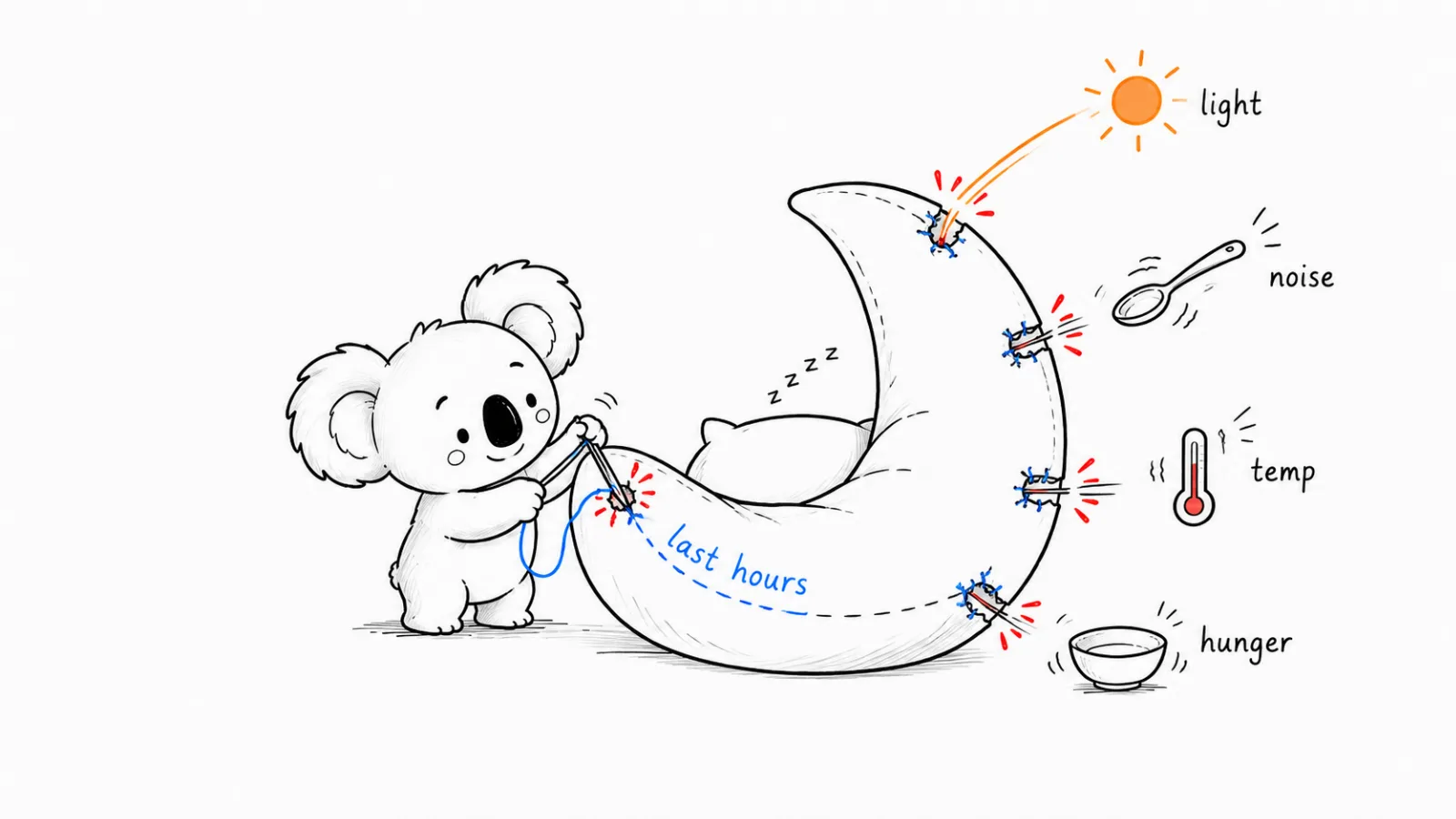
Protect the Last Hours of Sleep
The period before dawn is especially vulnerable to disruption. Check the room at the time your child usually wakes rather than only at bedtime.
Useful adjustments include:
- ●Installing blackout blinds or curtains that prevent light leaking around the edges.
- ●Keeping the room at a comfortable, stable temperature.
- ●Moving noisy devices, pets, or morning routines away from the bedroom.
- ●Using continuous, low-volume white noise if unpredictable sounds are a problem.
- ●Providing an appropriate dinner and, if normally part of your routine, a simple bedtime snack.
- ●Keeping bedtime calm and predictable.
A short story can provide a consistent cue that sleep is approaching. An ad-free bedtime story app such as Gula Stories may help maintain a calm routine when used with a dim screen or audio-only setup, but it should not become an exciting activity offered after an early wake-up.
Give environmental and routine changes several days to settle. Illness, travel, daylight-saving changes, developmental transitions, and family disruptions can temporarily affect sleep even when the routine is otherwise sound.
FAQ
Should I give my child breakfast at 5 a.m.?
If possible, keep breakfast close to the time you want the day to begin. For a genuinely hungry child, review the previous evening’s meal and consider a suitable bedtime snack. Do not withhold food from a distressed or unusually hungry child; the aim is simply to avoid making very early breakfast the daily signal for morning.
Can daylight-saving time cause early waking?
Yes. A clock change can temporarily shift a child’s internal rhythm. Move meals, bedtime, light exposure, and morning activities gradually toward the new schedule. Bright light at the desired morning time and a dark bedroom before then can help reinforce the new pattern.
What if my child leaves the bedroom repeatedly?
Use a brief, predictable response: guide them back, repeat the same simple phrase, and avoid lengthy conversations or play. Some families use a quiet basket of books or soft toys for an older child who can safely remain in their room until morning time.
When should I speak to a health professional?
Seek advice from your GP, paediatrician, or child health professional if the pattern persists despite consistent adjustments, seriously affects family functioning, or is accompanied by loud snoring, pauses in breathing, persistent mouth breathing, pain, reflux symptoms, unusual movements, pronounced daytime sleepiness, or significant behavioural changes.

The Bottom Line
Early waking usually improves through small, consistent changes rather than a single dramatic fix. Start with the strongest clue—light, noise, hunger, nap timing, or overtiredness—and adjust one factor at a time. If something about your child’s breathing, health, or daytime functioning concerns you, consult a qualified health professional.
Ready for calmer bedtimes?
Try Gula Stories free — 5 narrated bedtime stories, ad-free, for children ages 3-8.