
Dinosaur Bedtime Stories That Don't Get Too Exciting
Calm dinosaur bedtime stories focus on gentle routines, friendship, discovery and reassurance—not chasing, roaring or da
Key Takeaways
- ●Calm dinosaur bedtime stories focus on gentle routines, friendship, discovery and reassurance—not chasing, roaring or danger.
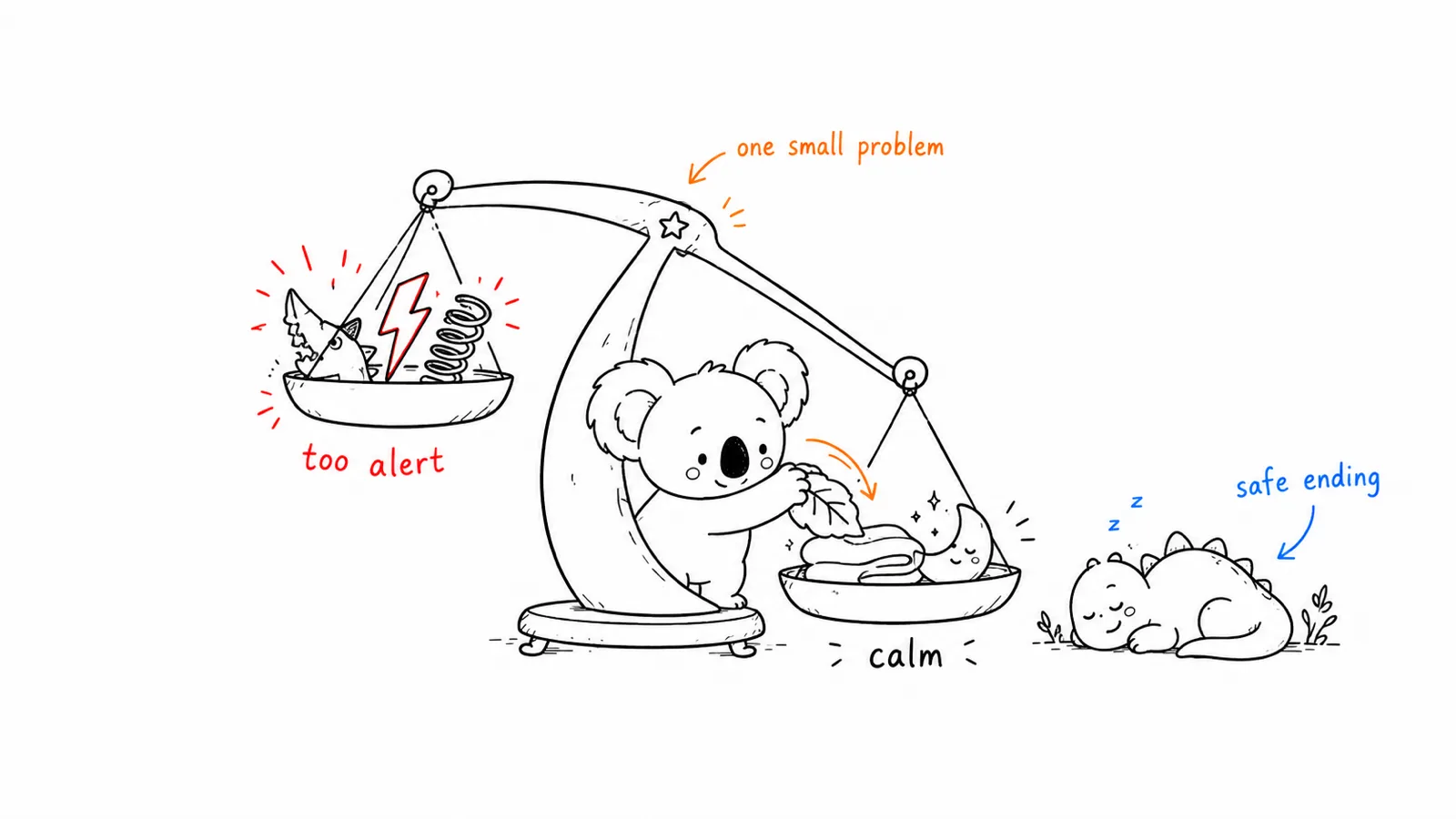
- ●Choose a predictable plot with one small problem, a safe resolution and a quiet ending.
- ●Soft narration and familiar characters can make an exciting theme feel more suitable for bedtime.
- ●If a story energises or worries your child, pause it and switch to a familiar, calmer favourite.
- ●Your voice and reading pace matter as much as the story itself.
Dinosaur bedtime stories can work well at night when the dinosaurs behave more like sleepy neighbours than action heroes. Look for low-stakes plots, reassuring language, calm narration and endings that clearly signal safety and rest.
The aim is not to remove everything your child loves about dinosaurs. It is to keep the fascination while reducing suspense, noise and rapid action.
What Makes a Dinosaur Story Calm Enough for Bedtime?
A bedtime-friendly dinosaur story should gradually lower its energy. The character may begin with a simple goal—finding a comfortable sleeping spot, returning a lost leaf or saying goodnight to friends—but the story should not introduce escalating threats.
A useful test is to ask: Does each part of the story move the child closer to calm?
| Story element | Calmer bedtime choice | More stimulating choice |
|---|---|---|
| Main goal | Finding a nest or preparing for sleep | Escaping a predator |
| Conflict | A missing blanket or an unfamiliar sound | Fighting, chasing or surviving danger |
| Language | Repetition and gentle sensory details | Shouting, roaring and urgent commands |
| Pace | One simple event at a time | Frequent surprises and rapid scene changes |
| Ending | Everyone is safe, settled and sleepy | A cliffhanger or last-minute scare |
Even friendly stories can become stimulating if they contain competitive races, repeated crashes or dramatic rescues. Read or preview a new story before bedtime when possible, particularly if your child is sensitive to suspense.
Choose Dinosaurs Without Turning Bedtime Into an Adventure
Dinosaurs are naturally exciting to many young children. Trying to suppress that enthusiasm can create more resistance than choosing a quieter expression of it.
Keep the theme while changing what the dinosaurs do. Suitable premises include:
- ●A young dinosaur learns the sounds of the forest before falling asleep.
- ●A dinosaur family completes its evening routine.
- ●Two friends quietly search for the owner of a dropped feather.
- ●A herbivore chooses soft leaves for a nest.
- ●A dinosaur says goodnight to familiar places.
- ●A baby dinosaur worries about the dark and receives calm reassurance.
For children aged two to four, repetition and a clearly resolved ending are often helpful. Older children may enjoy slightly more detailed discoveries, humour or factual elements, provided the story does not become tense. A gentle tale about identifying footprints, for example, is usually calmer than a mystery involving something chasing the characters.
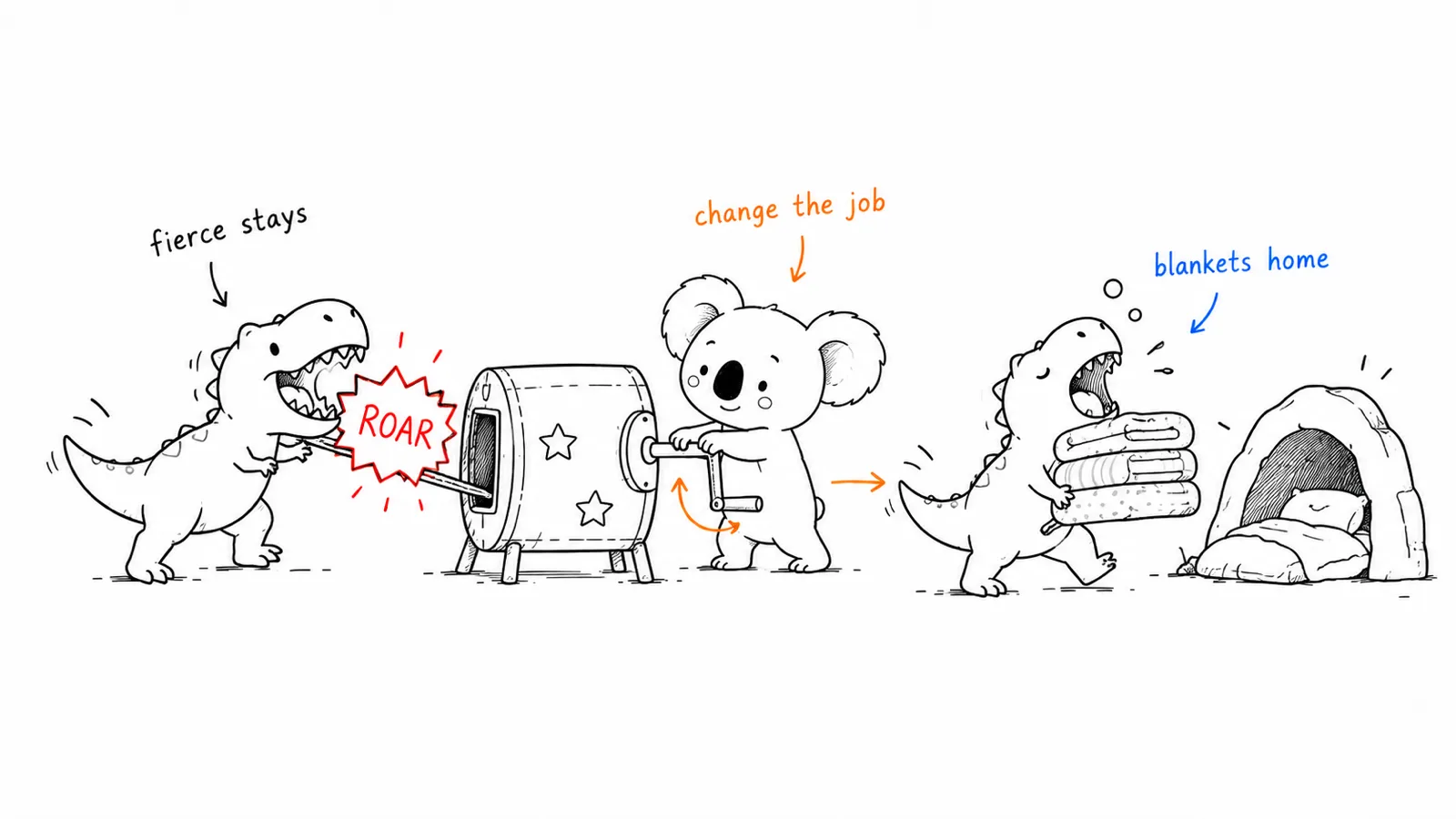
If your child requests a fierce dinosaur, you do not have to reject the idea. Give the character a restful task: perhaps the Tyrannosaurus has a large yawn, cannot find a quiet cave or uses its strong feet to carry blankets home.
Use Delivery to Lower the Energy
The same text can feel very different depending on how it is read. Dramatic voices, sudden volume changes and exaggerated roars may turn a mild plot into stimulating play.
For a calmer reading:
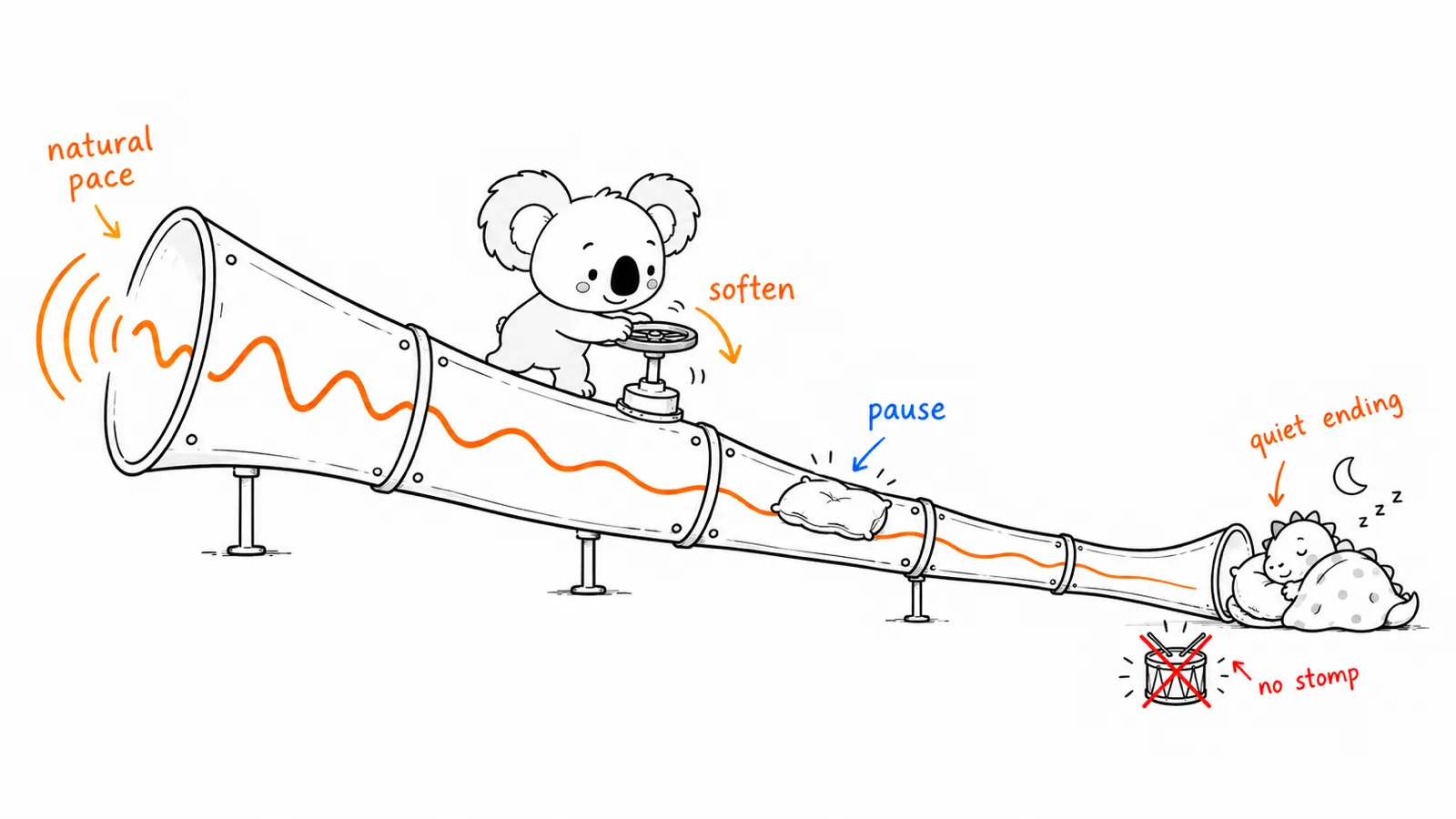
- ●Begin at a natural pace. Starting artificially slowly can frustrate a child who is still settling.
- ●Gradually soften your voice. Let the volume and intensity decrease as the story progresses.
- ●Pause after reassuring moments. A brief silence gives the child time to absorb that the character is safe.
- ●Keep sound effects small. A quiet rumble is less activating than an invitation to perform a full roar.
- ●End without adding a new game. Avoid finishing with questions such as, “Can you stomp like a dinosaur?”
A phrase repeated throughout the story can also provide predictability: “The forest was quiet, and the little dinosaur was safe.” Keep the wording simple and say it in the same calm rhythm each time.
If using an audio story, select an even, natural voice and avoid episodes with sudden music or dramatic effects. Gula Stories offers calm narration and age-appropriate recommendations, which can help parents find gentler dinosaur stories without relying on an autoplay feed.
Match the Story to Your Child’s Response
Age labels are useful starting points, but a child’s reaction is the better guide. One child may find a roaring dinosaur funny, while another continues thinking about it after the story ends.
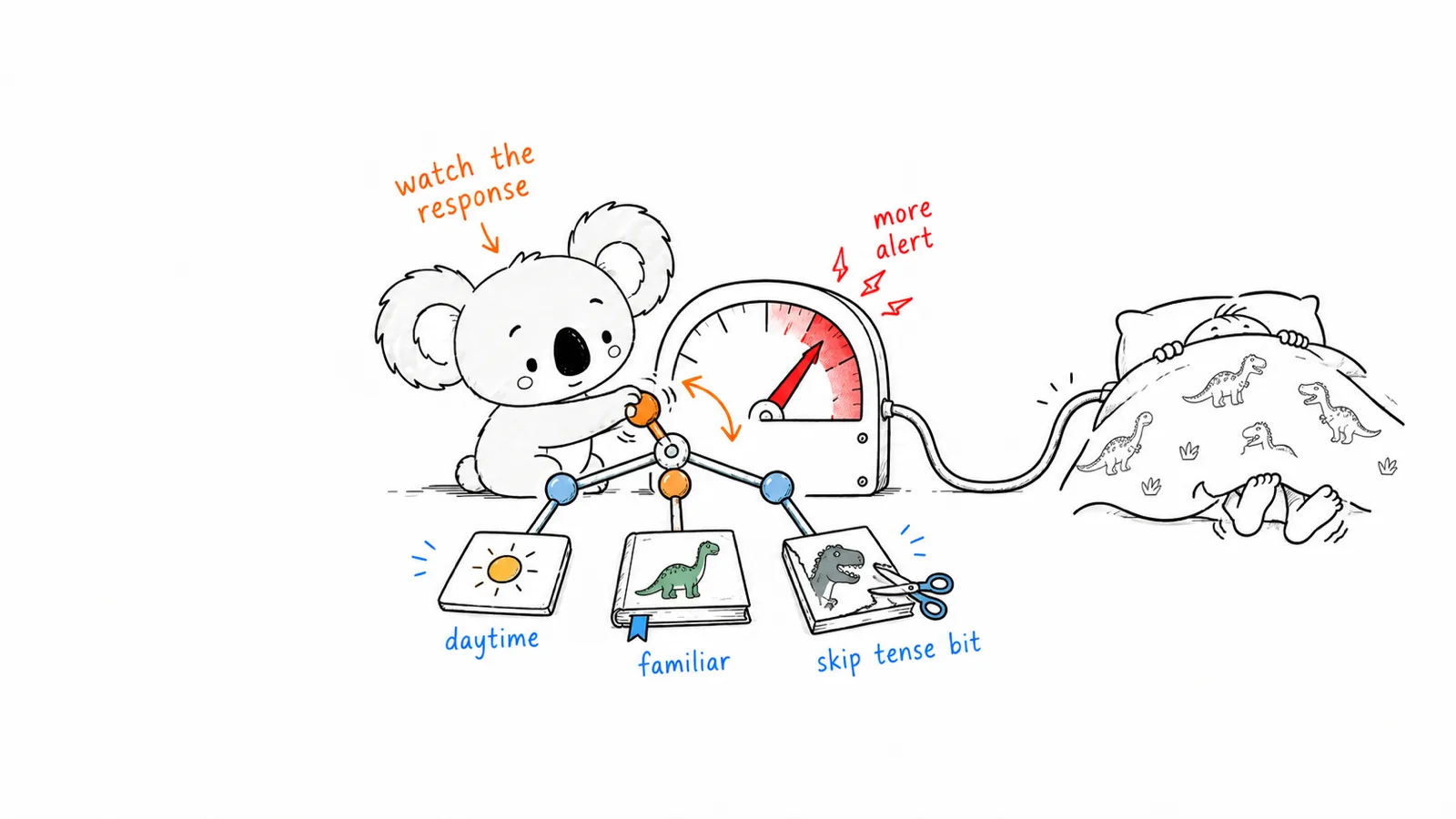
Watch for signs that a story is increasing rather than reducing alertness:
- ●Repeated questions about whether a character is in danger
- ●Requests to reenact battles, stomping or roaring
- ●Difficulty accepting that the story has ended
- ●New worries about darkness, monsters or being chased
- ●A noticeable shift from relaxed listening to active movement
These reactions do not mean dinosaur stories are unsuitable. Try the same theme earlier in the day, choose a more familiar story at bedtime or skip the tense section. Children often find repeated stories reassuring because they know exactly what will happen.
Recognised parenting and health authorities, including HealthyChildren.org, the NHS and Raising Children Network, generally emphasise consistent, calming bedtime routines. A quiet story can be one part of that routine, but no single story guarantees sleep. If bedtime anxiety, persistent sleep difficulties or distress regularly affect your child or family, discuss the pattern with a doctor or another qualified health professional.
FAQ
Should dinosaur bedtime stories include facts?
Yes, but keep them brief and connected to the plot. A gentle detail about what a dinosaur ate or how large its footprints were can satisfy curiosity without turning bedtime into a rapid-fire lesson. Save detailed questions and comparisons for daytime.
What should I do if my child insists on roaring?
Set a simple boundary before reading: one quiet roar near the beginning, followed by “sleepy dinosaur voices.” If roaring reliably becomes active play, make it a daytime activity and choose a different bedtime story.
Are audio dinosaur stories suitable every night?
They can be, especially when the narration is calm and the story is familiar. Choose audio without disruptive advertising, autoplay surprises or sharp changes in volume, and use a sleep timer if the app provides one.
Can I change parts of a story that seem frightening?
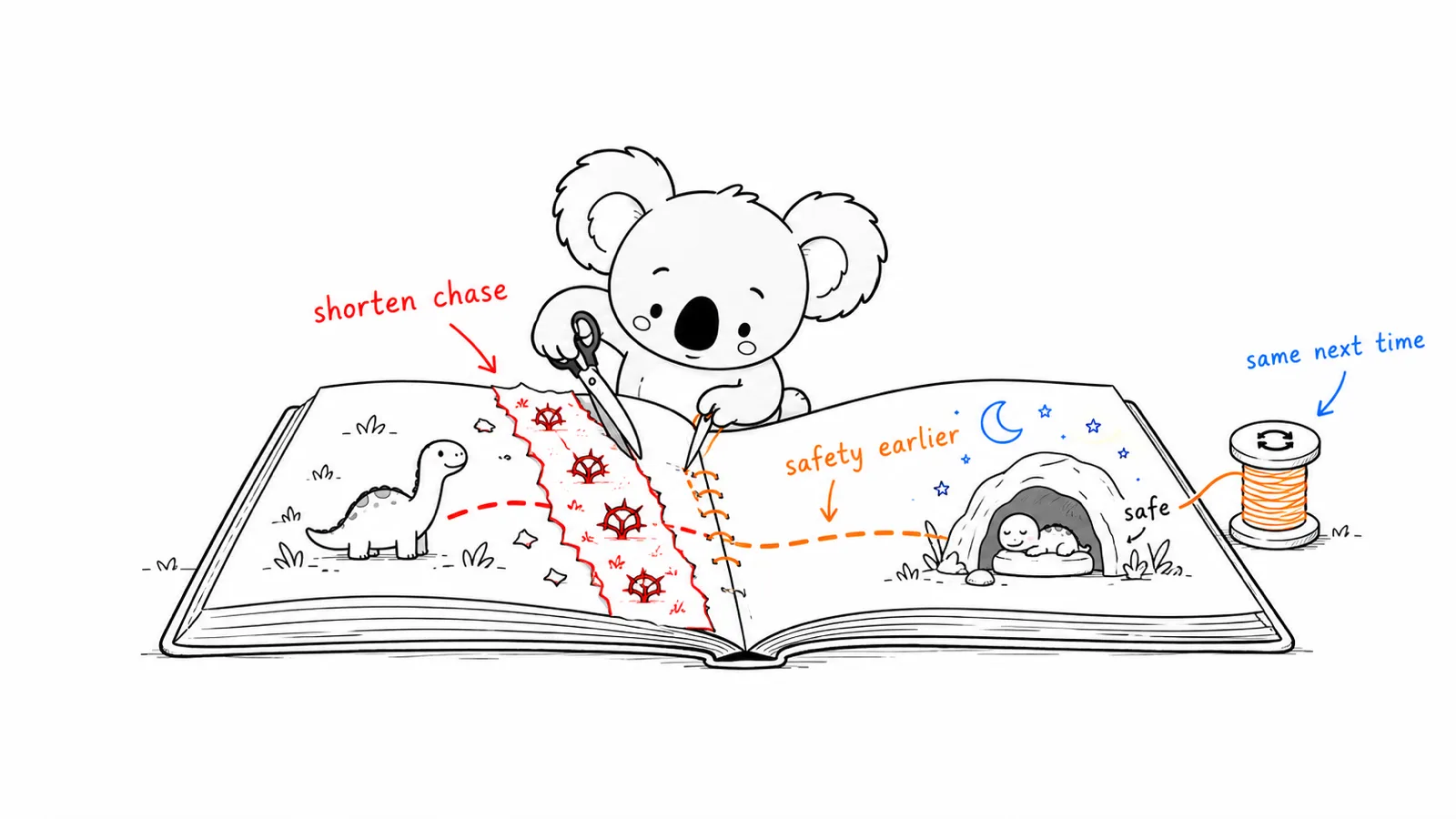
Yes. When reading aloud, you can shorten a chase, replace a threatening character or reveal safety earlier. Consistency still matters, so use the same gentler version on later nights if your child asks for the story again.
The Bottom Line
Dinosaur bedtime stories do not need battles or dramatic escapes to hold a child’s attention. Choose a small, safe plot, deliver it gently and finish with an unmistakably restful ending. If your child becomes more alert, move the exciting dinosaur adventures to daytime and keep a familiar calm story ready for bed.
Ready for calmer bedtimes?
Try Gula Stories free — 5 narrated bedtime stories, ad-free, for children ages 3-8.