
Daylight Saving Time: Shifting Your Child's Bedtime Gently
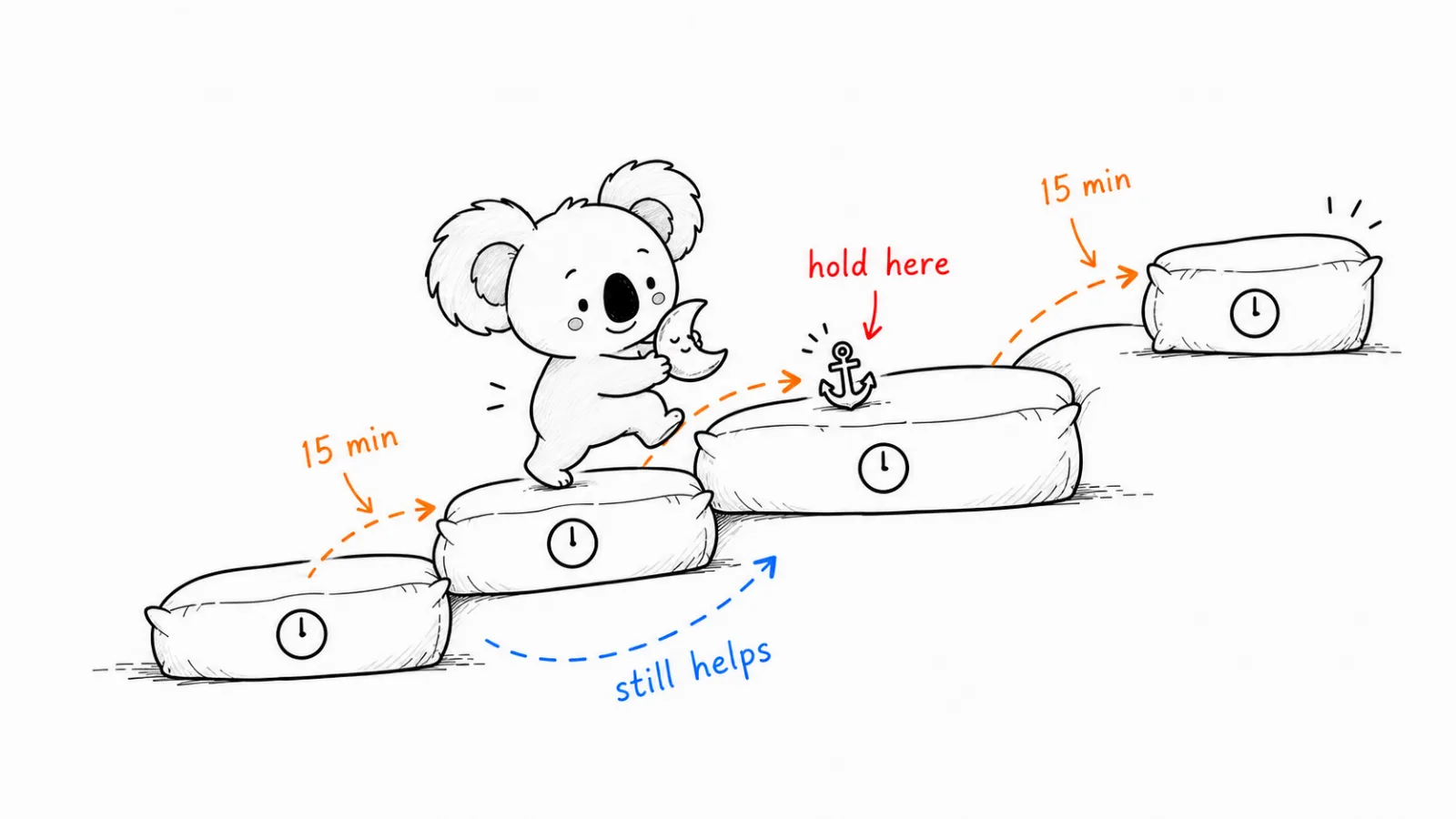
Start about one week before the clock change and move bedtime by 15 minutes every two days. Shift wake time, meals, naps
Key Takeaways
- ●Start about one week before the clock change and move bedtime by 15 minutes every two days.
- ●Shift wake time, meals, naps and the bedtime routine alongside bedtime so the whole day changes gradually.
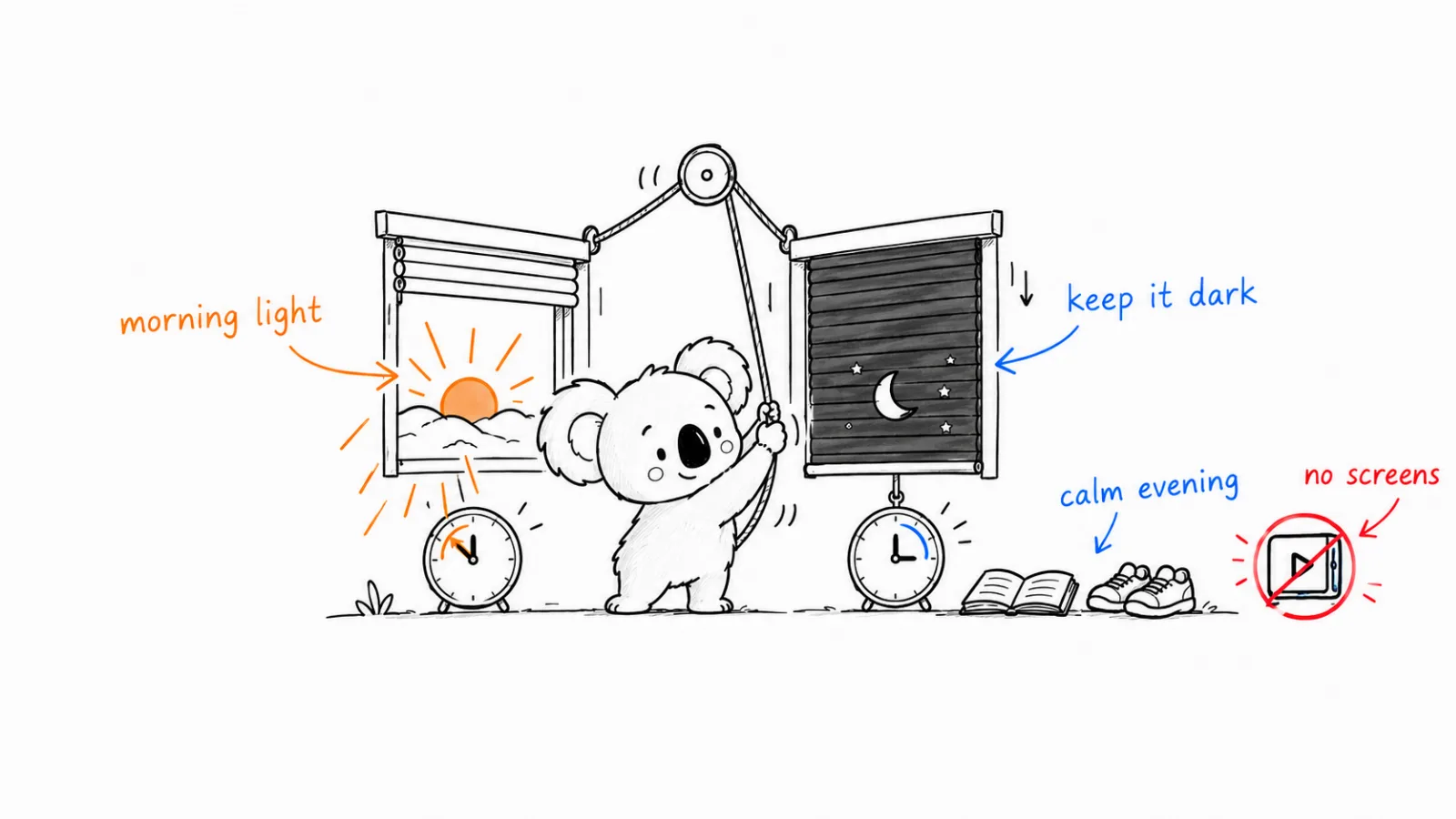
- ●Use morning light to help with the spring transition and a calm, dark evening environment to support the autumn transition.
- ●If your child becomes overtired, hold the current schedule for an extra day rather than forcing the next step.
- ●A few unsettled days can be typical; seek professional advice if sleep problems are persistent or significantly affect daily life.
For most children aged 2–8, the gentlest daylight saving bedtime plan is to adjust the schedule in 15-minute steps during the week before the clocks change. Small changes give the body clock time to adapt without making bedtime suddenly feel an hour early or late.
The plan below covers both “spring forward” and “fall back,” including wake times, naps, meals and evening cues that make the transition easier.
Choose the Right Direction for the Clock Change
The direction of the adjustment matters. Use the new clock time as your destination, then move your child’s current schedule toward it gradually.
| Clock change | What happens | Adjustment before the change |
|---|---|---|
| Spring forward | Clocks move one hour ahead | Move bedtime and wake time 15 minutes earlier every two days |
| Fall back | Clocks move one hour behind | Move bedtime and wake time 15 minutes later every two days |
For example, imagine your child normally sleeps from 7:30 p.m. to 6:30 a.m.
- ●Before spring forward, gradually work toward a 6:30 p.m. bedtime on the old clock. After the clock changes, this becomes 7:30 p.m. by the new time.
- ●Before fall back, gradually work toward an 8:30 p.m. bedtime on the old clock. After the change, this becomes 7:30 p.m. by the new time.
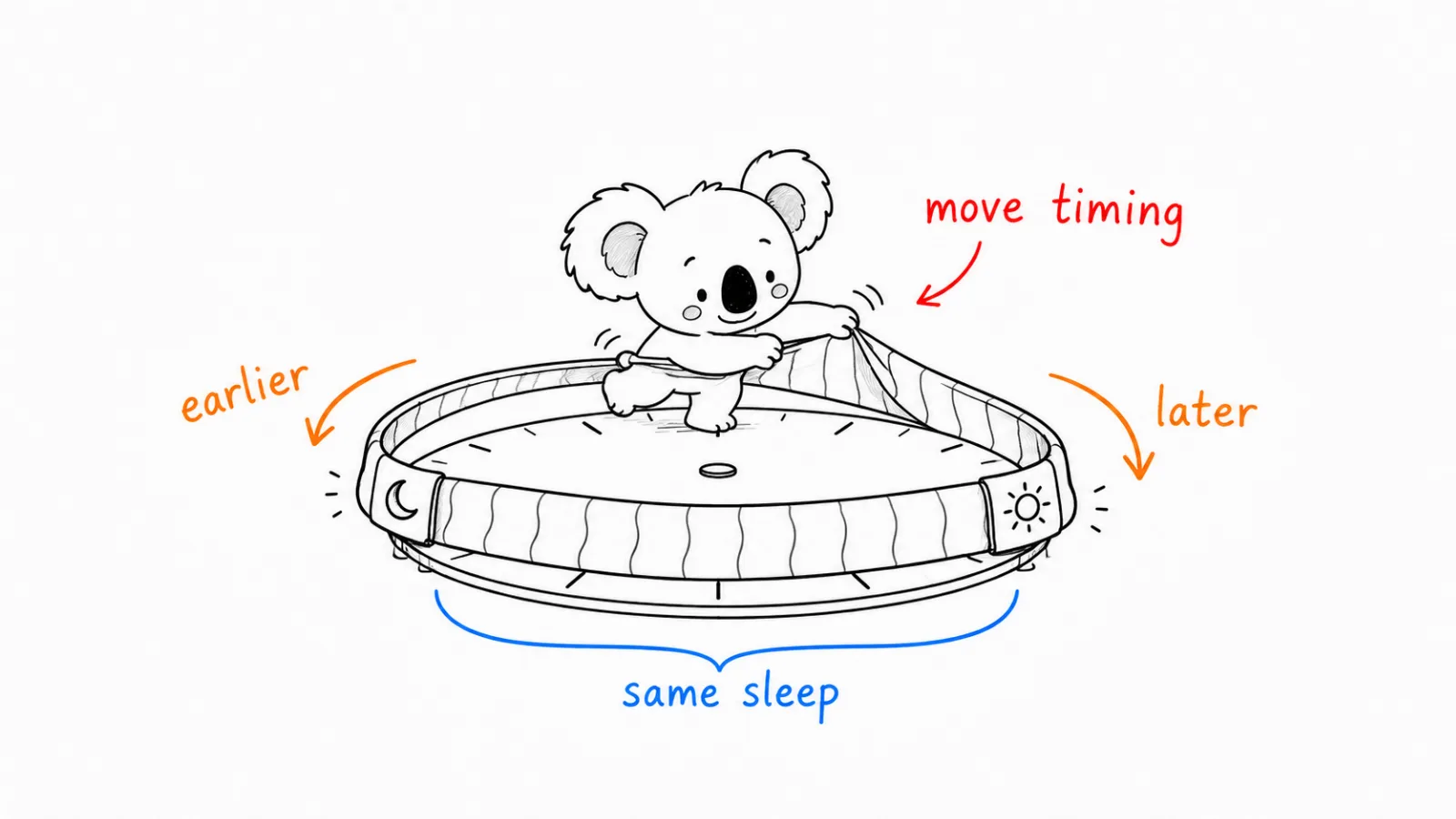
The goal is not to change how much sleep your child receives. It is to move the timing of sleep so the new clock schedule feels more familiar.
A One-Week, 15-Minute Bedtime Plan
Begin seven days before the clock change. Adjust both bedtime and morning wake time whenever practical.
| Days before the change | Spring forward | Fall back |
|---|---|---|
| 7–6 days | 15 minutes earlier | 15 minutes later |
| 5–4 days | 30 minutes earlier | 30 minutes later |
| 3–2 days | 45 minutes earlier | 45 minutes later |
| 1 day | 60 minutes earlier | 60 minutes later |
| Change day | Return to the usual bedtime by the new clock | Return to the usual bedtime by the new clock |
For a usual 7:30 p.m. bedtime, the spring schedule would be 7:15, 7:00, 6:45 and then 6:30 p.m. The fall schedule would be 7:45, 8:00, 8:15 and then 8:30 p.m.
Treat the table as a flexible framework rather than a test your family must pass. If your child struggles with one step, stay there for another day. A 30- or 45-minute adjustment before the clock change can still soften the transition.
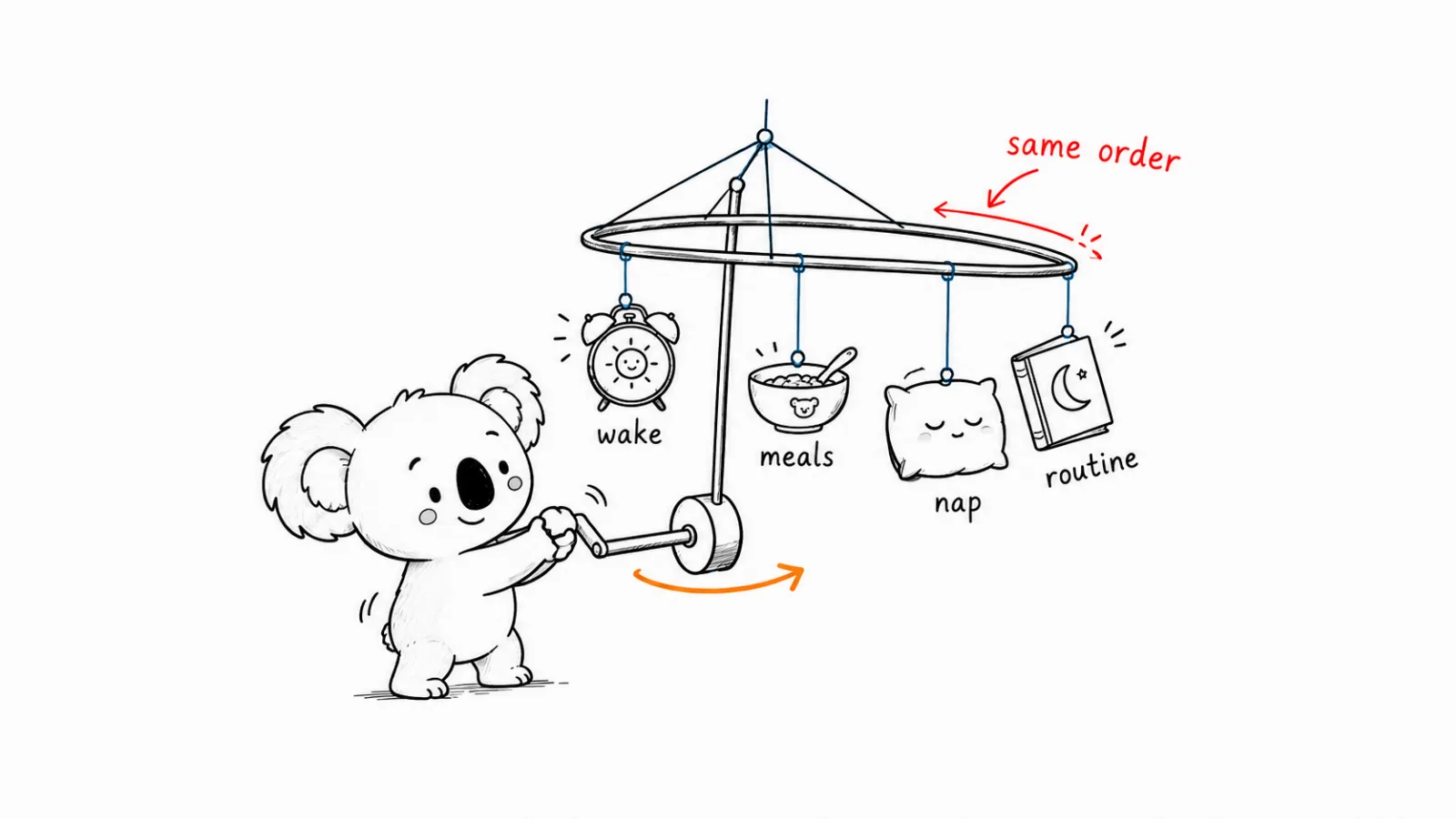
Move the rest of the daily rhythm at the same pace:
- ●Wake your child approximately 15 minutes earlier or later.
- ●Shift breakfast, lunch and dinner in the same direction.
- ●Adjust nap times for children who still nap.
- ●Begin the bath, story and lights-out routine 15 minutes earlier or later.
- ●Keep the order of the bedtime routine unchanged.
Consistency in the routine can be more reassuring than the exact time on the clock. A familiar sequence—such as wash, pyjamas, teeth, one calm story and lights out—helps signal that sleep is approaching. If an audio story is already part of your routine, a calm option such as Gula Stories can preserve that familiar cue while the timing changes.
Use Light and Activity to Support the New Schedule
The body clock responds strongly to light. You can use ordinary daylight and household lighting to reinforce the direction of the change.
For spring forward
Your child needs to feel ready for sleep earlier and wake earlier.
- ●Open curtains soon after the earlier wake time.
- ●Spend time outdoors in the morning when possible.
- ●Keep the hour before bed calm and reduce bright light.
- ●Avoid turning the earlier bedtime into a long negotiation. Complete the usual routine and offer quiet reassurance if sleep takes longer.
The first earlier bedtimes may not produce immediate sleep. That does not mean the plan has failed; the child’s internal timing may need several days to catch up.
For fall back
Your child needs to remain awake slightly later and avoid starting the day too early.
- ●Provide normal light and gentle activity in the late afternoon.
- ●Shift dinner and the bedtime routine later with the schedule.
- ●Keep the bedroom dark if your child wakes before the desired morning time.
- ●Use blackout curtains if early morning light is contributing to early waking.
Do not use exciting games or screens simply to keep a tired child awake. A quiet walk, drawing, puzzles or shared reading can extend the evening without making it harder to settle.
Adjust the Plan for Naps, School and Overtiredness
Children do not all respond to clock changes in the same way. Temperament, age, school schedules and whether a child naps can affect how quickly the new timing feels comfortable.
For a preschooler who naps, move the nap by the same 15-minute steps. Avoid shifting bedtime later while leaving a late nap unchanged, because the child may not have enough time awake before bed.
For a school-aged child, the morning schedule may be less flexible. Prioritise the earlier bedtime during spring forward, prepare clothes and bags the night before, and keep the first mornings simple. During fall back, avoid letting the day begin with stimulating activities at a very early hour, as this can reinforce the unwanted wake time.
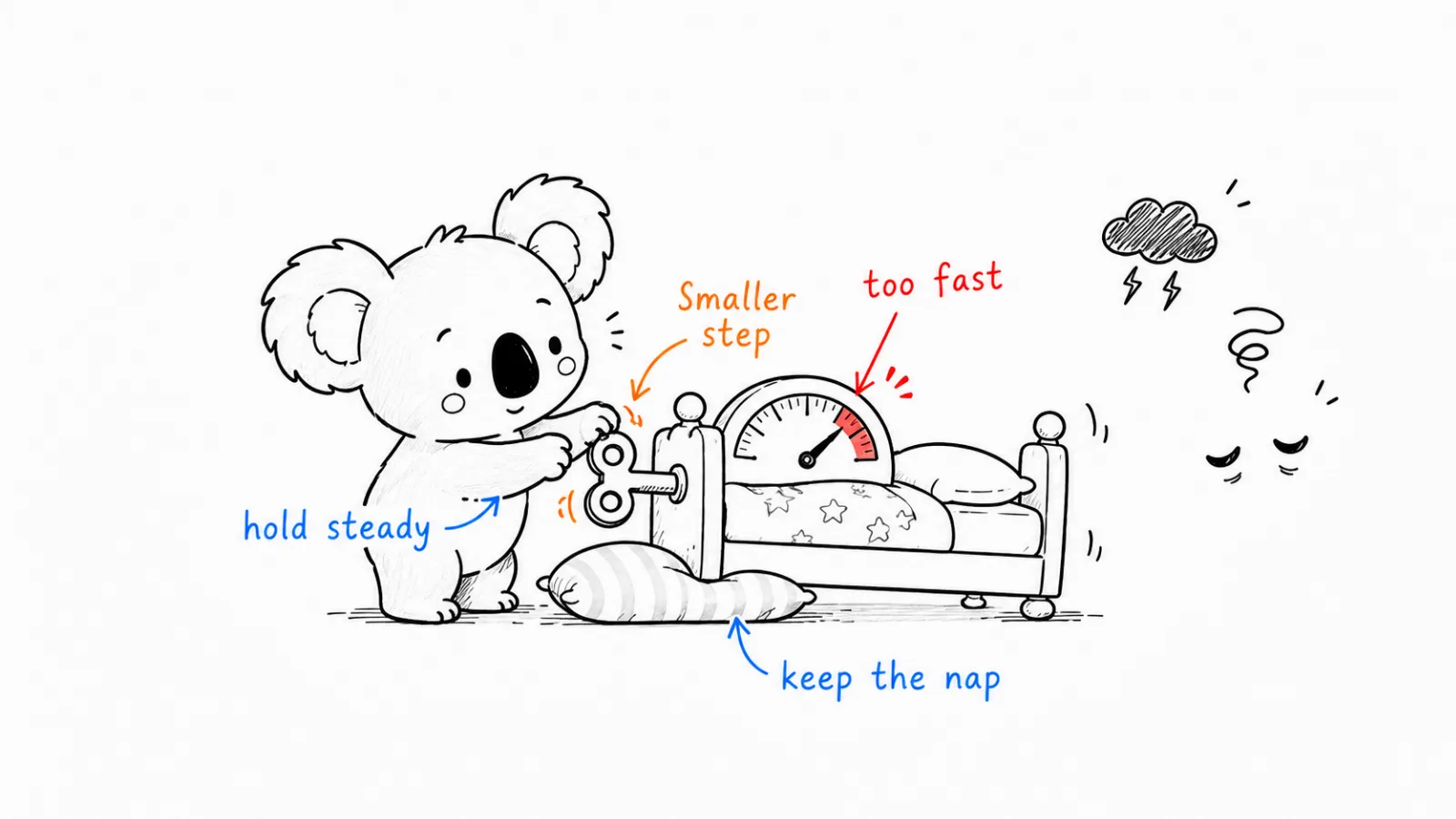
Watch for signs that the plan is moving too quickly, such as unusual irritability, repeated meltdowns near bedtime or falling asleep much earlier than intended. Hold the schedule steady or use smaller changes if needed. Avoid removing needed daytime sleep solely to force an earlier bedtime.
Recognised child-health resources, including HealthyChildren.org, the NHS and Raising Children Network, emphasise regular sleep routines and age-appropriate sleep opportunities. If your child regularly snores, has breathing pauses, appears extremely tired during the day, or continues to have significant sleep difficulties beyond the clock-change period, speak with a doctor or qualified child-health professional.
FAQ
What if I forgot to start a week before daylight saving time?
Start when you can. Make one or two 15-minute adjustments before the change, then continue in small steps afterward. You do not need to compress the entire hour into a day.
Should I wake my child if they sleep late during the transition?
A consistent morning wake time usually helps the body clock settle, but occasional extra sleep may be reasonable after a difficult night. Aim to return gently to the target wake time rather than allowing progressively later mornings.
Can I use melatonin for a daylight saving transition?
Do not give a child melatonin solely for a clock change without advice from a doctor or pharmacist familiar with the child’s health. Timing, suitability and product quality require professional guidance.
How long does adjustment usually take?
Some children adapt within a few days, while others need longer. Focus on a consistent new schedule, morning light and a predictable bedtime routine. Seek advice if disrupted sleep persists or causes substantial daytime difficulties.
The Bottom Line
Move bedtime in 15-minute steps, shift the rest of the daily schedule with it, and let light reinforce the new timing. A flexible one-week plan will not eliminate every early waking or delayed bedtime, but it can make the daylight saving transition less abrupt for both children and parents.
Ready for calmer bedtimes?
Try Gula Stories free — 5 narrated bedtime stories, ad-free, for children ages 3-8.