
Dad-Led Bedtime Routines: Tips for Sharing the Load
A successful dad bedtime routine works best when Dad or the second parent owns the whole process, rather than acting as
Key Takeaways
- ●A successful dad bedtime routine works best when Dad or the second parent owns the whole process, rather than acting as an occasional substitute.
- ●Keep the sequence familiar—such as bath, pyjamas, teeth, story and goodnight—even if each parent has a different style.
- ●Expect some resistance during the handover; calm consistency usually matters more than eliminating every protest.
- ●Agree on boundaries before bedtime so children receive the same message about extra stories, snacks and parental switching.
- ●Start with several predictable nights each week and adjust the routine to suit your child’s age and temperament.
A father or second parent can take full ownership of bedtime without copying the primary parent’s exact approach. The key is to keep the routine predictable, give the new bedtime parent genuine authority, and allow the child time to adjust.
For families with children aged 2–8, sharing bedtime can reduce pressure on one parent while strengthening the child’s relationship with another trusted caregiver. Here is how to make the transition practical and sustainable.
Give Dad Ownership, Not Just Tasks
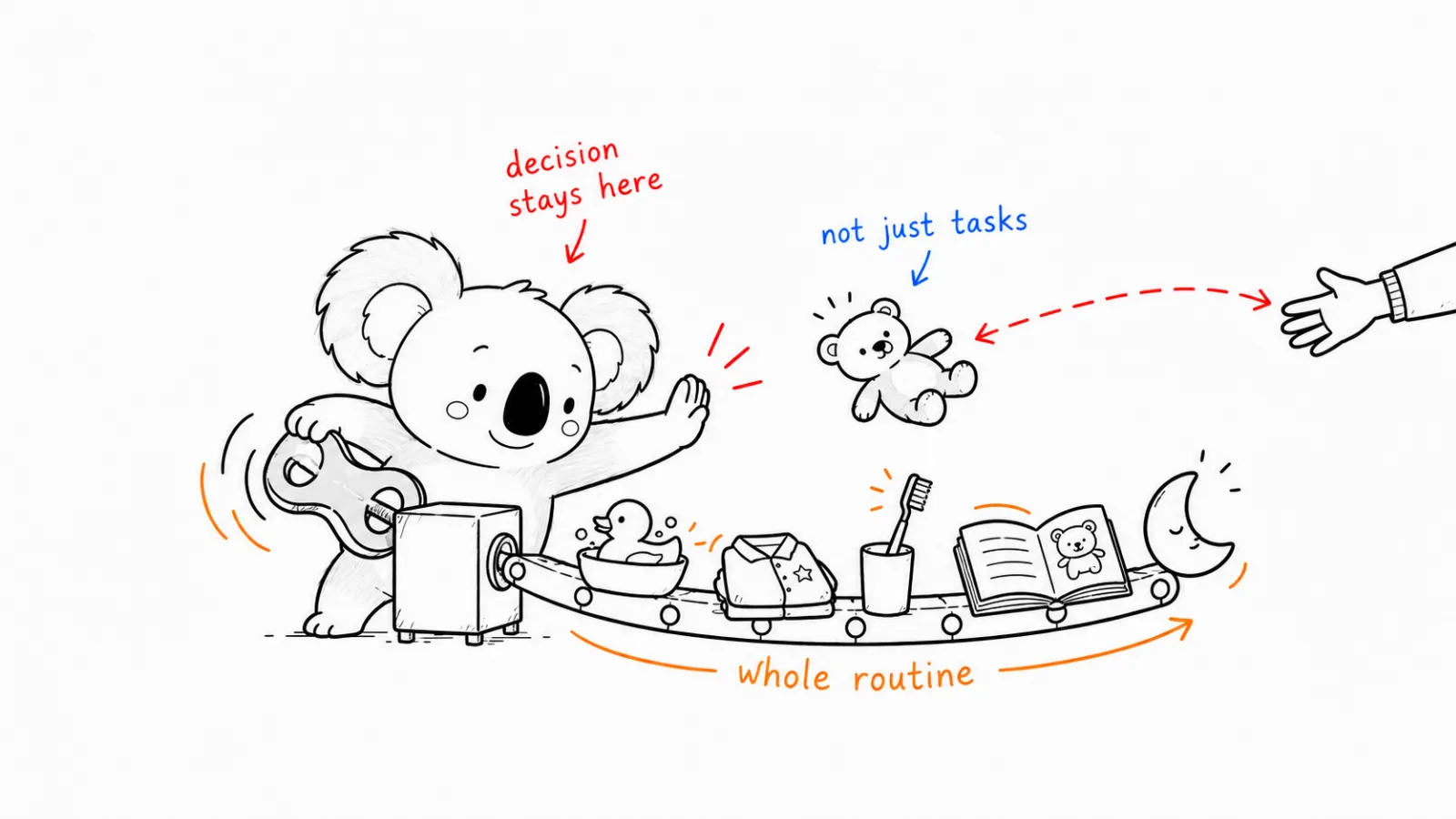
Sharing bedtime does not mean one parent prepares the bath while the other still handles every difficult moment. Dad-led bedtime becomes easier when one parent owns the routine from beginning to end: announcing bedtime, guiding transitions, responding to requests and saying the final goodnight.
This matters because children quickly notice who has decision-making authority. If Dad begins the routine but repeatedly calls the other parent when the child protests, the child may learn that resistance changes who is in charge.
Agree on the basics during the day:
- ●Which parent leads on which nights
- ●When the routine starts
- ●What happens in what order
- ●How many stories or songs are included
- ●Which requests are reasonable after lights-out
- ●How both parents will respond if the child asks to switch
The off-duty parent should offer a warm, brief goodnight and then step back. For example: “Tonight Dad is doing bedtime. I love you, and I’ll see you in the morning.”
This is not about withholding comfort. It gives the child a clear expectation while allowing Dad to provide reassurance in his own way.
Keep the Structure Familiar but Let the Style Differ
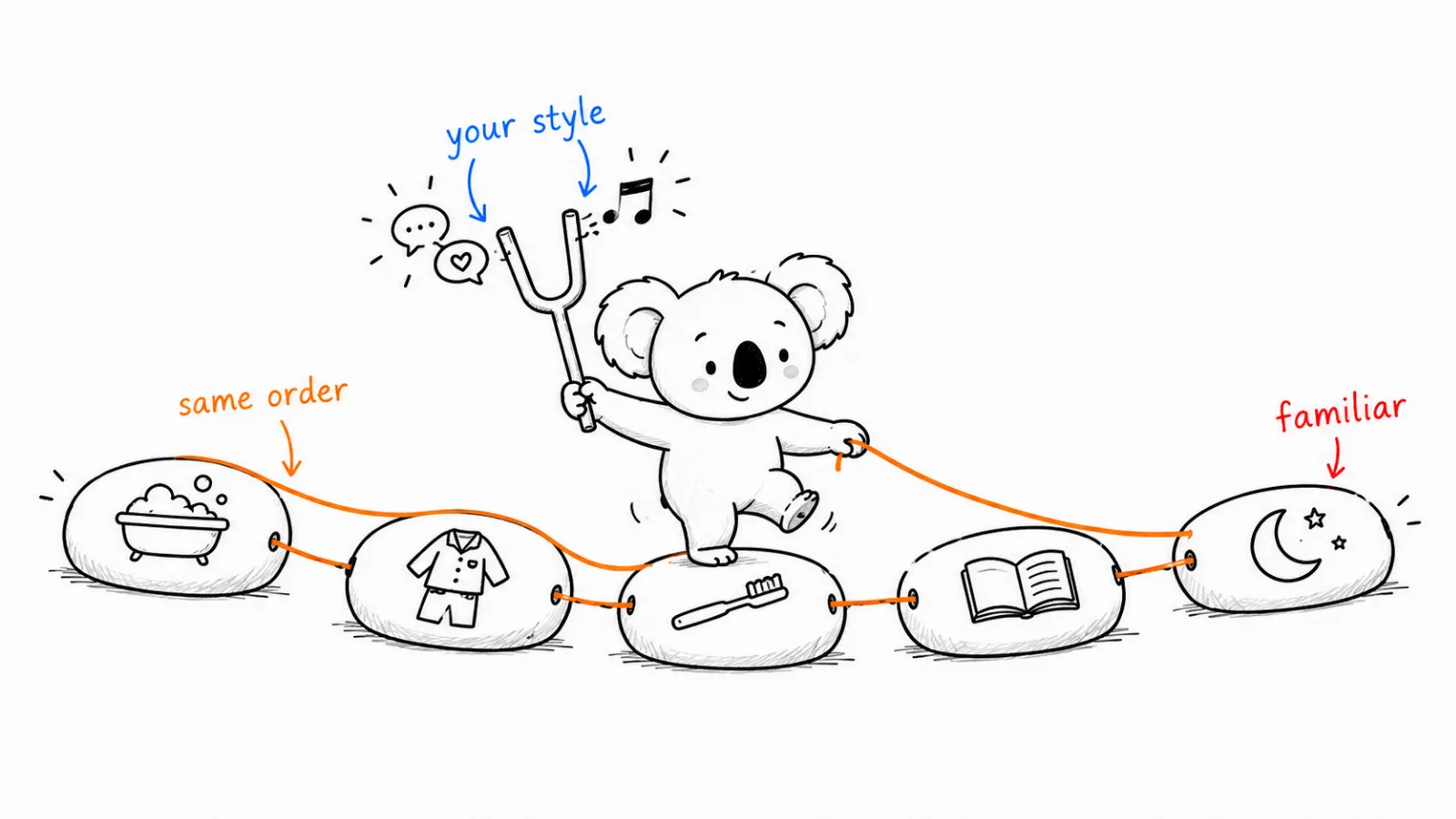
Children often rely on predictable steps more than a particular parent’s performance. A consistent sequence signals that the day is winding down, while small differences help each parent build an authentic routine.
A practical dad bedtime routine might look like this:
| Stage | What Dad Does | Helpful Boundary |
|---|---|---|
| Transition | Gives a calm warning that bedtime is approaching | Avoid starting an exciting activity close to bedtime |
| Preparation | Oversees washing, pyjamas and teeth | Offer limited choices, such as which pyjamas to wear |
| Connection | Reads a book, tells a short story or talks about the day | Decide the number of stories in advance |
| Settling | Dims lights and uses a quiet voice | Keep screens and energetic play out of this stage |
| Goodnight | Uses the same closing phrase and leaves calmly | Respond consistently to repeated requests |
Dad might use funny character voices while another parent reads quietly. One parent might sing; another might ask, “What was one good thing about today?” These differences are usually manageable when the order, timing and limits remain recognisable.
If choosing a story causes delay, select two options before the routine begins. Families using Gula Stories can also choose an age-appropriate narrated story in advance, keeping the listening experience calm and avoiding last-minute browsing.
Handle Parent Preference Without Turning It Into a Contest
A child who says, “I want Mum,” is usually expressing a preference, discomfort with change or a need for reassurance—not delivering a verdict on Dad’s parenting. Responding defensively or trying to become the more entertaining parent can make bedtime harder.
Use a short acknowledgement followed by a clear boundary:
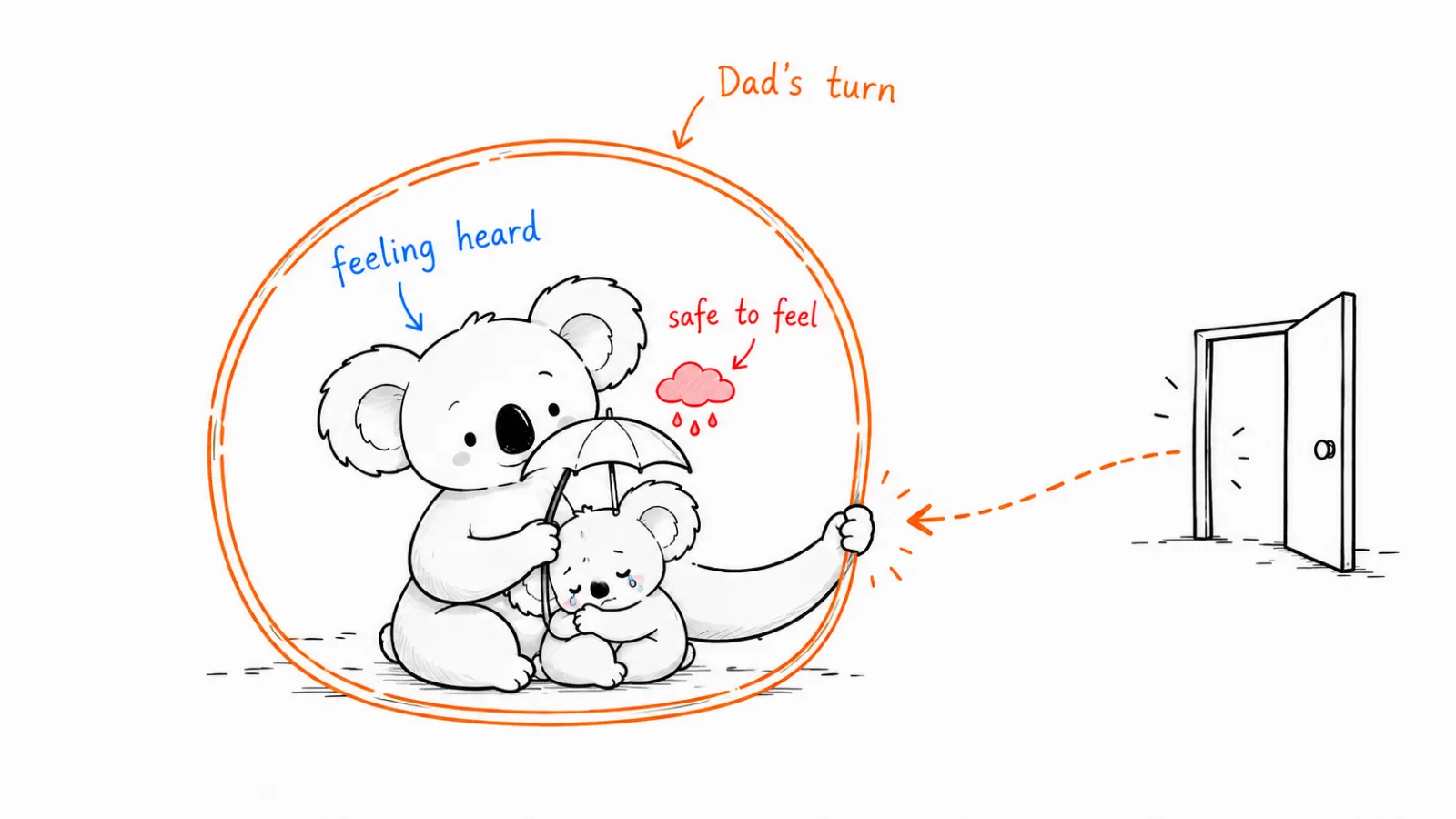
“You wish Mum were doing bedtime. Tonight it’s Dad’s turn, and I’m here with you.”
Dad can offer comfort within the boundary: a cuddle, a familiar song or a choice between two books. The goal is not to stop every unhappy feeling. It is to show that disappointment can be handled safely without changing the agreed plan.
Common situations call for slightly different responses:
- ●The child asks once: Acknowledge the request and continue.
- ●The child becomes tearful: Stay close, speak calmly and help them settle without immediately swapping parents.
- ●The child repeatedly leaves the room: Return them with minimal conversation and the same brief message.
- ●The child is ill, frightened or unusually distressed: Respond to the underlying need. Consistency should never prevent appropriate comfort or care.
Avoid secret signals between adults or negotiations at the bedroom door. If one parent wants to change the plan, discuss it privately rather than debating in front of the child.
Build Confidence Through Repetition
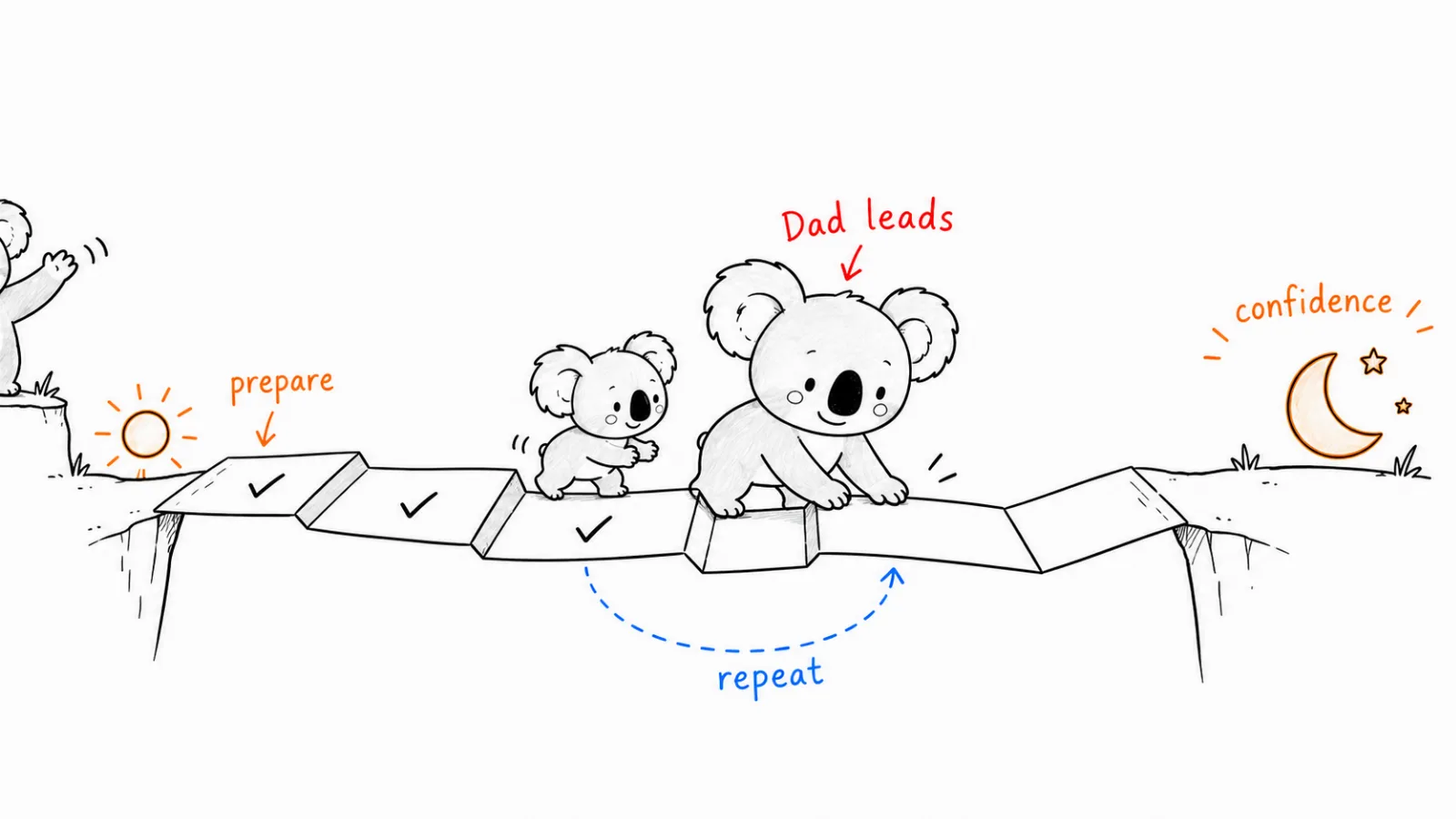
Confidence usually develops through repeated experience, not through waiting until Dad feels completely prepared. Choose a schedule that is frequent enough to become familiar—such as alternate nights or several set nights each week.
For a child strongly attached to one bedtime parent, a gradual handover may help:
- ●Prepare during the day. Explain simply who will lead bedtime that night.
- ●Keep familiar steps. Use the child’s usual routine while Dad takes the lead.
- ●Let the other parent leave earlier. After a brief goodnight, Dad completes the routine alone.
- ●Repeat the arrangement. Avoid judging the new routine after one difficult evening.
- ●Review as adults. Adjust timing or practical details without changing the plan in response to every protest.
Children aged 2–8 vary widely in how quickly they adapt. Younger children may need very simple choices and repeated reminders. Older children can help create a bedtime checklist, but adults should retain responsibility for the limits.
Recognised parenting and health resources, including HealthyChildren.org, the NHS and Raising Children Network, generally emphasise calm, predictable bedtime habits. If bedtime regularly involves severe distress, persistent sleep difficulty, breathing concerns or daytime problems, speak with your child’s doctor or another qualified health professional.
FAQ
What if Dad often arrives home after bedtime?
Choose the nights when he can reliably be present rather than promising a schedule that frequently changes. On other days, he might own a smaller but predictable connection point, such as choosing the evening story earlier or recording a brief goodnight message. The bedtime routine should still be led consistently by the parent who is present.
Can separated parents use different bedtime routines?
Yes. Children can learn that different homes have different routines. Each household should aim for a predictable sequence and age-appropriate boundaries; the routines do not need to match exactly unless a specific issue makes coordination important.
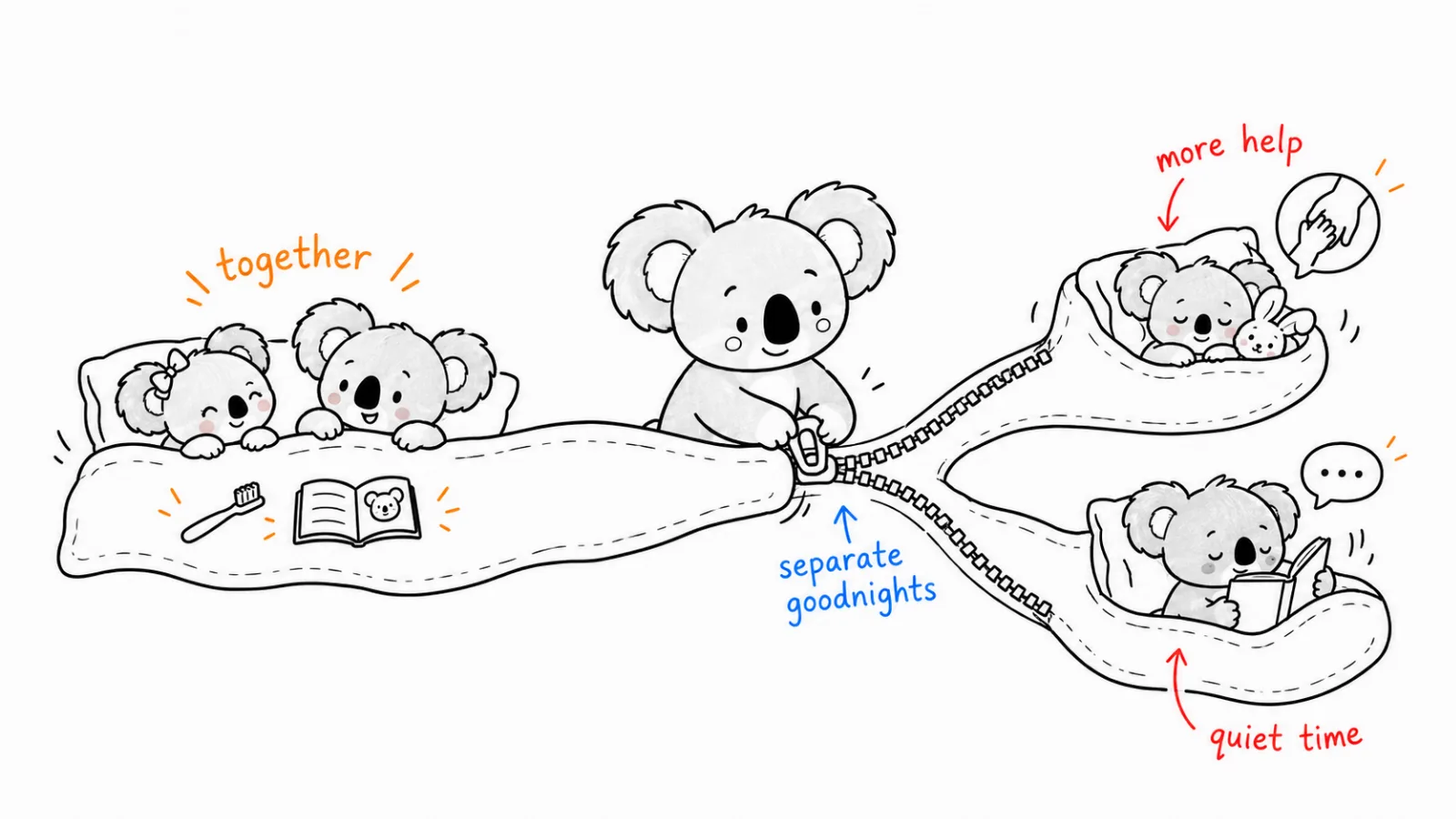
Should siblings share the same dad-led routine?
They can share preparation and story time, but individual needs may differ. A younger child may need more hands-on help, while an older child may benefit from a few minutes of private conversation or reading. A short shared routine followed by separate goodnights often works well.
What if bedtime takes much longer with Dad?
Expect some extra time during the transition, but check whether unclear limits are extending the routine. Set the number of stories and final requests in advance, then keep the closing sequence brief and consistent. If the routine remains unusually difficult over time, look at timing, naps, anxiety, illness or other factors with an appropriate health professional.
The Bottom Line
Dad-led bedtime works when it is treated as a normal part of family life, not an occasional rescue shift. Give Dad real ownership, preserve a familiar structure and allow both the child and parent enough repetition to build confidence. The routine does not need to look identical with each parent; it needs to feel safe, clear and dependable.
Ready for calmer bedtimes?
Try Gula Stories free — 5 narrated bedtime stories, ad-free, for children ages 3-8.