
Creating a Tech-Free Bedroom for Kids
A tech-free bedroom works best when devices have a clear home elsewhere, such as a family charging station in the kitche
Key Takeaways
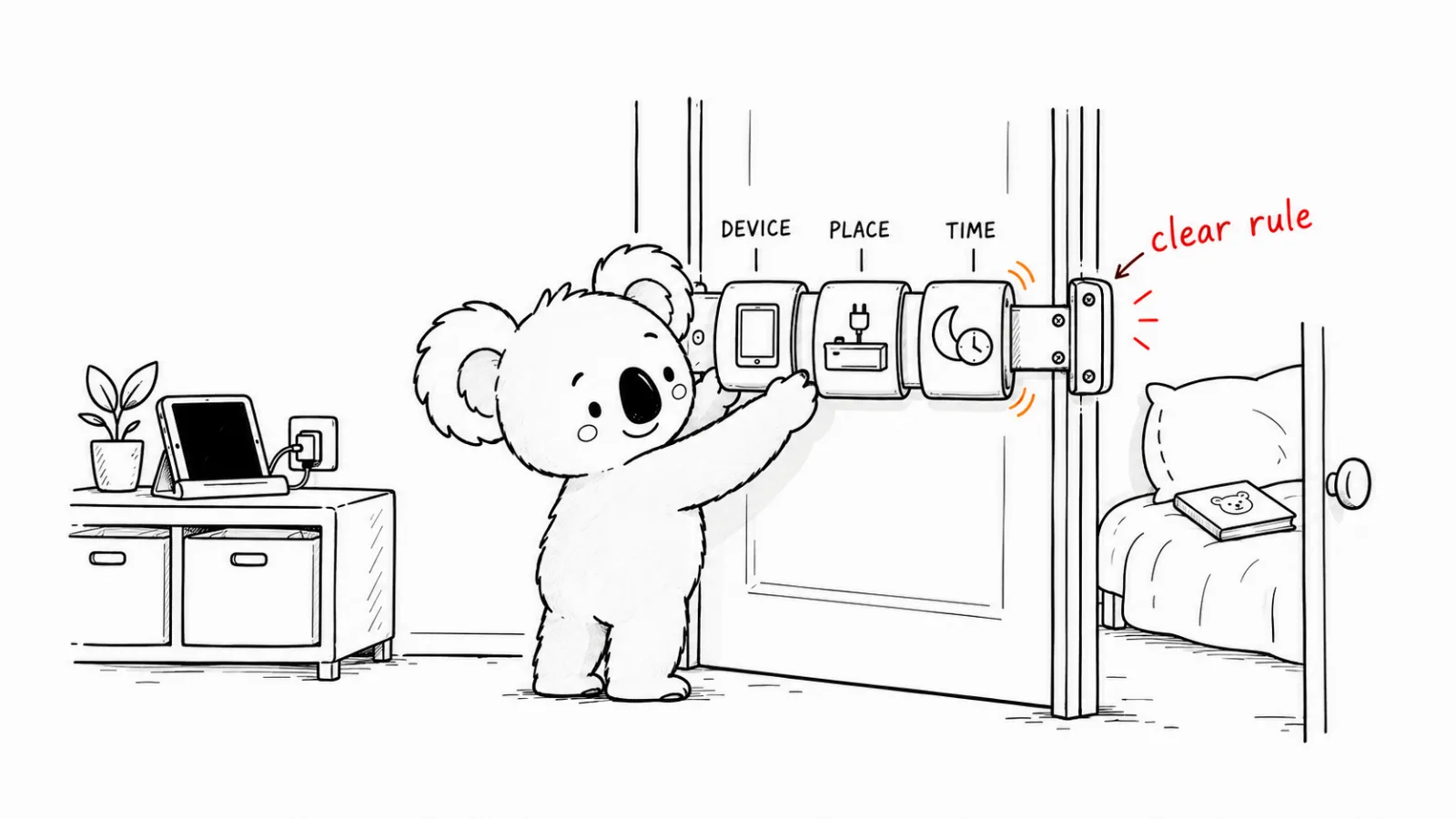
- ●A tech-free bedroom works best when devices have a clear home elsewhere, such as a family charging station in the kitchen.
- ●Consistent household rules are usually easier for children to accept than rules that change from night to night.
- ●Replace screens with a predictable wind-down routine that includes familiar activities such as washing, reading, quiet conversation and cuddles.
- ●Parents can model the same habits by keeping their own phones away during the child’s bedtime routine.
- ●If sleep difficulties continue despite consistent routines, speak with a GP, paediatrician or other qualified health professional.
1. Introduction
Tablets, phones and televisions can easily become part of a child’s bedroom. A device may begin as a practical tool for travel, quiet time or bedtime stories, then gradually remain beside the bed every night. Once that happens, removing it can feel like a much bigger change than bringing it into the room.
For families with children aged two to eight, the challenge is not simply deciding that screens should stay out. Parents also need to know where devices will go, how to explain the change and what will replace the familiar screen-based routine.
A tech-free bedroom is a room where entertainment devices are not stored or used as part of the normal bedtime routine. Depending on the household, that may include phones, tablets, televisions, gaming devices, smartwatches and internet-connected toys. Essential equipment, such as a medically necessary monitor, should be treated separately.
The goal is not to present technology as harmful or forbidden. It is to give the bedroom a clear purpose: sleeping, resting and reconnecting at the end of the day. This guide explains practical ways to establish that boundary without turning bedtime into a nightly conflict.
2. Decide What “Tech-Free” Means in Your Home
The first step is to create a rule that is specific enough for everyone to understand. “Less technology at bedtime” can mean different things to different family members. “Tablets stay in the kitchen overnight” is much clearer.
Start by identifying the devices that regularly enter the bedroom:
- ●Phones
- ●Tablets and e-readers
- ●Televisions
- ●Handheld gaming devices
- ●Smartwatches
- ●Internet-connected toys
- ●Laptops
- ●Portable speakers with interactive features
Next, decide whether your rule applies at all times or only during the bedtime period. A fully tech-free bedroom is often easier to manage because it removes negotiation: devices simply belong elsewhere. However, some families may need a staged transition, particularly if a child already relies heavily on a device at bedtime.
A practical family rule
A simple rule might be:
Entertainment screens stay outside bedrooms. They are put away before the bedtime routine begins and remain in the family charging area until morning.
This rule identifies the devices, the location and the timing. It also avoids making the boundary depend on whether a child has behaved well that day. Using bedroom technology as a reward can make the rule harder to maintain.
Account for genuine exceptions
A tech-free bedroom does not require removing equipment that supports a child’s health, safety or accessibility. Examples may include prescribed medical devices, communication aids or necessary monitoring equipment.
If a device serves both an essential and an entertainment function, consider limiting unnecessary features rather than removing the device entirely. Families can ask a health professional or relevant specialist for guidance when they are unsure how a technology boundary may affect a child’s individual needs.
3. Give Every Device a Home Outside the Bedroom
A rule is easier to follow when the physical environment supports it. If a tablet is left on a bedside table, children can see that access remains possible. Moving devices to a fixed location removes repeated decisions from the bedtime routine.
Create a family charging station in a shared area, such as:
- ●A kitchen counter away from food preparation
- ●A shelf in the living room
- ●A hallway cabinet
- ●A home office or utility area
- ●A secure drawer for devices that do not need overnight charging
Keep cables tidy, make sure the area is ventilated and follow the manufacturer’s charging instructions. Avoid charging damaged devices or covering them with bedding, clothing or other materials.
Remove bedroom-specific temptations
If the room contains a television or gaming setup, unplugging it each night may not create a meaningful boundary. When practical, relocate the equipment to a shared room. If it cannot be moved immediately, disconnect it and remove controllers, remotes or power cables while the family adjusts.
Parents should also check for less obvious technology. An old phone without a mobile plan may still play downloaded videos or games. A smartwatch may deliver notifications. An interactive toy may remain stimulating long after the lights are dimmed.
Use a short evening handover
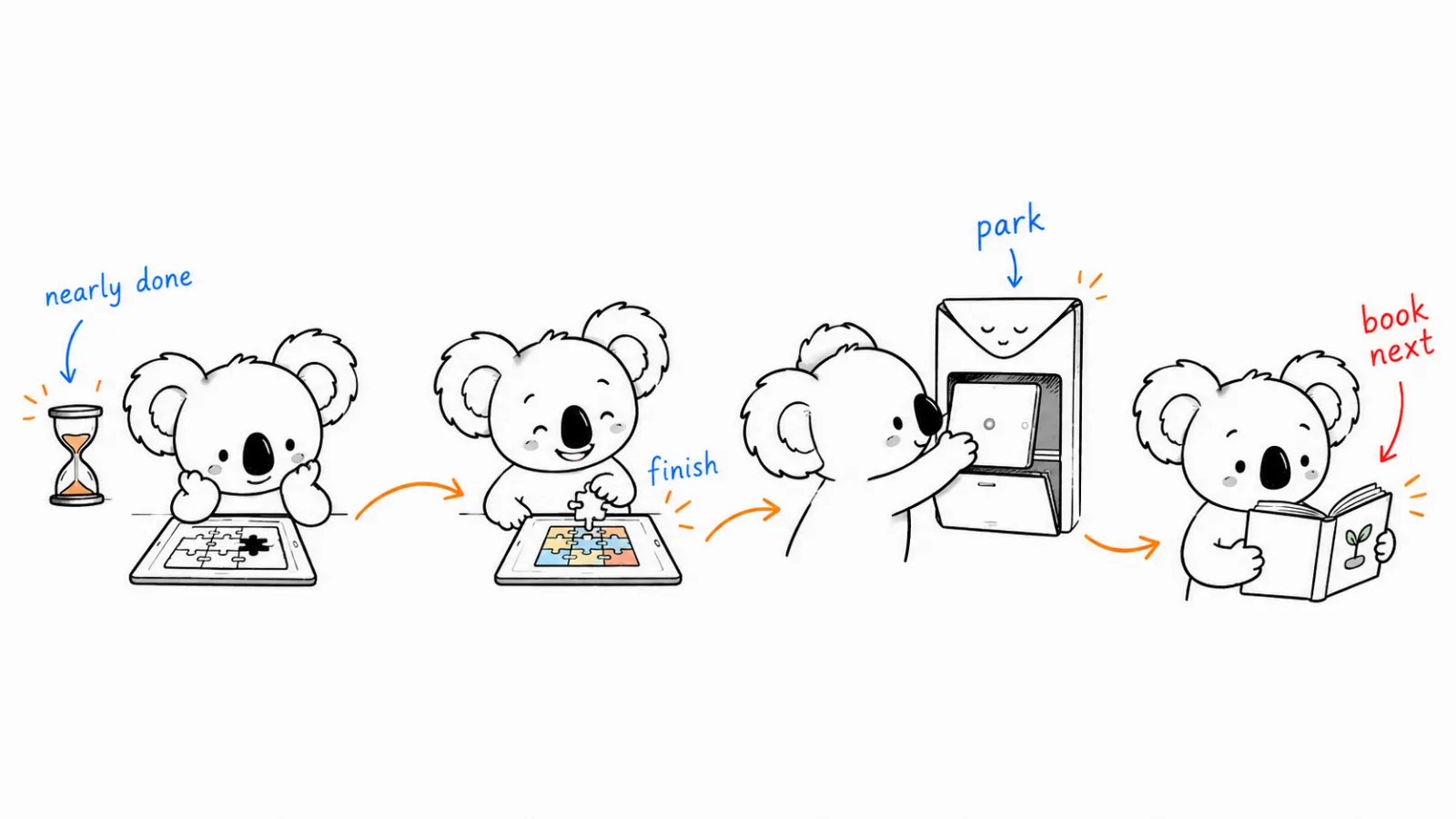
For younger children, turn putting devices away into a predictable transition rather than an abrupt confiscation.
For example:
- ●Give a calm reminder that screen time is nearly finished.
- ●Let the child complete a natural stopping point where possible.
- ●Ask the child to carry the device to its charging place.
- ●Confirm what comes next: “The tablet is resting now. It’s time to choose a book.”
- ●Move directly into the next bedtime activity.
This sequence gives the child a role in the process and reduces uncertainty. The language can be simple, but the order should remain consistent.
4. Replace the Screen-Based Routine
Removing a screen leaves a gap. If parents do not plan what will fill it, tired children are likely to ask for the familiar device again.
A replacement routine does not need to be elaborate. It should be calm, repeatable and realistic on busy evenings. Recognised parenting and health resources, including HealthyChildren.org, the NHS and Australia’s Raising Children Network, commonly emphasise consistent bedtime routines and calm transitions as useful foundations for children’s sleep.
A practical routine might include:
- ●Put devices in the family charging area.
- ●Have a bath or wash.
- ●Change into pyjamas.
- ●Brush teeth and use the toilet.
- ●Choose one or two quiet activities.
- ●Read or listen to a story.
- ●Share a brief cuddle or conversation.
- ●Say goodnight using the same closing phrase.
The exact order matters less than its predictability.
Choose replacements that meet the same need
Children use bedtime technology for different reasons. The most effective alternative addresses the reason the device was appealing.
| If the device provides… | Try replacing it with… | Practical example |
|---|---|---|
| A story | A printed book or screen-free audio | Let the child choose between two familiar stories |
| Background sound | Soft audio or a simple sound machine | Select the audio before entering the bedroom |
| Parent connection | Conversation, cuddles or shared reading | Ask one easy question about the child’s day |
| A distraction from worries | A predictable calming activity | Use slow breathing, drawing before bed or a comfort object |
| Independence | A limited set of choices | Let the child choose pyjamas, a book or a night-light colour |
| A visual night-light | A basic, dim light | Use a non-interactive light without notifications or games |
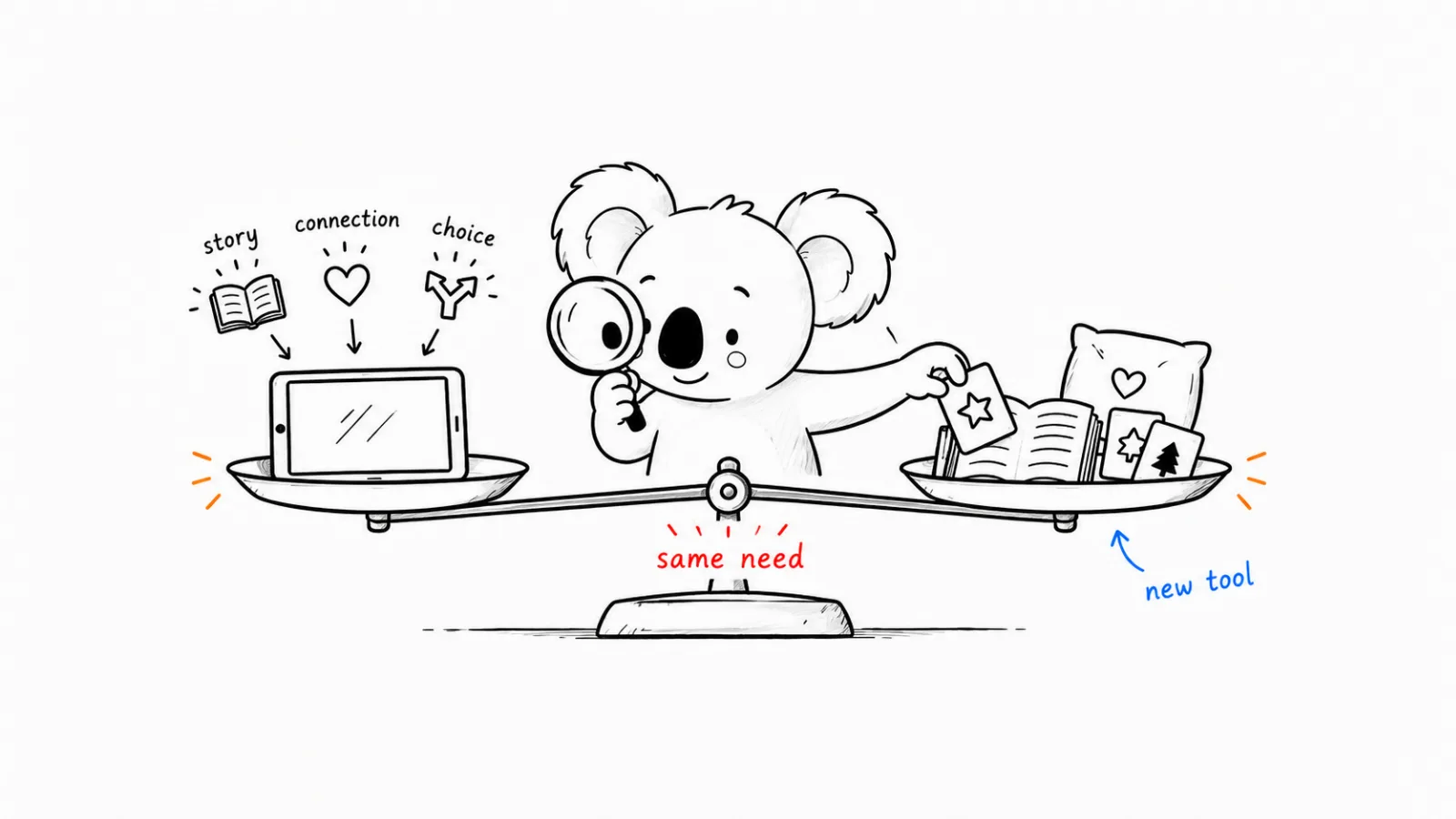
If your family uses a digital story service such as Gula Stories, choose the story and narration before the child enters the bedroom. Where practical, play audio from outside the sleeping area or use a simple speaker without a visible screen. The purpose is to preserve the calming story experience without putting an interactive device in the child’s hands.
Keep activities genuinely calm
Not every screen-free activity supports winding down. Competitive games, energetic play or exciting new toys may make the transition to bed more difficult for some children. Watch how your child responds and favour familiar, low-pressure activities during the final part of the evening.
Children vary in how quickly they settle. A routine that works well for one child may need adjusting for another, especially during developmental changes, illness, travel or major family transitions.
5. Make the Change Without Creating a Power Struggle
A child who is accustomed to watching or playing in bed may protest when the rule changes. That reaction does not necessarily mean the boundary is wrong; it often means the routine is unfamiliar.
Explain the change during the day, when nobody is tired or rushing. Keep the explanation short and concrete:
“We are making bedrooms a place for rest. From tonight, the tablet will charge in the kitchen. You can choose a book or an audio story instead.”
Avoid lengthy debates at bedtime. Young children may repeatedly ask the same question because they hope the answer will change. A calm, consistent response is usually clearer than introducing new reasons each time.
Consider a gradual transition
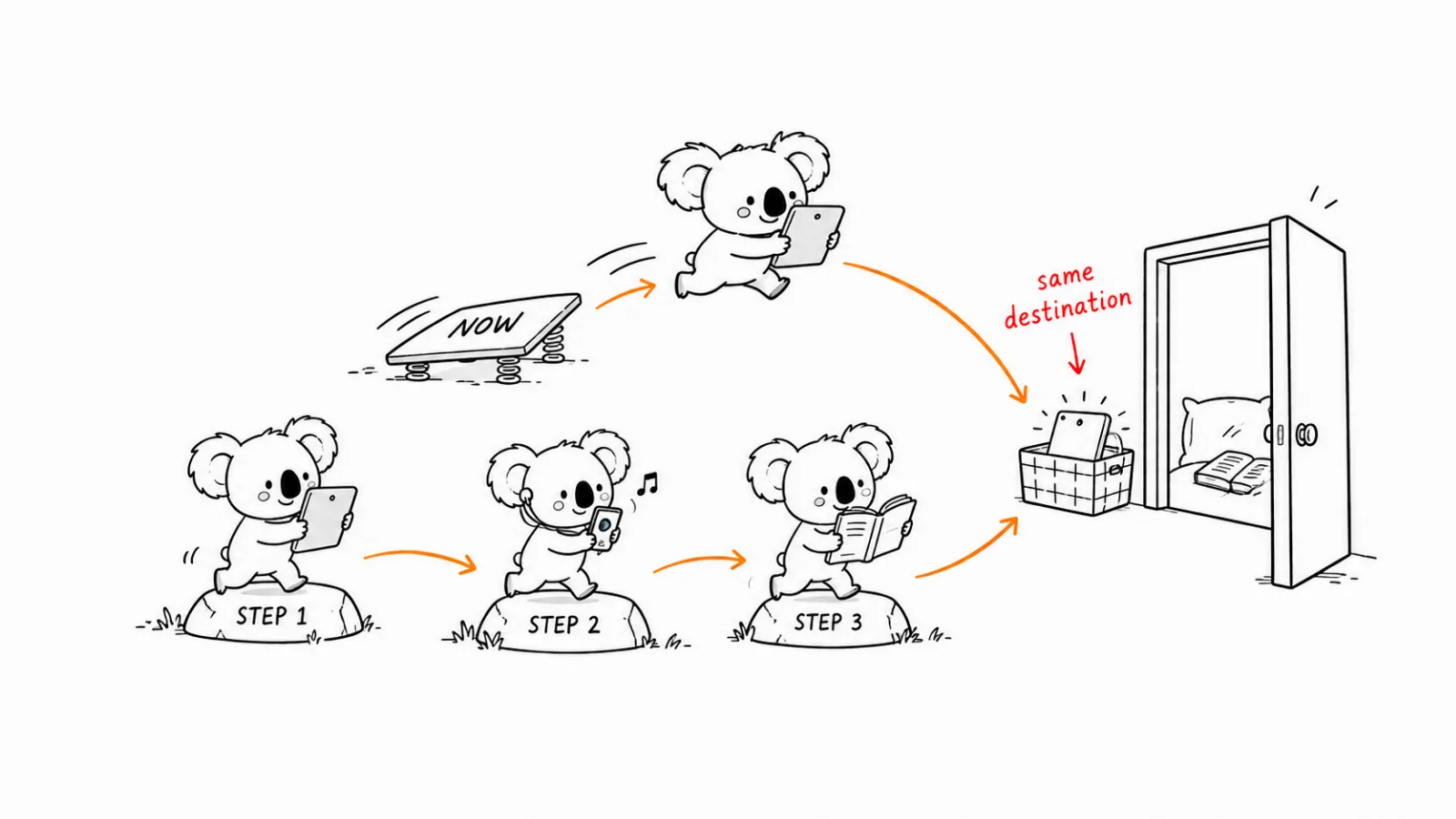
Some families can remove devices immediately. Others may find that a staged approach creates less disruption.
| Approach | How it works | May suit |
|---|---|---|
| Immediate change | All entertainment devices move out of the bedroom on a chosen day | Children who adapt well to clear boundaries |
| Short transition | Screen use ends earlier each evening, then moves outside the bedroom | Children strongly attached to an existing routine |
| Function replacement | Video becomes audio, then the device moves outside the room | Children who mainly use technology for stories or sound |
| Whole-family reset | Everyone places devices in a shared charging area | Families seeking a consistent household rule |
Whichever method you choose, avoid extending the transition indefinitely. Set a clear destination and explain each stage in age-appropriate language.
Model the boundary
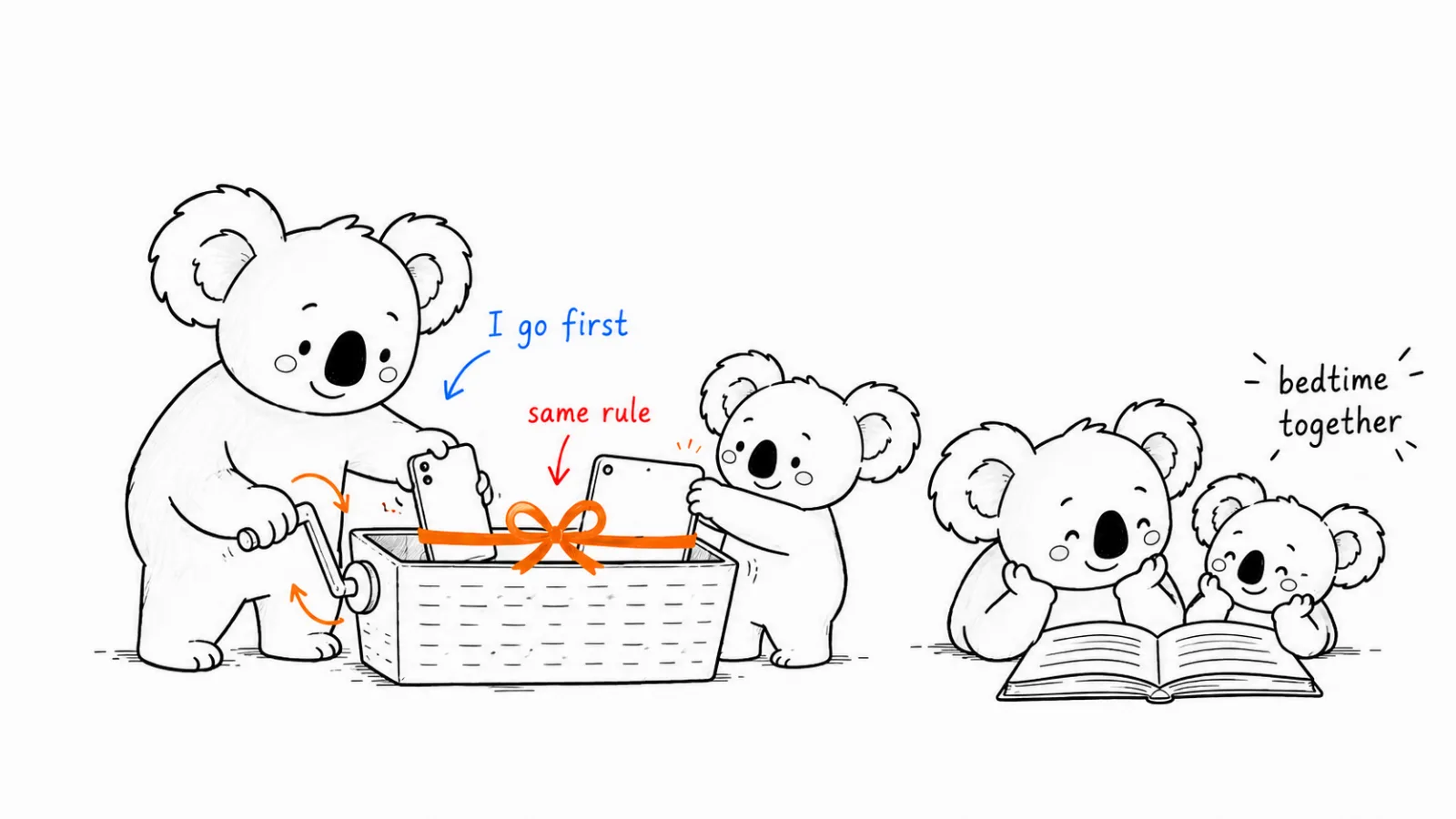
Children notice when adults carry phones into the room while telling them that bedrooms are screen-free. Parents do not need flawless technology habits, but visible consistency strengthens the rule.
During the bedtime routine:
- ●Keep your phone in a pocket, drawer or another room.
- ●Turn off unnecessary notifications.
- ●Avoid checking messages while reading or talking.
- ●Use a watch or simple clock instead of repeatedly checking the phone.
- ●Tell other adults when you are unavailable for the bedtime period.
If you need your phone for work, emergencies or monitoring, explain the difference briefly. A practical exception is easier for children to understand when it is clearly limited.
Respond calmly to setbacks
A late evening, holiday or illness may interrupt the routine. Treat this as a temporary exception rather than evidence that the plan has failed. Return to the usual boundary the following night.
If one caregiver allows a device and another does not, agree on a shared rule away from the child. Consistency between homes may not always be possible, particularly after separation, but each household can still maintain a clear and predictable routine.
6. FAQ
What should be removed from a tech-free bedroom?
Remove entertainment screens and devices that invite active use, including tablets, phones, televisions, handheld games and laptops. Smartwatches and connected toys may also need to stay outside if they provide notifications, videos or games. Essential medical, communication or accessibility equipment should remain available as required.
How long does it take a child to adjust?
There is no universal adjustment period. Some children accept the change quickly, while others need repeated reminders and extra reassurance. Temperament, age and the strength of the previous habit can all affect the transition. Focus on keeping the rule and replacement routine predictable instead of expecting progress by a specific date.
Can children listen to bedtime stories in a tech-free bedroom?
Yes, if the setup supports the family’s boundary. Printed books are the simplest option. Screen-free audio can also work when it is selected in advance and does not give the child access to games, videos or notifications. An app such as Gula Stories may be used to choose age-appropriate narration beforehand, with the controlling device kept outside the bedroom where practical.
What if my child still struggles to sleep?
Bedtime resistance and night waking can occur for many reasons, and technology is only one part of the picture. Continue with a calm, consistent routine and observe patterns such as timing, naps, discomfort, fears or environmental noise. If sleep problems persist, significantly affect daily life or cause concern, speak with a GP, paediatrician or qualified child health professional.
7. Conclusion
Creating a tech-free bedroom for kids is primarily an environmental and routine change. The clearest approach is to define which devices stay out, establish a shared charging area and replace screen use with a predictable sequence of quiet activities.
Families do not need to present technology as the enemy. Children can enjoy appropriate digital content at other times and in shared spaces while learning that the bedroom has a different purpose. Clear rules, realistic alternatives and calm repetition make that distinction easier to understand.
Begin with one concrete action: choose a permanent location outside the bedroom where every entertainment device will spend the night. Then build the bedtime routine around what remains—stories, comfort, conversation and rest.
Ready for calmer bedtimes?
Try Gula Stories free — 5 narrated bedtime stories, ad-free, for children ages 3-8.