
Choosing Bedtime Stories for 5-Year-Olds
Good bedtime stories for 5 year olds match three changing needs: a growing sense of humour, a vivid imagination that can
Key Takeaways
- ●Good bedtime stories for 5 year olds match three changing needs: a growing sense of humour, a vivid imagination that can amplify fears, and rapidly expanding vocabulary.
- ●Gentle absurdity, repetition and playful misunderstandings often work better at bedtime than loud, frantic comedy.
- ●Mild tension can make a story engaging, but the threat should be understandable, manageable and clearly resolved before the story ends.
- ●Choose language that is mostly familiar while introducing a small number of new words through context.
- ●A child’s response matters more than an age label. Notice what helps your child feel connected, curious and ready to settle.
1. Introduction
Choosing a bedtime story for a five-year-old can be surprisingly complicated. Children at this age often understand more sophisticated jokes, follow longer plots and ask detailed questions about unfamiliar words. At the same time, their imaginations can turn a shadow, villain or unresolved problem into a worry that continues after the book is closed.
The challenge is not simply finding a story marked “age five.” Parents need to judge whether its humour is calming or overstimulating, whether its scary moments feel manageable, and whether its language stretches the child without making the story difficult to follow.
The most suitable bedtime stories for 5 year olds usually combine emotional safety with genuine interest. They give children something to laugh about, a small problem to think through and a satisfying sense of closure. This article explains how humour, fears and vocabulary shape those choices—and how to adjust when a well-reviewed story does not suit your particular child.
2. Choose Humour That Connects Without Overexciting
Five-year-olds often enjoy humour built around surprise, repetition and broken expectations. A character may wear a saucepan as a hat, misunderstand a simple instruction or confidently attempt something in an obviously silly way. Children can anticipate a repeated joke while still enjoying its return.
This kind of humour works because it allows the child to participate. They may spot the mistake before the character does, complete a repeated phrase or predict the funny consequence. The joke becomes a shared experience between the child, the reader and the story.
Humour that often works at bedtime
Look for stories featuring:
- ●Gentle absurdity, such as animals doing ordinary human tasks
- ●Repeated phrases or escalating patterns
- ●Playful misunderstandings
- ●Harmless rule-breaking
- ●Wordplay that can be understood from context
- ●Characters who recover easily from embarrassing mistakes
For example, a story about a bear repeatedly choosing the wrong object for a pillow offers humour without much emotional intensity. A child can laugh, predict what the bear will try next and feel confident that nothing serious is at stake.
When funny becomes too stimulating
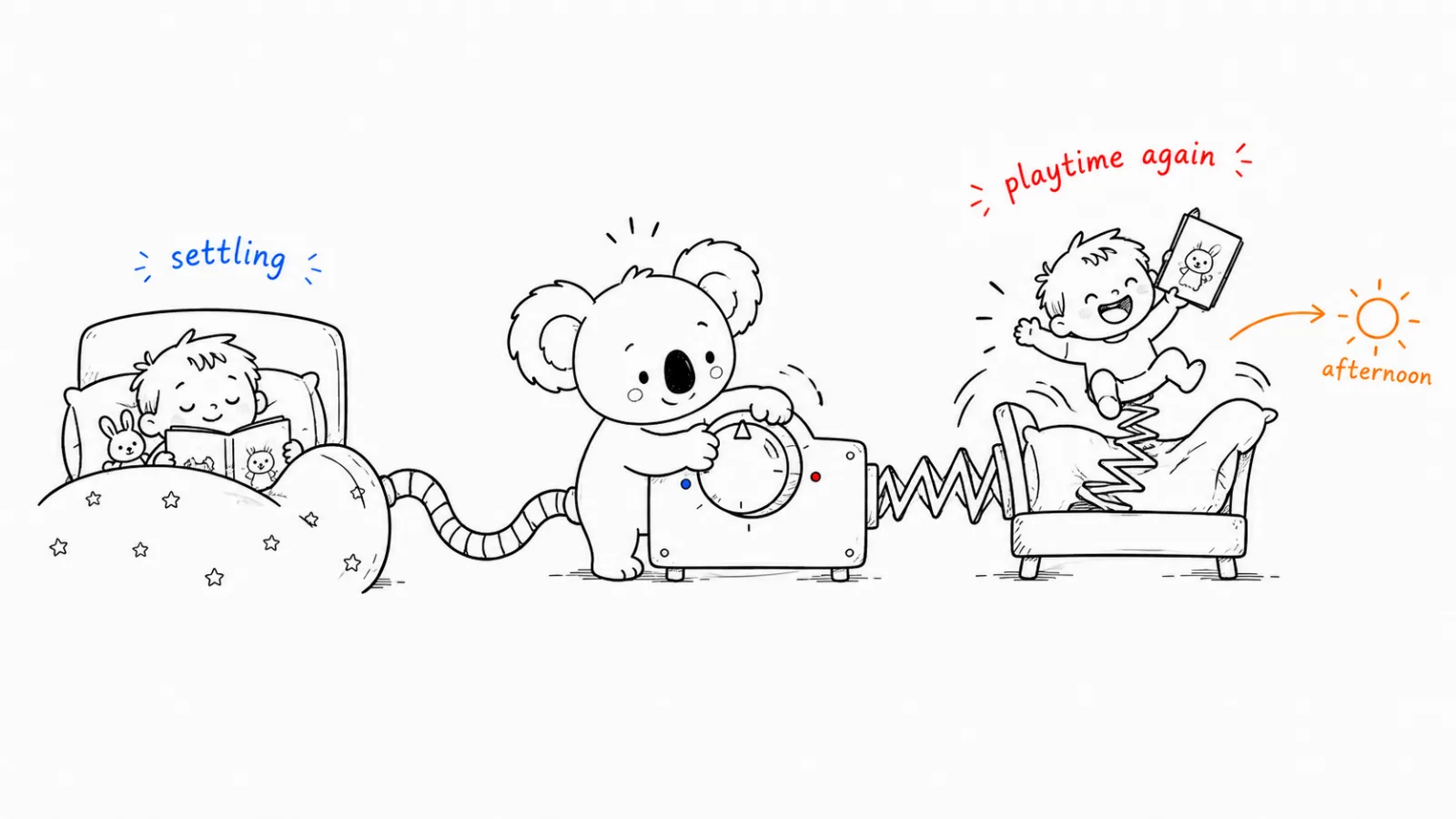
Not every funny story is well suited to the final part of the evening. Fast action, constant shouting, toilet humour, chaotic illustrations or characters who never slow down may leave some children more alert than relaxed.
That does not make the book inappropriate. It may simply work better earlier in the day.
A practical test is to observe the child after reading. Are they smiling and settling, or jumping up to reenact every scene? If the story reliably restarts playtime, move it to an afternoon reading session and choose quieter humour for bed.
The reader’s delivery also changes the experience. Even an energetic book can feel calmer when read at a measured pace, with gentle voices and pauses rather than dramatic shouting.
3. Treat Fears as Individual, Not Merely Age-Based
Five-year-olds can understand that a story is imaginary while still feeling frightened by it. Their ability to imagine what might happen is developing quickly, but their confidence in separating an imagined threat from an immediate one may vary by situation.
Common sensitivities can involve darkness, separation, getting lost, strange noises, monsters, animals, storms or a caregiver being in danger. These are typical themes in childhood stories, but children do not respond to them uniformly.
One child may find a friendly ghost hilarious. Another may think about it every time the bedroom light goes out. A child who happily reads about dragons may be distressed by a realistic story about a lost pet because it feels more possible.
Look at how the story handles danger
The presence of a frightening element is less important than how it is presented and resolved. A manageable bedtime story generally gives the child enough information to understand:
- ●What the problem is
- ●Who can help
- ●What the character does
- ●How safety is restored
- ●Where everyone is at the end
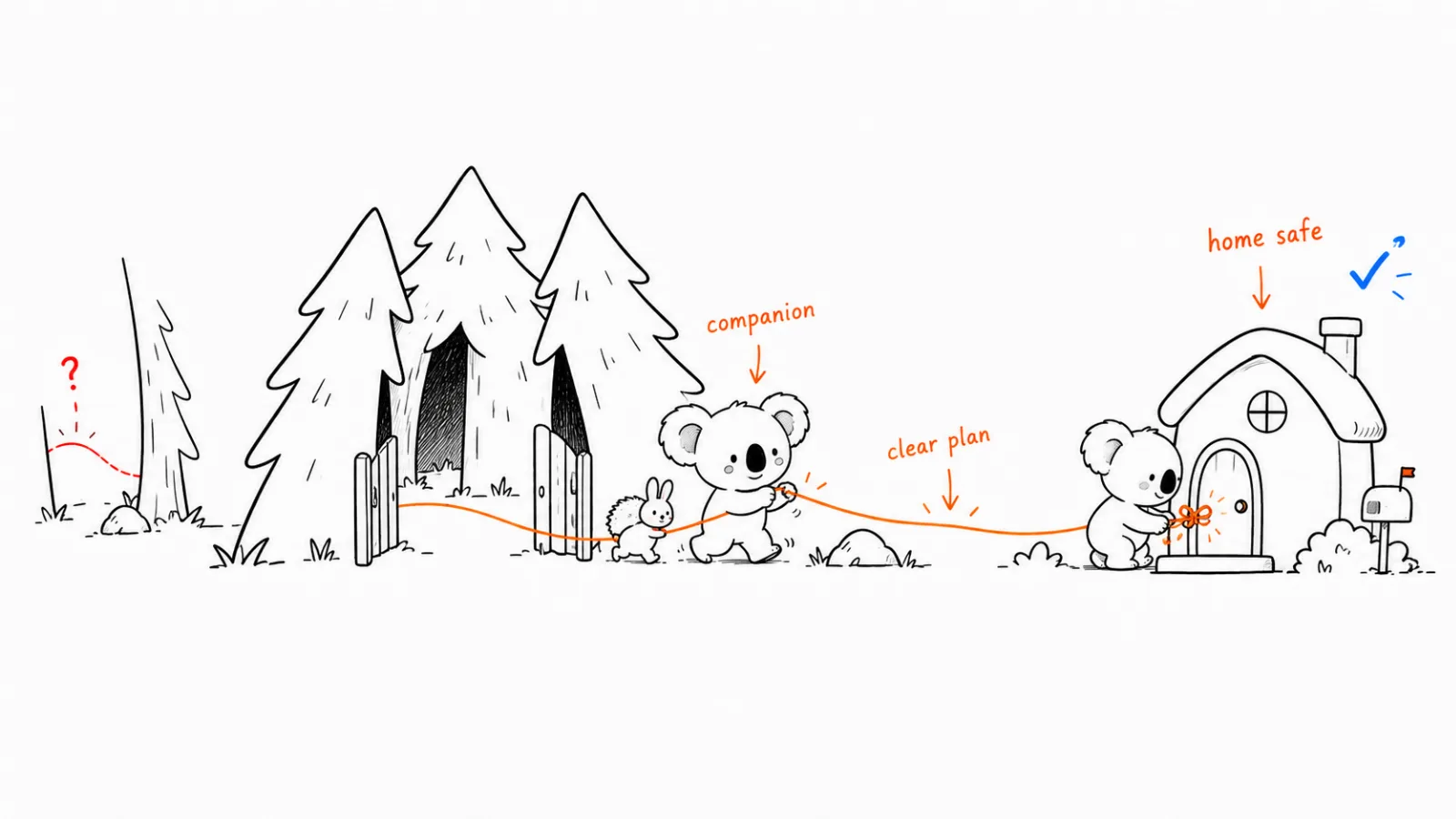
A dark forest can be manageable if the character has a companion, follows a clear plan and returns home safely. The same setting may feel much more unsettling if the character remains lost or if the final page hints that the danger is still nearby.
Use a simple “distance from danger” test
Before choosing a story, consider how close its threat is to the child’s own life:
| Story element | Often easier to manage | May require more caution |
|---|---|---|
| Character | Clearly imaginary creature | Child of a similar age |
| Setting | Fantasy kingdom or distant planet | Bedroom, school or local park |
| Threat | Silly, exaggerated problem | Realistic separation or injury |
| Support | Helpful adult or loyal companion | Character faces danger alone |
| Ending | Safety is clearly restored | Threat remains unresolved |
This table is a guide, not a rule. Fantasy can still frighten a child, and realistic stories can be reassuring when handled gently.
What to do when a story causes worry
If your child becomes uncomfortable, pause rather than insisting on finishing. Name the reaction calmly: “That wolf feels too scary tonight.” You can look ahead together, summarise the safe ending or stop and choose another story.
Avoid teasing the child or telling them that the story is “not scary.” Acknowledging the feeling does not confirm that the danger is real; it shows that the child’s experience has been heard.
Recognised parenting and health resources—including HealthyChildren.org from the American Academy of Pediatrics, the NHS and Australia’s Raising Children Network—generally encourage predictable bedtime routines and calm responses to children’s worries. If bedtime fears are persistent, intense or regularly interfere with sleep or daytime life, consider discussing them with a qualified health professional.
4. Match Vocabulary to Understanding, Not Reading Level Alone
At age five, a child’s spoken vocabulary and story comprehension may be well ahead of their independent reading ability. Bedtime reading therefore does not need to be limited to books the child could read alone.
Listening to an adult read allows children to encounter longer sentences, expressive language and unfamiliar words with support. The goal is not to remove every difficult word. It is to provide enough context that the child can follow the story without needing an explanation on every page.
Use the “mostly familiar, slightly stretching” principle
A suitable story usually has:
- ●A plot the child can follow
- ●Mostly familiar sentence structures
- ●Illustrations or context that clarify new language
- ●A small number of interesting new words
- ●Repetition that reinforces meaning
- ●Opportunities for brief questions without losing the narrative
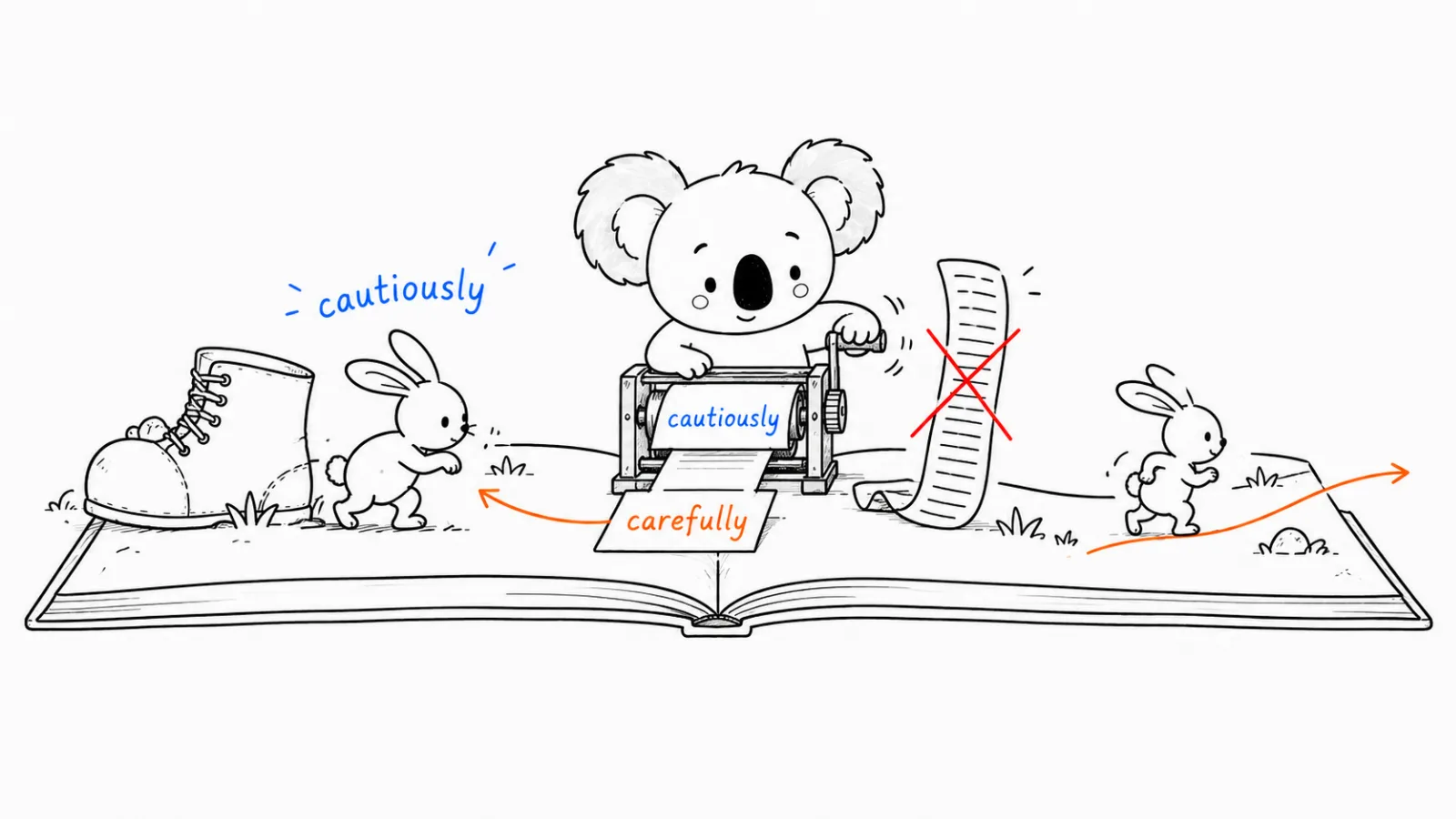
Suppose a story says, “The rabbit crept cautiously past the sleeping giant.” Even if “cautiously” is unfamiliar, the illustration and action may make its meaning clear. A quiet explanation—“He is moving carefully”—is usually enough.
By contrast, a story containing dense description, frequent abstract language and several unknown words in each sentence may become an informal vocabulary lesson rather than a comforting shared experience.
Explain without interrupting the story’s rhythm
When a child asks what a word means, use a short, concrete explanation and continue reading:
- ●“Enormous means very, very big.”
- ●“Reluctant means she does not really want to do it.”
- ●“A burrow is an animal’s home under the ground.”
Long definitions can make children lose track of the plot. If a word is especially interesting, return to it after the story.
Repetition also helps. When a favourite book is read again, children can focus less on understanding what happens and more on noticing phrases, patterns and new vocabulary. Re-reading is not a lesser activity; it supports familiarity, participation and confidence.
5. Use a Three-Part Method to Evaluate a Story
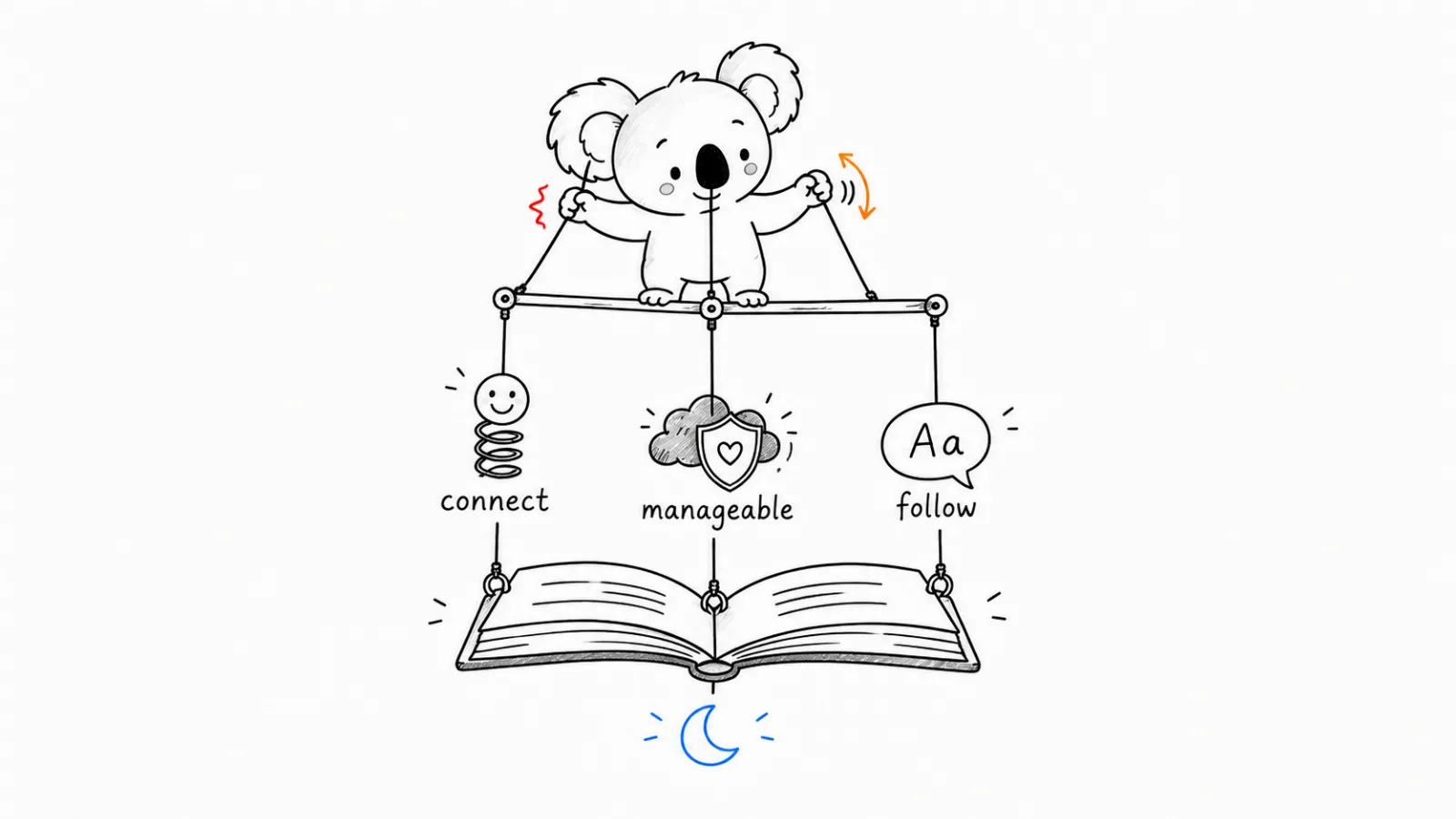
Age recommendations are useful starting points, but they cannot account for temperament, recent experiences or how tired a child is. A simple three-part check provides a more reliable decision.
The Humour–Fear–Language Check
| Question | Good signs | Signs to reconsider |
|---|---|---|
| Will the humour help connection? | Predictable jokes, gentle silliness, shared laughter | Relentless action, shouting or humour that encourages rough play |
| Is the tension emotionally manageable? | Mild problem, visible support, reassuring resolution | Realistic threat, prolonged helplessness or unresolved danger |
| Can the child follow the language? | Mostly familiar wording with contextual clues | Frequent explanations are needed to understand basic events |
A story does not need to score perfectly in every category. Context matters.
For example:
- ●After a tiring day: Choose a familiar story with a simple plot, soft humour and very little tension.
- ●When a child wants something new: Try a slightly longer story with richer vocabulary but a reassuring structure.
- ●During a phase of nighttime fears: Avoid surprise threats and ambiguous endings, even if the book is marketed for the correct age group.
- ●When the child requests the same book repeatedly: Keep reading it if it remains enjoyable. Familiarity may be part of what makes bedtime feel secure.
- ●When siblings listen together: Choose a clear central plot, then adjust engagement through delivery or questions rather than selecting solely for the oldest child.
Preview when possible
Before introducing an unfamiliar bedtime story, scan its final pages and its most intense scene. Reviews and publisher age ranges may describe the reading difficulty but overlook an image or plot point that matters to your child.
For audio stories, listen to a short sample if available. Narration speed, sound effects and character voices can change how intense a story feels. A safe, ad-free app such as Gula Stories can help parents choose age-appropriate recommendations and calmer narration styles, but the same principle applies: preview the experience and observe the individual child’s response.
Let the child have bounded choices
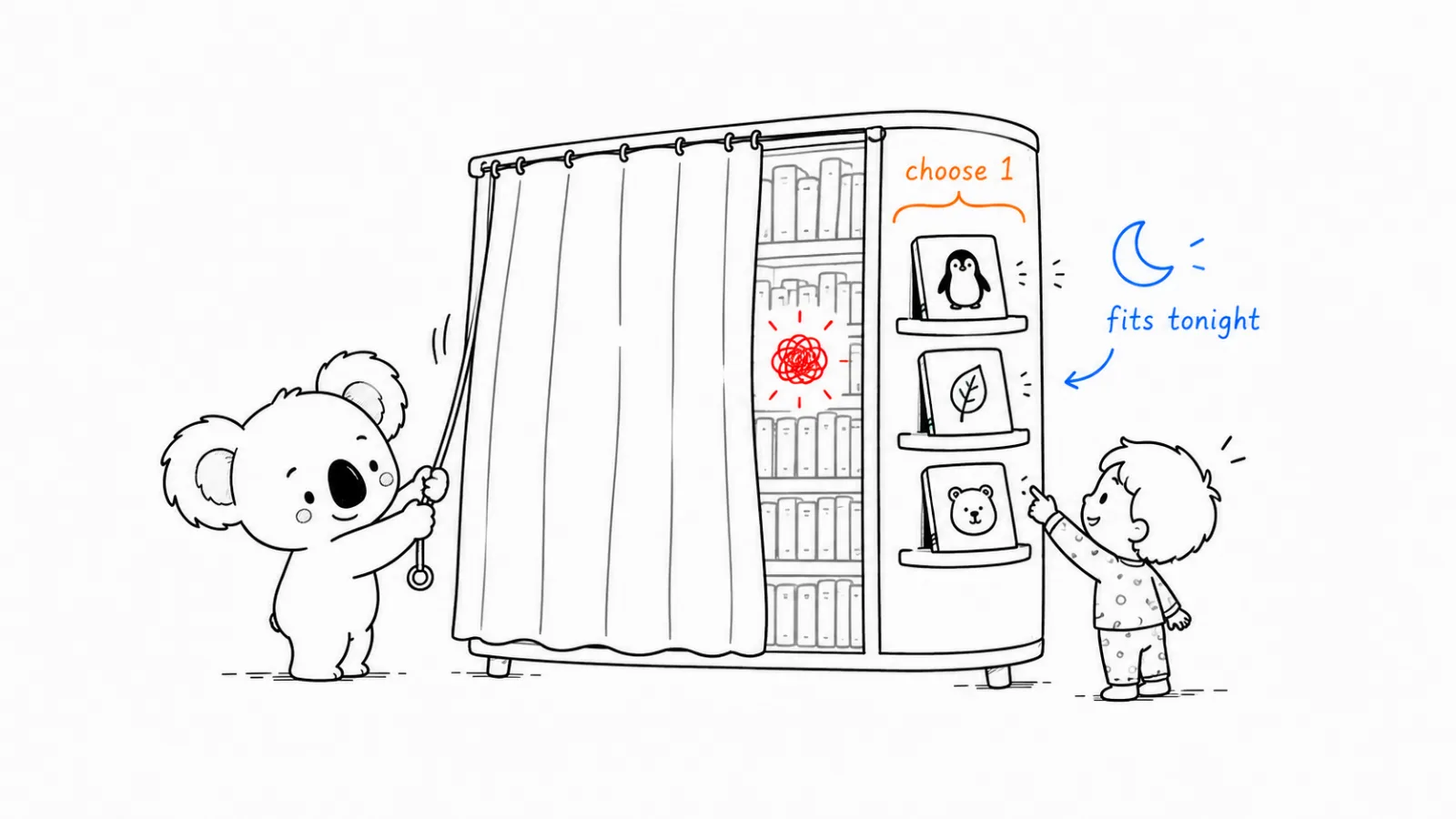
Choice can increase cooperation, but an unlimited bookshelf may delay bedtime. Offer two or three suitable options:
“Would you like the silly penguin story, the garden adventure or the familiar bear story?”
All available choices should already fit the evening. On a difficult night, this might mean selecting only familiar, low-tension books. On a relaxed night, one option might introduce a new story or more challenging vocabulary.
6. FAQ
What length should a bedtime story for a five-year-old be?
There is no single correct length. Choose a story that fits your routine and the child’s ability to stay engaged. On some nights, a short picture book is enough. On others, a child may enjoy several chapters or a longer illustrated story.
Consistency is often more useful than reaching a particular page count. If a longer book creates negotiation at the stopping point, agree in advance to read one chapter or stop at a clearly marked place.
Are scary stories appropriate for five-year-olds?
Mildly scary stories can be appropriate when the child enjoys them, the threat is manageable and the ending clearly restores safety. Preview stories involving separation, realistic danger, threatening characters or unresolved endings.
If a child remains worried after the story, choose gentler material for bedtime. Persistent or significant fears are worth discussing with a health professional.
Should parents explain every unfamiliar word?
No. Explain words that are essential to following the plot or that the child asks about. Other meanings may be understood through illustrations, tone and context.
Keep explanations brief during the story. You can discuss interesting words afterward or notice them again during a future reading.
What if my child only wants funny stories?
Funny stories can be excellent bedtime choices if they strengthen connection and do not leave the child overstimulated. Look for gentle comedy with repetition, warm relationships and a calm ending. Save highly energetic or chaotic favourites for earlier in the day if they make settling difficult.
7. Conclusion
Choosing bedtime stories for 5 year olds is less about finding a universal list and more about matching the story to the child and the evening. At this age, humour can create closeness, imagination can make fictional threats feel immediate, and growing vocabulary can support richer storytelling.
The strongest choices tend to offer gentle participation, manageable tension, accessible language and a clear emotional landing place. Preview unfamiliar stories, watch how your child responds and adjust without treating a rejected book as a failure.
A bedtime story has done its job when the child feels engaged during the reading and secure when it ends. The right balance may change from night to night—and careful observation is often a better guide than the number printed on the cover.
Ready for calmer bedtimes?
Try Gula Stories free — 5 narrated bedtime stories, ad-free, for children ages 3-8.