
Calming Anger Before Bed: Stories and Strategies
Help your child feel safe and physically calm before discussing behaviour or solving the original problem. Use fewer wor
Key Takeaways
- ●Help your child feel safe and physically calm before discussing behaviour or solving the original problem.
- ●Use fewer words, a steady voice and clear boundaries while anger is still intense.
- ●After the meltdown, choose a short, predictable calming routine rather than restarting the entire evening.
- ●A gentle story can help shift attention from conflict to connection, but it should not become a reward for aggression or a way to avoid necessary limits.
- ●Seek professional guidance if bedtime anger is frequent, severe, dangerous or affecting the child’s daily life.
When an angry child reaches bedtime, the immediate goal is not to force sleep or win the argument. First reduce stimulation, keep everyone safe and help the child’s body move from high alert toward calm; sleep becomes more possible once that transition has begun.
For children aged 2–8, bedtime meltdowns often happen when tiredness, disappointment and a demand such as turning off a screen arrive together. The following strategies show how to respond during the outburst, reconnect afterward and use stories without prolonging the night.
Calm the Body Before Discussing the Behaviour
A child in the middle of a meltdown may not be ready to explain what happened, consider consequences or follow several instructions. Strong emotion can temporarily reduce their ability to process language and control impulses. This is why a long lecture—even a reasonable one—often adds pressure instead of resolving the problem.
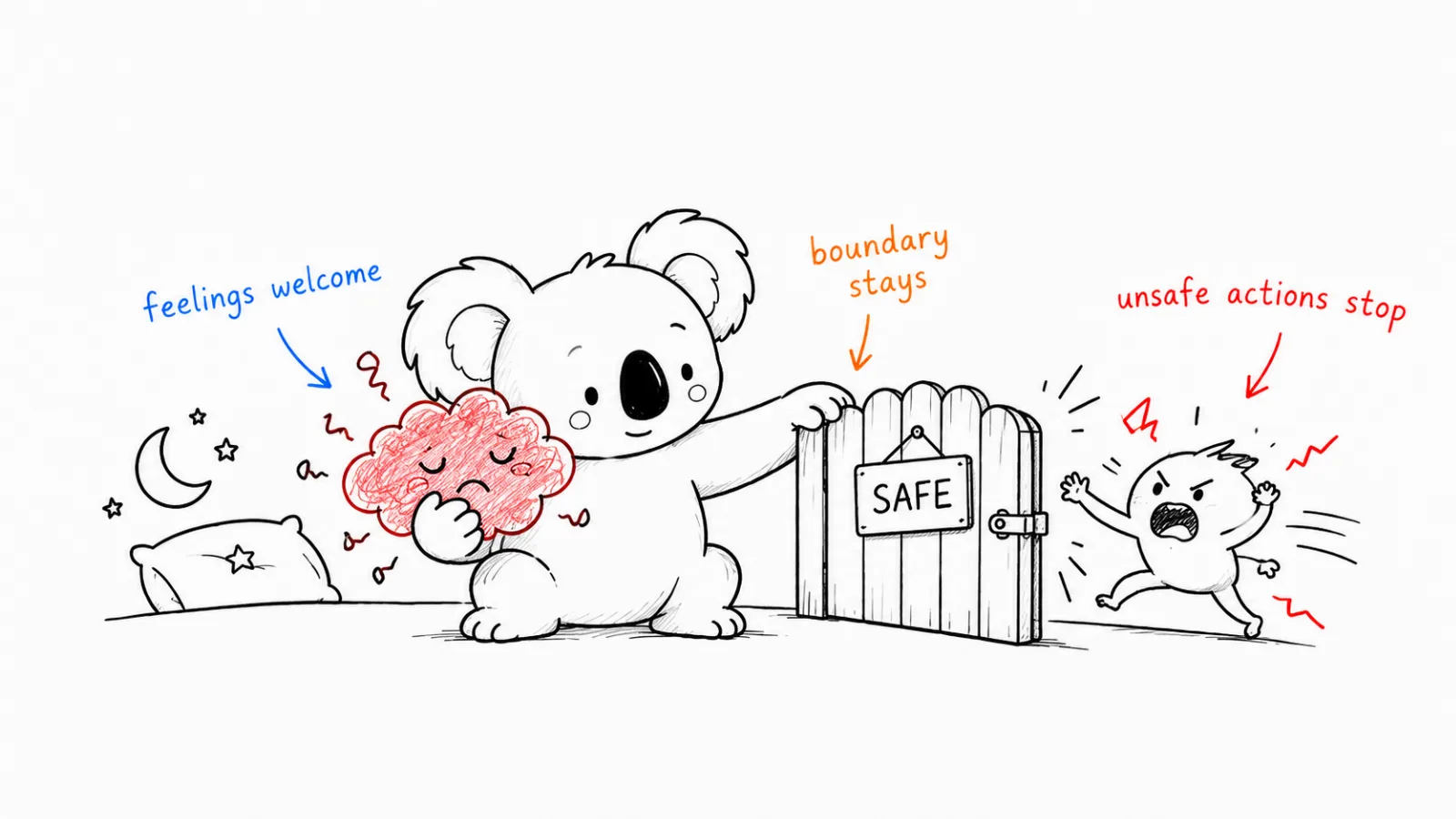
Start with safety. Move hard or breakable objects out of reach, give siblings some space and block hitting or kicking without shaming the child. Try short statements such as:
- ●“You are very angry. I’m here.”
- ●“I won’t let you hit.”
- ●“We can talk when your body is calmer.”
- ●“The answer is still no. I will help you through this.”
Then reduce sensory demands. Dim the lights, lower your voice and stop asking unnecessary questions. Some children settle with closeness; others need more physical space. Offer one simple choice: “Would you like me beside you or by the door?”
Calming should not mean giving in to the demand that triggered the meltdown. A parent can maintain the limit—no more videos, for example—while helping the child recover. The distinction is important: the feeling is accepted, but unsafe behaviour and bedtime boundaries remain limited.
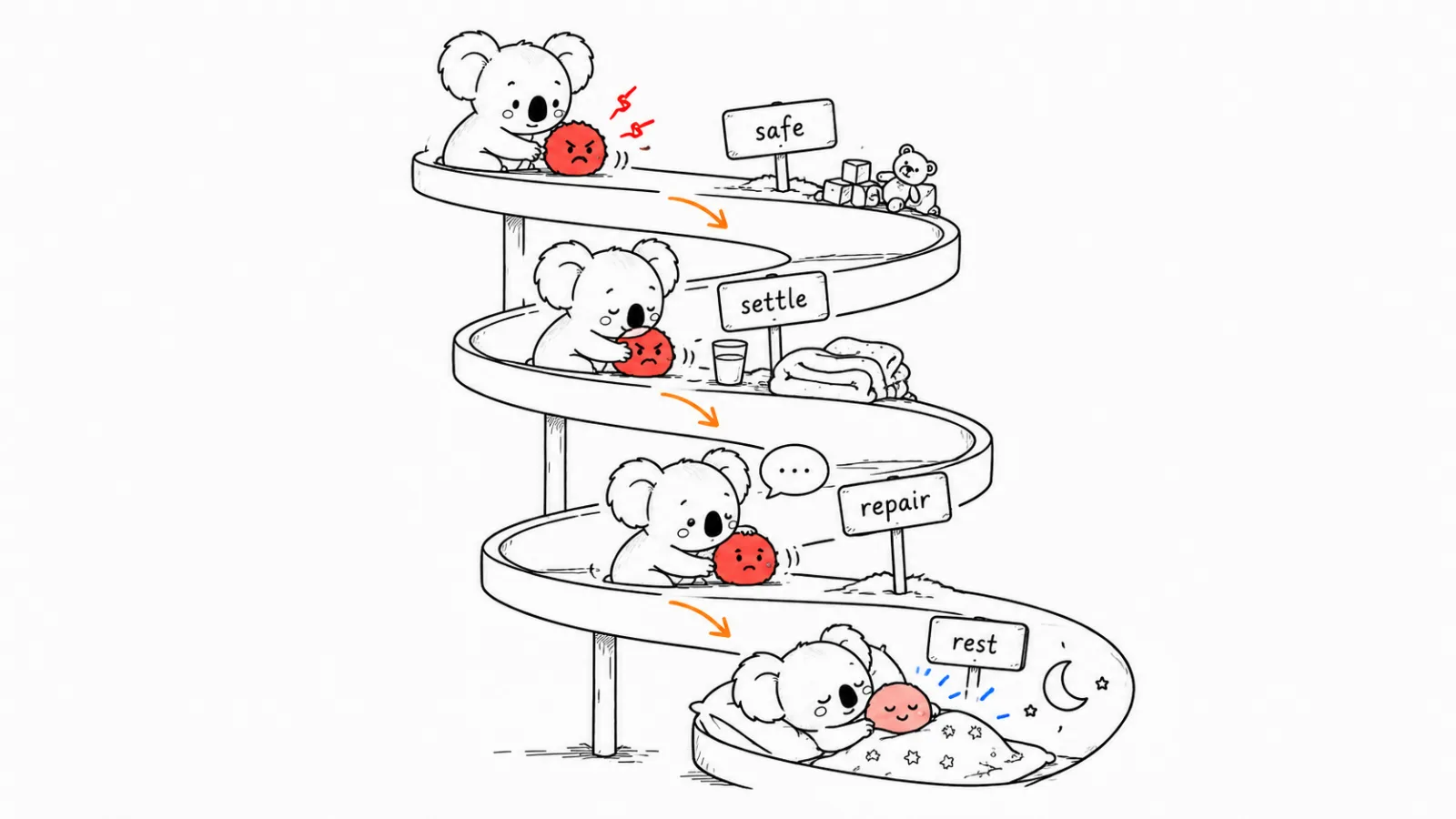
A simple response sequence
| Stage | What the child may need | What a parent can do | What to avoid |
|---|---|---|---|
| Anger is escalating | Safety and less stimulation | Speak slowly, remove hazards and state one clear boundary | Debating, threatening or asking many questions |
| The child is beginning to settle | Help regulating the body | Offer water, a cuddle, slow breathing or quiet space | Demanding an immediate apology |
| The child is calm enough to listen | Brief connection and repair | Name what happened in neutral language and plan one next step | Replaying every detail of the conflict |
| Bedtime resumes | Predictability | Use a shortened version of the normal routine | Adding exciting activities or restarting the evening |
Breathing exercises can help some children, but instructions to “take a deep breath” may irritate a child who is still overwhelmed. Instead, model the action: slowly smell an imaginary flower and gently blow out an imaginary candle. Younger children may copy you without needing an explanation.
Restart Bedtime Without Turning It Into a Battle
After the anger passes, return to a familiar sequence. Predictability communicates that the difficult moment did not destroy the evening and that bedtime expectations still apply.
If the meltdown has made bedtime late, use a shorter routine rather than skipping connection entirely. For example:
- ●Toilet and a quick wash.
- ●Pyjamas and a drink of water.
- ●One brief story.
- ●A cuddle or consistent goodnight phrase.
- ●Lights out.
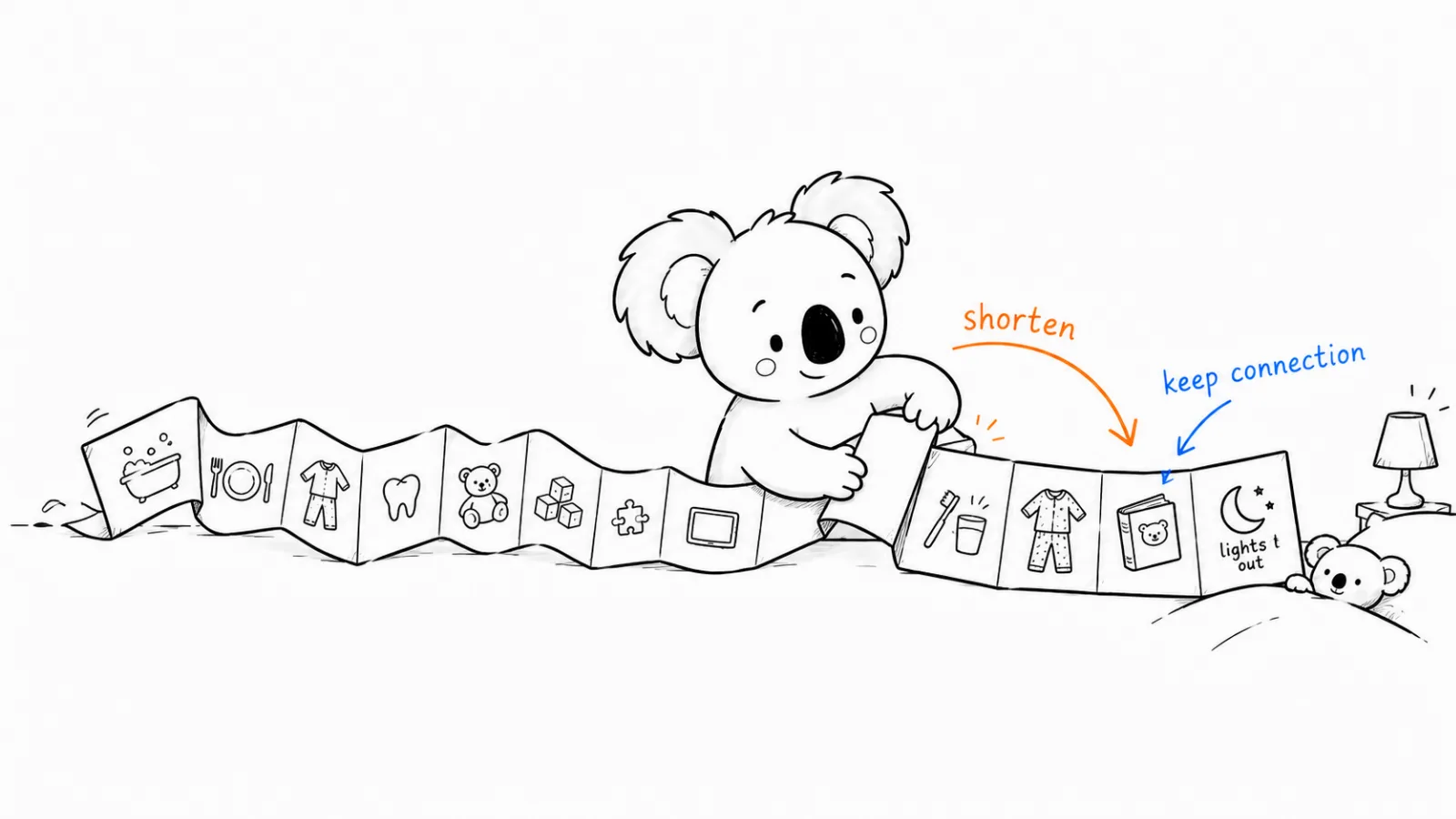
State the adjusted plan clearly: “We had a hard moment, so tonight we’ll read one short story and then sleep.” This is different from using the story as a threat. Removing every comforting part of bedtime may create another struggle precisely when the child needs help returning to safety and routine.
Save detailed problem-solving for the next day. Once everyone is rested, discuss the sequence without blame: “You wanted another episode, I said it was time to stop, and you kicked the door. What could help when you feel that angry tonight?” A child might choose a phrase such as “I need a minute,” squeeze a cushion or select a timer before screen time ends.
Repair can also wait until morning if the child is exhausted. A brief acknowledgement is enough at night: “Kicking is not safe. We will talk about it tomorrow. You are loved, and it is time to rest.”
Use Stories to Create Distance From the Conflict
Stories can help an angry child at bedtime because they shift attention without requiring the child to talk directly about their own behaviour. A character can experience anger, make a mistake, repair a relationship and settle for sleep. That emotional distance often feels safer than asking, “Why did you do that?”
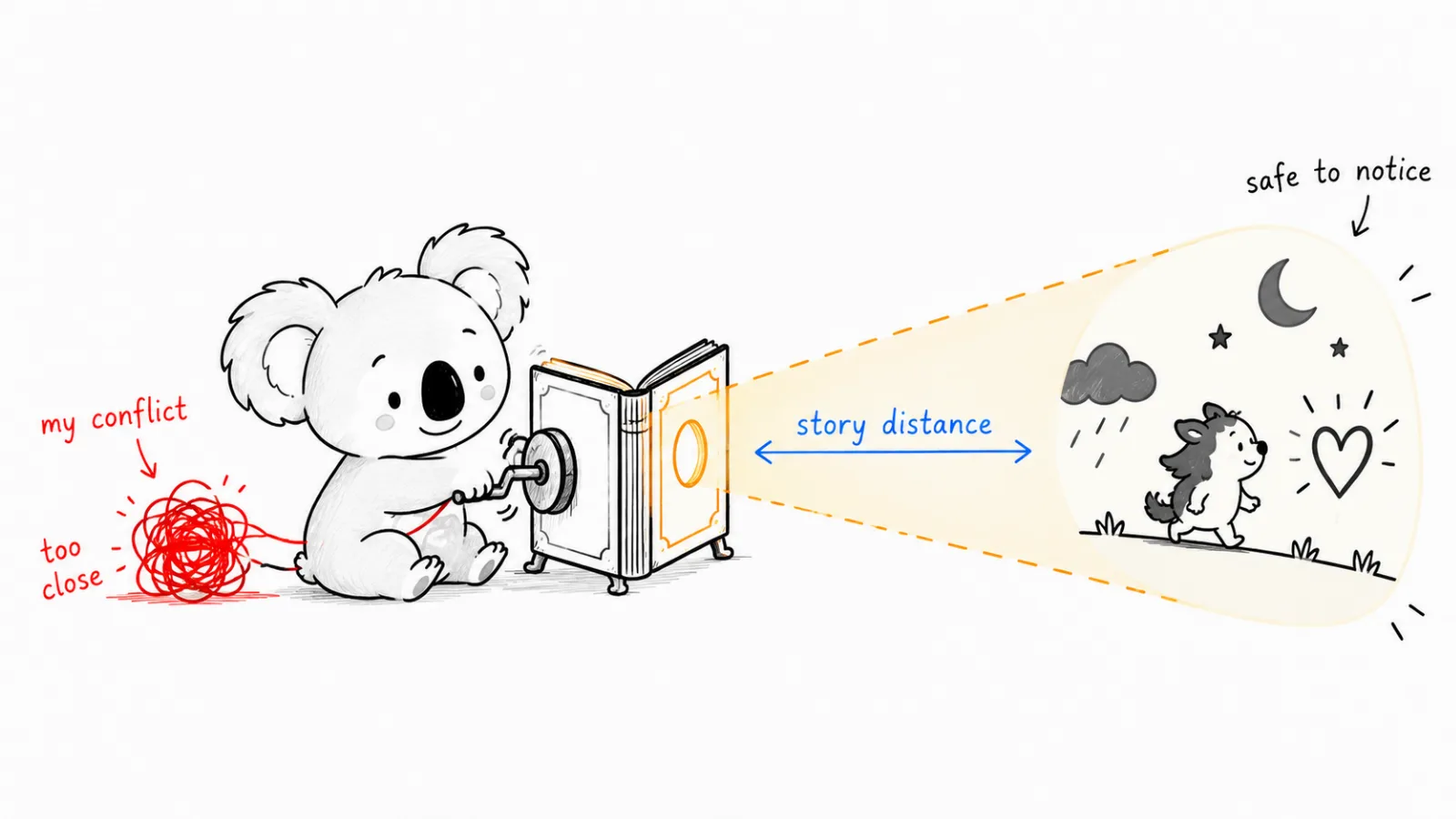
Choose a calm, familiar story with a simple plot. Avoid highly suspenseful adventures, frightening themes or stories designed to teach an obvious lesson about the argument that just happened. A child may experience a pointed “lesson story” as another lecture.
Useful story patterns include:
- ●A character notices how anger feels in their body.
- ●The character finds a safe way to release energy.
- ●A trusted adult stays nearby while the feeling passes.
- ●The character repairs harm without being labelled “bad.”
- ●The ending slows down and returns to safety, quiet and rest.
You can also tell a two-minute improvised story:
A little koala felt a storm thumping inside. The koala could not stop the storm at once, so a grown-up sat nearby. Together they listened as the thunder became a rumble, then a tap, then quiet rain. The problem could wait until morning. For now, the tree was safe, and it was time to rest.
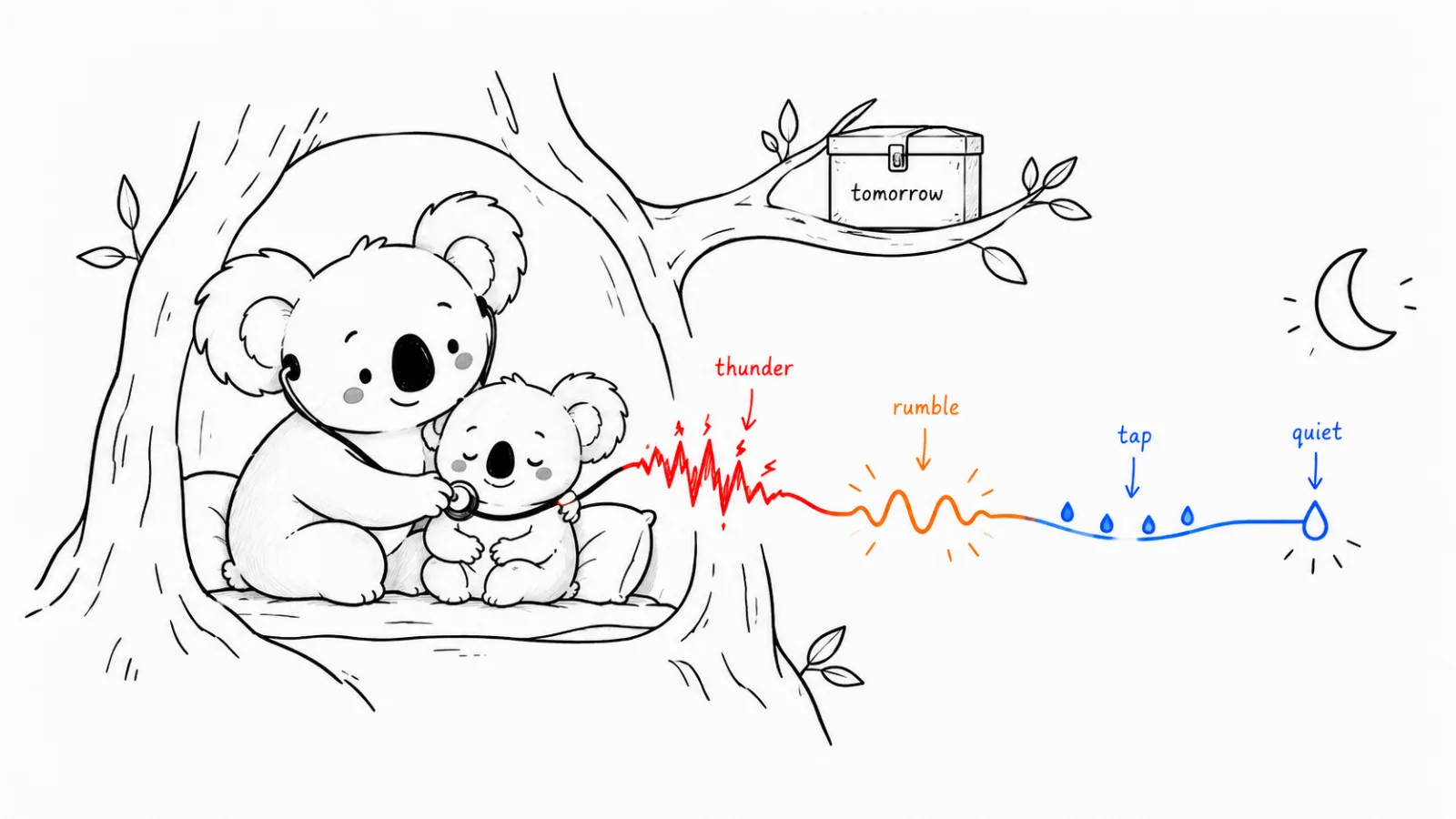
Keep the delivery slow and avoid asking comprehension questions afterward. The purpose is to support the transition to sleep, not test whether the child understood the message.
If reading aloud feels difficult after a draining evening, calm narration from an ad-free story app can preserve the familiar rhythm. Gula Stories offers age-appropriate stories, natural voices and personalised avatars, but the device should remain low-stimulation: dim the screen, disable unrelated notifications and use audio-only playback when possible.
Prevent the Same Flashpoint Tomorrow
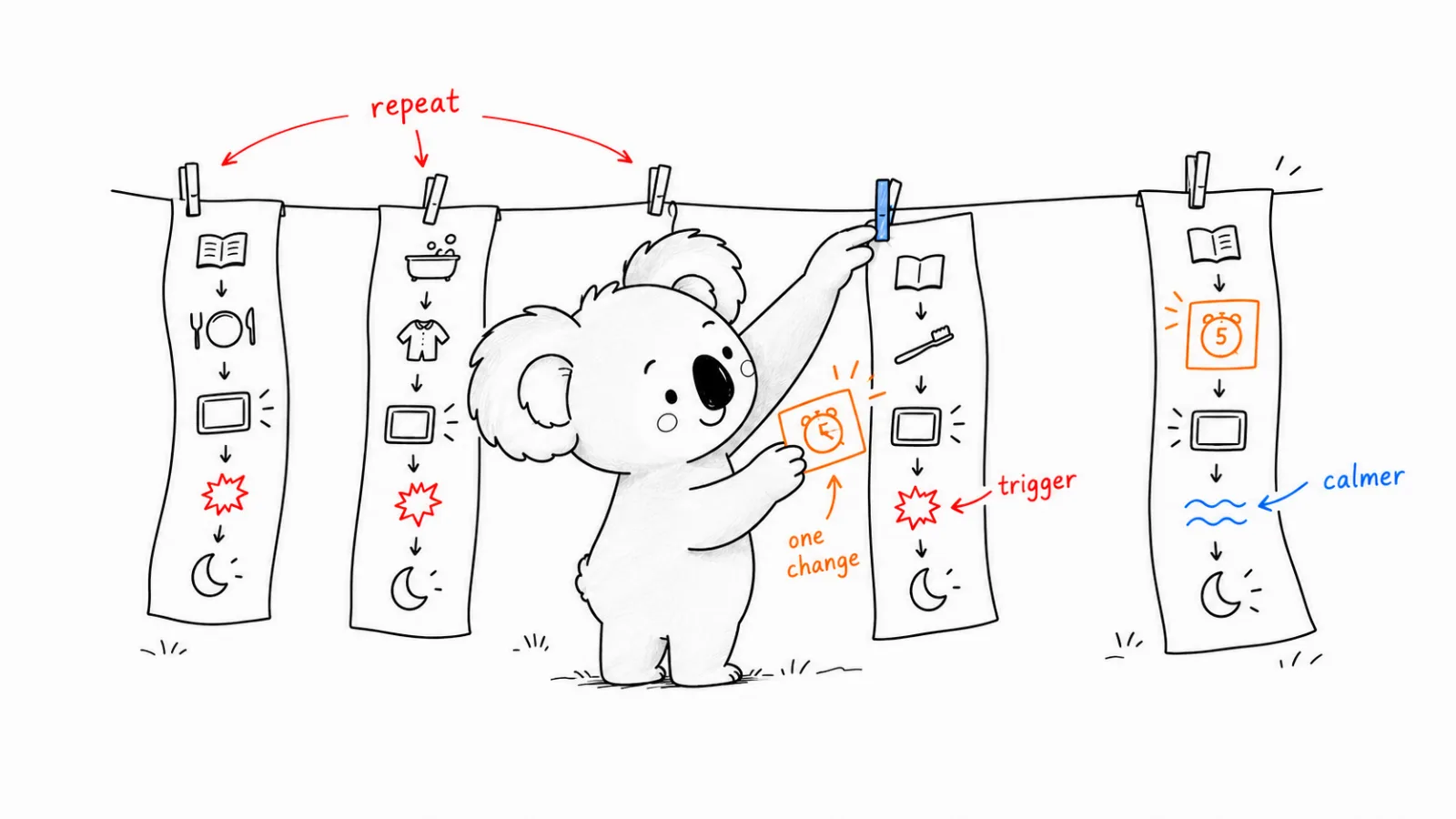
Bedtime anger is easier to manage when parents identify what repeatedly happens before it. Common triggers include abrupt transitions, hunger, overstimulation, fear of separation, sibling conflict and limits introduced only when the child is already exhausted.
Look for patterns over several evenings rather than treating one difficult night as evidence of a larger problem. A brief note can help: when the anger began, what happened immediately beforehand, how tired the child seemed and what helped them settle.
Then change one part of the routine. If stopping play is the trigger, give consistent countdowns. If choices create delay, offer only two acceptable options: “Blue pyjamas or green?” If worry appears after lights out, create a short earlier check-in for questions rather than opening a long discussion in bed.
Guidance from organisations such as HealthyChildren.org, the NHS and Raising Children Network generally supports calm, consistent routines and age-appropriate limits. Individual children differ, however, and a strategy may need several calm repetitions before it feels familiar.
FAQ
Should I make my child apologise before going to sleep?
Not while the child is still highly distressed. Once calm, invite a simple repair—checking whether someone is hurt, helping put something back or saying sorry sincerely. If exhaustion makes that unrealistic, state that repair will happen in the morning and follow through.
What if my child says they cannot sleep because they are still angry?
Acknowledge the feeling without reopening the argument: “You can still feel angry while your body rests.” Offer one quiet settling option, such as listening to a short story, holding a comfort object or lying beside the child briefly according to your usual boundaries.
Is it normal for tired children to become more emotional?
Many young children become irritable, impulsive or tearful when overtired. However, persistent sleep difficulties or intense nightly outbursts deserve attention, especially when they affect school, relationships or daytime functioning.
When should I seek professional help?
Talk with your child’s doctor or another qualified health professional if bedtime anger is frequent and severe, involves regular harm to self or others, follows a major change or frightening event, or occurs alongside ongoing sleep, developmental, sensory or emotional concerns. Seek urgent help if anyone is in immediate danger.
The Bottom Line
Calming anger before bed starts with safety, fewer words and a steady return to routine. Hold the boundary while helping the child regulate, then leave teaching and problem-solving until their brain is ready to participate. A difficult bedtime does not need a perfect ending—only a calmer, safer next step.
Ready for calmer bedtimes?
Try Gula Stories free — 5 narrated bedtime stories, ad-free, for children ages 3-8.