
Blue Light and Kids' Sleep: What the Evidence Says
Blue light can influence the body clock, but light is only one reason screens may interfere with children’s sleep. Timin
Key Takeaways
- ●Blue light can influence the body clock, but light is only one reason screens may interfere with children’s sleep.
- ●Timing, brightness, content, and screen habits often matter as much as the type of light emitted.
- ●Calm, consistent bedtime routines are usually more practical than relying on blue-light filters alone.
- ●Parents do not need to eliminate every screen. A realistic goal is to reduce stimulating or unnecessary use before bed.
- ●Persistent sleep difficulties, loud snoring, breathing concerns, or significant daytime tiredness should be discussed with a health professional.
1. Introduction
Many parents have heard that blue light from tablets, phones, televisions, and other screens can keep children awake. The concern is understandable: screens are now part of family life, while bedtime often depends on helping an energetic child make a difficult transition from play to rest.
The relationship between blue light, kids, and sleep is real, but it is more complicated than a simple rule that all blue light is harmful. Evening light can affect the body’s natural sleep timing. At the same time, a screen may delay sleep because a child is excited by a game, negotiating for another episode, responding to notifications, or simply staying up later to keep watching.
This distinction matters. Turning on a night-mode setting may reduce some short-wavelength light, but it does not make stimulating content—or an inconsistent bedtime—sleep-friendly.
This article provides a balanced summary of what is known about screens, light, and sleep. It also offers practical steps for families with children aged 2–8, without expecting parents to create a completely screen-free home.
2. How Blue Light Can Affect a Child’s Body Clock
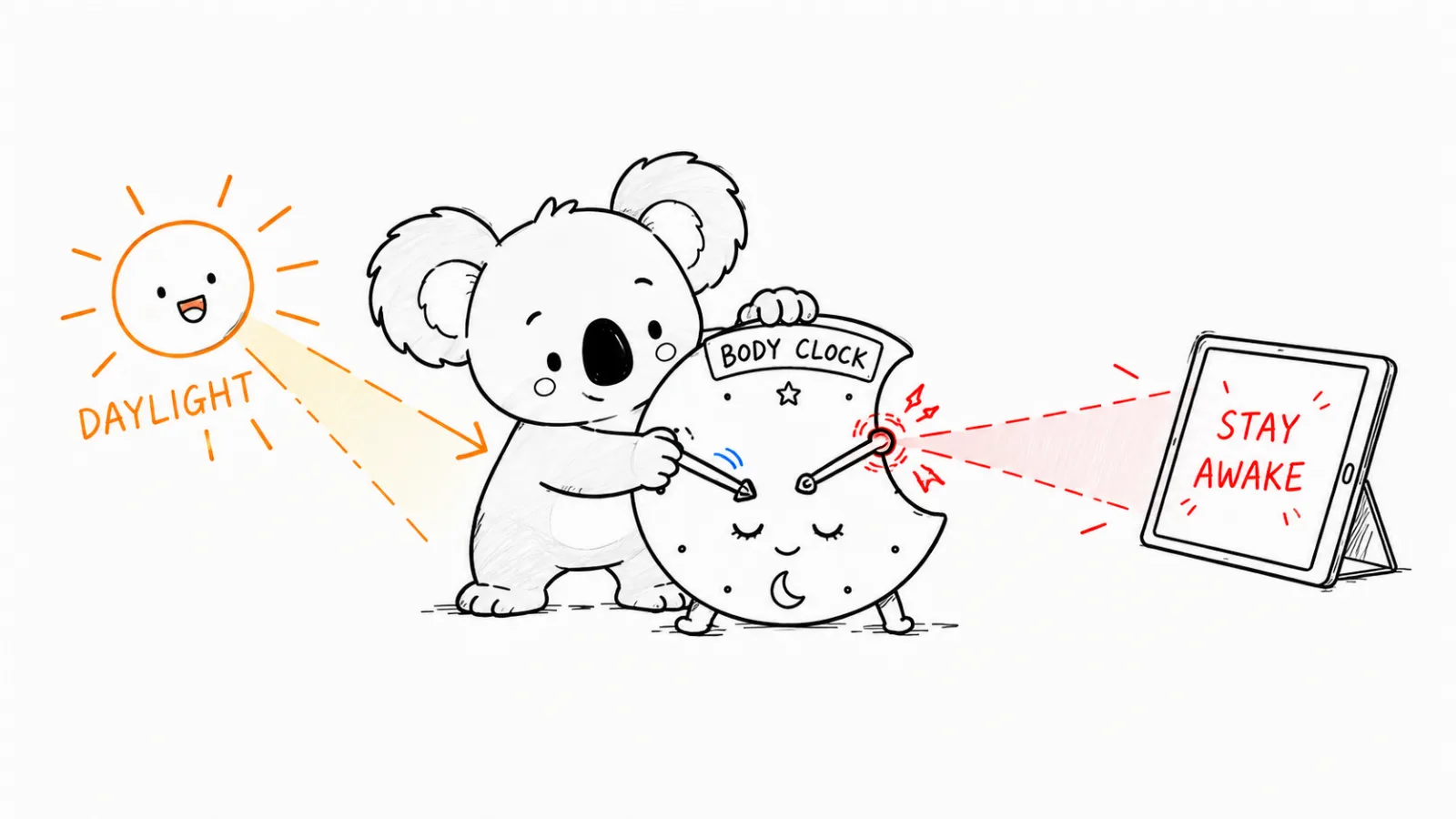
The core conclusion is that blue-enriched light in the evening can send a “stay awake” signal to the brain, particularly when it is bright, close to the eyes, or used near bedtime.
Human sleep is partly regulated by a circadian rhythm: an internal timing system that responds strongly to patterns of light and darkness. Morning and daytime light help align this body clock with the day. In the evening, dimmer conditions support the transition toward sleep.
Blue wavelengths are present in daylight and are not inherently dangerous. In fact, exposure to natural light during the day helps support a healthy daily rhythm. The concern is mainly about artificial light at a time when the body would normally be preparing for darkness.
Evening light may affect:
- ●When a child begins to feel sleepy
- ●The body’s release of melatonin, a hormone involved in sleep timing
- ●How easily the child shifts from an alert state to a restful one
- ●The consistency of the sleep-wake schedule
Children do not all respond in exactly the same way. Screen brightness, viewing distance, duration, room lighting, bedtime, and individual sensitivity may all change the effect. Research also cannot always separate the influence of light from the influence of engaging content and later bedtimes.
A practical scenario
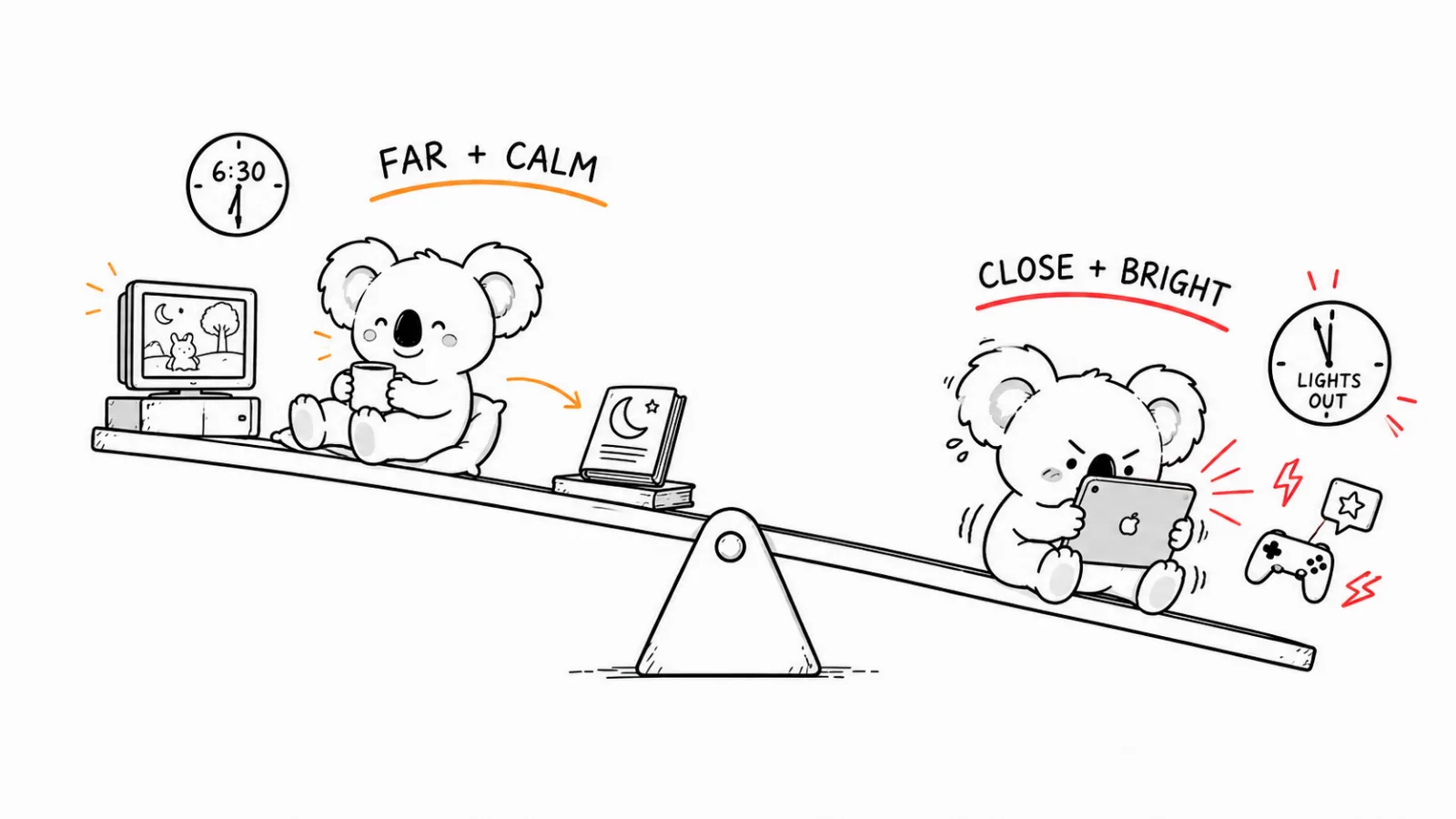
A child watches a short, familiar story on a television across the room at 6:30 p.m., then follows a calm bedtime routine. Another child plays a fast-paced game on a bright tablet held close to the face until lights-out.
Both children have used a screen, but the second situation includes more factors that may delay sleep: close-range light, interactive content, excitement, and no transition period. Focusing only on “blue light” would miss much of the difference.
What parents can do
Use evening light as one part of the sleep environment:
- ●Dim harsh household lighting as bedtime approaches.
- ●Keep screens out of a dark bedroom, where they may feel especially bright.
- ●Lower screen brightness to a comfortable level.
- ●Encourage outdoor time and natural light earlier in the day.
- ●Build a predictable transition between screen use and sleep.
The goal is not to fear blue light. It is to give the body clear signals about when the active day is ending.
3. Screens Affect Sleep in More Than One Way
The most useful conclusion for parents is that screen-related sleep disruption is usually a combination of light, timing, content, and behaviour.
Health organisations such as the American Academy of Pediatrics, the NHS, and Australia’s Raising Children Network generally encourage families to set age-appropriate boundaries around screen use and protect bedtime routines. Exact recommendations may vary by age and source, but the shared principle is that screens should not displace sleep, movement, family interaction, or other important activities.
Screen time can replace sleep time
A child cannot fall asleep while still watching, scrolling, or playing. Even content that seems harmless may extend bedtime through repeated requests for “one more.” This displacement effect may be more important than the screen’s light in some households.
Parents can reduce this problem by setting a clear stopping point that does not change according to the child’s requests. A visual timer, an episode boundary, or a consistent family rule can make the transition feel less arbitrary.
Content can increase alertness
Interactive games, exciting videos, frightening scenes, rapid editing, and emotionally intense stories may make it harder for a child to settle. A young child may continue thinking about a scene after the device is turned off or seek reassurance at bedtime.
Calmer content is less likely to create this level of arousal, although it can still delay sleep if it runs too late. If a family uses audio or stories during the bedtime routine, choose familiar, age-appropriate material with a clear ending. An ad-free app such as Gula Stories may help avoid autoplay, advertising, or unexpected content, but the device should still be kept dim and used within a defined routine.
Devices can create bedtime conflict
Sleep is harder when the final part of the evening becomes a negotiation. Sudden removal of a device may trigger frustration, especially when a child is deeply engaged.
Advance warnings can help:
- ●“Ten minutes until the tablet goes away.”
- ●“This is the last episode.”
- ●“When the timer rings, we will plug the device in and choose a book.”
For children aged 2–8, repeated routines usually work better than lengthy explanations delivered when everyone is tired.
Notifications and access can interrupt sleep
A device in the bedroom may remain a source of sound, light, or temptation after bedtime. Even if a child does not use it, notifications can disturb the sleep environment.
Whenever practical, charge portable devices outside the bedroom and silence notifications before the routine begins.
4. Do Blue-Light Filters, Night Mode, and Special Glasses Help?
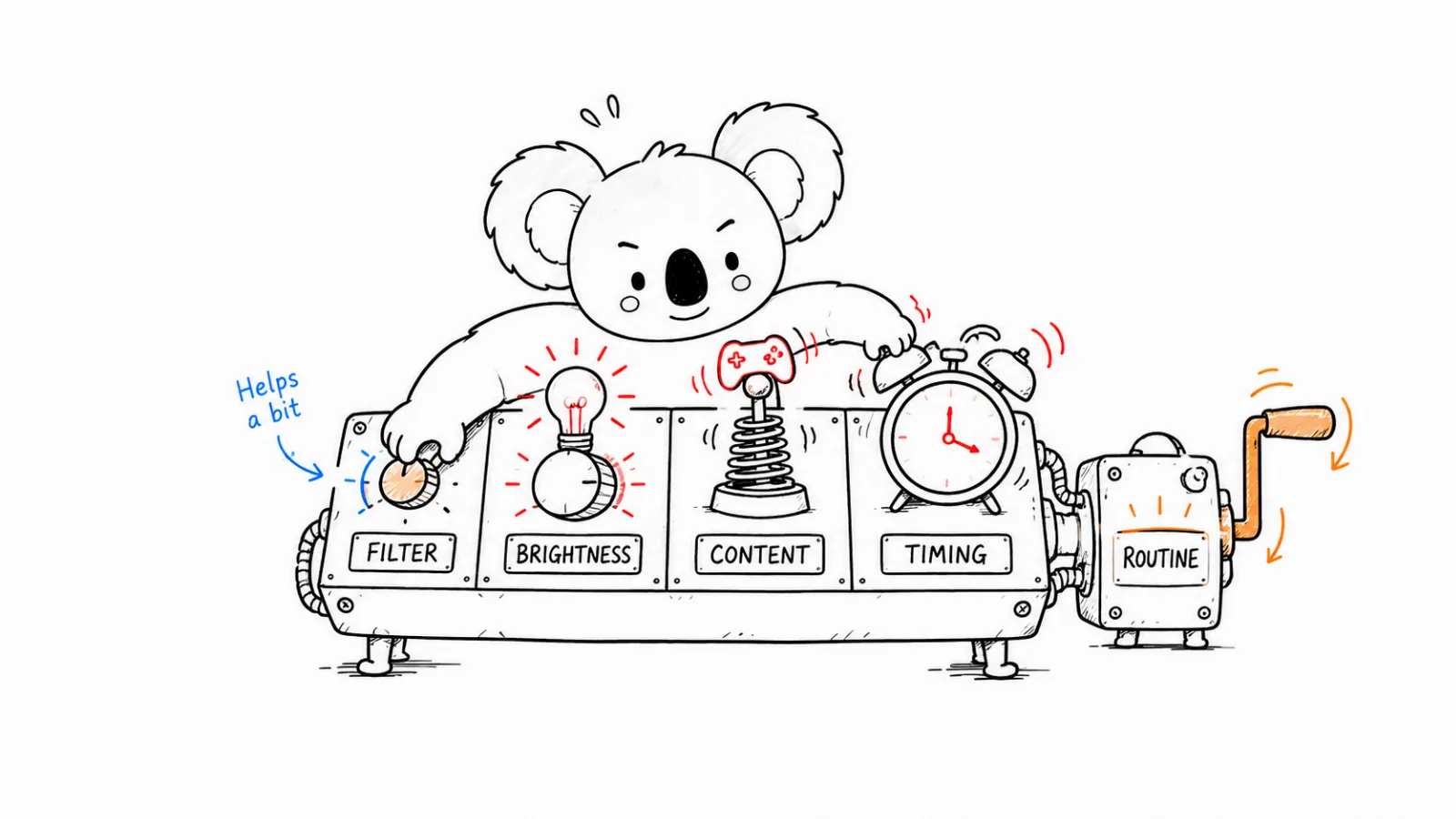
Blue-light reduction features may lower the amount of blue-enriched light reaching the eyes, but they should be treated as a supporting measure—not a complete solution.
Night mode typically shifts a display toward warmer colours. Lowering brightness can also reduce overall light exposure. These settings may make evening use more comfortable, but a warm-coloured screen can still keep a child awake if it is bright, exciting, or used beyond bedtime.
Evidence about blue-light-blocking glasses and sleep is mixed, and findings from adults should not automatically be applied to young children. Parents should be cautious about products that promise to “fix” sleep without changes to routines or device use. If glasses are being considered for a child because of headaches, vision concerns, or persistent sleep problems, seek advice from an appropriate health professional rather than relying on marketing claims.
What each intervention can and cannot do
| Strategy | What it may help with | What it does not solve |
|---|---|---|
| Night mode or warmer display settings | Reduces some blue-enriched light from the screen | Exciting content, delayed bedtime, or prolonged use |
| Lower screen brightness | Reduces total light intensity | Bedtime arguments or difficulty stopping |
| Blue-light-blocking glasses | May alter the wavelengths reaching the eyes | Poor sleep habits, notifications, or unsuitable content |
| A screen-free transition period | Reduces light, stimulation, and time displacement together | Other causes of sleep difficulty |
| Devices outside the bedroom | Limits overnight access, light, and notifications | Anxiety, discomfort, snoring, or medical sleep concerns |
| Consistent bedtime routine | Creates predictable cues that sleep is approaching | Every sleep problem or individual difference |
For most families, the broadest benefit is likely to come from changing the routine rather than purchasing a product. A filter can be useful when evening screen use is necessary, but it works best alongside lower brightness, calmer content, and a reliable stopping time.
5. A Practical Evening Screen Plan for Families
The strongest approach is one that parents can repeat consistently. A complicated routine that works only occasionally is less helpful than a simple plan that fits everyday family life.
Step 1: Protect the bedtime window
Work backwards from the child’s usual bedtime and identify a clear point when highly stimulating screen use ends. Some families choose a longer screen-free period, while others begin with a shorter transition that they can maintain.
If a full screen-free hour is unrealistic, do not abandon the effort. Start by ending games, short-form videos, or exciting programmes earlier. Move toward quieter activities as bedtime approaches.
Step 2: Create a predictable sequence
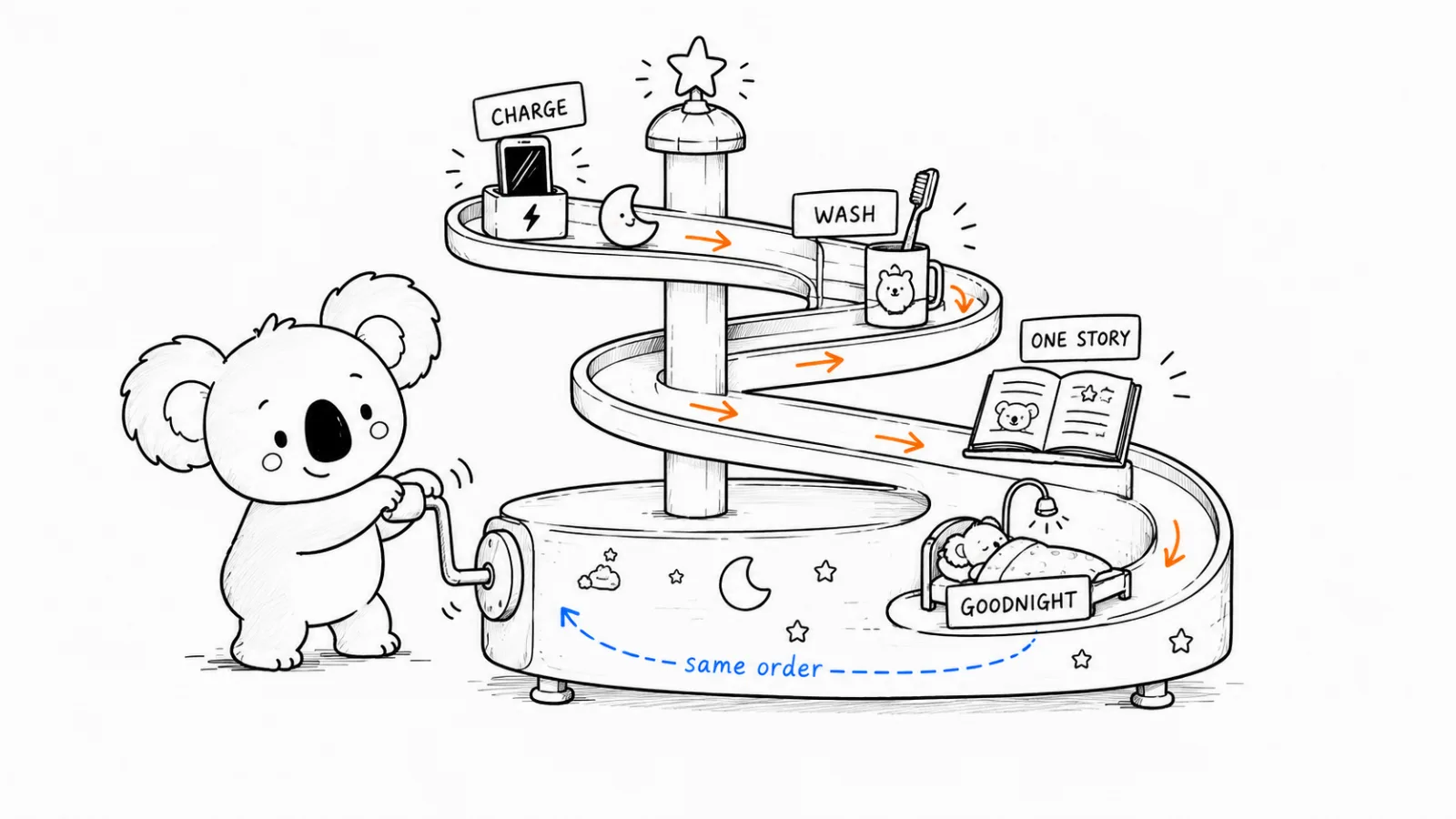
A bedtime routine might look like this:
- ●Turn off games and videos.
- ●Put devices on charge outside the bedroom.
- ●Have a bath or wash.
- ●Put on pyjamas and brush teeth.
- ●Read or listen to one calm story.
- ●Dim the lights.
- ●Say goodnight at a consistent time.
The specific order matters less than its predictability. Repetition helps children understand what comes next and reduces the need for fresh negotiations each evening.
Step 3: Match the plan to the child
A two-year-old may need a simple cue and direct parental guidance. A seven- or eight-year-old may respond well to choosing between two quiet activities or helping set a timer.
Consider the child’s typical reaction:
- ●If interactive games lead to frustration, stop them earlier.
- ●If television does not cause conflict but a handheld device does, set different rules for each.
- ●If a child becomes worried by certain stories, choose familiar and reassuring material.
- ●If audio helps the child settle, turn off the visible display and disable autoplay where possible.
Step 4: Make the environment support the rule
Children find limits harder to follow when devices remain visible and accessible. A shared charging station outside bedrooms can make the household rule clear. Parents can also model the routine by putting away their own phones during story time.
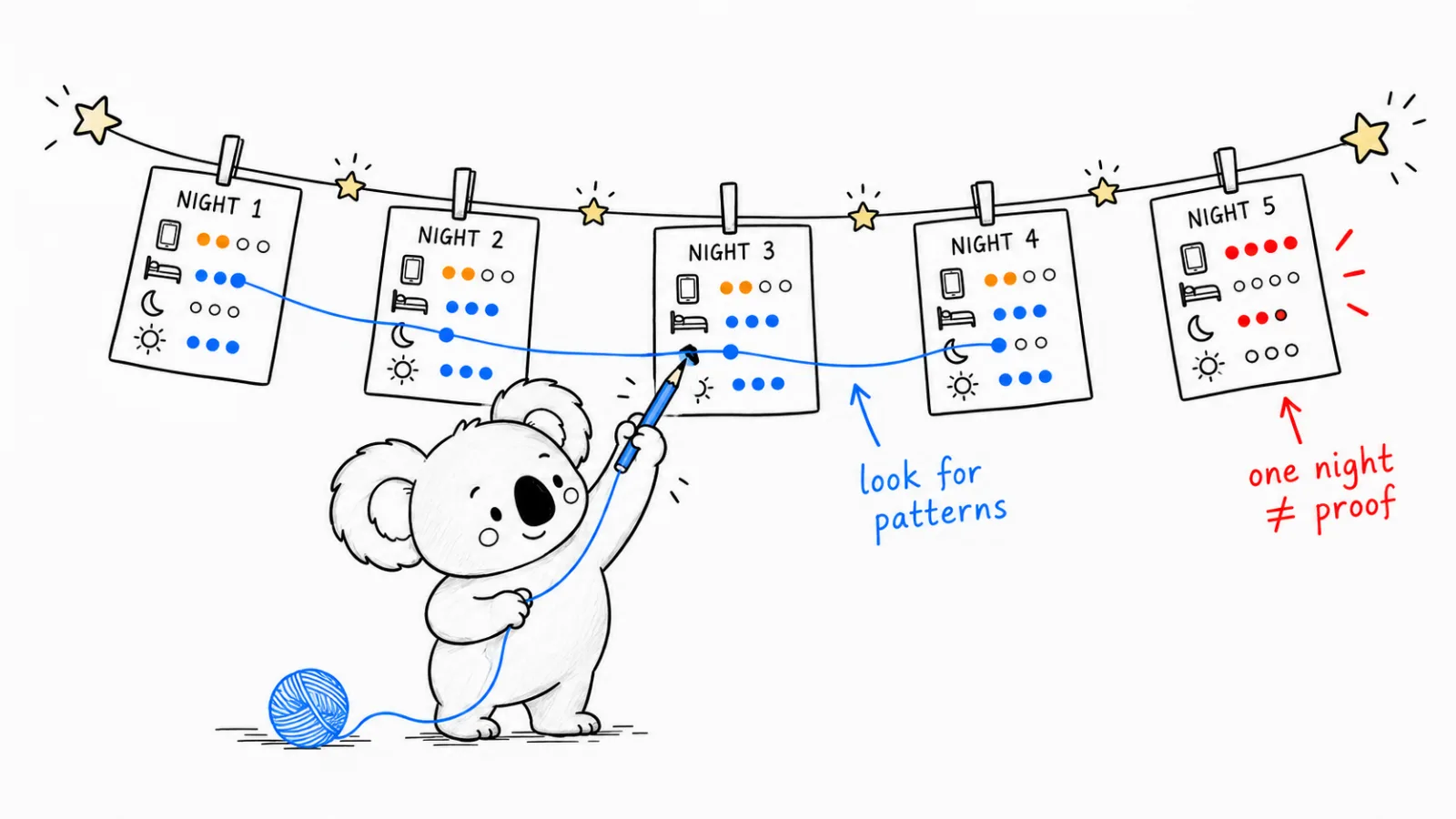
Step 5: Review patterns, not single nights
One difficult bedtime does not prove that blue light is the cause. Look for patterns across several days:
- ●Does the child settle more easily after earlier screen use?
- ●Are particular games or programmes associated with more resistance?
- ●Is weekend screen use pushing bedtime later?
- ●Does the child seem rested and able to function during the day?
A brief sleep diary can help parents record bedtime, screen timing, settling time, night waking, and morning mood. It may also provide useful context if professional advice is needed.
6. FAQ
Does all blue light harm children’s sleep?
No. Blue light is a normal part of daylight and helps regulate the body clock. The main concern is exposure to bright or blue-enriched light in the evening, when the body is preparing for sleep. Timing and intensity matter, and screen content and habits can be equally important.
How long before bed should children stop using screens?
There is no single interval that works for every family. Recognised child-health guidance commonly recommends keeping screens away from the period leading into bedtime and maintaining a consistent, calming routine. Parents can begin with a manageable screen-free transition and adjust it based on how the child settles. Local guidance may differ by age, so families can consult sources such as HealthyChildren.org, the NHS, or Raising Children Network.
Is watching television better than using a tablet before bed?
It may be less disruptive in some situations because a television is usually farther from the eyes and less interactive. However, a bright television or exciting programme can still delay bedtime and increase alertness. Content, timing, brightness, and the child’s response are more useful considerations than the device category alone.
When should parents seek professional advice?
Talk to a GP, paediatrician, child and family health nurse, or another qualified professional if sleep difficulties persist despite a consistent routine, significantly affect the child or family, or are accompanied by loud snoring, unusual breathing, ongoing pain, marked anxiety, frequent night waking, or significant daytime tiredness. Screen changes may support sleep, but they cannot address every underlying cause.
7. Conclusion
The evidence on blue light and kids’ sleep supports a balanced view. Evening light from screens can affect sleep timing, but it is rarely the only factor. Screens may also delay bedtime, increase mental and emotional alertness, cause conflict, and interrupt sleep through notifications or easy overnight access.
Blue-light filters and warmer display settings can be useful supporting tools, but they should not be treated as a substitute for a calm, consistent routine. The most practical strategy is to reduce bright and stimulating screen use before bed, move devices out of the bedroom, choose predictable content, and give children a clear transition from activity to rest.
Families do not need a perfect routine or a completely screen-free household. Small, repeatable changes are more likely to last—and observing the child’s actual sleep patterns is more informative than blaming blue light alone.
Ready for calmer bedtimes?
Try Gula Stories free — 5 narrated bedtime stories, ad-free, for children ages 3-8.