
Bedtime Talks About Friendship Troubles
Bedtime can help children talk about friendship troubles, but the conversation should feel gentle rather than investigat
Key Takeaways
- ●Bedtime can help children talk about friendship troubles, but the conversation should feel gentle rather than investigative.
- ●Start with simple observations and open questions, then listen before offering solutions.
- ●Stories can give children a safer way to explore playground conflict without discussing themselves directly.
- ●Help your child name feelings, consider different perspectives and choose one realistic next step.
- ●Speak with an educator or health professional if distress is persistent, severe or affecting daily life.
When playground conflict comes home, bedtime can offer a calm opportunity to reconnect. The most helpful approach is usually to ask one gentle question, listen without rushing to fix the problem and help your child identify what they might do next.
Children aged 2–8 may not provide a clear account of what happened. They may communicate through fragments, repeated phrases, play, imagined characters or a sudden worry about tomorrow. A short story and a few carefully chosen questions can make friendship problems easier for kids to express.
Begin With Safety, Not Questions
A child who has held difficult feelings together all afternoon may release them at home. Tears, irritability or refusal to talk do not necessarily mean the problem is larger than it appears; they may simply show that home feels safe.
Before asking for details, help your child settle. Keep your voice calm, reduce distractions and avoid turning bedtime into an interview. You might begin with an observation:
- ●“You seem quieter than usual tonight.”
- ●“It looked like something was bothering you after school.”
- ●“I’m here if you want to tell me about your day.”
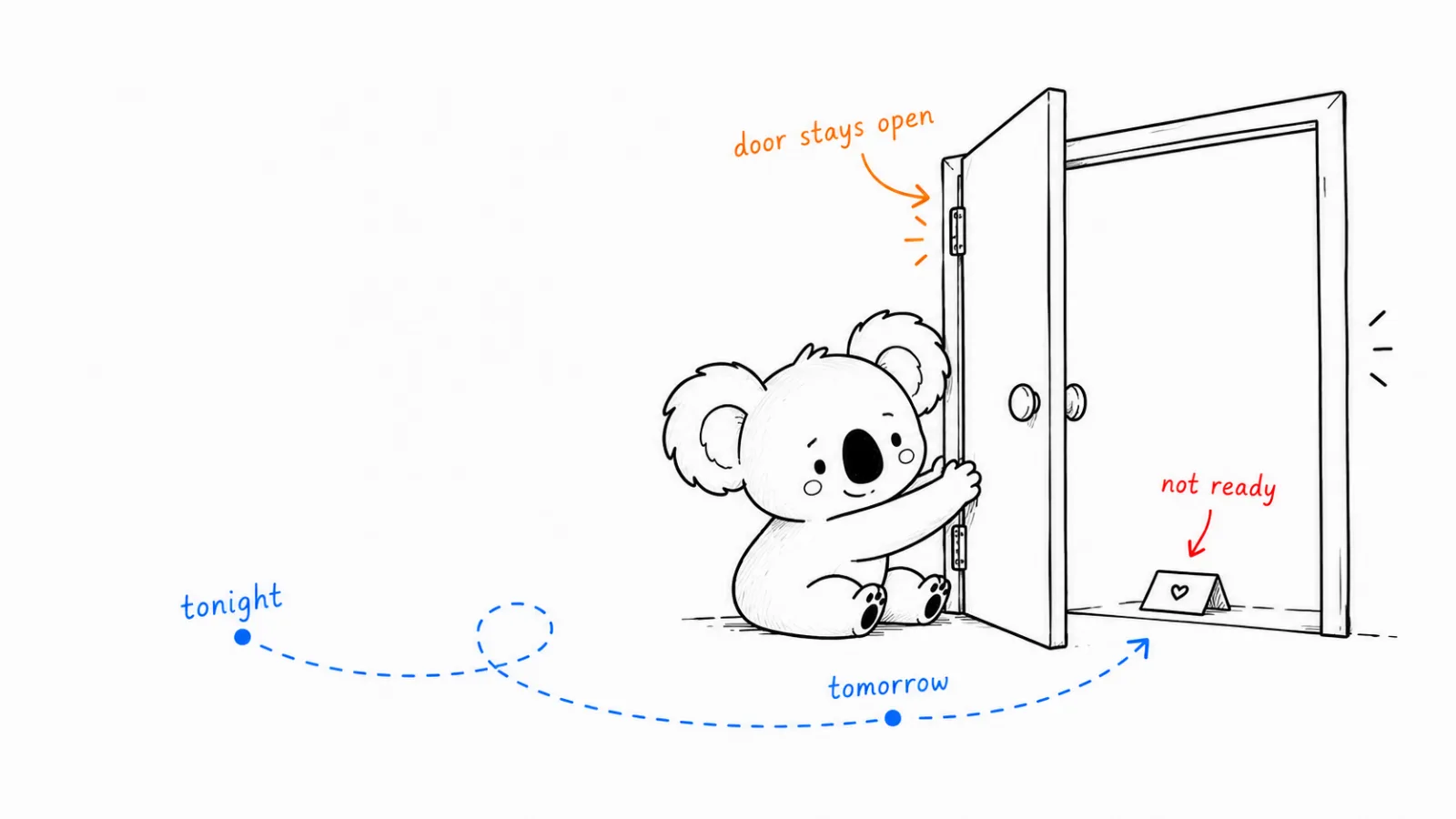
If your child says nothing happened, leave the door open: “That’s okay. You can tell me tonight, tomorrow or whenever you’re ready.”
Young children often need time before they can organize an experience into a story. Asking many specific questions—“Who started it?”, “What exactly did they say?” or “Why didn’t you tell the teacher?”—can add pressure. Begin broadly and follow the child’s lead.
Use Questions That Help Children Make Sense of Conflict
Once your child begins talking, focus first on understanding. Correcting, judging or offering an immediate solution can make a child feel that they handled the situation badly.
The following sequence keeps the conversation manageable:
| Purpose | Gentle question | What it may reveal |
|---|---|---|
| Understand the event | “What happened just before you felt upset?” | The sequence rather than only the final conflict |
| Name the emotion | “Did you feel left out, angry, worried or something else?” | The child’s emotional experience |
| Identify the need | “What did you wish your friend had done?” | Whether the child wanted fairness, inclusion, space or reassurance |
| Consider perspective | “What do you think your friend might have been feeling?” | Another viewpoint without excusing hurtful behaviour |
| Choose a next step | “What could you try tomorrow?” | A practical response the child can remember |
You do not need to ask every question. One useful answer is better than a long conversation with an exhausted child.
Try reflecting back what you hear: “You wanted to join the game, and when they said no, you felt left out.” This helps children connect events with feelings. It also shows that you understand before moving toward advice.
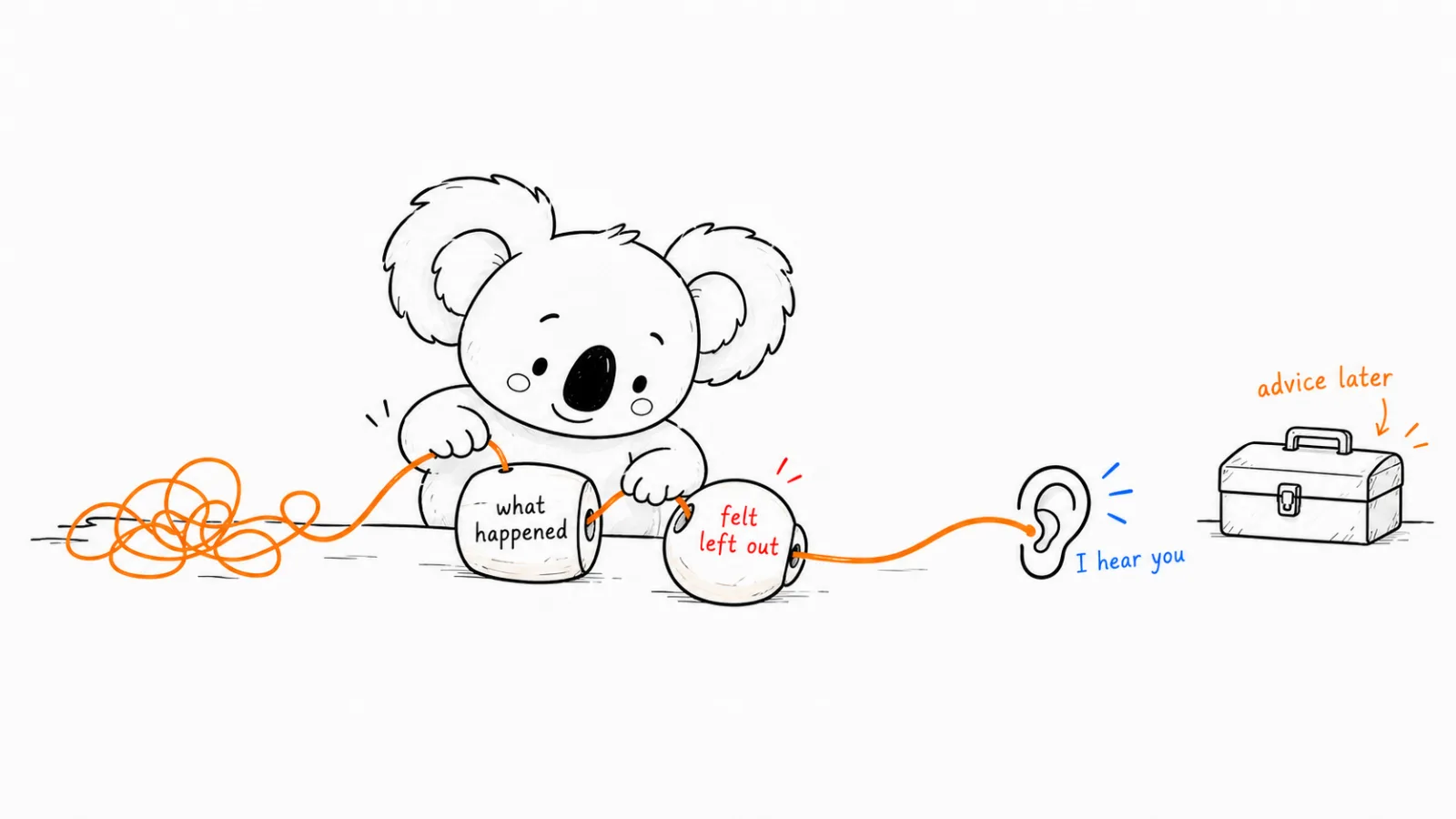
Avoid making firm claims about another child’s motives. “They were jealous” or “They are not a real friend” may oversimplify an event you did not witness. A more balanced response is: “We do not know why they did that, but it makes sense that it hurt.”
Let a Story Carry the Hardest Part
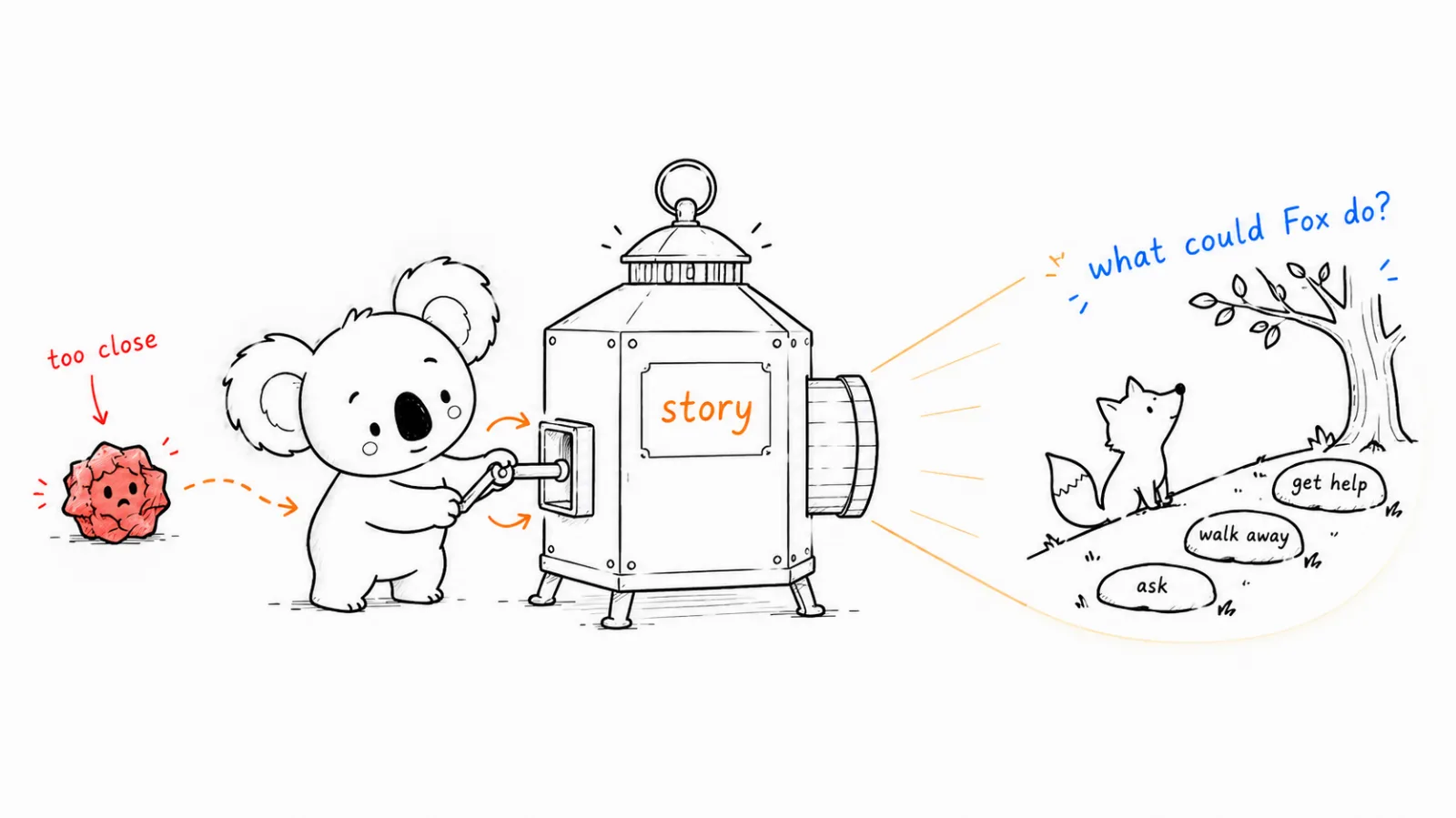
Some children speak more freely when the problem belongs to a fictional character. A short bedtime story creates emotional distance while still allowing your child to explore choices and consequences.
For example:
A little fox arrives at the climbing tree and discovers that two friends have started a game without her. She wants to shout, but first she sits beside the tree and thinks about what she needs. Should she ask to join, find another friend or tell a trusted grown-up that she keeps being excluded?
Pause and ask, “What do you think the fox should do?” A child’s answer may reveal what they wish they could do themselves.
You can adapt the story to common friendship situations:
- ●Two characters want the same toy.
- ●A friend changes the rules during a game.
- ●Someone says, “You cannot play.”
- ●A secret is shared after a promise.
- ●A child wants space but does not know how to say so.
- ●Two friends disagree and worry that the friendship is over.
Keep the ending realistic. The characters do not need to become best friends immediately. A useful ending might involve using clear words, finding another activity, accepting an apology, asking an adult for help or trying again another day.
If your child wants a narrated story rather than an improvised one, an age-appropriate bedtime app such as Gula Stories may offer a calm starting point. The important part is the conversation around the story: “Did anything in that story feel familiar?”
Turn the Conversation Into One Small Plan
Bedtime is usually not the right moment to solve an entire friendship pattern. Help your child select one simple action that suits their age and the situation.
Possible phrases to practise include:
- ●“Can I play too?”
- ●“I don’t like that.”
- ●“Please stop.”
- ●“I was still using that.”
- ●“Can we take turns?”
- ●“I need some space.”
- ●“Can you help me?”
Role-play briefly, with the parent acting as the other child. Keep it light and stop if your child becomes more worried. The aim is familiarity, not a perfect performance.
Adult involvement depends on the situation. A minor disagreement may be an opportunity for children to practise communication. Repeated exclusion, intimidation, threats, physical aggression or a clear power imbalance requires closer adult attention. Record the basic facts and contact the child’s educator using neutral language: what your child reported, when it occurred and whether it appears to be recurring.
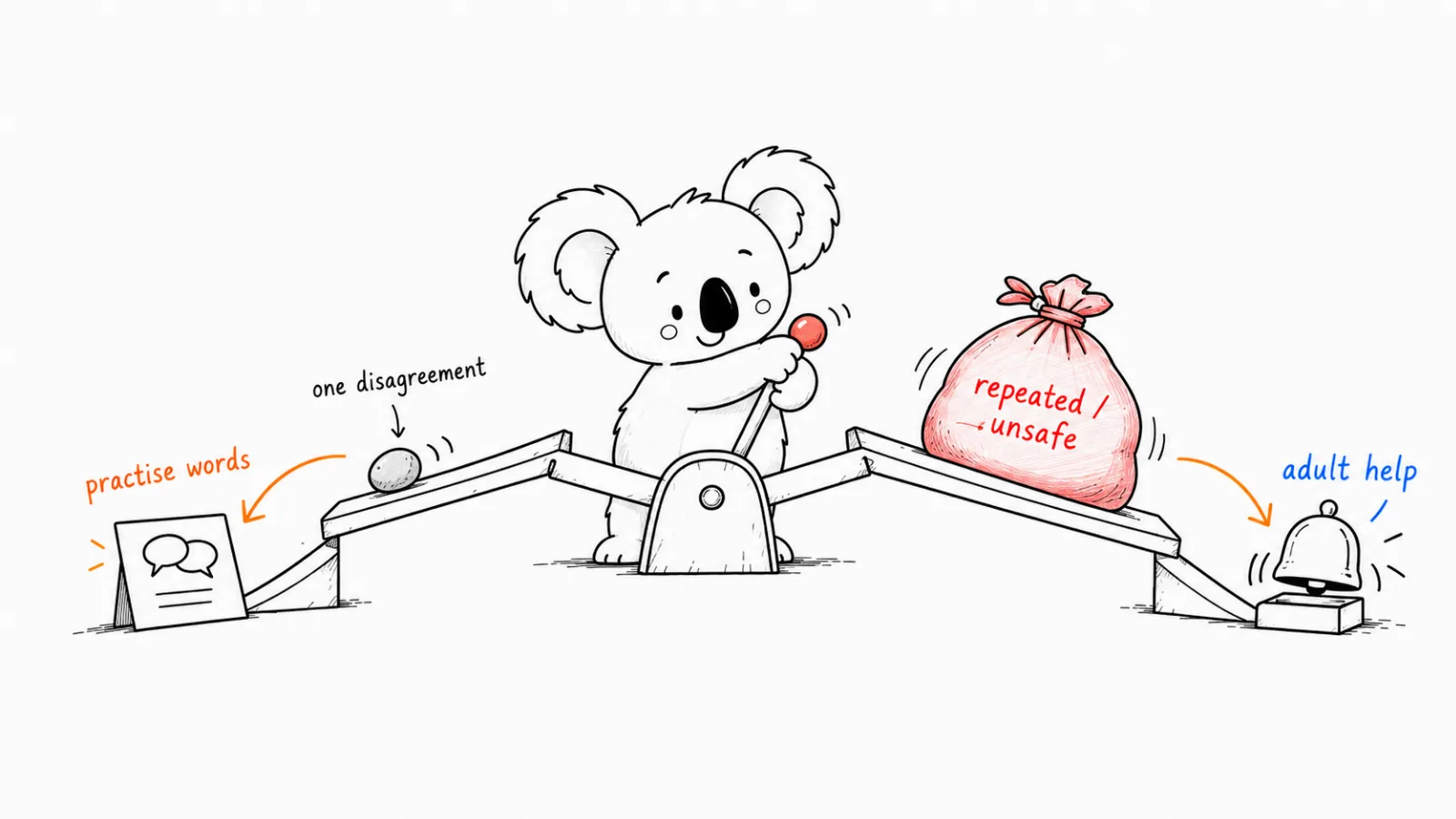
Avoid promising to keep everything secret. Instead, say: “I will respect your privacy, but if someone is unsafe, I may need to ask a trusted adult to help.”
Protect Sleep Without Closing the Conversation
A friendship discussion can expand quickly just as the lights go out. Listening matters, but so does helping your child settle for sleep.
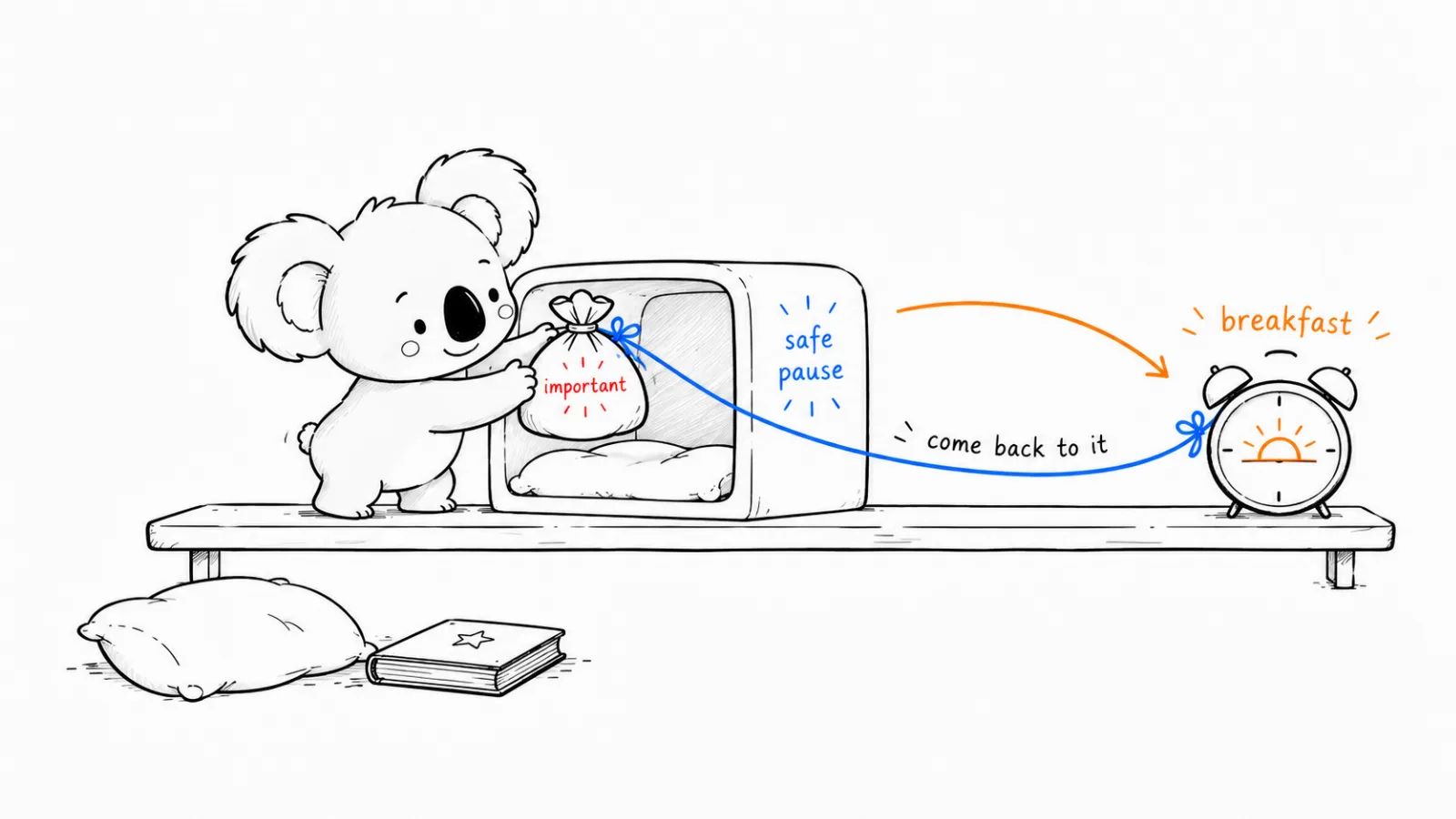
If the problem cannot be resolved that night, give it a clear holding place:
- ●Acknowledge it: “This is important.”
- ●Offer reassurance: “You do not have to work it out alone.”
- ●Set a next step: “We’ll talk again at breakfast and decide whether to contact your teacher.”
- ●Return to the bedtime routine: a cuddle, quiet story or familiar goodnight phrase.
This is not dismissing the concern. It shows your child that difficult problems can be paused safely and revisited when everyone has more energy.
FAQ
What if my child says they have no friends?
Respond to the feeling before checking the facts: “That sounds lonely.” Later, gently explore whether your child means no one played with them that day, a close friend was absent or exclusion has become a pattern. If the concern continues, ask their educator what they have observed during less structured times such as lunch or outdoor play.
Should I contact the other child’s parent?
For a single, low-level disagreement, it is often helpful to speak with the teacher or educator first because they can observe the children in context. Direct contact between parents can become tense when accounts differ. Immediate safety concerns should be raised promptly through the school, childcare service or relevant safeguarding process.
What if my child caused the problem?
Stay curious and hold the boundary. You might say, “It is okay to feel angry, but it is not okay to hit.” Help your child understand the impact, practise a better response and consider a meaningful repair, such as returning an item or offering a sincere apology without demanding immediate forgiveness.
When should I seek extra support?
Talk with an educator, GP, paediatrician or qualified child health professional if friendship worries persist, intensify or begin affecting sleep, school attendance, appetite, play or family life. Seek prompt help when a child reports threats, repeated physical harm or feeling unsafe. Recognised parenting resources such as HealthyChildren.org, the NHS and Raising Children Network also provide general guidance, but they cannot replace individual assessment.
The Bottom Line
Bedtime talks about friendship troubles work best when children feel heard, not examined. Offer calm attention, use stories when direct questions feel difficult and finish with one manageable next step. The goal is not to remove every conflict, but to help your child know that difficult feelings can be shared and handled with support.
Ready for calmer bedtimes?
Try Gula Stories free — 5 narrated bedtime stories, ad-free, for children ages 3-8.