
Bedtime Stories Grandparents Can Tell From Far Away
Long-distance grandparents can become a reliable part of bedtime through short live calls, recorded stories and shared s
Key Takeaways
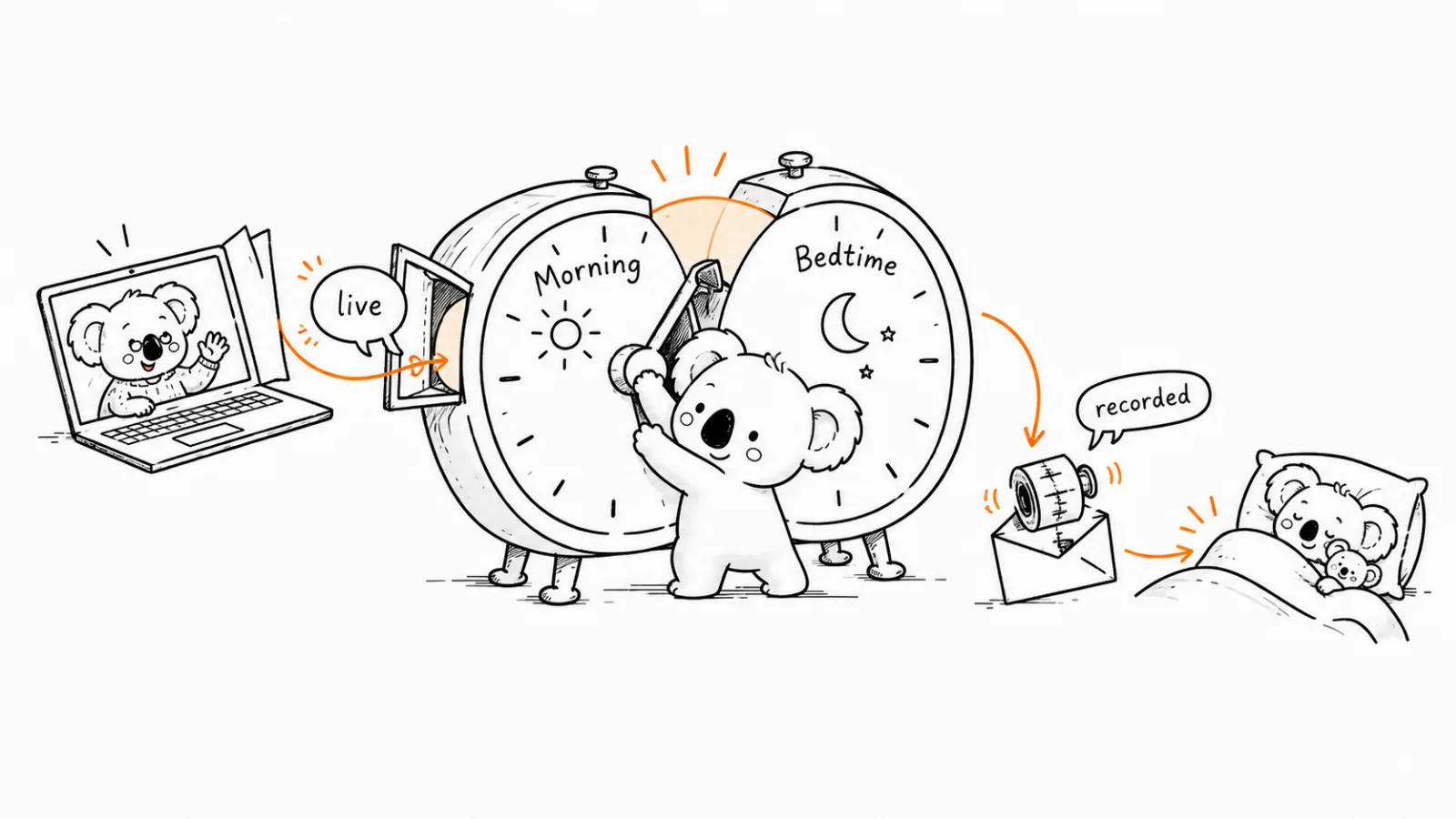
- ●Long-distance grandparents can become a reliable part of bedtime through short live calls, recorded stories and shared story rituals.
- ●Keep live sessions calm and predictable: choose the book beforehand, limit distractions and finish before the child becomes overtired.
- ●Recordings work well across time zones and give children a familiar voice they can revisit.
- ●Simple, repeatable stories are often more engaging over a call than books with detailed illustrations.
- ●Parents should keep control of the device, privacy settings and final bedtime transition.
Long-distance grandparents can stay meaningfully involved at bedtime by reading over a video or audio call, recording stories for later, or continuing a simple tale across several nights. The most effective approach is not an elaborate performance but a calm, familiar ritual that fits the child’s usual bedtime.
The options below help families manage different time zones, short attention spans and the practical limits of reading through a screen.
Choose a Format That Fits the Family’s Schedule
Live calls offer conversation and connection, while recordings provide flexibility. Many families benefit from using both rather than expecting one format to work every night.
| Format | Works well when | Main advantage | Practical caution |
|---|---|---|---|
| Live video reading | Bedtimes and time zones overlap | The child can see expressions and respond | Notifications, delays and conversation can become stimulating |
| Live audio reading | Video is distracting or the connection is weak | Keeps attention on the voice and story | Grandparents may need help knowing when the child loses interest |
| Prerecorded story | Schedules rarely align | Can be played during the normal routine | Keep files private and easy for caregivers to access |
| Ongoing voice-note story | The child enjoys anticipation | Creates a continuing ritual across several nights | Each episode needs a clear stopping point |
| Shared app or digital library | Both homes need access to the same material | Reduces confusion about pages and editions | An adult should check privacy and age suitability first |
For live reading, agree on a regular time that works in both locations. It does not have to be every night. A dependable Sunday story can feel more secure than calls that happen frequently but unpredictably.
If the grandparent’s morning overlaps with the child’s bedtime, that can become part of the ritual: “Grandad reads before breakfast while Maya gets ready for sleep.” When there is no useful overlap, a recording lets the child hear the story at the same point in their normal routine.
The caregiver at home should remain responsible for bedtime. Grandparents can provide the story, but the parent or carer should manage the device, notice signs of tiredness and handle the transition to lights out.
Make Live Story Calls Calm and Easy to Follow
A successful remote story usually begins before the call. Choose the book in advance, check that both homes have access to it and place the device where the grandparent’s face or the pages can be seen without constant movement.
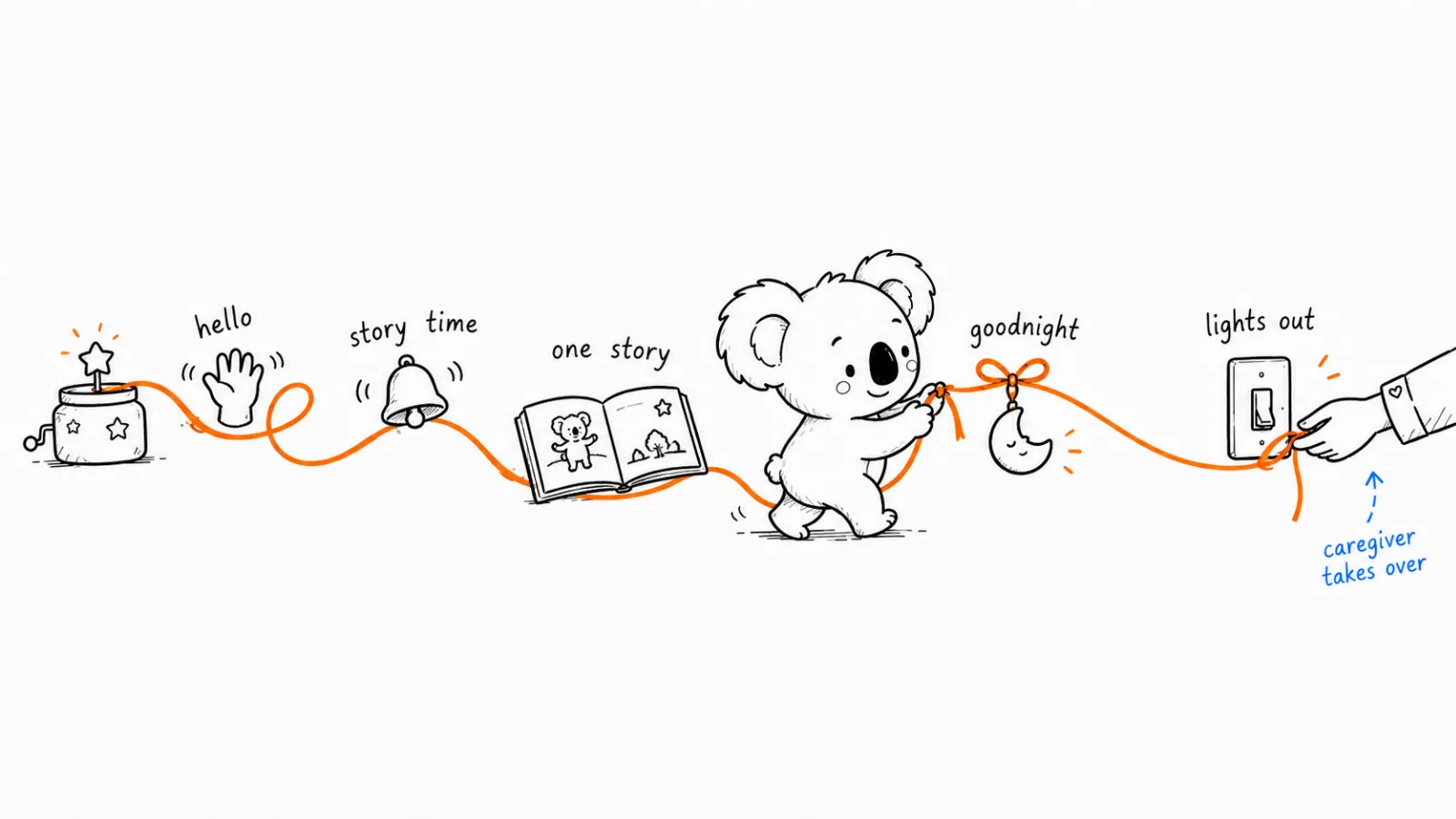
A simple live-reading routine might look like this:
- ●Connect briefly. Allow a few minutes for greetings and one small piece of news.
- ●Signal the start. Use the same phrase each time, such as, “Pillows ready—story time.”
- ●Read one story. Pause occasionally for a prediction or reaction, but avoid turning every page into a question.
- ●Use a familiar ending. A repeated goodnight phrase, rhyme or gentle wave helps the child recognise that the call is finishing.
- ●End before lights out. The caregiver can then complete the usual cuddle, drink, toilet or settling steps without the device.
For children aged two to four, short stories with repeated phrases, animal sounds or predictable actions are often easier to follow remotely. A grandparent might pause before a repeated word and let the child supply it.
Children aged five to eight may enjoy longer plots, simple chapter books or stories told in instalments. A useful stopping point creates anticipation without leaving the child distressed: “Tomorrow, we will find out what was inside the parcel.”
Picture-heavy books can be awkward on video because the camera may reverse text, lose focus or show glare. Grandparents can hold the illustration still after reading the page, or both homes can keep a copy of the same book. If neither is practical, an oral story may work better.
Calls do not need to continue when a child is clearly tired, restless or upset. A warm two-minute goodnight is more useful than forcing a full story because it was planned.
Record Stories That Still Feel Personal
Recordings are especially useful for long-distance grandparents separated by time zones, shift work, travel or unreliable internet. They also allow children to hear a familiar voice when a live conversation is not possible.
A recording can be as simple as a private audio file containing:
- ●The child’s name and a short personal greeting
- ●One story or self-contained chapter
- ●A few natural sound effects or character voices
- ●A calm closing line used across recordings
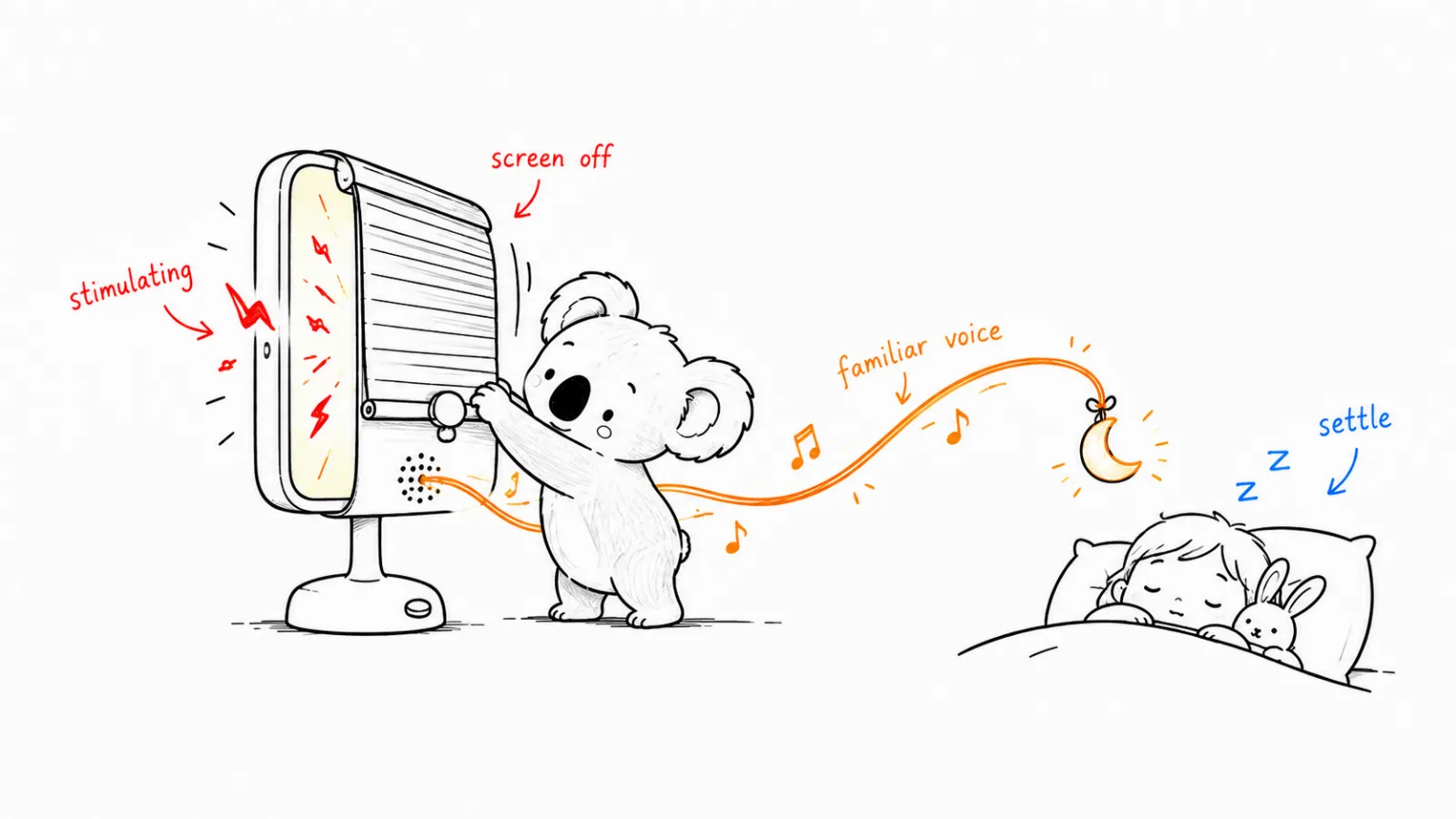
Audio often works better than video at bedtime because the device can remain out of the child’s hands and the screen can be turned off. HealthyChildren.org, from the American Academy of Pediatrics, advises families to avoid screens close to bedtime because stimulating content and device use can interfere with settling. A prerecorded video can therefore be watched earlier in the routine, with an audio-only story used once the child is in bed.
Grandparents do not need professional equipment. A quiet room, a phone placed close enough for clear speech and an unhurried pace are usually sufficient. A small mistake can be left in unless it disrupts the story; a natural laugh or corrected word may make the recording feel more personal.
Families should store recordings in a private location rather than posting them publicly, particularly when they include a child’s name, photograph or personal details. Parents should also check that any book being recorded and distributed beyond private family use is not restricted by copyright. Family memories, original stories and traditional tales are straightforward alternatives.
Gula Stories can also support this routine when families want calm narration, multiple natural voices, age-appropriate recommendations or a personalised avatar between grandparent-led sessions. It is most useful as part of the family’s existing bedtime pattern, not as a replacement for direct contact.
Create Stories That Belong to the Grandparent and Child
Grandparents do not have to read from a book. Stories based on family memories, familiar places or recurring imaginary characters can build a distinctive connection across distance.
The safest family stories for bedtime have a clear beginning, a manageable problem and a reassuring ending. A grandparent could describe:
- ●A gentle adventure involving the child’s favourite toy
- ●An age-appropriate memory from the parent’s childhood
- ●A fictional animal that travels between the two homes
- ●A continuing “postcard story” from a different place each week
- ●A repeated tale in which the child chooses one detail, such as the vehicle or destination
Personalisation should remain comforting rather than demanding. Avoid making the child responsible for the grandparent’s feelings with statements such as, “I am lonely because you are far away.” A calmer message is, “We live far apart, and story time is one way we stay connected.”
Some children will talk throughout the story, while others may listen silently or wander in and out of view. These reactions do not necessarily show how much the ritual matters to them. Keep invitations low-pressure: “Would you like to choose the animal?” is easier than repeatedly asking the child to perform, answer or speak.
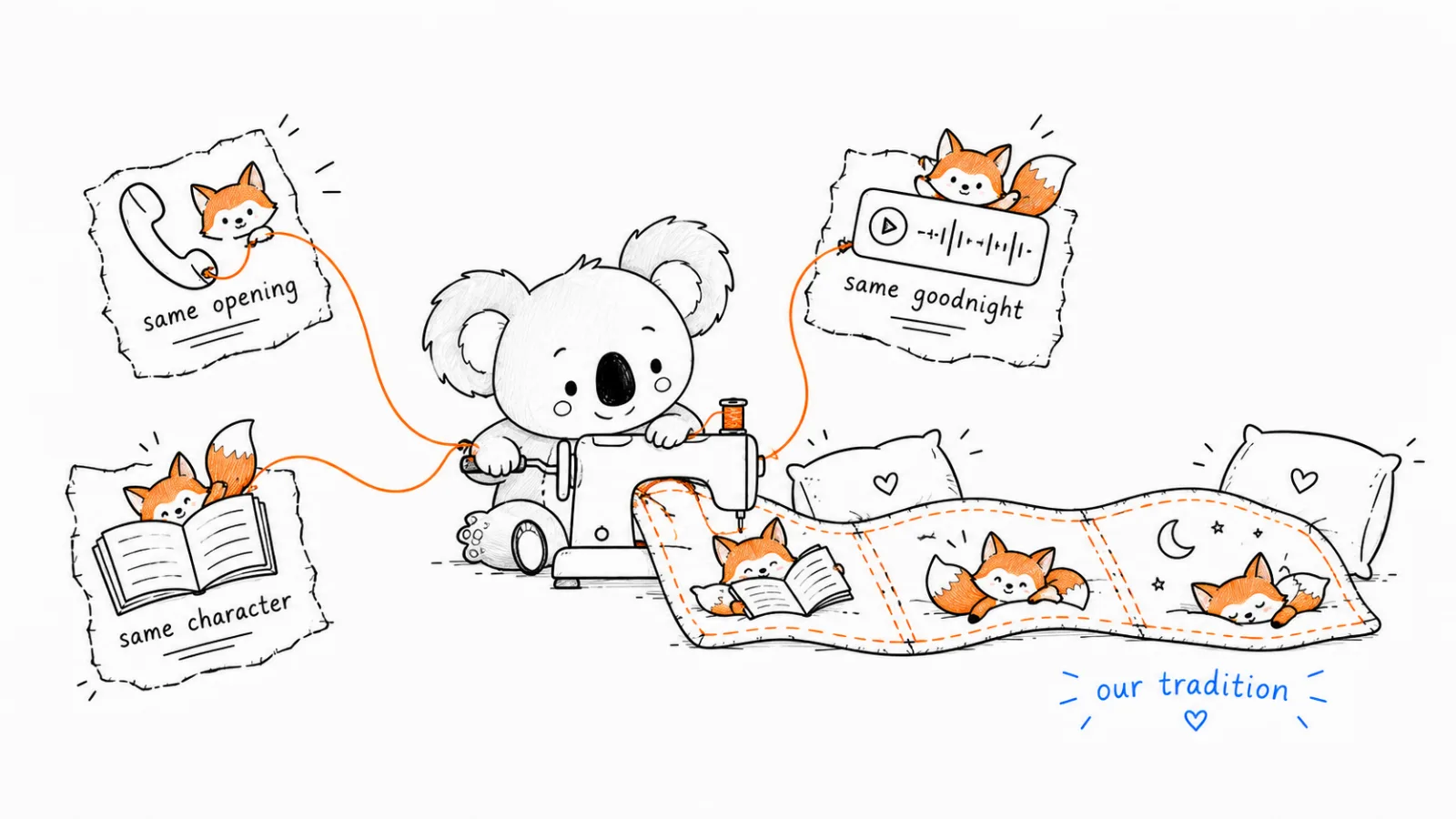
Consistency can come from one small element rather than an exact schedule. The same opening sentence, recurring character or final goodnight phrase can make separate calls and recordings feel like parts of one shared tradition.
FAQ
What if my child becomes more excited after talking to a grandparent?
Move the call earlier in the bedtime routine and keep the final minutes quieter. For example, schedule the grandparent’s story before teeth brushing, then let the caregiver complete the usual calming steps. If bedtime difficulties persist or significantly affect the child or family, discuss them with a GP, paediatrician or child health professional.
Can grandparents read the same story repeatedly?
Yes. Young children commonly enjoy repetition because knowing what comes next allows them to participate and follow the language more easily. A grandparent can preserve the familiar structure while changing one small detail, such as a character’s hat or destination.
What if siblings want different stories?
Alternate who chooses, select one short story for each child, or record individual stories for separate listening times. For a live call, it can help to begin with a shared story and finish with a brief personalised goodnight for each child.
How can families preserve recorded stories?
Keep copies in at least two private, secure locations and label them with the reader, story and date. Original stories and family memories may become valuable keepsakes, so use common file formats that are easy to transfer as devices change.
The Bottom Line
Bedtime stories give long-distance grandparents a practical role in family life even when they cannot be in the room. Start with one manageable ritual—a weekly call, a short recording or a continuing story—and let familiarity make it meaningful.
Ready for calmer bedtimes?
Try Gula Stories free — 5 narrated bedtime stories, ad-free, for children ages 3-8.