
Bedtime Stories for Siblings Who Share a Room
Shared-room bedtime stories work best when they create one predictable routine while respecting each child’s different f
Key Takeaways
- ●Shared-room bedtime stories work best when they create one predictable routine while respecting each child’s different fears, interests, and developmental needs.
- ●For anxious children, choose stories with manageable tension, calm language, supportive relationships, and reassuring endings.
- ●Establish clear rules before reading: where each child listens, who chooses the story, how interruptions are handled, and what happens when the story ends.
- ●Alternate choices or use a simple rotation so one sibling does not control the routine.
- ●If anxiety repeatedly disrupts sleep or affects daily life, stories can remain part of the routine, but they should not replace support from a qualified health professional.
1. Introduction
Sharing a bedroom can make bedtime comforting, complicated, or both. One child may relax when a sibling is nearby, while the other needs silence. An older sibling may want an adventurous chapter book, while a younger child prefers a short and familiar story. If either child worries about darkness, separation, nightmares, school, or unfamiliar sounds, those differences can become especially noticeable after the lights go down.
Bedtime stories for siblings who share a room need to do more than entertain. A useful story routine should lower stimulation, reduce conflict, give each child a fair role, and create a clear transition from family time to sleep.
This is particularly important when choosing bedtime stories for anxious kids. A story with sudden danger, unresolved suspense, or intense conflict may be enjoyable during the day but poorly suited to a child who already feels alert at night. Conversely, a story that avoids every difficult emotion may feel unrealistic and offer little help with coping.
The practical goal is not to eliminate all worry before sleep. It is to create a predictable setting in which children can experience small challenges, see characters receive support, and finish with a sense of safety. The following approach helps parents and caregivers select stories, manage sibling differences, and build a shared-room routine that remains calm and fair.
2. Choose Stories That Reduce Uncertainty Without Ignoring Emotion
The most suitable bedtime stories acknowledge a problem but resolve it gently. An anxious child often benefits from knowing that a character can feel afraid, ask for help, take a manageable action, and arrive somewhere safe.
This structure matters because bedtime is rarely the right moment for intense suspense. A child who is already monitoring shadows, sounds, or bodily sensations may remain mentally engaged if the story ends with unanswered danger. A reassuring ending provides a clear signal that the narrative—and the day—is complete.
Look for stories with:
- ●A familiar or easy-to-understand setting
- ●One manageable problem rather than several escalating threats
- ●Calm, supportive adults, friends, siblings, or animal companions
- ●A character who uses a concrete coping action
- ●Repetition or predictable patterns
- ●A complete and emotionally reassuring ending
- ●Language that can be read slowly without becoming dull
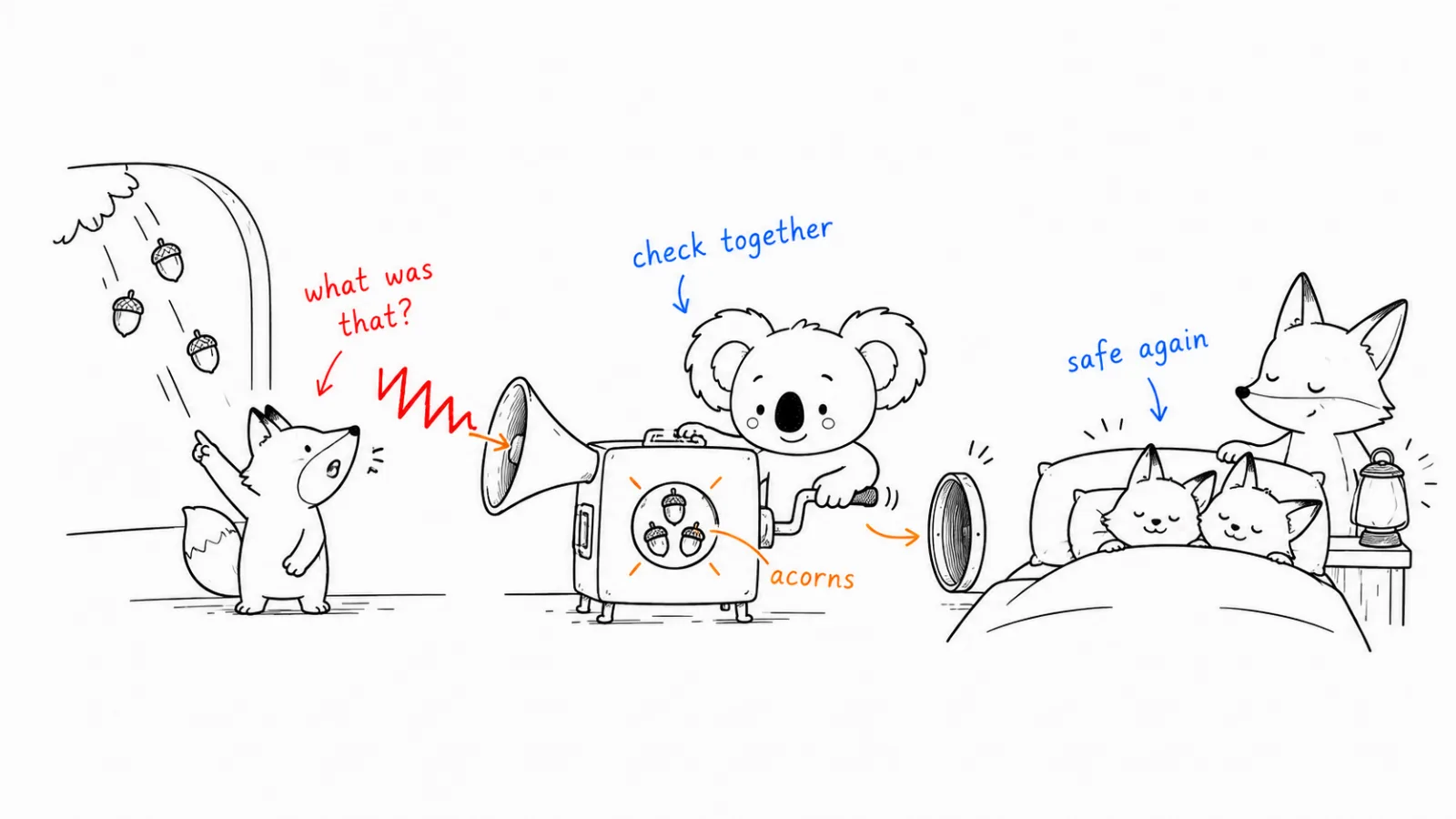
A story can still include fear. For example, two young foxes may hear a noise outside their den, investigate with a trusted adult, discover falling acorns, and return to bed. The fear is not mocked or dismissed. It is named, explored safely, and resolved.
Avoid assuming that a story marketed as soothing will suit every child. One child may find talking animals comforting, while another worries about forests. A story about a parent leaving and returning may reassure one child but activate separation fears in another. The caregiver’s knowledge of the children matters more than a category label.
Before adding a new book to the bedtime routine, consider reading it alone or sharing it during the day. This allows you to identify frightening images, unresolved endings, family themes, or language that may invite difficult questions when everyone is tired.
3. Build One Routine With Space for Two Different Children
A shared routine should be consistent, but it does not need to treat siblings as if they have identical needs. The central principle is simple: keep the structure predictable while allowing limited, fair choices inside it.
A workable sequence might be:
- ●Complete washing, toothbrushing, and other practical tasks.
- ●Let each child settle in their own sleeping space.
- ●Choose the story according to an agreed rotation.
- ●Read in a calm voice for a defined period or number of pages.
- ●Invite one brief comment or question from each child.
- ●Repeat the same closing phrase.
- ●Turn off the reading light and move to the household’s normal sleep conditions.
The closing phrase can be simple: “The story is finished, everyone is safe, and now it is time to rest.” Repeating the same words may help distinguish genuine story discussion from attempts to extend bedtime indefinitely.
Physical arrangements also matter. If one sibling repeatedly crowds the other or competes to see the pictures, assign listening places before reading begins. The children might stay in their own beds while the caregiver sits between them, or they might sit together for the story and return to separate beds before the final page.
For siblings with a significant age difference, a two-part routine can work well. Begin with a short story both children can follow. After the younger child settles, continue with a quieter chapter for the older child if the room arrangement and sleep needs allow it. A small reading light, low voice, or audiobook with carefully managed volume may reduce disruption, but only if it does not keep the younger child awake.
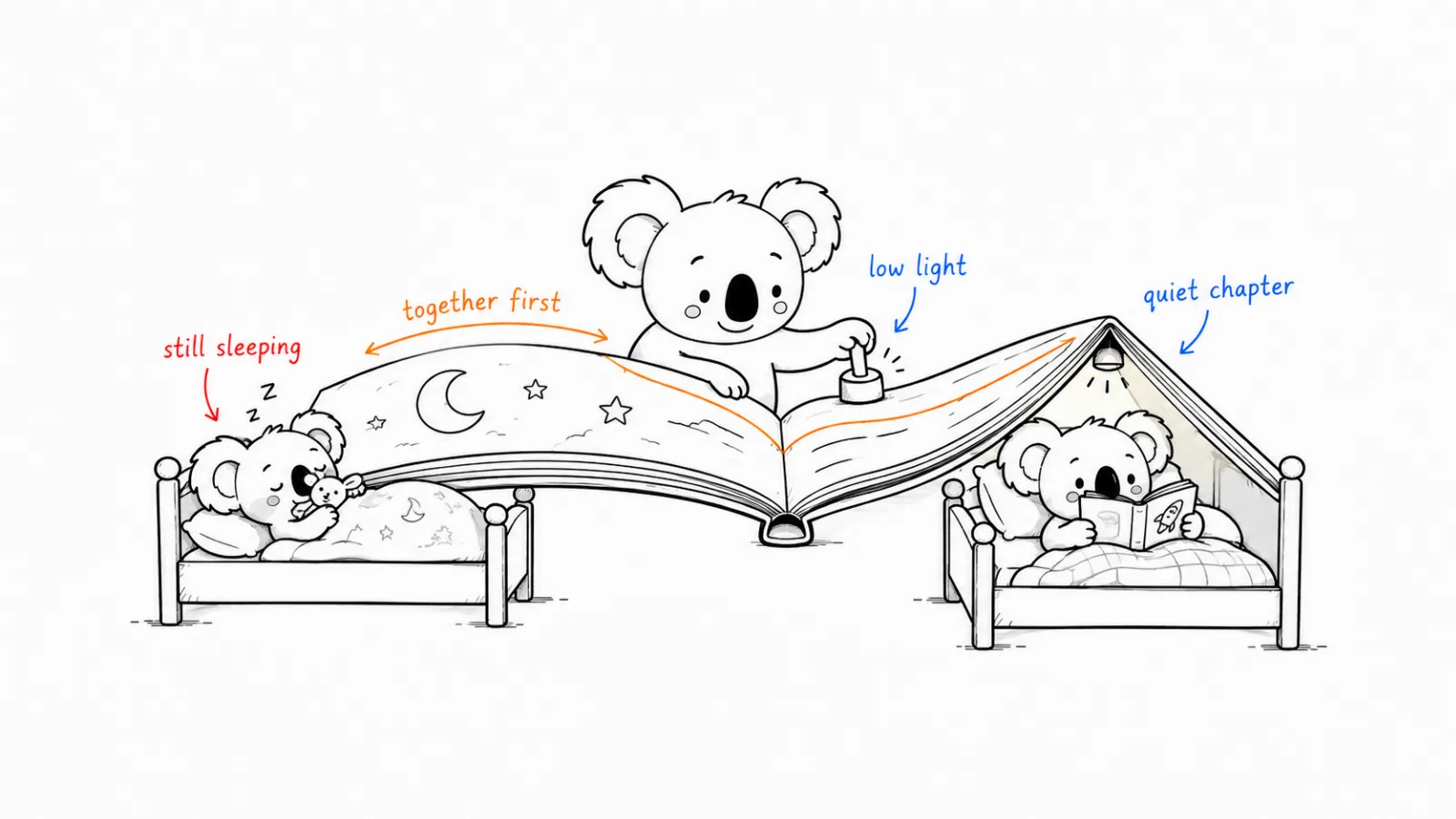
Consistency should not become rigidity. Illness, travel, late events, or unusually difficult days may require a shorter version. A familiar three-minute story and the usual closing phrase can preserve the structure when a full routine is impractical.
4. Manage Story Choice, Interruptions, and Sibling Conflict
Many shared-room bedtime problems begin before the first page. The children may argue over who chooses, correct each other’s answers, or use questions to compete for attention. Solving these problems requires rules that are visible, neutral, and established before bedtime.
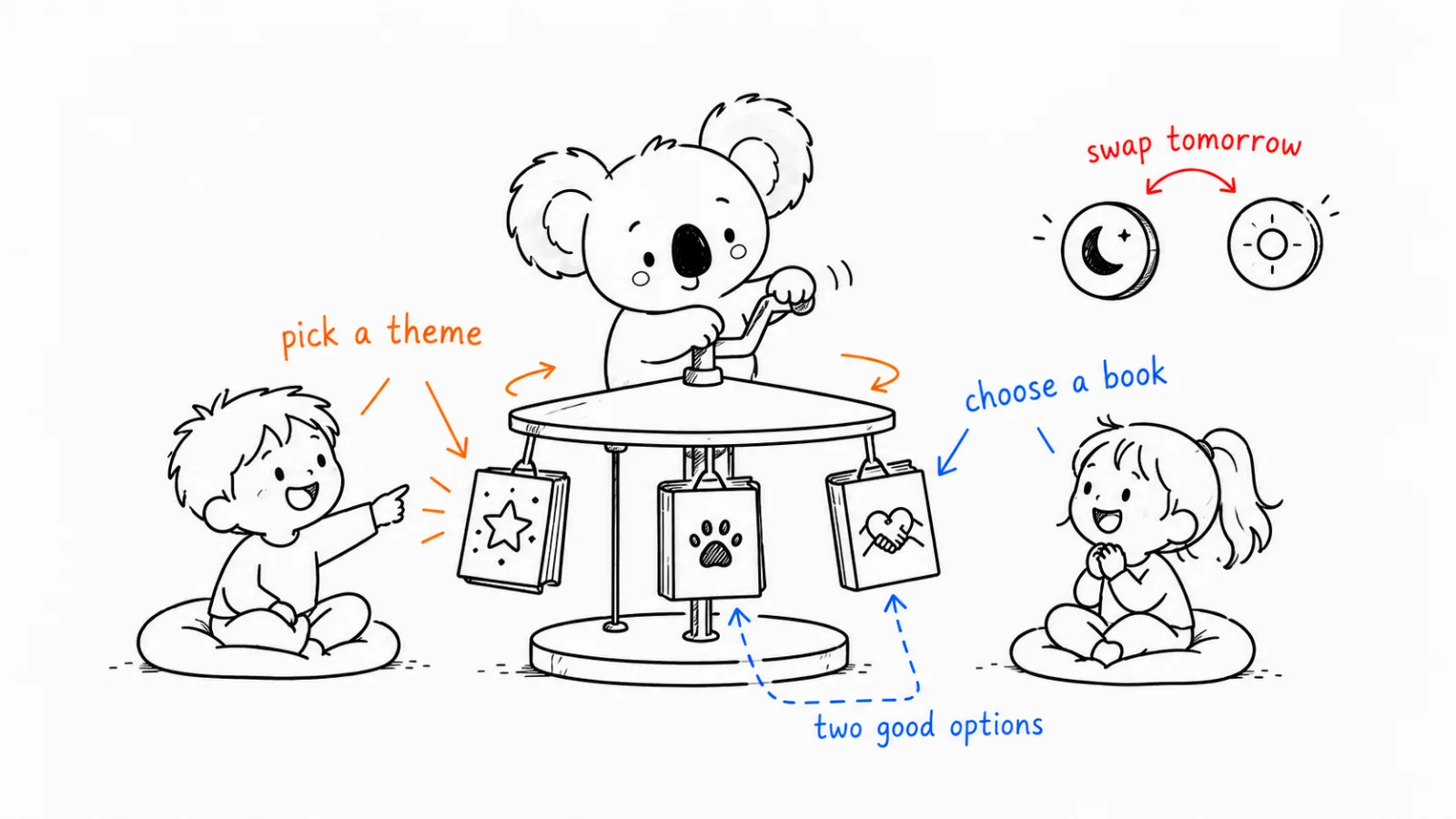
A rotation is often easier than negotiating every night. One child chooses on alternating evenings, or each child selects on designated days. If a chosen book is too stimulating or unsuitable for bedtime, the caregiver can offer two approved alternatives rather than rejecting the choice without explanation.
Another option is to separate topic choice from book choice. One child chooses the theme—such as space, animals, or friendship—while the other selects from two or three books in that category. They exchange roles the next night.
Interruptions need similar boundaries. Questions such as “What does that word mean?” or “Why is the character afraid?” may support understanding. Repeated unrelated questions may be an attempt to delay sleep or regain attention. A practical rule is to allow each child one question during the story and save other thoughts for breakfast or the next day.
When siblings disagree about what happened in the story, avoid turning bedtime into a debate. Acknowledge both interpretations briefly: “You think the sound was scary, and your brother thought it was funny.” The purpose is not to determine who interpreted the scene correctly. It is to help both children settle.
If one child becomes distressed, address that child without making the sibling responsible for fixing the fear. A sibling can offer comfort voluntarily, but should not be told, “You must be brave so your sister will calm down.” Each child should be allowed to have an emotional response without carrying responsibility for the other child’s sleep.
5. A Practical Method for Selecting Shared-Room Bedtime Stories
The following framework can help caregivers compare story types without relying only on age labels or marketing descriptions.
| Story feature | Why it matters | Suitable shared-room use | Caution |
|---|---|---|---|
| Predictable repetition | Helps children anticipate what comes next | Useful when both children need a calm transition | Excessive participation may become stimulating |
| Mild problem with clear resolution | Acknowledges fear while restoring safety | Helpful for common worries about darkness or noises | Avoid unresolved threats at the final page |
| Warm sibling relationship | Can model cooperation without lecturing | Useful after minor sibling conflict | Do not choose stories that imply siblings must always agree |
| Humor | Can release tension and create connection | Best when the humor is gentle and brief | Loud, absurd, or highly interactive humor may delay settling |
| Familiar favorite | Reduces uncertainty | Helpful after a difficult or unusual day | Repetition may bore an older sibling; use a rotation |
| Longer chapter narrative | Supports older children’s interest | Works when both children can tolerate a stopping point | Cliff-hangers may increase questions or anticipation |
| Guided relaxation story | Directs attention toward breathing or physical calm | Useful when both children enjoy explicit calming prompts | Some children dislike being instructed to relax |
| Personalized family story | Can address a specific routine or worry | Helpful when details remain reassuring and realistic | Avoid promising that nothing bad will ever happen |
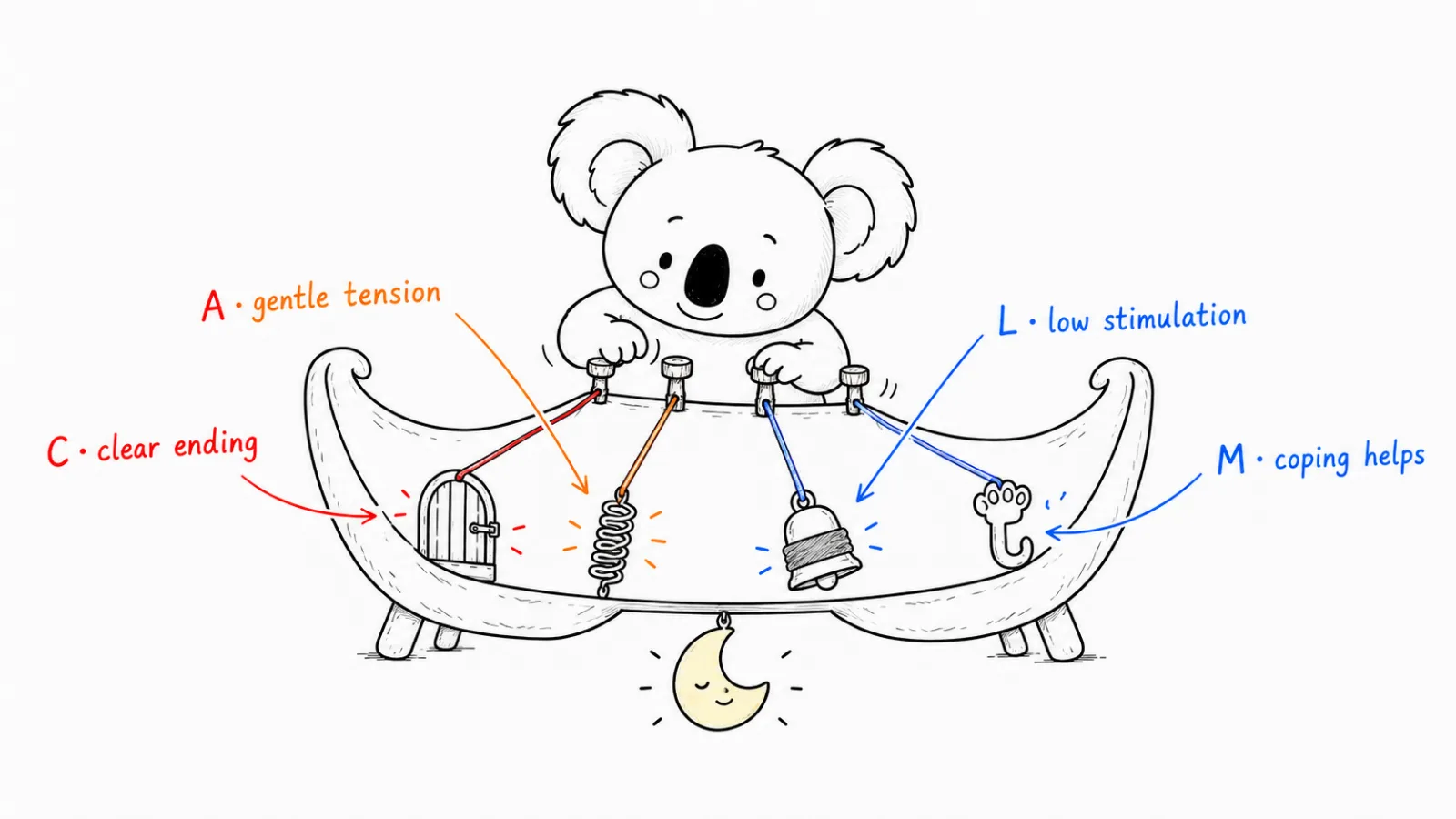
A concise selection test is CALM:
- ●C — Clear ending: Does the immediate problem reach a safe stopping point?
- ●A — Appropriate tension: Is the conflict manageable for both children at night?
- ●L — Limited stimulation: Can the story be read without shouting, rapid action, or intense participation?
- ●M — Meaningful coping: Does a character seek help, solve a small problem, or tolerate uncertainty?
A story does not need to meet every preference of both siblings. It should, however, be emotionally acceptable to both. If one child consistently finds a book frightening, save it for individual daytime reading.
Scenario-Based Recommendations
When one sibling fears the dark: Choose a story in which darkness is presented as ordinary rather than dangerous. Let the character notice nighttime sounds or shapes, check them with a trusted figure, and return to rest. Avoid repeatedly asking the anxious child whether the story is scary.
When the other sibling wants adventure: Look for low-intensity exploration with a completed episode. A journey can still feel adventurous if the characters solve a puzzle, find their way home, or prepare for tomorrow without facing severe danger.
When siblings are arguing: Select a story that shows characters repairing a small disagreement. Keep the lesson indirect. Afterward, ask one neutral question, such as, “What helped them solve the problem?” Avoid using the story as evidence that one child behaved badly.
When one child falls asleep earlier: Place the shorter, shared story first. If reading continues, reduce the light and volume, and choose material that does not require discussion. If this repeatedly disturbs the sleeping child, move the older child’s individual reading to another room before both children settle.
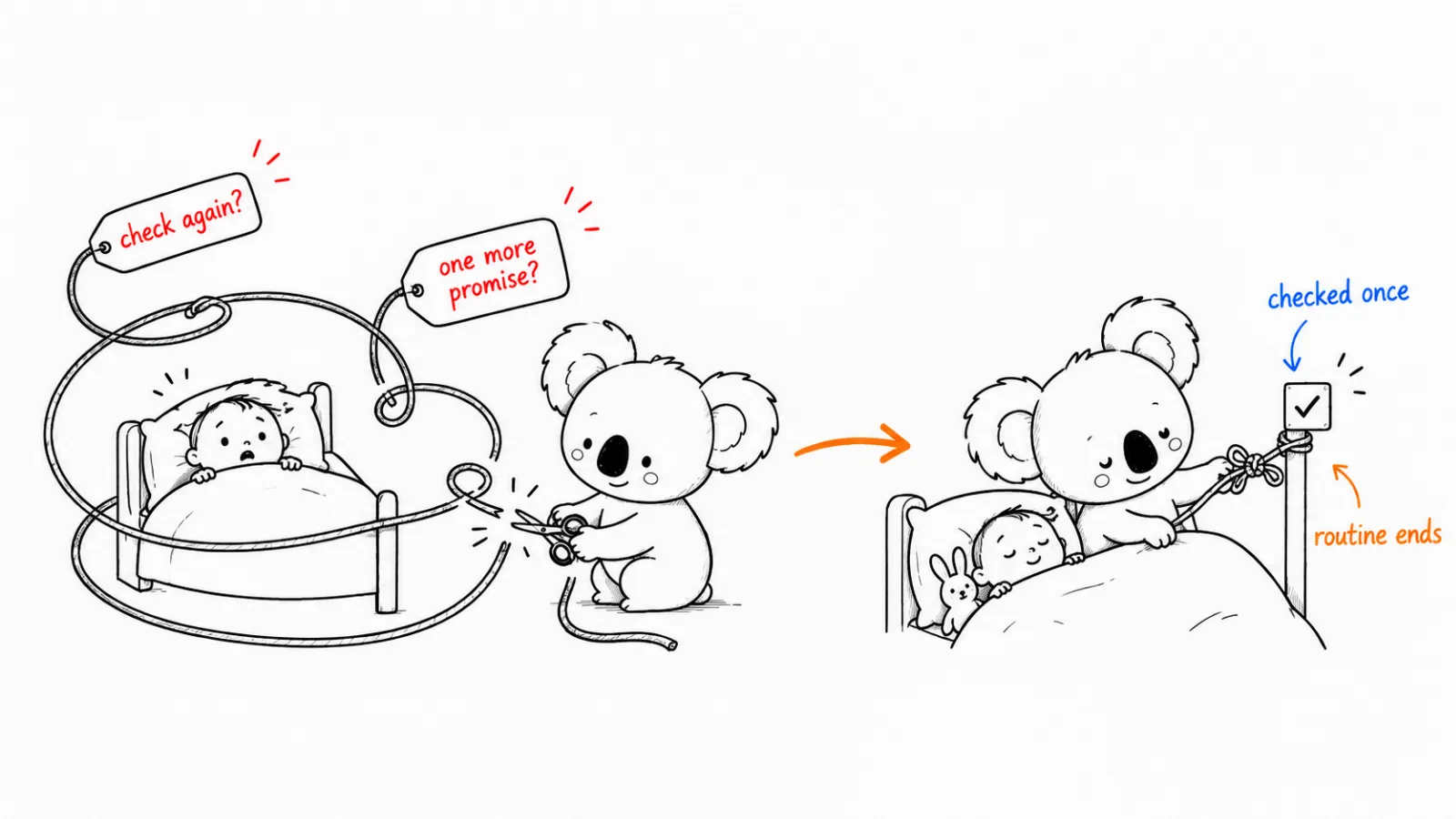
When anxiety triggers repeated reassurance requests: Answer briefly and consistently rather than creating new guarantees each time. A caregiver might say, “You are in your room, I have checked what you asked about, and the bedtime routine is finished.” Repeated checking can unintentionally extend the routine, so boundaries should remain calm and predictable.
Important Boundaries
Stories can support emotional regulation, but they are not a diagnostic or therapeutic tool by themselves. Consider seeking guidance from a pediatrician or qualified mental health professional if a child’s anxiety is persistent, causes significant distress, repeatedly prevents sleep, or affects school, relationships, health, or daily activities.
Caregivers should also avoid embedding impossible promises in personalized stories. Statements such as “Nothing frightening will ever happen” may not feel credible. More grounded reassurance focuses on support and coping: “If something worries you, you can tell a trusted adult, and we will decide what to do.”
6. FAQ
What are good bedtime stories for anxious kids who share a room?
Good bedtime stories for anxious kids usually include mild tension, supportive relationships, a clear resolution, and a calm ending. For siblings, the story should also be understandable and emotionally acceptable to both children. Familiar tales, gentle animal stories, low-stakes mysteries, and stories about coping with ordinary worries can work well.
What should I do if one sibling finds the story scary?
Pause and acknowledge the response without forcing the child to continue. Briefly explain what is happening if clarification resolves the concern. If the distress remains, switch to a familiar, calming story. The original book can be revisited during the day, when the child is less tired and stopping will not disrupt the sleep routine.
How can two siblings choose a story without arguing?
Use a predetermined system, such as alternating nights, designated weekdays, or choosing from two caregiver-approved options. Make the rule before bedtime and apply it consistently. A visible calendar can help younger children understand when their next turn will come.
Should siblings always listen to the same bedtime story?
No. A shared story can build connection, but different ages and emotional needs sometimes require separate material. Families can combine a short shared story with individual reading, alternate shared and separate nights, or let an older child continue reading quietly after the younger child settles.
7. Conclusion
Effective bedtime stories for siblings who share a room combine emotional safety with fair, predictable routines. The story itself matters, but so do the rules around choosing it, listening, asking questions, and ending the evening.
For anxious children, prioritize manageable tension, credible reassurance, supportive characters, and complete endings. For siblings with different preferences, preserve one shared structure while rotating choices or adding limited individual reading. Review unfamiliar stories in advance, respond to fear without ridicule, and avoid making either sibling responsible for the other’s emotions.
The most useful next step is simple: choose one calm story, establish a fair selection rule, and use the same short closing ritual for several nights. Observe how each child responds, then adjust the story type, timing, or seating arrangement while keeping the overall routine predictable.
Ready for calmer bedtimes?
Try Gula Stories free — 5 narrated bedtime stories, ad-free, for children ages 3-8.