
Bedtime Stories for Kids Who Worry About Tomorrow
Stories for worried kids work best when they acknowledge uncertainty, offer a manageable next step, and end with safety
Key Takeaways
- ●Stories for worried kids work best when they acknowledge uncertainty, offer a manageable next step, and end with safety or connection rather than unrealistic certainty.
- ●Helpful themes include gentle preparation, flexible problem-solving, trusted helpers, familiar routines, and characters who feel nervous but continue anyway.
- ●Keep wind-down conversations short and calm. Bedtime is usually better for reassurance and containment than detailed problem-solving.
- ●Avoid stories that dismiss fear, promise that nothing difficult will happen, or introduce suspense just before sleep.
- ●Persistent worries that regularly affect sleep, school, play, eating, or family life are worth discussing with a GP, paediatrician, or qualified child mental health professional.
1. Introduction
Tomorrow can feel enormous to a young child. A new classroom, a swimming lesson, a doctor’s appointment, a parent leaving for work, or even an ordinary change in routine may lead to repeated questions at bedtime:
What if I cannot do it? Who will help me? What if something goes wrong?
Children aged two to eight do not always have the language or perspective to explain anticipation anxiety directly. Instead, they may delay bedtime, ask for repeated reassurance, complain of a sore tummy, become tearful, or suddenly want to discuss every possible outcome.
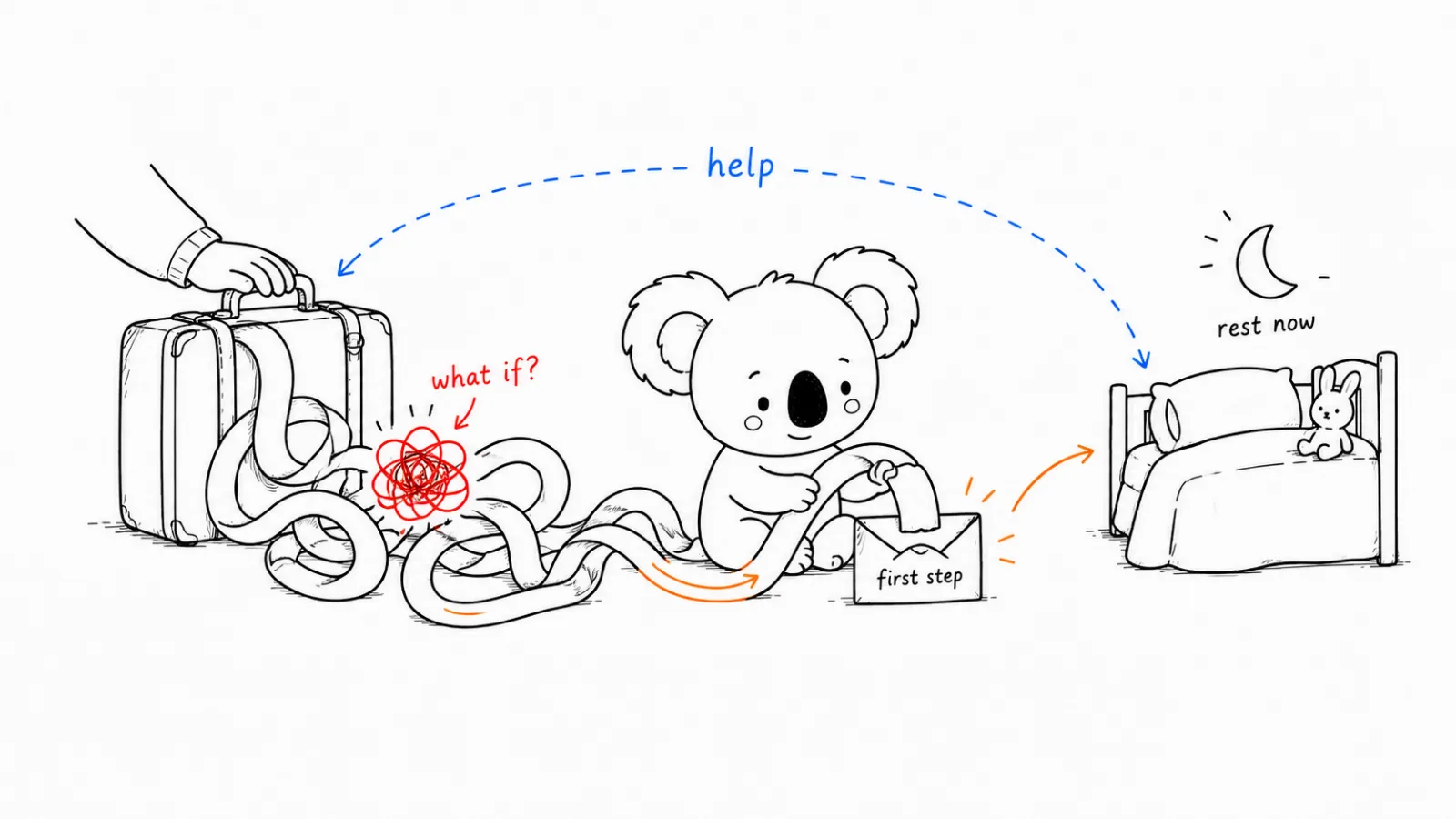
Bedtime stories can help because they create a safe distance between the child and the worry. A fictional character can face uncertainty, notice uncomfortable feelings, seek support, and take one small step forward. The goal is not to convince a child that tomorrow will be easy. It is to help them feel that they will not face it alone and do not need to solve everything tonight.
This guide explains which story themes are most useful, how to choose age-appropriate stories for worried kids, and what to say during the final wind-down conversation.
2. Choose Stories That Make Uncertainty Feel Manageable
The most reassuring story is not necessarily one in which everything goes exactly as planned. Children also need to see that plans can change and that people can still cope.
A useful story follows a simple emotional pathway:
- ●A character learns that something will happen tomorrow.
- ●The character imagines possible problems.
- ●A trusted figure listens without laughing or dismissing the fear.
- ●They make a small, practical plan.
- ●The character rests before taking the next step.
- ●The ending restores safety, connection, or confidence.
For example, a young rabbit might worry about visiting a new burrow school. Rather than promising that the school will be wonderful, the rabbit’s caregiver helps identify the teacher, pack a familiar snack, and choose what to do if the rabbit feels unsure. The story can end the night before school, with the bag waiting by the door and the rabbit tucked safely into bed.
That ending matters. It shows that readiness does not require complete certainty.
Helpful story themes
Look for stories built around:
- ●Preparation without overplanning: Packing a bag, choosing clothes, or practising one part of tomorrow’s routine.
- ●Trusted helpers: Parents, teachers, grandparents, siblings, health professionals, or gentle fictional guides.
- ●Flexible plans: A character has a first plan and a simple backup plan.
- ●Small acts of courage: The character feels nervous and still takes one manageable step.
- ●Familiar anchors: A comfort object, goodbye ritual, family phrase, or predictable reunion.
- ●Successful recovery: Something goes differently than expected, but the character receives help and adjusts.
These themes teach a more durable message than “nothing bad will happen.” They communicate: You can feel worried, ask for support, and handle the next part.
3. Match the Story to the Child’s Age and Worry
Children’s understanding of tomorrow changes considerably between ages two and eight. The same story style will not suit every stage.
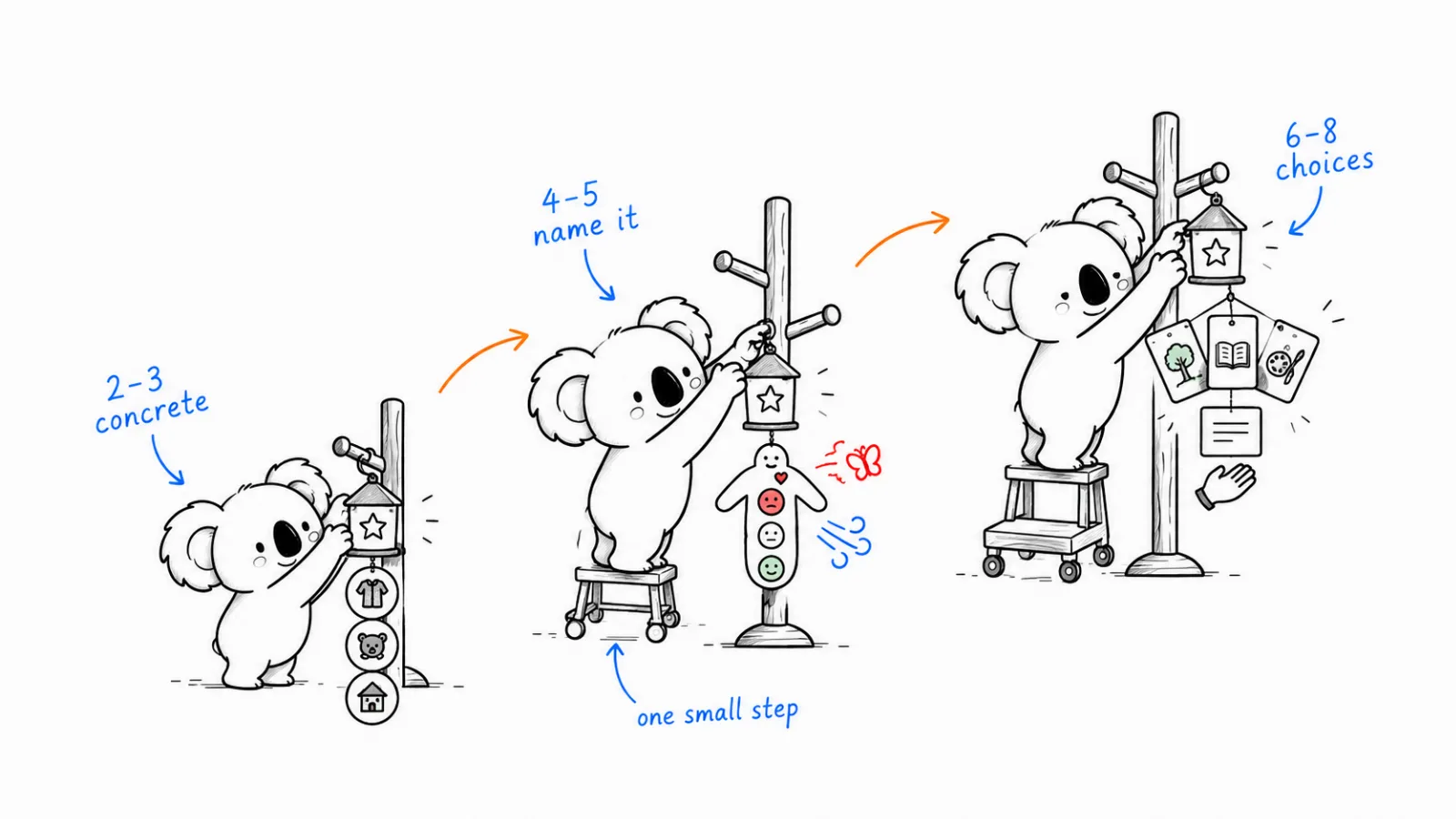
Ages 2–3: Use repetition, familiarity, and concrete details
Younger children usually benefit from short stories with a predictable sequence. Abstract explanations about anxiety are unlikely to help as much as familiar actions.
A useful story might show a character:
- ●putting on pyjamas;
- ●packing a comfort item;
- ●saying goodnight;
- ●waking up;
- ●travelling with a trusted adult;
- ●returning home afterward.
If the concern is separation, repeat a clear reunion message: “Dad goes, Mia plays, Dad comes back after afternoon tea.” Keep time markers connected to familiar events rather than clock times.
Ages 4–5: Name feelings and show one coping action
Preschool-aged children can often connect a body sensation with an emotion: a fluttery tummy, tight shoulders, or thoughts that keep asking questions.
A story can gently name that experience without making it frightening:
Theo’s thoughts were racing ahead to tomorrow, even though his body was still tucked safely in bed.
The character might then take three slow breaths, hold a favourite toy, ask a grown-up one question, or picture the first step of the morning.
Ages 6–8: Include realistic choices and flexible thinking
Older children may worry about performance, embarrassment, friendship, mistakes, or events they cannot control. They can benefit from stories that compare an anxious prediction with several possible outcomes.
For example, a character worried about speaking in class might consider:
- ●“I might forget one word.”
- ●“I can look at my note card.”
- ●“My teacher can give me a prompt.”
- ●“I do not have to deliver it perfectly to finish it.”
Avoid turning the story into a lecture. The emotional experience should remain central, and the solution should be modest enough to feel believable.
4. Use Wind-Down Talk to Contain the Worry
A story may open the door to conversation, but bedtime is rarely the ideal moment for a long investigation. Extended questioning can accidentally give the worry more attention and delay sleep.
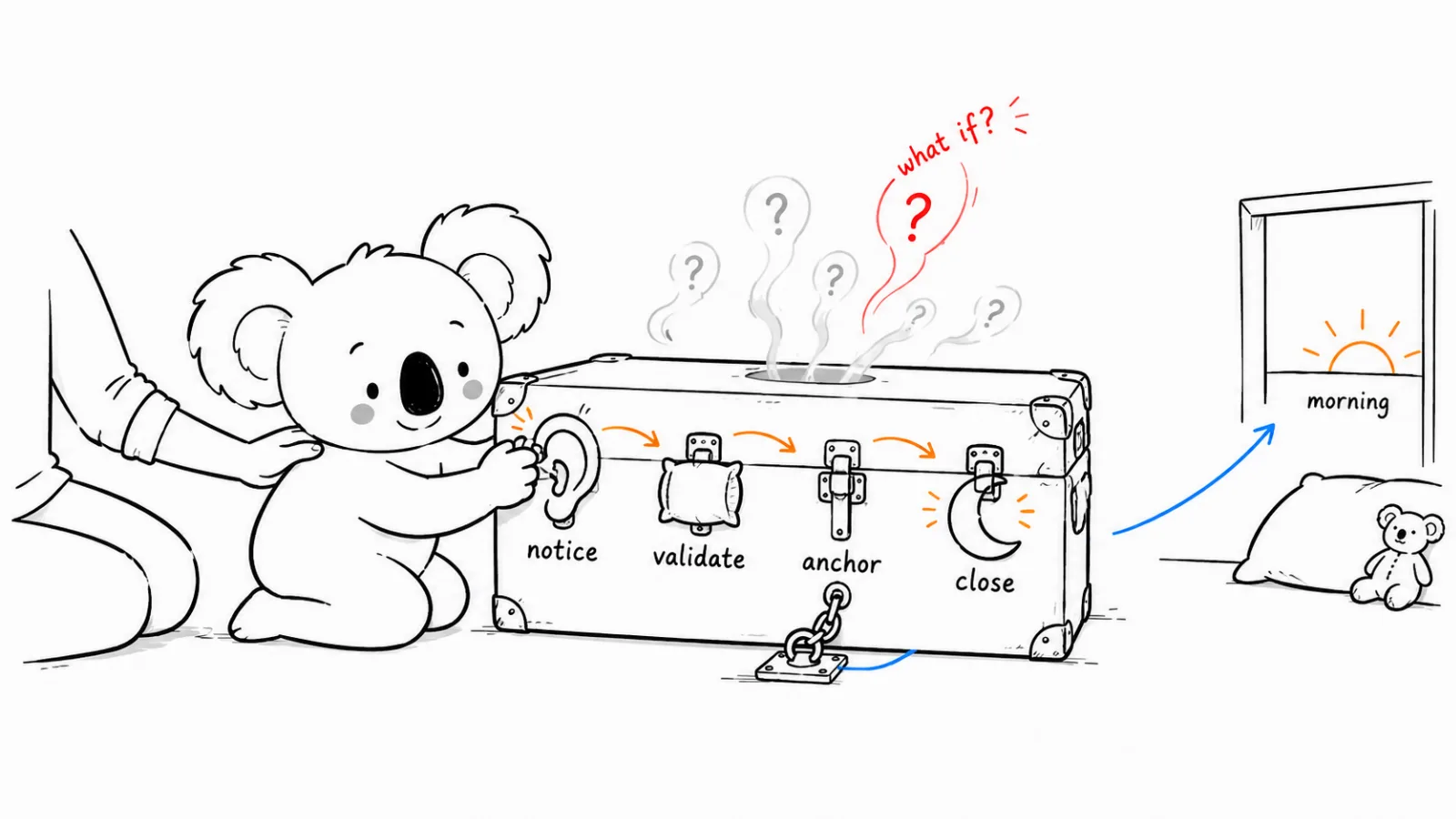
A calm wind-down conversation usually has four parts:
| Step | Parent response | Purpose |
|---|---|---|
| Notice | “It sounds as though tomorrow is taking up a lot of space in your thoughts.” | Shows that the child has been heard |
| Validate | “New things can feel uncertain.” | Accepts the feeling without confirming danger |
| Anchor | “You will go with me, and your teacher will meet you at the door.” | Returns to known facts and available support |
| Close | “We have a plan for the first step. We can talk more after breakfast.” | Sets a gentle boundary around bedtime worry |
This structure is short enough to repeat consistently. It also avoids two common traps: debating every imagined possibility and offering promises that no one can guarantee.
Phrases that can help
- ●“You do not have to work out all of tomorrow tonight.”
- ●“Being worried does not mean you are not ready.”
- ●“What is the very first step? We only need a plan for that.”
- ●“If the plan changes, which grown-up can help?”
- ●“Your job now is to rest. The grown-ups will help with the morning.”
- ●“I cannot promise exactly what will happen, but I can tell you what we know.”
Phrases to use carefully
Statements such as “There is nothing to worry about” may be intended as reassurance, but they can leave a child feeling misunderstood. Repeatedly answering the same question in greater detail may also provide only brief relief before the question returns.
Try to avoid:
- ●“Don’t be silly.”
- ●“You’ll definitely love it.”
- ●“Nothing will go wrong.”
- ●“Big kids aren’t scared.”
- ●detailed discussion of unlikely negative outcomes;
- ●introducing a new reward, threat, or consequence at bedtime.
The aim is calm confidence, not complete certainty.
5. A Practical Method for Choosing and Adapting Stories
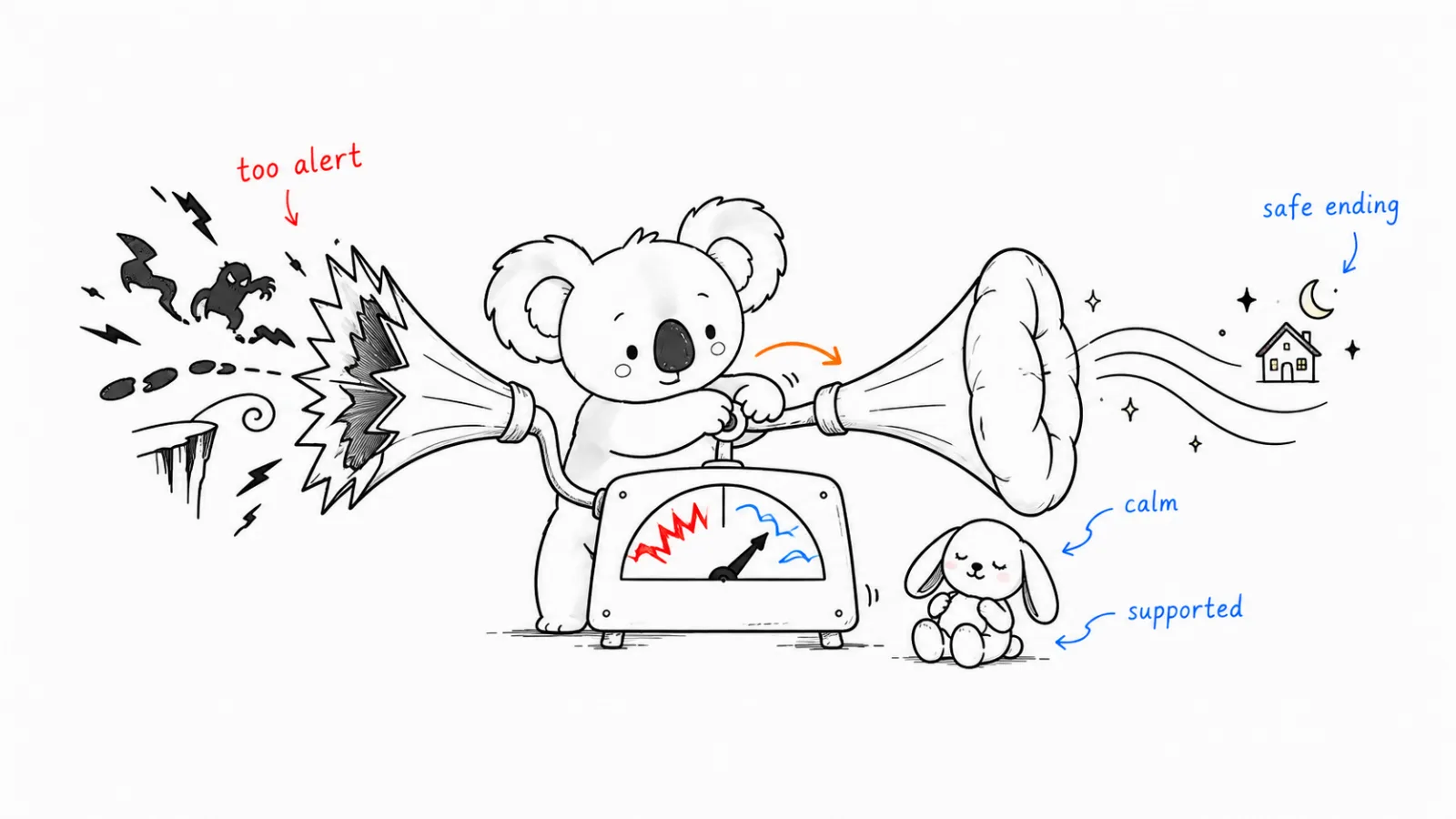
The right story should settle the nervous system rather than add stimulation. Use the following comparison when selecting a book, audio story, or improvised tale.
| Story feature | More helpful before bed | Less helpful before bed |
|---|---|---|
| Conflict | A familiar, manageable concern | Danger, pursuit, or intense suspense |
| Main character | Nervous but supported | Helpless, mocked, or repeatedly abandoned |
| Solution | One or two practical steps | A complicated rescue or magical guarantee |
| Emotional message | “Feelings can come and go” | “Brave people never feel afraid” |
| Ending | Safety, connection, and rest | A cliffhanger or sudden surprise |
| Length | Predictable and suitable for the child’s attention | Long enough to create overtiredness |
| Sound | Calm narration at a steady volume | Dramatic effects or abrupt changes |
Adapt the details without changing the emotional lesson
If a child is worried about tomorrow’s dentist visit, you can adapt a familiar story by changing a few elements:
- ●The character visits a new place.
- ●A trusted adult explains the first step.
- ●The character brings or imagines a familiar comfort.
- ●The professional tells the character what will happen before doing it.
- ●The character can signal if they need a pause.
- ●The ending focuses on returning to an ordinary, safe routine.
Do not overload the story with procedural detail unless the child finds detail reassuring and the information is accurate. If you are unsure what will happen at an appointment or event, say so and check with the relevant school, clinic, or organiser during the day.
Keep the bedtime routine predictable
Recognised child-health resources, including HealthyChildren.org, the NHS, and Raising Children Network, commonly recommend calm, consistent bedtime routines. The exact routine varies between families, but the sequence might include washing, pyjamas, one story, a brief check-in, and lights out.
Consistency can reduce the number of decisions a worried child has to make. If using an audio app, choose the story before getting into bed, lower the volume, and keep the device screen dimmed or out of sight. Gula Stories, for example, offers calm narration, multiple natural voices, age-appropriate recommendations, personalised avatars, and an ad-free environment; those features may be useful when a familiar and low-interruption listening experience helps a child settle.
A story should support the routine, not become an unlimited reassurance loop. It is reasonable to set a kind boundary: “We will listen to one story, choose one thought for tomorrow, and then rest.”
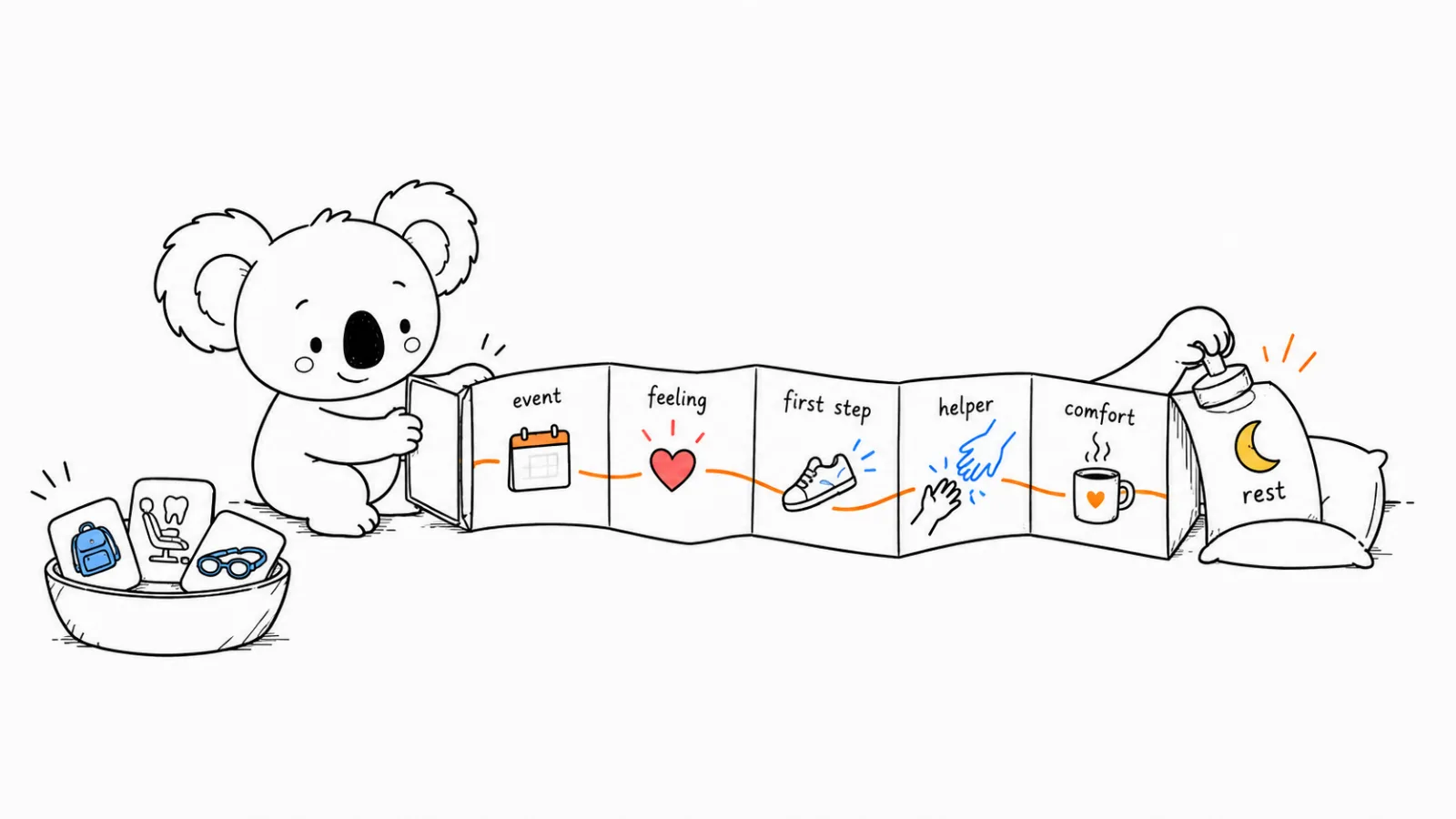
Create a repeatable “tomorrow story”
Parents do not need to invent a new plot each night. A reusable template can be more comforting:
Tomorrow, [character] will do [event].
Part of them feels [emotion or body sensation].
They know the first step is [simple action].
If they need help, they can ask [trusted person].
They carry [comforting thought or object] with them.
Tonight, there is nothing else to solve. It is time to rest.
Keep the ending the same even when the event changes. Repetition turns the story into a familiar emotional pathway.
6. FAQ
What if my child keeps asking the same question after the story?
Answer briefly and consistently rather than adding more detail each time. You might say, “I have answered that, and our plan is ready. We can talk again in the morning.” Then return to the usual bedtime cue.
Repeated questions can be a child’s attempt to obtain certainty rather than new information. A calm, unchanged response provides reassurance while maintaining the boundary that bedtime is for rest.
Should a bedtime story mention the exact thing my child fears?
Usually, gentle and age-appropriate similarity is helpful. A character facing the same type of event can help a child feel understood. However, avoid vivid descriptions, frightening possibilities, or an exact retelling if it increases distress.
Some children prefer a direct school or appointment story. Others engage better with a symbolic version involving animals, space travellers, or imaginary creatures. Watch the child’s response and simplify the story if they become more alert or upset.
Is it better to solve tomorrow’s problem before bed?
Handle practical preparation during the day whenever possible. Pack the bag, confirm who will be present, practise the goodbye routine, or contact the school before the bedtime wind-down begins.
At night, review only the first step and the available support. Complex planning can signal that the situation requires continued vigilance when the child needs permission to rest.
When should parents seek professional advice?
Occasional worry before a new event is a common childhood experience. Consider speaking with a GP, paediatrician, school wellbeing professional, or qualified child mental health professional if worries persist, intensify, or regularly interfere with sleep, eating, school attendance, play, separation, or family life.
Seek individual guidance sooner if the child appears highly distressed, reports physical symptoms that concern you, or if you are unsure whether the behaviour is typical for their age. Stories can support connection and routines, but they are not a substitute for assessment or treatment.
7. Conclusion
Bedtime stories for kids who worry about tomorrow should not try to erase uncertainty. Their most useful role is to make uncertainty smaller, safer, and more manageable.
Choose stories in which a character’s fear is heard, trusted people remain available, and the next step is clear. Follow the story with a short conversation that notices the feeling, confirms known facts, identifies support, and closes the topic for the night.
The message a child needs is simple: You do not have to know everything about tomorrow. You have a plan for the first step, people who can help, and permission to rest now.
Ready for calmer bedtimes?
Try Gula Stories free — 5 narrated bedtime stories, ad-free, for children ages 3-8.