
Bedtime Stories for a Child's First Week of School
Bedtime stories can help children process the first week of school in a calm, indirect way. Choose reassuring stories th
Key Takeaways
- ●Bedtime stories can help children process the first week of school in a calm, indirect way.
- ●Choose reassuring stories that acknowledge mixed feelings, show manageable school-day moments, and end with safety or connection.
- ●A short, predictable bedtime routine is usually more helpful than extending bedtime to resolve every worry.
- ●Invite conversation without turning story time into an interview; children may communicate through play, questions, or repeated story requests.
- ●Persistent sleep difficulties, intense distress, or physical complaints deserve additional support from the child’s school and a qualified health professional.
1. Introduction
A child’s first week of school can bring excitement, pride, uncertainty, and tiredness—sometimes all in the same evening. Even children who appear confident at drop-off may have more questions at bedtime, when the house becomes quiet and the next school day feels close.
Parents may notice repeated requests for another story, sudden worries about the teacher, difficulty saying goodnight, or questions such as, “What if no one plays with me?” Younger children may not explain their feelings directly. Instead, they might ask the same practical question several times, act out school scenes with toys, or become unusually clingy.
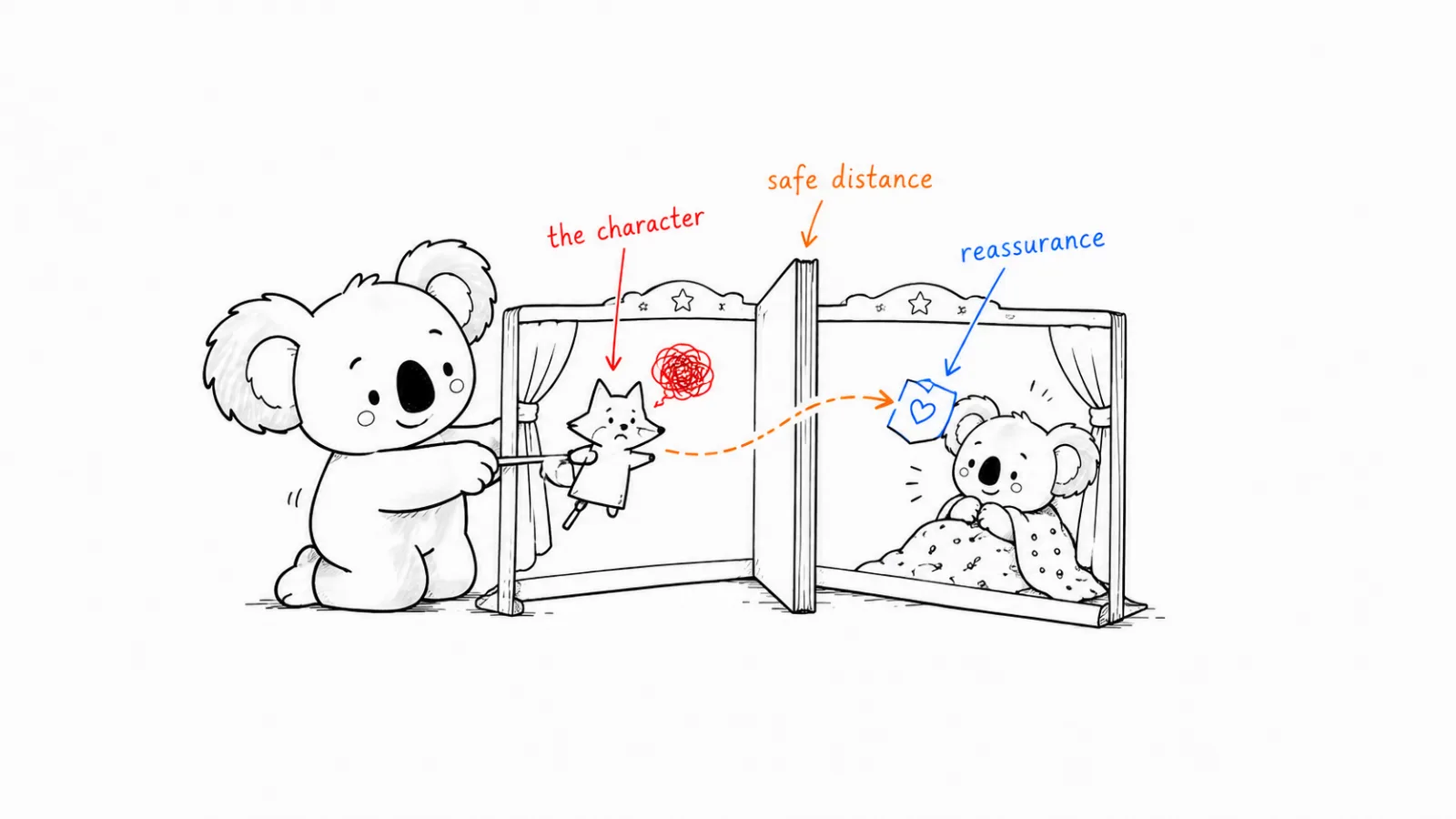
Bedtime stories offer a gentle way to make these experiences easier to understand. A well-chosen story can show a character entering an unfamiliar classroom, finding a helpful adult, making a small mistake, or discovering that a difficult day can still end safely at home. It gives the child emotional distance: the problem belongs to the character, but the reassurance remains available to the listener.
This guide explains how to choose reassuring stories, create a practical routine, respond to school-related worries, and adjust bedtime support for children aged two to eight during the first days of school.
2. Why Stories Help During the First Days of School
The most useful first-week stories do not promise that school will always feel easy. They show that unfamiliar situations can become more manageable through ordinary actions: asking for help, learning a routine, finding a familiar face, or trying again tomorrow.
Stories give feelings a safe shape
A child may struggle to answer, “How did school make you feel?” A fictional character can make the question less demanding. A story about a small fox who cannot find the right lunch table might allow the child to say, “That happened to me,” or simply listen without speaking.
Both responses can be valuable. The purpose is not to extract a report about the school day. It is to provide language and structure for an experience the child is still processing.
Repetition builds familiarity
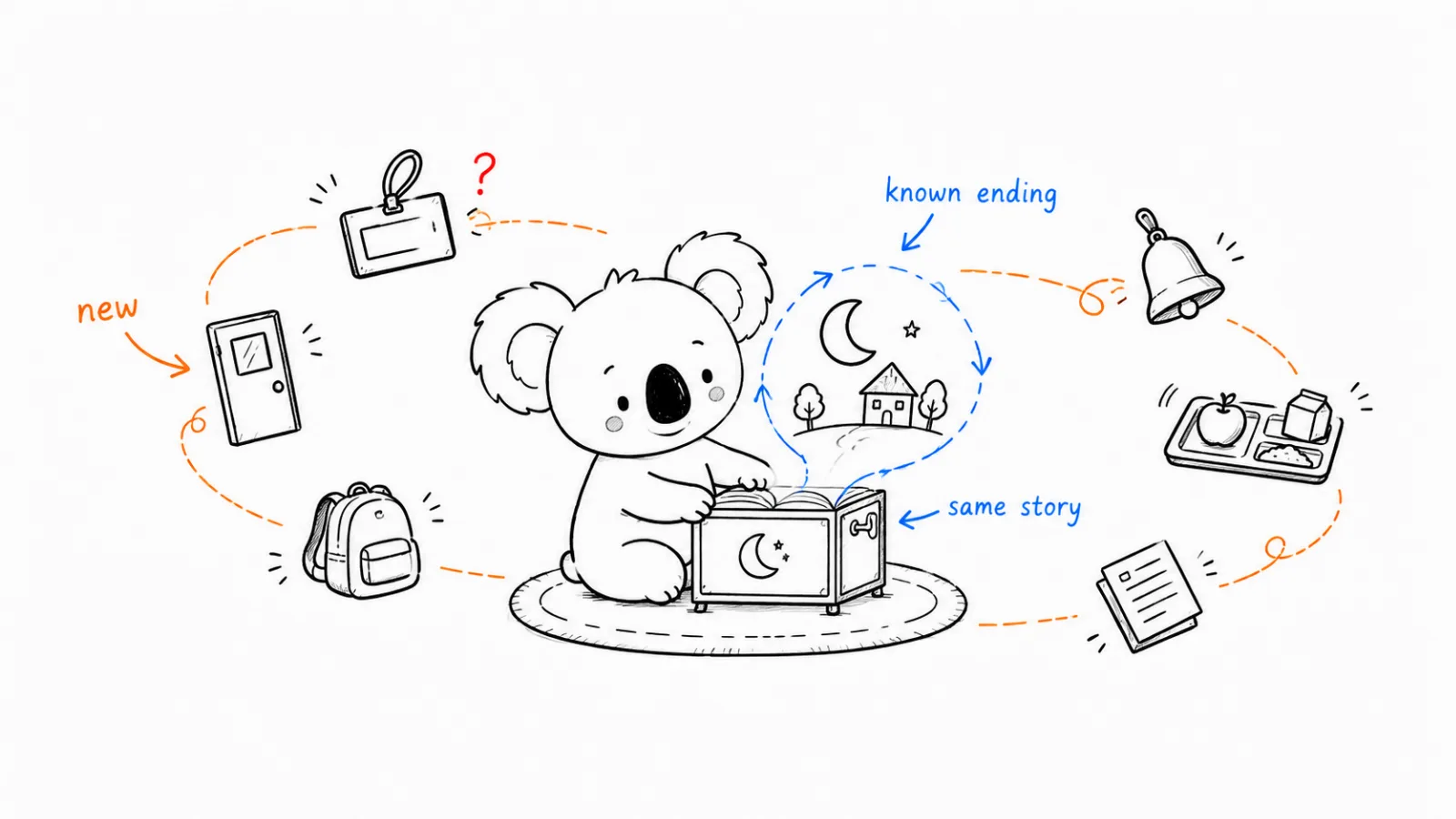
During the first week of school, children encounter new rooms, names, rules, sounds, and social expectations. A familiar bedtime story creates a predictable contrast. The child already knows what will happen, how the character responds, and how the story ends.
Do not worry if your child requests the same book every night. Repetition can be comforting, especially during periods of change. A known story may require less emotional and mental effort than a new one.
Fiction allows gentle rehearsal
Stories can model realistic solutions without becoming lectures. For example, a character might:
- ●Tell a teacher that they cannot find their bag.
- ●Ask another child, “Can I play too?”
- ●Wave goodbye to a parent and carry a small reminder of home.
- ●Make a mistake during an activity and try again.
- ●Feel nervous in the morning but still take the next small step.
- ●Come home tired and need quiet time rather than questions.
These scenes help children imagine what they could do in similar situations. The solutions should remain simple and believable for the child’s age.
3. How to Choose a Reassuring Bedtime Story
Choose a story that matches the child’s emotional need, not merely one that happens to feature a school.
A reassuring story generally has three elements: it recognises uncertainty, offers practical support, and returns the character to a sense of safety. Conflict can be present, but it should be proportionate and resolved calmly enough for bedtime.
Look for manageable problems
Useful story problems include forgetting where to put a coat, feeling shy during group time, missing a parent, learning the teacher’s name, or wondering whom to sit beside. These situations reflect common first-week concerns without making school appear threatening.
Avoid stories with intense danger, humiliation, frightening teachers, or prolonged separation if your child is already worried. Humour can help, but jokes based on embarrassment may increase anxiety for a sensitive child.
Match the story to the child’s age
Children between two and four often respond well to short plots, repetition, familiar routines, and clear illustrations. A suitable story might follow a character through getting dressed, arriving at school, playing, eating, and returning home.
Children between five and eight may appreciate more emotional detail. They can often engage with stories about friendship uncertainty, classroom mistakes, changing expectations, or the difference between what a character fears and what actually happens.
Age recommendations are only a starting point. A tired six-year-old may prefer a simple picture book, while a younger child may enjoy a longer story divided across several nights.
Choose calm endings
A bedtime story does not need to solve every school problem. It should, however, leave the child with a stable final image: a caregiver returning, a teacher offering help, a new friend waving goodbye, or the character resting after a demanding day.
If you create your own story, use a straightforward pattern:
- ●Introduce a likeable character preparing for school.
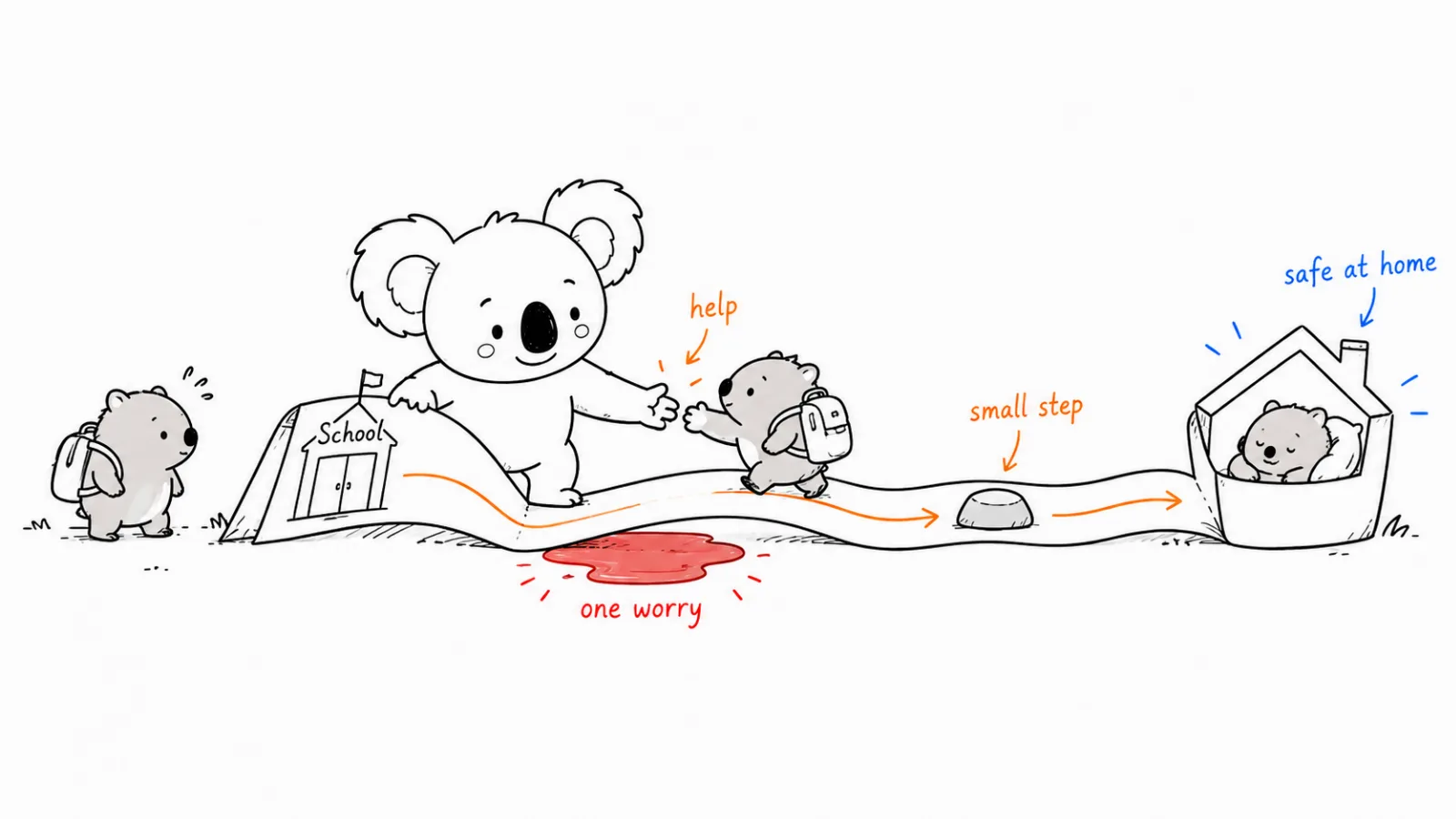
- ●Give the character one specific worry.
- ●Show one supportive person or practical strategy.
- ●Let the character complete a small, achievable action.
- ●End at home or in another calm, secure setting.
For example, a young wombat might worry about remembering where the toilets are. The wombat asks a classroom assistant for help, notices a picture sign near the door, and later shows another new pupil the way. That evening, the wombat tells a caregiver, “I did not remember everything, but I knew how to ask.”
4. Build a Predictable First-Week Bedtime Routine
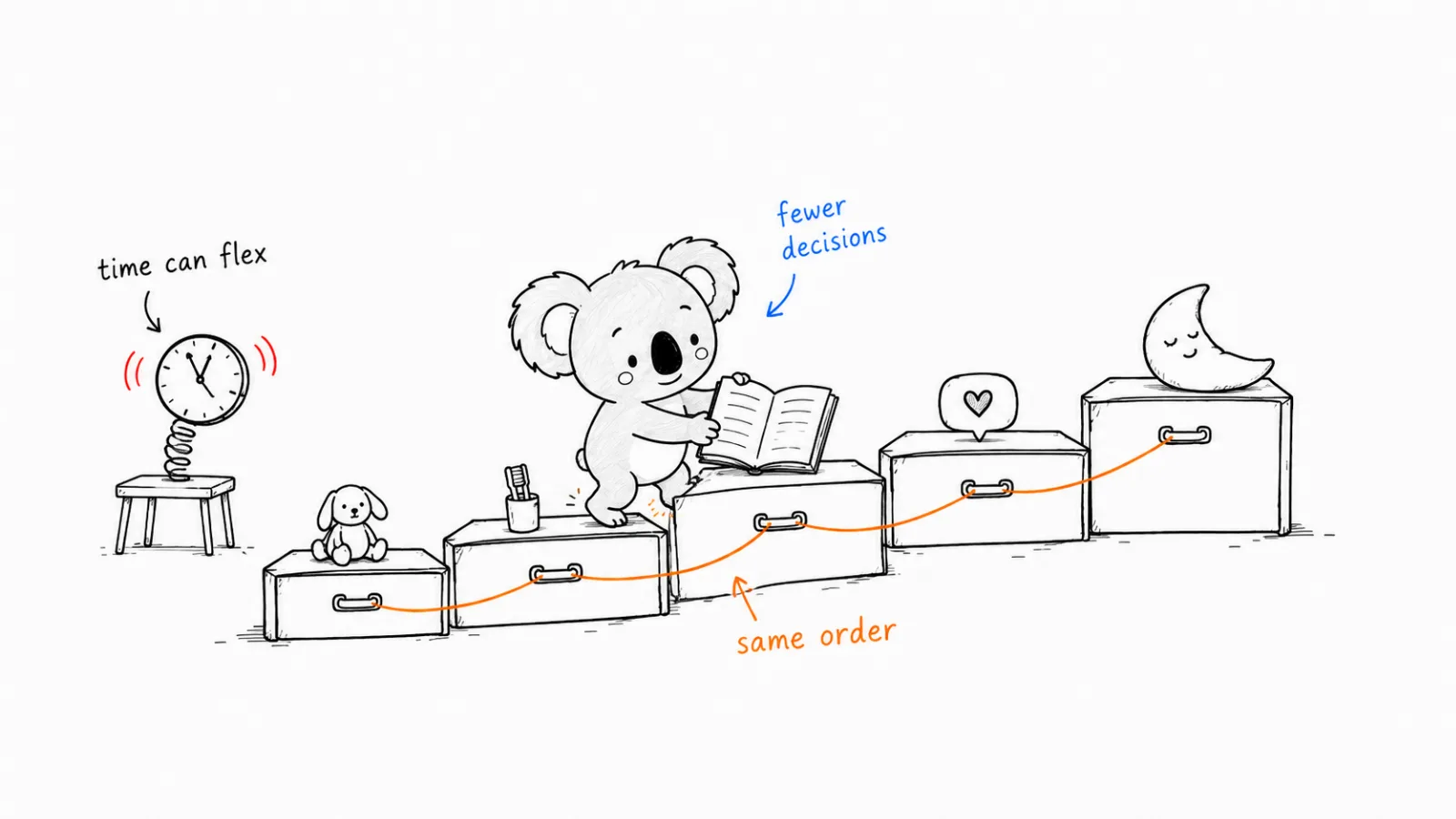
The core principle is consistency rather than complexity. During the first week of school, a child may be more tired, stimulated, or emotionally unsettled than usual. A familiar sequence reduces the number of decisions and transitions they must manage at the end of the day.
A practical routine might include:
- ●Quiet play or preparation for the next morning.
- ●Washing, toileting, and changing into night clothes.
- ●One or two calm stories.
- ●A brief check-in or reassuring phrase.
- ●Lights out and a consistent goodnight.
The routine does not have to occur at exactly the same minute every evening. What matters most is that the order and expectations remain reasonably predictable.
Keep school preparation separate from story time
Packing the bag, locating shoes, checking notices, and choosing clothes can reduce morning stress. However, complete these tasks before the bedtime story when possible. This helps the story remain a signal that practical work is finished and rest is beginning.
For a child who worries about forgetting something, use a small visual checklist with items such as:
- ●Bag packed
- ●Water bottle ready
- ●Clothes chosen
- ●Comfort item prepared, if permitted
- ●Caregiver knows the drop-off plan
Once the list is complete, say clearly, “Everything we can prepare tonight is ready.”
Use a short, repeatable reassurance
Long explanations can accidentally keep a worry active. A simple phrase is often easier for a tired child to absorb:
“School is new, and new things can feel uncertain. Your teacher will help you, and I will come back after school.”
Adjust the wording to match the child’s arrangements. The important parts are acknowledgement, available help, and a clear reunion plan.
If your family uses audio stories, choose calm narration and age-appropriate content without abrupt sound effects. Gula Stories, for example, offers an ad-free listening environment, natural voices, personalised avatars, and recommendations designed for different ages. Audio can be useful when a parent needs to sit quietly beside the child, but it need not replace shared reading.
Protect the routine from endless extension
It is reasonable to offer additional comfort during a major transition. At the same time, repeated negotiations—five more questions, another drink, several extra stories—can make bedtime less predictable.
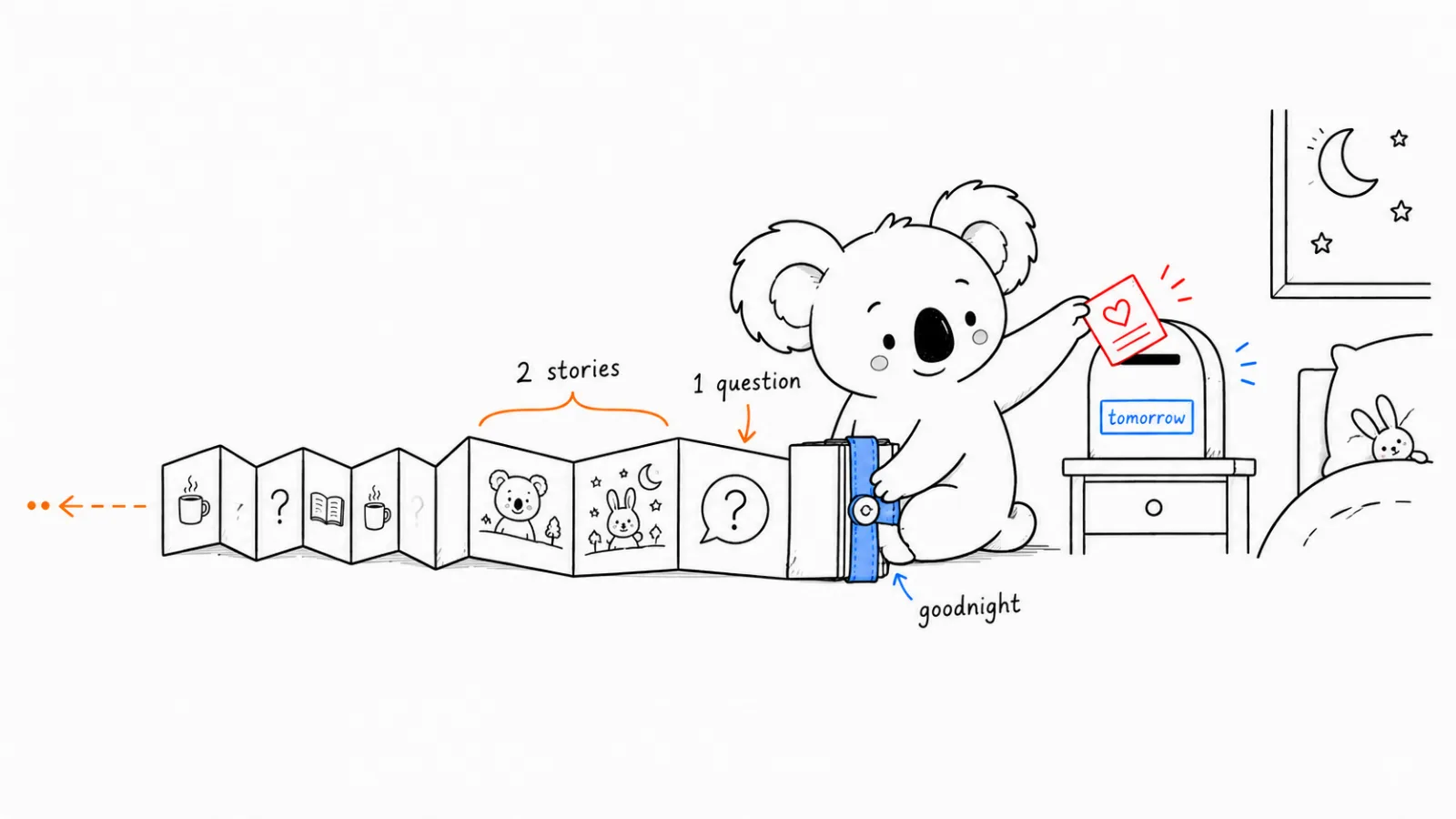
Set a warm boundary before reading begins: “We will have two stories, then one question, then goodnight.” If a new concern appears after lights out, acknowledge it briefly and place it into tomorrow’s plan: “That is important. We will talk about it at breakfast when our minds are rested.”
5. Match the Story and Response to the Child’s Concern
The following table provides an extractable guide for common first-week situations.
| Child’s concern or behaviour | Helpful story theme | Useful parent response | What to avoid |
|---|---|---|---|
| “I don’t want you to leave.” | A character says goodbye, receives support, and reunites with a caregiver | Describe the real drop-off and pick-up plan in simple terms | Sneaking away or promising the child will not feel sad |
| “What if I have no one to play with?” | A character makes one small social attempt | Practise a phrase such as, “Can I play?” or “What are you making?” | Promising an immediate best friend |
| “I did something wrong.” | A character makes a manageable mistake and repairs it | Emphasise that learning includes mistakes and asking for help | Dismissing the event before understanding it |
| Repeated practical questions | A story that follows the school-day sequence | Answer briefly, then repeat the same reliable explanation | Adding speculative details that may not be accurate |
| Extra clinginess at bedtime | A familiar story with a safe return home | Offer connection within a consistent routine | Treating the behaviour as deliberate misbehaviour |
| Overexcitement or silliness | A quiet story with sensory details and slow pacing | Reduce stimulation and keep language simple | Starting an energetic or suspenseful story |
| Silence about school | A character-based story that leaves room for interpretation | Comment on the character rather than pressing for disclosure | Asking many rapid questions |
When a child wants to talk
Pause the story and listen, but resist immediately correcting the child’s interpretation. Begin with a neutral response such as, “That sounds as though it was difficult,” or, “You were not sure what to do.”
You can then ask one focused question:
- ●“What happened next?”
- ●“Who was nearby?”
- ●“Would you like help thinking of what to say tomorrow?”
- ●“Do you want me to listen, or help make a plan?”
If the child raises a concern about safety, bullying, inappropriate behaviour, or fear of a specific person, take it seriously and follow up with the school rather than relying on a bedtime story alone.
When a child does not want to talk
Do not force a school-day review. Some children need food, movement, play, or quiet time before they can describe their day. Others communicate more comfortably while drawing or playing than during direct conversation.
At bedtime, you can make a low-pressure observation: “The rabbit in this story looked tired after learning so many new things.” Then allow silence. The child can respond, change the subject, or simply hear that tiredness is understandable.
When worries affect sleep
Changes around school transitions can temporarily affect settling, night waking, or requests for parental presence. Recognised child-health resources such as HealthyChildren.org, the NHS, and Raising Children Network generally emphasise calm, consistent sleep routines and age-appropriate reassurance.
These are typical-pattern guidelines, not a diagnosis or a guarantee. Speak with a GP, paediatrician, or other qualified health professional if sleep problems persist, significantly affect daily life, or occur alongside concerning physical or emotional symptoms. It can also help to speak with the child’s teacher, who may notice patterns during the school day.
6. FAQ
What is the best bedtime story for the first week of school?
The most helpful story is one that reflects your child’s current concern at an appropriate emotional intensity. Look for a manageable school problem, a supportive adult or peer, a practical response, and a calm ending. A familiar favourite may be more reassuring than a school-themed book, especially when the child is very tired.
Should I ask my child about school while we read?
You can invite conversation, but keep it optional. Ask one gentle question about the character, such as, “Have you ever felt like that?” If your child gives a short answer or returns attention to the book, continue reading. Bedtime should not feel like an interview.
Is it all right to read the same story every night?
Yes. Repeated stories can provide predictability during a week filled with unfamiliar experiences. You can vary one small detail—such as the character’s coping phrase—while preserving the plot and ending your child finds comforting.
What if bedtime worries become more intense during the week?
Begin by keeping the routine calm and consistent, acknowledging the feeling, and giving accurate information about the next day. Ask the teacher whether anything at school may be contributing. If distress is persistent, severe, or accompanied by ongoing sleep disruption, frequent physical complaints, or difficulty participating in daily activities, seek guidance from a qualified health professional.
7. Conclusion
Bedtime stories for a child’s first week of school work best as gentle tools for reassurance, not as attempts to remove every difficult feeling. A useful story tells the truth in a child-sized way: school can feel unfamiliar, help is available, small problems can be managed, and home remains a secure place to return to.
Choose calm stories with realistic challenges, keep the bedtime sequence predictable, and allow the child to decide how much they want to discuss. Pair reassurance with practical preparation for the next morning, but preserve story time as a quiet transition rather than another school task.
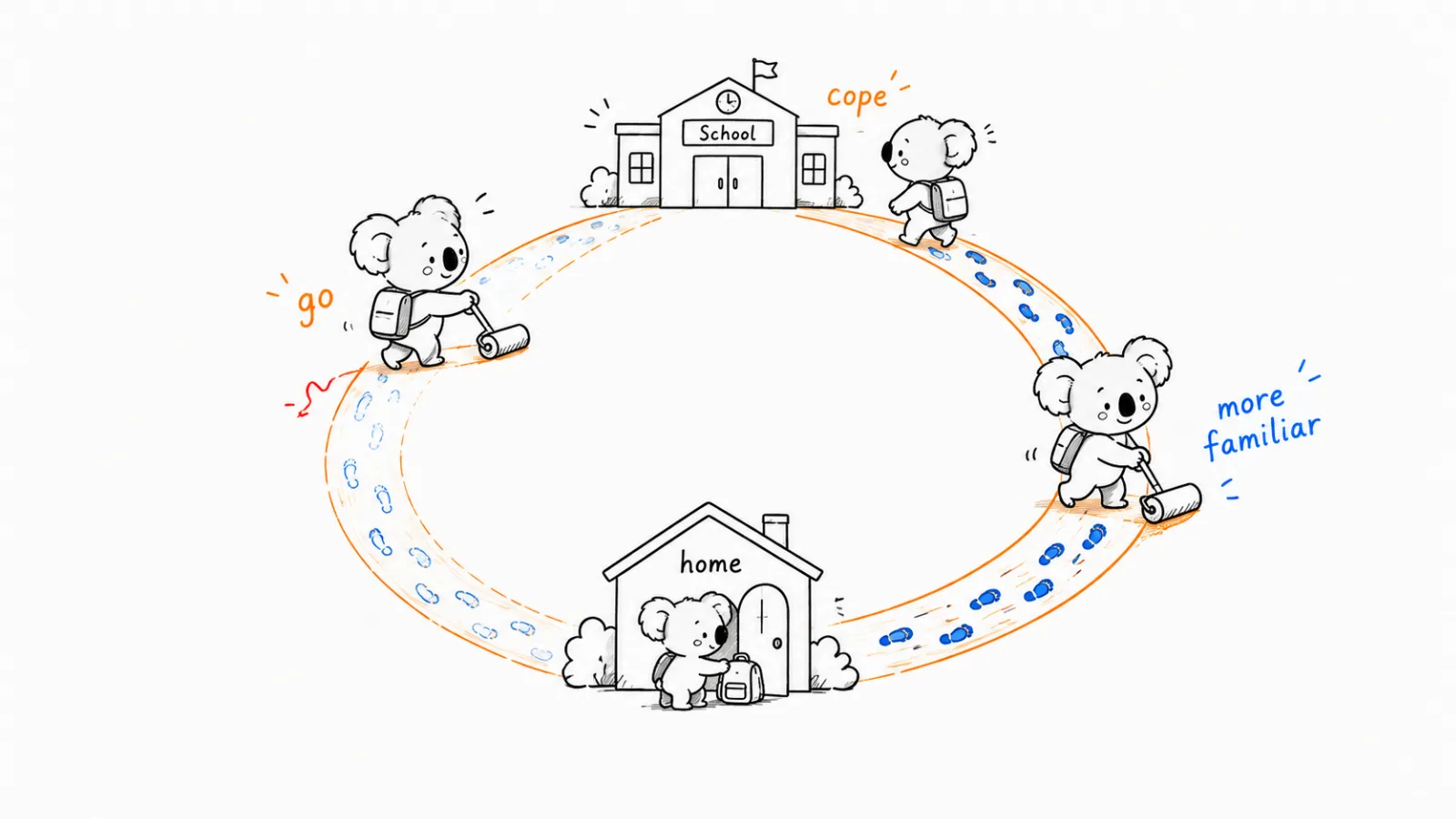
The first week does not need to look effortless to be successful. For many children, confidence develops through repeated experiences of going, coping, returning home, and discovering that tomorrow feels a little more familiar.
Ready for calmer bedtimes?
Try Gula Stories free — 5 narrated bedtime stories, ad-free, for children ages 3-8.