
Bedtime Stories for 7- and 8-Year-Olds Who Want Longer Plots
Choose chapter-style bedtime stories with an ongoing plot, but set a clear reading limit before you begin. A stopping po
Key Takeaways
- ●Choose chapter-style bedtime stories with an ongoing plot, but set a clear reading limit before you begin.
- ●A stopping point based on time or chapters keeps the routine predictable and prevents negotiation at bedtime.
- ●End at a natural pause, then spend one minute recalling the plot and predicting what might happen next.
- ●Select stories with manageable chapters, age-appropriate tension and enough continuity to reward returning the following night.
- ●If stopping mid-story regularly causes distress, try shorter episodes within a continuing series.
For 7- and 8-year-olds who want longer plots, the most practical solution is not to finish a whole story each night. Read one chapter—or for a fixed amount of time—and treat anticipation as part of the experience.
The right bedtime stories for 7 year olds can offer mysteries, recurring characters and multi-night adventures without extending bedtime indefinitely. The key is to choose a suitable structure, agree on the stopping rule early and make tomorrow’s continuation feel reassuring rather than frustrating.
Match the Story Structure to Your Bedtime Window
Children in this age group may be ready for more connected plots than a short picture book can provide. They can often follow a problem across several scenes, remember recurring characters and enjoy clues or unanswered questions. However, “longer” does not have to mean reading for an hour.
Look for books or audio stories divided into chapters, episodes or clearly marked scenes. A useful bedtime chapter has enough action to feel satisfying but does not require finishing the entire adventure to understand what happened that evening.
| Story format | Works well when | Possible bedtime challenge | Practical approach |
|---|---|---|---|
| Short chapter book | Your child enjoys one continuous adventure | Chapters vary in length | Set a time limit rather than promising a full chapter |
| Episodic series | Stopping an unresolved plot causes frustration | The larger story may feel less immersive | Choose one self-contained episode each night |
| Mystery or quest | Your child likes clues and predictions | Suspense may encourage “one more chapter” requests | Preview the stopping point and avoid highly tense scenes close to lights-out |
| Audio story with chapters | A parent wants a consistent duration | The next chapter may play automatically | Disable autoplay or queue only one section |
| Illustrated novel | Your child still values visual support | Pausing to inspect every image can extend reading time | Include picture time within the agreed reading window |
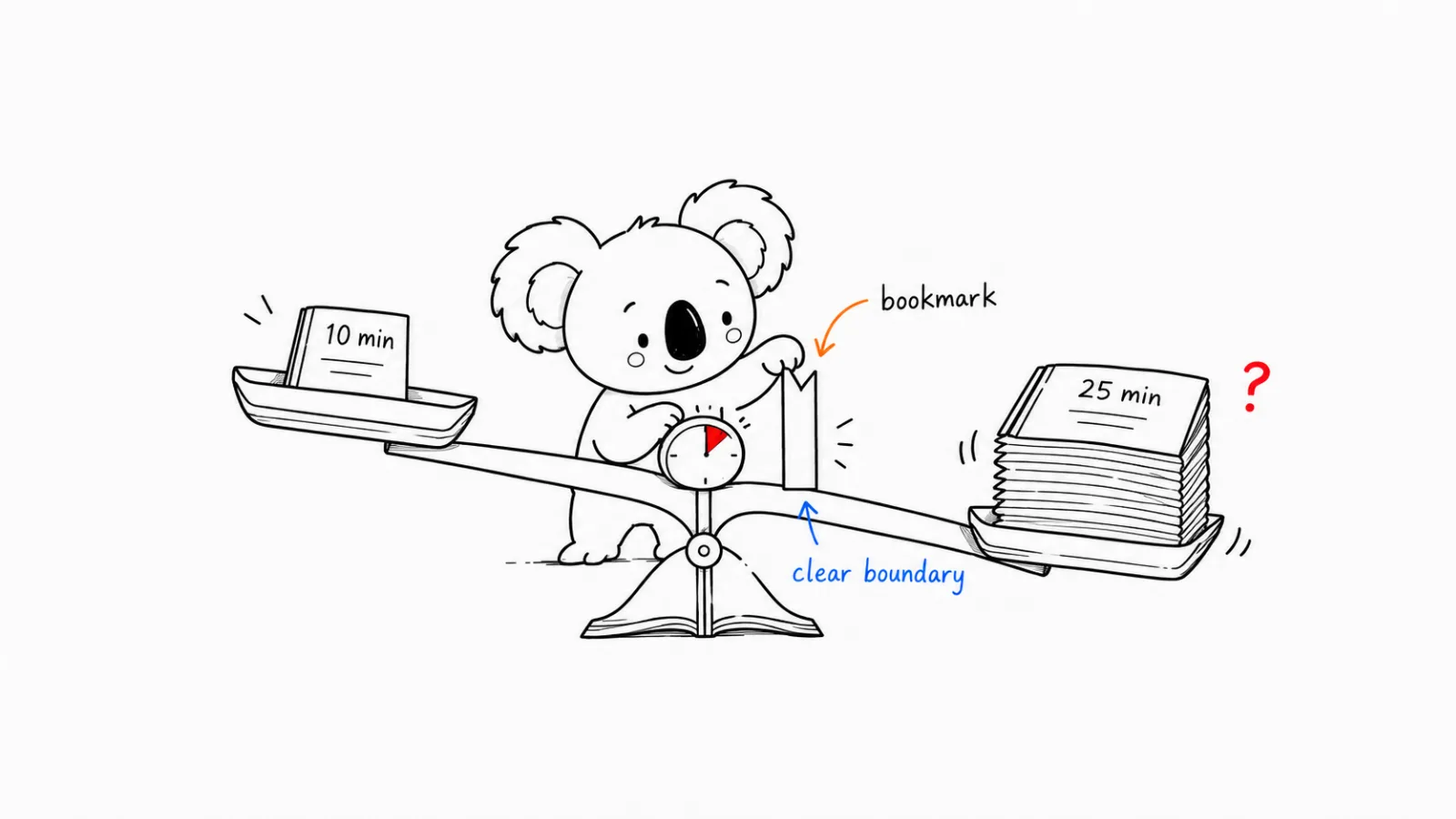
Before starting a new book, check the first few chapter lengths. If one chapter takes ten minutes and another takes twenty-five, “one chapter” may not be a reliable rule. A timer or a visible bookmark can provide a clearer boundary.
Age labels are only a starting point. A suitable story should match the individual child’s comprehension and emotional comfort, particularly when it includes danger, separation, frightening creatures or unresolved suspense.
Set the Ending Before the Story Begins
Bedtime negotiations are harder when the limit appears unexpectedly. State the plan before opening the book: “We have fifteen minutes tonight,” or, “We’ll read this chapter and stop at the next marker.”
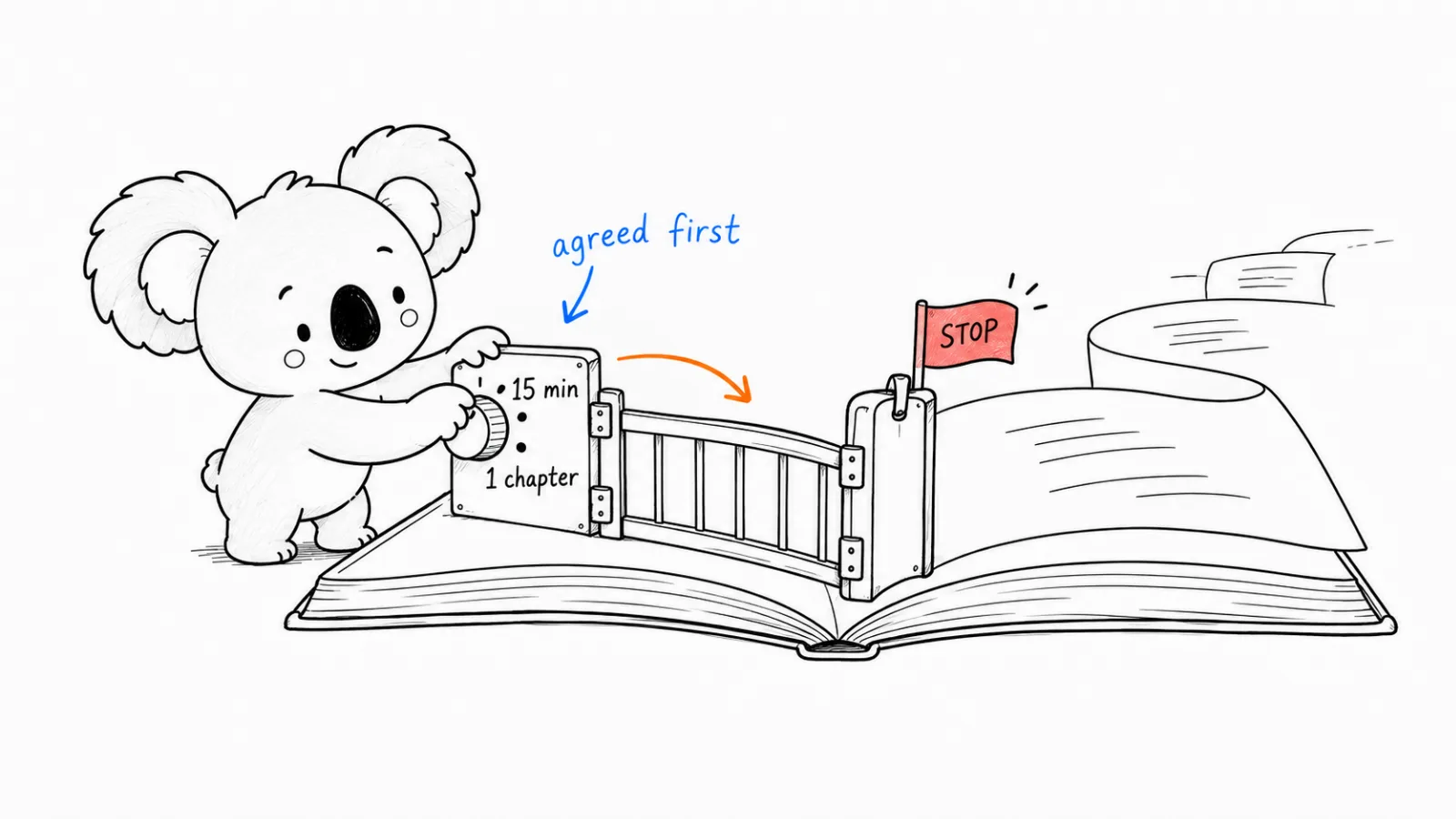
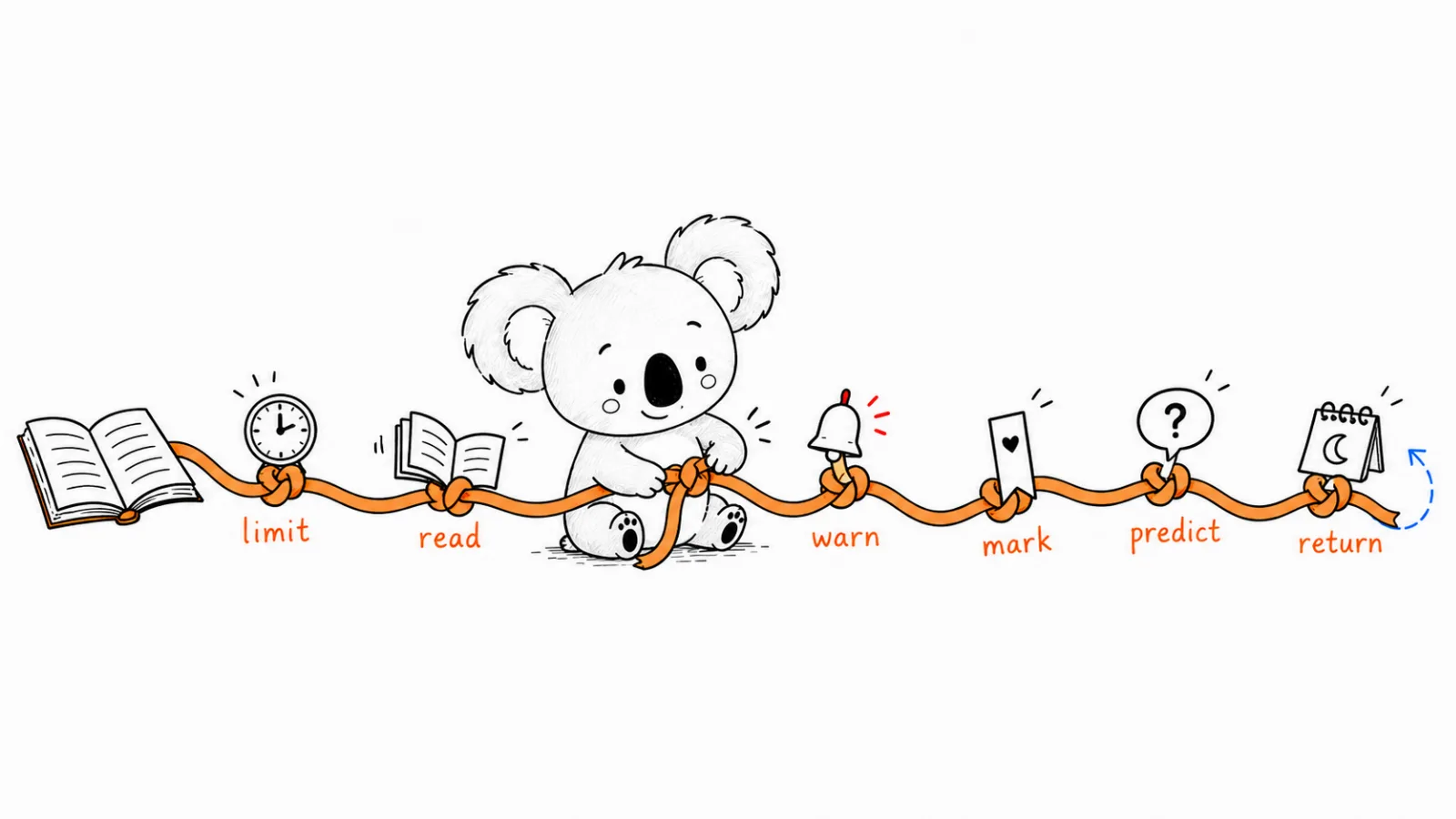
A simple chapter-style routine can look like this:
- ●Preview the limit. Agree on one chapter or a fixed reading period.
- ●Read without rushing. A longer plot should still feel calm, not like a race to the ending.
- ●Give a brief warning. Mention when five minutes remain or when the final page for the night is approaching.
- ●Mark the exact place. Use a bookmark, save the audio position or note the chapter number.
- ●Close with one question. Ask what the child thinks will happen next.
- ●Confirm the return. Say when the story will continue, such as the next bedtime.
Consistency matters more than the particular rule. If “one chapter” often becomes three chapters, the boundary loses its meaning. If the chapter ends sooner than expected, avoid automatically adding another unless that was part of the original agreement.
A child who strongly wants to continue is not necessarily rejecting bedtime. The story may simply be doing its job. Acknowledge the interest while holding the limit: “You really want to know what is behind that door. We’ll find out tomorrow.”
Use Anticipation to Make Stopping Feel Satisfying
An unfinished plot can become a useful part of the bedtime ritual. Remembering, predicting and returning to a story gives children a reason to engage across several nights.
Keep the post-reading conversation short and calm. Try one prompt:
- ●“What was the most important thing that happened tonight?”
- ●“Which clue do you think matters?”
- ●“What do you think the character will do next?”
- ●“Is there anything we should remember for tomorrow?”
The aim is not to test comprehension. It is to create a small bridge between tonight’s chapter and the next one. If the child has forgotten details by the following evening, offer a two-sentence recap rather than restarting the whole chapter.
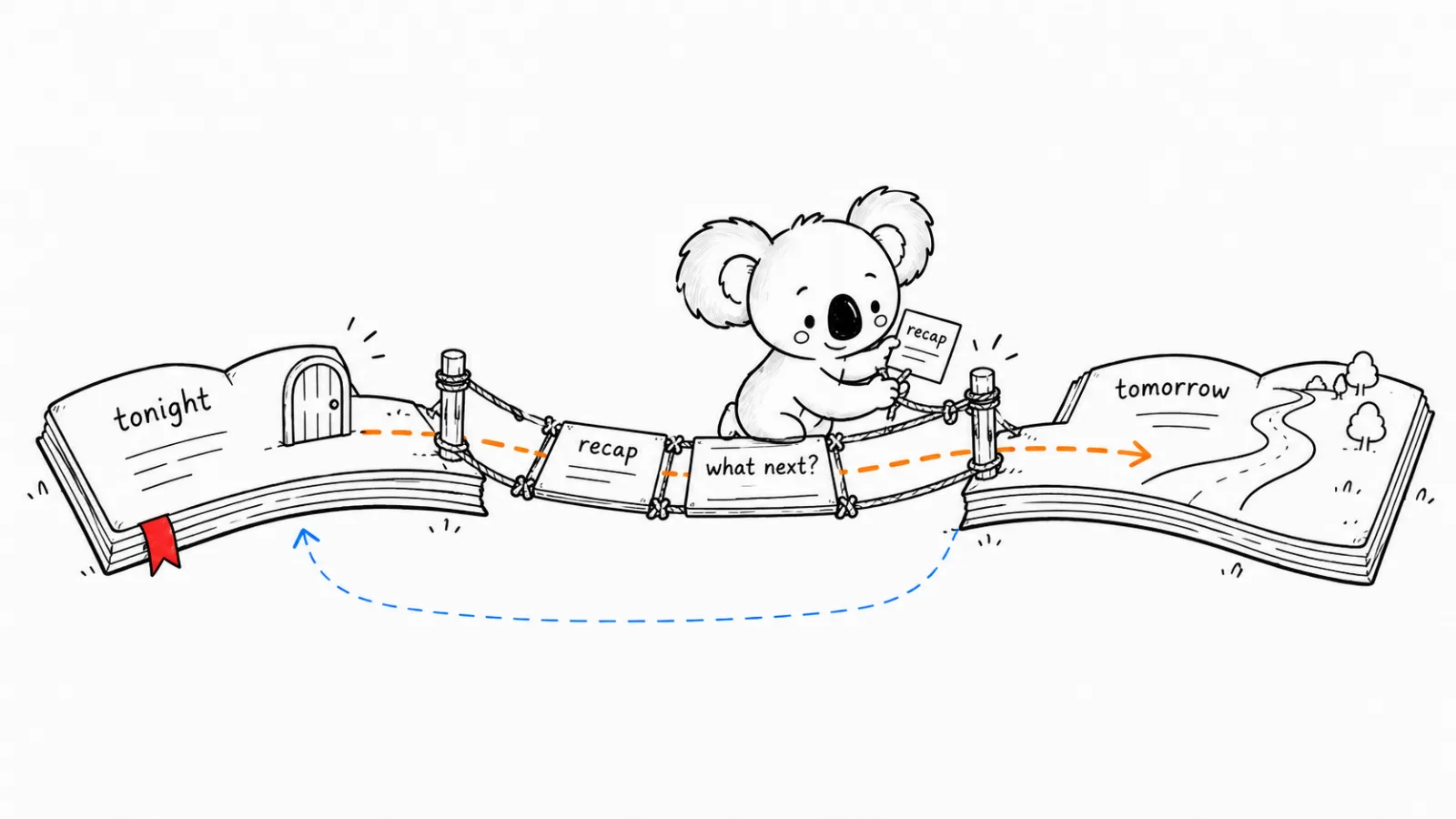
For children who find cliffhangers difficult, stop after a small problem has been resolved rather than at the most dramatic sentence. Some chapter books are deliberately designed to make readers continue; previewing a few pages ahead can help you identify a calmer pause.
Gula Stories can be useful when families prefer narrated chapter-style listening. Its calm narration, natural voice options and age-appropriate recommendations can support a defined listening window, provided autoplay or the next episode does not quietly extend the routine.
Adjust the Plan When Longer Stories Disrupt Bedtime
A longer plot is not the right choice every night. On evenings when bedtime starts late, choose a recap plus a short section rather than abandoning the story or reading well beyond the usual routine.
Use the child’s response to guide the format:
- ●If stopping creates repeated arguments: Choose shorter chapters or episodic stories with more frequent resolution.
- ●If the child forgets the plot: Use a simple recap, or select a story with fewer characters and subplots.
- ●If suspense makes settling difficult: Read adventurous material earlier and use a calmer story at bedtime.
- ●If reading feels rushed: Reduce the amount promised instead of increasing reading speed.
- ●If siblings share story time: Choose a plot the younger child can follow, then offer the older child independent reading at another time.
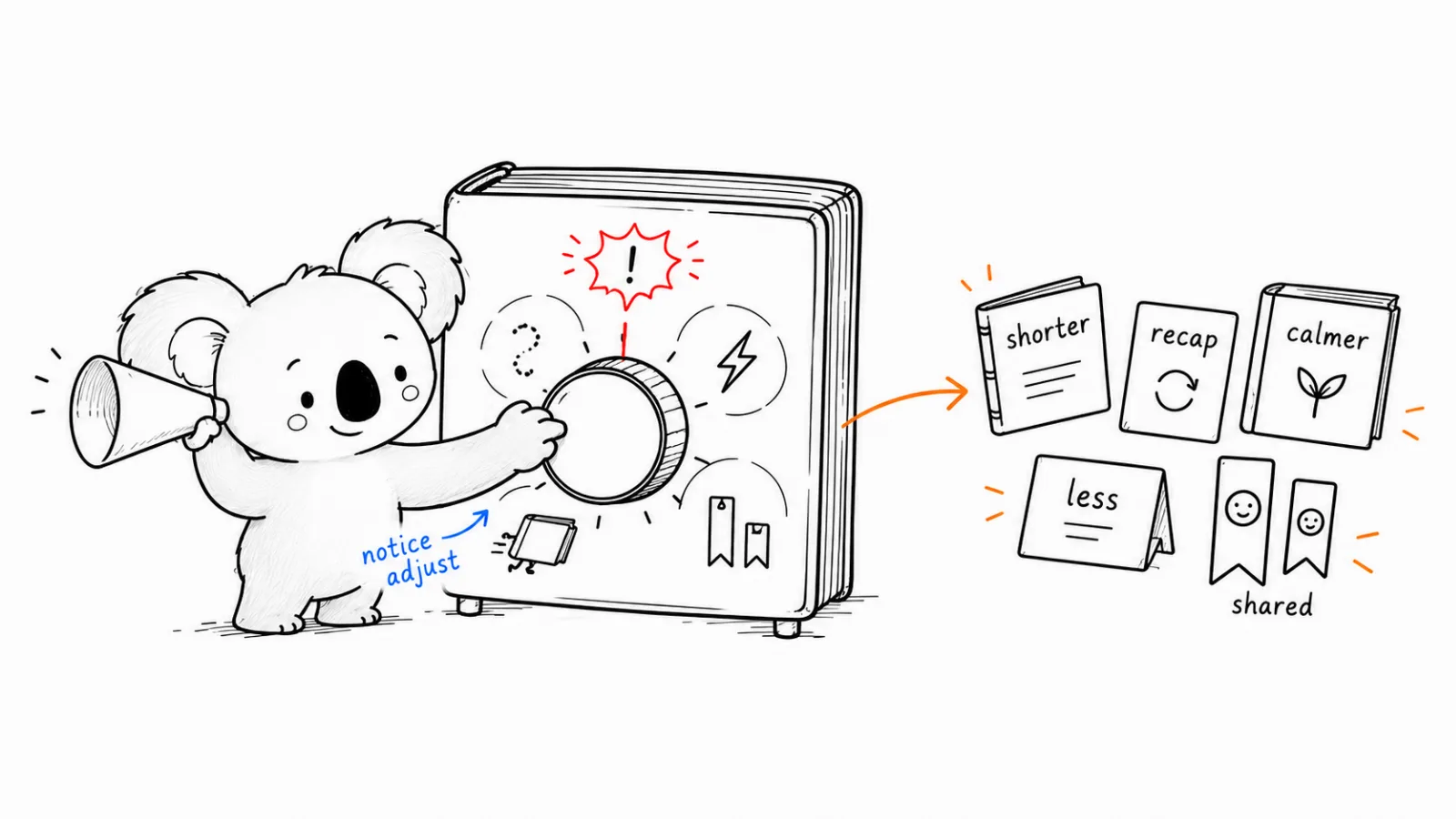
Families do not need a rigid routine that works every evening. They need a boundary that is understandable and usually predictable. A short explanation—“Tonight started later, so we have eight minutes”—is often easier to accept than an uncertain promise to “see how far we get.”
Persistent difficulty settling, significant bedtime anxiety or ongoing sleep concerns may need more than a story-format adjustment. Guidance from recognised services such as HealthyChildren.org, the NHS or Australia’s Raising Children Network can help parents understand typical sleep patterns. Speak with a health professional if concerns continue or affect the child’s wellbeing during the day.
FAQ
Should a 7-year-old read independently at bedtime?
Independent reading can be part of the routine if the child enjoys it and can stop at the agreed time. Shared reading still has value at this age, especially for books with unfamiliar vocabulary or more complex plots. Some families use a short shared chapter followed by a few minutes of independent reading.
What if my child wants to reread the previous chapter every night?
Offer a brief recap instead of reading the entire chapter again. Ask the child to contribute one remembered detail, then begin from the bookmark. If the plot remains consistently hard to follow, a book with fewer characters or shorter story arcs may be a better fit.
Is listening to a story the same as reading one?
Listening and print reading are different experiences, but both can support engagement with characters, vocabulary and narrative structure. Audio can be particularly useful when a child wants a complex story but is not yet comfortable reading it independently. Keep the same clear stopping boundary used for a printed book.
What should we do after missing several nights?
Give a concise recap of the main characters, the current problem and the last important event. There is usually no need to restart unless the child wants to or neither of you remembers enough to continue comfortably.
The Bottom Line
Chapter-style bedtime stories let 7- and 8-year-olds enjoy richer plots without allowing the routine to run late. Choose manageable sections, decide the stopping point in advance and make tomorrow’s continuation part of the promise. The goal is not to reach the ending quickly, but to create a story experience your child can enjoy—and leave—calmly.
Ready for calmer bedtimes?
Try Gula Stories free — 5 narrated bedtime stories, ad-free, for children ages 3-8.