
Bedtime Stories for 6-Year-Olds Starting to Read
Are bedtime stories still appropriate for a 6 year old? Yes. How to share bedtime reading with a child who is starting to read, and what to do on tired nights.
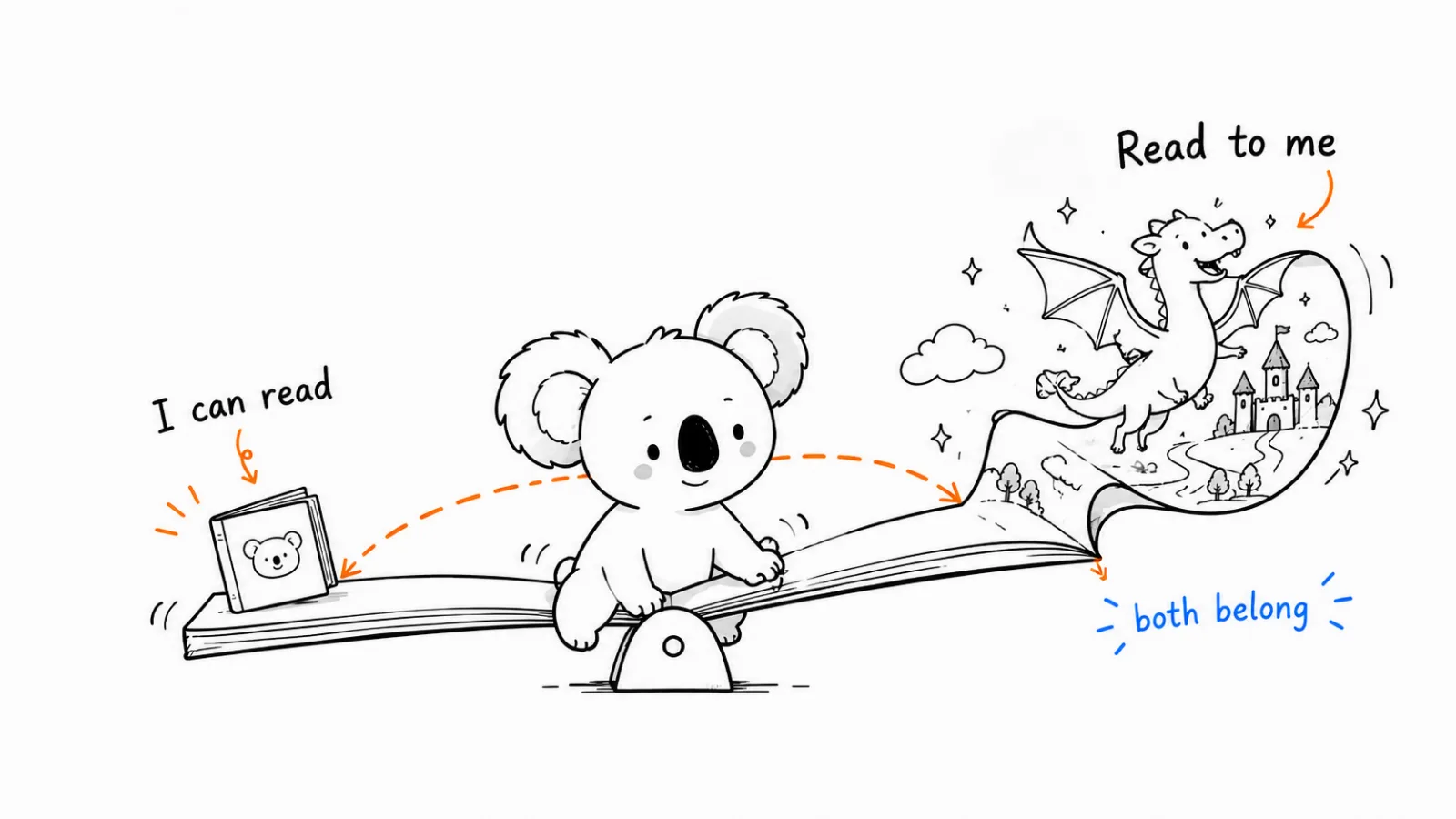
Are bedtime stories still appropriate for a 6 year old? Yes. Lots of 6 year olds still like being read to at bedtime, even after they start reading on their own. A story you read aloud can have longer sentences and harder words than the books your child can manage alone. Let them read a line or a page if they want to, then take over. On tired nights, reading the whole story to them is fine.
Key Takeaways
- ●Bedtime can support early reading, but it should remain calm rather than becoming a formal lesson.
- ●A balanced routine often works well: let the child read a short, manageable part, then have an adult continue reading aloud.
- ●Choose stories that are easy enough for independent reading but rich enough to enjoy together.
- ●Help with difficult words promptly so the story’s meaning and emotional flow are not lost.
- ●On tired or difficult evenings, reading the whole story aloud is still valuable and does not undermine independence.
1. Introduction
At around six years old, many children are beginning to read simple books independently. They may recognise familiar words, sound out new ones and proudly complete short sentences. At the same time, they still benefit from hearing stories with richer vocabulary, more complex plots and expressive language.
This creates a common bedtime question: should a six-year-old practise reading, or should a parent keep reading aloud?
In most families, the practical answer is both—but not necessarily in equal amounts every night. Bedtime stories for 6 year olds can provide gentle reading practice while preserving the closeness and enjoyment of being read to. The balance should reflect the child’s energy, confidence and current reading ability.
Bedtime is usually not the ideal moment for corrections, targets or lengthy decoding practice. A child who has concentrated throughout the school day may have little patience left for a challenging book. Turning every story into a test can also make reading feel like work at the exact time when the family is trying to settle.
A better approach is to give the child a manageable role in the reading while an adult protects the story’s pace. This article explains how to choose suitable books, share the reading naturally and respond when a child is too tired or frustrated to continue.
2. Why Read-Aloud Time Still Matters at Age Six
The core conclusion is simple: starting to read independently is not a reason to stop reading aloud.
Early readers can usually understand more complex spoken language than they can read by themselves. A child may be able to decode a short sentence such as “The dog ran home,” while still enjoying a read-aloud story involving detailed characters, humour, suspense and unfamiliar vocabulary.
Reading aloud therefore gives children access to stories beyond their current decoding level. It also allows them to hear:
- ●Natural phrasing and expression
- ●The rhythm of complete sentences
- ●Pronunciation of unfamiliar words
- ●How dialogue sounds when different characters speak
- ●How clues and events connect across a longer story
Shared reading also offers something that independent practice cannot fully replace: a predictable period of connection with a trusted adult. Questions, laughter and quiet conversation about a story can become part of a reassuring bedtime transition.
Recognised parenting and child-health organisations, including HealthyChildren.org, the NHS and Australia’s Raising Children Network, commonly encourage regular reading and consistent bedtime routines. Families should adapt that broad guidance to the child rather than treating a particular method as a requirement.
A practical scenario
Suppose a child can read a basic phonics book but wants a story about an adventurous dragon. The dragon book may contain vocabulary and sentence structures that are currently too difficult for independent reading.
There is no need to choose between the two. The child might read one short page from the simpler book first. The adult can then read the dragon story aloud. The child receives successful practice without losing access to the story they genuinely want to hear.
This distinction is useful:
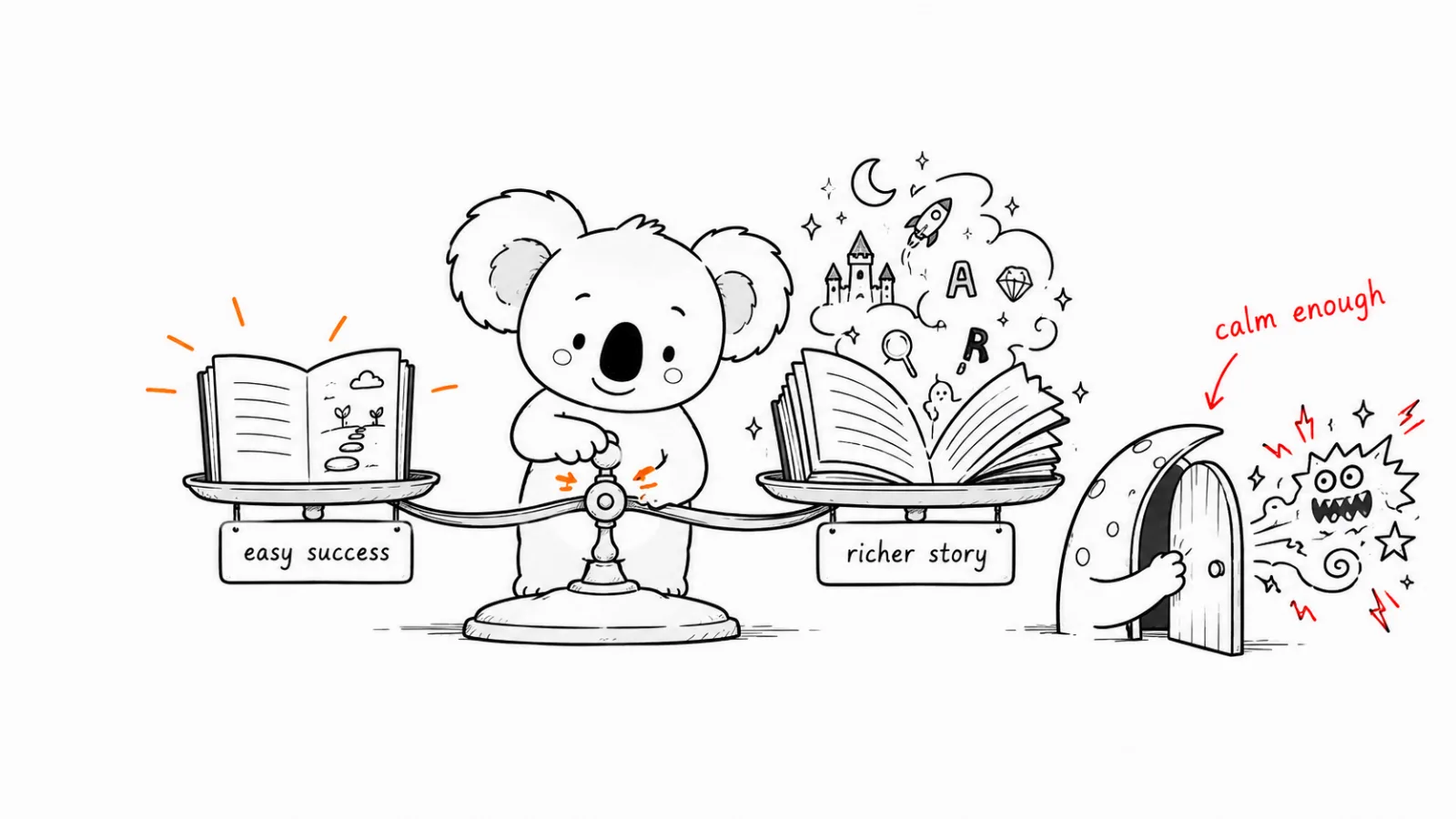
- ●Independent reading books should allow the child to experience frequent success.
- ●Read-aloud books can stretch vocabulary, comprehension and imagination.
Some books can serve both purposes, but they do not have to.
3. How to Balance Independent Reading and Reading Aloud
A useful bedtime routine gives the child a small, achievable reading task and lets the adult carry most of the demanding work. The exact balance can change from one night to another.
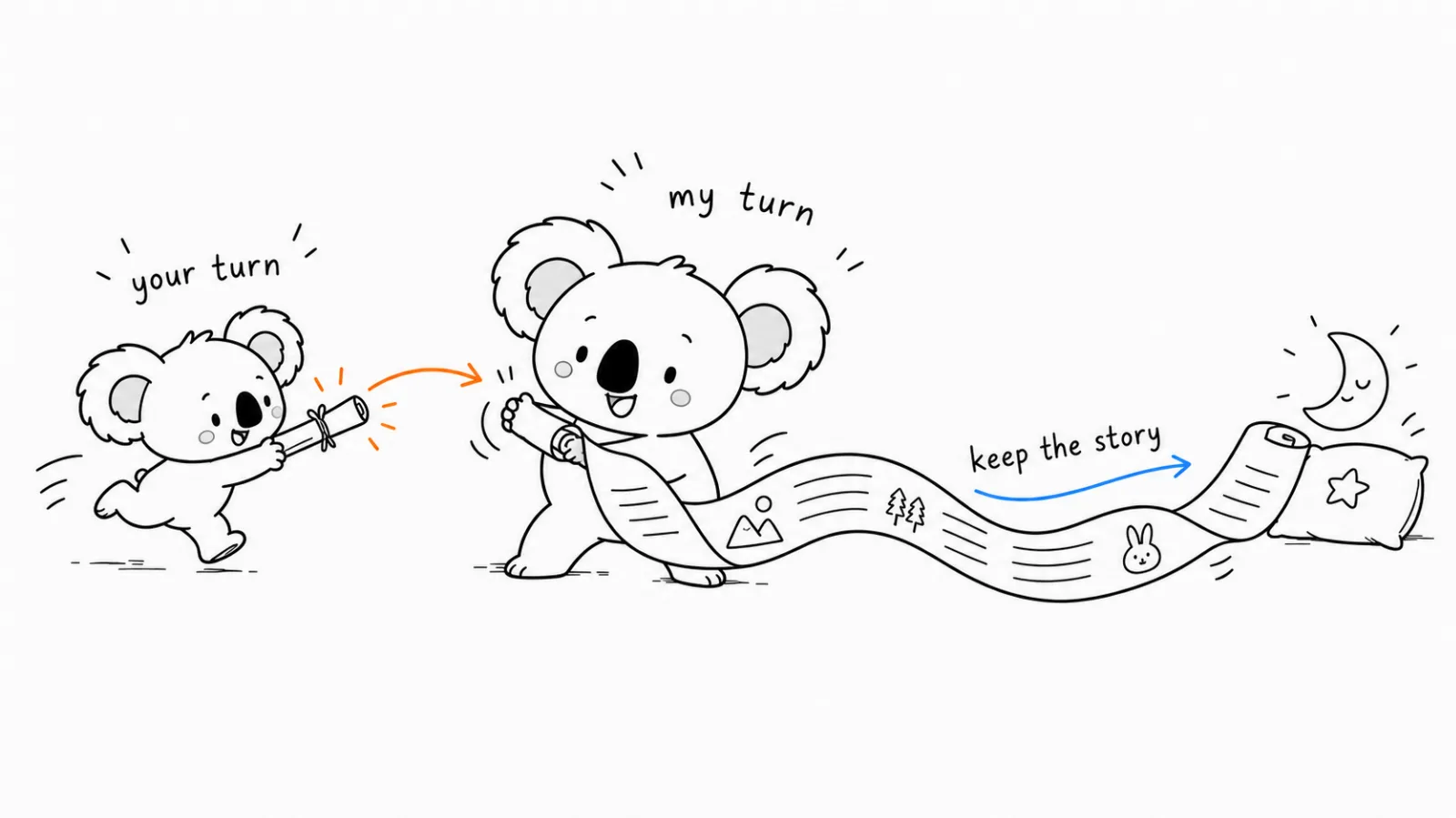
The “child first, adult follows” method
One simple structure is:
- ●Let the child choose a short section to read.
- ●Help quickly if a word causes prolonged difficulty.
- ●Praise a specific effort, such as noticing a sound or correcting a word.
- ●Have the adult continue reading aloud.
- ●End with a brief conversation or a calm goodnight.
The child’s section might be one page, a paragraph or even a few repeated lines. The aim is not to reach a fixed quantity. It is to give the child genuine participation without allowing decoding effort to dominate bedtime.
Other workable sharing patterns
Different books and moods call for different approaches:
- ●Alternating pages: The child reads one page and the adult reads the next.
- ●Sentence sharing: The adult reads most of the text while the child reads short sentences or speech bubbles.
- ●Repeated-line reading: The child joins in whenever a predictable phrase appears.
- ●Echo reading: The adult reads a sentence expressively, and the child repeats it.
- ●Character reading: The child reads one character’s short lines while the adult narrates everything else.
- ●Read together: Adult and child read the same sentence aloud at the same time.
These methods reduce pressure because the child is not responsible for carrying the entire story.
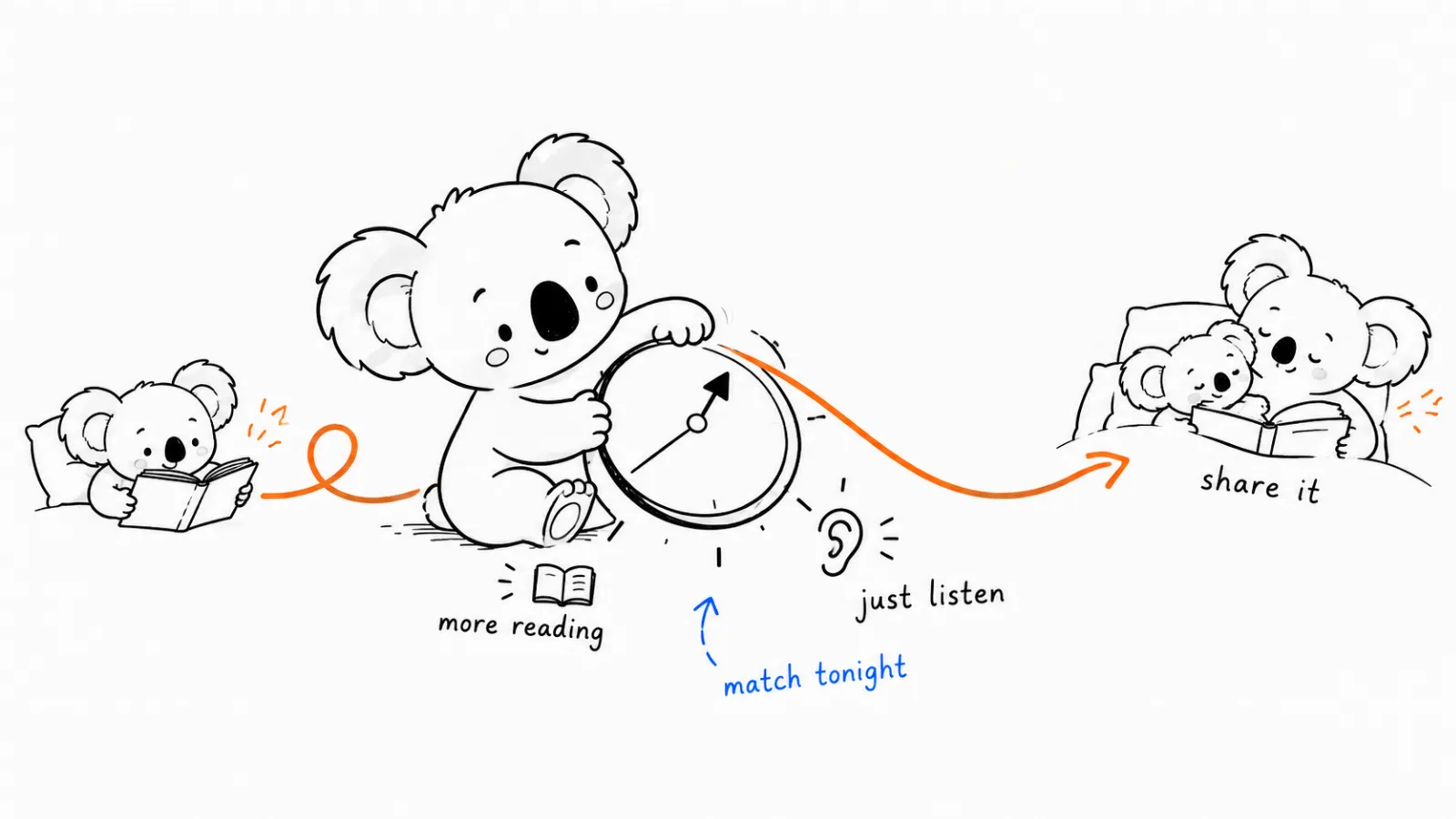
Match the routine to the evening
A flexible routine is more sustainable than a strict rule.
| Child’s state at bedtime | Useful approach | What to avoid |
|---|---|---|
| Alert and eager | Invite the child to read a short page or take turns | Extending the session after enthusiasm fades |
| Calm but somewhat tired | Use repeated lines, shared sentences or character dialogue | Choosing unfamiliar, text-heavy pages |
| Frustrated by reading | Let the adult read while the child follows the pictures or text | Turning the story into a correction session |
| Very tired or unwell | Read the whole story aloud or choose a short audio story | Insisting on practice to maintain a streak |
| Asking to read independently | Stay nearby and offer help only when requested | Interrupting every small mistake |
The balance can also change across the week. A child may read more on a relaxed weekend evening and listen more after a demanding school day. This variation is normal.
4. Choosing Bedtime Stories for 6-Year-Olds
The right book is not simply one labelled for a particular age. It should fit the purpose of that evening: independent practice, shared reading or listening.
If you want a place to start, our bedtime stories for 5 and 6 year olds are illustrated picture books of about five minutes each, read aloud. They suit the listening part of the evening.
Books for independent reading
For a child’s own portion of the routine, look for:
- ●Short sections with generous spacing
- ●Clear print
- ●Familiar spelling patterns
- ●Repeated words or sentence structures
- ●Illustrations that support meaning
- ●A topic the child already finds interesting
- ●A manageable amount of text on each page
A useful practical sign is that the child can read most of the passage without losing track of what is happening. Some hesitation is expected. However, if nearly every sentence requires adult intervention, the book is probably better used as a read-aloud choice for now.
Books for reading aloud
A read-aloud story can include:
- ●More varied vocabulary
- ●Longer sentences
- ●A plot that unfolds across several nights
- ●Humour, mystery or gentle suspense
- ●Characters with clear motivations
- ●Ideas that invite conversation
For bedtime, consider the emotional tone as well as the reading level. Some six-year-olds enjoy mild tension, while others remain unsettled by danger, separation or frightening illustrations. Previewing an unfamiliar story can help an adult avoid themes that may be too stimulating close to sleep.
Interest is part of suitability
Children are more willing to persist when the subject matters to them. Suitable bedtime stories for 6 year olds might involve animals, space, school friendships, family life, imaginary worlds, vehicles or silly misunderstandings. There is no educational advantage in forcing a topic the child consistently dislikes.
Rereading is also worthwhile. Adults may become tired of a familiar story before the child does, but repetition allows a beginning reader to notice words, anticipate sentences and participate with greater confidence.
Print, digital and audio formats
Printed books offer a simple, screen-free experience, but digital and audio formats can also support a calm routine when used thoughtfully. The important questions are whether the content is age-appropriate, whether the experience is free from distracting interruptions and whether it helps the child settle.
For families using an app, Gula Stories provides stories for ages 3–8 with child-friendly English reading voices, age-based choices and no third-party ads. It may be useful when an adult cannot read the whole story, although shared conversation can still be included before or after listening.
5. A Calm Method for Helping With Difficult Words
The main goal at bedtime is to maintain meaning, confidence and calm. A difficult word should not become a prolonged obstacle.
Use a short help sequence
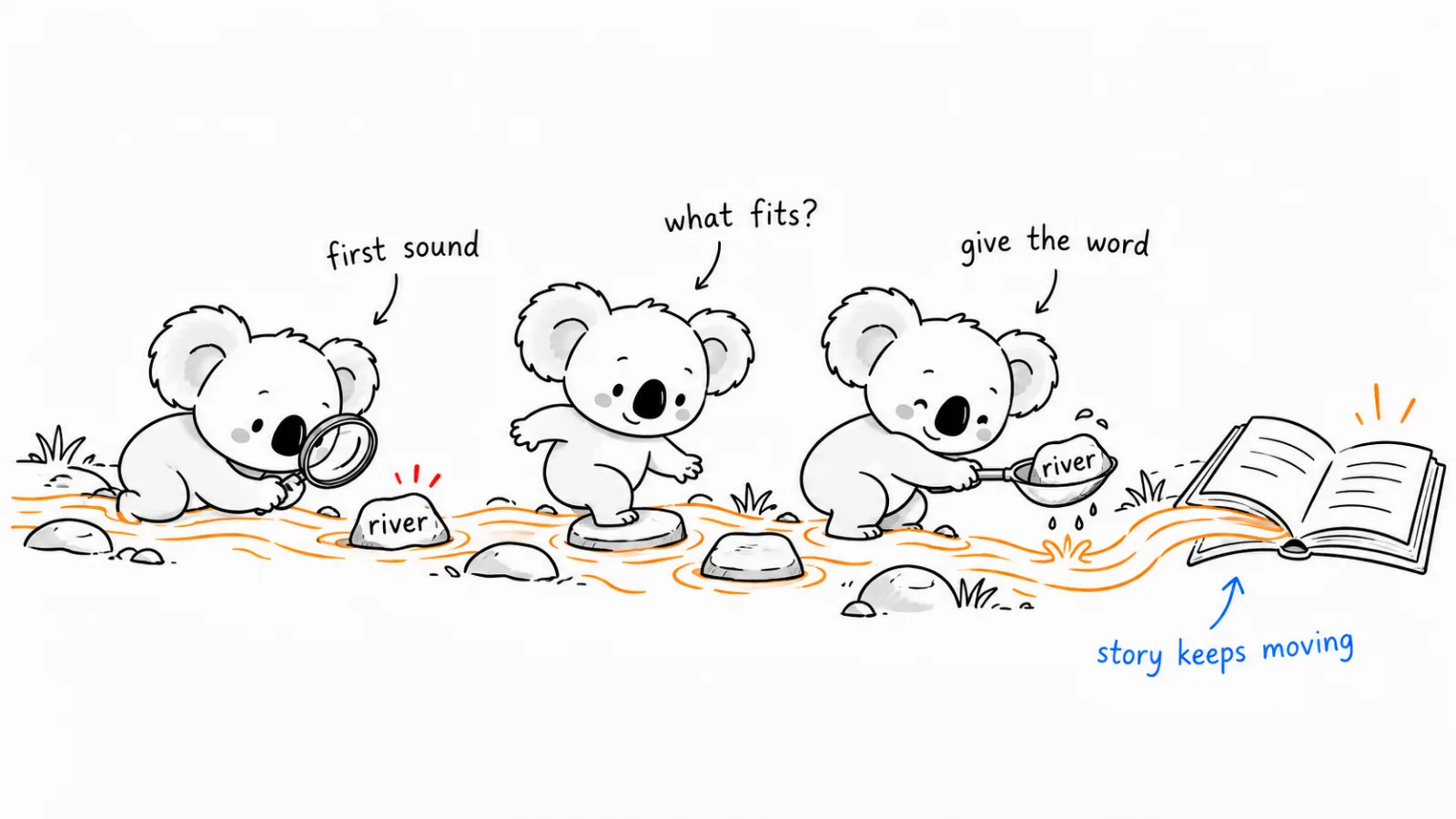
When a child pauses, allow a brief moment to think. If the word does not come, try this sequence:
- ●Point to the relevant part of the word. Ask about the first sound or a familiar letter pattern.
- ●Use the sentence for meaning. Briefly consider what word would make sense.
- ●Give the word if needed. Continue the sentence and return to the story.
- ●Revisit only if useful. After the page, mention the word casually or find it again.
This keeps support proportionate. Sounding out can be helpful, but not every English word can be solved easily through simple letter-by-letter decoding. Sometimes the most constructive response is to supply the word and keep moving.
Correct selectively
Not every mistake needs an immediate interruption. Consider whether the error changes the meaning.
If a child reads “house” instead of “home,” the sentence may still make sense. An adult can often wait until the end of the sentence and then draw attention to the printed word. If a mistake makes the story confusing, a prompt such as “Try that word again” may be enough.
Avoid comments that label the child, such as “You are not concentrating” or “This is easy.” The word may not feel easy to the child, particularly when tired.
More useful responses include:
- ●“You noticed that didn’t sound right.”
- ●“That word starts the same way as one you already know.”
- ●“I’ll tell you this one so we can keep the story going.”
- ●“You worked through a tricky sentence.”
- ●“Would you like to read the next line together?”
Specific feedback helps children understand what they did successfully without creating pressure to perform.
Know when to stop the practice portion
End the child’s reading turn if you notice repeated guessing, rubbing eyes, restless movement, unusually strong frustration or loss of understanding. These signs do not necessarily indicate a reading problem; they may simply mean that the task and the time of day are no longer a good match.
If concerns about reading, vision, hearing, language or sleep persist across settings—not only at bedtime—parents can discuss them with the child’s teacher and an appropriate health professional. Bedtime behaviour alone is not a reliable basis for diagnosis.
A simple bedtime framework
Balanced bedtime reading framework
- ●Start: The child reads a short, achievable section.
- ●Support: The adult helps before frustration builds.
- ●Continue: The adult reads the richer or more difficult part aloud.
- ●Connect: Discuss one idea, character choice or favourite moment.
- ●Settle: Finish calmly without testing recall or adding extra tasks.
6. FAQ
Q1. Are bedtime stories still appropriate for a 6 year old?
Yes. Many 6 year olds still enjoy a story at the end of the day after they start reading on their own, and a book you read aloud can be longer and harder than one they can read by themselves. Keep it short and calm: let your child read a little if they want to, and read the rest yourself. On a tired night, just read the whole story to them.
Q2. How long should a six-year-old read at bedtime?
There is no single duration that suits every child or family. A short, positive reading experience is usually more useful than a longer session filled with correction or resistance. Consider the child’s tiredness, the complexity of the text and the overall bedtime schedule. Consistency matters more than reaching a fixed number of minutes.
Q3. Should I correct every word my child reads incorrectly?
No. Correct words that affect meaning, recur frequently or reflect a skill the child is currently learning. Allow minor errors to pass temporarily when constant correction would disrupt understanding or confidence. When help is needed, keep it brief and neutral.
Q4. Is listening to an audiobook the same as independent reading?
They support different abilities. Listening can expose a child to vocabulary, fluent expression and stories beyond their decoding level. Independent reading gives direct practice in recognising and working through printed words. Both can have a place in the routine, but listening should not be described as identical to reading the text independently.
Q5. What if my child only wants me to read?
Continue reading aloud, then offer very small opportunities to join in. The child might read the title, a repeated phrase, one speech bubble or a familiar final sentence. Avoid making adult reading conditional on the child completing a difficult task. Confidence often grows when participation feels safe and achievable.
7. Conclusion
The most useful bedtime stories for 6 year olds do not force families to choose between reading practice and being read to. A balanced routine can include both: a small section that the child can manage, followed by expressive adult reading that protects enjoyment and connection.
Choose independent material for success and read-aloud material for depth. Help with difficult words before frustration takes over, adjust expectations when the child is tired and remember that listening remains valuable during the early reading years.
The long-term aim is not to produce a flawless performance at bedtime. It is to help the child associate books with meaning, curiosity, warmth and growing capability—one manageable story at a time.
Ready for calmer bedtimes?
Try Gula Stories free — 5 narrated bedtime stories, ad-free, for children ages 3-8.