
Bedtime Stories for 2-Year-Olds: What Holds Their Attention
Bedtime stories for 2 year olds work best when they are short, concrete and easy to follow. Repetition is valuable: fami
Key Takeaways
- ●Bedtime stories for 2 year olds work best when they are short, concrete and easy to follow.
- ●Repetition is valuable: familiar words, predictable phrases and repeated readings help toddlers participate and understand what comes next.
- ●Interaction should be gentle and optional. Pointing, naming and simple choices usually suit bedtime better than energetic games or frequent questions.
- ●A toddler does not need to sit still or finish every page for story time to be worthwhile.
- ●The most useful story is often the one that matches the child’s mood, language level and remaining energy that evening.
1. Introduction
Reading to a two-year-old can feel unpredictable. One evening, a child may listen closely to the same book three times. The next, they may skip pages, interrupt every sentence or leave before the story ends.
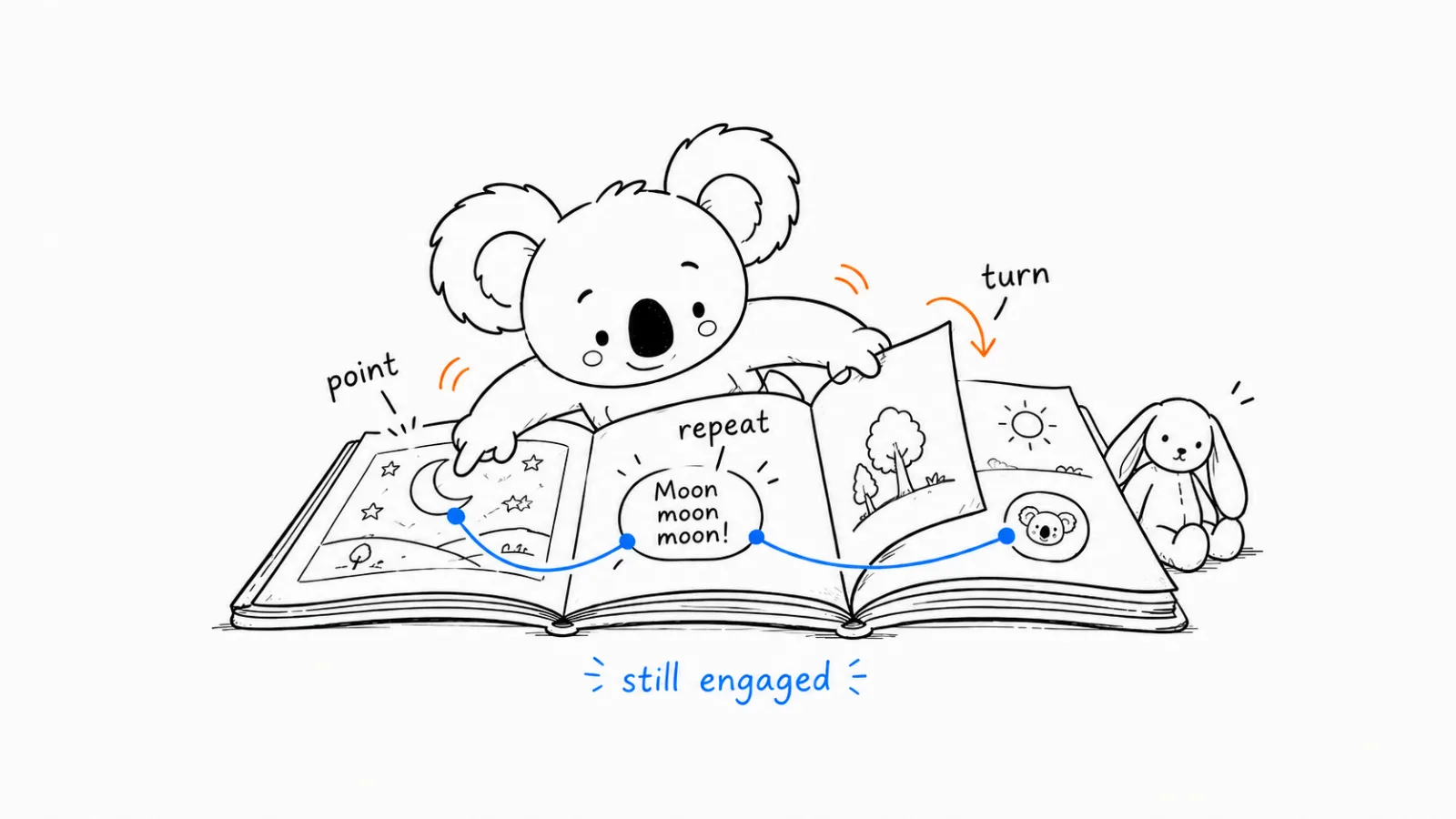
This does not necessarily mean the book has failed to hold their attention. At this age, attention often looks active rather than quiet. A toddler may point at pictures, repeat one interesting word, turn several pages at once or connect the story to something that happened earlier in the day. These are all ways of engaging with a book.
The challenge for parents is choosing a story that is interesting without making bedtime more stimulating. Long plots, detailed explanations and too many questions can be difficult to follow when a young child is tired. Short scenes, repeated language and calm interaction are usually easier to manage.
This guide explains the story length, repetition and interaction styles that commonly suit two-year-olds. It also shows how to adjust bedtime reading when a child is restless, highly verbal, reluctant to participate or strongly attached to one familiar book.
2. How Long Should a Bedtime Story Be for a Two-Year-Old?
The practical answer is: short enough for the child to remain comfortable and for the routine to stay calm. For many families, that means one brief picture book, a few pages of a longer book or a simple story told aloud without a book.
There is no single correct number of minutes. A two-year-old’s capacity to listen can change with tiredness, temperament, familiarity and the events of the day. A child who enjoys a story after a quiet afternoon may struggle with the same book after childcare, travel or an unusually stimulating evening.
Focus on completion cues, not the clock
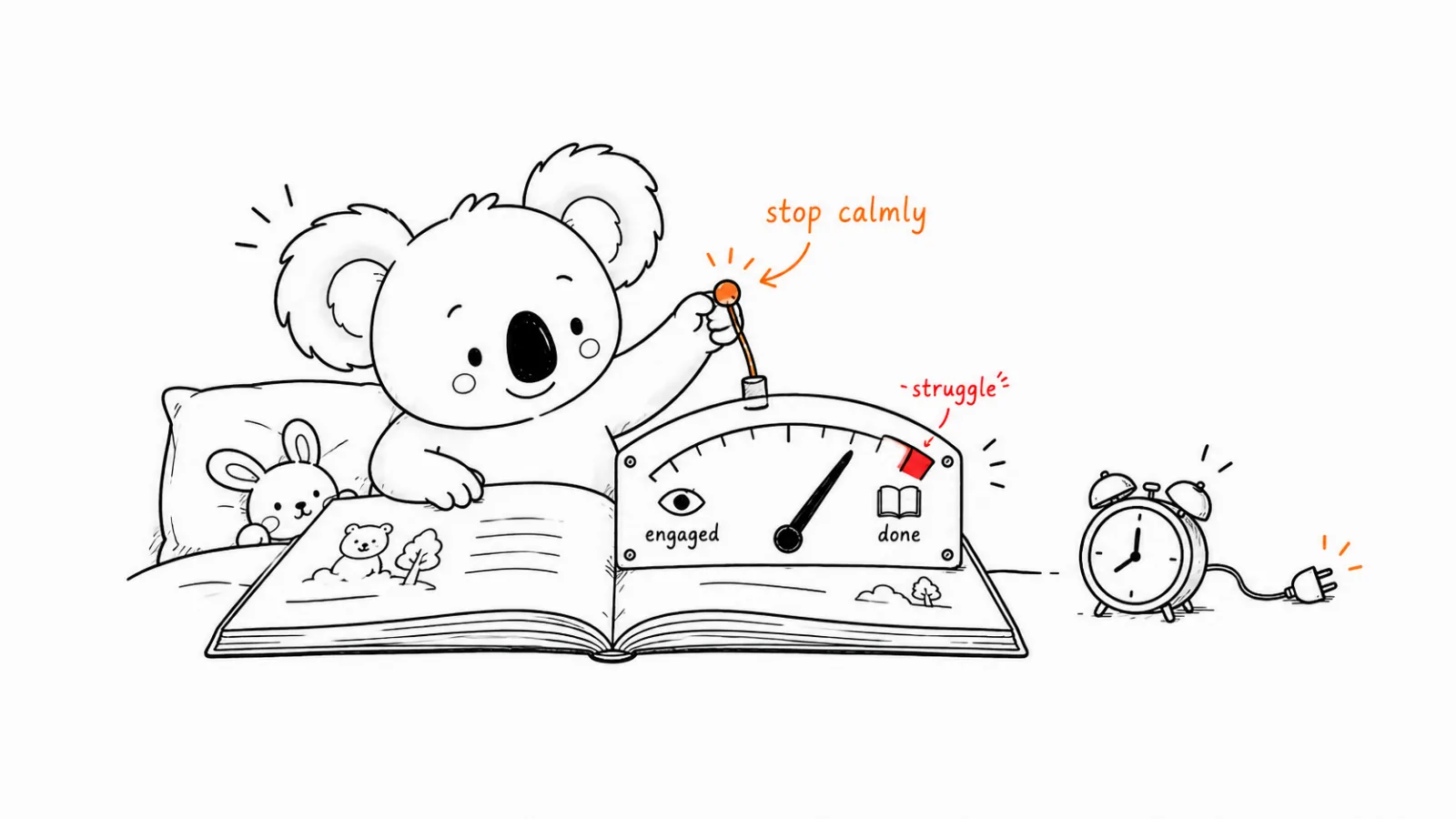
Instead of trying to reach a fixed reading time, watch for signs that the story still fits the moment.
Signs of continued engagement may include:
- ●Looking at or pointing to the pictures
- ●Repeating a word or sound
- ●Turning pages with interest
- ●Completing a familiar phrase
- ●Bringing attention back after a brief distraction
- ●Asking for the book again
Signs that the story may be too long or demanding include:
- ●Repeatedly closing the book
- ●Moving away and not returning
- ●Becoming increasingly loud or frustrated
- ●Rapidly flipping pages without looking
- ●Resisting each attempt to continue
- ●Asking for an unrelated activity
These cues are more useful than insisting that every page be read. Ending early can protect the calm tone of the routine and make it easier to return to reading the next evening.
Use a simple bedtime structure
A predictable sequence reduces the amount of negotiation required at bedtime. For example:
- ●Choose one or two short books.
- ●Read in the same comfortable place.
- ●Finish with a familiar closing phrase.
- ●Put the book away and move to the next bedtime step.
If a child asks for repeated stories, parents can set a clear boundary before reading: “We will read this book twice, then it is time to sleep.” The boundary is easier to accept when it is stated calmly and used consistently.
When time is limited, shortening the story is usually more practical than rushing through it. Read selected pages, describe the pictures briefly or retell the plot in a few sentences.
3. Why Repetition Holds a Two-Year-Old’s Attention
Adults often look for novelty, but toddlers frequently prefer familiarity. Hearing the same story repeatedly allows a two-year-old to recognise the sequence, anticipate favourite moments and participate before they can follow a complex plot independently.
Repetition can appear at several levels:
- ●Within a sentence: “Tap, tap, tap.”
- ●Across pages: The same question or action returns in each scene.
- ●Across the whole story: A character follows a predictable routine.
- ●Across nights: The child chooses the same book again.
- ●During narration: The reader repeats key words, sounds or gestures.
Predictability reduces the effort required to understand what is happening. Once the basic pattern is familiar, the child can pay attention to a new word, a facial expression in the illustration or a small change in the sequence.
Repeated reading is not wasted reading
A parent may feel that reading the same book every night limits variety. In practice, the experience can change as the child becomes more familiar with it.
On early readings, the child may mainly observe the pictures. Later, they may point to known objects, imitate a sound or supply the final word in a repeated line. Eventually, they may retell parts of the story using their own language.
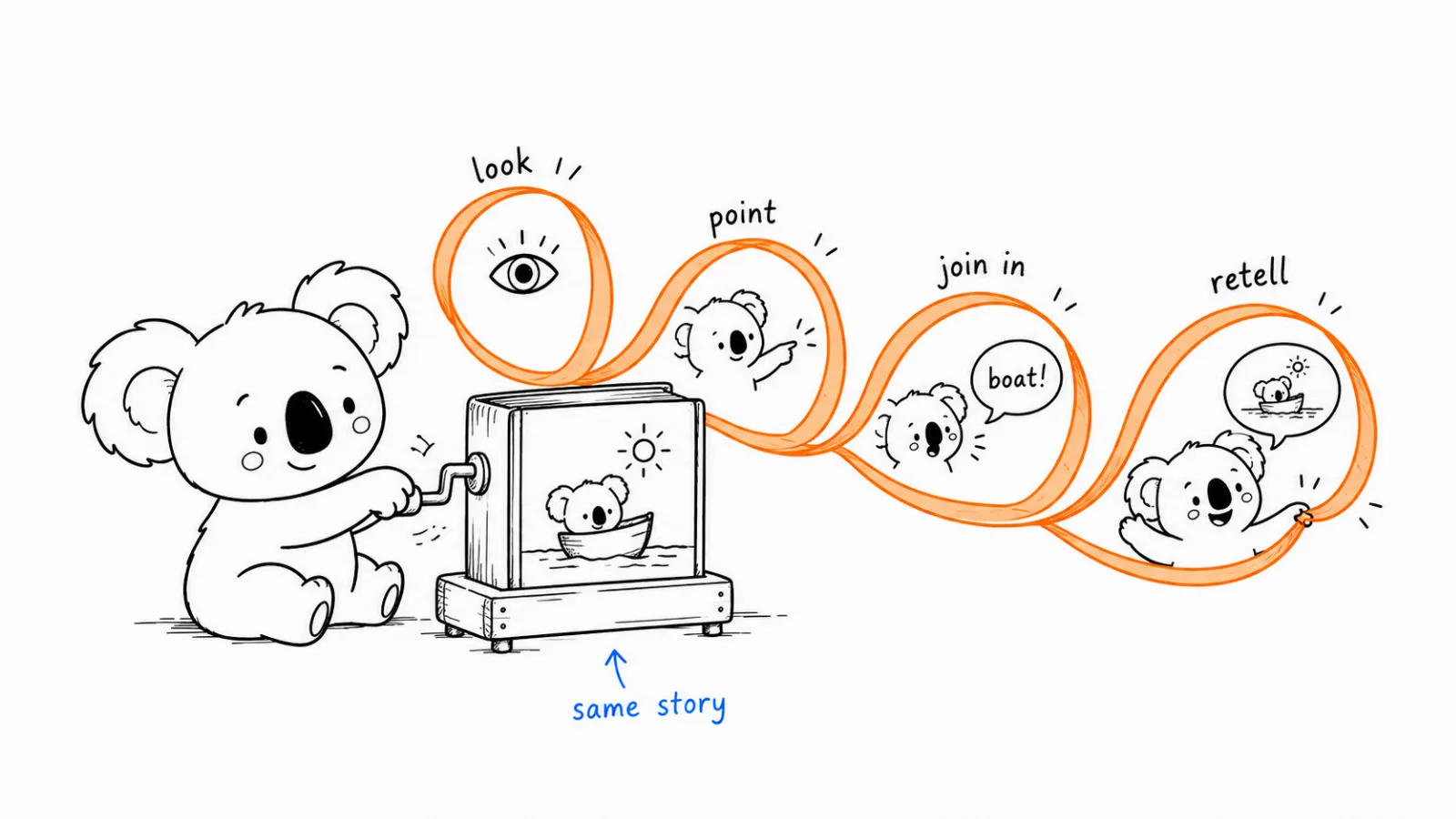
Parents can keep a familiar book engaging without changing its core pattern:
- ●Pause before a repeated word and let the child complete it.
- ●Point to a familiar object and wait for the child to name it.
- ●Use the same gentle sound effect at the same moment.
- ●Connect one picture to the child’s experience: “You saw a bus today.”
- ●Let the child turn the page at each repeated cue.
Avoid turning every page into a lesson. At bedtime, repetition is most effective when it feels safe and enjoyable rather than corrective. If the child says a word differently, the parent can model it naturally in the reply without interrupting the story for formal correction.
When to add variety
Familiarity and variety do not need to compete. A useful home selection might include:
- ●A small group of dependable favourites
- ●One or two newer books
- ●Stories linked to current interests, such as animals or vehicles
- ●Quiet stories associated specifically with bedtime
A child can choose between two books rather than facing a large shelf. This provides control while keeping the decision manageable.
4. Which Interaction Styles Work Best at Bedtime?
The most suitable bedtime interaction is usually simple, calm and responsive. The goal is shared attention, not a test of memory or vocabulary.
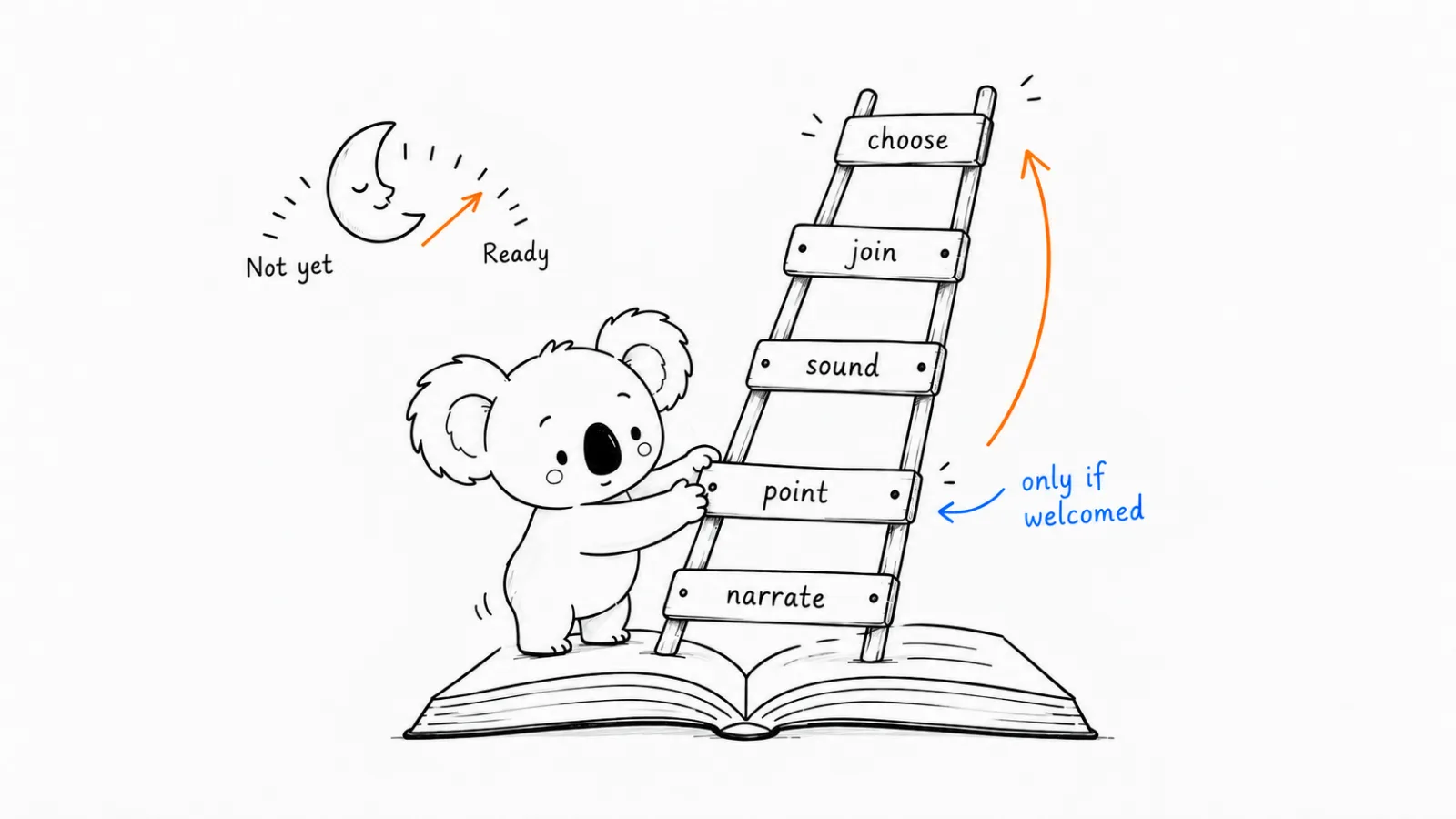
Parents can think of interaction as a ladder, beginning with minimal participation and adding more only when the child welcomes it.
Level 1: Calm narration
Read slowly enough for the child to look at the pictures. Use a warm, steady voice and allow brief pauses. This level suits a very tired child or one who prefers listening without being questioned.
Level 2: Pointing and naming
Point to an important object and name it: “Moon,” “dog” or “red boots.” Invite the child to point if they wish, but continue without pressure if they do not respond.
Level 3: Sounds and actions
Use one or two repeated sounds or small gestures, such as a quiet “whoosh” for the wind or a gentle wave when a character says goodnight. Consistency is more helpful than elaborate performance.
Level 4: Predictable participation
Pause at a familiar phrase or repeated event so the child can join in. For example: “The little bear opened the door and saw a…” A pause works best when the answer is already obvious from repetition or the picture.
Level 5: Simple choices
Offer a choice with two clear options: “Is the cat under the bed or on the chair?” Choices can be easier than broad questions because they reduce the language required to answer.
Open-ended questions such as “Why do you think the character did that?” may be too demanding for many two-year-olds, especially when tired. They are not harmful, but they can interrupt the rhythm of bedtime. Save more complex discussion for daytime reading when the child has more energy.
Follow the child’s lead
If the child points to a tiny object that is unrelated to the plot, acknowledge it briefly. Shared attention matters more than following the printed text exactly.
If a toddler wants to turn backward, revisit a favourite page or skip ahead, the reading can remain successful. The adult provides structure, but the child’s interest helps determine where attention settles.
5. Choosing and Adapting Stories for Different Bedtime Scenarios
The same book will not suit every child or every evening. The table below provides an adaptable method for matching story design and interaction to the situation.
| Bedtime scenario | Story features to try | Interaction style | What to avoid |
|---|---|---|---|
| The child is very tired | Very short text, familiar images, predictable ending | Calm narration with few questions | Introducing a complicated new plot |
| The child is restless | Repeated phrases, clear page changes, simple actions | Pointing, one quiet gesture or a page-turning role | Loud voices or active movement games |
| The child wants the same book again | Familiar sequence and favourite repeated lines | Pause for known words or sounds | Forcing a new book simply for variety |
| The child interrupts frequently | Large, clear pictures and concrete objects | Briefly acknowledge comments, then return to the story | Correcting every word or demanding silence |
| The child rarely responds | Simple pictures and familiar subjects | Name objects without requiring an answer | Repeated questioning |
| The child is highly verbal | Slightly richer language within a short plot | Simple choices and brief conversation | Extending discussion until the child becomes more alert |
| The parent has limited time | A short book, selected pages or an oral retelling | One familiar opening and closing routine | Reading quickly in a tense voice |
What story content is easiest to follow?
At two, children often engage readily with stories built around concrete, recognisable experiences. Useful subjects may include:
- ●Getting dressed
- ●Eating a snack
- ●Visiting the park
- ●Bath time
- ●Looking for a familiar object
- ●Animals making distinctive sounds
- ●Saying goodnight to people, toys or places
A simple story structure is usually enough: a character wants something, completes a few related actions and reaches a clear ending. Multiple timelines, large casts and lengthy explanations are less likely to support a calm bedtime experience.
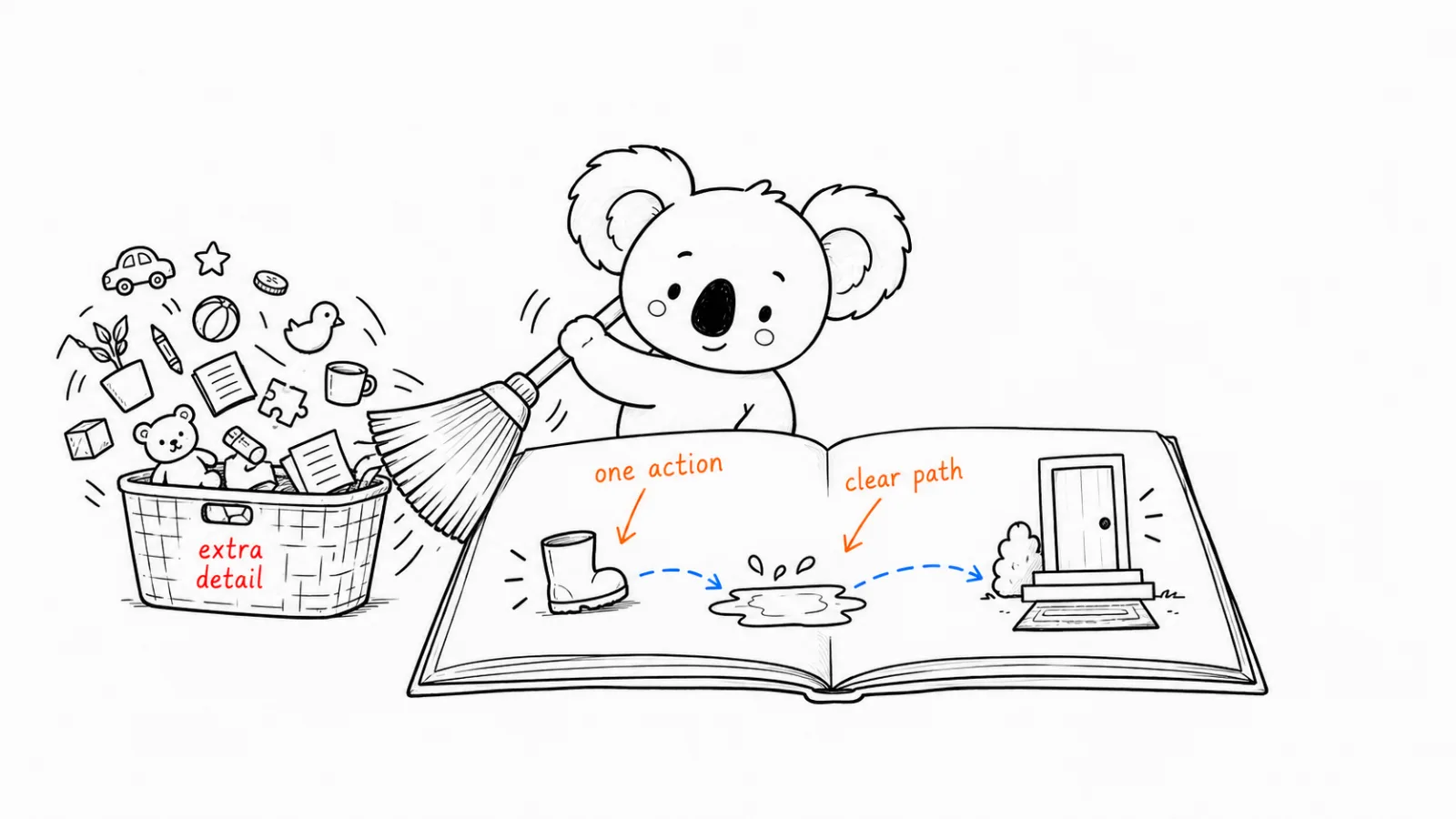
Illustrations should help carry the meaning. If the words describe one action while the page contains many competing details, a tired toddler may focus on the visual distractions instead of the story sequence.
Printed, spoken and audio stories
A printed picture book supports page turning, pointing and shared visual attention. A story told from memory can be adapted immediately to the child’s mood and interests. Calm audio narration can be useful when a parent needs support with consistency or wants to listen alongside the child.
Audio should not replace connection by default. When possible, a parent can remain nearby, respond to the child and use the story as part of the bedtime routine. Gula Stories, for example, offers ad-free stories with calm narration, natural voice options, age-appropriate recommendations and personalised avatars. These features may help families who want a structured listening option without introducing advertising into bedtime.
For screen-based stories, families may wish to consider the wider bedtime environment, including brightness, stimulation and established household limits. HealthyChildren.org, the NHS and Australia’s Raising Children Network provide general guidance on children’s routines, sleep and media use. A family health professional can offer individual advice when sleep or developmental concerns persist.
6. FAQ
What makes a good bedtime story for a two-year-old?
A good bedtime story is brief, visually clear and easy to predict. It usually focuses on familiar objects, actions or routines and contains repeated words or events. Most importantly, it matches the child’s current mood and does not require them to remain perfectly still or answer many questions.
Is it normal for a two-year-old to request the same story every night?
Repeated requests are common in early childhood. A familiar story gives the child opportunities to anticipate events, practise words and participate with confidence. Parents can continue the favourite while occasionally offering one new option alongside it.
Should I ask questions while reading?
Yes, but questions should remain simple and optional. Pointing prompts, sound imitation and two-choice questions usually preserve the flow better than frequent open-ended questions. If questions make the child frustrated or more alert, return to straightforward narration.
What if my child will not sit through a complete book?
Completing the book is not required. Try reading fewer pages, choosing a simpler story or describing the pictures in your own words. A child may also listen while changing position or holding a comfort object. If persistent concerns about attention, language, hearing, sleep or development extend beyond story time, discuss them with a qualified health professional.
7. Conclusion
Bedtime stories for 2 year olds hold attention through simplicity, familiarity and shared participation. A short story with clear pictures, repeated language and a predictable sequence is often more effective than a longer book with an elaborate plot.
Parents can begin with calm narration, add pointing or repeated sounds, and invite participation only when the child is receptive. Skipped pages, interruptions and requests for the same story are not automatic signs that reading is going badly. They are often part of how a toddler explores a book.
The most sustainable approach is flexible and consistent: keep a small selection of familiar stories, offer limited choices, notice the child’s cues and finish before reading becomes a struggle. At this age, a calm shared experience matters more than the number of books completed.
Ready for calmer bedtimes?
Try Gula Stories free — 5 narrated bedtime stories, ad-free, for children ages 3-8.