
Bedtime Routines for 6- to 8-Year-Olds: Giving Older Kids a Say
A successful bedtime routine for school age kids combines a predictable sequence with a few meaningful choices. Parents
Key Takeaways
- ●A successful bedtime routine for school age kids combines a predictable sequence with a few meaningful choices.
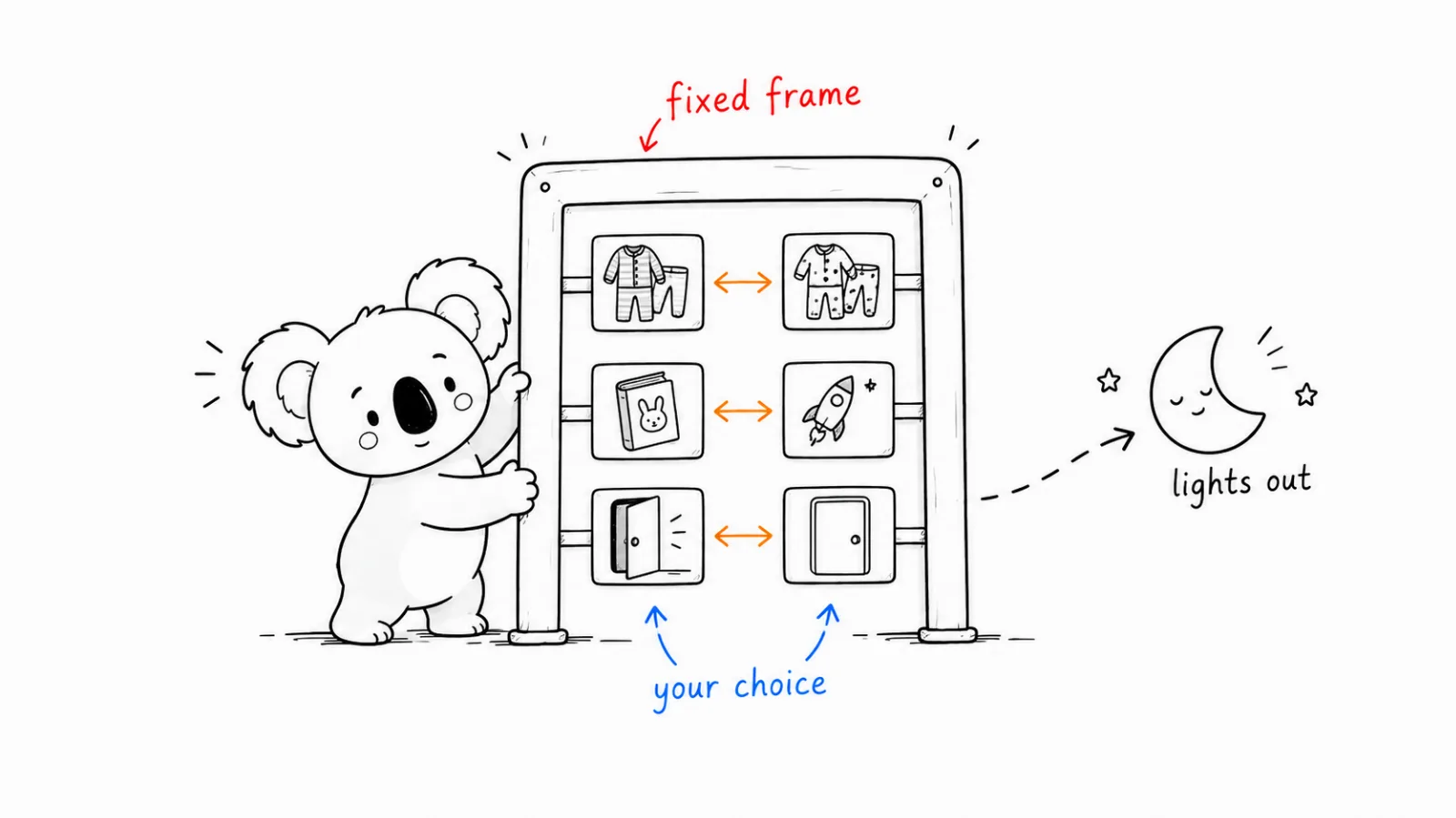
- ●Parents should set the boundaries—such as when the routine begins and when lights go out—while children choose details within those boundaries.
- ●Offer two or three acceptable options rather than asking broad questions that invite negotiation.
- ●Keep the routine simple enough to repeat on busy evenings, weekends and nights with another caregiver.
- ●Persistent sleep difficulties, loud snoring, breathing concerns or significant daytime tiredness should be discussed with a health professional.
1. Introduction
Between the ages of six and eight, children often want more control over everyday decisions. They may have strong opinions about which pyjamas to wear, what to read and whether they are “really tired yet.” At the same time, school, activities and growing independence can make evenings feel more complicated for families.
This creates a familiar tension: children want a say, but bedtime still needs to happen.
The answer is not to let children design the entire evening or to remove every choice. A practical bedtime routine for school age kids separates the routine’s fixed structure from its flexible details. Parents remain responsible for the timing and sequence, while children receive small, age-appropriate choices inside that framework.
This approach gives older children a genuine sense of participation without turning bedtime into a nightly debate. It also helps different caregivers follow the same plan and makes the routine easier to restore after weekends, holidays or disruptions.
2. Keep the Structure Predictable and the Details Flexible
The central principle is simple: parents set the framework; children choose within it.
A predictable routine tells a child what happens next. That predictability can make the transition from daytime activity to sleep feel calmer and less open to negotiation. Choice serves a different purpose: it gives the child some ownership over how the routine happens.
For example, a parent might decide that the routine begins after dinner, includes washing, teeth brushing and quiet reading, and ends with lights out at an agreed time. The child might choose:
- ●Which of two pairs of pyjamas to wear
- ●Whether to brush teeth before or after changing
- ●Which story to hear
- ●Which approved narration voice to use
- ●Whether the door stays slightly open or closed, if either option is suitable
- ●Whether to receive a hug before or after the final goodnight phrase
These are real choices, but none of them changes the essential boundary.
What should remain fixed?
The most useful fixed elements are usually:
- ●The approximate start time
- ●The main steps in the routine
- ●The place where each step happens
- ●The number of stories or other bedtime activities
- ●The point at which lights go out
- ●What happens after lights out
The exact arrangement will differ between households. What matters is that the child can understand and anticipate it.
A practical scenario
Suppose an eight-year-old asks to build a complicated model just as the bedtime routine begins. Instead of debating whether the child is tired, the parent can acknowledge the request and hold the boundary:
“That looks like a project that needs more time. We are starting bedtime now. Would you like to leave it on the table for tomorrow, or take a photo so you remember your plan?”
The child receives a choice, but staying up to continue the project is not one of the options.
3. Offer Small Choices That Do Not Delay Bedtime
Not every choice is helpful. The most effective bedtime choices are limited, immediate and acceptable to the parent.
“Choose anything you want to do before bed” is too broad. It requires a child to generate options and gives the impression that every suggestion is negotiable. In contrast, “Would you like one longer story or two short stories?” defines the available choices clearly.
Use the two-option test
Before offering a choice, ask:
- ●Am I genuinely comfortable with either answer?
- ●Can the child decide quickly?
- ●Will both options keep the routine moving?
- ●Is the choice appropriate for tonight?
If the answer to any of these questions is no, it may be better to state the boundary directly.
| Bedtime decision | Parent sets | Child may choose |
|---|---|---|
| Routine timing | When the routine begins and ends | Which reminder helps them start |
| Washing | That washing happens | Bath or shower, when practical |
| Teeth | That teeth are brushed | Before or after pyjamas |
| Clothing | Suitable bedtime clothing | One of two or three options |
| Story time | How long reading lasts | Book, chapter or narration voice |
| Bedroom environment | Safe household limits | Night-light setting or door position |
| Goodnight | What happens after lights out | Hug, short chat or quiet phrase before lights out |
Avoid choices that are not really choices
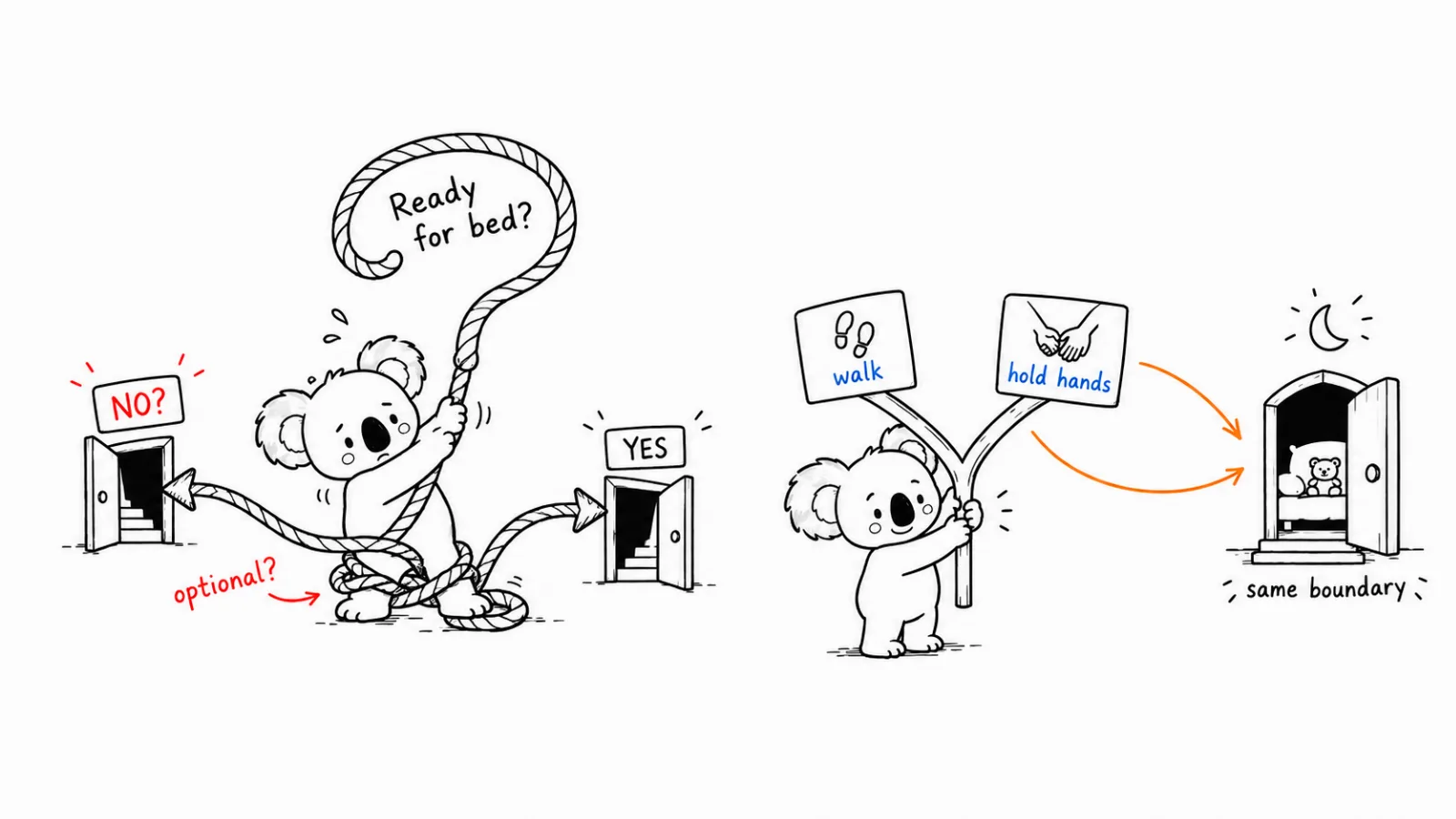
A question such as “Are you ready for bed?” can create conflict when “no” is not an acceptable response. A clearer statement is:
“It is time to begin the bedtime routine. Would you like to walk upstairs yourself or hold my hand?”
The difference is important. The first question makes bedtime appear optional. The second keeps bedtime fixed while allowing the child to decide how to make the transition.
Adjust choices on difficult nights
Choice is a tool, not a requirement. On an unusually late or overstimulating evening, a parent may need to reduce the number of decisions:
“We are short on time tonight, so I will choose the short story. You can choose the story tomorrow.”
Briefly changing the routine does not undermine it. Calmly explaining the change helps the child understand that the usual structure still exists.
4. Build the Routine With Your Child—Outside Bedtime
Children are more likely to cooperate with a plan when they have helped shape it. However, bedtime itself is rarely the best moment for a planning discussion. Everyone may be tired, and even simple decisions can become emotionally charged.
Instead, talk about the routine during a calm part of the day.
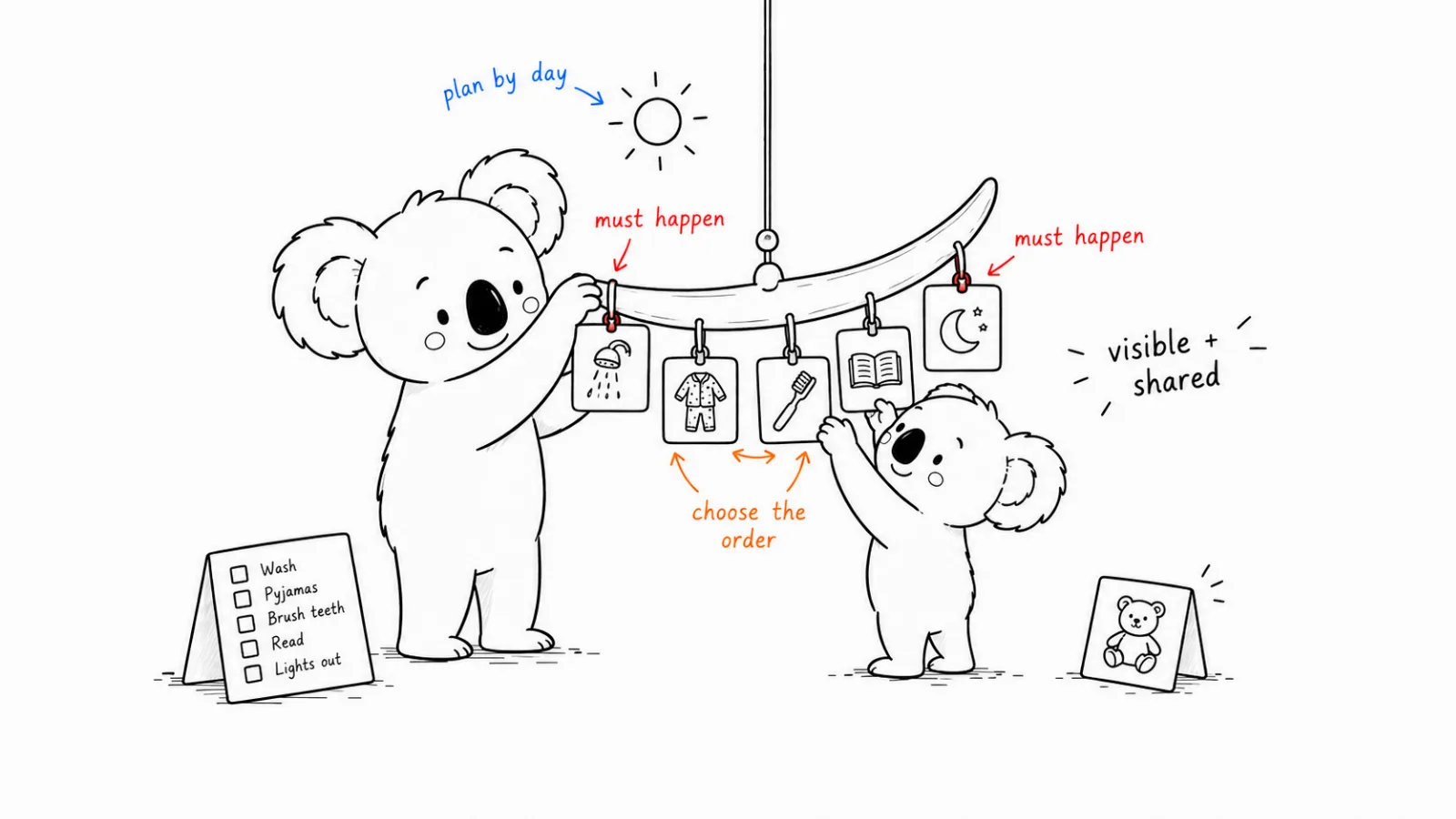
Begin by naming the non-negotiable elements:
- ●The routine needs a clear start and finish.
- ●Teeth must be brushed.
- ●Activities should become quieter as bedtime approaches.
- ●Screens and highly stimulating play should follow the family’s established evening limits.
- ●The final steps should support settling in bed.
Then invite the child to contribute:
- ●“Which order makes the most sense to you?”
- ●“Would you rather choose tomorrow’s clothes before or after story time?”
- ●“What helps you remember the next step?”
- ●“Would you like a written checklist or a picture chart?”
A six-year-old may prefer pictures or simple icons. An eight-year-old may enjoy writing the list, checking off the steps or helping set a timer. The purpose is not to make the routine elaborate. It is to make expectations visible and shared.
Example routine
A repeatable routine might look like this:
- ●Put away the current activity.
- ●Wash or bathe.
- ●Put on pyjamas.
- ●Brush teeth and use the toilet.
- ●Prepare clothes or the school bag for tomorrow.
- ●Choose one quiet story.
- ●Share a brief goodnight conversation.
- ●Turn out the light.
If audio stories are part of the routine, choose the story and set any playback limits before the child is in bed. A calm, age-appropriate story from an ad-free service such as Gula Stories may be useful when a family wants consistent narration without introducing a stream of stimulating recommendations. Audio should support the established routine rather than extend it indefinitely.
5. Respond to Negotiation Without Creating a Power Struggle
Even a well-designed routine will be tested. Children may ask for another drink, another story or one more conversation. This does not necessarily mean the routine has failed. At this age, children are practising independence and learning whether limits remain consistent.
A useful response has three parts:
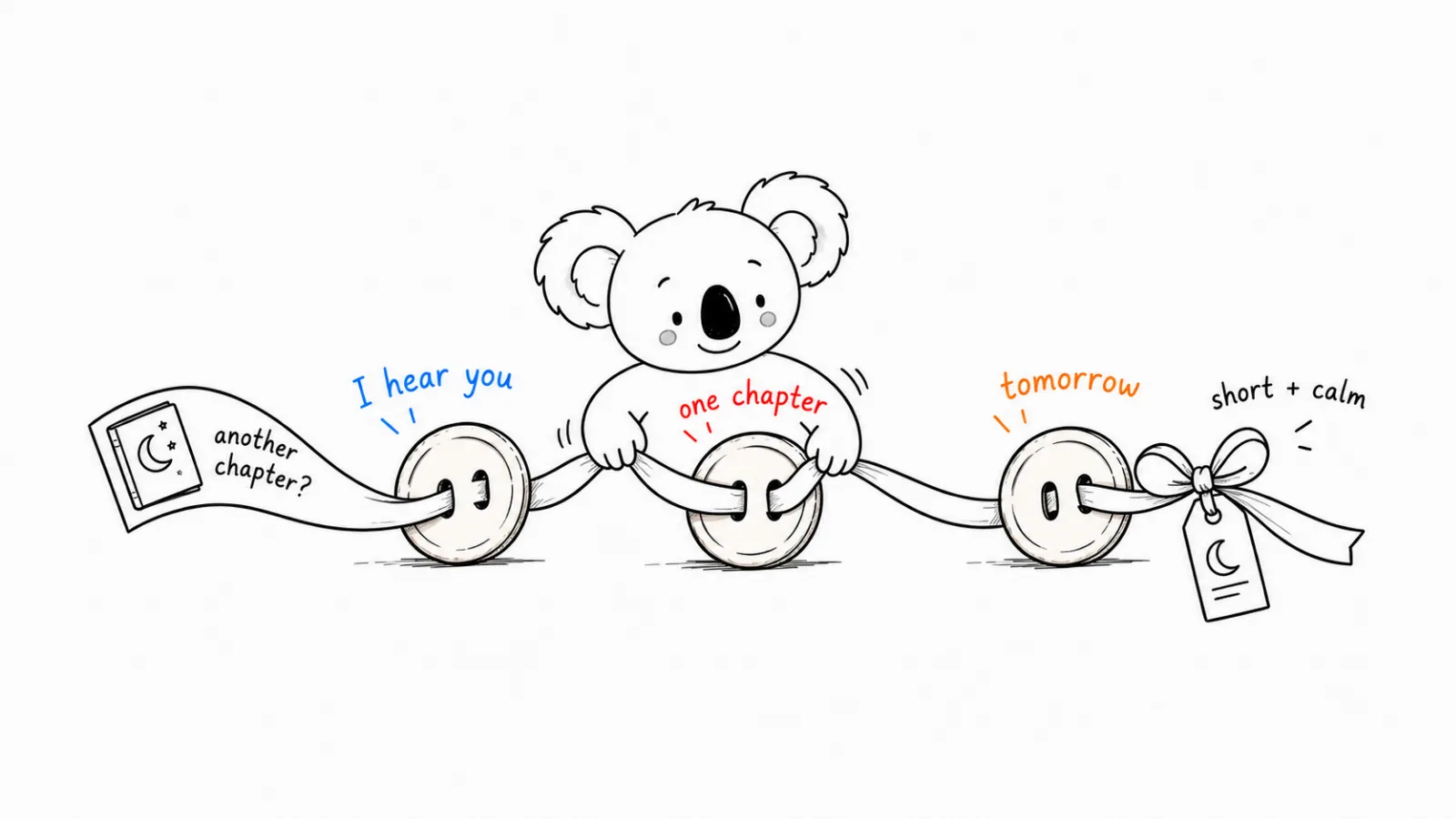
- ●Acknowledge the request.
- ●Restate the boundary briefly.
- ●Offer an acceptable next step, if one exists.
For example:
“I know you want another chapter. We agreed on one chapter tonight. You can mark the page and choose whether we continue this book tomorrow.”
Long explanations often create more material for negotiation. A short, calm response is usually easier for a tired child to process.
Plan for predictable requests
If a child regularly asks for water after lights out, place a suitable drink beside the bed before the final story. If they repeatedly remember questions or worries, add a short “talk time” before lights out. Some children may like writing tomorrow’s thought on a note so they do not feel responsible for remembering it overnight.
The aim is not to eliminate every request. It is to meet reasonable needs before the final boundary and avoid repeatedly restarting the routine.
Use natural limits rather than threats
If prolonged discussion reduces reading time, explain that consequence in advance:
“Story time ends at 8:00. If getting ready takes longer, we may have time for a shorter story.”
This keeps the limit connected to the schedule. It is clearer than introducing an unrelated punishment during a tense moment.
Stay flexible when circumstances genuinely change
Illness, fear after a distressing event, travel and major family changes may temporarily increase a child’s need for reassurance. Consistency still matters, but consistency does not require ignoring context. A parent might add a short check-in, sit nearby for an agreed period or simplify the routine while keeping its basic order.
If bedtime distress is intense, continues over time or significantly affects family life, speak with a GP, paediatrician or another qualified health professional.
6. Match the Routine to the Child’s Sleep Needs
A bedtime routine is a transition process, not a guarantee that a child will fall asleep immediately. Sleep needs and settling patterns vary, even among children of the same age.
Recognised sources such as the American Academy of Pediatrics’ HealthyChildren.org, the NHS and Australia’s Raising Children Network provide general guidance on children’s sleep and the value of consistent routines. Families should treat such guidance as a starting point and consider the individual child’s wake time, daytime energy and actual settling pattern.
Watch for practical signs that the schedule may need review:
- ●The child is regularly very difficult to wake for school.
- ●Daytime tiredness affects mood, attention or participation.
- ●The child consistently lies awake for a long time despite a calm routine.
- ●Bedtime has moved so late that the morning schedule becomes difficult.
- ●Weekend and weekday sleep patterns are dramatically different.
- ●Snoring is frequent or accompanied by gasping, breathing pauses or restless sleep.
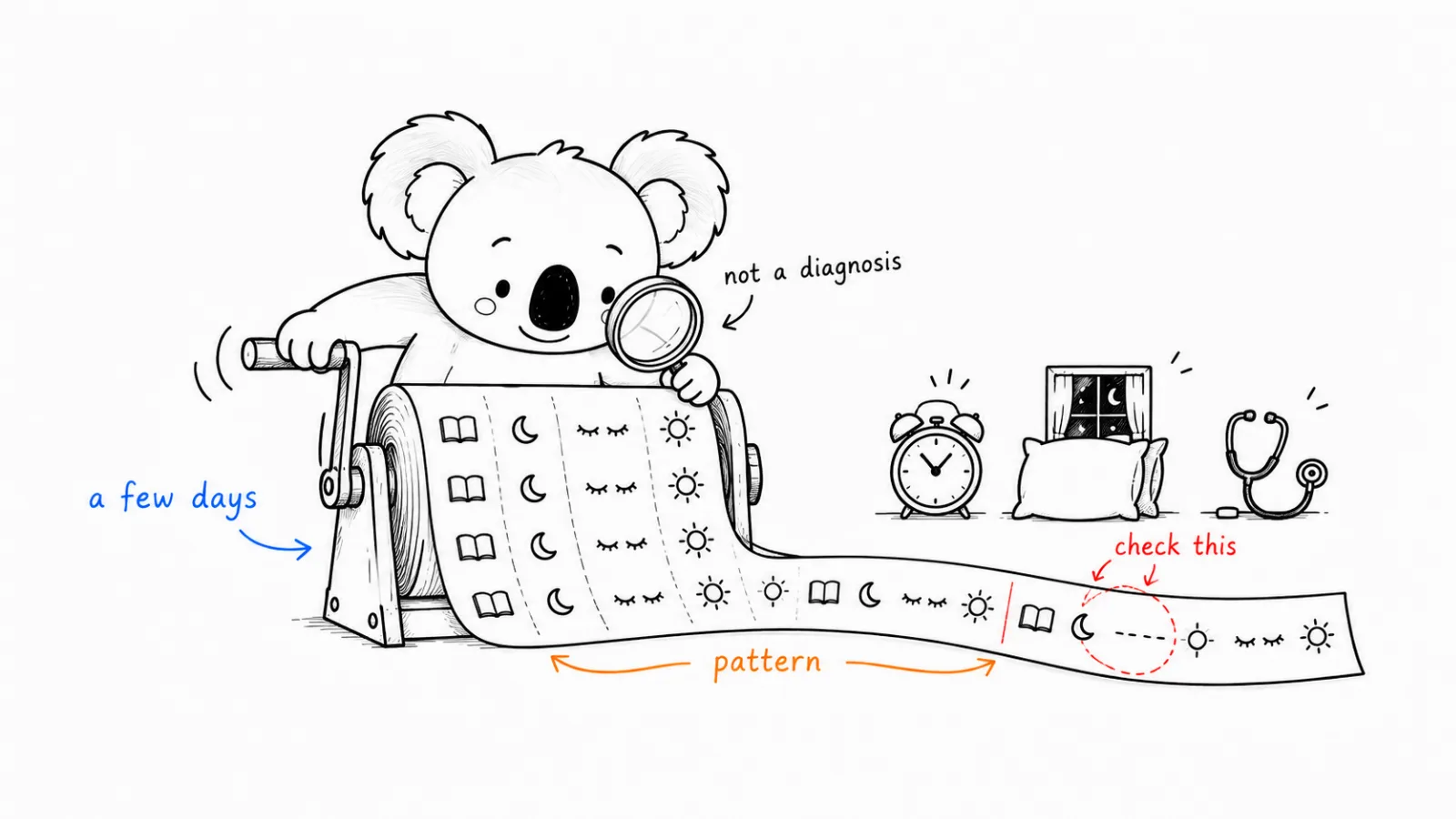
Avoid treating these signs as a diagnosis. They are reasons to observe patterns and, when concerns persist, seek professional advice. Breathing difficulties during sleep warrant particular attention from a health professional.
A simple sleep diary can help. For several days, record when the routine starts, when lights go out, roughly when the child appears to fall asleep, night waking and morning wake time. The record may reveal whether the main difficulty is the routine, the schedule, the sleep environment or another concern.
7. FAQ
How long should a bedtime routine for school age kids take?
There is no single duration that suits every family. It should be long enough to complete essential care and allow a calm transition, but short enough to repeat consistently. Many families find that a compact sequence works better than an elaborate routine with numerous opportunities for delay. Focus on repeatability rather than a precise number of minutes.
What if my child keeps changing their choice?
Set a simple rule: once a choice has been made and the next step has started, the decision is finished for that evening. You might say, “You chose this story tonight. You can choose the other one tomorrow.” If choosing remains difficult, reduce the options or select one yourself without criticism.
Should weekends have the same bedtime routine?
The exact timing may vary according to family plans, but keeping the same basic sequence can make bedtime more predictable. If the schedule changes, explain the change in advance: “Tonight we are starting later, but we will still brush teeth, choose one story and follow our usual goodnight steps.”
When should parents seek help about sleep?
Consider speaking with a health professional if sleep problems persist, cause significant distress, interfere with daytime functioning or affect the family’s ability to manage daily life. Seek advice if a child regularly snores loudly, seems to pause or struggle while breathing, or has other concerning symptoms during sleep.
8. Conclusion
Giving a six- to eight-year-old a say at bedtime does not mean handing over responsibility for the schedule. The most workable approach is to keep the structure predictable while making selected details flexible.
Parents decide when the routine begins, which essential steps happen and when the day ends. Children choose between a small number of acceptable options, such as the order of two tasks, the story or the form of the final goodnight. Those choices give children meaningful autonomy without making bedtime negotiable.
Start with a short routine that the family can repeat on ordinary evenings. Discuss it during the day, make the steps visible and review it if it consistently takes too long. A calm boundary, offered with limited choice and adjusted when circumstances genuinely require it, can help bedtime feel more cooperative while preserving the predictability school-age children still need.
Ready for calmer bedtimes?
Try Gula Stories free — 5 narrated bedtime stories, ad-free, for children ages 3-8.