
Bedtime in Blended Families: Building New Rituals Together
Build a blended family bedtime around familiar comforts, then add one small shared ritual. Agree on household expectatio
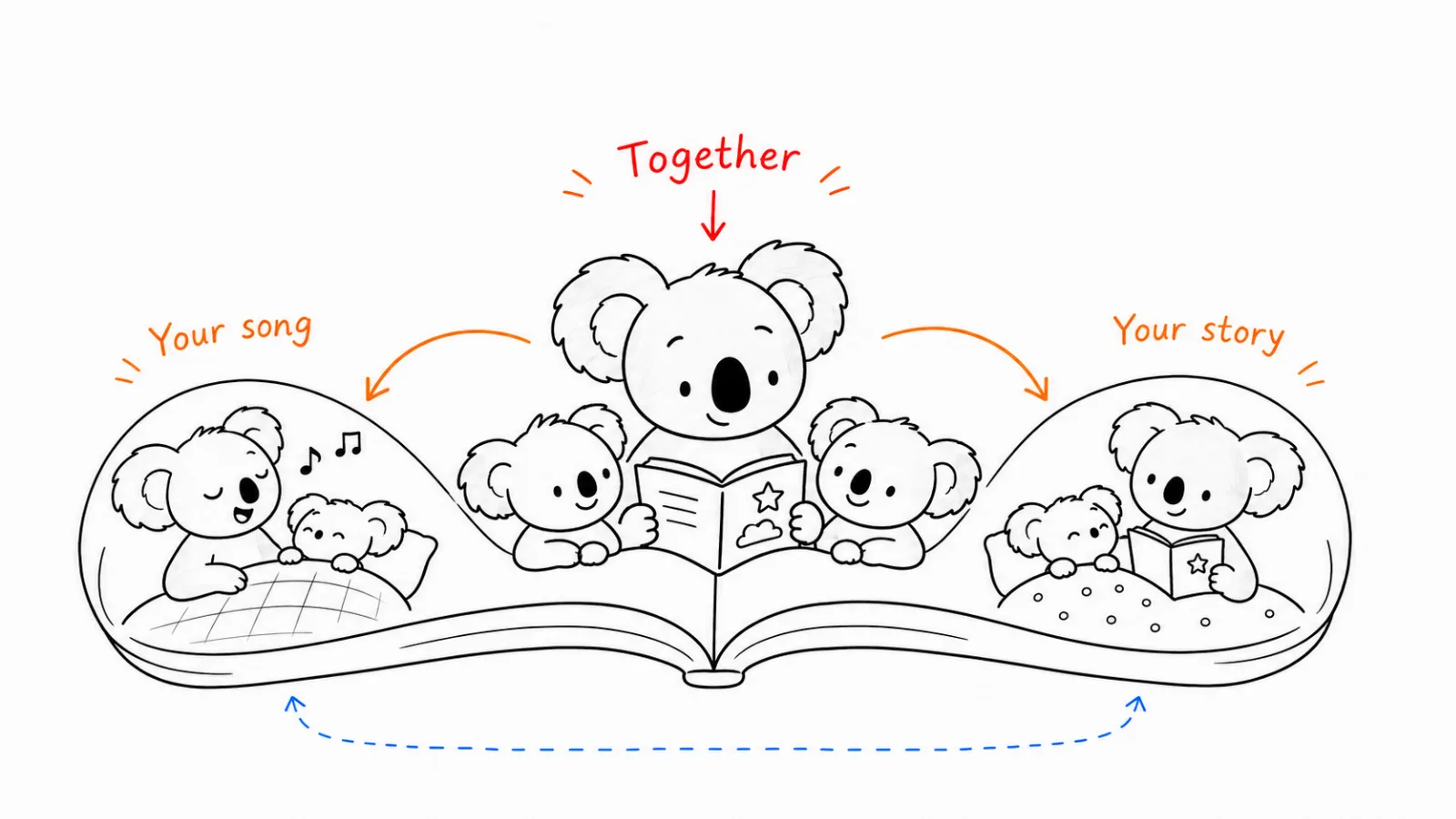
Key Takeaways
- ●Build a blended family bedtime around familiar comforts, then add one small shared ritual.
- ●Agree on household expectations while allowing different bedtimes, stories and levels of involvement.
- ●Let stepparents develop a bedtime role gradually, without requiring hugs, special names or private tuck-ins.
- ●Keep arrangements between homes practical: a familiar book or goodnight phrase can travel even when routines differ.
A workable blended family bedtime preserves something familiar for each child and adds a small ritual the new household can share. Start with a predictable sequence, keep a place for time with each child’s parent, and let closeness with a stepparent grow without pressure.
For families with children aged 2–8, the practical challenge is deciding what everyone shares and what stays individual. The aim is a routine children can understand and adults can carry out calmly.
Keep Familiar Comforts Before Adding Something New
When families join together, bedtime can bring several changes at once: a different bedroom, another adult nearby, new siblings and less private time with a parent. Before designing a shared routine, find out what each child wants to keep.
Ask during a quiet daytime moment: “What part of bedtime would you like us to keep doing?” A younger child might show you a favourite book or blanket. An older child might ask for a parent to sit beside the bed for a short chat.
Separate meaningful comforts from details adults can negotiate. A familiar goodnight song may matter more to a child than whether pyjamas come before or after brushing teeth. Preserve the comfort where possible, then agree on a manageable sequence.
For example, one child may be used to a song with Mum while another has always heard a story with Dad. A shared story can become the household ritual, followed by each child’s familiar individual goodnight. Neither child has to surrender an existing connection to participate.
Avoid presenting the new routine as a test of family unity. “We’re trying a story together before individual goodnights” leaves room for adjustment. “We’re a family now, so everyone must join in” puts an emotional demand on a practical task.
Share the Sequence, Allow Different Details
A shared bedtime routine does not require every child to go to bed at the same time or receive identical attention. It needs clear expectations about what happens next.
Adults should agree on the basic sequence privately before introducing it. Decide who handles each step, how story choices work and what happens when someone asks for an extra activity. Keep the plan simple enough for an ordinary tired evening.
The following is an example to adapt, rather than a prescribed sleep schedule:
| Bedtime step | What the household shares | What can stay individual |
|---|---|---|
| Prepare for bed | The same order for washing, teeth and pyjamas | Help from a preferred adult; different start times |
| Gather for a story | One short reading period in a comfortable space | Seating, book preferences and whether to join |
| Say goodnight | A familiar phrase or clear end to shared time | A song, cuddle or private conversation |
| Settle in bedrooms | Considerate noise and respect for others’ space | Bedtime, comfort objects and preferred adult involvement |
If a three-year-old needs an earlier bedtime than a seven-year-old, hold the shared story before the younger child goes to bed. The older child can then have a separate quiet activity. Explain the difference plainly: “You have different bedtimes. You both get story time and a goodnight.”
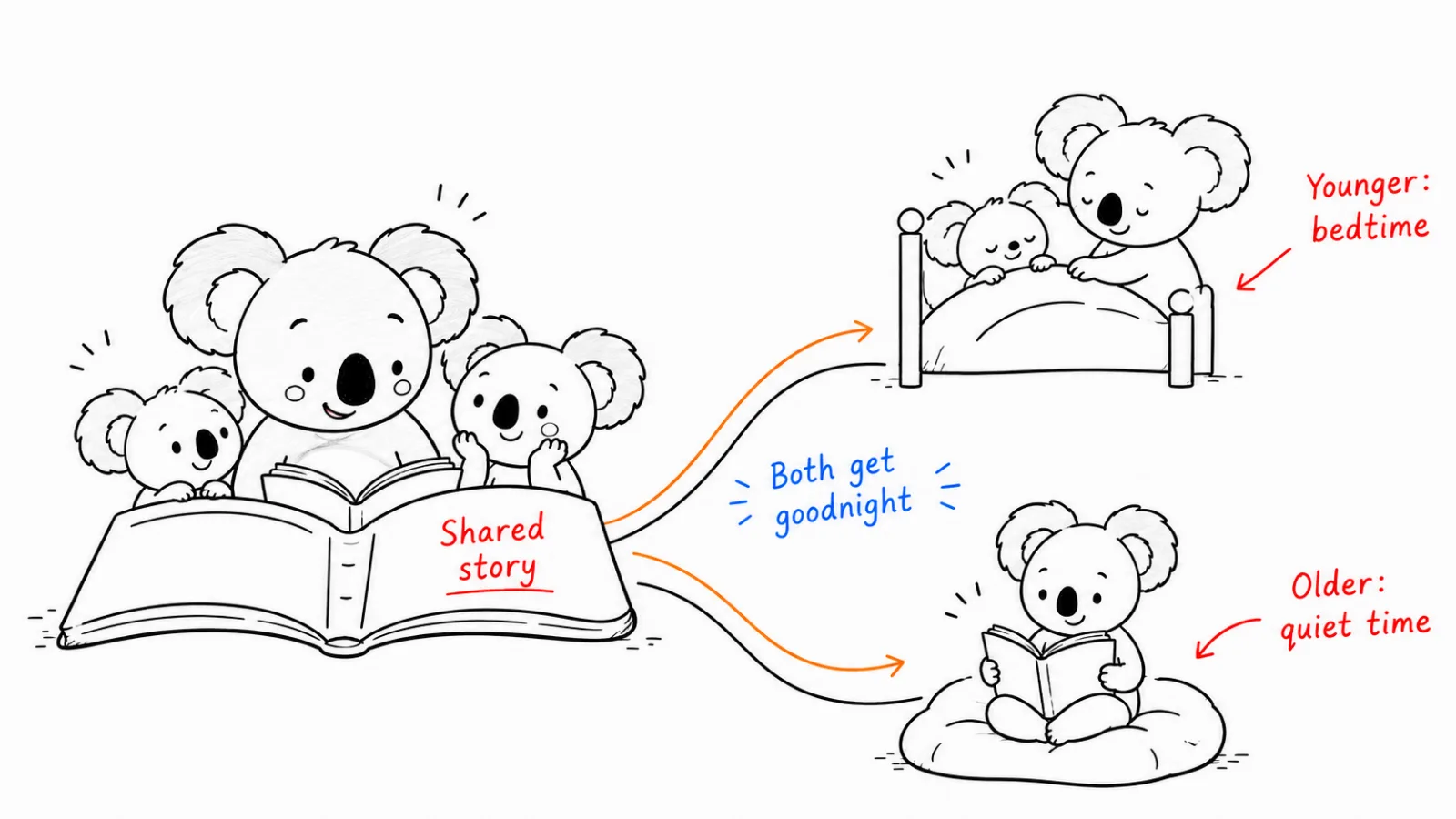
Fairness is easier to explain through predictable arrangements than through identical treatment. If one child chooses tonight’s book, another can choose tomorrow’s. For children who stay only on certain nights, use a turn-taking system based on nights they are present.
Keep the new shared element small. One book, a gentle song or “one thing I liked today” is enough to try. A complicated ritual creates more work and more opportunities for disagreement.
Let the Stepparent’s Role Grow Through Comfortable Contact
A shared household does not automatically make every bedtime task comfortable with every adult. A child may enjoy playing with a stepparent but still want their parent for the final goodnight.
Treat that preference as information when planning the routine. Where practical, the child’s parent can remain responsible for the most personal parts at first, while the stepparent takes a clear, low-pressure role: bringing the book, reading to the group or saying goodnight from the doorway.
Offer choices within an agreed boundary:
- ●“Would you like Sam to read, or would you like me to read?”
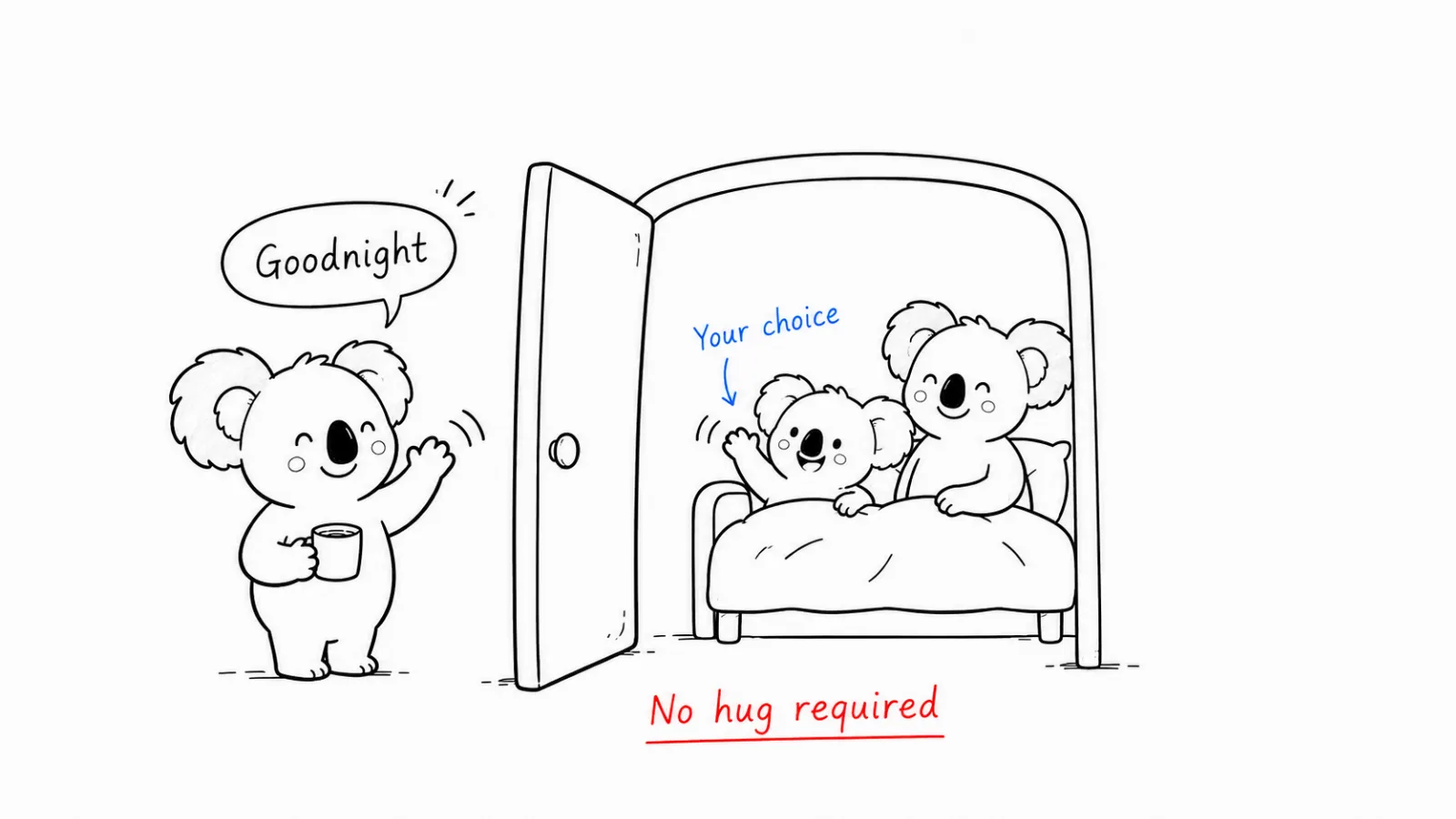
- ●“Would you like a wave, a high-five or just goodnight?”
- ●“Sam can bring your water. I’ll come for our goodnight after I finish helping your brother.”
Do not require physical affection, a parental title or being alone with a stepparent as part of the ritual. A polite goodnight can be enough.
If a parent will be away, explain the arrangement earlier in the day. Name who will help and which familiar parts will stay: “Tonight Alex will read your book and leave your door at its usual angle.”
When a child objects at bedtime, keep the response brief and respectful. “You wanted Dad tonight. He’s working, and I’m here to help” acknowledges the wish without promising something unavailable. Adults can review the arrangement later, away from the children.
Make Returning Between Homes Predictable
Children who move between homes may encounter different bedtime rules, rooms and available adults. The routines do not have to match exactly for each household to make its own expectations clear.
Where communication is workable, exchange useful information: a favourite story, a recent worry or a comfort item the child needs. Keep the focus on helping the child settle into the evening.
A small familiar element can bridge homes without requiring identical routines. This might be the same book, a goodnight phrase or a comfort object, where practical. Avoid giving children responsibility for carrying messages or reporting on the other household.
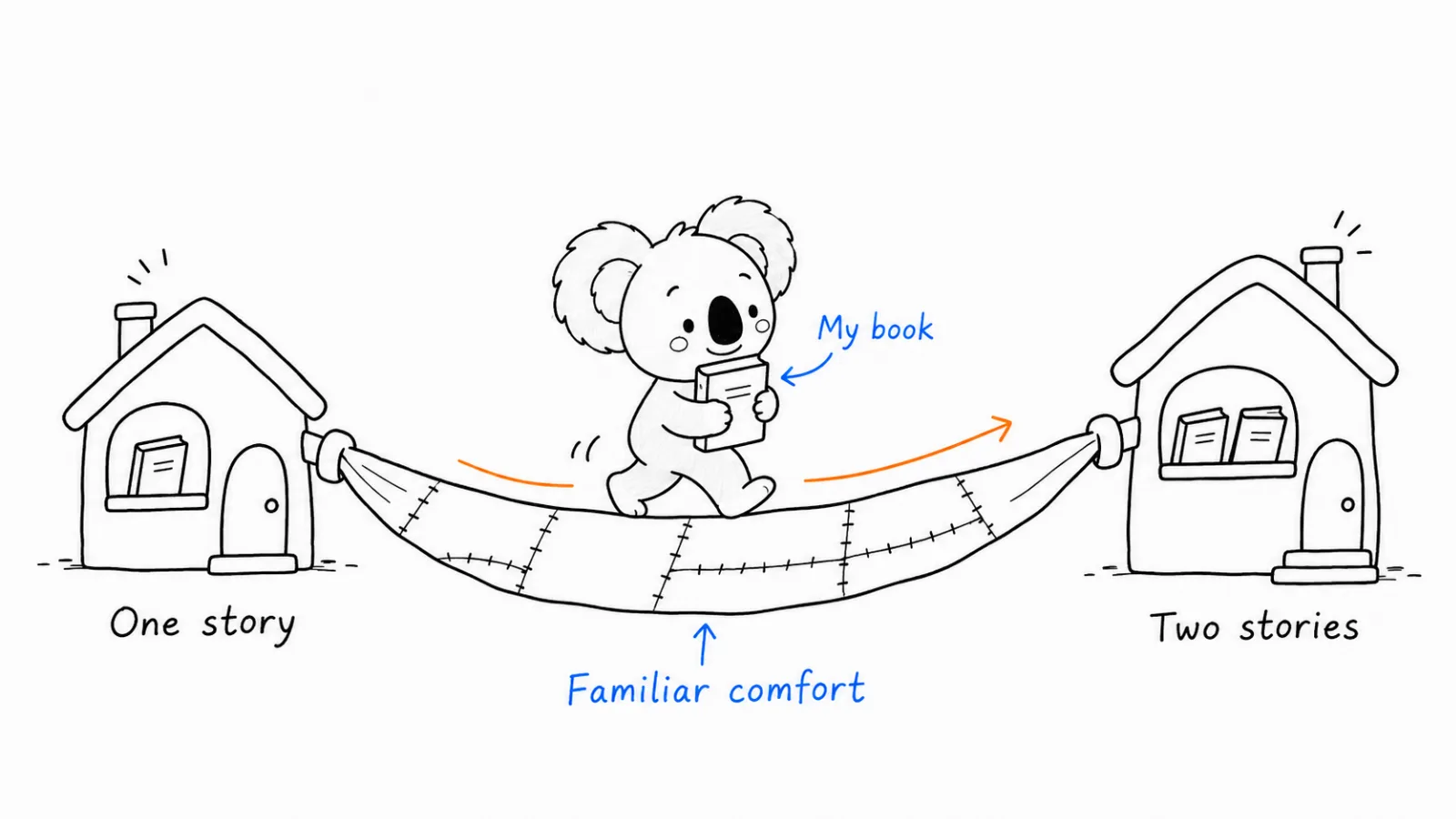
If a child says, “At my other house I get two stories,” answer without criticism: “You have two there. Here we read one together, then have our goodnight.”
On return nights, favour a familiar, manageable routine over introducing another new activity. Ask about difficulties the next day, when there is time to listen. “Was anything tricky about bedtime?” is more useful than asking the child to judge which home does it better.
If bedtime distress or sleep difficulties persist, speak with a GP, paediatrician or another qualified child health professional. Describe what happens, when it began and whether it occurs in one or both homes.
FAQ
Should stepsiblings share a bedroom straight away?
Do not make sharing a room a requirement for bonding. Where space allows, consider each child’s preferences, privacy and existing bedtime habits. If sharing is necessary, give each child a defined sleeping space and agree on light, noise and belongings before the first night.
Can a child call their other parent before bed?
Where contact is appropriate and consistent with family arrangements, a call can be part of the plan. Agree on its timing and a backup for unanswered calls beforehand. If bedtime calls regularly leave the child upset, discuss whether an earlier conversation would work better.
What if an older child thinks the shared story is too babyish?
Offer a choice of stories with broader appeal, invite the child to read a short part, or let them have quiet reading nearby. Participation should not require pretending to enjoy a younger child’s book. Individual reading time can follow the shared ritual.
Start With One Ritual Everyone Can Manage
Choose one shared activity and keep the familiar individual goodnights around it. After trying it, ask each child what they would keep or change. A useful bedtime ritual is one the household can repeat comfortably while leaving room for relationships to develop.
Ready for calmer bedtimes?
Try Gula Stories free — 5 narrated bedtime stories, ad-free, for children ages 3-8.