
Audio-Only Apps vs Video Apps Before Bed
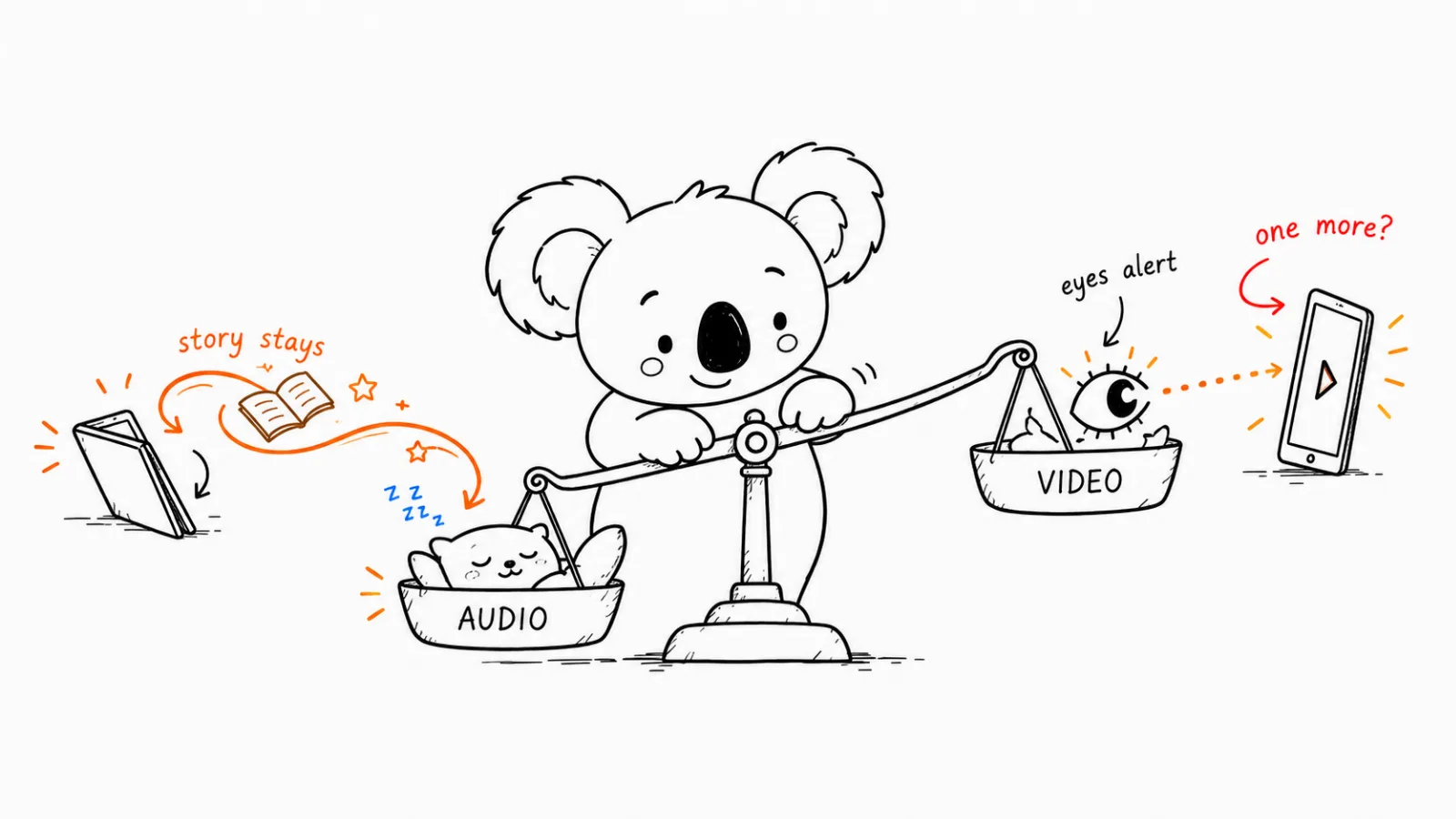
Audio-only apps generally fit bedtime better because children can listen with their eyes closed and the room kept dim. V
Key Takeaways
- ●Audio-only apps generally fit bedtime better because children can listen with their eyes closed and the room kept dim.
- ●Video adds light, movement and visual novelty, which can make it harder to shift from entertainment to sleep.
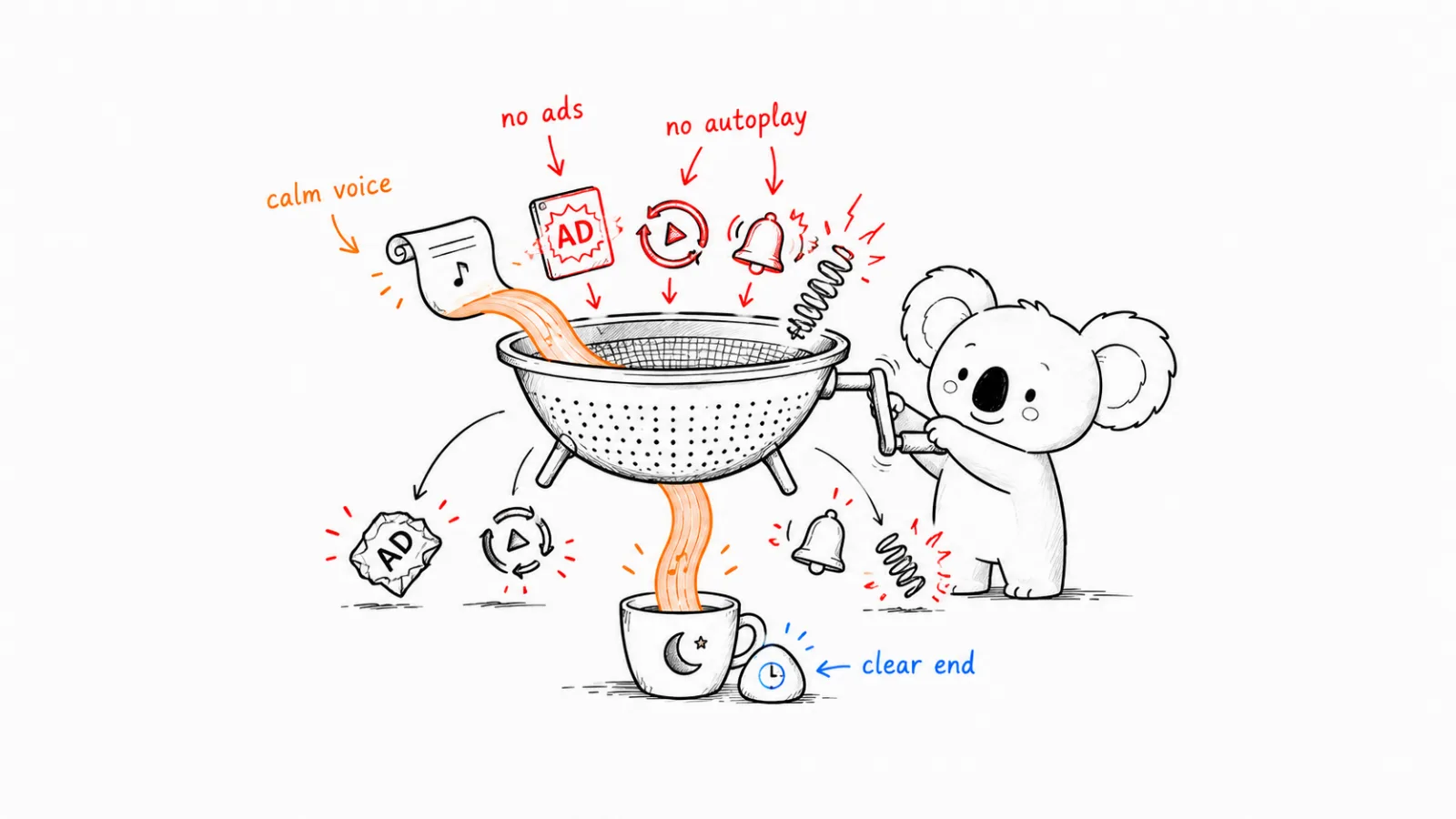
- ●A calm story is most helpful when it has a clear ending, predictable narration and no autoplay or stimulating sound effects.
- ●Audio should support a consistent bedtime routine rather than extend indefinitely after lights-out.
- ●Content, volume and device setup matter: “audio-only” is not automatically calming.
For most children aged 2–8, audio-only apps are a better bedtime choice than video apps. Eyes-free listening removes the bright, changing images that compete with the body’s transition toward sleep, while still offering the comfort of a familiar story or voice.
That does not mean every video causes sleep problems or every audio app promotes calm. The useful comparison is how each format affects light exposure, attention, stopping cues and parent-child routines.
Audio Apps vs Video Apps: A Bedtime Comparison
| Bedtime factor | Audio-only apps | Video apps |
|---|---|---|
| Visual stimulation | None once the screen is off | Moving images, colour and scene changes hold attention |
| Room lighting | Can be used with a dark or dim room | Usually requires a visible, illuminated screen |
| Body position | Allows closed eyes and a settled position | Encourages watching and checking the screen |
| Stopping point | A single story can provide a natural ending | Autoplay, previews and recommendations may encourage “one more” |
| Parent involvement | Can complement reading, cuddling or quiet reassurance | May shift attention toward the device |
| Main bedtime risk | Exciting content or endless playback | Light, visual novelty and difficulty disengaging |
The practical advantage of audio is simple: the story can continue after the screen disappears. A parent can choose the episode, lower the brightness, lock the device and place it safely out of reach. The child hears the narrative without needing to keep watching.
With video, watching is the activity. Even gentle animation asks the child to follow movement, facial expressions and visual changes. When the goal is to reduce stimulation gradually, that extra layer can work against the bedtime transition.
Why Eyes-Free Listening Better Matches the Sleep Transition
Bedtime works best as a change in state: the environment becomes darker, activity slows and attention narrows. Audio can fit that process because it does not require children to keep their eyes open.
Recognised child-health authorities, including the American Academy of Pediatrics through HealthyChildren.org, the NHS and Australia’s Raising Children Network, generally encourage consistent bedtime routines and thoughtful limits around screens. Their advice reflects an important distinction: bedtime media is not only about the content children consume, but also about what the device asks them to do.
Video typically asks a child to remain visually alert. Audio can allow:
- ●closed eyes;
- ●dimmer surroundings;
- ●fewer visual decisions;
- ●a comfortable, still position;
- ●imagination without continuous on-screen input.
Consider two versions of the same bedtime story. In the video version, a child waits to see each new character and may protest when the episode ends. In the audio version, the child can turn away from the device, hold a comfort toy and listen as the room stays dark. The story remains engaging, but the behaviour surrounding it is more compatible with settling.
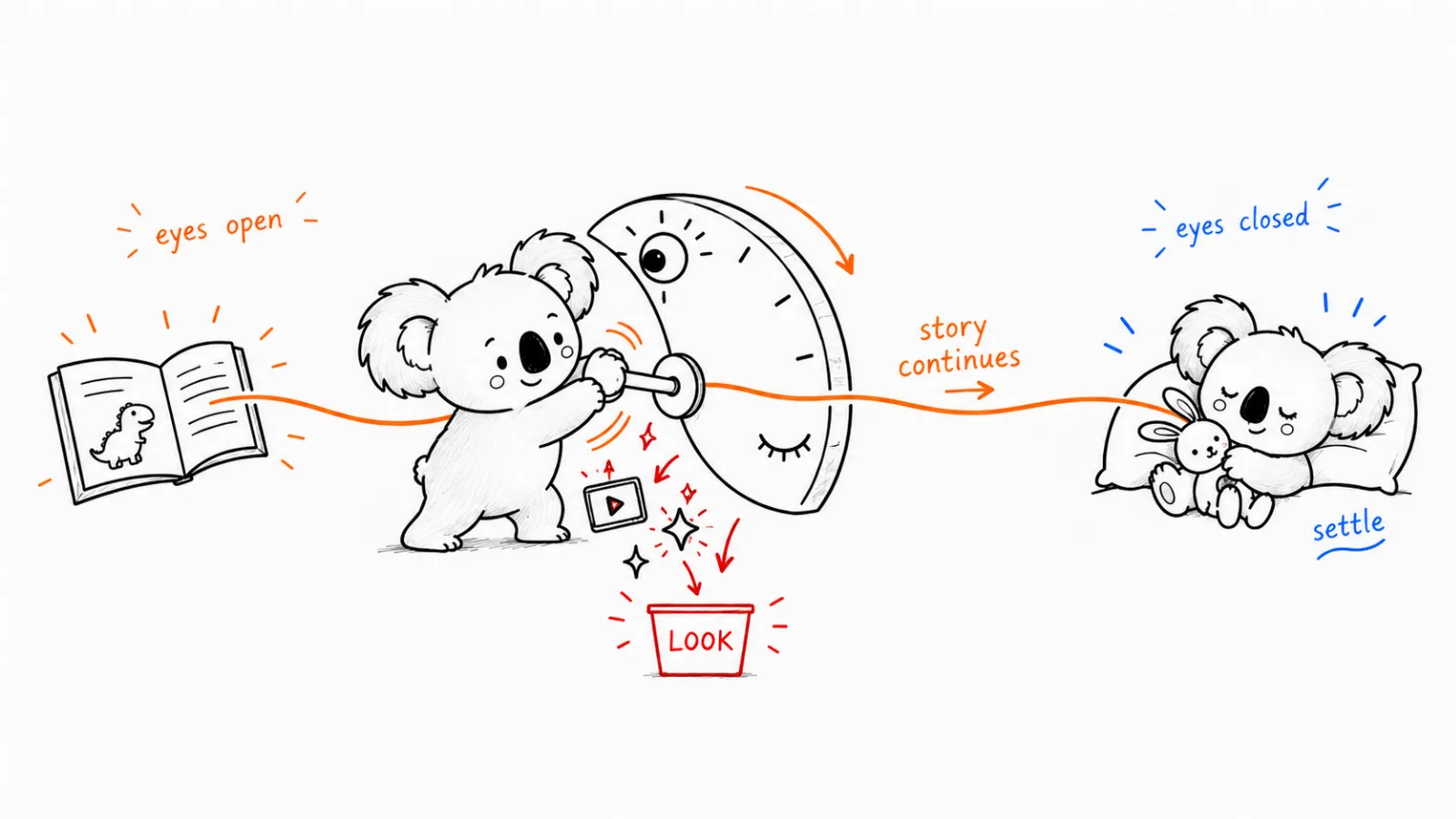
Individual children respond differently. Some can stop a short video without difficulty, while others become more alert or negotiate for another episode. Parents can judge the format by what happens afterward: Does the child become quieter and less dependent on the device, or more awake and reluctant to stop?
The App Design Matters as Much as the Format
Audio-only does not automatically mean bedtime-friendly. Fast narration, suspenseful plots, loud music or abrupt adverts can be stimulating even without pictures.
A suitable bedtime audio app should make calm listening easy. Look for:
- ●age-appropriate stories without frightening themes;
- ●natural, steady narration;
- ●predictable episode lengths;
- ●gentle volume changes;
- ●a sleep timer or automatic stop;
- ●no advertising interruptions;
- ●no autoplay into unrelated content;
- ●controls that can be handled by an adult before the screen is turned off.
Gula Stories, for example, is designed as an ad-free bedtime story app with calm narration, multiple natural voices, age-appropriate recommendations and personalised avatars. Features like these can make audio feel familiar without requiring children to watch a screen throughout the story.
Device placement also matters. Keep the phone or tablet out of the bed and away from the child’s face. Set a low, comfortable volume, disable notifications and avoid headphones during sleep unless a qualified professional has recommended a specific setup. A small speaker or a device placed safely out of reach usually keeps the experience more clearly audio-first.
How to Use Audio Without Making It a New Sleep Dependency
Audio works best as one step in a predictable routine, not as an unlimited background service. A simple sequence might be:
- ●Finish active play and screens outside the bedroom.
- ●Complete washing, teeth brushing and pyjamas.
- ●Read together or talk briefly about the day.
- ●Choose one audio story.
- ●Turn off or lock the screen before playback.
- ●Let the story finish, then keep the room quiet.
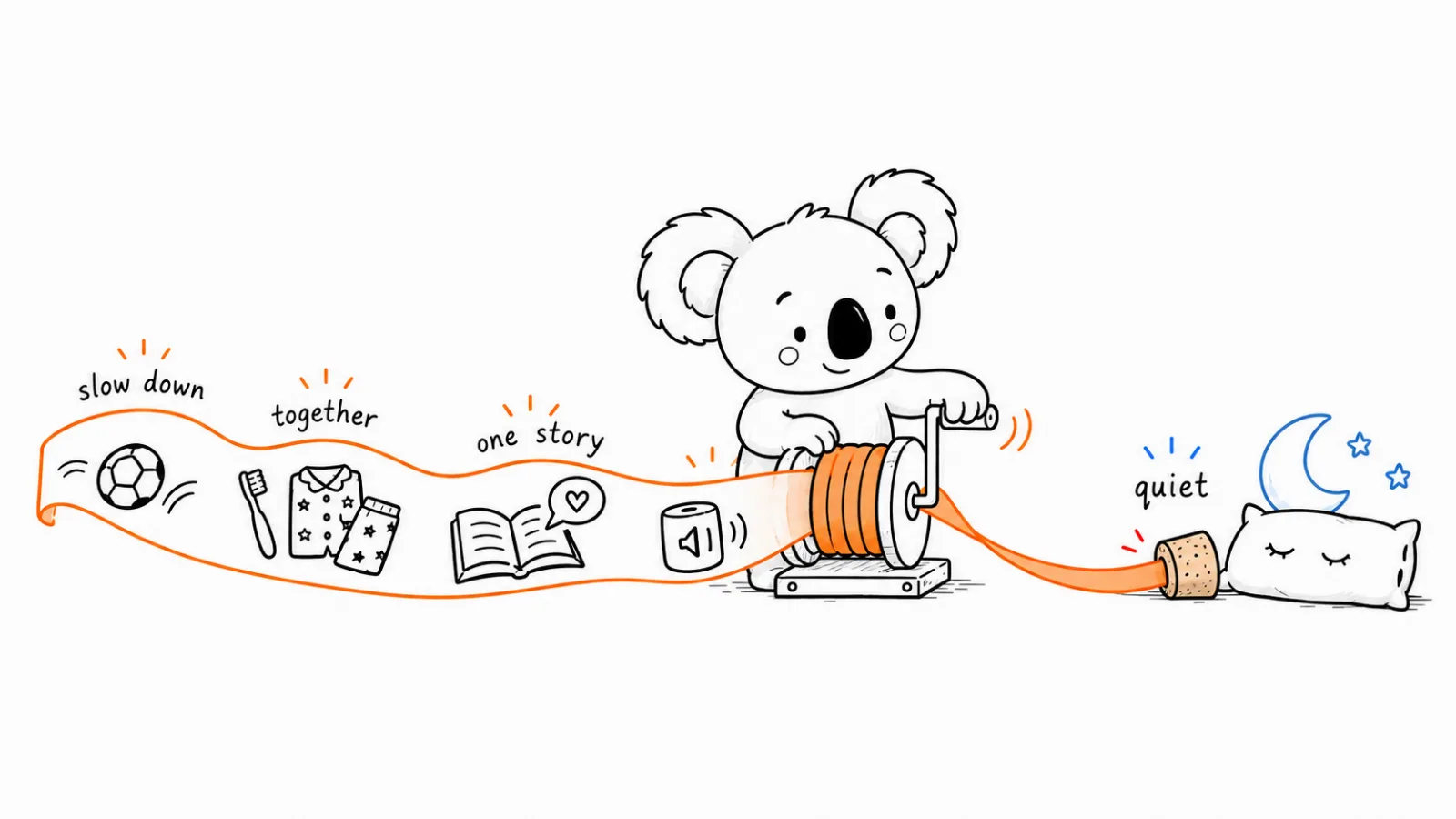
Clear boundaries reduce negotiation. “One story, then quiet time” is easier for a young child to understand than an open-ended instruction to listen until sleepy. A timer can help, but the ending should not feel sudden or punitive.
If a child currently depends on video, a gradual transition may be easier than removing it in one night. Parents might begin by choosing a familiar story available in both formats, watching it earlier in the evening, and using only the audio version at bedtime. Another option is to sit nearby during the first few nights so that audio does not feel like a loss of connection.
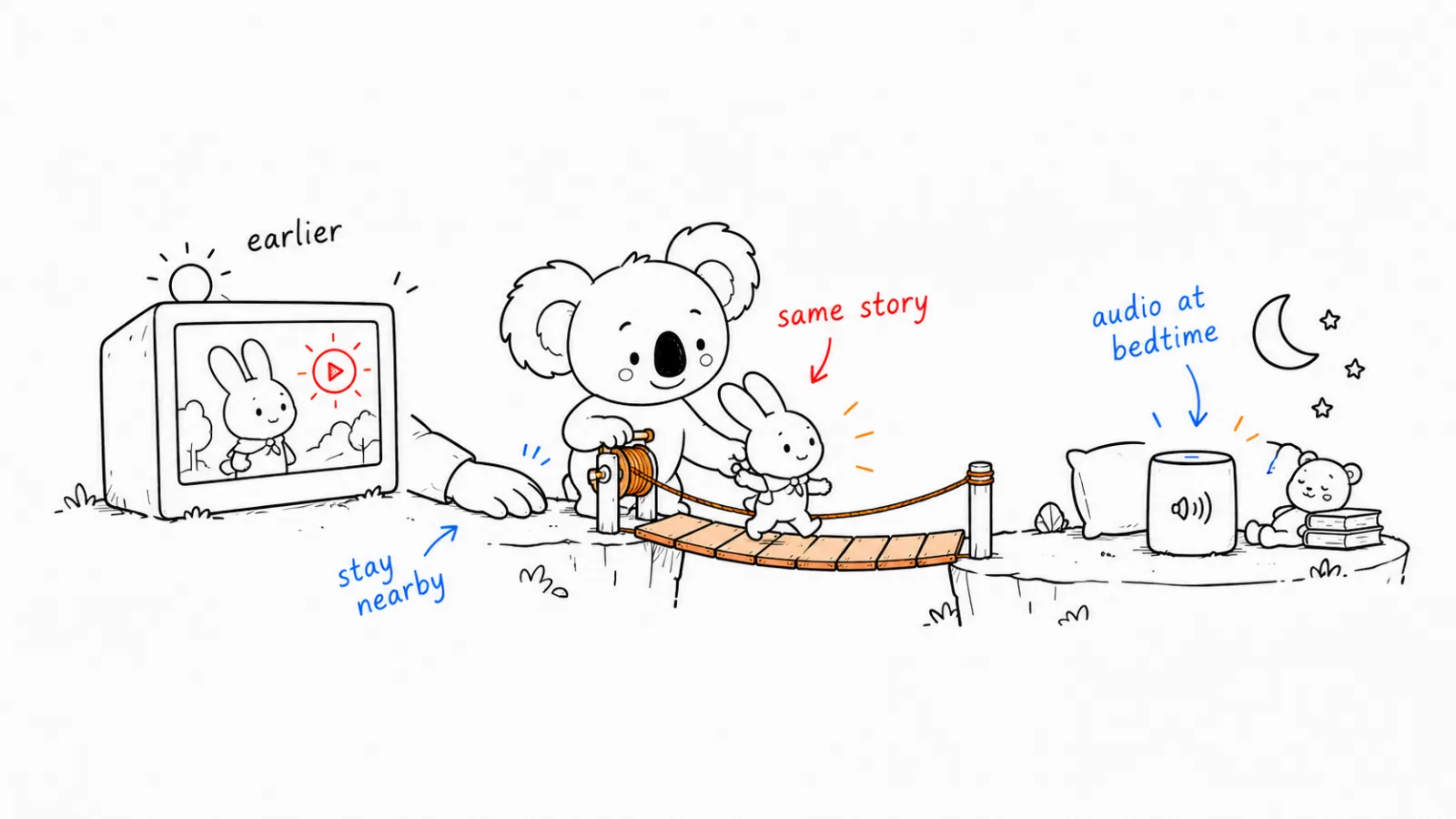
The aim is not to make a child fall asleep through entertainment. It is to create a quieter bridge between family interaction and independent rest.
FAQ
Is listening to an audiobook considered screen time?
Listening itself is not a visual screen activity when the display is off. However, children may still spend time looking at the device while selecting stories, so parents can choose the content beforehand and lock or turn off the screen during playback.
Can children listen to bedtime audio every night?
For many families, one short story can become a predictable part of the nightly routine. It is worth varying the routine occasionally—such as using a parent-read book or quiet conversation—so that the child retains more than one way to settle.
What if my child becomes excited by audio stories?
Try a more familiar story, slower narration, lower volume or an earlier listening time. If every story leads to active play, repeated requests or prolonged wakefulness, quiet reading or simple conversation may suit that child better.
When should parents seek advice about bedtime difficulties?
Speak with a GP, paediatrician or other qualified health professional if sleep difficulties are persistent, significantly affect the child or family, or occur alongside concerns such as breathing problems, marked daytime tiredness or distress. An app should not be used to assess or treat an underlying health issue.
The Bottom Line
In the comparison of audio apps vs video apps before bed, audio usually has the stronger fit because it lets the screen disappear while the story continues. Choose calm content, establish a clear ending and watch how your child responds. The most useful bedtime app is one that becomes less noticeable as the child settles.
Ready for calmer bedtimes?
Try Gula Stories free — 5 narrated bedtime stories, ad-free, for children ages 3-8.