
Audio Bedtime Stories for Kids: A Parent’s Listening Guide
Choose audio bedtime stories with calm narration, age-appropriate themes, predictable pacing, and minimal disruptive sou
Key Takeaways
- ●Choose audio bedtime stories with calm narration, age-appropriate themes, predictable pacing, and minimal disruptive sound effects.
- ●Treat audio as part of a consistent wind-down routine, not as a guaranteed sleep solution.
- ●Personalised bedtime stories can increase relevance by including a child’s name, interests, family details, or familiar situations.
- ●Preview stories before bedtime, especially when a child is sensitive to suspense, separation themes, loud sounds, or unfamiliar voices.
- ●Keep listening simple: use low volume, avoid autoplay, limit screen interaction, and observe how the individual child responds.
1. Introduction
Audio bedtime stories can make evenings easier when parents are tired, routines are changing, or children want to hear the same story repeatedly. They can also offer a useful alternative when a caregiver cannot read aloud because of travel, illness, work schedules, or responsibilities involving another child.
However, selecting a bedtime story is not simply a matter of finding something labelled “for kids.” A story may be appropriate during the day but too exciting, noisy, frightening, or complicated for the period before sleep. Some audio services also introduce practical concerns, including advertising, autoplay, screen exposure, data collection, and unexpected content recommendations.
This guide explains how to choose audio bedtime stories by age, temperament, format, and family routine. It also examines when personalised bedtime stories may be useful, how to create a calmer listening environment, and what parents should check before making audio a regular part of bedtime.
The central principle is straightforward: the right bedtime audio should support connection and predictability. It should not add stimulation or replace responsive interaction when a child needs comfort.
2. What Makes an Audio Story Suitable for Bedtime?
A suitable bedtime story is usually calm, understandable, emotionally safe, and easy to stop. The label, platform, or production quality matters less than the child’s actual response.
Look for a gentle narrative shape
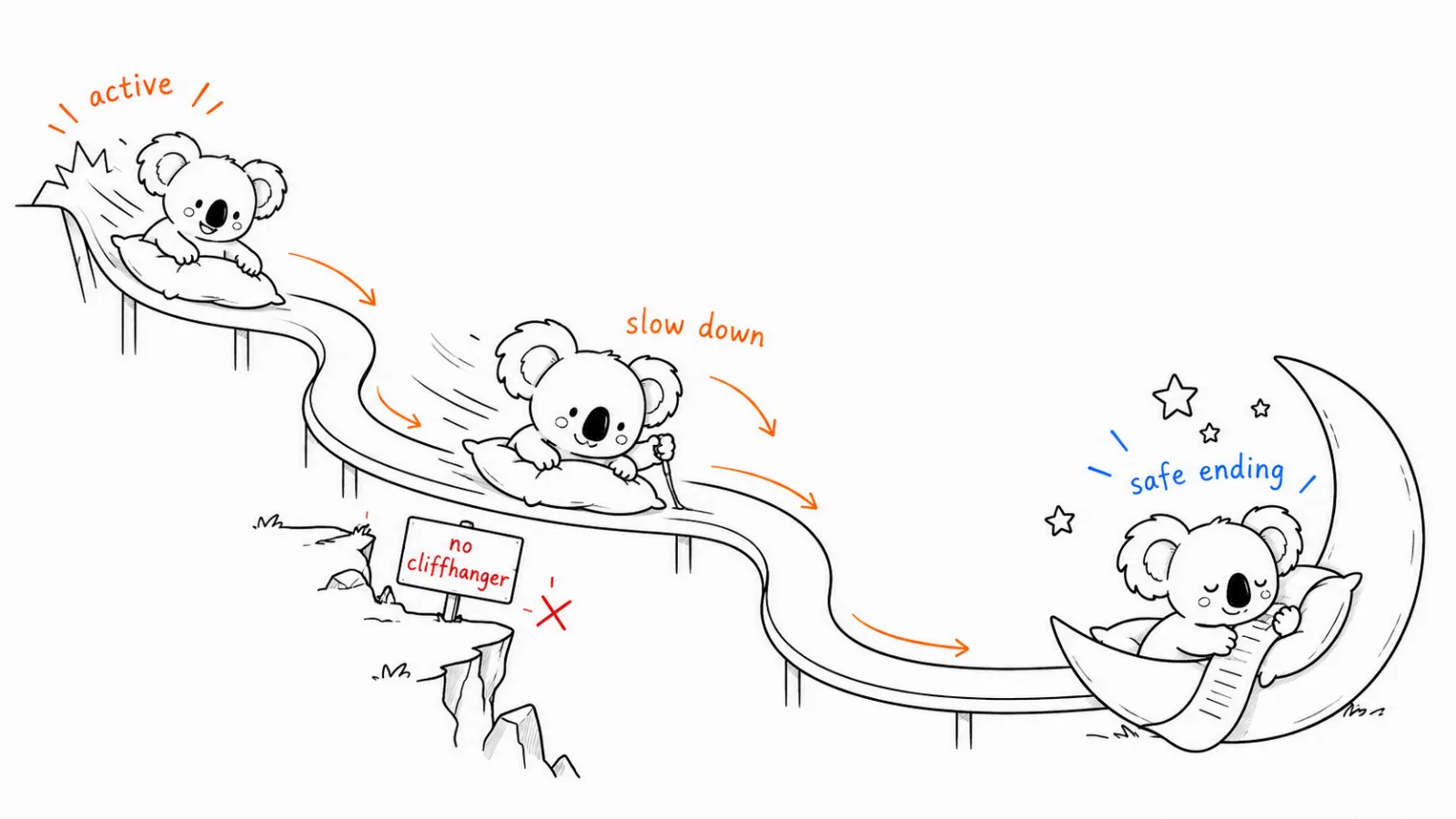
Bedtime stories tend to work more smoothly when they move from activity toward resolution. A character might complete a small journey, solve a manageable problem, return home, or settle into a safe place. The ending should feel complete rather than introducing a cliffhanger.
Stories with rapid scene changes, intense conflict, shouted dialogue, or unresolved danger may keep some children alert. Even cheerful stories can be overstimulating if they include loud music, sudden effects, or highly energetic narration.
Before adding a story to the evening routine, listen for:
- ●A steady speaking pace
- ●Clear pronunciation
- ●Predictable changes in volume
- ●Limited or gentle background music
- ●An emotionally reassuring ending
- ●Language the child can broadly follow
- ●A duration that fits the existing routine
Match the story to the child, not only the age label
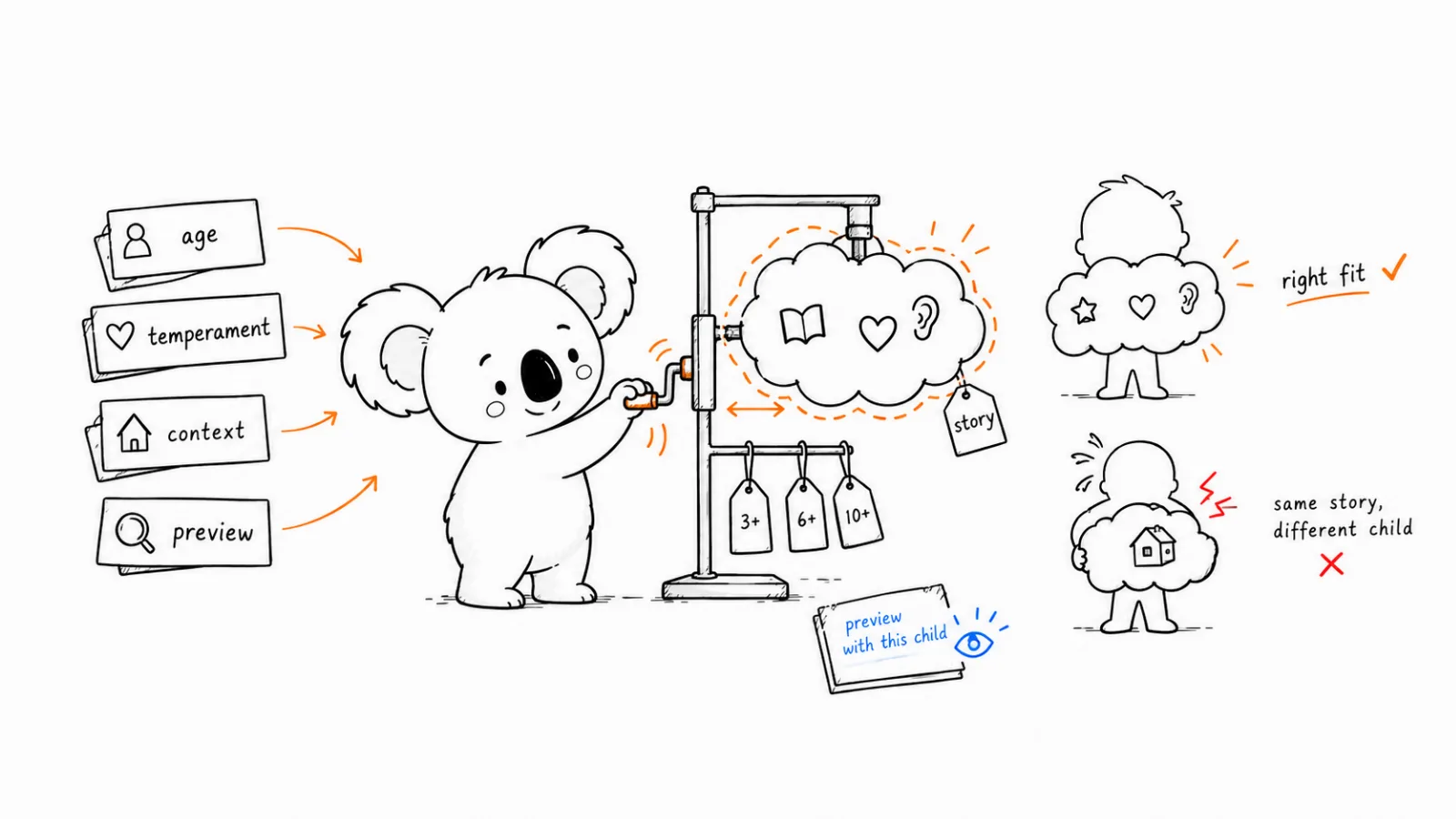
Age categories are useful starting points, but they cannot account for temperament, language development, personal fears, or recent experiences. One five-year-old may enjoy a mild mystery, while another may worry about it after the story ends.
Context also changes how a story feels. A plot about moving house may be reassuring for one child but emotionally difficult for another who is currently facing a move. Stories involving lost toys, absent parents, darkness, hospitals, or animals in danger deserve particular attention when they overlap with a child’s concerns.
A practical rule is to preview unfamiliar content during the day. If the child wants to discuss the story, ask questions, or stop listening, there is time to respond without disrupting bedtime.
Consider length and stopping points
Longer is not automatically better. A short story can provide a complete listening experience without delaying sleep, while a long chapter may encourage negotiation for “just a little more.”
Choose audio with visible durations and clear episode boundaries. Avoid relying on autoplay, which can continue into unrelated or more stimulating material. If a platform supports a sleep timer, set it before listening begins.
3. Choosing Stories for Different Ages and Listening Needs
The most useful format changes as children develop. Younger listeners often benefit from repetition and simple plots, while older children may prefer richer characters and continuing narratives.
| Listener profile | Helpful story features | Common cautions | Practical approach |
|---|---|---|---|
| Toddlers | Repetition, familiar objects, animal sounds, simple routines, short duration | Sudden effects, complex plots, listening without caregiver support | Listen together and use the same small selection regularly |
| Preschool children | Clear sequence, gentle humour, repeated phrases, everyday challenges | Villains, separation themes, fast pacing, ambiguous endings | Preview new stories and invite the child to choose from two approved options |
| Early primary-age children | Character development, manageable problems, imaginative settings | Cliffhangers, intense suspense, content designed for much older children | Use complete episodes or agree on a chapter endpoint before starting |
| Older primary-age children | Longer narratives, factual stories, mythology, thoughtful humour | Excessively long sessions, late-night device use, mature themes | Set a listening duration and keep controls outside the child’s reach if needed |
| Anxious or highly sensitive listeners | Familiar voice, predictable plot, reassuring ending, repeated favourites | Surprise content, peril, unresolved conflict, loud sound design | Use a pre-approved playlist and stop if the story increases alertness |
| Children learning a language | Clear speech, repeated vocabulary, familiar context | Dense figurative language, narration that is too fast | Choose shorter stories and discuss unfamiliar words earlier in the day |
These categories are not rigid developmental rules. Parents should use them as decision prompts and adjust according to the child’s comprehension, preferences, and emotional response.
For toddlers and preschoolers
At this stage, repetition is often an advantage rather than a problem. A familiar story reduces uncertainty, and the child does not have to work as hard to understand the plot. Stories about ordinary routines—getting dressed, visiting a grandparent, caring for a pet, or preparing for sleep—can be easier to process than elaborate fantasy.
Listening together is especially valuable. A caregiver can pause, clarify a confusing moment, or reassure the child if a sound feels frightening.
For primary-age children
Older children may want longer adventures, serialised stories, or nonfiction. These formats can still suit bedtime if the episode has a natural stopping point and the emotional intensity remains manageable.
Discuss the stopping rule before playback. For example: “We will listen to one 15-minute chapter, then the device goes off.” A clear agreement reduces the chance that bedtime becomes a negotiation about the next episode.
For neurodivergent children or children with sensory sensitivities
There is no single audio format that works for every neurodivergent child. Some children find steady narration regulating; others may be distracted or distressed by background music, character voices, or changes in volume.
Look for adjustable playback speed, narration-only versions, reliable transcripts, and easy volume controls. Consistency may matter more than variety. If one familiar recording supports a calm routine, there is no need to introduce new stories frequently.
4. Personalised Bedtime Stories: Benefits, Limits, and Safety
Personalised bedtime stories adapt the narrative to the listener. They may include the child’s name, interests, family members, pets, cultural details, daily experiences, or a current challenge such as starting school.
Their main advantage is relevance. A child may pay closer attention when the central character shares familiar details. Personalisation can also help a family explore a specific routine or feeling through a fictional scenario.
For example, a story could follow a character who:
- ●Prepares calmly for the first day at a new school
- ●Learns to sleep in a different room
- ●Welcomes a new sibling
- ●Packs for a family trip
- ●Practises asking for help
- ●Completes a familiar bedtime sequence
The value comes from thoughtful alignment, not simply repeating the child’s name. Effective personalisation uses a few meaningful details while preserving a coherent, gentle story.
Avoid turning the story into a behavioural lecture
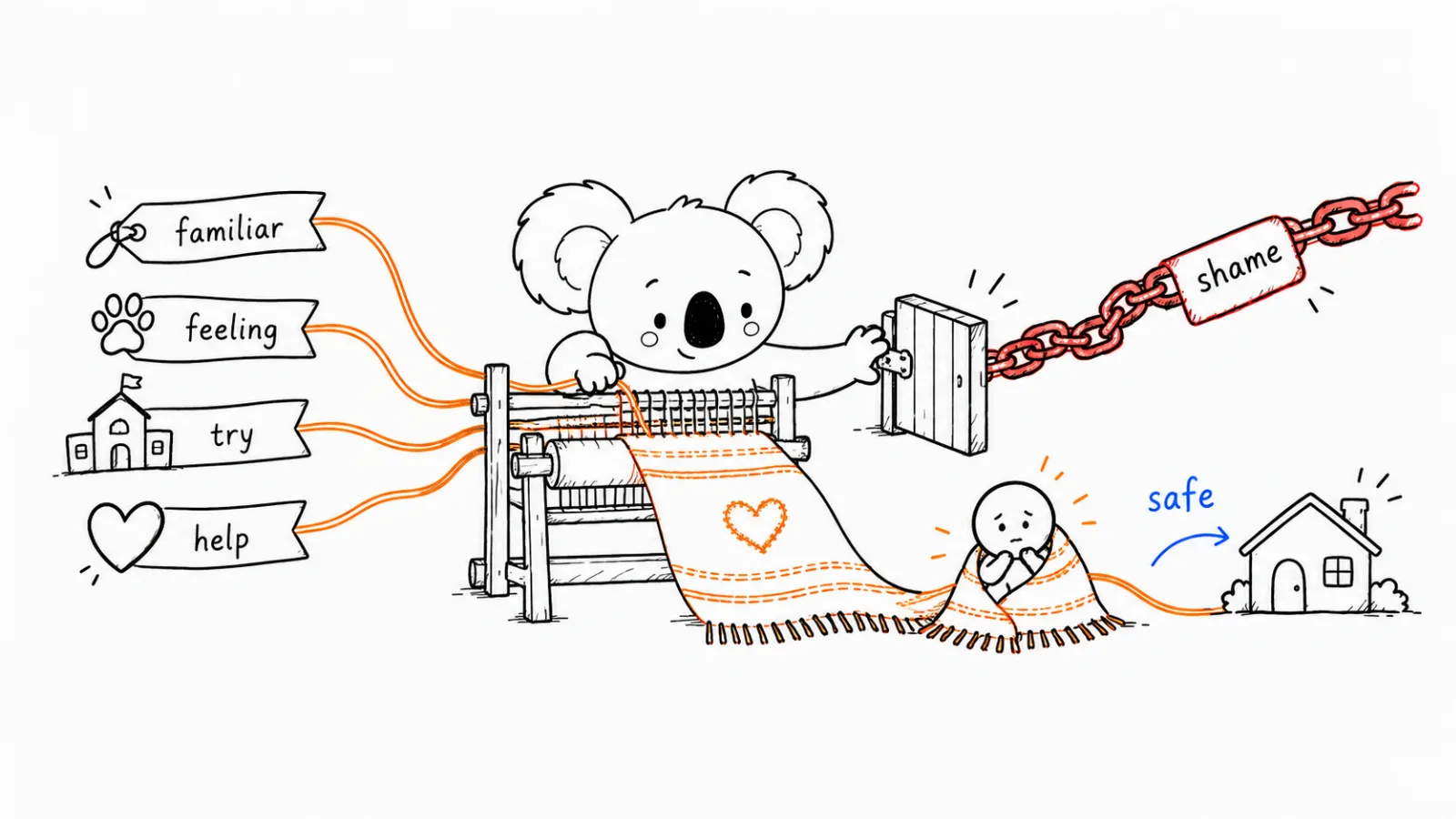
A bedtime story should not shame, threaten, or manipulate a child into compliance. Narratives suggesting that affection, safety, or rewards depend on “good” behaviour can create unnecessary emotional pressure.
If the story addresses a challenge, keep the language supportive. A character can encounter a feeling, try a strategy, receive help, and reach a reassuring resolution. The aim is to create a relatable scenario, not to disguise discipline as entertainment.
Review privacy before entering personal information
Some personalised story services ask for names, ages, photographs, voice recordings, or details about family life. Before providing that information, check:
- ●Which details are required and which are optional
- ●Whether the service stores prompts, recordings, or generated stories
- ●Whether information is used to improve or train automated systems
- ●Whether content or recordings can be deleted
- ●Whether stories can be shared publicly
- ●Whether the service contains advertising or third-party tracking
- ●What parental controls and account protections are available
Provide only the information needed for the story. A fictional nickname and broad interests may offer sufficient personalisation without disclosing a child’s full identity, school, location, or other sensitive details.
Review generated content before playback
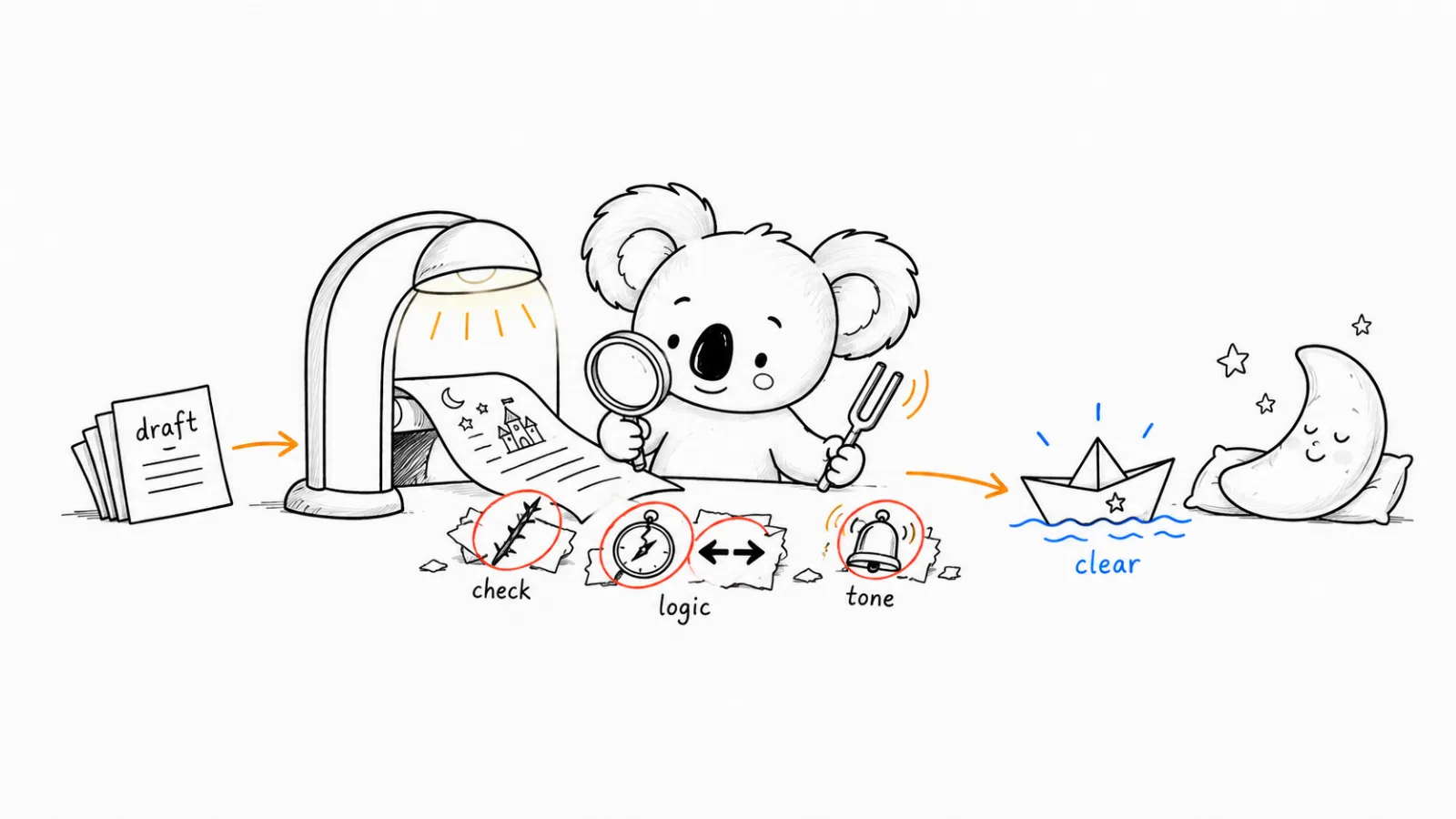
Automatically generated stories can produce awkward, inaccurate, or unsuitable material. A personalised output should therefore be treated as a draft until an adult has reviewed it.
Check names and relationships, but also inspect the emotional logic. Confirm that the story does not introduce frightening events, unsafe advice, stereotypes, confusing contradictions, or an abrupt ending. For audio, listen for pronunciation errors and unexpected changes in tone or volume.
5. Building a Calm and Practical Listening Routine
Audio is most useful when it fits inside a broader bedtime routine. It should signal that the day is slowing down rather than becoming the main event of the evening.
Use a repeatable sequence
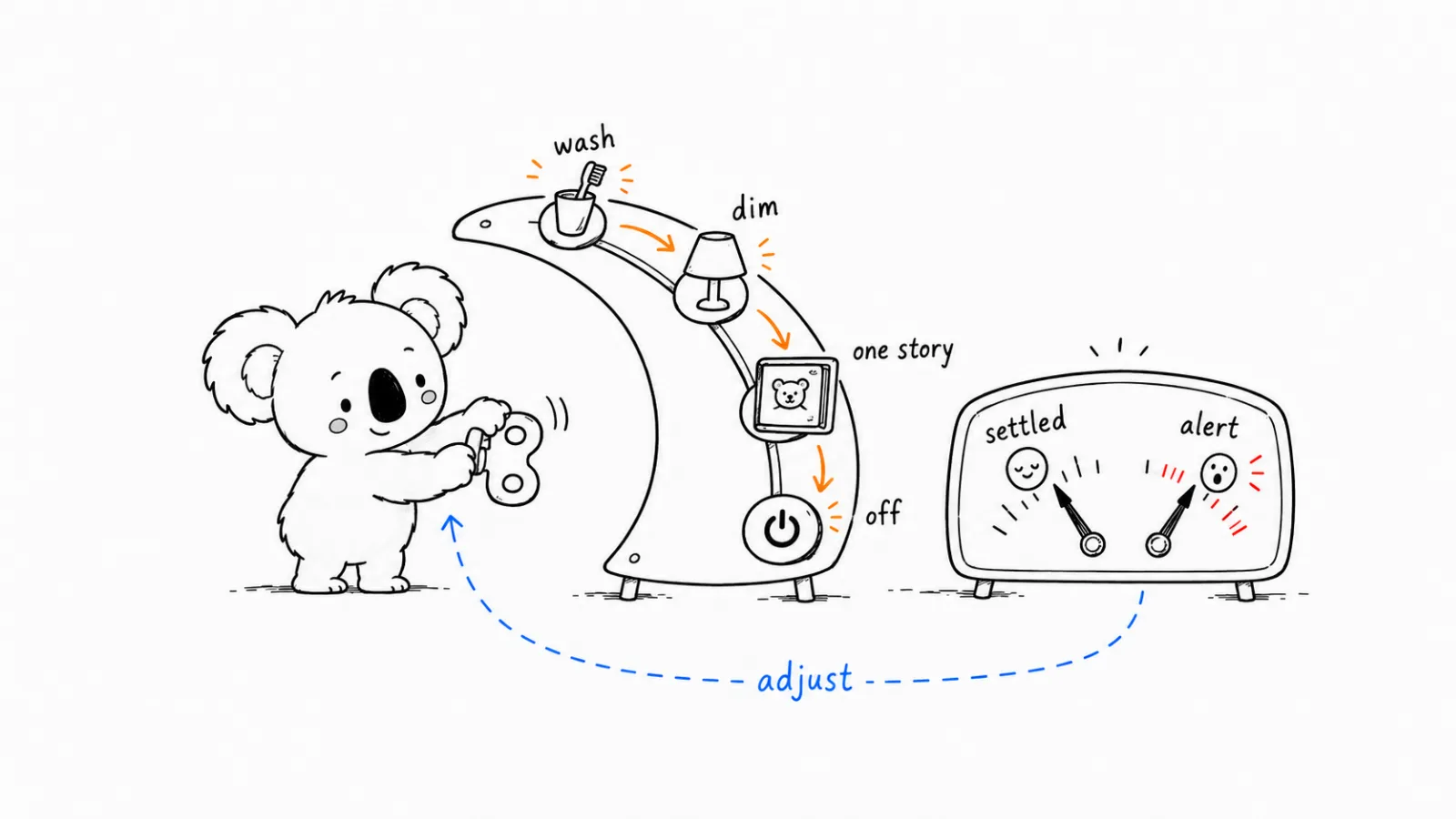
A simple routine might look like this:
- ●Finish active play.
- ●Complete washing, toothbrushing, and other practical tasks.
- ●Dim the room and put away interactive screens.
- ●Let the child choose one story from a small approved selection.
- ●Listen at a low, comfortable volume.
- ●Turn the audio off at the agreed endpoint.
- ●Offer brief reassurance or conversation before saying goodnight.
The exact order can vary. Consistency matters more than complexity.
Separate listening from screen use
Audio does not require continuous visual attention. If a phone or tablet is used for playback, prepare the story before bedtime and reduce the need to touch the screen. Lock the controls when appropriate, disable notifications, and place the device away from the bed.
A dedicated speaker or audio player may reduce visual distraction, but it is not essential. Families can create a low-interaction setup with equipment they already own.
Keep the volume modest
The audio should be clearly audible without dominating the room. Avoid placing speakers or headphones at unnecessarily high volume. For young children, external speakers can make supervision easier and allow caregivers to hear the content.
If headphones are used, follow the device manufacturer’s safety guidance and maintain a comfortable listening level. Headphones may not suit children who are likely to fall asleep while wearing them or who cannot communicate discomfort reliably.
Observe outcomes rather than assuming success
A bedtime story may be calming for one child and activating for another. Watch for practical signs:
- ●Does the child appear more settled or more alert?
- ●Does the story reduce conflict or create requests for additional episodes?
- ●Does the child become worried about events in the narrative?
- ●Can the audio stop without distress?
- ●Is the routine still manageable for caregivers?
If listening regularly delays bedtime, triggers anxiety, or leads to repeated arguments, change the story type, shorten the session, or pause audio use. Audio is an option, not a requirement.
Use human connection where it matters
Recorded stories can support families, but they do not respond to a child in real time. When possible, combine audio with a small moment of connection: choose the story together, listen nearby, ask what the child liked, or offer a familiar goodnight phrase.
Parents who are away from home might record a short introduction or closing message if the technology and privacy arrangements are appropriate. This can preserve a sense of routine without requiring a completely personalised production.
6. FAQ
Q1. How long should an audio bedtime story be?
There is no universal duration. Choose a length that fits the child’s age, attention, and established bedtime. For younger children, one short, complete story may be easier than a long chapter. Older children may enjoy longer episodes if the endpoint is agreed in advance. The key test is whether listening supports a timely, calm transition to sleep.
Q2. Are personalised bedtime stories better than standard stories?
Not necessarily. Personalised bedtime stories may increase interest and make a scenario feel more relevant, but a well-chosen standard story can be equally comforting. Quality, emotional suitability, narration, privacy, and the child’s response matter more than personalisation alone.
Q3. Is it acceptable for a child to fall asleep while audio is playing?
Some families allow quiet audio to continue briefly, while others stop it before the child falls asleep. If audio is left playing, use a timer, disable autoplay, keep the volume low, and ensure that later content cannot change unexpectedly. Families should also consider whether the child becomes dependent on continuous playback and whether the setup remains safe and manageable.
Q4. Can audio bedtime stories replace reading aloud?
They can substitute when reading aloud is not practical, but the two experiences are not identical. Live reading allows a caregiver to adjust the pace, answer questions, notice emotions, and share attention with the child. A balanced routine might use recorded audio on busy evenings and live reading when time and circumstances allow.
7. Conclusion
Audio bedtime stories for kids work best when they are selected deliberately and used within a predictable routine. Calm pacing, age-appropriate content, a reassuring resolution, controlled playback, and low-friction technology are more important than an extensive catalogue.
Personalised bedtime stories can add meaningful familiarity, especially when they reflect a child’s interests or help explore a current experience. They also require careful review. Parents should limit personal data, examine service policies, and check every generated story before bedtime.
Start with a small collection of pre-approved stories, establish a clear stopping point, and observe the child’s response over several evenings. If the audio makes bedtime calmer and preserves connection, it may be a useful part of the routine. If it increases stimulation, worry, or negotiation, simplify the format or return to a familiar read-aloud approach.
Ready for calmer bedtimes?
Try Gula Stories free — 5 narrated bedtime stories, ad-free, for children ages 3-8.