
Asking Questions During Stories: Dialogic Reading Explained
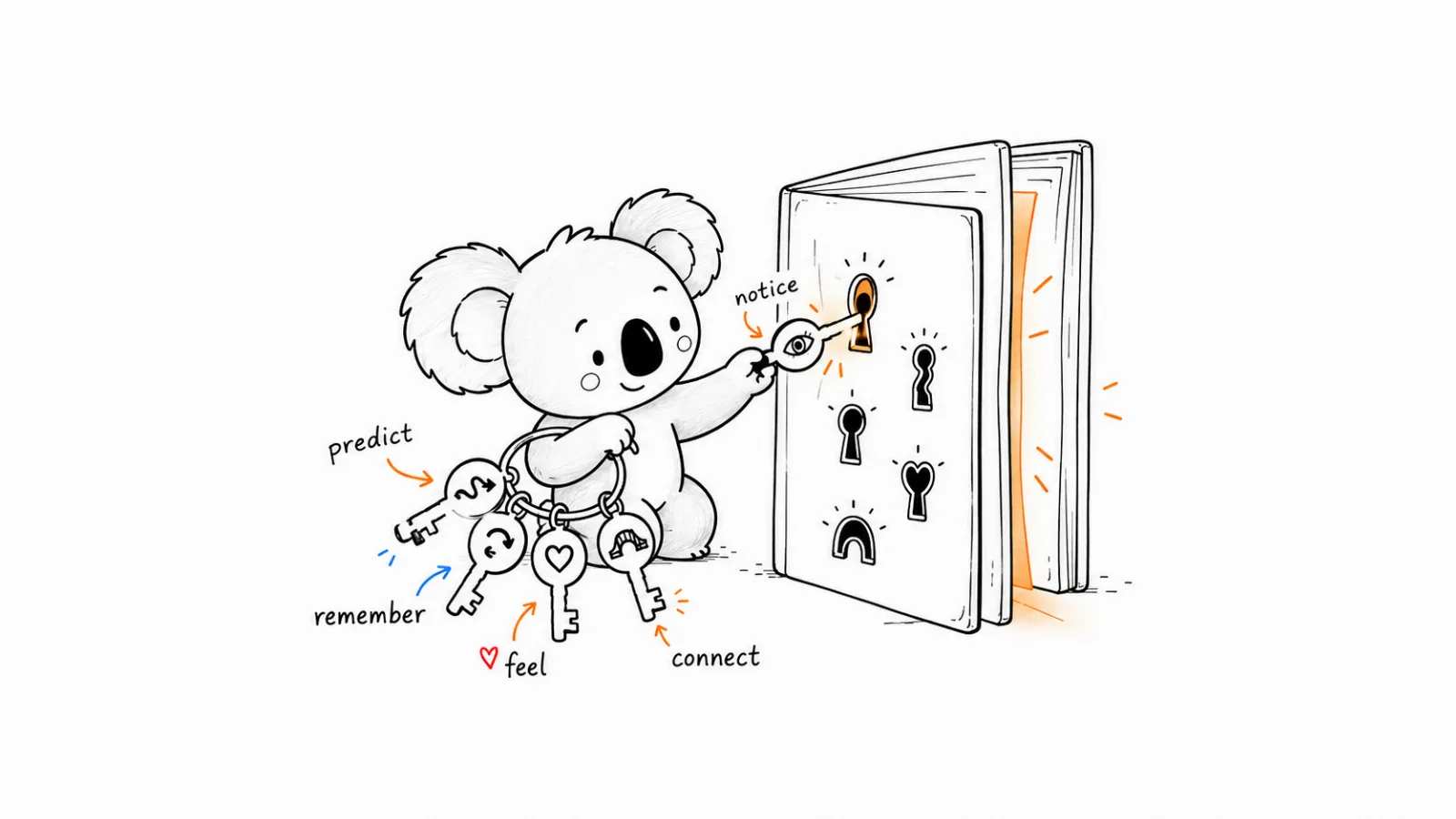
Dialogic reading turns story time into a gentle conversation by inviting your child to observe, predict, remember and co
Key Takeaways
- ●Dialogic reading turns story time into a gentle conversation by inviting your child to observe, predict, remember and connect.
- ●At bedtime, a few well-timed questions are usually more effective than questioning your child on every page.
- ●Use open prompts, allow time for an answer and build briefly on whatever your child says.
- ●Follow your child’s energy: conversation can support engagement, but calm listening is also valuable when they are tired.
- ●Questions are invitations, not tests. There is no need to correct every answer or finish every prompt.
Dialogic reading is a way of sharing books in which the adult and child talk about the story instead of the adult doing all the reading. At bedtime, it can be as simple as pausing a few times to ask, “What do you think will happen next?” or “How is the bear feeling?”
The aim is not to quiz your child or delay sleep. It is to help them take an active role in the story while keeping the experience warm, calm and enjoyable.
What Dialogic Reading Looks Like at Bedtime
In ordinary read-aloud time, the adult usually reads and the child listens. In dialogic reading, the adult still guides the story, but the child is invited to become a storyteller, observer or problem-solver too.
A simple exchange might sound like this:
Adult: “The rabbit has reached a dark forest. What do you notice?”
Child: “The trees look scary.”
Adult: “They do look shadowy. What might help the rabbit feel brave?”
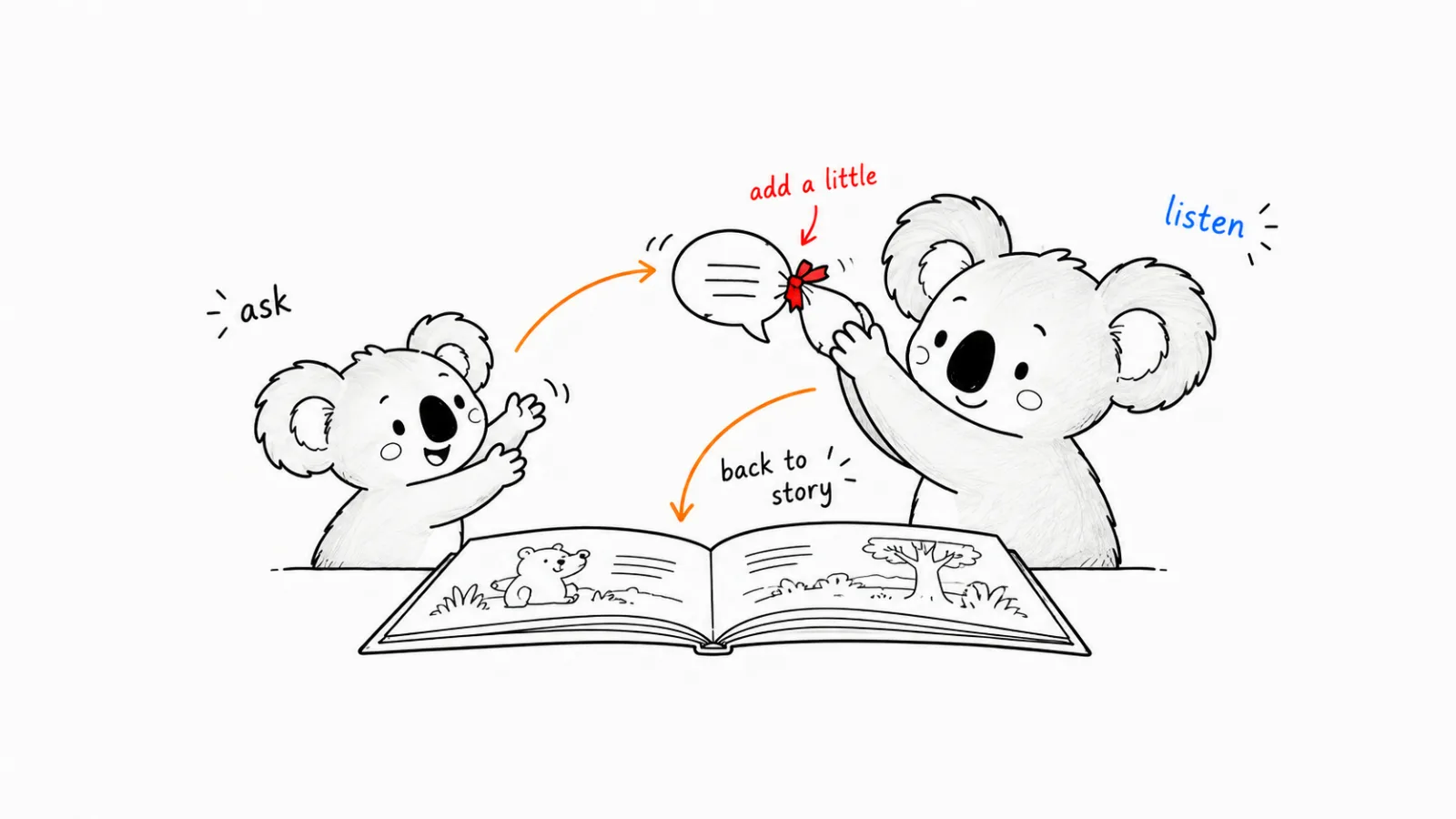
The adult accepts the child’s contribution, adds a little language and offers another opening for thought. This pattern can happen once or twice during a short story; it does not need to happen on every page.
Dialogic reading can be used with printed books, picture books without words, familiar stories or an audio story paused at a natural moment. If your family uses an app such as Gula Stories, one or two brief pauses can invite conversation without interrupting the calm narration too often.
Five Useful Types of Story Questions
Different prompts encourage different kinds of participation. The following framework provides practical options without turning bedtime into a lesson.
| Question type | What it invites | Example |
|---|---|---|
| Observation | Attention to pictures or details | “What can you see near the window?” |
| Prediction | Reasoning about what comes next | “Where do you think they will go?” |
| Recall | Remembering earlier events | “What did Maya put in her bag?” |
| Emotion | Considering feelings and motives | “Why might he feel nervous?” |
| Connection | Relating the story to experience | “Have you ever built something like that?” |
For children aged two or three, concrete prompts are often easiest: “Where is the dog?” or “What sound might the train make?” Older children may enjoy explaining motives, imagining alternatives or debating a character’s decision.
When a question feels too difficult, make it more specific. Instead of asking, “Why did she do that?”, try, “Do you think she hid because she was frightened or because she wanted to play?”
How to Respond Without Making It a Test
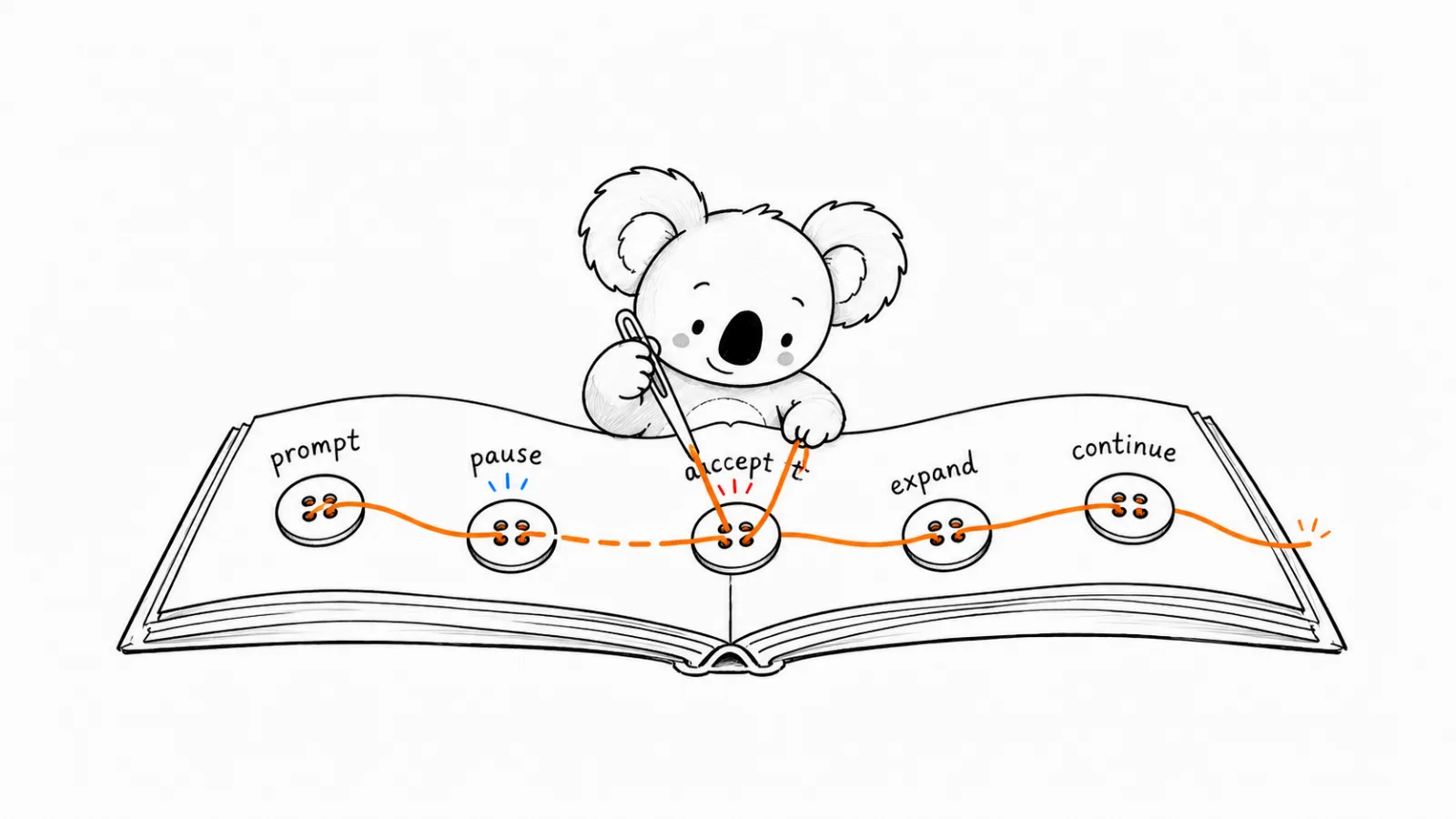
The quality of the response matters more than the number of questions. A useful sequence is:
- ●Prompt: Ask one short question connected to the page or scene.
- ●Pause: Give your child time to think. Avoid answering immediately for them.
- ●Accept: Treat their response as a contribution, even if it is unexpected.
- ●Expand: Add one small detail or a slightly richer word.
- ●Continue: Return to the story before the exchange becomes tiring.
For example:
Child: “She is mad.”
Adult: “Yes, she looks frustrated because the tower fell. Let’s see what she does next.”
You can gently correct important misunderstandings without making the child feel examined. If your child calls a fox a dog, you might say, “It does look a little like a dog. This one is a fox—it has that long, bushy tail.”
Some answers will be imaginative rather than literal. Unless accuracy is essential to understanding the story, there is usually no need to correct them. A child who says the moon is following the character may be playing with an idea, not demonstrating a factual misunderstanding.
Keep Bedtime Questions Calm and Optional
Bedtime changes the way dialogic reading should be used. A lively discussion that works in the afternoon may be too stimulating when a child is preparing for sleep.
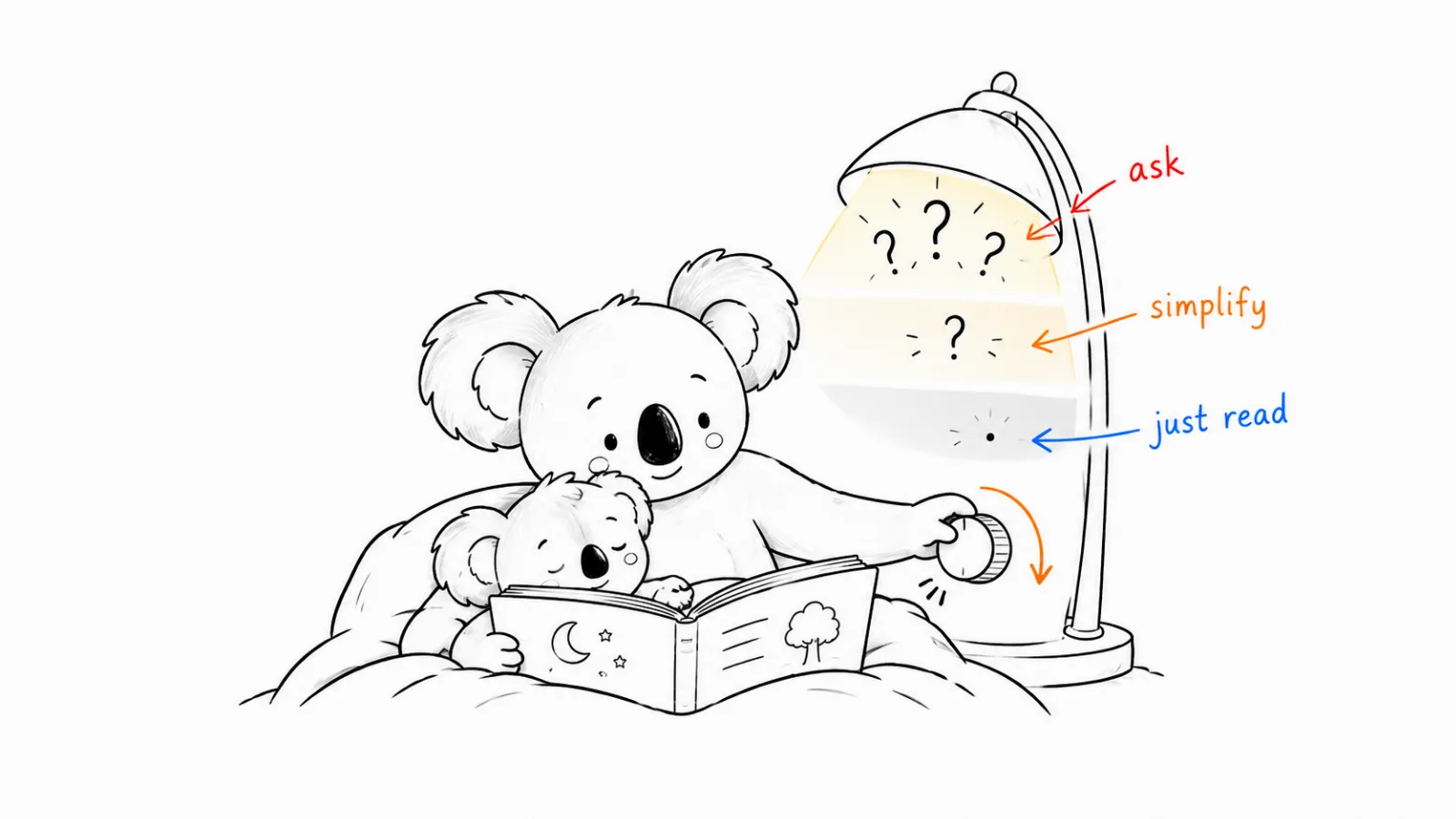
Use your child’s behaviour as a guide:
- ●If they are alert and interested, ask a prediction or connection question.
- ●If they are answering briefly, choose simple observation prompts.
- ●If they are yawning, restless or asking you to continue, stop asking and read.
- ●If a question leads to worry, acknowledge the feeling briefly and return to a reassuring part of the story.
- ●If the same book is requested repeatedly, vary the prompt—or simply enjoy the familiar words together.
It is also fine for a child not to answer. You can offer your own thought—“I wonder if the owl is looking for home”—and continue without pressure.
Avoid correcting speech, pronunciation or grammar repeatedly during the story. Natural expansion is gentler: if your child says, “Cat runned away,” you can reply, “Yes, the cat ran away very quickly.”
FAQ
Does dialogic reading work with children of different ages?
Yes, but the questions should match the child’s language and attention. Younger children may point, name objects or make sounds; older children may predict consequences, explain emotions or invent another ending. These are all valid forms of participation.
What if my child always gives silly answers?
Playful answers often show engagement. Join the joke briefly, then use the picture or plot to bring the conversation back: “A dinosaur in the cupboard would be surprising! What do you think is actually making that noise?”
Can siblings do dialogic reading together?
Yes. Invite different kinds of responses so one child does not dominate. One child might find a detail while another predicts what happens next. Avoid requiring them to agree; different interpretations can create useful conversation.
Should I ask questions during every bedtime story?
No. Some nights your child may want conversation, while on others they may need the comfort of listening quietly. Dialogic reading is one option within a flexible bedtime routine, not a requirement for every book.
The Bottom Line
Dialogic reading at bedtime means making space for your child’s ideas while keeping the story relaxed. Start with one or two genuine questions, listen to the answers and expand on them briefly. When your child is tired, let the conversation fade and allow the story itself to carry them toward sleep.
Ready for calmer bedtimes?
Try Gula Stories free — 5 narrated bedtime stories, ad-free, for children ages 3-8.