
A Bedtime Routine for 5-Year-Olds Who Resist Winding Down
A workable bedtime routine for a 5-year-old is predictable, calm and short enough to repeat every night. Begin winding d
Key Takeaways
- ●A workable bedtime routine for a 5-year-old is predictable, calm and short enough to repeat every night.
- ●Begin winding down before the child is expected to sleep, using the same sequence rather than relying on repeated reminders.
- ●Offer limited choices within firm boundaries: let your child choose the pyjamas or story, but not whether bedtime happens.
- ●Use simple fallback moves for stalling, leaving the bedroom, emotional escalation and nights when the schedule slips.
- ●Persistent snoring, breathing difficulties, significant anxiety or ongoing sleep disruption should be discussed with a health professional.
1. Introduction
Bedtime resistance at five can be surprisingly determined. A child who appeared tired during dinner may suddenly need another drink, a different toy, one more story or an urgent conversation about tomorrow. Some children become playful; others argue, cry or repeatedly leave the bedroom.
This behaviour does not necessarily mean the child is not tired. Five-year-olds are developing independence, imagination and a stronger awareness of separation. Bedtime brings all three together: the child must stop an enjoyable activity, follow an adult-led transition and remain in a quiet room without constant company.
A practical response is not to make bedtime longer or more entertaining. It is to create a sequence that feels safe because it is predictable, while keeping the boundaries clear enough that resistance does not control the evening.
The plan below provides a step-by-step bedtime routine for a 5-year-old who struggles to wind down. It includes sample timings, language parents can use and fallback moves for common difficulties. Adjust the clock times to suit your household, the child’s morning wake time and any guidance from their health professional.
2. Set Up the Evening Before the Routine Begins
The core principle is simple: bedtime works better when the transition starts before the child reaches the bedroom.
Recognised child-health resources, including HealthyChildren.org from the American Academy of Pediatrics, the NHS and Australia’s Raising Children Network, generally encourage consistent sleep schedules and calm, predictable bedtime routines. The exact routine can differ between families, but repetition helps a child understand what happens next.
Choose a realistic sleep window
Work backwards from the time your child needs to wake. Consider how long they usually take to settle rather than treating “lights out” and “asleep” as the same moment.
For example, if lights go out at 7:45 p.m. but your child usually needs some quiet time before sleeping, the routine may need to begin around 7:00 p.m. A bedtime that is too early can create a long battle with a child who is not ready to sleep. A bedtime that is too late can also be difficult because an overtired child may appear energetic, irritable or unusually silly.
Look at patterns across several evenings:
- ●When does your child begin rubbing their eyes, slowing down or becoming emotionally fragile?
- ●How long do they usually remain awake after lights out?
- ●Are weekends shifting the schedule so far that weekday bedtime becomes difficult?
- ●Is late napping, if it still occurs, affecting bedtime?
Make small adjustments rather than moving bedtime dramatically after one difficult night.
Give one clear warning
About ten minutes before the routine begins, say what is ending and what comes next:
“Ten more minutes of play. Then it is tidy-up time, bath, teeth and stories.”
A visual timer can help children who find verbal warnings too abstract. When the timer ends, avoid reopening the decision. Move calmly into the first step.
Reduce stimulation
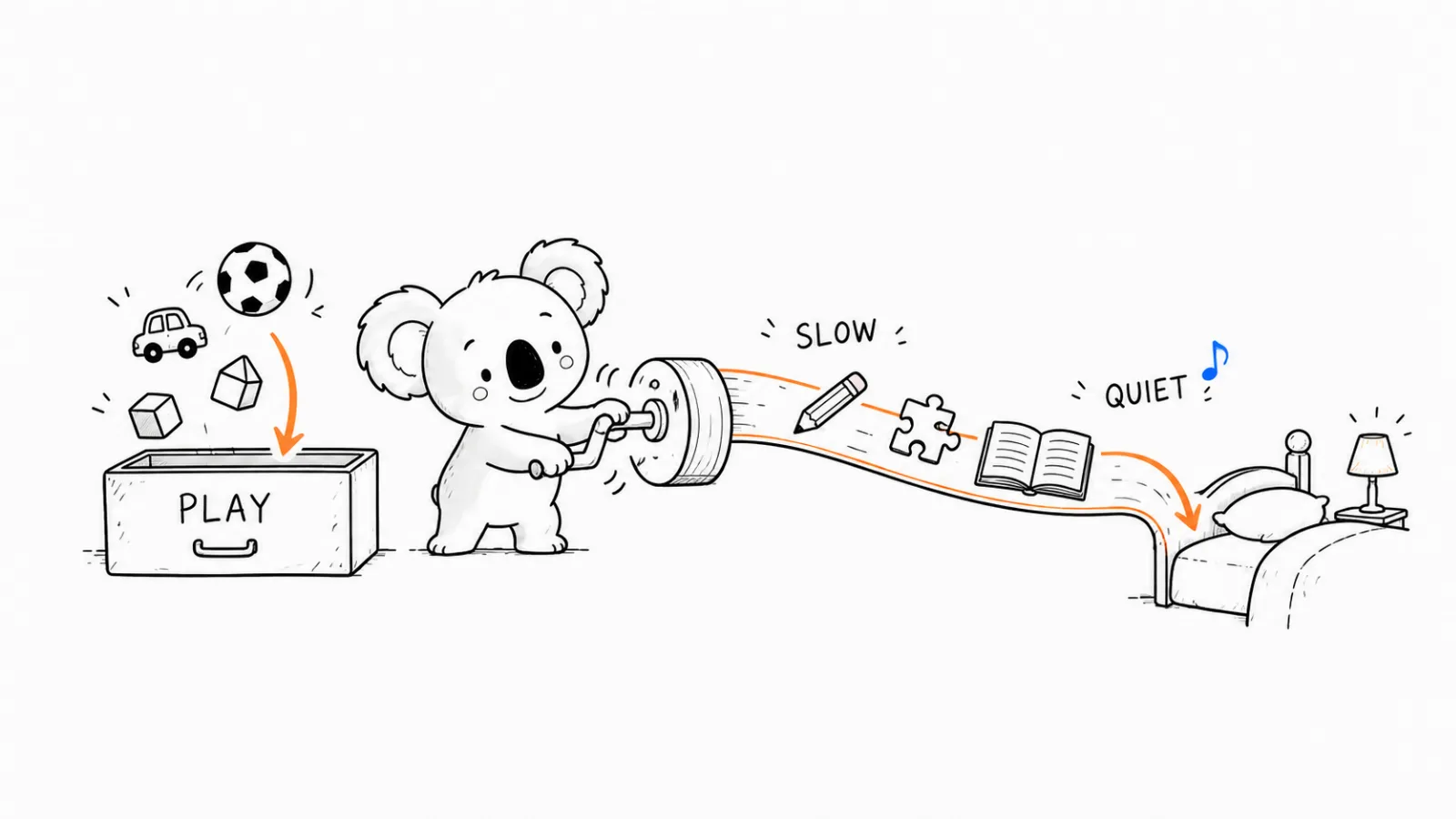
The final part of the evening should become progressively quieter. This may mean dimming lights, ending energetic games and putting away highly stimulating screens before the bedtime sequence.
The goal is not complete silence. It is a noticeable change in pace. Quiet drawing, puzzles, looking at books or helping prepare clothes for tomorrow can bridge the gap between active play and bed.
Prepare common requests in advance
Many delays are predictable. Before entering the bedroom, check the practical needs:
- ●The child has used the toilet.
- ●A small drink of water is available if appropriate.
- ●The room is comfortable.
- ●A favourite comfort item is ready.
- ●Tomorrow’s clothes or school items are organised.
- ●The chosen books are already beside the bed.
Preparation does not eliminate every request, but it makes the boundary easier to hold: “You have your water, and we have finished the toilet step. Now it is time to stay in bed.”
3. Follow a 45-Minute Step-by-Step Routine
A routine for a resistant five-year-old should contain enough connection to feel reassuring, but not so many activities that bedtime becomes an extended negotiation.
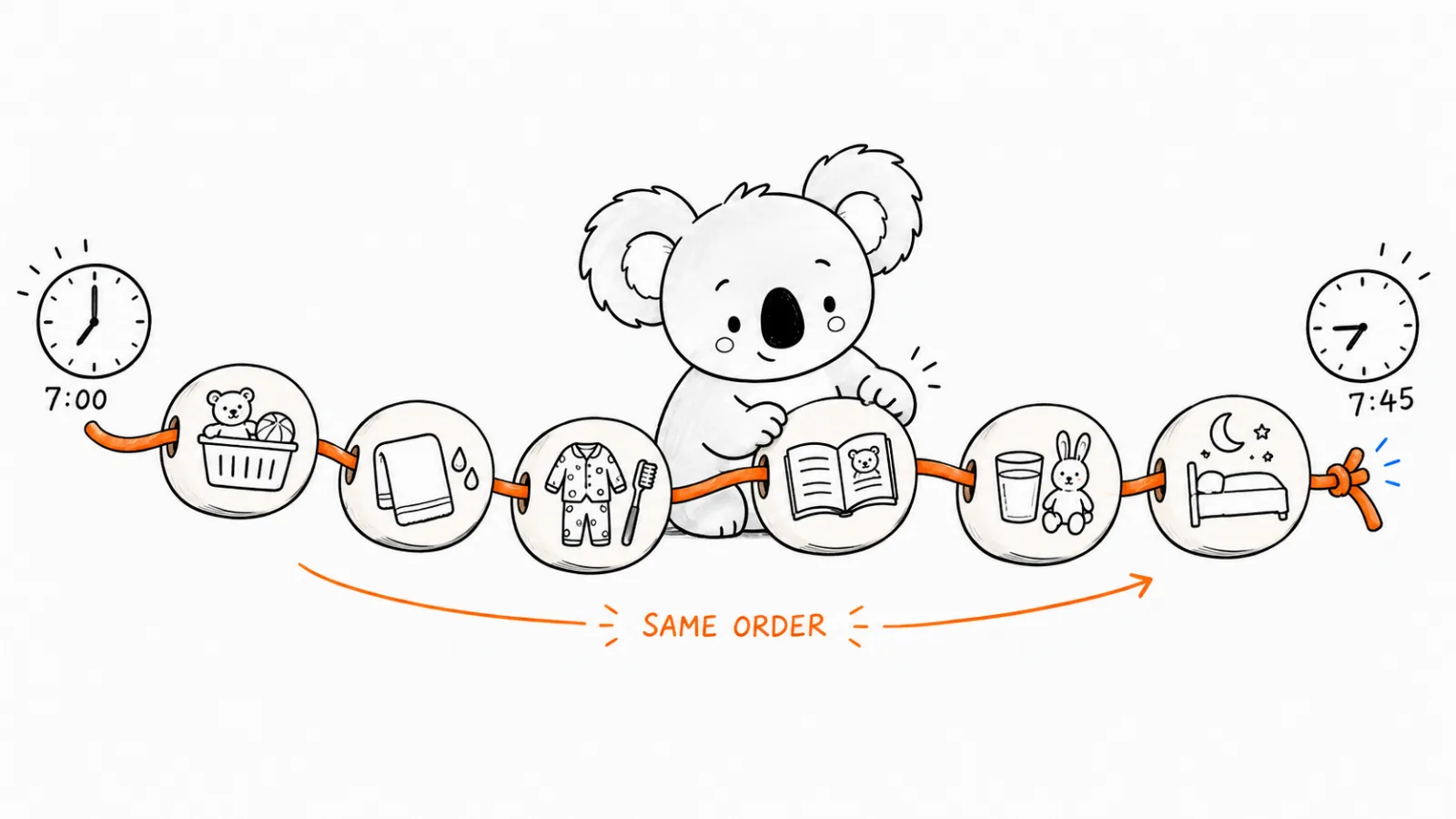
The following schedule uses a 7:45 p.m. lights-out time. Shift the entire sequence earlier or later as needed.
| Time | Step | What to Do | Boundary |
|---|---|---|---|
| 7:00 p.m. | Transition | End screens and energetic play; give a brief tidy-up task | Play ends when the timer sounds |
| 7:05 p.m. | Wash | Bath or a quick wash, depending on the night | Keep water play time-limited |
| 7:15 p.m. | Practical needs | Put on pyjamas, use the toilet and brush teeth | Complete these before entering bed |
| 7:25 p.m. | Connection | Choose one or two short stories and have a brief cuddle | Decide the number of stories in advance |
| 7:40 p.m. | Final check | Offer a sip of water, arrange the comfort item and say goodnight | No new activities begin |
| 7:45 p.m. | Lights out | Use the same closing phrase and leave or sit briefly as planned | Bedtime is no longer being negotiated |
Step 1: End play with a small job
Moving directly from play to “Go to bed” invites resistance. A short closing task gives the evening a clearer ending.
Try:
“The timer has finished. Please put the blocks in the basket while I put the books away.”
Keep the job achievable. This is not the moment to demand a complete bedroom clean-up.
Step 2: Keep washing calm and contained
A bath can be soothing for some children and highly stimulating for others. If bath play regularly leads to excitement or conflict, move baths earlier or use a quick wash on busy nights.
Give limited choices that do not change the overall plan:
- ●“Blue towel or green towel?”
- ●“Would you like to wash your face or arms first?”
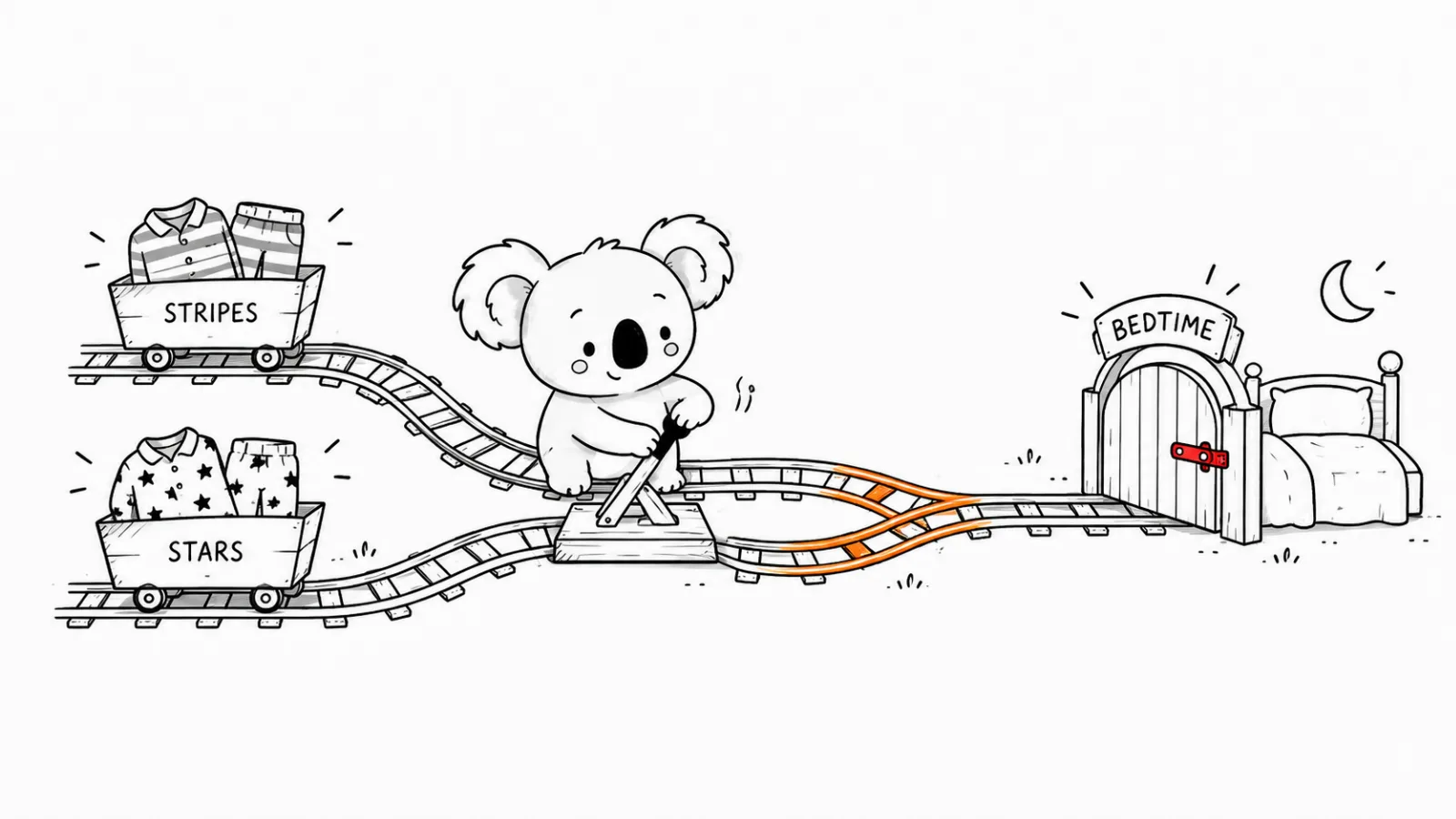
- ●“Do you want the striped pyjamas or the star pyjamas?”
Both options should lead toward bed.
Step 3: Complete practical needs before stories
Toilet visits, teeth brushing and pyjamas belong before the most enjoyable part of the routine. This creates a natural sequence: first the necessary jobs, then connection.
If your child resists brushing teeth, keep the language brief:
“Teeth need to be brushed before stories. You may start, or I can help you start.”
Avoid introducing several additional warnings. A clear statement followed by calm assistance is usually easier to understand than a long debate.
Step 4: Protect a short connection period
Children often resist bedtime because they want more access to a parent, not because they need more activities. A reliable period of undivided attention can reduce the need to create delays later.
Choose one or two short stories before getting into bed. Calm audio can also be useful when reading aloud is not practical. For example, Gula Stories offers ad-free bedtime stories with calm narration and age-appropriate recommendations. Audio should remain part of a defined routine rather than continuing indefinitely.
After the story, invite one brief reflection:
- ●“What was one good thing about today?”
- ●“Is there anything you want me to remember for tomorrow?”
- ●“Would you like a cuddle or a hand squeeze?”
If your child raises a complicated concern, acknowledge it without turning bedtime into a long problem-solving session:
“That sounds important. We will talk about it after breakfast. Right now, your job is to rest.”
Step 5: Use a repeatable closing phrase
Finish with the same short message each night:
“You are safe, you are loved, and it is time to rest. I will see you in the morning.”
Predictability matters more than finding magical wording. The phrase should signal that conversation is ending.
4. Use Fallback Moves Without Restarting Bedtime
Resistance often increases when a delay successfully produces another story, snack or long conversation. Fallback moves should respond to the child’s need while preserving the sequence.
If your child asks for “one more” everything
Use a completed-routine statement:
“We have had two stories, a cuddle and water. Bedtime is finished. You may rest quietly now.”
Do not list ten reasons they need sleep. Explanations can become material for further argument.
A simple bedtime pass can help some families. Give the child one paper pass that can be exchanged for one reasonable request after lights out, such as a brief hug or toilet visit. Once used, return them to bed with minimal conversation. Necessary care should never be withheld because the pass has been used.
If your child repeatedly leaves the room
Return them calmly and with as little interaction as possible:
“It is bedtime. Back to bed.”
Repeat the same response each time. Avoid anger, bargaining or starting another comforting activity. The first few nights of a firmer boundary may still involve repeated returns; consistency is the important part.
If leaving the room appears driven by genuine fear, address the fear during daytime as well. At bedtime, offer a modest support such as a night-light, an open door or scheduled check-ins.
If your child needs you in the room
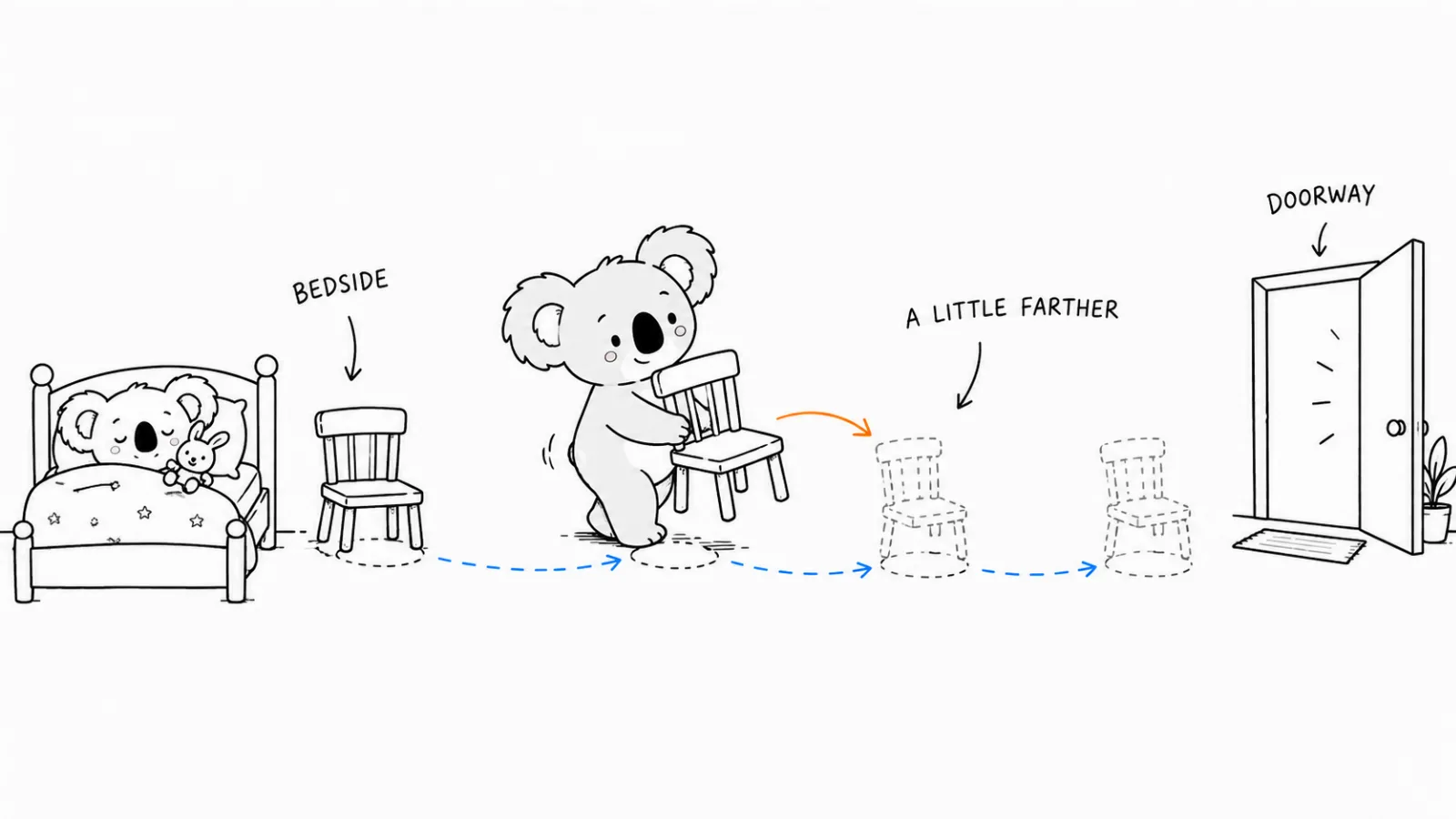
Abrupt withdrawal may be too difficult for a child accustomed to falling asleep beside a parent. A gradual approach can be more manageable:
- ●Sit beside the bed without adding stories or conversation.
- ●After several settled nights, move the chair a little farther away.
- ●Continue moving toward the doorway.
- ●Eventually complete the goodnight routine and leave.
Explain the plan during the day, not during an upset bedtime moment. Progress may be uneven, so focus on maintaining the new position rather than rushing through the steps.
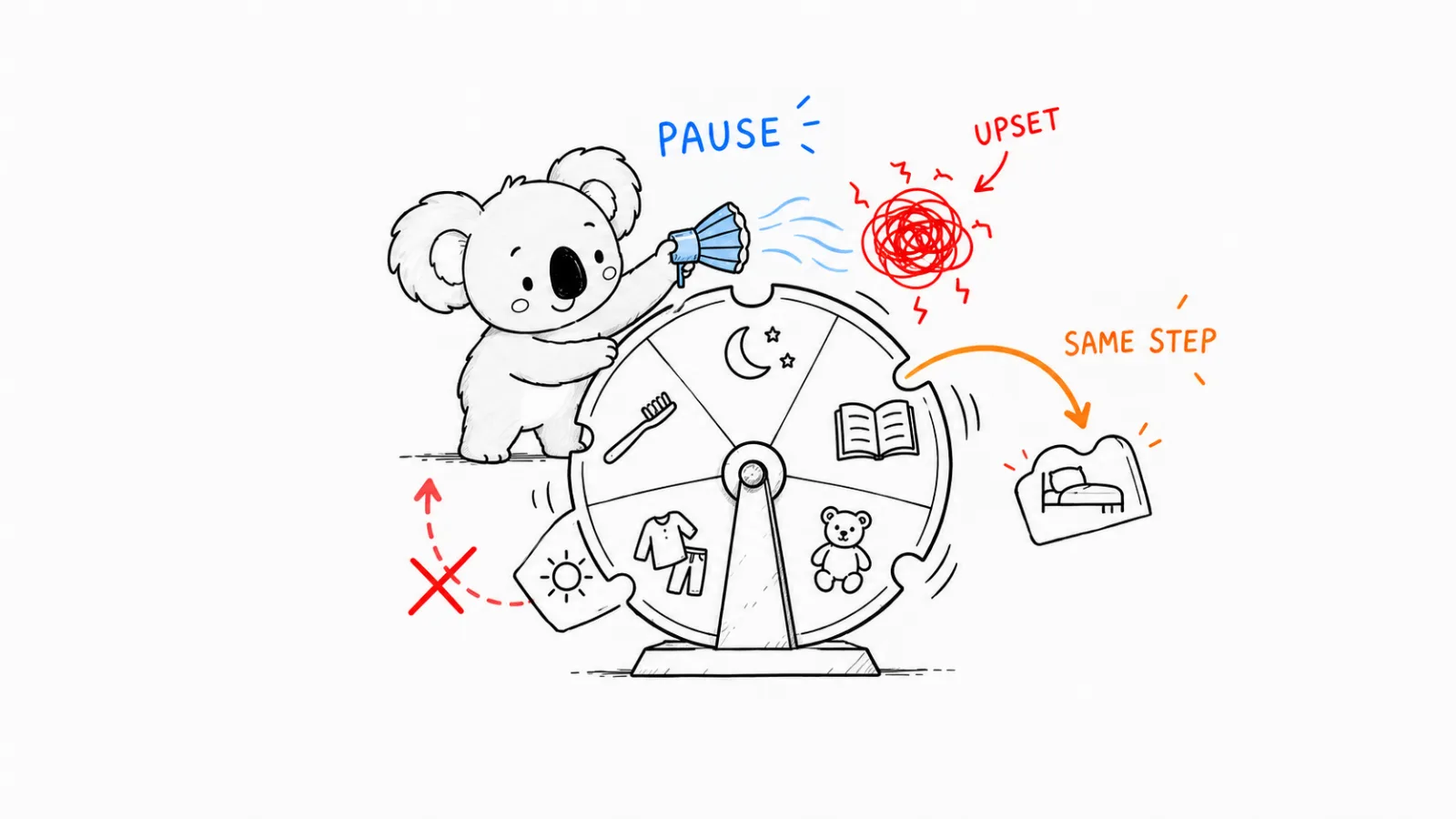
If emotions escalate
When a child is crying or angry, use fewer words and a quieter voice. Name the feeling while holding the limit:
“You are upset because you want to keep playing. It is still bedtime. I am here while your body becomes calm.”
A brief cuddle, slow breathing together or firm back rub may help if the child welcomes it. Once calm, resume from the current step. Do not restart the entire routine or add rewards that were not already planned.
If the evening runs late
Use a shortened routine rather than skipping it:
- ●Toilet and teeth.
- ●Pyjamas.
- ●One short story or song.
- ●Cuddle and the usual goodnight phrase.
- ●Lights out.
The sequence can remain familiar even when its length changes. Tell the child plainly:
“We are home late, so tonight is our short routine. We will still do all the important parts.”
5. Match the Response to the Type of Resistance
Different bedtime problems require different responses. Treating every protest as deliberate misbehaviour can miss practical or emotional causes.
| What You Notice | Possible Need | Practical Response | Avoid |
|---|---|---|---|
| Constant bargaining | Clearer boundaries | Decide stories, drinks and choices before bed | Reopening decisions |
| Wild or silly behaviour | Earlier wind-down or less stimulation | Dim lights and move energetic play earlier | Adding exciting games |
| Repeated reassurance seeking | Connection or predictable checking | Use brief scheduled check-ins | Staying unpredictably for long periods |
| Fear of darkness or separation | Gradual reassurance | Use a night-light, comfort item or gradual retreat | Mocking or dismissing the fear |
| Long periods awake but calm | Schedule review | Track sleep patterns and consider a modest timing adjustment | Forcing an unrealistically early bedtime |
| Sudden change in sleep | Stress, illness or environmental change | Ask gentle daytime questions and restore routine | Assuming the child is simply defiant |
Reinforce the morning, not the argument
Notice the behaviour you want to see the next morning:
“You stayed in your room after I tucked you in. That helped our evening feel calm.”
A simple sticker chart may help if it rewards one specific, achievable action, such as completing the routine or remaining in the bedroom. Avoid vague goals such as “be good at bedtime.” Rewards should not replace warmth, boundaries or attention.
Review the plan after one or two weeks
Bedtime habits rarely change because of one ideal evening. Keep the sequence stable long enough to observe a pattern. A simple log can record:
- ●When the wind-down began
- ●When lights went out
- ●Approximate settling time
- ●Whether the child left the room
- ●Unusual factors such as illness, travel or a late nap
Use the notes to make one adjustment at a time. Changing the bedtime, routine length, reward and parental response simultaneously makes it difficult to know what helped.
Know when to seek advice
Talk with a GP, paediatrician or other qualified health professional if sleep problems persist despite a consistent routine, significantly affect daytime functioning or place serious strain on the family.
Seek professional guidance when bedtime difficulties occur alongside concerns such as frequent loud snoring, pauses or difficulty in breathing, unusual movements, persistent pain, marked daytime sleepiness or intense anxiety. A routine can support healthy sleep habits, but it cannot assess or treat an underlying medical or developmental concern.
6. FAQ
What is a good bedtime routine for a 5-year-old?
A good routine is a predictable sequence lasting roughly 30 to 45 minutes, adjusted to the child and household. It might include ending active play, washing, putting on pyjamas, using the toilet, brushing teeth, reading one or two stories and saying the same goodnight phrase.
The order should remain more consistent than the exact clock time. On late evenings, use a shorter version while preserving the main sequence.
What time should a 5-year-old go to bed?
There is no single bedtime that suits every five-year-old. Work backwards from the required morning wake time and consider the child’s total sleep pattern, how long they take to settle and whether they still nap.
If your child regularly remains awake for a long time without appearing distressed, the planned bedtime may need review. If they become tearful, clumsy, highly energetic or irritable late in the evening, an earlier wind-down may help. Discuss ongoing concerns with a health professional.
Should I stay until my child falls asleep?
You can, but it may become difficult if your child cannot settle without you. If the current arrangement works for the whole family, there is no need to change it simply because another family does things differently.
If you want your child to fall asleep more independently, reduce your presence gradually. Sit farther from the bed over time, keep interaction minimal after goodnight and explain each change during the day.
What should I do when my child says they are not tired?
Acknowledge the statement without turning it into a negotiation:
“You do not have to make yourself sleep, but it is time to rest quietly in bed.”
If this happens most nights and the child remains awake for a long period, review the schedule. A modestly later lights-out time may work better than an extended nightly conflict, provided the child can still get the rest they need.
7. Conclusion
An effective bedtime routine for a 5-year-old who resists winding down combines warmth with a clear endpoint. Begin reducing stimulation before bed, follow the same practical sequence, include a short period of focused connection and use limited choices that do not change the boundary.
When resistance occurs, respond to the specific problem without restarting bedtime. Return a wandering child calmly, shorten the routine on late nights, offer structured reassurance for fears and make schedule changes gradually.
The aim is not to produce a protest-free evening immediately. It is to make bedtime so familiar and consistent that everyone knows what happens next. If difficulties remain intense, disrupt daytime life or appear connected to breathing, pain or significant anxiety, seek advice from a qualified health professional.
Ready for calmer bedtimes?
Try Gula Stories free — 5 narrated bedtime stories, ad-free, for children ages 3-8.